This site is supported by our readers. We may earn a commission, at no cost to you, if you purchase through links.
A chickadee weighing less than half an ounce burns through roughly 10% of its body weight in fat every single winter night, just to survive until morning. That’s the metabolic reality birds face when temperatures drop and natural food sources disappear under ice and snow.
What do birds eat in winter becomes less a casual curiosity and more a survival equation—one where backyard feeder can genuinely tip the balance. Research on supplemental feeding shows survival rates climbing from around 37% to 69% in studied populations. Knowing which foods, feeders, and care practices actually matter makes that difference real.
Table Of Contents
- Key Takeaways
- Winter Bird Feeding Basics
- What Do Birds Eat in Winter
- Winter Bird Diets and Nutrition
- Essential Winter Bird Foods
- Winter Bird Care and Conservation
- Frequently Asked Questions (FAQs)
- What to feed birds in winter?
- Can you feed birds in the winter?
- Why do birds eat winter food?
- What seeds do birds eat in winter?
- What is the best thing to feed birds in the winter?
- What is the 5 7 9 rule for bird feeders?
- Why put a potato in your bird feeder?
- What do most birds do in the winter?
- What can birds eat in winter?
- How do birds survive winter?
- Conclusion
Key Takeaways
- A chickadee burns through roughly 10% of its body weight in fat each winter night, making calorie-dense foods like suet and black-oil sunflower seeds genuinely life-saving at your feeder.
- Consistent supplemental feeding can nearly double bird survival rates—from around 37% to 69%—so what you stock matters far more than most people realize.
- Different species need different setups: tube feeders suit chickadees and finches, suet cages draw woodpeckers and nuthatches, and platform feeders serve ground-foraging sparrows and juncos.
- Clean water, regular feeder maintenance every two weeks with a diluted bleach solution, and shelter like roost boxes are just as critical as food for helping birds make it through winter.
Winter Bird Feeding Basics
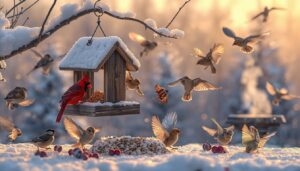
Getting started with winter bird feeding doesn’t have to be complicated, but a few key decisions make a real difference. The right feeder setup and a simple care routine can mean the difference between birds thriving and struggling through the cold months.
Knowing when to start feeding birds each season helps you stay ahead of the cold and give your backyard visitors a reliable food source before they need it most.
Here’s what you need to know to get both right.
Types of Bird Feeders
Choosing the right feeder makes a real difference for the birds in your yard this winter. Each design targets specific species based on how they naturally forage. Consider using black-oil sunflower seed to attract a wide range of winter birds.
- Tube Feeders — Tube Mechanics rely on gravity-fed ports that minimize spillage, drawing chickadees and finches to black-oil sunflower seeds.
- Hopper Feeders — Hopper Capacity ranges from 3 to 15 pounds, serving cardinals and blue jays with less frequent refilling.
- Suet Cages — Wire suet cages hold fat blocks that woodpeckers and nuthatches depend on when insects disappear.
- Ground Feeders — Platform Advantages include open access for sparrows, juncos, and doves that naturally feed low.
- Window Feeders — A Window Feeder lets you observe small songbirds up close without disturbing them.
Place feeders at varying heights to reduce competition and welcome greater species diversity.
Maintenance of Bird Feeders and Birdbaths
Once your feeders are placed, keeping them clean is just as important as filling them. A solid cleaning schedule protects birds from the diseases that spread through moldy seeds and contaminated water. Scrub feeders every two weeks with a 9:1 water-to-bleach solution, disassemble tube feeders to reach every port, and let everything air dry fully — a built-in drainage system helps prevent moisture from pooling between cleanings.
For birdbath hygiene, swap out the water every other day and scrub the basin weekly.
A water heater safely keeps liquid accessible when temperatures drop below freezing.
What Do Birds Eat in Winter
Winter strips away most of what birds rely on — insects vanish, snow buries seeds, and fruit disappears fast.
To survive, birds shift their habits and seek out whatever calories they can find.
Here’s a look at what actually sustains them through the cold months.
Natural Food Sources
Even in the coldest months, nature quietly stocks a winter pantry that birds have relied on long before feeders existed. Winterberry and dogwood cling to their fruit well into January, delivering Berry Antioxidants and residual sugars that support immune function. Oak trees offer Acorn Energy dense enough to sustain blue jays and woodpeckers through bitter cold. Cone Seed Availability from pine and spruce gives crossbills and redpolls reliable calories when little else remains.
Here’s what natural food sources actually look like on the ground:
- Native berry-producing shrubs hold fruit through hard frosts, offering vitamins and flavonoids
- Bark crevices harbor Invertebrate Protein — beetles, larvae, spiders — critical for nuthatches and creepers
- Pine and spruce cones release seeds gradually across the season
- Tree Sap Nutrients from birch and maple sustain woodpeckers during the coldest snaps
These sources matter deeply, but they don’t last forever.
The role of species like the red-breasted nuthatch in forest ecosystems shows just how much hinges on a single bird’s presence.
Supplemental Food Options
Natural food carries birds only so far — once berry clusters thin and bark beetles go quiet, supplemental options fill the gap.
Seed mixes without filler, suet, black oil sunflower seeds, and peanuts rank among the most effective high‑fat, high‑energy foods you can offer.
Protein Insect Mix and dried mealworms support insectivores like chickadees.
Nutty Crumbles, Fruit Infusions, and Calorie-Dense Pellets round out Seasonal Food Variation across species.
| Food Type | Best For | Feeder Style |
|---|---|---|
| Black oil sunflower seeds | Chickadees, finches | Tube or hopper |
| Suet blocks | Woodpeckers, nuthatches | Suet cage |
| Peanuts | Blue jays, woodpeckers | Platform or hopper |
| Protein Insect Mix | Chickadees, creepers | Platform feeder |
| Fruit Infusions | Robins, thrushes | Open platform tray |
High-Energy Foods for Birds
Fat is the most efficient fuel birds can burn, delivering up to 9 calories per gram — more than double what carbohydrates offer. That’s why high-fat, high-energy foods matter so much when temperatures drop hard.
Fatty Seed Blends built around black oil sunflower seeds give small birds like chickadees quick access to dense nutrition. Animal Fat Blocks, or suet, anchor a strong high-energy diet for birds through the coldest weeks. Mealworm Protein Packs support muscle function alongside energy needs, while High-Calorie Fruit and Energy-Rich Insect Larvae round out the spread.
- High-fat seeds like sunflower hearts contain roughly 50 percent fat by weight, making them reliable daily staples.
- Suet paired with Mealworm Protein Packs covers both fat and protein gaps when natural insects disappear entirely.
Winter Bird Diets and Nutrition
Different birds have surprisingly different strategies for getting through a cold winter. What works for a nuthatch won’t work for a horned lark, and that variety is part of what makes winter birding so fascinating.
Here’s a closer look at how four specific species fuel up when temperatures drop.
Red-Breasted Nuthatch Winter Diet
Red-breasted Nuthatches are small but surprisingly strategic winter survivors. Their cone seed preference for spruce, pine, and fir keeps them fueled when other food disappears.
They also rely on bark beetle foraging, probing crevices where insect larvae serve as a critical winter protein source.
At your feeders, suet and black-oil sunflower seeds deliver the thermoregulatory energy they need. Watch for their seed caching behavior — they wedge seeds into bark using spatial memory to relocate winter stores.
Gray-Crowned Rosy-Finch Winter Diet
Gray-crowned Rosy-Finches are among winter’s most resourceful foragers, descending from high alpine terrain when snowfall buries their usual feeding grounds.
Their Seed Preference Patterns lean heavily toward Russian thistle, wild grasses, and mustard — seeds they gather through Alpine Ground Foraging and Snow Edge Foraging along wind-exposed ridges.
Rocky Outcrop Perching gives them a vantage point between feeding bursts.
To meet their Energy Intake Requirements at your feeders, offer:
- Black oil sunflower seeds — their top high-energy food pick
- Nyjer for smaller seed variety
- Suet and seed mixes during deep freezes
Brown Creeper Winter Diet
Brown Creepers are one of winter’s most dedicated insect hunters, rarely straying from their bark-focused routine. Through Bark Crevice Foraging and Beetle Larvae Targeting, they spiral steadily up dead trees and mature trunks, probing every fissure for insect larvae as a winter protein source.
Seasonal Food Shifts push them toward Insect Egg Intake when larvae run thin.
Their Tree Trunk Habitat use exploits microclimates beneath loose bark where prey lingers.
- Curved bills extract beetles and eggs from tight crevices
- Suet at feeders supplements energy during harsh cold snaps
- High-fat, high-energy foods support survival when natural prey is scarce
Horned Lark Winter Diet
Horned Larks are built for open country, and winter only sharpens that focus. Their diet shifts almost entirely to seeds — often 80–100% of daily intake — driven by Field Seed Availability across harvested fields and prairie margins. Their Ground Pecking Strategy is remarkably efficient, uncovering hidden seeds even under light snow.
- Snow Depth Influence pushes flocks toward wind-cleared stubble and road edges where crop residues stay exposed.
- Crop Residue Dependence on brome, foxtail, and waste grain keeps energy needs met through cold snaps.
- Flock Foraging Dynamics help larks sweep fields faster, locating scattered seed mixes more reliably together than alone.
When brief thaws arrive, protein-rich insects supplement their intake.
Essential Winter Bird Foods
When natural food runs low, the right offerings at your feeder can make a real difference for the birds in your yard. Some foods deliver far more energy than others, and knowing which ones to stock gives you a meaningful edge.
Here are the essential winter bird foods worth keeping on hand.
Suet as a Winter Food Source
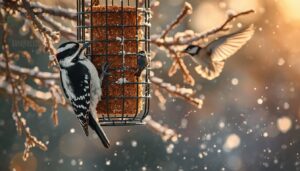
Few supplemental foods match suet’s ability to support birds through winter’s harshest stretches. Its suet nutrient profile is built around dense animal fat, delivering roughly twice the calories of standard seeds — exactly what birds need for energy conservation and thermoregulation in cold weather. That fat converts almost directly into body heat, which matters when overnight temperatures drop sharply.
Suet placement strategies make a real difference. Position feeders near tree cover so birds can reach them quickly, mimicking natural bark crevices. Seasonal suet variations — plain cakes for woodpeckers and nuthatches, seed‑mixed blends for chickadees and cardinals — help you attract a wider range of species.
Follow basic suet storage guidelines: keep cakes cool and dry to prevent rancidity. Use suet pest deterrents like cage‑style feeders to limit squirrel access. These winter bird feeding strategies genuinely improve supplemental feeding benefits for backyard habitats.
Sunflower Seeds and Other Seed Options
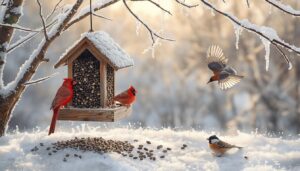
After suet, seeds become your next strongest tool. Black oil sunflower seeds stand out for good reason — their thin shells and high fat content make them easy calories for cardinals, chickadees, and finches. Feeder placement strategies matter here: tube feeders reduce waste and target smaller species effectively.
For broader seed mix ratios, consider these proven options:
- Safflower seeds — cardinals favor them; squirrels usually don’t
- Cracked corn — juncos and sparrows feed on it readily
- White millet — small songbirds select it consistently in quality seed mixes
Seed shelf life affects nutrient balance directly. Store seeds in airtight containers, cool and dry, to preserve the high‑fat, high‑energy foods birds depend on. Rotating stock every few weeks keeps your winter bird feeding strategies working as intended.
Nyjer Seed and Other Small Seed Options
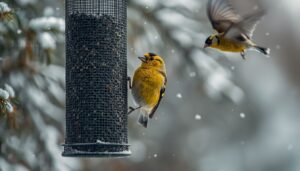
Beyond sunflower seeds, Nyjer deserves its own spotlight in your winter bird feeding strategies. These tiny, oil-rich seeds from Guizotia abyssinica are built for finches — goldfinches and siskins especially, with their narrow, pointed beaks suited for extracting individual seeds.
Nyjer feeder design matters: fine mesh or small-port tube feeders reduce waste and match finch preference perfectly.
Small seed mixes pairing Nyjer with white millet can draw sparrows and juncos too.
Seed purity standards vary by brand, so choose mixes free of filler seeds.
Seed shelf life drops quickly once exposed to moisture, so store in a cool, dry container.
Peanuts and Peanut Butter for Birds
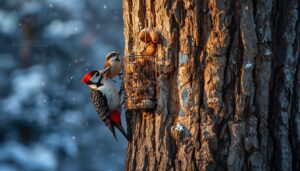
While Nyjer suits finches perfectly, peanuts serve a broader crowd. Unsalted, xylitol-free peanut butter dabbed sparingly on bark — think pea-sized amounts — keeps feathers clean and birds safe.
Smart Peanut Feeder Design and feeder hygiene practices reduce waste and support Mold Prevention Strategies.
- Woodpeckers and nuthatches — prefer whole shelled peanuts
- Chickadees and titmice — favor peanut pieces or peanut butter
- Jays — readily take high-fat foods from platform feeders
Winter Bird Care and Conservation
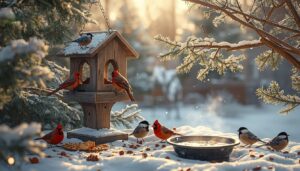
Feeding birds through winter is only part of the picture — shelter, water, and smart habits matter just as much. few simple steps can make your yard a genuine refuge when temperatures drop and natural resources run thin.
Here’s what you can do to give winter birds a real fighting chance.
Providing Shelter for Winter Birds
Food alone won’t carry birds through a brutal winter — shelter is just as critical.
Roost box design matters more than most people realize: mount untreated wood boxes 8 to 12 feet high, face the entrance away from prevailing winds, and line the interior with insulation materials like pine needles or straw.
brush piles and dense vegetative cover nearby to create protective microclimates that buffer wind chill.
Windbreak placement near feeding stations reduces heat loss and predator exposure.
Predator guarding around entry holes keeps raccoons out, while heated water access close to roosts saves birds precious energy.
Winter Bird Feeding Tips and Tricks
Smart feeder placement strategies make a real difference. Position feeders 4 to 10 feet from dense shrubs, giving birds quick escape routes while limiting predator ambushes.
Mount a predator baffle on every pole to block squirrels.
Clean feeders every two weeks with a diluted bleach solution to stop disease spread.
Swap in high-fat, high-energy foods like suet as temperatures drop, and keep a heated birdbath running so birds don’t burn precious energy melting ice.
Adapting to Regional Differences
Where you live shapes what your backyard birds need most. Northern seed mixes lean heavily on black-oil sunflower and suet — high-energy foods for winter survival when temperatures crash and daylight shrinks.
Coastal food sources like marine invertebrates and persistent shoreline vegetation mean coastal birds face less pressure than inland populations.
Mountain microhabitats concentrate birds on south-facing slopes, where conifer seeds dominate.
Urban roosting structures — bridges, buildings, dense hedgerows — support year-round residents in ways rural landscapes can’t match.
Island feeding strategies rely on peanut products when native berry-producing shrubs run thin.
Understanding regional differences in winter bird food preferences helps you plant native shrubs to support winter birds and provide water sources for birds in freezing temperatures.
Importance of Winter Bird Feeding for Conservation
Feeding birds in winter does more than fill a few empty stomachs — it quietly helps population stability across fragmented landscapes where food scarcity in winter hits hardest. Research shows survival rates climb from roughly 37% to 69% when supplemental feeding to support wild birds is consistent and well‑maintained. That’s a real conservation benefit, not just a feel‑good number.
Consistent winter feeding can nearly double bird survival rates, making your backyard feeder a genuine conservation tool
Your feeder also doubles as a citizen science hub — every species you record contributes to broader habitat connectivity data and tracks disease mitigation trends across local populations.
- A clean, stocked feeder helps winter bird nutrition and survival during the coldest nights, when energy reserves can vanish by dawn.
- Habitat enrichment for wildlife starts in your backyard, where conservation benefits of winter feeding ripple outward into the wider ecosystem.
Frequently Asked Questions (FAQs)
What to feed birds in winter?
Birds need high-fat, high-energy foods like black oil sunflower seeds, suet, and peanuts to survive winter’s cold. A DIY seed mix with millet rounds out the options nicely.
Can you feed birds in the winter?
Yes, you can — and should — supplement winter birds’ survival with high-energy foods like suet and black-oil sunflower seeds through well-placed feeders, a heated birdbath, and proper predator deterrents.
Why do birds eat winter food?
Cold weather triggers avian thermoregulation demands that can double a bird’s daily calorie needs.
Shorter daylight hours shrink foraging windows, so energy metabolism runs on a tighter schedule — making every bite count.
What seeds do birds eat in winter?
Like a well-stocked pantry keeping a household going through a storm, the right seeds carry winter birds through their hardest months. Black oil sunflower seeds lead because of their high nutrient density and thin shells — shell thickness effects matter more than most people realize, since smaller-beaked species like chickadees can’t crack thick hulls efficiently.
Sunflower hearts remove that barrier entirely, giving immediate access to every visitor at your feeder.
Seed size impact shapes who shows up: nyjer draws goldfinches and pine siskins with its tiny, oil-rich profile, while white proso millet pulls in sparrows and juncos foraging low to the ground.
Cracked corn offers quick carbohydrates but molds fast when wet, so use it sparingly.
Seed preference variability and regional seed selection mean your location genuinely changes what works — northern feeders lean hard on black oil sunflower seeds during extreme cold, while temperate zones benefit from mixed blends that serve a broader range of species through the season.
What is the best thing to feed birds in the winter?
Black oil sunflower seeds and suet top the list — both deliver the high-fat, high-energy foods birds need most when temperatures drop, and natural protein-rich insects, bark beetle larvae, and fatty berry options disappear.
What is the 5 7 9 rule for bird feeders?
The 5-7-9 rule covers feeder placement guidelines in three steps: five feet of Feeder Height off the ground, seven feet of Structure Distance from walls or decks, and nine feet of Obstacle Clearance from branches.
Why put a potato in your bird feeder?
Cooked plain potatoes offer birds a carbohydrate energy boost, vitamin C immunity support, and seasonal nutrient diversity.
They’re safe scraps that work as a low-fat supplement, especially appealing as a ground foraging incentive for sparrows and doves.
What do most birds do in the winter?
Most birds cache food, form flocks, migrate short distances, and increase roosting to survive winter.
Natural food scarcity drives diet adaptation, making high-energy foods essential for energy conservation during cold months.
What can birds eat in winter?
When temperatures drop, survival depends on finding right calories fast.
High-fat foods like suet, black oil sunflower seeds, and peanuts keep birds warm, while bark beetles, conifer cones, and winter berries fill natural gaps.
How do birds survive winter?
Feathered survivors rely on thermoregulation strategies, energy conservation tactics, and spatial memory caching to endure harsh winters.
They fluff feathers for insulation, practice social huddling dynamics, and seek sheltered roosts, while supplemental feeding, suet, and providing water sources for birds in freezing temperatures substantially boost survival odds.
Conclusion
Feeders filled faithfully through February don’t just attract birds—they sustain them through the most dangerous stretch of the year. Understanding what birds eat in winter lets you move beyond guesswork and offer exactly what local species need: calorie-dense suet, black-oil sunflower seeds, and clean, reliable water.
A chickadee that makes it to dawn because your feeder was stocked isn’t a small thing. That’s a life held steady by one deliberate choice.
- https://www.birdsandblooms.com/birding/attracting-birds/feeding-birds/top-tips-winter-bird-feeding/
- https://www.woodsideca.gov/272/Winter-Bird-Feeding-Tips
- https://www.ecobeneficial.com/ask_ecobeneficial/birds-eat-winter-besides-seed-put/
- https://blog.nwf.org/2024/01/year-round-bird-feeding/
- https://www.perkypet.com/articles/winter-bird-feeding