This site is supported by our readers. We may earn a commission, at no cost to you, if you purchase through links.

Your first bird shouldn’t be a gamble. Yet many new owners bring home species that demand expert-level care, leading to stress for both bird and owner. Certain birds thrive with beginners—species that forgive early mistakes, adapt to varied schedules, and reward your efforts with companionship rather than constant challenges.
Budgerigars, cockatiels, and canaries top the list for good reason: they’re hardy, forgiving, and genuinely suited to first-time care. But choosing wisely means looking beyond cute faces to understand size requirements, noise tolerance, social needs, and realistic costs. The right match transforms bird ownership from overwhelming to genuinely rewarding.
Table Of Contents
- Key Takeaways
- Top Beginner-Friendly Pet Bird Species
- Budgerigar (Parakeet) – Personality, Size, and Care
- Cockatiel – Temperament, Social Needs, and Lifespan
- Canary – Noise Levels, Handling, and Suitability
- Dove – Gentle Nature and Low Maintenance
- Green-Cheeked Conure – Playfulness and Space Needs
- Finch – Hands-Off Care for Beginners
- Lovebird – Socialization and Care Requirements
- Parrotlet – Playful Personality and Training
- Key Factors When Choosing a Pet Bird
- Essential Bird Care Requirements
- Costs and Lifespan of Beginner Birds
- Bird Behavior and Socialization Tips
- Frequently Asked Questions (FAQs)
- What is the best bird to have as a pet for beginners?
- What is the most low-maintenance bird?
- What bird is the easiest to train?
- What is the friendliest bird species?
- How loud are different bird species really?
- Can pet birds fly freely at home?
- What unusual behaviors signal bird health problems?
- Do birds recognize and remember their owners?
- Can pet birds safely interact with children?
- What are common bird health problems to watch?
- Conclusion
Key Takeaways
- Budgerigars, cockatiels, and canaries rank as top beginner birds because they’re hardy, forgiving of early mistakes, and adapt well to varied schedules without demanding expert-level care.
- Your bird’s size, noise level, and social needs must match your living space and daily routine—small species like budgies need minimal space and stay apartment-friendly at 65-70 decibels, while active birds like conures demand 2-4 hours of daily out-of-cage time.
- Monthly care costs run $25-50 for small birds and $50-100 for medium species, but you’ll need an emergency fund of $1,500-3,000 since vet visits easily reach $500-1,500 per incident.
- Daily interaction, proper cage enrichment, and early behavioral training prevent common problems like feather plucking and excessive screaming while building the trust that transforms bird ownership from overwhelming to rewarding.
Top Beginner-Friendly Pet Bird Species
Choosing your first pet bird can feel overwhelming with so many species to think about. The good news is that several bird species adapt well to beginners and offer different levels of interaction, noise, and care requirements.
Here are eight beginner-friendly birds that can help you find the right match for your lifestyle and experience level.
Budgerigar (Parakeet) – Personality, Size, and Care
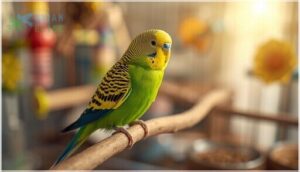
Budgerigars—often called budgies or parakeets—make ideal starter birds for beginner bird ownership. These small parrots measure around 18–20 cm and weigh 30–40 grams, fitting comfortably in compact spaces. Taming budgies is straightforward with consistent handling, and their budgie vocalizations stay relatively quiet at 65–70 decibels.
You’ll need to provide flight exercise, meet their dietary needs with pellets and fresh vegetables, and guarantee cage enrichment through varied toys and perches.
These birds are native to Australia and are known for their colourful plumage.
Cockatiel – Temperament, Social Needs, and Lifespan
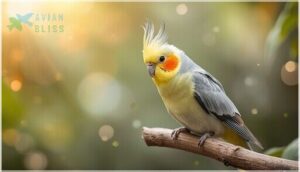
Cockatiels are another excellent choice for beginners, offering a gentle disposition that many new bird owners appreciate. You’ll need to provide at least one to two hours of daily social interaction to keep your cockatiel happy and prevent behavioral issues.
These birds are popular pets because of their gentle nature. Watch their crest signals—a raised crest often means excitement or alarm.
With proper small bird care, these companions can live 16–25 years in captivity, making them a significant care commitment.
Canary – Noise Levels, Handling, and Suitability
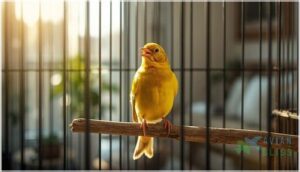
Canaries offer an appealing compromise: they’re one of the easiest beginner birds to keep, requiring less hands-on handling than cockatiels. Male canaries sing at conversational volume—around 60–70 dB—though some reach 110 dB during peak song. They rarely bite and adapt well to apartment living, but they prefer observation over cuddling.
You’ll need a cage at least 24 inches wide for short flights, supporting their natural exercise needs.
Dove – Gentle Nature and Low Maintenance
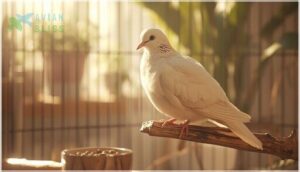
If you’re looking for something even calmer, doves—especially ring-necked doves—offer a peaceful alternative among beginner birds. These low-maintenance birds weigh around 160–200 grams and rarely bite, making them ideal for nervous first-timers. Their soft cooing is quieter than most bird species, and they thrive in pairs with moderate daily interaction.
You’ll need a 24×30-inch cage minimum, plus regular pellet-based diet maintenance and monitoring for respiratory or parasitic health concerns.
Green-Cheeked Conure – Playfulness and Space Needs
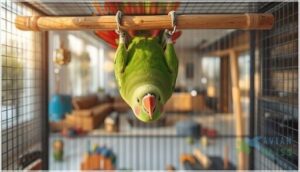
Green-cheeked conures bring clown-like energy to beginner bird care requirements, but you’ll need more space than smaller birds. Their Conure Play Styles include hanging upside-down and interactive games, while behavioral nippiness during hormonal phases requires patience. This green-cheeked parakeet species—among the quieter parrot species—needs:
- 24×24×30-inch minimum cage with climbing branches
- 2-4 hours supervised out-of-cage safety time daily
- Puzzle toys for Cage Enrichment Ideas
- Target training for mental stimulation
- Bird-proofed rooms preventing hazards
Training Benefits include reduced destructive bird behavior and stronger bonding with these playful small birds.
Finch – Hands-Off Care for Beginners
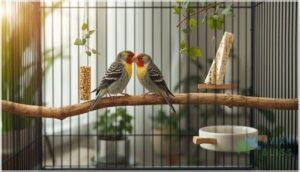
If you want small birds that thrive without constant handling, finch species offer ideal hands-off pets for beginner bird care. These social birds need same-species companions—never house them alone.
A 24×14×18-inch minimum cage size accommodates pairs, though larger enclosures improve flight exercise.
Their diet basics include quality seeds, fresh greens, and cuttlebone. With 5–10-year lifespans and low beginner costs, finches suit observation-focused owners perfectly.
Lovebird – Socialization and Care Requirements
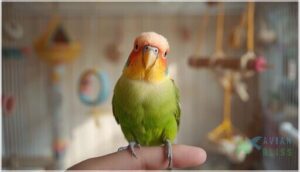
Unlike finches, lovebirds demand intensive daily interaction and form powerful pair bonds—making single birds easier to tame but requiring your consistent attention. Hand-raised individuals accept handling far better than parent-raised birds, which need weeks of gradual socialization.
Consider these realities before choosing a lovebird:
- Vocalization levels exceed budgies and canaries considerably
- Minimum 18×18×18-inch cage for singles, 32×20×20 inches for pairs
- Paired lovebirds focus on each other, complicating human bonding
- Multiple short training sessions daily maintain tameness
- Enrichment needs include rotating toys and foraging opportunities
Their territorial nature and high energy suit experienced beginners willing to invest substantial time in bird interaction and care.
Parrotlet – Playful Personality and Training
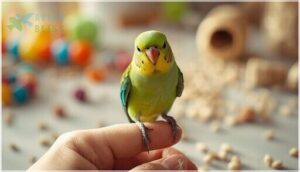
Parrotlets pack large-parrot confidence into a 5-inch frame, but their bold temperament demands careful handling. Males develop modest talking ability with consistent training, while both sexes master tricks through short, positive sessions. Their strong bite and parrotlet aggression toward other birds mean you’ll need solo housing and daily enrichment. Social bonding requires structured interaction—neglect leads to defensive nipping and territorial behavior in this spirited parrot species for beginners.
| Training & Behavior | Key Considerations |
|---|---|
| Trick Learning | Responds well to target training, retrieval, stationing |
| Talking Ability | Males mimic small vocabulary; females rarely vocalize words |
| Aggression Risk | Territorial with birds; strong bite despite small size |
| Enrichment Needs | Multiple toys, foraging items, several hours daily out-of-cage time |
Key Factors When Choosing a Pet Bird

Picking the right bird isn’t just about which one looks cutest at the pet store. Your lifestyle, living space, and daily routine all play a role in which species will actually thrive in your home.
Let’s walk through the main factors you need to think about before bringing a feathered friend into your life.
Bird Size, Noise, and Activity Level
Body size, noise level, and activity budgets shape your daily life with a bird more than any other traits. As a beginner, matching these to your space and routine prevents frustration down the road.
- Small bird species like budgerigars (30–40 g) and canaries (12–25 g) fit modest cages and vocalize around 60–70 dB—conversational volume that won’t disturb neighbors.
- Cockatiels and green-cheeked conures (60–100 g) need larger vertical space and 2–4 hours out daily to meet their higher activity needs.
- Noise tolerance matters: species comparison shows macaws hit 100+ dB, while finches and budgies stay apartment-friendly.
- Behavioral impacts emerge when active birds lack exercise—expect louder calls and restlessness if cage time exceeds their energy.
Socialization Needs and Family Compatibility
A bird’s social needs shape how it fits into your family routines and who can safely handle it. Species matching matters for child supervision—budgerigars and cockatiels rank among the most family-friendly bird species, while larger parrots pose aggression triggers near young children.
Early handling reduces fear biting, but all family members must respect the bird’s space. Plan 1–2 daily socialization sessions and expect to supervise interactions closely, especially during the first months.
Single Birds Vs. Pairs
After settling family roles, you’ll decide whether to keep one bird or two. Single birds bond more strongly with you but need hours of daily interaction to avoid stereotypical behaviors like feather plucking.
Pairs satisfy each other’s flock instincts and reduce loneliness, yet they’re noisier, harder to train, and bring breeding risks if opposite-sex.
Weigh your time against your bird’s social needs before choosing companionship structure.
Apartment Living and Space Considerations
Apartment living demands careful planning around cage size, noise levels, and air quality. Your budgie or cockatiel needs at least 18×18×24 inches even in tight quarters, positioned away from vents and kitchens.
Small bird species like finches suit thin walls better than louder conures.
Proper cage placement near household activity—not isolated corners—keeps your bird engaged without overwhelming neighbors or compromising indoor air safety.
Compatibility With Other Pets
Dogs and cats view birds as prey, making pet interaction risky despite careful socialization. Before bringing home your finch or parrotlet, understand three critical hazards:
- Predation risks – Even gentle pets may suddenly attack, and cat saliva infections can kill birds within hours of a minor scratch.
- Stress effects – Constant proximity to predators disrupts feeding and triggers feather plucking.
- Disease transmission – Shared spaces enable cross-species pathogens like avian influenza.
Management practices—secure cages in separate rooms, supervised visits only, training “leave it” commands—improve bird companionship safety when other pets live in your home.
Essential Bird Care Requirements

Bringing a bird home is just the beginning—keeping them healthy and happy takes consistent daily care. Birds need more than food and water to thrive; they require proper housing, mental stimulation, and regular health monitoring.
Let’s walk through the essential care tasks every beginner bird owner should know.
Cage Size and Environmental Enrichment
Think of your bird’s cage as their entire universe—it shapes everything from physical health to mental well-being. Minimum cage dimensions vary by species, but federal legal standards now require space for full wing extension and normal postural movement.
Beyond cage size, you’ll need varied perch placement, foraging enrichment devices, and cognitive stimulation through toys to create a truly enriching bird environment that encourages natural behaviors and prevents stereotypic movements.
Diet, Nutrition, and Fresh Foods
Your bird’s diet is the single biggest factor in long-term health. A proper bird diet and nutrition plan includes:
- Pellets (60–70%) – formulated bird care staples meet vitamin deficiencies better than seeds alone
- Fresh foods (20–30%) – safe foods like carrots, kale, and broccoli support immune function
- Seeds (10–25%) – the pellet vs. seed debate favors moderation
- Feeding schedules – offer fresh food prep twice daily, removing leftovers after three hours
Hygiene and Cage Cleaning
Daily cleaning keeps your bird healthy and prevents serious health risks like aspergillosis and salmonellosis. Replace water and food dishes every day, spot-clean droppings, and wipe down bars.
Deep cleaning with safe disinfectants—diluted bleach or bird-safe products—should happen weekly for the entire bird cage.
Environmental control matters: mist dusty areas before wiping to avoid stirring up harmful particles.
Exercise and Mental Stimulation
Meeting your bird’s exercise needs and mental stimulation requirements protects against serious behavioral problems. Aim for at least 30–60 minutes of supervised out-of-cage time daily—more for active species.
Support your bird’s cognitive workload and natural instincts with:
- Foraging enrichment using puzzle feeders
- Toy rotation to prevent boredom
- Bird training sessions with positive rewards
- Housing design with varied perches and climbing structures
Wild parrots spend up to 75% of their day foraging, so replicating that challenge keeps your bird thriving.
Wild parrots forage up to 75% of the day, so replicating that challenge keeps your bird thriving
Veterinary Care and Health Checks
Did you know a single annual checkup can transform your pet bird’s future? Early detection of illness, routine beak trimming, and screening for zoonotic diseases are central to preventive medicine.
Regular veterinary care isn’t just a box to tick—it’s the backbone of avian health. Prioritizing bird health and wellbeing means you’re investing in years of companionship.
Costs and Lifespan of Beginner Birds

Before you bring home your first bird, you need to understand what you’re signing up for financially and how long your feathered friend will be part of your life. The initial price tag is just the beginning—monthly care adds up, and some species will be with you for decades.
Let’s break down what each beginner bird actually costs and how long you can expect to share your home together.
Initial Purchase Price by Species
Your upfront cost varies widely depending on which bird species you choose. Breed rarity and color mutations can push retail pricing higher, so factor that in when choosing pet birds:
- Budgerigars (Parakeets): Average expense of $10–$35, one of the most affordable types of pet birds.
- Cockatiels: Usually $50–$150 from breeders or stores.
- Canaries: Range from $25–$150 depending on variety.
- Finches: Around $20–$100 per bird.
- Lovebirds: Usually $50–$150 for common colors.
Monthly and Long-Term Care Costs
Your monthly pet care costs depend heavily on species size. Small parrots like budgies run about $25–$50 each month for food, toy replacement, and basic supplies. Medium birds such as cockatiels average $50–$100, while larger parrots can exceed $100–$200 monthly.
Don’t forget veterinary expenses—annual check-ups cost $50–$200, and you’ll want an emergency fund for unexpected bird health considerations.
Typical Lifespans and Long-Term Commitment
Your bird’s lifespan shapes the commitment you’re making. Budgerigars commonly live 5–15 years, while cockatiels often reach 10–25 years—sometimes over 30 with excellent care. Green-cheeked conures can be 20-plus–year companions, and lovebirds frequently pass the decade mark.
Care quality directly influences longevity: balanced diets, roomy cages, and regular vet visits help birds outlive dogs and cats of similar size.
Planning for Emergencies and Ongoing Expenses
Beyond routine costs, you’ll need financial planning for pet ownership that covers the unexpected. Emergency savings of $1,500–$3,000 can buffer you against vet visits that easily reach $500–$1,500 per incident.
Insurance options remain limited for pet bird health, so consider setting aside $50–$100 monthly.
First-aid kits ($55) and documented care requirements help you respond quickly to bird health considerations before reaching the clinic.
Bird Behavior and Socialization Tips
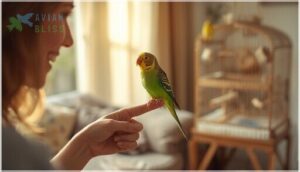
Understanding your bird’s behavior is just as important as getting the cage and food right. Birds need regular interaction and training to stay happy and well-adjusted.
Here’s how to build a strong bond with your new pet and handle common behavioral challenges.
Training Basics and Positive Reinforcement
When you’re starting out, positive reinforcement is the best approach for teaching your bird new behaviors. Clicker training marks the exact moment your bird does something right, followed immediately by a reward—usually a favorite treat like millet or sunflower seeds.
Target practice, where your bird touches a stick with its beak, builds trust without physical pressure.
Keep session length short, around three to five minutes, to maintain attention and prevent frustration.
Bonding With Your Bird
Once you’ve established training basics, building a real relationship takes consistent time together. Studies show that about half of bird owners interact closely with their birds for at least two hours daily—this interaction frequency directly strengthens social support and trust indicators.
Early rearing shapes how readily your bird seeks your company, but enrichment effects and regular handling help any pet bird species form lasting bonds through shared activities and gentle attention.
Managing Noise and Mess
Keeping your environment calm and tidy matters as much as bonding. Daily interaction reduces boredom-related screaming, while quiet background sounds around 55–60 decibels help maintain tolerable noise levels.
Change cage liners every day and deep-clean weekly to control seed scatter and feather dust. Mesh guards limit debris beyond the bird cage requirements, improving apartment suitability and reducing neighbor impact from bird noise levels.
Recognizing and Responding to Behavioral Changes
Why does a chatty budgie suddenly go quiet? Early warning signs like decreased activity, altered vocalization, or reduced appetite signal stress indicators requiring immediate responses.
Watch for aggression triggers—lunging, feather picking—that suggest poor pet bird behavior and temperament shifts.
When bird socialization patterns change or bird behavior and training routines falter beyond 24 hours, veterinary evaluation becomes essential before small birds deteriorate rapidly.
Frequently Asked Questions (FAQs)
What is the best bird to have as a pet for beginners?
Like choosing a running partner, selecting beginner bird breeds means finding the right match for your lifestyle.
Budgerigars and cockatiels top the list—they’re forgiving, social, and teach you bird care difficulty without overwhelming demands.
What is the most low-maintenance bird?
Finches are often the most low-maintenance bird pets because they thrive without daily handling or supervised free flight.
Their hands-off care focuses on feeding, cage cleaning, and minimal interaction—ideal for beginners seeking straightforward bird ownership.
What bird is the easiest to train?
Training a bird is like shaping clay—budgerigars and cockatiels respond fastest to early training.
Budgies often master step-up commands and simple words within days when you handle them consistently from 6–8 weeks of age.
What is the friendliest bird species?
Budgerigars and cockatiels consistently rank as the friendliest bird species due to their affectionate traits and gentle behavior.
They also possess a strong capacity for human-bird bond formation through daily social interaction and companionship.
How loud are different bird species really?
Budgerigars stay around 65–70 decibels—conversational volume—while cockatiels reach Lovebirds climb to 83, and green-cheeked conures can hit 100–110 decibels at peak calls, approaching power-tool intensity.
Can pet birds fly freely at home?
Yes, with proper hazard control and supervision needs. Flight safety requires secure windows, turned-off fans, and eliminating toxic items.
Training benefits recall, supporting bird exercise and activity while maintaining hygiene impacts through vigilant cleaning.
What unusual behaviors signal bird health problems?
Watch for breathing problems—open-mouth breathing or tail bobbing—as serious bird health considerations.
Posture changes, like sitting on the cage floor, feather plucking, neurologic events, and vomiting signs demand immediate veterinary attention.
Do birds recognize and remember their owners?
Birds do recognize their owners through visual recognition and auditory cues. Species like parrots and budgerigars show strong attachment behaviors, remembering faces and voices for years, creating lasting bird-owner relationships through daily interaction.
Can pet birds safely interact with children?
Like any friendship, the bond between birds and children thrives with care. With proper supervision guidelines, consistent hygiene practices, and injury prevention strategies, family pets can coexist safely.
Despite zoonotic disease and respiratory risks, vigilant attention ensures a harmonious relationship.
What are common bird health problems to watch?
Your bird’s health depends on catching problems early. Respiratory infections, nutritional deficiencies, parasitic diseases, trauma accidents, and feather plucking are the most common issues—each requiring different prevention strategies and veterinary attention.
Conclusion
The best birds for beginners aren’t always the quietest or smallest—they’re the ones that match your lifestyle and forgive early missteps. Whether you choose a chatty budgie, a melodic canary, or a playful cockatiel, success hinges on realistic expectations and consistent care.
Your bird won’t demand flawlessness, but it will require patience, daily attention, and a willingness to learn. Start informed, stay committed, and you’ll discover companionship that’s genuinely worth the effort.
- https://pethero.co.za/blog/how-long-do-pet-birds-live-in-captivity/
- https://www.turlockvet.com/site/blog/2023/07/15/parrot-lifespan--how-long-pet-parrots-live
- https://myrightbird.com/articles/pet-bird-life-expectancy
- https://www.omnicalculator.com/biology/bird-age
- https://threebirdsandacloud.wordpress.com/2013/12/22/pros-and-cons-of-buying-a-canary-or-other-pet-finch/