This site is supported by our readers. We may earn a commission, at no cost to you, if you purchase through links.
You hang a generic plastic box on your fence and wonder why the birds fly right past it. The truth is that birds are picky tenants. They’re looking for specific entrance hole sizes, proper ventilation, and materials that regulate temperature naturally.
Handmade bird houses solve these problems because craftspeople design them with actual bird behavior in mind. Cedar construction keeps the interior cool in summer. Drainage holes prevent flooding. Species-specific entrance sizes keep aggressive birds from stealing nests meant for smaller cavity nesters.
When you choose a well-crafted birdhouse, you’re not just adding yard decor. You’re creating real habitat that benefits bluebirds, chickadees, wrens, and dozens of other species that desperately need nesting sites. The right design can transform your backyard into a thriving wildlife sanctuary.
Table Of Contents
- Key Takeaways
- Best Handmade Bird Houses Reviewed
- 1. Handmade Cedar Bird House Multi Room
- 2. Glitzhome Green Distressed Wood Birdhouse
- 3. Edible Birdhouse Wooden Bird Feeder Kit
- 4. Amish Copper Roof Birdhouse Eight Compartments
- 5. Handmade Cedar Hummingbird House Birdhouse
- 6. Masterpiece Stone Villa Bird House Green
- 7. Bee Shaped Wooden Bird House
- 8. Handmade Cedar Bird House Outdoor
- 9. Handmade White Cottage Bird House
- 10. Handmade Bluebird Wooden Bird House
- Choosing The Right Handmade Birdhouse
- Materials and Construction Methods
- Unique Birdhouse Designs and Styles
- Birdhouse Features for Safety and Comfort
- Placing and Mounting Your Birdhouse
- Maintaining and Cleaning Handmade Birdhouses
- Benefits of Handmade Birdhouses for Your Garden
- Frequently Asked Questions (FAQs)
- What are Amish made birdhouses?
- Why should you buy a handmade birdhouse?
- What is the best birdhouse to buy?
- Can a bird house be custom built?
- What is a whimsical Birdhouse?
- Are unique birdhouses a good gift?
- What kind of bird house do birds like the best?
- How to make an easy bird house?
- What not to do when building a birdhouse?
- What is the best wood for a birdhouse?
- Conclusion
Key Takeaways
- Handmade birdhouses succeed because they’re built with species-specific features like proper entrance hole sizes, ventilation, drainage, and natural materials that regulate temperature—details that generic plastic boxes miss entirely.
- Cedar construction outperforms other materials by lasting 15-25 years outdoors with natural rot and pest resistance, while poly alternatives offer 20-50 year lifespans in harsh climates without any maintenance.
- The right birdhouse placement matters as much as design—mount boxes 5-8 feet high on smooth metal poles with morning sun and afternoon shade, positioning entrance holes away from prevailing winds and predator perches.
- Regular seasonal cleaning between September and November prevents parasite buildup and disease while extending your birdhouse’s lifespan, and adding predator guards can boost nest success rates by up to 16% for vulnerable species.
Best Handmade Bird Houses Reviewed
Now let’s look at ten handmade birdhouses that bring both beauty and function to your backyard. Each one has been crafted with care and designed to meet the needs of specific bird species.
You’ll find options ranging from rustic cedar designs to charming themed houses that serve as garden art while providing safe nesting spots.
1. Handmade Cedar Bird House Multi Room
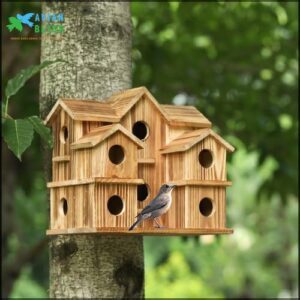
Cedar multi-room birdhouses give you a dozen separate nesting cavities in one handmade structure. Cedar naturally resists rot and insulates nests from temperature swings. Look for entrance holes around 1.25 inches that discourage larger predators.
You’ll attract chickadees, wrens, and other small songbirds to your garden while creating a stunning focal point. Mount yours 5–6 feet high on a sturdy post, spacing holes several inches apart to reduce squabbles.
These unique birdhouses blend species targeting with garden integration, offering both habitat value and artisan charm for your backyard.
Best For: Bird enthusiasts and nature lovers who want to attract multiple small songbird families while adding a beautiful handcrafted focal point to their garden or backyard.
- Cedar wood naturally resists rot and insects while providing excellent insulation, keeping nests protected through different seasons without chemical treatments.
- Multiple separate rooms let you host several bird families at once—chickadees, wrens, finches—creating a lively backyard habitat in a single structure.
- Handmade craftsmanship and waterproof coating deliver both durability and visual appeal, turning functional nesting space into an attractive garden feature.
- Entrance holes and interior rooms may be too small for larger bird species, limiting which types of birds can actually use the house.
- Mixed customer feedback on value suggests the price point feels high to some buyers, with concerns about size expectations versus actual dimensions.
- May need extra maintenance like adding dividers or reapplying waterproofing, plus some buyers reported shipping delays and delivery issues.
2. Glitzhome Green Distressed Wood Birdhouse
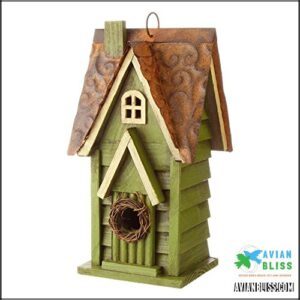
If decorative charm ranks high on your wish list, the Glitzhome Green Distressed Wood Birdhouse delivers farmhouse appeal. This 14.75-inch 3-room villa features a washed-green distressed finish over natural wood, creating a weathered cottage look that feels handcrafted.
At under 4 pounds, you can hang it easily from branches or hooks. Consumer reception highlights its visual appeal for covered patios and porches.
Keep in mind it’s primarily bird decor—plywood construction won’t stand up to heavy rain. Think sheltered installation for best results.
Best For: Shoppers who want a charming farmhouse accent for covered porches or indoor spaces and care more about vintage aesthetics than serious bird nesting.
- Hand-painted distressed green finish gives each piece authentic weathered character that fits cottage and farmhouse gardens perfectly.
- Three-room villa design with multiple entrance holes adds visual interest and can accommodate several small birds at once.
- Lightweight construction under 4 pounds makes hanging simple on branches, hooks, or pergola beams without extra hardware.
- Plywood construction won’t survive heavy rain or snow—you’ll need a sheltered spot to prevent rapid deterioration.
- Lacks predator guards or reinforced entrance holes, so it’s better suited as decoration than serious wildlife housing.
- Small cleanout openings make seasonal maintenance awkward when you need to clear out old nesting material.
3. Edible Birdhouse Wooden Bird Feeder Kit
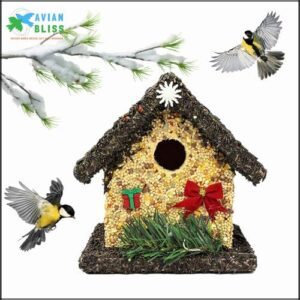
If you’re looking for something truly different, the Edible Birdhouse Wooden Bird Feeder Kit combines bird feeders with bird food in one clever package. This handcrafted birdhouse features a seed coating that birds peck at directly—think of it as an edible wrapper over a solid wood frame.
Once the seeds are gone, you can follow simple reseeding practices using bird-safe glues or peanut butter. Consumer satisfaction runs high for these unique gifts, and the chili-based squirrel deterrence keeps unwanted visitors away while staying completely safe for your feathered friends.
Best For: Bird lovers who want a creative, eco-friendly feeder that doubles as a nesting spot and can be reused season after season.
- Innovative 2-in-1 design with a reusable wooden frame under the seed coating—just re-seed with peanut butter or bird-safe glue when the first layer runs out.
- Attracts popular backyard birds like finches, chickadees, and wrens while naturally deterring squirrels with optional chili flakes that don’t bother birds at all.
- Built to last up to 5 years with proper care, making it a durable and sustainable alternative to disposable plastic feeders.
- Seeds can come loose in the packaging, so expect a bit of cleanup when you first open it.
- You’ll need to re-seed it regularly to keep birds coming back, which adds a maintenance step compared to standard feeders.
- Not ideal for all bird species or climates—works best for small songbirds in typical backyard settings.
4. Amish Copper Roof Birdhouse Eight Compartments
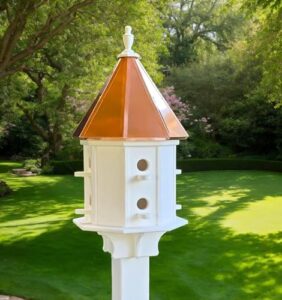
For those drawn to large-capacity handmade birdhouse designs, the Amish Copper Roof Birdhouse with eight compartments stands out. This handcrafted birdhouse showcases Amish craftsmanship through weather-resistant poly construction and a genuine copper roof that ages beautifully into a green patina.
Each compartment offers separate nesting space for bluebirds and wrens, while the 1.5-inch entry holes keep larger predators out. Standing around 29 to 36 inches tall, these unique birdhouses include dual mounting options for 4×4 posts.
The copper aesthetics and weather durability justify the $535–$680 price range for serious bird enthusiasts.
Best For: Bird enthusiasts who want a premium, low-maintenance birdhouse that attracts multiple nesting pairs and serves as a handcrafted focal point in their yard.
- Weather-resistant poly material won’t crack, fade, or splinter, and the copper roof lasts decades with minimal upkeep
- Eight separate compartments provide ample nesting space for bluebirds, wrens, and other songbirds in one structure
- Handcrafted Amish quality with authentic copper that develops a distinctive green patina over time
- High price point of $535–$680 makes it a significant investment compared to standard birdhouses
- Quality control issues reported by some buyers, including damaged units or poor assembly upon arrival
- Copper roof patina may not appeal to everyone, and the large size requires a sturdy 4×4 post installation
5. Handmade Cedar Hummingbird House Birdhouse
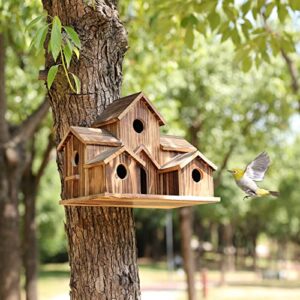
Natural cedar construction makes these handmade hummingbird houses appealing, but you should know the reality: hummingbirds are open-cup nesters that rarely use enclosed birdhouse designs. While the decorative value and garden aesthetics are undeniable, limited occupancy data shows these unique birdhouses function better as nesting alternatives for small cavity-nesters like wrens rather than hummingbirds themselves.
Cedar’s natural decay resistance and absence of cedar toxicity for birds mean they’ll last 15–25 years outdoors. Consider them charming garden accents that might surprise you with unexpected tenants—just not the ones pictured on the label.
Best For: Garden lovers who want a charming, long-lasting cedar accent that attracts small cavity-nesting birds like wrens and chickadees, though it’s unlikely to house actual hummingbirds.
- Natural cedar lasts 15–25 years outdoors with built-in decay resistance and no harmful toxins for birds
- Handcrafted wooden design adds rustic charm and works well as garden decoration even if birds don’t nest inside
- Multiple entrance holes give small cavity-nesters like wrens real nesting options beyond the hummingbird marketing
- Hummingbirds are open-cup nesters and rarely use enclosed houses, making the “hummingbird” label misleading
- Some buyers report smaller-than-expected size and durability issues like broken landing pieces
- Mixed results on actual bird use, with several customers saying no birds moved in at all
6. Masterpiece Stone Villa Bird House Green
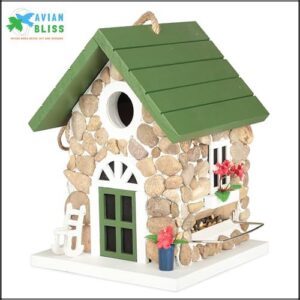
At 6.7 × 6.7 × 8.3 inches, this stone villa design in green pairs cedar wood quality with UV-resistant finishing for multi-year outdoor use. You’ll appreciate the roof-access cleaning door and the 1.18–1.5 inch entrance that welcomes wrens and bluebirds while deterring larger species.
While it’s a handmade birdhouse that doubles as garden decoration, reviews highlight mixed weather resistance and predator vulnerability. Bird safety features like entrance guards aren’t standard, so consider added protection if hawks or raccoons frequent your yard.
Think charming cottage aesthetic with practical limitations.
Best For: Bird enthusiasts who want a decorative, small-capacity nest box for wrens or bluebirds and don’t mind occasional maintenance or weatherproofing touch-ups.
- Handmade cedar construction with UV-resistant finish helps the house hold up across multiple seasons when properly maintained.
- Roof-access cleaning door makes end-of-season nest removal straightforward, supporting healthy repeat use.
- Compact stone-villa design adds visual charm to garden spaces while providing functional nesting habitat for small songbirds.
- Mixed weather resistance with some reports of paint peeling and potential need for additional waterproofing.
- Lacks built-in predator guards, leaving nesting birds vulnerable to hawks, raccoons, and larger aggressive species.
- Some customers found the interior too small for certain birds and noted a strong chemical smell on arrival.
7. Bee Shaped Wooden Bird House
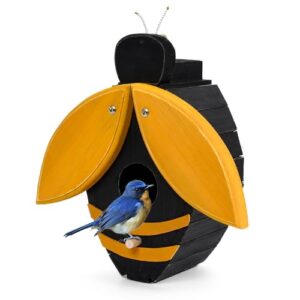
This yellow-and-black whimsy brings bee design appeal to your garden as both a functional nest box and aesthetic garden decor. At 8.5 × 7.2 × 4.3 inches, the handmade birdhouse offers weather-resistant wood construction and openable wings that reveal functional entry features sized for wrens or finches. You’ll find the rear clean-out door practical for seasonal maintenance.
While market niche availability keeps these unique birdhouse designs mid-priced, consider reinforcing the wings and supplementing weatherproofing in harsh climates—handmade crafts sometimes trade durability for charm.
Best For: Gardeners who want a cheerful, functional accent that attracts small nesting birds while adding pollinator-themed charm to their outdoor space.
- Handcrafted solid wood with weather-resistant construction and an inventive openable-wing design that doubles as both decor and a practical entry feature
- Rear clean-out door makes seasonal nest removal straightforward, so you can refresh the house between breeding cycles without hassle
- Compact 8.5-inch size fits easily on trees, fences, or pergolas and appeals to cavity nesters like wrens and finches
- Wings may need reinforcement to stay open reliably, and the back door could be wider for easier access during deep cleaning
- Mid-tier pricing reflects the handmade appeal, but durability in severe weather isn’t guaranteed without extra sealing
- Small footprint limits use to songbirds only—larger species won’t fit, and harsh rain or snow may require seasonal shelter
8. Handmade Cedar Bird House Outdoor
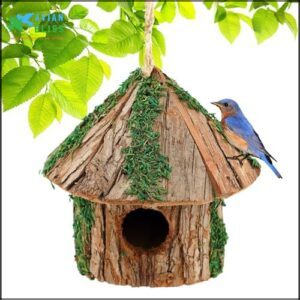
When you want a birdhouse that lasts season after season, Eastern Red Cedar delivers exceptional outdoor durability. This wood resists rot and pests naturally without chemical treatments.
The handcrafted birdhouse features cedarshake shingles for weather resistance, keeping interiors dry through downpours. A 1.5-inch entry hole attracts bluebirds and chickadees, while built-in ventilation gaps maintain comfortable nest temperatures.
Natural aesthetics blend seamlessly into garden settings, and the unique birdhouse design promotes successful breeding with proper drainage. You’ll appreciate how this birdhouse design and construction outlasts cheaper alternatives for 15-plus years.
Best For: Homeowners seeking a long-lasting, eco-friendly birdhouse that attracts small cavity-nesting birds like bluebirds and chickadees while blending naturally into garden landscapes.
- Eastern Red Cedar construction lasts 15-25 years outdoors with natural rot and insect resistance, eliminating the need for chemical treatments or frequent replacements.
- Built-in ventilation gaps and drainage holes keep nests dry and temperatures comfortable, increasing successful breeding rates by maintaining optimal conditions for nestlings.
- Easy seasonal maintenance with a clean-out panel that provides full interior access in under 5 minutes, plus weather-resistant design that withstands harsh conditions and extreme temperatures.
- Higher upfront cost ranging from $30 to $300 depending on customization, which may not fit tighter budgets compared to mass-produced alternatives.
- Limited monthly production of 50-100 handcrafted units can result in longer wait times, especially for custom orders requiring 4-6 weeks.
- The 1.5-inch entry hole may exclude larger bird species, and some users report issues with decorative elements like fake moss falling off or flimsy hanging hardware.
9. Handmade White Cottage Bird House
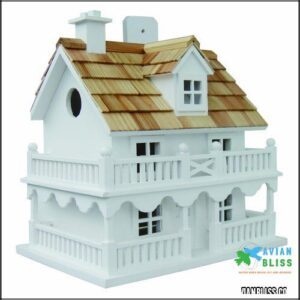
A spotless white cottage design adds charm to any garden while serving cavity-nesting birds like wrens and chickadees. These handcrafted birdhouses generally measure 10 to 15 inches tall with solid wood construction—often three-quarter-inch pine boards sealed with non-toxic exterior paint for white durability.
You’ll find a 1.25-inch entry hole suited to smaller species, plus ventilation openings and drainage holes that prevent overheating and moisture buildup. Cottage aesthetics blend traditional craftsmanship quality with functional nesting preferences, and removable back panels simplify seasonal cleaning.
Market value ranges from $65 to $85, making unique designs practical birdhouses as gifts.
Best For: Homeowners who want a decorative yet functional birdhouse that attracts small songbirds like wrens and chickadees while adding classic cottage charm to their garden or yard.
- Solid three-quarter-inch wood construction with weather-resistant paint holds up through multiple seasons, unlike flimsy decorative models that fall apart quickly.
- Proper ventilation and drainage holes keep the nest box dry and comfortable, while the 1.25-inch entry hole welcomes wrens and chickadees but keeps out larger aggressive birds.
- Removable back panel makes annual cleaning simple so you can maintain a healthy nesting space without taking the whole house apart.
- Some buyers report receiving units that aren’t sturdy enough for harsh weather or arrive damaged, suggesting quality control varies between handmade batches.
- The cottage aesthetic adds cost—you’ll pay $65 to $85 compared to simpler functional boxes that do the same job for less money.
- May need extra weatherproofing or a predator guard in areas with heavy rain, extreme temperatures, or climbing animals like raccoons.
10. Handmade Bluebird Wooden Bird House
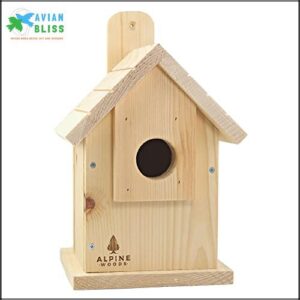
Bluebird-specific design matters when you’re choosing a house that truly works. Handcrafted birdhouses for eastern bluebirds use three-quarter-inch cedar or redwood boards cut to precise dimensions—usually a 1.5-inch entrance hole placed 6 to 10 inches above a four-by-four-inch floor.
Quality construction includes ventilation holes near the roofline, drainage cuts in each floor corner, and interior grooves beneath the entrance so fledglings can climb out. Weather protection comes from overhanging roofs and tight seams.
Mount your birdhouse four to six feet high on smooth metal poles to deter climbing predators and support a healthy avian habitat.
Best For: Bird lovers who want a sturdy, handmade wooden house designed specifically for eastern bluebirds with proper ventilation, drainage, and predator protection.
- Made from durable American pine with pre-assembled construction for quick setup
- Features a protective predator guard at the entrance hole and built-in ventilation for safe nesting
- Easy-clean side door design makes seasonal maintenance simple without disturbing active nests
- Side door can be difficult to open and may stick during regular cleaning
- Lacks interior grooves or texture below the entrance hole to help baby birds climb out
- No floor screen to keep nesting material elevated and dry, which can lead to moisture issues
Choosing The Right Handmade Birdhouse
Picking the right handmade birdhouse isn’t just about looks—it’s about creating a safe home that birds will actually use. The species you want to attract, the size of the entrance hole, and key design features all play a role in your success.
Let’s walk through the main factors that’ll help you choose a birdhouse your feathered friends will love.
Factors to Consider Before Buying
Before you invest in a handmade birdhouse, think about which birds you’d like to welcome and how much space you have. Your budget considerations and aesthetic preferences matter, but so do the birdhouse materials and features that match your climate impact and intended species. An important aspect is ensuring proper ventilation within the birdhouse.
Here are four key factors:
- Target bird species – Different birds need different designs
- Available mounting locations – Trees, posts, or fence options
- Local weather patterns – Rain, heat, and wind affect durability
- Maintenance access – You’ll need to clean it seasonally
Selecting The Best Size and Entrance Hole
Once you know your birds, you need to get the sizing right. Interior dimensions and hole diameter matter more than looks. Small cavity-nesting species like chickadees need about 4×4 inch floors with 1.25-inch entrances, while bluebirds prefer 5.5×5.5 inch nesting space with 1.5-inch holes. Entrance hole size influences which bird species will use the birdhouse.
Proper box height and predator exclusion through correctly sized openings boost occupancy rates and keep your feathered friends safe.
Matching Birdhouse Design to Bird Species
Beyond sizing the hole, you need to think about species-specific dimensions and interior nesting space. Wrens thrive in 4×4 inch boxes with 6–8 inch depths, while purple martins need 6×6 inch compartments to support colony life.
Ventilation needs and placement strategies also shift by bird species habitats—bluebirds want open yards, chickadees prefer wooded edges. Matching birdhouse design and construction to each species’ natural habits improves attracting birds and offers real predator exclusion.
Materials and Construction Methods
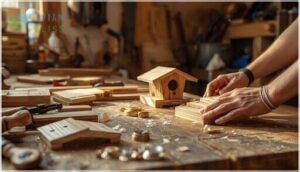
The materials you choose will directly impact how long your birdhouse lasts and how safe it keeps the birds inside. Wood and poly each bring their own strengths to the table, while craftsmanship details like ventilation and weatherproofing separate a quick project from a true sanctuary.
Let’s look at what makes certain materials and construction methods worth your investment.
Benefits of Cedar and Other Woods
You’ll find western red cedar stands out as the top choice for handcrafted bird houses. Here’s why this wood earns its reputation:
- Durability that lasts – Cedar heartwood resists decay for 20+ years outdoors, far outlasting pine’s 8–9 year lifespan
- Natural climate control – Its R-value of 1.41 per inch provides better thermal insulation than most softwoods
- Built-in protection – Cedar’s natural oils repel moths, beetles, and rot-causing fungi without chemicals
Cypress and mahogany also offer excellent weather resistance and eco-friendly longevity.
Poly Vs. Wood Birdhouses
When you’re choosing between poly and wood bird houses, think about how each material performs over time. Poly lumber resists water absorption and lasts up to 50 years with minimal upkeep, while cedar offers natural thermal regulation that keeps nests cooler in summer heat.
| Feature | Poly Bird Houses | Wood Bird Houses |
|---|---|---|
| Material Lifespan | 20–50+ years maintenance free | 10–20+ years with care |
| Weather Resistance | Won’t crack, rot, or split | Needs periodic sealing |
| Pest Resistance | Blocks wood-boring insects | Vulnerable to termites, beetles |
Poly’s synthetic wood construction delivers enhanced pest resistance and zero water absorption. Wood stays slightly cooler to the touch but requires more frequent cleaning checks.
Both choices support your garden habitat—poly shines in harsh climates, while responsibly sourced cedar minimizes environmental impact through biodegradable materials.
Chemical-Free and Eco-Friendly Options
When you select birdhouses made from untreated lumber and certified wood, you’re protecting both birds and your garden ecosystem. Chemical-free construction prevents toxic leaching into soil and water—a win for habitat health.
Look for these sustainable features:
- Zero-VOC finishes (under 5 g/L) that release minimal fumes
- Natural oils like tung oil or linseed for water resistance
- FSC-certified materials that reduce pesticide contamination
These eco-friendly garden products support wildlife without compromising environmental integrity.
Craftsmanship and Durability Features
Quality handcrafted birdhouses stand apart through careful wood selection and strong joint integrity. You’ll want thick-walled designs—at least 15 mm—that resist warping across seasons.
Excellent birdhouse design and construction means decades of reliable shelter, not disposable décor. Look for weather resistance through sloped roofs and quality finishes.
| Feature | Budget Build | Premium Craftsmanship |
|---|---|---|
| Wood Selection | Pine or thin plywood | Cedar, cypress, marine ply |
| Wall Thickness | Under 12 mm | 15 mm or thicker |
| Finish Quality | Single coat or bare | Two+ coats exterior paint |
| Roof Design | Flat or minimal overhang | Sloped with felt, overhang |
| Expected Lifespan | 2–3 years | 20–30 years |
Unique Birdhouse Designs and Styles
Handmade birdhouses come in a wide range of styles that go far beyond basic boxes. You’ll find everything from charming vintage cottages to sleek modern designs, plus creative multi-room layouts and themed pieces that double as garden art.
Let’s explore the different looks and features that make these birdhouses stand out in both function and beauty.
Vintage, Classic, and Modern Looks
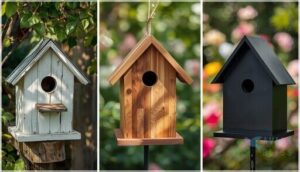
Your birdhouse design speaks volumes about your garden’s personality. Whether you lean toward nostalgic charm or sleek simplicity, there’s a handcrafted option that’ll feel just right.
- Vintage aesthetics feature distressed finishes and farmhouse details, making up roughly half of all bird houses sold today
- Classic function prioritizes natural cedar with simple lines—these timeless designs attract more nesting birds
- Modern materials like metal and composite bring clean geometry, with design trends showing 7% annual growth in contemporary styles
Color palettes range from natural wood tones to bold accent hues.
Multi-Room and Themed Birdhouses
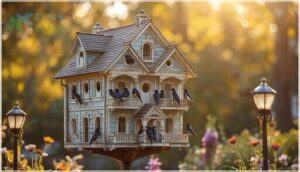
Purple martins are the stars of colonial nesting, thriving in apartment-style bird houses with multiple 6×6×6-inch compartments. But here’s the catch: themed “condo” birdhouse designs often sacrifice function for charm. Without proper predator exposure guards and species-specific compartment design, your decorative garden bird houses may look stunning as unique bird decor or birdhouse as gifts yet remain empty.
Thematic aesthetics must balance beauty with ecological impacts to truly support wildlife.
Decorative Motifs and Color Choices
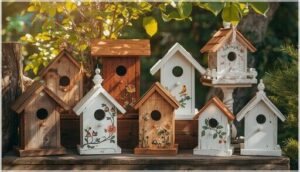
Color psychology plays a real role in attracting birds—white reflects heat for bluebirds, while brown mimics bark for wrens. When choosing garden bird decor, balance unique bird decor trends with material colors that keep your ornaments functional, not just pretty.
Regional preferences lean toward earth tones in 62% of North American gardens, but floral motifs and rustic design accents drive decorative sales.
Birdhouse Features for Safety and Comfort
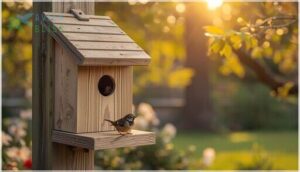
A well-designed birdhouse does more than look good in your garden. It keeps birds safe from predators and weather while giving them a comfortable space to nest and raise their young.
Let’s look at the key features that make a birdhouse both protective and welcoming.
Predator Guards and Entry Hole Protection
Beyond basic birdhouse design and construction, protecting birds from predators requires smart features. Adding predator guards boosts nest success by roughly 7% overall—and up to 16% for certain species. Consider these proven safeguards:
- Stovepipe guards wrap posts to block climbing deterrence from raccoons and snakes
- Hole extenders deepen entrances so predators can’t reach inside
- Species exclusion sizing (1.5″ for bluebirds) keeps starlings out while multiple guards offer layered protection
Smaller entrance holes naturally improve hole effectiveness as a predator muffler, helping anxious parents raise their young safely.
Proper Ventilation and Drainage
Good predator protection is only half the battle—your birdhouse also needs air circulation and water control. Ventilation holes near the top (about 5/8″ diameter) let hot air escape, while drainage openings in the floor prevent pooling. Here’s how proper design keeps nests dry and comfortable:
| Feature | Recommended Spec | Why It Matters |
|---|---|---|
| Ventilation Hole Size | Four 5/8″ holes near roof | Prevents overheating during summer heat |
| Drainage Hole Design | Four 3/8–1/2″ floor holes | Stops moisture buildup after rain |
| Thermal Humidity Effects | Cross-ventilation placement | Maintains 19–24°C ideal range |
| Moisture Management | Recessed floor 1/4″ up | Keeps nest material dry and healthy |
| Structural Durability | Multiple drainage points | Extends birdhouse lifespan by years |
Studies show nest boxes without ventilation can reach dangerous temperatures—sometimes 3°C hotter than natural cavities. Poor drainage invites mold, parasites, and wood rot.
Your handmade birdhouse will attract more nesting pairs and last longer when you prioritize these features during construction and maintenance.
Weatherproofing and Roof Options (e.g., Copper Roofs)
Ventilation teams up with smart roof choices to shield nests year-round. Copper roofs last 60–100 years—far outpacing other materials—and their natural patina stops corrosion without toxic sealants.
Pair copper with a 15–30° slope and 2–4 inch overhangs to shed rain fast.
Apply eco-safe finishes only on exteriors, curing them 7–30 days before birds arrive, ensuring chemical-free habitat inside.
Placing and Mounting Your Birdhouse
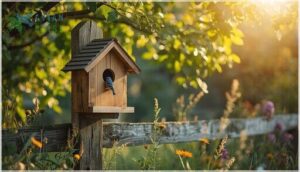
Where you put your birdhouse matters just as much as the house itself. The right spot can mean the difference between an empty box and a thriving family of birds raising their young.
Let’s walk through how to find the perfect location and set up your handmade birdhouse so your feathered friends feel right at home.
Ideal Locations in Your Yard or Garden
Where you hang your birdhouse can make or break nesting success. The right spot in your backyard balances sun exposure, predator access, and natural habitat needs.
- Height and mounting: Position most birdhouses 5–8 feet high on smooth metal poles to block climbing predators while matching the garden landscape birds prefer.
- Sun and shelter: Morning sun with afternoon shade keeps nests cool; avoid reflective surfaces that increase heat.
- Vegetation cover and flight paths: Place near native plants but away from dense branches that offer predator perches or block clean approaches, and face entrances away from prevailing wind exposure.
Tips for Attracting Desired Bird Species
Once you’ve chosen your location, a few specific adjustments can draw the cavity-nesting species you want most. Entrance hole size is your first filter—2.9 cm welcomes chickadees while 3.8 cm suits bluebirds but blocks starlings. Habitat context matters too: place boxes near grassland for bluebirds or water for swallows. Pair birdhouse orientation facing east with predator deterrence guards, and you’ll create an ideal nest site that turns your backyard into prime bird habitat.
| Species | Entrance Hole (cm) | Preferred Habitat Context |
|---|---|---|
| Black-capped Chickadee | 2.9 | Forest edges, partial shade |
| Eastern Bluebird | 3.8 | Open fields, grassland |
| Tree Swallow | 3.5 | Near water sources |
| Carolina Wren | 3.8 | Riparian vegetation, shrubby areas |
Maintaining and Cleaning Handmade Birdhouses
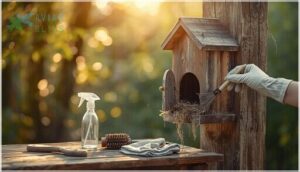
Keeping your handmade birdhouse in good shape doesn’t take much effort, but it makes all the difference for the birds that call it home. A little regular care protects your investment and creates a healthier nesting spot year after year.
Let’s walk through the essential maintenance steps that’ll keep your birdhouse welcoming for seasons to come.
Seasonal Cleaning and Upkeep Tips
Think of birdhouse maintenance like tidying your guest room between visitors—regular cleanouts keep everyone healthy and happy. You’ll want to remove old nesting material once each autumn, between September and November, after birds finish raising their young.
This simple cleaning routine prevents parasites and disease from building up inside. For busy boxes hosting multiple broods, a gentle mid-season cleanout between families helps even more.
Extending Birdhouse Lifespan
Protecting your birdhouse investment comes down to smart material choices and consistent care. You can dramatically slow material degradation with these simple steps:
- Apply protective coatings like non-toxic wood preservative or exterior latex paint every two to three years
- Choose mounting locations with partial shade to reduce UV and moisture stress
- Select design features like roof overhangs and thicker walls that resist warping
- Schedule seasonal cleanouts to catch loose joints or cracks early
- Use corrosion-resistant hardware on all attachment points
Regular birdhouse maintenance transforms a typical five-year shelter into one protecting birds from weather for a decade or more. Cedar and redwood naturally resist rot better than untreated pine, while quality birdhouse construction with proper drainage extends lifespan considerably.
Monitoring for Pests and Predators
Predator identification starts with weekly checks during breeding season. You’ll spot telltale signs fast—scratches near entry holes mean raccoons tried their luck, while missing eggs point to snakes or invasive species.
Nest box cameras capture avian visitors without disturbing families inside, and studies confirm they don’t increase predation risk. Guard effectiveness jumps nearly seven percent with proper baffles, protecting your backyard wildlife.
Watch for parasite control needs when nestlings seem stressed—blowflies infest seventy-two percent of active nests in research, so timely intervention during birdwatching rounds keeps broods healthy.
Benefits of Handmade Birdhouses for Your Garden
Adding a handmade birdhouse to your garden does more than just provide a home for birds. You’ll create a thriving ecosystem while adding character to your outdoor space.
Let’s look at three key ways these carefully crafted homes make your garden better for you and the wildlife around you.
Attracting Birds and Supporting Local Wildlife
When you set up a handmade birdhouse, you’re doing more than attracting wild birds—you’re providing bird habitat that strengthens ecosystem balance. Studies show cavity nesters enjoy 60–80% nesting success in proper boxes, far outpacing open nests.
Handmade birdhouses strengthen ecosystems by providing habitat where cavity nesters achieve 60–80% nesting success—far surpassing open nests
The benefits of birdhouses include supporting species diversity and real conservation impact. Your backyard birding activities create mini-habitats where birds thrive, boosting the importance of bird conservation through habitat enhancement right at home.
Enhancing Backyard Decor and Ambiance
A handmade birdhouse works as both outdoor decor and a soundscape integration tool. Birdsong creates garden tranquility that’s scientifically linked to psychological well-being. Studies show environments with birds singing reduce stress and boost mood for hours.
These garden accessories serve as visual focal points, adding design coherence while transforming your backyard birding space into a calming retreat where home and garden decor meets nature’s soundtrack.
Eco-Friendly Gardening and Conservation Benefits
Beyond beauty, handmade birdhouses deliver real eco-friendly wins for your yard. Cavity-nesting birds provide natural pest control by devouring caterpillars and beetles, reducing pesticide need. They also assist with seed dispersal and pollination support.
In cities, nest boxes boost urban biodiversity and help maintain bird populations when natural cavities disappear. Providing bird habitat furthers the importance of bird conservation while offering climate benefits through sustainable, environmentally friendly gardening that fosters population survival.
Frequently Asked Questions (FAQs)
What are Amish made birdhouses?
More than 380,000 Amish people across Pennsylvania, Ohio, and Indiana create authentic handmade bird houses using traditional methods and locally sourced materials like cedar and pine, offering durable nesting sites for backyard birds.
Why should you buy a handmade birdhouse?
Unique craftsmanship ensures enhanced quality and bird health. Handmade birdhouses offer better ventilation, drainage, and predator protection than mass-produced options.
They attract wild birds while supporting conservation, combining aesthetic appeal with proven benefits for successful nesting.
What is the best birdhouse to buy?
There’s no one-size-fits-all answer—the best birdhouse depends on which birds visit your area, your budget, whether you prefer wood or poly, and where you’ll mount it.
Can a bird house be custom built?
Yes, many artisans and Amish workshops craft custom bird houses made to your specifications. You can choose species-specific entrance sizes, select materials like cedar, add predator guards, and request decorative finishes—though expect higher costs and potential wait times.
What is a whimsical Birdhouse?
A whimsical birdhouse blends functional nesting space with playful design aesthetics—think fairy cottages, lighthouse shapes, or hand-painted storybook themes.
These birdhouses serve birds while doubling as charming home decor and popular gift choices for nature lovers.
Are unique birdhouses a good gift?
Handcrafted birdhouses rank among the most memorable gifts for gardeners and bird lovers—in fact, 66% of people recall custom presents longer than generic ones.
They blend sentimentality with practicality, making them perfect for nearly any gifting occasion.
What kind of bird house do birds like the best?
Birds prefer birdhouses with correctly sized entrance holes for their species, proper ventilation, predator protection features, and natural muted colors.
Cavity-nesting species need adequate internal depth and round hole shapes for successful nesting.
How to make an easy bird house?
Start with a single 1×6 cedar board cut into simple birdhouse plans. Use basic tools—saw, drill, and screws. Create a 25-inch entrance hole for attracting birds. Apply safe finishes, then practice proper mounting techniques.
What not to do when building a birdhouse?
Skip toxic finishes and poor ventilation when building bird houses. Wrong hole size excludes cavity-nesting species. Neglect predator protection and cleaning access, and you’ve wasted effort. Choosing the right birdhouse features matters most.
What is the best wood for a birdhouse?
Cedar stands as the best choice for building bird houses because natural oils resist rot, insects, and moisture for 15–25 years.
Pine works as an affordable alternative, though it needs more frequent replacement.
Conclusion
Your backyard isn’t a town square where every bird gathers anymore. It’s a specialized habitat that needs the right architecture. Handmade bird houses deliver exactly that through thoughtful design and quality materials.
You’re not just buying yard art. You’re installing functional shelter that gives cavity-nesting birds a real fighting chance.
Choose species-appropriate dimensions, prioritize ventilation and drainage, and you’ll watch your garden transform into a thriving sanctuary where feathers outnumber flowers.
- https://dataintelo.com/report/bird-house-market
- https://www.verifiedmarketresearch.com/product/birdhouses-market/
- https://www.archivemarketresearch.com/reports/birdhouses-510374
- https://www.cbi.eu/market-information/home-decoration-home-textiles/birdhouses/market-potential
- https://pmc.ncbi.nlm.nih.gov/articles/PMC10090579/