This site is supported by our readers. We may earn a commission, at no cost to you, if you purchase through links.
You spot a small bird on the ground, feathers ruffled, eyes wide with what looks like fear or confusion. Your first instinct is to scoop it up and bring it inside—but that impulse, however well-meaning, might do more harm than good.
Most people don’t realize that many young birds on the ground are exactly where they’re supposed to be, learning to fly under their parents’ watchful eyes. The challenge isn’t just about knowing how to help a fallen bird; it’s about recognizing when intervention is truly necessary and when the kindest action is to step back.
Understanding the difference between a bird in genuine distress and one following its natural development can mean the difference between saving a life and accidentally separating a healthy fledgling from its family. The right response requires knowledge, careful observation, and a measured approach that prioritizes the bird’s welfare above our instinct to rescue.
Table Of Contents
- Key Takeaways
- Assessing a Fallen Bird’s Condition
- Deciding Whether to Intervene
- Safely Handling and Containing The Bird
- Providing Emergency Care Before Help Arrives
- Contacting Wildlife Rehabilitators
- Supporting Successful Release and Recovery
- Frequently Asked Questions (FAQs)
- How do I help a baby bird that fell out of a nest?
- What to do if a baby bird is uninjured?
- How do you rescue a fledgling bird?
- What should I do if a bird is orphaned?
- What should I do if my baby bird dies?
- How do you handle a baby bird?
- Is The Bird A Nestling Or A fledgling?
- Is The Fledgling Healthy?
- How long can a fallen bird survive outdoors?
- Can birds carry diseases dangerous to humans?
- Conclusion
Key Takeaways
- You need to identify whether the bird is a nestling (featherless, needs immediate help) or a fledgling (feathered, learning to fly with parents nearby) before intervening, since many grounded fledglings are developing normally and don’t require rescue.
- Look for clear distress signals like visible injuries, persistent calling, lethargy, or breathing issues to determine if the bird truly needs help, and always watch from a distance for 10–20 minutes to see if parents are still feeding it.
- If rescue is necessary, handle the bird gently with gloves, place it in a ventilated box lined with soft cloth, keep it warm and quiet, and contact a licensed wildlife rehabilitator immediately without attempting to feed it.
- Creating bird-friendly environments with native plants, safe windows, and proper shelter prevents injuries before they happen and supports successful recovery for birds returning to the wild after rehabilitation.
Assessing a Fallen Bird’s Condition
When you spot a bird on the ground, your first instinct might be to scoop it up and help—but the right response actually depends on what you’re seeing. Before you intervene, you need to understand what’s happening with the bird and whether it truly needs rescuing.
Let’s walk through the key signs to look for so you can make the best decision for the bird’s survival.
Identifying Nestlings Vs. Fledglings
Before you decide how to help a fallen bird, you need to understand what you’re looking at. Nestlings—often just days old—are mostly covered in down with underdeveloped wing and tail feathers. They belong in the nest. Fledglings, usually two to four weeks old, show visible feather growth and hop around testing their wings. This age identification matters because fledgling behavior is completely normal, while a grounded nestling needs your help.
Understanding AP study resources can help you develop critical thinking skills, useful in various life situations.
Recognizing Signs of Injury or Illness
Once you’ve identified the bird’s age, you’ll want to check its condition carefully. Look for clear distress signals that tell you something’s wrong:
- Persistent distress calls lasting more than two minutes
- Lethargy or inability to perch properly
- Visible bleeding, broken bones, or swelling at joints
- Rapid, shallow breathing indicating respiratory issues
- Uncoordinated movements when gently stimulated
These signs mean the bird needs a wildlife rehabilitator’s help right away. The rescue process requires careful planning and execution, similar to a cyber security protocol.
Evaluating Immediate Dangers (Predators, Weather)
After spotting injury signs, scan the area for immediate threats. Predators like cats, dogs, and raptors exploit an injured bird’s vulnerability—studies show encounters happen in nearly half of rescue attempts within the first hour.
Weather extremes also matter: cold snaps destabilize body temperature, while rain can dehydrate small birds in just two to four hours, demanding swift wildlife protection and bird safety measures.
Deciding Whether to Intervene

Not every bird you find on the ground needs your help. In fact, intervening when a young bird is simply learning to fly can do more harm than good, separating it from parents who are still actively caring for it.
Before you step in, you’ll want to understand what normal development looks like, how to watch for parental activity, and when it’s truly best to leave well enough alone.
Understanding Normal Fledgling Behavior
You might think a fledgling hopping on the ground needs rescuing, but this behavior is completely normal. These young birds leave the nest before they’ve mastered flight, spending days on the ground while building strength and coordination.
Watch for short flutter-hops between perches and listen for begging calls—signs that parents are still nearby, teaching essential survival skills. Flight patterns develop gradually during this vital fledgling development stage.
Monitoring Parental Care
Patience becomes your most valuable tool when evaluating parental roles in bird care. Position yourself 5–10 meters away and watch for nest attendance patterns—parents usually visit every 10–20 minutes during peak hours.
If you observe feeding attempts or hear alarm calls, the adults haven’t abandoned their fledgling or nestling. Document feeding frequency in a simple log, as this data helps wildlife rehabilitators make informed decisions about your fallen bird.
Avoiding Unnecessary Rescue
When you spot a grounded fledgling exhibiting normal fledgling behavior—hopping, wing-flapping, and calling—intervention can do more harm than good. Rescue ethics demand restraint when parental guidance is present.
Consider these principles of bird welfare:
- Legal constraints: Wildlife laws restrict possession without permits
- Natural development: Parents teach survival skills you can’t replicate
- Stress reduction: Handling elevates cortisol, compromising immunity
- Fitness outcomes: Unnecessary rescue reduces long-term independence
If injury assessment reveals no wounds and a wildlife rehabilitator confirms parental care, leave the fallen bird undisturbed. Your best bird care? Watchful distance.
Safely Handling and Containing The Bird
Once you’ve determined the bird needs help, your next step is handling it with care and creating a safe space where it can stay calm until a rehabilitator takes over. The right approach protects both you and the bird from unnecessary stress or injury.
Here’s how to gather what you need, pick up the bird properly, and set up a temporary shelter that keeps it secure.
Gathering Essential Rescue Supplies

Before you reach for the bird, gather your rescue kits and emergency gear. You’ll need a ventilated cardboard box lined with a soft towel, non-latex gloves to protect both of you, and a shallow dish for water.
Keep a supply checklist handy: paper towels for bedding, a lid for secure bird transport, and basic first aid tools like gauze and antiseptic wipes.
Approaching and Picking Up The Bird

Did you know a gentle approach can make all the difference in bird rescue? When handling a fallen bird, move slowly from the side, keep your hands visible, and avoid direct eye contact. Slip on gloves for safety precautions. Support the body and legs—never squeeze.
Rescue techniques like using a towel can help reduce stress, protecting both you and the injured bird.
Creating a Safe Temporary Shelter

Did you know a well-designed shelter can boost a fallen bird’s survival by 60%? For bird rescue, line a cardboard box with soft cloth, add a shallow dish of water, and use gloves for safe handling.
Focus on Shelter Design and Thermal Control—keep it dark, ventilated, and warm. Humidity Management and Lighting Options help reduce stress and support recovery.
- Soft, breathable materials
- Controlled warmth (95–105°F)
- Low light, proper ventilation
Providing Emergency Care Before Help Arrives
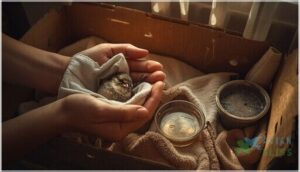
Once you’ve secured the bird, your next steps can make a real difference in its recovery. The right environment helps keep it safe and comfortable while you wait for expert help.
Here are some simple options to think about for temporary care.
Temperature and Hydration Basics
Did you know a fallen bird’s life can hinge on how you manage heat and fluids? Thermoregulation methods, like keeping ambient temperature between 32–40°C, protect against heat stress.
Hydration techniques matter too—offer small amounts of water or oral rehydration solution, never plain water. For any injured bird, prompt animal care and welfare decisions support fluid balance until a wildlife rehabilitator arrives.
Avoiding Harmful Foods and Treatments
Once warmth and fluids are set, steer clear of risky foods—chocolate, avocado, onions, and salt top the list for Toxic Food Avoidance.
For Safe Hydration Methods, offer only clean water or a bird-specific electrolyte solution. Skip home remedies and household cleaners.
Emergency Feeding Alternatives include mashed fruit or tiny insects, but never force-feed. When unsure, contact a wildlife rehabilitator.
Minimizing Stress and Handling
After you’ve addressed food and hydration, your next focus should be Stress Reduction. Gentle Handling is key—think of it as steady hands calming a nervous fledgling. Use gloves and keep movements slow.
For Bird Calming and Safe Transport, remember:
- Limit handling to under a minute
- Keep lighting dim
- Avoid loud noises
- Provide soft bedding for Minimal Intervention
Your careful bird care and handling matters.
Contacting Wildlife Rehabilitators

Once you’ve stabilized the bird, reaching out to a wildlife rehabilitator is the next vital step. You’ll want to know who to call and what to prepare before you go.
Here are the options to help you get started.
Finding Licensed Local Experts
You’ll need to connect with a licensed wildlife rehabilitator quickly. Most states maintain public registries through their wildlife department or US Fish and Wildlife Service. Within about 15 minutes, you can usually locate a licensed rehabilitator within 20 miles.
These expert networks understand local regulations, licensing requirements, and permit processes, ensuring your bird receives proper care at an authorized rehab center.
Legal Considerations for Bird Rescue
Once you’ve reached a licensed wildlife rehabilitator, you’ll face a maze of Wildlife Laws and Permit Requirements. Handling wild birds without federal permits or licenses—even with good intentions—can bring steep Rescue Liability.
Regulatory Compliance matters for conservation ethics, so always notify authorities like the US Fish and Wildlife Service. This keeps your rescue lawful and ensures the bird’s best chance.
How to Transport a Bird Safely
A sturdy bird carrier is your best ally for Bird Carrier Safety—think rigid sides, secure lid, and proper Ventilation Systems with gaps under 6 mm. Line it with non-slip, absorbent material from your Emergency Kit. Handle gently to reduce Transport Stress. Skip food or water en route. Quick, quiet delivery to a wildlife rehabilitator aids avian conservation and successful bird rescue and rehabilitation.
Supporting Successful Release and Recovery

Once a bird is ready to return to the wild, the right support can make all the difference. Your next steps help bridge the gap between rescue and freedom.
Here’s what to keep in mind as you prepare for a safe and successful release.
Post-Rescue Monitoring and Documentation
Ever wonder what happens after a bird returns to the wild? Post Release Tracking, like Bird Banding and Rehabilitation Records, lets us follow survival and Release Outcomes.
These tools in wildlife rehabilitation and bird rescue aren’t just paperwork—they’re essential for animal welfare and avian conservation, helping experts improve wildlife care and deepen our understanding of what truly helps birds thrive.
Creating Bird-Friendly Environments
Your backyard can become a lifeline for birds before they ever need rescuing. By choosing Native Plantings like native trees and shrubs, you support Urban Wildlife and boost Habitat Restoration—native plant strips increase local bird visits by 25% during breeding season.
Consider these Eco Friendly Designs for Bird Safety and wildlife conservation:
- Install bird-safe window treatments to reduce collisions by up to 70%
- Plant native pollinator strips that attract diverse species year-round
- Add dense shrubbery and ground cover, cutting predation events by roughly 28%
- Maintain birdhouses annually to improve cavity-nesting occupancy by 20–25%
- Create water sources alongside vegetation for complete habitat conservation
These steps strengthen bird conservation and environmental conservation while supporting wildlife preservation in your own community.
Educating Others on Bird Rescue
Sharing what you’ve learned turns one rescue into many. Join Community Outreach efforts by volunteering with your local wildlife rehabilitator—Rescue Training sessions often welcome helpers, building Environmental Awareness while teaching practical Bird Conservation skills.
Sharing your rescue knowledge through local wildlife programs and community outreach turns one bird saved into countless future rescues
Talk to neighbors about Wildlife Education, post quick guides online, or lead a workshop. Each conversation strengthens Wildlife Rescue networks and bolsters Avian Conservation, multiplying the impact far beyond your own backyard.
Frequently Asked Questions (FAQs)
How do I help a baby bird that fell out of a nest?
First, identify whether you’ve found a nestling or fledgling. Nestlings need your help immediately—they’re featherless with closed eyes.
Fledglings, however, are learning to fly and parents often watch nearby, so observe before intervening.
What to do if a baby bird is uninjured?
Here’s your heroic instinct: do absolutely nothing. If the baby bird looks healthy and feathered—likely a fledgling—back away quietly. Parents are watching, feeding, and teaching survival skills nearby. Let nature parent.
How do you rescue a fledgling bird?
To rescue a fledgling, observe its Bird Behavior for signs of injury or orphaned status.
Use gentle Rescue Techniques—contain in a soft-lined box, provide Fledgling Nutrition basics, and contact a wildlife rehabilitator for expert bird rehabilitation and avian rescue.
What should I do if a bird is orphaned?
If you discover an orphaned bird, especially a nestling or fledgling, gently contain it in a warm, quiet box. Avoid feeding it. Contact a licensed wildlife rehabilitator immediately for expert Orphaned Bird Care and proper Avian First Aid.
What should I do if my baby bird dies?
When your baby bird dies, follow Death Protocol: place it in a small box, contact a wildlife rehabilitator for Postmortem Care guidance, and consider Burial Methods.
Bird Mourning is natural; reflect on Euthanasia Ethics and orphaned bird welfare.
How do you handle a baby bird?
Handling a baby bird is like cradling a fragile leaf—support its body gently, avoid touching wings or beak, and place it in a soft, warm box.
For Baby Bird Care or Feather Repair, always consult a wildlife rehabilitator.
Is The Bird A Nestling Or A fledgling?
Distinguishing a nestling from a fledgling bird hinges on Feather Identification and Bird Development. Nestling Care involves downy, flightless chicks, while Fledgling Behavior features hopping, vocalizing juveniles with developed feathers—key for Species Classification and orphaned wildlife assessment.
Is The Fledgling Healthy?
Did you know 70% of healthy fledgling birds manage brief flights within two days?
For reliable Health Checks, observe Fledgling Behavior—look for symmetrical wings, steady nutrition needs, and alertness. Any drooping or ruffled feathers signals possible injury.
How long can a fallen bird survive outdoors?
A fallen bird’s outdoor survival depends on species, age, and environmental factors. Small nestlings may survive only 12–24 hours in harsh weather, while fledglings can endure longer with adequate shelter and parental care.
Can birds carry diseases dangerous to humans?
Yes, birds can carry zoonotic risks like avian influenza and bacterial pathogens. When handling an injured bird, wear gloves and practice good hygiene to minimize disease transmission and protect both human exposure and bird welfare during animal rescue.
Conclusion
The next time a bird crosses your path in an unexpected way, you’ll carry something most people lack: the wisdom to pause, observe, and act with precision. Knowing how to help a fallen bird transforms you from a well-intentioned bystander into a genuine ally of wildlife.
That small moment of informed compassion—choosing the right action over the easy one—can literally rewrite a bird’s future. Sometimes the quietest choices echo the loudest.
- https://otio.ai/blog/examples-of-research-topics
- https://www.ncbi.nlm.nih.gov/books/NBK481583/
- https://www.sharkpapers.com/blog/research-paper-writing-guides/literature-research-paper-topics
- https://www.science.gov/topicpages/i/identifying+key+research
- https://fws.maps.arcgis.com/apps/instant/nearby/index.html?appid=6e5a1e28771543f5ba195f85ffb95b17