This site is supported by our readers. We may earn a commission, at no cost to you, if you purchase through links.
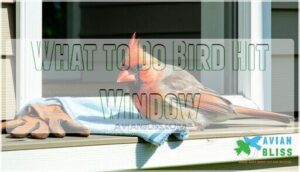 When you find a bird that’s hit your window, don’t panic—many survive these collisions.
First, observe from a distance to check if it’s breathing or moving. If the bird seems stunned but alive, gently place a ventilated box over it or move it to a quiet, dark spot away from pets and predators.
Never give water or food, as this can cause more harm. Birds often recover within 15 minutes to two hours.
However, if you notice blood, twisted wings, or the bird doesn’t improve after a few hours, contact your local wildlife rehabilitator immediately.
Simple prevention methods can stop future accidents.
Table Of Contents
- Key Takeaways
- Bird Window Collision Prevention
- What to Do Bird Hit Window
- Assessing Bird Injuries
- Caring for Injured Birds
- Preventing Future Collisions
- Frequently Asked Questions (FAQs)
- How long can a bird stay stunned after hitting a window?
- What to do when birds hit windows?
- How to tell if a bird is ok after hitting the window?
- How to help a bird that hit window life is strange?
- How can I tell if a bird has hit my window?
- What should I do if a bird hits my window?
- What message do birds communicate when they hit a window?
- What are the spiritual meanings of a bird hitting a window?
- How long will a bird be stunned after hitting a window?
- What should I do with a bird that hit my window?
- Conclusion
Key Takeaways
- Stay calm and observe from a distance first – Check if the bird’s breathing and moving before approaching, as many stunned birds recover naturally within 15 minutes to two hours without intervention.
- Handle gently and create a safe recovery space – Use gloves or a towel to place the bird in a dark, ventilated box lined with soft cloth, then keep it in a quiet room away from pets and noise.
- Don’t give food or water – These can cause more harm than good to injured birds, so focus on providing warmth, darkness, and minimal handling instead.
- Contact wildlife rehabilitators for serious injuries – If you notice blood, twisted wings, or the bird doesn’t improve after a few hours, get professional help immediately rather than attempting treatment yourself.
Bird Window Collision Prevention
You can prevent most bird window collisions by making simple changes to your home’s glass surfaces and surroundings.
Strategic placement of feeders, window treatments, and visual markers will protect birds while maintaining your view of nature.
Positioning Feeders Safely
Strategic bird feeder placement creates safe dining zones while minimizing collision risk zones. Follow these distance recommendations to protect your feathered visitors from dangerous bird window strikes.
- Position feeders within 3 feet of windows so birds can’t build dangerous speed
- Place feeders over 30 feet away to give birds time to see and avoid glass
- Choose safe feeder types near vegetation for quick escape routes
- Consider habitat considerations when selecting locations away from reflective surfaces
Optimal placement requires considering appropriate feeder products for safety.
Reducing Window Reflections
Window reflections fool birds into thinking they’re flying toward open sky or leafy trees.
Film effectiveness varies, but anti-reflective coatings substantially reduce bird window strike incidents.
These bird window reflections create deadly illusions.
Glass treatments transform dangerous mirrors into bird-safe surfaces—your windows don’t have to be death traps.
Simple changes to your windows can save hundreds of bird lives—prevention is easier than you think.
- Install external shutters at strategic awning angles to block problematic reflections
- Apply specialized films designed for bird collision window prevention
- Use reflection analysis to identify your home’s most dangerous window bird deterrents needs
These bird strike prevention methods work.
Using Decals and Netting
You can protect birds with window decals for birds and netting as effective bird prevention methods. Install decals with proper decal spacing of 2 inches apart horizontally and 4 inches vertically for maximum bird strike prevention.
Many retailers offer various bird decal options for purchase.
| Method | Cost | Effectiveness |
|---|---|---|
| Window decals | $10-30 | High when spaced correctly |
| DIY netting | $15-50 | Very high with fine mesh |
| Professional netting materials | $50-150 | Excellent with proper installation |
Choose aesthetic options that complement your home’s appearance.
Creating Buffer Zones
Beyond decals and netting, you can establish Safe Zones around your windows through strategic Bird-Friendly Landscaping. Collision Reduction happens when you create natural barriers that break up glass reflections while providing Habitat Creation opportunities.
- Plant Native Plants within three feet of windows to soften reflections and create natural bird window cushioning.
- Install bird window blinds or bird window drapes inside to reduce interior light attraction.
- Combine netting with landscaping for thorough bird collision prevention.
What to Do Bird Hit Window
Once you’ve set up prevention measures, knowing how to respond when bird collisions happen saves lives. Your Initial Assessment starts the moment you spot a bird that’s hit your window.
First, observe from a distance. A stunned bird might sit motionless but recover within minutes. Look for signs of breathing and check if wings appear twisted or bleeding.
Safe Handling requires gloves or a towel. Gently cover the bird and place it in a ventilated shoebox lined with soft cloth. Avoid squeezing – birds have delicate bones that break easily.
Temporary Care means creating a calm environment. Keep the container in a dark, quiet room away from pets and children. Don’t offer food or water, as this can cause more harm than good.
Monitor for 30 minutes to two hours. If the bird doesn’t recover, contact local Rehab Centers immediately. Meeting Release Criteria means the bird can fly normally and shows alert behavior. Proper bird rescue and bird treatment often mean the difference between bird injury becoming fatal or successful recovery.
Assessing Bird Injuries
When you find a bird after a window collision, you’ll need to quickly determine whether it’s stunned, injured, or worse.
Look for signs of consciousness, visible wounds, and unusual positioning while keeping your distance to avoid causing additional stress to the already traumatized bird.
Checking for Visible Injuries
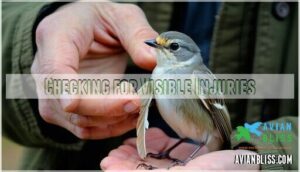
Examine the bird carefully for signs of trauma. Look for drooping wings, blood, or unusual wing position that signals broken bones.
Check for head trauma by observing swelling or tilted positioning. Assess eye condition for cloudiness or damage.
Watch for labored breathing assessment and test leg movement gently.
These bird injuries require immediate injured bird care from wildlife rehabilitators.
Monitoring Behavior and Movement
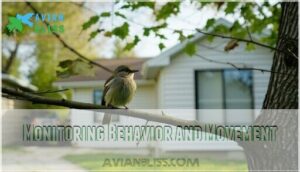
After checking for visible injuries, your Post-Collision Observation focuses on watching how the bird moves and behaves.
Recovery Signs include balanced perching and coordinated movement. A stunned bird may show bird shock initially, but gradual improvement indicates healing from potential bird concussion.
- Movement patterns: Watch for steady hopping versus erratic fluttering
- Flight Assessment: Note any attempted short flights or wing coordination
- Release Readiness: Look for alert responses to gentle sounds or movement
Seeking Professional Help
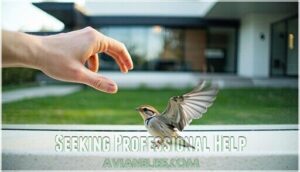
When a bird can’t recover after monitoring, you need professional help.
Contact bird rehabilitation centers or wildlife experts immediately – they possess rehabilitator expertise for proper bird handling and first aid.
Local resources include state wildlife directories and emergency hotlines.
| Contact Method | When to Use | What They Provide |
|---|---|---|
| Wildlife Rehabilitators | Severe injuries, no recovery | Expert bird first aid, medical care |
| Emergency Hotlines | Immediate assistance needed | Guidance on transporting birds safely |
| Local Wildlife Centers | Non-emergency situations | Long-term bird rehabilitation services |
| State Wildlife Agencies | Legal considerations unclear | Permits, euthanasia options if needed |
Handling Birds Safely
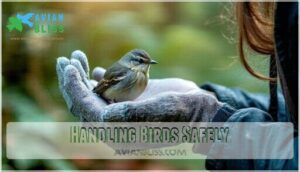
Throughout the bird handling process, your calm approach makes all the difference.
Use gloves for safe capture, approaching slowly from behind to avoid startling.
Prepare a ventilated box lined with soft towels for transport methods that minimize movement.
Cover the bird gently—darkness reduces stress substantially, and these bird recovery tips guarantee proper bird first aid while preparing for potential bird rescue window situations ahead.
Caring for Injured Birds
When you’ve confirmed a bird needs help after a window strike, you’ll need to create the right conditions for recovery while minimizing additional stress.
Your primary goals are keeping the bird warm, quiet, and safe from predators until it can either recover on its own or receive professional wildlife care.
This approach ensures the bird has the best chance of survival by providing a safe environment that reduces stress.
Providing a Safe Environment
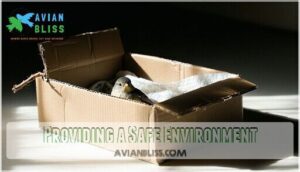
Once you’ve assessed the bird’s condition, create a sanctuary for recovery.
Transform your space into a healing haven—every injured bird deserves a chance to soar again.
Place the injured bird in a well-ventilated shoebox lined with soft cloth. Keep your makeshift hospital in a dark, quiet room away from pets and household noise.
Room temperature works best—no heating pads needed. Minimal handling makes certain the bird’s stress stays low.
Add a small twig as a natural perch for comfort. This birdsafe environment promotes healing while supporting bird window collisions prevention through proper care techniques.
Minimizing Stimuli and Stress
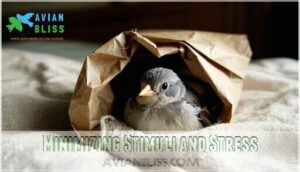
Once you’ve created a safe space, your stunned bird needs peace to heal. A Dark Quiet Environment promotes faster bird hit recovery through reduced stress. Your paper bag or container should stay in a calm room away from household noise.
Avoiding Unnecessary Handling prevents additional trauma during bird recovery. Gentle Handling Techniques matter when checks are needed, but limit contact to visual monitoring.
- Keep the room dark and silent
- Maintain Warmth and Comfort with soft bedding
- Avoid touching or moving the bird
- Check progress every 30 minutes visually
- Plan for Gradual Reintroduction to outdoor conditions
Releasing Birds After Recovery
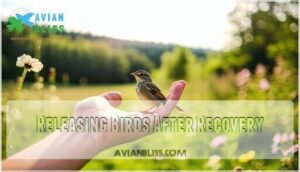
Once your feathered patient shows clear recovery signs, it’s release timing.
Choose a safe environment away from windows and predators. Conduct a flight assessment by gently opening the container outdoors.
Monitoring post-release behavior guarantees successful bird recovery. Select your release location near where the bird hit occurred.
If flight struggles continue, contact wildlife rehabilitation services immediately.
Disposing of Deceased Birds
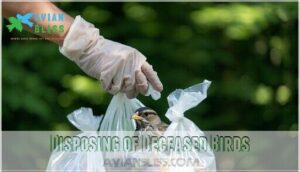
When a bird doesn’t survive the collision, you’ll need to handle disposal properly to protect your family and prevent disease risks.
Bird fatalities require careful attention to both legal considerations and ethical concerns regarding bird welfare.
Here’s how to manage safe disposal methods while respecting burial regulations:
- Wear waterproof gloves – Handle bird mortality cases with rubber gloves and wash hands thoroughly afterward
- Double-bag for trash – Use thick plastic bags for secure bird disposal in regular waste collection
- Bury responsibly – Dig holes 2+ feet deep away from gardens and pets to prevent scavenger access
- Contact authorities – Report avian fatalities during disease outbreaks per local health department guidelines
Preventing Future Collisions

Once you’ve helped an injured bird recover, you’ll want to protect other birds from hitting your windows in the future.
Simple changes like adding decals, installing screens, or adjusting your outdoor lighting can reduce window strikes by up to 90% and save hundreds of birds each year, which can make a significant difference in saving birds.
Applying Window Films
How can window film for birds transform your glass into bird-safe barriers?
Film application starts with cleaning surfaces thoroughly, then measuring and cutting with extra material.
Anticollision window film with UV reflection properties makes glass visible to birds while preserving your view.
Many options for bird-safe window films are available online.
DIY vs professional installation depends on window size and complexity.
Film durability lasts years with proper care, making cost analysis favorable for long-term bird window safety measures.
Installing Screens and Netting
Physical barriers work wonders where window films fall short.
Screen types like aluminum mesh or specialized netting materials create effective bird proof windows.
Install screens 2-3 inches from glass using sturdy brackets for proper tension.
Fine mesh netting prevents bird collisions while maintaining visibility.
Installation methods vary by window size—larger frames need corner reinforcement.
Aesthetic considerations matter; choose colors matching your home’s exterior.
Maintenance costs stay low with weather-resistant materials designed for bird safety windows.
Using Decals and Patterns
The right decals transform dangerous glass into visible barriers.
Decal Spacing requires two-inch gaps maximum—closer spacing prevents more collisions.
Pattern Effectiveness depends on covering most glass surfaces, not just corners.
Key placement strategies:
- UV Reflectivity decals work better than traditional Silhouette Myths like hawk shapes
- DIY Decals using tempera paint or tape provide budget-friendly bird window strikes solutions
- Bird tape windows with vertical stripes spaced four inches apart maximize bird prevention
Reducing Nighttime Light Pollution
Migrating birds’ navigation systems get scrambled by excessive urban illumination, leading to deadly bird-window collisions.
You’ll prevent migration disorientation by installing light shielding fixtures that direct beams downward.
Motion sensors and timers support energy conservation while creating bird-friendly lighting.
Turn off unnecessary interior lights during peak migration seasons to support dark sky initiatives.
These initiatives transform your home into bird-safe lighting that protects our feathered neighbors from light attraction dangers.
Frequently Asked Questions (FAQs)
How long can a bird stay stunned after hitting a window?
Your feathered friend might experience a temporary daze lasting anywhere from a few minutes to several hours.
Most stunned birds recover within 30 minutes to two hours if they’re simply experiencing minor head trauma.
What to do when birds hit windows?
When you discover a stunned bird, observe it from a distance first.
If it’s unconscious, gently place it in a dark, quiet box.
Don’t feed or water it.
Contact wildlife rehabilitators if needed.
How to tell if a bird is ok after hitting the window?
Watch closely for steady breathing and alert eyes.
A stunned bird sits upright but dazed, while an injured one lies sideways or flops helplessly.
If it’s breathing normally and stays upright, it’ll likely recover within minutes.
How to help a bird that hit window life is strange?
You’ll need to gently approach the stunned bird and carefully place it in a dark, quiet box lined with soft material.
Keep it warm and still for about an hour, then release it outdoors.
How can I tell if a bird has hit my window?
Absolutely heartbreaking thuds against glass often signal bird strikes.
You’ll spot feathers scattered below, see the bird stunned on the ground, or notice smudges and prints left on your window’s surface.
What should I do if a bird hits my window?
Stay calm and observe the bird from a distance first.
If it’s unconscious, gently place it in a dark, ventilated box using gloves or a towel, then contact a wildlife rehabilitator immediately.
What message do birds communicate when they hit a window?
Birds don’t communicate messages when hitting windows.
These collisions happen because birds can’t see glass and mistake reflections for open sky or habitat.
It’s simply an unfortunate accident, not intentional bird communication, and birds are just reacting to their mistake.
What are the spiritual meanings of a bird hitting a window?
Many cultures believe you’re receiving messages about change, transformation, or spiritual awakening when birds strike your windows.
Some interpret these collisions as signs from deceased loved ones or warnings about upcoming life shifts.
How long will a bird be stunned after hitting a window?
While you might think it’s just a quick bump, a stunned bird typically needs 30 minutes to several hours to recover from window collision trauma, depending on the severity of its head injury.
What should I do with a bird that hit my window?
Approach carefully and observe from a distance first. Gently cover the bird with a towel, place it in a ventilated box, and keep it warm, dark, and quiet for recovery.
Conclusion
Windows represent barriers between two worlds—the safety of our homes and the freedom of nature.
When you know what to do in bird hit window situations, you become a bridge between these worlds.
Quick assessment, gentle handling, and patient observation can mean the difference between life and death for stunned birds.
Remember that prevention remains your most powerful tool.
Simple modifications to your windows today can protect countless birds tomorrow, creating harmony between human spaces and wildlife habitats.
- https://birdscreen.com/
- https://www.birdsavers.com/
- https://abcbirds.org/glass-collisions/stop-birds-hitting-windows/
- https://blockclubchicago.org/2021/06/08/up-to-200-birds-a-night-die-crashing-into-mccormick-place-windows-turning-off-the-lights-could-save-them-study-finds/
- https://www.fws.gov/migratorybirds/pdf/management/lossetal2014buildingcollisions.pdf