This site is supported by our readers. We may earn a commission, at no cost to you, if you purchase through links.
The largest bird alive today, the common ostrich, stands 2.8 meters tall—roughly the height of a one-story ceiling—and can outrun most horses over short distances. Scale that up to the extinct Vorombe titan, a Madagascan giant that weighed 650 kg (1,430 lbs), and you start to sense just how vast avian diversity truly runs.
Birds occupy an astonishing size range, from species that can’t leave the ground to others that soar on wingspans stretching 3.65 meters. Flightless giants, soaring raptors, and massive seabirds each solved the challenge of survival through sheer physical scale—and the records they hold are genuinely startling.
This large bird species list cuts across five distinct categories, giving you the measurements, ranges, and behaviors that define each one.
Table Of Contents
- Key Takeaways
- Largest Living Flightless Bird Species
- Heaviest Flying Bird Species
- Birds With The Biggest Wingspans
- Largest Extinct Bird Species
- Largest Birds of Prey
- Frequently Asked Questions (FAQs)
- What birds are large?
- How many large birds are there?
- What is the largest bird species in the world?
- Which bird has the highest rank in the Accipitridae?
- Can birds drink milk?
- What are the big 6 birds?
- What are the top 5 biggest flying birds?
- What are the largest birds in America?
- What is the top 10 biggest bird?
- What bird weighs 50 pounds?
- Conclusion
Key Takeaways
- The common ostrich holds every size record among living birds—standing 2.8 meters tall, weighing up to 156.8 kg, and sprinting at 70 km/h—while extinct giants like Vorombe titan (650 kg) and Argentavis magnificens (7-meter wingspan) dwarf anything alive today.
- Flight imposes a hard weight ceiling, yet species like the kori bustard (19 kg) and Dalmatian pelican (15 kg) push that limit to its biological edge, trading agility for sheer mass.
- The wandering albatross holds the wingspan record among living birds at 3.65 meters, but all five of the largest albatross species face critical pressure from longline fishing bycatch and introduced predators on breeding islands.
- Size is a survival trade-off, not a free advantage—flightlessness, habitat specialization, and slow reproduction make today’s largest birds disproportionately vulnerable to hunting, habitat loss, and lead poisoning.
Largest Living Flightless Bird Species

Flightless birds have taken a completely different evolutionary path — trading wings for raw size and ground-level power.
Without the pressure to stay airborne, these birds redirected their energy toward survival on the ground — reshaping everything from feather structure and mating displays to nesting behavior.
The species on this list represent the largest living examples of that trade-off, spread across continents from Africa to Australia to Antarctica. Here’s a look at five of the biggest flightless birds alive today.
Common Ostrich
Standing up to 2.8 meters tall and weighing 156.8 kg, the common ostrich holds the title of largest living bird on Earth — and it can’t fly. Its eyes, each 5 cm across, detect predators across vast open plains with ease. Three traits define this wonderful flightless species:
- Sprint speed reaches 70 km/h
- Nests hold 10–24 eggs
- Gastroliths grind food internally
These birds use swallowed pebbles to help grind their food.
Somali Ostrich
Close behind the common ostrich stands its lesser-known relative, the Somali ostrich (Struthio molybdophanes), a distinct species native to Somalia, northern Kenya, Djibouti, and eastern Ethiopia. Males reach over 2 meters tall and weigh up to 130 kg, with striking purplish-blue neck skin appearing during breeding season.
They forage across arid Horn of Africa savannahs, eating grasses, seeds, and opportunistic insects, nesting in shallow ground scrapes. Hunting and habitat loss threaten wild populations deeply.
Southern Cassowary
From blue-necked giants of the Horn of Africa, we move to Australia’s own prehistoric-looking heavyweight.
The southern cassowary (Casuarius casuarius) stands 1.5–1.8 meters tall, with females reaching 59 kg. Three traits define this species:
- A keratinized casque that grows throughout life
- Male-only incubation lasting roughly 50 days
- Critical rainforest seed dispersal across northeast Queensland’s tropical forests
Habitat loss threatens their fragmented wild populations deeply.
Emu
Sharing Australia with the cassowary but ranging far beyond rainforest edges, the emu (Dromaius novaehollandiae) claims the title of second-tallest living bird, standing up to 1.9 meters and weighing over 45 kg.
| Trait | Detail | Significance |
|---|---|---|
| Sprint speed | Up to 50 km/h | Outpaces most predators |
| Incubation | Male-only, ~8 weeks | Rare paternal investment |
| Seed dispersal | Via droppings | Restores plant diversity across ranges |
Omnivorous foraging drives emus across Australia’s grasslands and savannas, eating seeds, fruits, insects, and small animals. Their sparsely feathered neck and head aid thermoregulation — shedding heat efficiently across open terrain.
Their adaptability across Australia’s varied climates — from scorching grasslands to alpine snowfields — is explored in depth in this emu and ostrich habitat comparison.
Emperor Penguin
The tallest and heaviest penguin, Emperor (Aptenodytes forsteri) stands 115 cm tall and weighs up to 45 kg — flightless, but engineered for the deep.
- Dives to 550 meters hunting fish, krill, and squid
- Males incubate a single egg through Antarctic winter
- Breeds on Antarctic sea ice, huddling for warmth
- Sea ice loss now threatens colony survival
Heaviest Flying Bird Species

Flight comes with a weight limit — but some birds push that boundary further than you’d expect. The species on this list have managed to stay airborne despite carrying body masses that seem almost incompatible with leaving the ground. Here are the heaviest flying birds sharing our skies today.
Great Bustard
The great bustard (Otis tarda) is the heaviest flying bird in Europe, with males averaging 12–16 kg (26–35 lbs) and wingspans reaching 230 cm (90 in). They roam open steppe landscapes across Europe and Central Asia.
| Feature | Detail |
|---|---|
| Max weight (male) | 16 kg (35 lbs) |
| Female weight | 4–9 kg |
| Wingspan | 180–230 cm |
| Body length | 100–140 cm |
| Habitat | Open steppe, grassland |
During lekking display rituals, males inflate neck pouches and fan UV-reflective white feathers visible across astonishing distances. They forage primarily on seeds, bulbs, and seasonal insects across open ground.
Kori Bustard
Africa’s heaviest flying bird, the Kori bustard (Ardeotis kori), weighs up to 19 kg (42 lbs) across Kenya’s open savannas and Botswana’s grasslands. Males perform impressive leks — inflating throat sacs and booming at low frequencies to attract females.
They forage on foot, eating beetles, lizards, and seeds. Habitat loss makes grassland conservation critical to their survival.
Trumpeter Swan
North America’s heaviest flying waterfowl, the Trumpeter Swan (Cygnus buccinator), weighs up to 14 kg (31 lbs) with wingspans reaching 2.4 meters — built for long migratory flights across wetland corridors from Alaska south to the United States.
Five things that define this avian giant:
- Monogamous pair bonds persist across multiple breeding seasons
- Loud trumpeting vocalizations travel far across open wetlands
- Breeds across Alaska, Canada, and the northern U.S.
- Forages by up-ending into aquatic vegetation
- Wetland conservation restored populations to tens of thousands
Dalmatian Pelican
The Dalmatian Pelican (Pelecanus crispus) weighs up to 15 kg (33 lbs) — making it one of the heaviest flying birds alive. Its gular pouch, stretching 37–45 cm, scoops fish from freshwater wetlands across Europe and Asia with astonishing efficiency.
During breeding season, that pouch shifts to vivid orange. Groups coordinate foraging runs across shallow lakes, nesting on isolated islets to shield eggs from predators.
Andean Condor
The Andean condor (Vultur gryphus) soars the Andes from Venezuela to Tierra del Fuego, riding thermal updrafts at elevations between 1,500 and 5,000 meters — with a wingspan reaching 3.2 meters, it’s the largest raptor on Earth by wing surface area.
Weighing up to 15 kg, it scavenges guanaco and deer carcasses. Poisoning and habitat loss keep it Near Threatened across much of its range.
Birds With The Biggest Wingspans
Regarding sheer wingspan, no group of birds comes close to the albatrosses. These ocean wanderers stretch their wings to lengths that seem almost impossible for a living creature. Here are the five species with the most impressive wingspans on the planet.
Wandering Albatross

The wandering albatross holds the record for the largest wingspan of any living bird, stretching up to 3.65 meters tip to tip. It crosses the Southern Ocean using energy-efficient soaring — riding wind gradients with minimal flapping.
Pairs bond for life, returning to the same island. Longline fishing remains its gravest threat, killing thousands annually as bycatch.
Southern Royal Albatross
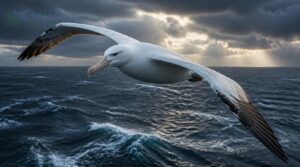
Close behind the wandering albatross, the southern royal albatross achieves a maximum wingspan of 3.51 meters (11.5 ft). Most of its roughly 8,200–8,600 breeding pairs nest on Campbell Island, New Zealand.
Like its cousin, it masters energy-efficient soaring across the Southern Ocean, foraging on squid and fish while covering thousands of kilometers between breeding seasons.
Tristan Albatross
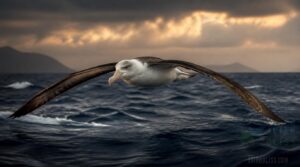
The Tristan albatross (Diomedea dabbenena) reaches a wingspan of 3.5 meters (11.5 ft), breeding almost exclusively on Gough Island in the South Atlantic. It spends most of its life airborne, using easy soaring across open ocean to hunt squid across thousands of kilometers.
Introduced house mice on Gough Island prey on chicks, while longline fishing kills adults at sea — pushing this species to critically endangered status.
Amsterdam Albatross

Rarer still than the Tristan, the Diomedea amsterdamensis breeds exclusively on Amsterdam Island in the southern Indian Ocean, nesting on high plateau terrain between October and February.
- Wingspan reaches 280–340 cm (9.2–11.2 ft)
- Adults weigh 4.8–8 kg (10.6–17.6 lb)
- Critically endangered; only a few hundred mature individuals remain
- Longline fishing bycatch drives ongoing population decline
Genetic analysis confirmed it as a distinct species in 1983.
Antipodean Albatross
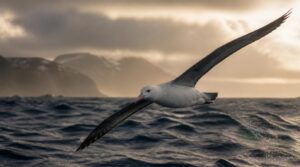
The Diomedea antipodensis rounds out the albatross giants with a wingspan of up to 3.3 meters (10.8 ft) and a body mass between 6–10 kg (13–22 lb).
It breeds on New Zealand’s subantarctic Auckland and Antipodes Islands, foraging across the South Pacific using wind-assisted soaring to cover vast ocean distances. Longline bycatch remains its most pressing threat.
Largest Extinct Bird Species

Before today’s giants, birds of an entirely different scale once walked and soared across the Earth. Some tipped the scales at hundreds of kilograms, while others stretched wingspans that would dwarf anything alive today. Here are the largest extinct bird species ever recorded.
Vorombe Titan
Vorombe titan claimed the title of heaviest bird ever, with mean body mass estimates converging near 650 kilograms (1,433 lb) — dwarfing every living species today. This Madagascan elephant bird stood roughly 3 meters (10 ft) tall on legs built like structural columns, its broad tarsometatarsus engineered purely for carrying that massive weight across open Holocene landscapes.
Formally described as a distinct genus in 2018, though taxonomic debate continues.
Giant Moa
Two giant moa species stood up to 3.6 meters tall — the tallest birds ever recorded. Females reached up to 2.5 times a male’s weight, one of the most extreme cases of avian sexual dimorphism known.
Their rapid extinction after Māori arrival in the 13th century came from three compounding forces:
- Intensive coastal hunting
- Habitat clearance
- Loss of Haast’s eagle
Dromornis Stirtoni
Meet Stirton’s thunderbird — an Australian giant that stood over 3 meters tall and weighed up to 500 kg. Fossils from the Alcoota Fossil Beds in the Northern Territory date this dromornithid to roughly 9–6 million years ago.
Its massive skull and deep jaw suggest a herbivorous-to-omnivorous diet, browsing high vegetation across Miocene open woodlands on powerful, endurance-built legs.
Pelagornis Sandersi
Pelagornis sandersi makes Dromornis look earthbound — this prehistoric seabird carried a wingspan of 6–7.4 meters, nearly double the wandering albatross. Reconstructed from a single North American skeleton, it soared ocean thermals with minimal flapping, guided by long, broad wings built for distance.
Its beak lined with bony pseudoteeth — enamel-free, socket-less projections — locked onto fish and squid at the water’s surface.
Argentavis Magnificens
Argentavis magnificens dominated South America’s skies roughly 6 million years ago, spreading wings up to 7 meters (23 feet) — nearly matching Pelagornis in sheer span.
Fossils recovered from central Argentina suggest it weighed around 70 kg (154 lbs), soaring open plains on thermal updrafts rather than flapping. Its hooked, 55-centimeter skull points squarely toward scavenging large vertebrate carcasses.
Largest Birds of Prey

Regarding raw power and aerial dominance, birds of prey occupy a league of their own. Some species combine massive wingspans with bone-crushing strength in ways that make them genuinely hard to ignore. Here are the largest raptors you’ll find ruling the skies today.
California Condor
The California condor nearly vanished — by 1987, every wild individual had been captured. Breeding programs reversed that, releasing birds back by 1992. Watch adults soar on thermal updrafts with a 3-meter (9.8 ft) wingspan, traveling hundreds of miles to scavenge carrion. Four threats remain:
- Lead poisoning from ammunition
- Habitat loss and wildfires
- Microtrash ingestion by chicks
- Human development reducing range
Cinereous Vulture
Across Eurasia’s steppes and mountain ranges, the cinereous vulture rivals the California condor in sheer scale — spanning up to 3.2 meters (10.5 ft) and weighing 14 kg (30.9 lb). Dark brown plumage and a hooked bill designed for tearing through tough hides make it unmistakable.
Poisoned carcasses remain its biggest threat, pushing conservation teams toward legal protection and reintroduction programs.
Steller’s Sea Eagle
Where the cinereous vulture dominates Eurasian skies, Steller’s sea eagle commands the coastlines of northeast Asia. Weighing up to 9 kg (19.8 lb) with a 2.5-meter wingspan, it’s the heaviest eagle on Earth.
Salmon runs drive everything — breeding success, territory, survival. Habitat loss and fish stock depletion have pushed it to vulnerable status, making active conservation monitoring critical.
Harpy Eagle
Shifting from coastlines to canopy, the harpy eagle (Harpia harpyja) rules the tropical rainforests stretching from Mexico to Argentina.
Females reach 9–9.5 kg with a wingspan of up to 220 cm — built for threading dense foliage, not open skies. Their talons rival a grizzly bear’s claws, crushing sloths and monkeys mid-canopy with lethal precision.
The harpy eagle’s talons rival a grizzly bear’s claws, crushing sloths and monkeys mid-canopy with lethal precision
Frequently Asked Questions (FAQs)
What birds are large?
Wings that blot out the sun, legs that shake the ground — large birds span every habitat on Earth, from flightless giants like the common ostrich (7 meters tall) to soaring heavyweights with wingspans exceeding three meters.
How many large birds are there?
There’s no single fixed number. Large bird species span dozens of families, and definitions vary by weight, height, or wingspan — making any precise global count depend entirely on which criteria you apply.
What is the largest bird species in the world?
The common ostrich (Struthio camelus) holds the title, standing up to 8 meters tall and weighing as much as 135 kg — no living bird on Earth surpasses it in size.
Which bird has the highest rank in the Accipitridae?
The Philippine eagle (Pithecophaga jefferyi) holds the highest rank in Accipitridae by total length, reaching 100 cm. Female harpy eagles rival it in mass, commonly exceeding 9 kg with powerful talons built for rainforest predation.
Can birds drink milk?
No, birds can’t drink milk. They lack lactase, the enzyme needed to digest lactose, so dairy causes bloating, diarrhea, and dehydration. Fresh water and moisture-rich foods are what birds actually need.
What are the big 6 birds?
The big six birds are Africa’s most iconic large species: the lappet-faced vulture, martial eagle, saddle-billed stork, Pel’s fishing owl, kori bustard, and ostrich — all prized by safari guides in Kruger National Park.
What are the top 5 biggest flying birds?
The heaviest flying birds are the great bustard (21 kg), kori bustard (16 kg), trumpeter swan (12 kg), Dalmatian pelican (15 kg), and Andean condor (15 kg) — each pushing the biological limits of sustained flight.
What are the largest birds in America?
Think of America’s skies as a layered kingdom. The California condor reigns with a 9-meter wingspan, while the trumpeter swan tops 12 kg, and South America’s greater rhea stands 8 meters tall.
What is the top 10 biggest bird?
The common ostrich tops the list at 8 kg (346 lbs), trailed by the Somali ostrich, cassowary, emu, and emperor penguin. Extinct giants like Vorombe titan once dwarfed them all at 730 kg.
What bird weighs 50 pounds?
Few birds on Earth tip the scales near fifty pounds — the great bustard maxes out around 44 pounds, while flightless species like the greater rhea comfortably exceed it, reaching roughly 66 pounds.
Conclusion
The heaviest flying bird ever recorded—a great bustard at 21 kg (46 lbs)—could barely sustain flight for more than a few minutes. That contrast alone tells you something profound about the trade-offs embedded in this large bird species list.
Scale brings power, but it exacts a price. Flightlessness, massive wingspans, extinction—each entry reflects nature’s relentless negotiation between size and survival. The birds that won those negotiations are the ones that still leave you speechless.
- https://www.discoverwildlife.com/animal-facts/birds/biggest-flying-birds
- https://www.birdfy.com/blogs/blogs/largest-flying-bird-in-the-world
- https://factanimal.com/animal-facts/largest-flying-birds-in-the-world
- https://avibirds.com/large-flying-birds
- https://nationalzoo.si.edu/animals/southern-cassowary