This site is supported by our readers. We may earn a commission, at no cost to you, if you purchase through links.
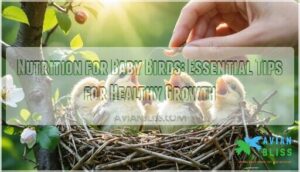 Feeding baby birds takes a mix of caution and science.
Their nutrition needs lean heavily on protein and fat—think insects, mealworms, or specialized baby bird formulas.
Vitamins and minerals, like calcium for bones, are just as critical, so some crushed eggshell might help.
Avoid giving them bread, milk, or anything processed, as these can harm their tiny systems.
Keep food warm (body temperature is ideal) but not too hot, and offer small portions often—every 20 minutes for hatchlings, no kidding!
Each species has unique needs, so research is key.
A little preparation here can guarantee they grow strong and healthy.
Table Of Contents
- Key Takeaways
- Nutrition Requirements
- Foods to Avoid
- Suitable Foods
- Feeding Techniques
- Feeding Schedules
- Safety Considerations
- Frequently Asked Questions (FAQs)
- What food can I leave out for baby birds?
- How do you take care of abandoned baby birds?
- What do you feed homemade baby birds?
- What type of food should baby birds eat?
- What is the nutritional value of chicken eggs?
- Can baby birds eat protein supplements?
- Should you feed baby birds a protein-rich diet?
- Should you feed a baby bird?
- Why is nutrition important for birds?
- What should I feed a baby bird?
- Conclusion
Key Takeaways
- Prioritize protein-rich foods like mealworms, egg yolk, or moistened dog kibble to support rapid growth and feather development.
- Avoid harmful foods like bread, milk, chocolate, or avocado, as they can cause malnutrition or toxicity.
- Feed baby birds small, warm portions frequently, adjusting the schedule and portion sizes based on their age and species.
- Incorporate essential vitamins and minerals like calcium and vitamin D to promote strong bones and overall health.
Nutrition Requirements
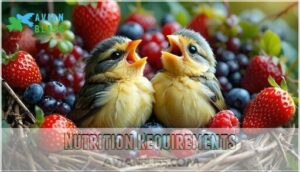
You’ll need to provide a carefully balanced diet to support a baby bird’s rapid growth and development.
Proteins, fats, vitamins, and minerals are all essential, along with species-specific variations, to guarantee healthy feather formation, strong bones, and proper organ function.
Protein and Fat Sources
Protein and fat are essential in a baby bird’s diet, acting like the bricks and mortar for growth.
To guarantee your chick gets the best start, focus on these nutrient-packed foods:
Focus on nutrient-packed foods, like mealworms or egg yolk, to foster rapid growth and healthy feathers from the very start.
- Insect Protein: Mealworms and crickets provide amino acids.
- Egg Yolk: A complete protein that’s easy to digest.
- Dog Food: Soaked kibble delivers protein and fats.
- Crushed Peanuts: Ideal for energy and feather health.
- LCPUFA Benefits: Found in fish, aiding immunity and metabolism.
These options guarantee balanced avian nutrition.
Remember, a baby bird diet must match its needs, whether it’s nestling food or for an insectivorous bird diet.
Always adjust for species!
Vitamin and Mineral Needs
A balanced baby bird diet needs essential vitamins and minerals for proper development.
Calcium deficiency can affect bone health and beak strength, while Vitamin D is essential for calcium absorption.
Vitamin A boosts immune support, and Vitamin E helps with cell protection.
To meet nutritional requirements, sprinkle crushed eggshells or mineral mixes on food.
Species protein needs must also be considered for overall health.
These elements are essential for feather development and overall avian nutrition, ensuring your bird grows strong and healthy with a balanced diet that includes essential vitamins.
Hydration Importance
Water is essential for a baby bird’s development, as dehydration can quickly become life-threatening.
Watch for signs like wrinkled skin or sunken eyes to confirm proper hydration.
Offer water carefully—never straight from a dish.
Use these steps:
- Use an eyedropper or syringe for controlled amounts, avoiding direct pouring.
- Maintain electrolyte balance with specialist solutions to support metabolic functions.
- Monitor hydration daily, especially during warm weather or illness.
- Adapt methods based on species needs; smaller birds require even gentler handling.
Keeping hydration in check confirms baby birds thrive within their nutritional requirements.
Dietary Variations by Species
Every bird’s diet reflects its lifestyle—a hawk’s carnivore diet differs from a finch’s granivorous bird diet.
Insectivores prefer insects, larvae, and worms, while herbivores need soft seeds and greens.
Nectarivores crave sugary nectars, and frugivorous bird diets revolve around fruits.
Altricial bird diets (like robins’) demand high protein, while precocial bird diets (like ducks’) focus on varied nutrition.
Research species thoroughly—baby bird formula or natural options can bridge gaps.
Tailor care for healthy, happy chicks.
Foods to Avoid
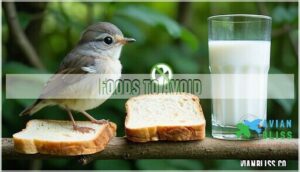
When feeding baby birds, you’ve got to be cautious about what goes into their tiny beaks, as some foods can be harmful or even deadly.
Avoid giving items like milk, bread, or large food pieces, since these can cause malnutrition, stomach upset, or choking.
Toxic Foods
Not everything in your kitchen is safe for baby birds.
Even tiny amounts of certain foods can be lethal.
Avocado contains persin, which harms their hearts.
Chocolate and caffeine can trigger seizures or death.
Steer clear of these toxic foods:
- Onions and garlic: They damage red blood cells.
- Salt and sugar: Upset their delicate systems.
- Grapes: Hazardous to digestion.
Also, avoid milk dangers, bread risks, and dairy issues—these disrupt bird nutrition.
Never offer water directly to avoid water aspiration.
Always prioritize proper bird care with customized bird diet recommendations for good health.
Low Nutrient Foods
Bread Dangers top the list of bird diet mistakes—it’s like feeding air to a hungry bird.
Milk Problems and Dairy Issues upset delicate digestion, while Water Aspiration risks choking.
Junk food is a no-go, much like spoiled seeds or salty snacks.
These won’t meet bird nutrition standards and may harm growth.
Check this table for clarity:
| Food Type | Problem | Effect on Bird |
|---|---|---|
| Bread | No nutrients | Malnutrition risk |
| Milk/Dairy | Indigestible | Stomach upset |
| Salty Snacks | High salt content | Kidney strain |
| Spoiled Seeds | Bacteria growth | Illness, gut harm |
The key to proper bird care is understanding what foods are harmful, and the provided table helps to clarify these risks by outlining the specific problems associated with each food type.
Overfeeding Prevention
Feeding baby birds can be tricky, but overfeeding isn’t hard to avoid if you pay attention.
Keep the crop gently rounded—not bulging—or digestion slows.
Watch droppings for unusual consistency or frequency.
Stick to your bird’s feeding schedule to promote proper digestion rates.
Protein-rich foods are best for growth.
Here’s how to prevent overfeeding:
- Monitor the crop’s fullness.
- Avoid giving food past regurgitation signs.
- Adjust portions for weight management.
- Stick to proper bird feeding techniques.
Suitable Foods
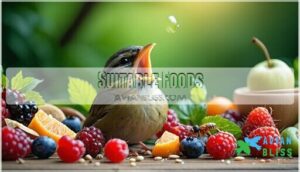
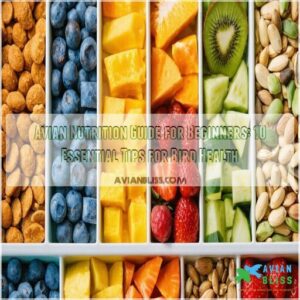
You’ll want to provide baby birds with foods that closely mimic their natural diet, which often includes insects, seeds, and small fruits.
Choosing the right options guarantees they get the protein, fats, and essential nutrients needed for proper growth and feather development.
Natural Food Options
Natural food options are perfect for baby birds and match what they’d find in the wild.
Offer mealworms, crickets, and earthworms for protein, complementing them with native seeds for variety. Mimic parental regurgitation by softening foods.
Fresh fruits like blueberries can add vitamins, and crushed eggshells serve as natural supplements for calcium.
Fresh blueberries boost vitamins, while crushed eggshells provide essential calcium, supporting strong bones and thriving baby birds.
Introducing foraging behaviors early encourages independence, ensuring orphaned birds develop healthy habits critical for moving toward adulthood in their natural environment.
Parents often feed their young insects, as they’re essential for energy and growth.
Commercial Bird Foods
Although wild diets work for many birds, commercial bird formulas remain unmatched for ideal nutrition.
They’re scientifically crafted to meet baby birds’ needs while keeping bird diet planning manageable.
Here’s what you should consider:
- Comparison of formulas – Prioritize those ensuring balanced nutrition for all growth stages.
- Ingredient quality – Avoid fillers; look for calcium, protein, and essential vitamins.
- Cost analysis versus nutrition – Splurge on reliable brands despite higher prices.
- Storage guidelines – Keep in airtight containers, freeze if needed, for lasting freshness.
These formulas often include essential bird nutrients to support growth.
Using commercial bird formulas guarantees your feathered friend stays healthy while you sidestep common feeding pitfalls.
Insect-Based Diets
Insect-based diets are a natural cornerstone of chick feeding.
Insects pack protein and fats essential for baby birds, supporting strong feathers and growth.
Mealworms, waxworms, and silkworms are excellent choices, offering energy-rich nutrition when served fresh.
Gut-load insects, like crickets, with nutrient-dense food to boost their value.
Live insects promote feeding instincts, though frozen ones work too.
Be cautious with wild-caught risks like parasites.
Consider insect-based bird food as a supplemental option.
Tailor insect sourcing to species variations, ensuring balanced options in your bird diet planning.
Proper bird feeding sets the stage for healthy, thriving fledglings.
It is crucial to have a well-planned diet that includes insect-based components for optimal growth.
Feeding Techniques
Feeding baby birds properly requires careful attention to technique, as their fragile bodies depend on the right methods for safe consumption.
You’ll need to use tools like syringes or small bowls, keep the food warm without overheating, and make certain their beaks stay clean to prevent infections.
Hand-Feeding Methods
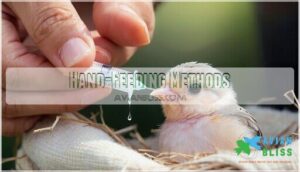
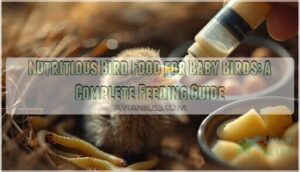
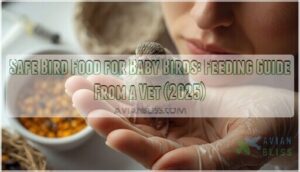
Hand-feeding baby birds can feel tricky at first, but the right tools and steps make everything smoother.
Start by picking the right tool—like a syringe, dropper, or small spoon—for controlled feeding. Good hygiene is non-negotiable; clean tools and hands keep birds safe.
It’s important to use proper hand feeding techniques for the bird’s health.
Use gentle feeding techniques to avoid harm:
- **Hold tools at the beak’s side, never head-on.
- **Feed in small amounts, watching for swallowing between bites.
- **Maintain a natural posture, mirroring parent birds.
- **Monitor the crop to prevent overfilling.
With the right approach, you’ll mimic nature beautifully, ensuring safe, happy feedings.
Bowl Feeding Guidelines

When shifting baby birds to feed from bowls, focus on three key guidelines for safety and success.
Use shallow bowls to match the bird’s size—tiny for finches, slightly larger for doves.
Material safety matters; opt for non-slip, easy-to-clean dishes.
Consider using specialized baby bird feeders designed for this purpose.
Keep food depth at 1/4 inch to prevent choking or accidental drowning.
Place bowls in quiet, accessible spots to encourage eating without added stress.
Monitor feeding times, filling bowls during peak activity.
Regular cleaning is vital to avoid bacteria buildup.
These bird feeding guidelines facilitate proper nutrition and help your baby birds move smoothly to independent eating.
Food Temperature Control
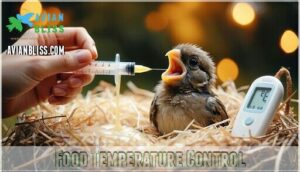
Getting the ideal warmth for baby bird food is vital and can’t be overlooked. Serve the food slightly warm, like a cozy hug, to mimic a parent bird’s body heat.
Too cold? It slows digestion. Too hot? It risks crop burns, a painful mistake no baby bird should endure. Always test food on your wrist first; if it’s comfortable, it’s bird-approved.
A baby bird thermometer helps guarantee accurate temperatures.
- Use temperature tools like digital thermometers for precision.
- Opt for gentle heating methods, such as warm water baths.
- Avoid microwaves—they create dangerous hot spots.
- Allow gradual cooling if the food gets accidentally overheated during preparation.
Feeding Schedules
You’ll need to adjust feeding schedules based on the baby bird’s age, ensuring they receive meals frequently enough to meet their rapid growth needs.
Younger birds require smaller, more frequent feedings, while older ones can manage longer intervals between meals as their digestion matures, which is a key factor in their overall development and digestion.
Frequency and Portion Sizes
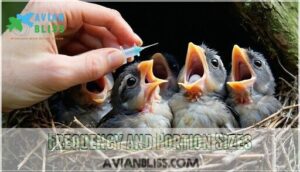
Baby birds have fast metabolisms, making proper feeding intervals and portion consistency essential. Feed nestlings every 15-20 minutes, from sunrise to sunset, to match their caloric needs.
As they grow, choosing the right commercial bird formula is essential for their health.
Portions should equal about 10% of the bird’s body weight per meal. Check the crop—a visible bulge at the base of the neck—for fullness after feeding.
Here’s a quick reference:
Age/Condition Feeding Interval Portion Size (Percent of Body Weight)
Age-Based Feeding Adjustments
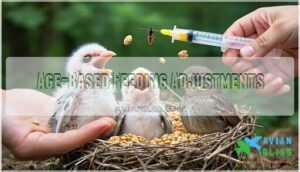
As baby birds go through different growth stages, their feeding needs evolve.
You’ll need to adjust your approach to suit their development stages:
- Start with frequent feedings every 15-20 minutes for newborns, then scale down to every 30-60 minutes as they mature.
- Gradually increase portion sizes to meet their growing appetite needs.
- Slowly introduce adult foods, like seeds and insects, to align with fledgling nutrition and monitor digestion.
Adjusting feeding schedules supports proper development and guarantees healthy bird diet supplements.
Safety Considerations
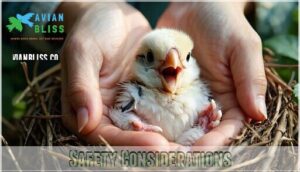
You’ve got to keep baby birds safe by preventing overfeeding, avoiding harmful foods, and watching for any signs of distress.
When in doubt, don’t hesitate to consult a professional, as their guidance can make all the difference in ensuring healthy growth.
Preventing Overfeeding
Overfeeding can be a bigger problem than you think with bird feeding.
Always check the crop—it should be full, not stretched tight. Portion control matters; offer pea-sized amounts, adjusting for your bird’s size and species.
Pay attention to cues like decreased movement or digestion issues. Weight monitoring helps too.
Here’s a quick reference:
| Sign | What It Means | Next Step |
|---|---|---|
| Crop feels tight | Overfeeding | Skip the next meal |
| Lethargy | Too much food or wrong diet | Adjust portion, check nutrition |
| Crop empties slowly | Digestion issues | Consult a wildlife expert |
Avoiding Harmful Foods
In regards to baby birds, avoiding harmful foods is critical for their survival.
Steer clear of bread—it’s empty calories.
Milk dangers arise since birds are lactose intolerant, causing digestive issues.
Water aspiration can happen if you try giving them water directly.
Dairy issues extend to cheese, yogurt, or butter, all harmful.
Toxic plants like avocado, garlic, and onion are deadly for their sensitive systems.
Junk food and salty snacks also disrupt bird nutrition advice.
Stick to bird-safe diet formulations for ideal bird feeding safety and health.
Seeking Professional Help
When feeding and caring for baby birds, situations can pop up where you’ll need help from the pros. Whether it’s about an orphaned bird diet or managing health issues, turning to the experts is smart.
- Contact Avian Rehabilitation Centers for advice or help with injured, weak birds.
- Ask veterinary care specialists for medical support if signs of illness or deformity appear.
- Seek Expert Dietary Advice from wildlife professionals for species-specific feeding needs.
- Use resources on Orphaned Bird ID if you’re unsure about its species.
A Vet Consultation Urgency is especially important when handling delicate health concerns or long-term caregiver planning, which requires expert advice to ensure the best care for the baby birds.
Frequently Asked Questions (FAQs)
What food can I leave out for baby birds?
You can leave out moistened dog kibble, cooked egg yolk, or a mixture of baby food with unflavored Pedialyte.
Make sure the food is soft, nutrient-rich, and appropriate for the bird species.
How do you take care of abandoned baby birds?
Did you know baby birds need 100°F warmth?
Use a heat lamp, create a soft nest, and keep them draft-free.
Feed species-specific food often, avoid milk or water, and mimic parental care diligently.
What do you feed homemade baby birds?
You can feed homemade baby birds a mix of soaked dog kibble, cooked egg yolk, and soft fruits.
Make sure the food is warm, watered down to oatmeal consistency, and species-appropriate for their needs.
What type of food should baby birds eat?
Baby birds thrive on soft, protein-rich foods like moist dog kibble, scrambled eggs, or specialized hand-rearing formulas.
Always warm the food to body temperature and adjust portions based on their species and growth stage.
What is the nutritional value of chicken eggs?
Chicken eggs pack a punch with protein, healthy fats, and essential vitamins like B12, D, and A.
They’re also rich in minerals, especially calcium and phosphorus, making them a compact, nutritious source of energy and growth!
Can baby birds eat protein supplements?
Think of protein supplements like junk food for birds—tempting but not balanced.
Baby birds thrive on natural proteins like eggs, insects, and mealworms.
Stick to species-specific diets, ensuring proper nutrients for healthy growth and development, with natural proteins being essential for their well-being.
Should you feed baby birds a protein-rich diet?
A protein-rich diet is critical for baby birds, as protein supports feather development, muscle growth, and energy needs.
Without it, birds can suffer stunted growth, deformities, and weak immune systems, so prioritize high-quality protein sources carefully.
Should you feed a baby bird?
Why does feeding a baby bird matter? It’s essential for their survival.
Baby birds rely on frequent, gentle feeding with species-appropriate, protein-rich food.
Avoid dairy, water, and oversized pieces to prevent harm or fatal mishaps.
Why is nutrition important for birds?
Good nutrition keeps birds healthy, fuels their energy, and supports proper growth, especially for feathers and bones.
Without it, they risk stunted development, weak immune systems, and deformities.
Think of nutrition as their survival superpower!
What should I feed a baby bird?
Feed baby birds a warm, soft mix like moistened dog kibble, cooked egg yolk, or baby bird formula.
Use a popsicle stick to serve it, and avoid water, bread, or milk—they can harm them.
Conclusion
Caring for baby birds is no small task—you’re basically a personal chef, nutritionist, and waiter rolled into one.
Meeting their unique needs requires understanding nutrition for baby birds, from balancing proteins and fats to ensuring proper vitamins like calcium for strong bones.
Skip the bread, milk, or junk; these do more harm than help.
Master warm, frequent feedings and species-specific diets, and you’ll set them up for healthy growth.
It’s science-backed care, minus the feathers.
- https://www.gardenwildlifedirect.co.uk/bird-seed-mixes.html
- https://www.bilantan.com/blogs/blog/guide-what-feed-baby-bird?srsltid=AfmBOopOph9rYvBSTKpgAdiHnZvsU-m8paNNX0ujnByiVCAy1_yg4O0E
- https://www.quora.com/What-kind-of-food-do-baby-birds-eat-if-theyve-fallen-from-the-nest-and-need-to-be-fed-by-humans
- https://www.justanswer.com/pet-bird/1ba1g-found-baby-bird-obn-grass.html
- https://blog.gardenwildlifedirect.co.uk/what-do-baby-birds-eat/