This site is supported by our readers. We may earn a commission, at no cost to you, if you purchase through links.
Most pet birds don’t die from disease—they die from a bowl of seeds refilled on autopilot. A seed-only diet looks generous, even loving, but it quietly starves birds of the vitamins, protein, and calcium their bodies depend on.
A macaw needs something entirely different from a finch, and a sedentary cage bird burns far fewer calories than one flying laps around your living room.
Getting bird food for pet birds right means matching nutrition to species, size, and lifestyle—not just grabbing whatever’s on sale.
The products reviewed here make that easier, with honest breakdowns of ingredients, portion guidance, and which birds actually benefit from each option.
Table Of Contents
- Key Takeaways
- Choosing Bird Food by Species Size
- Top 10 Bird Foods for Pet Birds
- 1. Wild Harvest Universal Bird Blend
- 2. Wild Harvest Small Bird Seed Blend
- 3. Wild Harvest Orange Bird Seed Blend
- 4. Kaytee Forti Diet Pro Health Bird Food
- 5. Wild Harvest Bird Seed Blend
- 6. ZuPreem Sensible Seed Bird Food
- 7. Wild Harvest Orange Bird Seed
- 8. Kaytee Forti Diet Safflower Cockatiel Food
- 9. ZuPreem Pure Fun Bird Seed Pellet Blend
- 10. ZuPreem FruitBlend Bird Pellets
- Seed Vs Pellet Diets
- Fortified Nutrition and Ingredient Quality
- Freshness, Rotation, and Daily Feeding
- Frequently Asked Questions (FAQs)
- What is the best food for pet birds?
- How do I tell a parrot I love you?
- How to feed a pet bird a healthy diet?
- What type of bird food should I feed my bird?
- How do you feed a picky pet bird?
- Should you give your pet the best bird feed?
- Does a bird have a good diet?
- Can a pet bird eat birdseed as a regular food?
- What should an owner feed their pet bird?
- What is the healthiest thing to feed birds?
- Conclusion
Key Takeaways
- A seed-only diet quietly starves your bird of essential vitamins, calcium, and protein — pellets should make up 70–80% of daily intake for most species.
- Bird nutrition isn’t one-size-fits-all: a finch, cockatiel, and macaw each need different seed sizes, fat levels, and calcium ratios to stay healthy.
- Activity level matters more than most owners realize — a sedentary cage bird needs smaller, nutrient-dense portions, not just a refilled bowl.
- Transitioning to better food works best gradually over 7–10 days, rotating formulas every few weeks to prevent nutrient gaps and keep your bird interested in eating.
Choosing Bird Food by Species Size
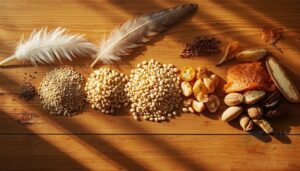
Not all birds eat the same way, and feeding a finch like a macaw is a recipe for trouble. Size matters more than most people think, with respect to picking the right food.
Matching the feeder to the bird makes a real difference, and these best finch feeders are built with exactly that size gap in mind.
Here’s a breakdown of what works best for each category.
Small Bird Food for Parakeets, Canaries, and Finches
Small birds like parakeets, canaries, and finches have fast metabolisms, so feeding frequency matters more than you might think.
Their small bird diet selections should center on a quality seed mix — canary grass seed, red and white millet — plus calcium supplementation through cuttlebone.
Rotate seed variety regularly for behavioral enrichment, and consider fortified pellets to round out protein sources without overloading fat.
Including Omega‑3 fatty acids promotes feather gloss and skin health.
Medium Bird Food for Cockatiels and Conures
Cockatiels and conures sit in a sweet spot — bigger than finches but not quite macaw-sized.
A good Cockatiel Mix or Conure Food generally offers a balanced seed and vegetable blend with consistent Protein Targets and immune support built in.
Look for Gut Microbiome Support through prebiotics, plus omega fatty acids for a real Feather Condition Boost.
Calcium Ratio matters too, especially during molt.
Large Bird Food for Macaws and Cockatoos
Step up from cockatiels and you’re in macaw and cockatoo territory — birds with big personalities and even bigger nutritional needs.
Hookbill Premium Hookbill Bird Food built around High Protein Pellets should make up about 70 percent of their diet.
Round it out with a Low-Fat Seed Mix, Calcium Supplementation, Seasonal Fruit Variety, and a Foraging Puzzle Design to keep them sharp and satisfied.
Matching Calories to Activity Level
Activity Portioning matters more than most bird owners realize. A sedentary parrot burns fewer calories than one enjoying daily out-of-cage flights, so your Calorie Adjustment Chart isn’t optional — it’s your baseline.
Track weight weekly using Weight Monitoring Strategies, reduce Treat Frequency Guidelines during low-energy periods, and account for Seasonal Activity Shifts.
Nutrient density should stay consistent even when portions shrink.
Species-specific Ingredient Needs
Every species has its own rulebook. Beak Size Matching isn’t just about what fits in the mouth — it shapes how well your bird actually chews and absorbs nutrients.
Fat Level Suitability, Fiber Tolerance, and Vitamin Form Preference all shift depending on species-specific needs.
Mineral Ratio Adjustments matter too, since choosing bird food based on species size directly affects feather health, brain function, and long-term wellbeing.
Top 10 Bird Foods for Pet Birds
Finding the right bird food doesn’t have to be overwhelming — you just need to know what to look for. These ten options cover everything from small finches to large macaws, with formulas built around real nutritional needs.
Here’s a closer look at each one.
1. Wild Harvest Universal Bird Blend
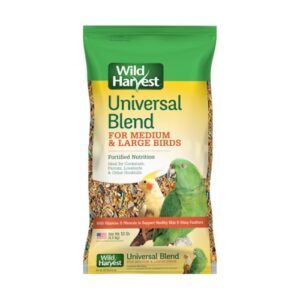
If you keep multiple medium or large birds, finding one blend that works for everyone is a small victory. Wild Harvest Universal Bird Blend does a decent job of that.
It combines sunflower seeds, safflower seeds, dried peas, and other vegetables, then fortifies the mix with vitamins A, D3, and E for feather health and immune support.
At $12.78 for 10 lbs, it’s practical and straightforward. Just store it somewhere cool and dry — seeds don’t love humidity any more than you do.
| Best For | Bird owners with multiple medium or large species (cockatiels, parrots, lovebirds) who want one simple, daily-use blend that covers everyone. |
|---|---|
| Bird Size Target | Medium/Large |
| Net Weight | 10 lb |
| Vitamins Added | Yes |
| Primary Form | Seed blend |
| Retail Price | $12.78 |
| Artificial Colors | No |
| Additional Features |
|
- Solid mix of seeds and veggies with added vitamins to keep feathers looking their best
- One daily refill keeps feeding routines simple, especially in multi-bird households
- BPA-free and gentle on sensitive stomachs
- Some cockatiels can be picky about it — not every bird will dive right in
- Occasional batch issues like extra hulls or dust mean you might need to sieve it
- Needs proper storage to stay fresh; humidity is not its friend
2. Wild Harvest Small Bird Seed Blend
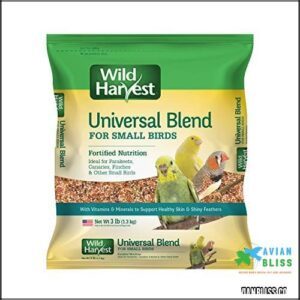
For small birds like parakeets, canaries, and finches, Wild Harvest Small Bird Seed Blend hits the right notes.
The mix combines white millet, canary grass seed, oat groats, and flaxseed — seeds your little ones actually want to eat.
It’s fortified with vitamins A, D3, and E, plus calcium and phosphorus for bone and feather support.
At 3 lbs per resealable bag, you get solid freshness protection and enough supply to last a few weeks without constant restocking.
| Best For | Owners of small birds like canaries, parakeets, and finches who want a nutritious, all-in-one seed blend that covers daily dietary needs without the hassle of mixing their own. |
|---|---|
| Bird Size Target | Small |
| Net Weight | 3 lb |
| Vitamins Added | Yes |
| Primary Form | Seed blend |
| Retail Price | $N/A |
| Artificial Colors | Yes (FD&C Red 40, Yellow 6, Blue 1) |
| Additional Features |
|
- Packed with vitamins A, D3, E, and key minerals like calcium and phosphorus — solid support for healthy feathers and bones
- The mix of millets, canary grass seed, oat groats, and flaxseed keeps birds interested and encourages natural foraging
- At 3 lbs a bag, it’s a good bulk value that cuts down on how often you’re restocking
- Some bird species, like cockatiels, may not take to it as well as others
- Certain batches can have more hulls and dust than expected, which means extra cleanup
- Contains artificial food dyes (Red 40, Yellow 6, Blue 1), which might be a dealbreaker for owners who prefer all-natural ingredients
3. Wild Harvest Orange Bird Seed Blend
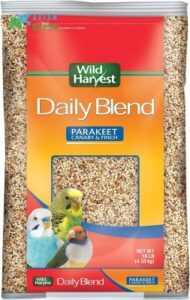
If your bird turns up its beak at plain seed mixes, the Wild Harvest Orange Bird Seed Blend might change the game. The orange essence and lightly toasted seeds make it genuinely more appealing to picky parakeets, canaries, and finches.
The base includes white millet, red millet, canary grass seed, and oats — plus added vitamins A, D, and E.
It comes in a resealable bag, so freshness isn’t a gamble. Just remember it’s a supplement, not a complete diet.
| Best For | Small bird owners with picky eaters — especially those keeping parakeets, canaries, or finches — who want an affordable daily seed blend with a little extra flavor appeal. |
|---|---|
| Bird Size Target | Small |
| Net Weight | 10 lb |
| Vitamins Added | Yes |
| Primary Form | Seed blend |
| Retail Price | $10.94 |
| Artificial Colors | No |
| Additional Features |
|
- The orange essence actually makes a difference for fussy birds who ignore plain mixes
- Resealable bag keeps things tidy and helps the seed stay fresh longer
- Good everyday value at under $11 for 10 lbs
- Not a complete diet on its own — you’ll still need to round things out with fresh food
- The bag’s seal can lose its grip over time, so an airtight container is a safer bet
- The "grain-free" label is misleading given the ingredient list, which may frustrate shoppers with specific dietary requirements for their birds
4. Kaytee Forti Diet Pro Health Bird Food
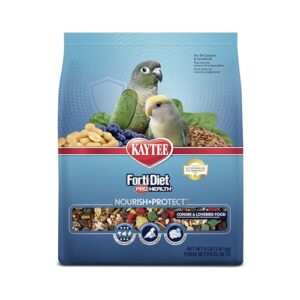
Kaytee has been in the avian nutrition game for over 150 years — and this formula shows why that experience matters. The Forti Diet Pro Health blend is built specifically for conures and lovebirds, packing in flaxseed, blueberries, spinach, and peanuts alongside prebiotics and probiotics for genuine gut support.
At $12.95 for 4 pounds, it’s solid value. Just note it’s not ideal for smaller finches or juvenile birds needing specialized diets.
| Best For | Adult conures and lovebirds that need a daily seed-based diet with extra gut and immune support. |
|---|---|
| Bird Size Target | Medium (Conures/Lovebirds) |
| Net Weight | 4 lb |
| Vitamins Added | Yes |
| Primary Form | Seed blend |
| Retail Price | $12.95 |
| Artificial Colors | Yes (Yellow 5, Red 40, Blue 1) |
| Additional Features |
|
- Pre- and probiotics plus psyllium fiber keep digestion running smoothly
- Packed with superfoods like blueberries, spinach, and flaxseed for real nutritional depth
- Great value at $12.95 for 4 lbs from a brand with serious avian expertise
- Large seeds and whole peanuts can be tough for smaller birds to manage
- Contains artificial dyes (Red 40, Yellow 5, Blue 1) that some owners prefer to skip
- Heavy on seeds, so you’ll want to add fresh produce for a well-rounded diet
5. Wild Harvest Bird Seed Blend
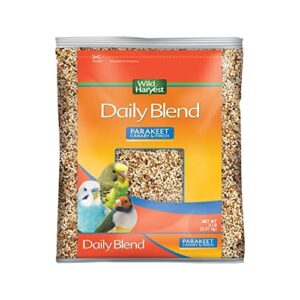
If you’re looking for a reliable everyday seed blend that won’t break the bank, this one earns its spot. The Wild Harvest Bird Seed Blend combines white millet, oat groats, canary grass seed, red millet, and rapeseed — all enhanced with orange oil for extra appeal.
At $5.66 for 5 pounds, it’s genuinely economical.
A vitamin and mineral premix promotes feather health and daily vitality. Just don’t treat it as a complete diet — fresh veggies and fruits still belong in the mix.
| Best For | Parakeet, canary, and finch owners who want an affordable daily seed blend that works just as well for backyard feeders as it does for pet birds. |
|---|---|
| Bird Size Target | Small |
| Net Weight | 5 lb |
| Vitamins Added | Yes |
| Primary Form | Seed blend |
| Retail Price | $5.66 |
| Artificial Colors | No |
| Additional Features |
|
- Great value at $5.66 for 5 lbs — easy to stock up without overspending
- Orange oil and a solid seed mix make it genuinely appealing to small birds
- Resealable bag keeps things fresh, and the added vitamins support feather health
- Not a complete diet on its own — you’ll still need to add fresh fruits and veggies
- Very small birds may struggle with some of the larger seed pieces
- The resealable zipper doesn’t always work as advertised, and the mix can attract squirrels
6. ZuPreem Sensible Seed Bird Food
ZuPreem’s Sensible Seed Bird Food steps things up a notch for cockatiels, lovebirds, and small conures. It blends safflower seeds, squash seeds, shelled pumpkin seeds, ground corn, and whole buckwheat with FruitBlend flavored pellets — giving your bird both foraging fun and real nutritional backup.
Think of it as seeds with a safety net.
Cap it at about 30% of your bird’s daily diet and pair it with fresh pellets or vegetables.
The 2 lb resealable bag keeps everything fresh between servings.
| Best For | Medium-sized birds like cockatiels, lovebirds, quakers, and small conures who need more variety than a plain seed diet offers. |
|---|---|
| Bird Size Target | Medium |
| Net Weight | 2 lb |
| Vitamins Added | Yes |
| Primary Form | Seed & pellet blend |
| Retail Price | $N/A |
| Artificial Colors | Yes (Yellow 5, Red 40, Yellow 6, Blue 1) |
| Additional Features |
|
- Packs in real ingredients like pumpkin seeds, squash seeds, and buckwheat to keep foraging interesting
- Includes pellets alongside seeds, so there’s some nutritional backup built right in
- Works for all life stages and comes with a 100% satisfaction guarantee
- High in safflower seeds, which are fatty and low in calcium — you may need to supplement
- Contains artificial dyes and added sugars that some avian vets recommend avoiding
- Only meant to cover about 30% of your bird’s diet, so it needs to be paired with other foods to be complete
7. Wild Harvest Orange Bird Seed
 View On Amazon
Wild Harvest’s Orange Bird Seed brings something a little different to the seed aisle.
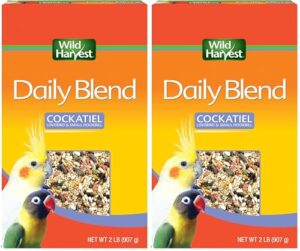
Formulated for cockatiels, lovebirds, and small hookbills, it blends millet, sunflower, and safflower seeds with a light orange essence that genuinely gets birds interested in their bowl.
The barrier-sealed 2 lb resealable bag keeps seeds fresh between feedings, and the pack-of-two format saves you reorder headaches.
Just remember — seeds stay a supplement, not the whole story.
| Best For | Small bird owners with cockatiels, lovebirds, or similar hookbills who want a flavorful seed blend in a convenient bulk size. |
|---|---|
| Bird Size Target | Small |
| Net Weight | 2 lb (x2) |
| Vitamins Added | Yes |
| Primary Form | Seed blend |
| Retail Price | $N/A |
| Artificial Colors | No |
| Additional Features |
|
- The orange essence adds real appeal — less picky eating, less wasted seed
- Barrier-sealed bags keep things fresh, and buying two at once cuts down on reorder runs
- Works across all life stages, so it fits whether you’ve got a baby bird or an old-timer
- Only comes in orange flavor, so birds with specific sensitivities might turn their beaks up at it
- Not a complete diet on its own — seeds should be part of a broader feeding routine
- Switching birds over takes time and a careful look at the label chart to avoid digestive upset
8. Kaytee Forti Diet Safflower Cockatiel Food
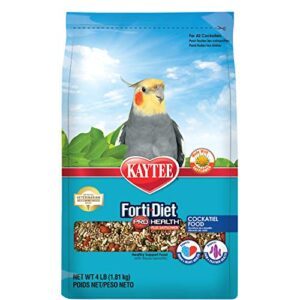
If your cockatiel is prone to ignore the bowl, this one might change that. Kaytee Forti-Diet Pro Health Safflower Cockatiel Food swaps sunflower seeds for safflower — lower fat, but still satisfying.
It’s built around canary grass seed, oat groats, and flaxseed, with added probiotics and prebiotics to keep digestion steady. Vitamins A, D3, and E round out the blend for feather and immune support. The 4 lb resealable bag runs about $12.95 — solid value for a daily cockatiel staple.
| Best For | Adult cockatiel owners who want a seed-based diet with digestive support and lower fat than typical sunflower mixes. |
|---|---|
| Bird Size Target | Adult Cockatiels |
| Net Weight | 4 lb |
| Vitamins Added | Yes |
| Primary Form | Seed blend |
| Retail Price | $12.95 |
| Artificial Colors | Yes (Yellow 5, Red 40, Blue 1) |
| Additional Features |
|
- Swaps sunflower for safflower seeds, cutting fat while keeping birds interested in the bowl
- Pre- and probiotics help keep digestion on track, especially for sensitive or older birds
- Packed with vitamins, omega-3s, and antioxidants to support feathers, immunity, and overall health
- Contains wheat, corn, and soy — not ideal for birds with grain sensitivities
- Includes artificial dyes (Yellow No. 5, Red No. 40, Blue No. 1) that some owners prefer to skip
- Formulated for adults only, so it’s not a fit for nestlings or young birds needing more protein
9. ZuPreem Pure Fun Bird Seed Pellet Blend
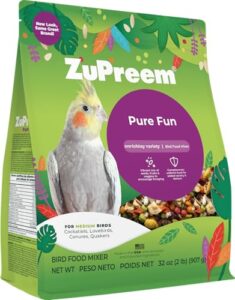
Want to shake things up a bit? The ZuPreem Pure Fun Bird Seed Pellet Blend does exactly that.
It pairs traditional seeds — millet, canary grass, safflower — with FruitBlend Flavor Smart Pellets, dried fruit pieces, and vegetables in one 2 lb bag.
That mix keeps foraging instincts alive while the pellets deliver structured vitamins and minerals.
It’s marketed as a supplement, not a standalone diet, so pair it with your bird’s regular pellets.
It retails around $13.99.
| Best For | Medium-sized bird owners — cockatiels, lovebirds, small conures — who want to add variety and foraging fun alongside a regular pellet diet. |
|---|---|
| Bird Size Target | Medium |
| Net Weight | 2 lb |
| Vitamins Added | Yes |
| Primary Form | Seed/fruit/veggie mix |
| Retail Price | $13.99 |
| Artificial Colors | Yes (Red 40, Yellow 5, Yellow 6, Blue 1) |
| Additional Features |
|
- Combines seeds, dried fruit, veggies, and FruitBlend pellets in one bag, so your bird gets real dietary variety without buying multiple products.
- Supports immune health, feather color, and digestion thanks to a solid vitamin and mineral lineup built right into the mix.
- Scattering it over regular feed is an easy way to spark natural foraging behavior and keep your bird mentally engaged.
- Lower seed ratio means pickier, seed-loving birds might turn their beaks up at it.
- Contains artificial dyes (Red 40, Yellow 5, Yellow 6, Blue 1) and peanuts, which could be a concern for sensitive birds.
- It’s a supplement, not a complete diet — you’ll still need a quality base pellet to round things out.
10. ZuPreem FruitBlend Bird Pellets
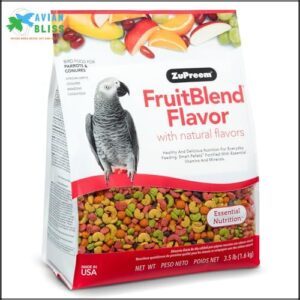
If your bird needs a complete daily diet — not just a supplement — the ZuPreem FruitBlend Pellets are worth a serious look. Fruit-shaped, multi-colored pellets come in small, medium, and large sizes for species like conures, Amazons, and cockatoos.
Real banana, apple, and orange flavors make mealtime genuinely appealing. The formula covers vitamins A, D3, E, and B-complex, plus minerals for feather and bone health.
One heads-up: those vivid dyes can turn droppings surprisingly colorful. A 3.5 lb bag runs around $20.
| Best For | Parrot and conure owners looking for a complete, everyday diet that makes mealtime more fun and keeps nutrition on point. |
|---|---|
| Bird Size Target | Medium/Large |
| Net Weight | 3.5 lb |
| Vitamins Added | Yes |
| Primary Form | Pellets |
| Retail Price | $N/A |
| Artificial Colors | Yes (Yellow 5, Red 40, Blue 1) |
| Additional Features |
|
- Real fruit flavors (banana, apple, orange) make birds actually want to eat it — great for weaning picky seed addicts onto a healthier diet
- Fully balanced formula with vitamins A, D3, E, B-complex, and key minerals to support feathers, bones, and immune health
- Fruit shapes and colors tap into natural foraging instincts, keeping medium to large birds engaged at mealtime
- Those bright artificial dyes pass right through — expect colorful droppings that can stain fabrics or furniture
- Contains soy, corn, and possible peanut/tree nut traces, which may not work for birds with sensitivities
- Some birds play favorites with certain pellet colors, so you might end up with a weirdly picked-over bag
Seed Vs Pellet Diets
What you feed your bird matters more than most people realize, and the seed-versus-pellet debate sits right at the heart of it. Getting the balance right means understanding what each option actually brings to the bowl.
Here’s a closer look at how seeds and pellets each play a role in keeping your bird healthy.
Benefits of Pellet-based Nutrition
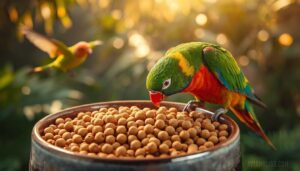
Pellets are basically the set it and forget it of bird nutrition. Each piece delivers Uniform Nutrition — the same protein, vitamins, and minerals in every bite. That means Consistent Intake and Improved Digestibility, thanks to thermal processing that makes nutrients easier to absorb.
You’ll also notice Reduced Dust and a cleaner Stable Bowl Form compared to loose mixes.
| Pellet Benefit | What It Means | Why It Matters |
|---|---|---|
| Uniform Nutrition | Same nutrients per bite | No selective feeding gaps |
| Improved Digestibility | Thermal processing aids absorption | Better nutrient use |
| Stable Bowl Form | Compact, consistent shape | Less mess, less waste |
Why Seeds Should Stay Limited
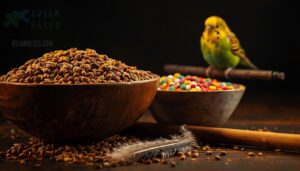
Seeds look harmless in the bowl, but too much of a good thing quietly causes real damage.
A seed-heavy diet raises Obesity Risk, triggers Fatty Liver disease, and creates Calcium Deficiency that weakens bones over time.
Reducing seed overconsumption with pellets is the smartest move for Weight Management and balanced nutrition for small vs medium birds alike.
| Risk | Cause | Effect |
|---|---|---|
| Obesity Risk | Excess calorie-dense seeds | Reduced activity, weight gain |
| Fatty Liver | High-fat seed overload | Organ stress, shortened lifespan |
| Calcium Deficiency | Seed vs pellet diet imbalance | Weak bones, poor egg health |
Using Seed Mixes for Foraging Enrichment
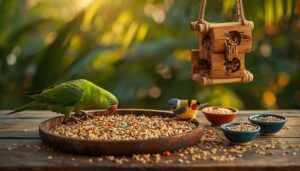
Think of seeds as a scavenger hunt, not a meal. Scatter Feeding Techniques and Puzzle Feeder Design turn snack time into brain exercise, your bird actually needs. Vary Seed Size Variation across dishes to slow consumption and extend Foraging Time Monitoring naturally.
| Enrichment Method | Bird Benefit |
|---|---|
| Scatter feeding | Extends foraging time |
| Puzzle feeders | Stimulates problem-solving |
| Multiple small dishes | Reduces boredom |
| Enrichment Cycle Planning | Facilitates diet rotation schedule |
Balancing Palatability With Nutrition
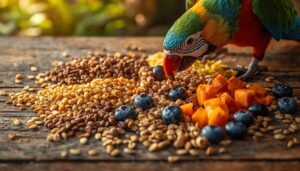
Your bird won’t eat what it doesn’t enjoy — but enjoyment alone doesn’t equal health. Flavor Nutrient Synergy is the real goal: food that smells appealing through Aroma Acceptance and delivers Ingredient Integrity underneath. Natural flavor enhancers like fruit pieces boost palatability without sacrificing fortified nutrition.
Enjoyment fills the bowl, but only nutrient-packed flavor keeps your bird truly healthy
| Balance Factor | Why It Matters |
|---|---|
| Calorie Flavor Ratio | Prevents overconsumption of rich seeds |
| Texture Health Balance | Matches foraging instincts while ensuring complete intake |
Balancing vitamins and minerals for feather health, alongside prebiotic benefits and probiotic benefits, means your bird actually absorbs what it eats.
When to Combine Seeds and Pellets
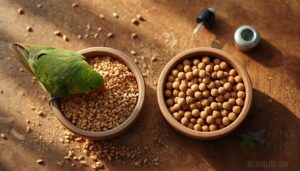
Mixing seeds and pellets isn’t guesswork — it’s a structured process built on Behavioral Observation and Health Monitoring. Your Feeding Schedule shapes how well Pellet Introduction takes hold.
| Stage | Seed Ratio Adjustment |
|---|---|
| Week 1–2 | 80% seed, 20% pellets |
| Week 3–4 | 60% seed, 40% pellets |
| Week 5–6 | 40% seed, 60% pellets |
| Maintenance | 20–30% seed, 70–80% pellets |
Follow feeding guidelines and diet rotation closely, watching droppings and weight throughout.
Fortified Nutrition and Ingredient Quality
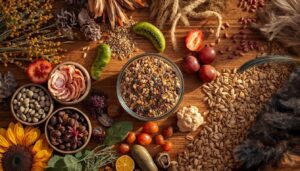
Not all bird foods are created equal — and the ingredient label tells the whole story.
The best formulas go beyond basic seeds and grains, packing in targeted nutrients that actually support your bird’s health from the inside out.
Here’s what to look for when quality really matters.
Vitamins A, D, and E for Health
Fortified blends do more than fill your bird’s bowl — they protect its health from the inside out.
Vitamins A, D, and E each play distinct roles: vitamin A enhances Vision Support, Skin Integrity, and Immune Boost by maintaining healthy epithelial tissues; vitamin D drives Bone Strength through calcium absorption; and vitamin E delivers Antioxidant Protection at the cellular level.
Balancing vitamins and minerals for feather health matters more than most owners realize.
Omega Fatty Acids for Feathers and Brain Support
Beyond vitamins, your bird’s brain and feathers depend heavily on the right fats — specifically omega‑3 fatty acids and omega‑6 fatty acids in the right Fatty Acid Ratio.
Here’s what a balanced fatty acid profile actually does:
- DHA Brain Boost enhances Neuro Lipid Support for sharper cognition during development
- Omega‑3 Feathering supplies structural lipids that keep plumage strong through molt
- Fish Oil Supplement ingredients deliver these fats in a bioavailable form
- A nutrient‑rich universal blend covers both omega families together
- Poor fat balance — not just low fat — leads to dull feathers and foggy behavior
That’s why Higgins Safflower Gold includes DHA omega‑3 specifically for feather health and brain health.
Prebiotics and Probiotics for Digestion
Fats set the foundation, but your bird’s gut does the real work of turning food into fuel. Kaytee Forti-Diet adds prebiotic fiber types and probiotic strain selection together — a synbiotic pairing that promotes gut fermentation benefits from the inside out.
Prebiotics feed beneficial bacteria; probiotics boost viable microbe count. Together, they’re a quiet but powerful part of optimizing gut health through avian nutrition.
Natural Fruit Flavors and Added Palatability
Your bird’s gut is thriving — now let’s talk about whether it’ll actually eat. Natural fruit flavors like natural orange essence use Fruit Extract Sources and Flavor Carrier Systems to release aroma the moment your bird gets close. These Aroma Release Techniques follow Safety Regulation Compliance guidelines, so natural flavor enhancers in bird food stay safe:
- Fresh fruits and fresh vegetables provide real palatability without artificial additives
- Natural ingredients over artificial additives mean cleaner label transparency
- Storage Preservation keeps those volatile esters potent longer
Checking Ingredient Lists for Quality Standards
When you’re scanning a bag of bird food, ingredient transparency isn’t just a buzzword — it’s your first quality check. Ingredients listed in descending weight order, clear allergen disclosure, and supplier certification all signal a trustworthy brand.
Look for batch traceability on packaging and verify label accuracy reflects the current formula. Certified organic or non-GMO ingredients are a bonus.
Natural ingredients over artificial additives? Always the smarter pick.
Freshness, Rotation, and Daily Feeding
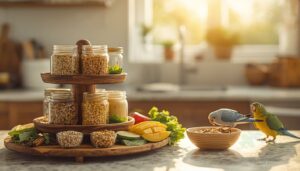
Even the best bird food loses its value if it’s stored carelessly or fed without a plan. How you manage freshness, rotation, and daily portions matters just as much as what’s in the bag.
Here’s what you need to know to keep every meal working for your bird.
Using Resealable Bags to Preserve Freshness
A good resealable bag does more than just close — it’s your first line of defense against spoiled seed.
Look for multi-layer barrier material choices that block moisture, and always press out trapped air before sealing; air exclusion techniques alone can extend freshness up to twice as long.
Store bags in a cool 50–65°F spot, and your food packaging resealable investment pays off every morning.
Rotating Bird Foods Every Few Weeks
Think of bird diet rotation as your flock’s version of a weekly farmers’ market run.
Rotating bird foods every 2–4 weeks helps Nutrient Gap Prevention and delivers nutritional variety essentials, your birds can’t get from one formula alone.
Use simple Rotational Schedule Templates to time Seasonal Ingredient Swaps, support Digestive Health Monitoring, and build Behavioral Enrichment Timing into your daily feeding schedule naturally.
Transitioning to New Food Over 7 to 10 Days
Switching your bird’s food cold turkey is a recipe for stress — theirs and yours.
A Gradual Ratio Increase over 7–10 days works best: start at 75% old food, move to 50/50 midway, then 75% new food before completing the change.
Dropping Monitoring and Appetite Observation daily helps you catch trouble early. Keep Water Availability consistent throughout, and use your Adjustment Chart when anything looks off.
Portion Control to Prevent Overfeeding
Overfeeding sneaks up on you faster than you’d think. Use Scale Measurement to stay honest — a kitchen scale beats guessing every time. Meal Scheduling means set windows, not all-day grazing.
Factor in Treat Limiting and Calorie Counting when seeds or snacks are involved. Weight Tracking weekly catches creeping gains early.
Stick to your Feeding guidelines for small versus large birds, and adjust portions before the problem grows.
Keeping Fresh Water Available at All Times
Fresh water isn’t optional — it’s the foundation of everything else you’re doing right.
Follow a Daily Water Rotation by swapping bowls every 24 hours and sticking to a Hygiene Maintenance Schedule weekly.
Use Multiple Water Stations to cut competition, and apply Bowl Placement Strategies by keeping dishes away from perches.
Temperature Controlled Water reduces stress, especially in dry or warm rooms.
Frequently Asked Questions (FAQs)
What is the best food for pet birds?
The best bird food depends on your bird’s species, size, and activity level.
Pellets, premium seed mixes, and fortified blends each serve different nutritional requirements — and matching pet bird nutrition and health to the right formula makes all the difference.
How do I tell a parrot I love you?
Show your parrot love through Gentle Touch, Soft Vocalizations, and Eye Contact. Offer treats, read Body Language Cues, and let them approach you. That patience says everything.
How to feed a pet bird a healthy diet?
Want a happy, healthy bird?
Balance pellets, seeds, fresh water, and species-specific nutrients daily. Match portions to your bird’s size and activity, and rotate foods to keep their gut microbiome thriving.
What type of bird food should I feed my bird?
Your bird’s size and species drive every food choice. Match seeds, pellets, and protein sources to their nutritional requirements, follow a consistent feeding schedule, and you’ll nail weight management naturally.
How do you feed a picky pet bird?
Start with one new food alongside familiar favorites. Use foraging stimulation and interactive feeding toys to spark curiosity.
Gradual flavor introduction, positive reinforcement training, and rotating bird foods prevent dietary boredom without stress.
Should you give your pet the best bird feed?
Yes — quality matters.
Investing in premium bird seed mixes with fortified nutrition, solid Feed Brand Reputation, and proven ingredient quality standards pays off in Long Term Health.
The Cost Benefit and Nutrient Density make it worth every penny.
Does a bird have a good diet?
Your bird’s diet depends on species-specific needs — gut microbiome balance, calcium ratio, protein quality, vitamins and minerals, and seasonal food variation all matter.
Prebiotics and probiotics support digestion, while feather health reflects what’s actually in the bowl.
Can a pet bird eat birdseed as a regular food?
Technically, yes — but it shouldn’t be the main course.
Seeds are high in fat, and veterinary recommendations cap them at around 10% of the diet to avoid obesity risks and serious nutrient gaps.
What should an owner feed their pet bird?
Your pet bird thrives on variety — quality pellets, leafy greens, measured seeds, and calcium supplements form the foundation.
Match portions to species size, activity level, and nutritional requirements for genuinely balanced, feather-healthy meals.
What is the healthiest thing to feed birds?
Perfectly portioned pellets, paired with fresh produce and fortified blends, deliver the healthiest results.
Nutrient-rich universal blends packed with vitamins and minerals, omega-3 fatty acids, prebiotics and probiotics, and balanced fiber content over seed-only diets.
Conclusion
Funny how the smallest decision—what goes in that bowl each morning—carries the most weight for your bird’s health.
A seed-only routine feels like generosity, but it’s quietly the opposite.
Choosing the right bird food for pet birds means thinking past habit and toward what each species actually needs to thrive.
Get the nutrition right, and everything else—feathers, energy, lifespan—usually follows.
Your bird can’t read the label, but you can.
- https://www.jahankaveh.com/en/feed-pellets-and-the-benefits-of-pellet/
- https://www.vitagronutrition.com.ua/en/blog/advantages-of-pelleted-feed/
- https://www.feedstrategy.com/animal-nutrition/poultry/article/15439498/pelleted-feeds-understanding-nutritional-benefits-issues
- https://www.lffoodmachine.com/info/what-are-the-benefits-of-feeding-feed-pellets-92646414.html
- https://acg-world.com/news/what-pelletisation-and-how-it-advancing-nutraceuticals-and-dietary-supplements