
This site is supported by our readers. We may earn a commission, at no cost to you, if you purchase through links.
 Proper bird house placement for purple martins makes all the difference in attracting these social, insect-eating birds.
Set the house in a wide-open area, at least 40 feet from trees and tall structures, so martins feel safe and can easily swoop in.
Install it 12-20 feet above ground on a sturdy pole with predator guards, because no one likes uninvited guests like snakes or raccoons.
Orient the entrances away from prevailing winds—east or southeast works best.
Since martins prefer group housing, space poles about 30 feet apart.
It’s all about creating a safe, sunny, and welcoming space—keep reading to fine-tune your setup!
Table Of Contents
- Key Takeaways
- Choosing Ideal Location
- Housing Placement Tips
- Attracting Purple Martins
- Managing Competing Species
- Caring for Purple Martins
- Off-Season Preparation
- Frequently Asked Questions (FAQs)
- What is the best housing for purple martins?
- What are common predators of purple martins nests?
- How to protect purple martin eggs from extreme heat?
- Can purple martins coexist with other bird species nearby?
- What types of insects do purple martins primarily eat?
- How can you encourage martins to return yearly?
- Conclusion
Key Takeaways
- Place the birdhouse in a wide-open area, at least 40 feet from trees and tall structures, to give martins clear flyways and protection from predators.
- Set the house 12-20 feet high on a sturdy pole with predator guards, and orient entrances away from prevailing winds, ideally east or southeast.
- Space multiple birdhouses or poles at least 30 feet apart to create a colony-friendly environment while avoiding overcrowding.
- Regularly check and maintain the house, evict invasive species like starlings and sparrows, and clean compartments after the season to keep it ready for returning martins.
Choosing Ideal Location

You’ll find that placing your purple martin house in an open area 30-60 feet from your home, with no tall trees within 40 feet, dramatically increases your chances of attracting these social birds.
Placing your purple martin house 30-60 feet from your home, away from tall trees, invites these social birds to thrive.
Just like choosing the perfect spot for a backyard barbecue, the location of your martin housing can make or break your success, as these aerial acrobats need plenty of room to swoop and soar while feeling protected by their human neighbors, which is a key factor in attracting purple martin.
Open Areas for Martins
The perfect purple martin habitat starts with wide-open spaces.
Your martin house placement needs clear, unobstructed flyways in at least two directions, giving these aerial acrobats room to soar.
They thrive in open area placement that provides ideal hunting conditions for catching insects on the wing.
This openness also offers natural predator protection—hawks and owls can’t easily ambush martins when there’s nowhere to hide, providing natural predator protection and allowing them to thrive in such environments.
Distance From Human Dwellings
One key factor in successful martin house placement is finding the right distance from your home.
Purple martins actually prefer sites near human activity, ideally 30-60 feet from your dwelling. This ideal proximity balances safety concerns with their natural affinity for human presence.
You’ll also benefit from easy monitoring of your colony, while the visual appeal of these aerial acrobats enhances your outdoor living space.
Consider that proper drainage is essential to maintain a dry and comfortable nesting environment.
Avoiding Trees and Obstructions
When placing your purple martin house, remember trees are the biggest obstacle to success.
Keep housing at least 40 feet from any tree—preferably a distance equal to the tree’s height.
This creates essential flyway clearance while reducing predator access.
Martins need open areas for wind resistance and proper sunlight exposure.
Many obstruction hazards go unnoticed, but martins will spot them immediately and avoid poorly positioned houses, requiring careful consideration of wind resistance.
Housing Placement Tips
You’ll need to carefully position your purple martin houses 12-20 feet high on poles, facing south or west, with at least 40 feet clearance from trees to create the perfect purple martin neighborhood.
The placement of your housing determines whether these aerial acrobats will zip past with a polite "no thanks" or settle in for the summer, so getting these details right is like putting out a welcome mat that actually works.
Height and Pole Installation
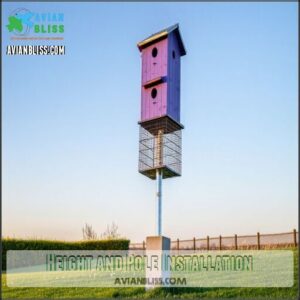
After securing your site location, mount your purple martin house at the ideal height range of 12-20 feet.
Your pole should be set in a concrete base 18-25 inches deep for stability against wind resistance. Most successful martin colonies use metal poles that can be lowered for maintenance.
Wood and aluminum are popular material choices, though mounting options like fence posts can work too when properly secured.
Proper placement also requires deterrents for predators to guarantee nesting safety.
Directional Facing for Martins

Unlike popular belief, the directional facing for your martin birdhouse isn’t critical—it’s all about location.
While south or west-facing entrances are recommended, what’s most important is orienting entrances toward wide open flight paths.
You’ll want multiple entrances facing different directions and consistent orientation to avoid confusing your purple martin tenants.
Consider your region’s weather patterns and prevailing winds for ideal direction and wind protection to ensure the best environment for your birds, focusing on orienting entrances in a way that provides a clear and safe flight path.
Spacing Between Nest Boxes

After orienting your houses southward or westward, you’ll need to evaluate proper spacing. Purple martins thrive in colonies but need personal space too.
For ideal nest density without triggering territorial behavior:
- Space individual martin houses at least 10 feet apart
- Position gourd racks 15-20 feet from other housing types
- Allow 12-15 feet between large colony houses
- Maintain 8-10 feet minimum for smaller housing units
- Consider resource competition when planning your martin colony
This balanced approach supports healthy social interactions while preventing overcrowding. You can find products related to martin house dimensions online, which helps in achieving healthy social interactions and preventing overcrowding with a focus on personal space.
Attracting Purple Martins
You’ll need more than just a house to welcome purple martins to your yard, as these social birds respond best to specific attraction methods like dawnsong recordings and strategically placed decoys.
Welcoming purple martins takes more than a house—dawnsong recordings and decoys create the perfect invitation for these graceful aerial acrobats.
With proper techniques and a dose of patience, you’re setting the stage for these aerial acrobats to discover your thoughtfully prepared housing and potentially establish a thriving colony that returns year after year.
Patience and Persistence

Many successful purple martin landlords will tell you that attracting these birds requires a long-term commitment.
Don’t get discouraged if your martin house sits empty the first season—or even the second.
Site fidelity means established colonies typically return to the same location, while initial attraction of new birds often happens gradually.
Colony establishment can take several years, so patience and ideal placement are your best tools for gradual colonization.
Playing Dawnsong Recordings
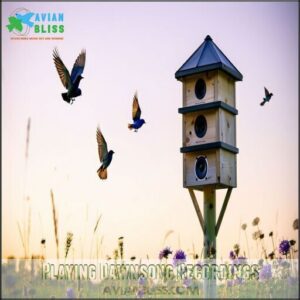
Harness the power of dawnsong recordings to substantially improve your chances of attracting purple martins.
This technique is particularly effective in rural areas where established colonies are sparse.
Position your speaker near the purple martin house, playing high-quality recordings during early morning hours.
The distinctive chirps and warbles act like a sonic beacon, signaling to passing martins that your location is colony-friendly.
You’ll notice the dawnsong effectiveness varies depending on timing strategy.
Ideal placement involves locating the house 12-15 feet high, which is a critical factor in attracting and retaining purple martins.
Using Decoys and Feeding Areas
While dawnsong recordings get martins’ attention, visual cues can seal the deal.
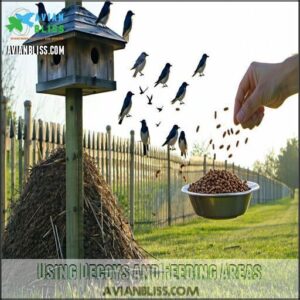
Life-size decoys from PMCA create the illusion of an established colony—precisely what these social birds are looking for.
You can find various decoy options online.
- Position decoys near housing units where passing martins can easily spot them
- Combine decoys with supplemental feeding during bad weather
- Toss mealworms or crickets into the air to mimic flying insects
- Create brush piles between your colony and trees to divert predators
Managing Competing Species
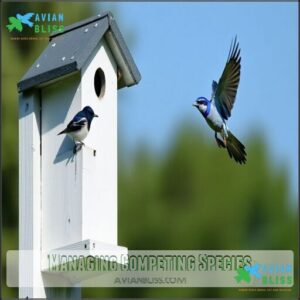
You’ll need to regularly check your martin houses to evict unwelcome tenants like European starlings and house sparrows, as these aggressive competitors can quickly take over and prevent purple martins from establishing colonies.
Just as you wouldn’t let uninvited guests crash at your home indefinitely, your purple martin houses require similar vigilance to guarantee these aerial acrobats have exclusive access to their summer real estate, ensuring they can thrive in their desired summer real estate.
Removing Other Nesters
While attracting purple martins with decoys and dawnsong can be effective, you’ll need to actively manage other native birds that compete for nesting space.
House wrens, tree swallows, and bluebirds may try claiming your martin housing. Check houses every 2-3 days and promptly remove nesting materials from these competitor birds.
This nest removal prevents them from establishing territory while leaving space open for martins to discover. Always practice humane deterrent methods during competitor identification, which helps in managing the native birds and ensuring the martin housing is available for the intended species.
Getting Rid of Non-Native Species
While removing competing birds is important, your battle against non-native species requires specific solutions. European starlings represent the most significant threat to your purple martin colony.
Here’s how to implement effective starling deterrent methods:
- Install crescent-shaped SREH (Starling Resistant Entrance Holes) on your martin house
- Temporarily seal entrances before martins arrive in spring to prevent early invasive birds
- Choose aluminum houses with factory-installed SREH for long-term starling exclusion
- Consider ethical, non-lethal sparrow control options that comply with local regulations
These strategies dramatically reduce nest site competition from invasive birds. A suitable option includes a house with starling resistant holes, which can be an effective method for purple martin colony protection and non-native species control, ensuring a safe environment for your martins.
Regularly Checking Houses
Keeping a watchful eye on your martin houses can make all the difference in colony success. You’ll need to check houses 3-4 times weekly to prevent unwanted guests from taking over.
| Check Type | Frequency | Action Required |
|---|---|---|
| Nest Check | 3-4x weekly | Remove competing nests |
| Egg Count Logs | Weekly | Document in spreadsheet |
| Predator Guard Checks | Bi-weekly | Confirm proper function |
| Cleaning Schedule | Monthly | Remove debris/parasites |
Consistent house maintenance keeps your martin community thriving while deterring house sparrows and starlings.
Caring for Purple Martins
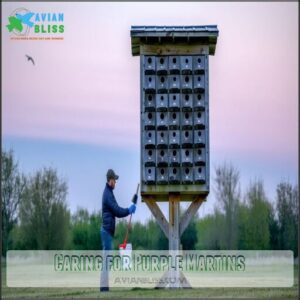
You’ll need to check your purple martin housing at least three times weekly, just like a doctor’s appointment that keeps these aerial acrobats healthy and thriving.
Regular maintenance, including installing predator guards and seasonal cleaning with bleach water, guarantees your feathered tenants return year after year to your bird apartment complex.
Regular Nest Checks
Most successful purple martin landlords perform regular nest checks to guarantee colony health. You’ll need to monitor your martin houses 3-4 times weekly for best results.
Here’s what to track:
- Egg count and hatch dates using log spreadsheets
- Nest occupancy tracking to identify potential problems early
- Data collection on nestling development and fledging success
This consistent nest monitoring helps you identify issues before they become serious problems, ensuring the overall nest monitoring and fledging success of your martin colony.
Adding Predator Protection
Predators can devastate your purple martin colony overnight if you don’t take defensive measures.
Install proper guards on your martin house to guarantee these beloved birds return year after year.
One popular option is to prevent climbing predators with specialized baffles.
| Predator Guard Type | Threat Protection | Installation Tips |
|---|---|---|
| Stovepipe Baffle | Raccoons, Squirrels | Mount 4 feet above ground |
| Electric Guards | Snakes, Raccoons | Use with backup power |
| Snake Nets | Climbing Snakes | Check daily for captures |
Don’t compromise on predator protection—even one night without guards can lead to complete colony loss. It is crucial to take defensive measures to ensure the beloved birds are safe.
Cleaning and Maintenance
With your purple martin house protected, regular cleaning and maintenance become your next mission.
After the birds depart, remove old nests and sanitize compartments with a mild bleach solution to prevent parasites.
Check for any loose or damaged components that need repair before next season.
This off-season care isn’t just housekeeping—it’s essential for the health of returning martins and the longevity of your birdhouse, which is crucial for the health of the birds.
Off-Season Preparation
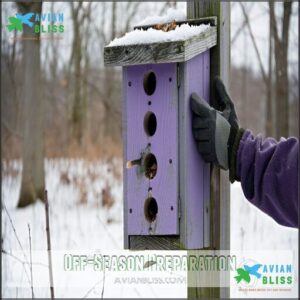
You’ll maximize your chances of attracting purple martins next spring by tackling essential maintenance during the fall and winter months, when your feathered tenants have headed south.
While your birdhouses sit empty, you can thoroughly clean out old nesting material, repair any damage, and upgrade predator guards—turning what might seem like a boring chore into an investment that pays off with the cheerful chatter of returning martins.
Cleaning and Repairing Houses
Autumn’s golden leaves signal it’s time for martin house maintenance.
After your aerial friends have migrated, remove old nests completely and scrub with a mild bleach solution (1:9 ratio).
Check for loose screws, cracked entrances, or damaged compartments needing replacement.
Don’t forget to inspect pulleys and cables if you have a winch system.
This off-season care guarantees your birdhouse will be ready when purple martins return.
Improving Predator Protection
During the off-season, upgrade your predator guards to protect returning martins.
Install conical baffles or stovepipe guards on poles to prevent climbing predators.
Consider switching to SREH (Starling-Resistant Entrance Holes) sized at exactly 2 inches to deter house sparrows while allowing martins access.
If you’ve noticed predator activity, try adding owl-deterrent flashers above your martin house height. Monitoring predator behavior patterns can inform which deterrent strategies will work best for your specific location.
Preparing for Next Season
With predator guards installed, you’re already on the right track! Now’s the time to prepare your purple martin house for next season.
Check the structural integrity of poles and housing, tightening loose screws and replacing damaged parts. Store detachable houses in a dry place if you live in harsh winter areas.
Consider adding fresh nesting material and planning housing improvements like better ventilation or updated SREH doors for better protection. Like the Atlanta Falcons, who are still pursuing a championship, you should always aim for improvement.
Frequently Asked Questions (FAQs)
What is the best housing for purple martins?
Think of a purple martin house as a cozy apartment building.
Choose a multi-unit, white-painted structure with 7"x12" compartments, SREH doors, and easy maintenance access.
Mount it high, ensuring predator protection and open flyways.
What are common predators of purple martins nests?
Raccoons, snakes, squirrels, owls, and hawks often target purple martin nests.
You can outsmart them by adding predator guards to poles, using starling-resistant entrances, and keeping houses away from trees or dense vegetation.
How to protect purple martin eggs from extreme heat?
Shield eggs from heat by painting houses white to reflect sunlight, ensuring ventilation holes for airflow.
Add insulation or shade if temperatures soar.
Regularly check nests, as overheating can harm developing chicks.
Can purple martins coexist with other bird species nearby?
Purple martins can coexist with some species, but they fiercely defend their nests.
Sharing space with sparrows or starlings often leads to trouble, so evict these competitors quickly to keep your martin colony thriving.
What types of insects do purple martins primarily eat?
They feast on flying insects like mosquitoes, beetles, dragonflies, and moths.
You’ll rarely see them hunting on the ground—they’re aerial acrobats, catching bugs mid-flight, which keeps your backyard’s pest population in check, making them a beneficial presence due to their pest population control.
How can you encourage martins to return yearly?
Think of martins as loyal friends—keep their homes clean, predator-free, and ready before they return.
Play dawn songs, use decoys, and make certain nearby food sources are available.
Patience pays off; they’ll reward you yearly.
Conclusion
Picture a wide-open field, sunlight pouring down, and purple martins darting gracefully through the air.
By mastering bird house placement for purple martins—choosing open spaces, setting proper heights, and spacing houses thoughtfully—you create a haven these birds can’t resist.
Add predator guards, keep homes clean, and stay vigilant against invasive species.
With patience and care, your efforts will pay off, rewarding you with the lively chatter and insect control only these aerial gems can provide.
- https://www.facebook.com/Purple.Martin.Fanatics/
- https://birdsoftheworld.org/
- https://backyardbirdwatcher.com/purplemartinhouses.html
- https://birdschoice.com/products/purple-martin-house-starling-resistant-entrance-holes-4-floor-16-room-assembled?srsltid=AfmBOorqNWb0bFHv-D_o4guh3_UPEgiT2YAg6MHmr4JrqRU5cUIea_h5
- https://www.homedepot.com/p/BIRDS-choice-Purple-Martin-House-with-Starling-Resistant-Entrance-Holes-4-Floor-16-Room-Assembled-PMSR16ASSEM/330975534