This site is supported by our readers. We may earn a commission, at no cost to you, if you purchase through links.

A bird bath sits empty in your yard while neighborhood birds flock to a murky puddle down the street. This frustrating scene plays out in countless backyards because attracting birds to your bird bath requires more than just filling a basin with water.
Birds are surprisingly selective about where they bathe and drink. They prefer specific water depths, safe locations, and features that signal cleanliness and security.
The good news is that a few strategic changes can transform your ignored bird bath into a bustling avian hotspot. Understanding what birds actually want—from the right placement to the ideal water movement—makes all the difference between an empty decoration and a lively gathering spot that brings cardinals, robins, and warblers right to your window.
Table Of Contents
Key Takeaways
- Birds prefer bird baths with textured surfaces like concrete or stone for safe footing, water depths between 1-2 inches with sloping edges, and placement 10-15 feet from shrubs in partial shade where they can spot predators while having quick escape routes nearby.
- Moving water through fountains, drippers, or solar pumps attracts 30-50% more bird species because the sound and ripples catch their attention from over 30 meters away while also preventing mosquito breeding and algae growth.
- Daily water changes and weekly scrubbing with safe cleaners like diluted vinegar keep your bird bath healthy since shared water spreads diseases between birds and stagnant water becomes a breeding ground for mosquitoes in just four days.
- Winter bird baths with thermostatically controlled heaters become critical lifelines when natural water sources freeze because birds lose up to 5% of their body mass overnight from dehydration and must waste precious calories melting snow without access to liquid water.
Choosing The Right Bird Bath
The right bird bath can make all the difference in how many feathered visitors you attract to your yard. Your choice depends on several factors, including the bird species you want to see and your local climate.
Here are the key features to think about when selecting a bird bath.
Concrete Vs. Ceramic Vs. Plastic Baths
When choosing bird bath materials, you’re balancing durability against practicality. Concrete bird baths last over 10 years and offer textured surfaces that attract 70% more birds than smooth plastic, but they weigh around 23 pounds and crack during freeze-thaw cycles. For example, stone bird baths are known for their longevity and resistance to the elements.
Consider these trade-offs:
- Plastic bird bath options cost 40-60% less and resist freezing
- Ceramic provides aesthetic appeal but splits in winter
- Concrete dominates the market with greater bird preference
- Terra cotta requires careful winter storage like ceramic
Ground-level Vs. Pedestal Designs
Once you’ve picked your material, bath height matters just as much. Ground-level bird baths draw cardinals and robins but increase predator vulnerability—cats kill millions of birds yearly. Pedestal-style bird bath designs at 2-3 feet offer better protection while attracting the widest species preference. A good height will balance accessibility and protection from predators, and ideal bird bath height is between 1 to 3 feet.
Consider these factors:
| Feature | Ground-level | Pedestal |
|---|---|---|
| Species Preference | Larger ground feeders | Most variety |
| Predator Vulnerability | High risk | Moderate protection |
| Cleaning Ease | More debris daily | Less frequent needs |
Mid-height pedestals balance safety with accessibility and aesthetic integration in your yard.
Selecting Textured Surfaces for Safe Footing
Beyond height, textured surfaces matter most for bird bath safety. Concrete advantages include rough textures that birds grip within milliseconds—100% more usage than glazed designs. Stone benefits offer natural traction year-round. Adding rocks or pea gravel gives smaller birds secure stepping areas. Even sanding surfaces on slippery materials creates artificial texture. Terra-cotta traction works beautifully since its porous surface lets claws lock securely for safe footing.
Ideal Bath Depth for Different Bird Species
Once you’ve got safe footing sorted, bird bath depth becomes your next focus. Small bird species like finches and chickadees need shallow water around 1 inch deep. Larger birds such as robins and blue jays prefer 2 inches.
Sloping benefits all visitors—start at half-inch edges and gradually deepen to 2 inches center. This design lets ground feeders wade safely while adjusting depths for various bird species naturally.
Improving Slippery Surfaces With Rocks or Gravel
After selecting the right depth, you need to tackle slippery surfaces. Place flat river rocks sized 2-3 inches across the basin bottom. Pea gravel works well too—spread a single layer creating 1-inch water coverage.
These traction methods prevent drowning by limiting depth below 5 cm while mimicking natural streambeds. Your installation tips: arrange stones to expose one shallow section above the water line for bird safety.
Optimal Placement for Maximum Bird Visits
Where you place your bird bath can make all the difference in how many feathered visitors show up. Birds need to feel safe while they drink and bathe.
Let’s look at the key placement factors that will turn your bird bath into a popular gathering spot.
Shady Spots to Keep Water Cool

Shade transforms your bird bath location into a haven that birds flock to naturally. Temperature regulation keeps water 10-15°F cooler, while evaporation reduction cuts daily water loss by 50-70%. Here’s why providing shade and protection matters:
- Birds prefer water below 75°F for comfortable bathing
- Algae prevention increases dramatically in a shady spot
- Daily visits triple during hot weather
- Maintenance efficiency improves with 40% less cleaning needed
Position your bath where foliage filters sunlight for best bird attraction.
Proximity to Trees and Shrubs for Cover

When birds feel exposed, they won’t visit your bath—no matter how inviting it looks. Place it 10-15 feet from shrubs or trees to balance predator avoidance with protective cover. This distance lets birds spot threats while keeping foliage close for quick escapes.
Dense vegetation offers perching and drying spots after bathing, though areas with 22+ shrubs per 1000 m² dramatically boost visits while reducing predator ambush risk.
Safe Distance From Predators and Windows
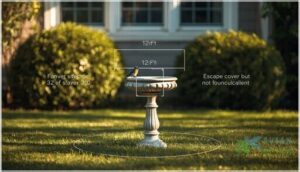
Position your bath at least three feet high or 10-15 feet from dense cover to create open sightlines that help birds detect predator ambush zones. Keep it within three feet of windows or beyond 30 feet to minimize window strike risk. Separate it 10-15 feet from feeders to prevent feeder contamination while maintaining escape routes.
Elevated bath safety combined with strategic predator control creates the safe environment birds need.
Visibility From Your Home

When you can watch from your window, you won’t miss the magic. Studies show 83% of winter bird baths are positioned for home observation, and that visibility boosts bird detection rates considerably.
Place your bath within clear sight of your favorite indoor vantage point to enjoy backyard birds while deterring predator ambushes.
Best distance from windows matters for birdwatching and attracting birds to your yard through consistent bird activity monitoring.
Avoiding High-traffic and Feeder-adjacent Areas

Think of your feeder like a busy coffee shop—too much action can stress everyone out. Place your bird bath at least 10 to 15 feet away to reduce crowding and disease prevention risks.
Safe distance from driveways and play areas minimize disturbance from noise pollution. This bird bath placement gives birds safe shelter and predator protection while providing shade and protection that encourages natural bird activity.
Enhancing Bird Baths With Moving Water
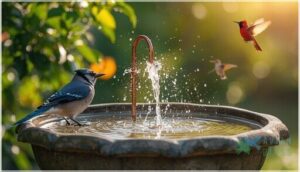
Birds can’t resist the sound and sight of moving water. A fountain, dripper, or mister turns your bath into a magnet for feathered visitors.
Here’s how to add movement to your bird bath and watch the difference it makes.
Benefits of Fountains, Drippers, and Misters
Moving water transforms your bird bath into a hotspot. Fountains, drippers, and misting systems catch birds’ attention from over 30 meters away through sound and motion.
Water movement cuts mosquito reduction by disrupting breeding cycles while improving water cleanliness through circulation. Misters provide thermal comfort on hot days and attract specific species like hummingbirds and warblers.
This simple addition can boost bird behavior visits by 30–50%, drawing species that ignore feeders.
Using Solar-powered Water Pumps
Solar-powered pumps offer energy savings while creating bird attraction through continuous water movement. These submersible pumps generate spray heights around 20–24 inches using 1.5 to 6 watts of panel power. You’ll notice improved water hygiene since circulation disrupts mosquito breeding and slows algae growth. Design choices include floating units for shallow basins and adjustable spray heads for different fountain patterns.
- Small solar-powered fountains eliminate electrical wiring and ongoing energy costs
- Pumps generally deliver 40–80 gallons per hour for bird bath applications
- Moving water attracts diverse species including hummingbirds drawn to fine sprays
- Continuous circulation keeps water fresh and reduces contamination risk
- Most units operate in water depths as shallow as 1.2 inches
Key benefits include energy efficiency, bird attraction, and water hygiene. The design versatility ensures compatibility with various water features, making solar-powered pumps a practical and eco-friendly choice.
DIY Moving Water With Recycled Containers
You don’t need expensive gear to create moving water that birds love. Drill a tiny hole in a syrup bottle cap to make a gravity-fed dripper, or stack a shallow food container over a bucket reservoir with a small pump for an endless recirculating bath.
Add rocks for secure footing and seal any leaks with silicone caulk. Rinse trays every few days to keep your DIY water fountain clean and inviting.
How Moving Water Attracts More Bird Species
Once you’ve set up your DIY fountain or dripper, watch what happens. Visual cues like ripples catch birds’ eyes from over 30 meters away. Acoustic attraction pulls in warblers and thrushes using sound alone.
Better water quality discourages mosquitoes, while microhabitat diversity around moving water bolsters multiple species at once.
Seasonal responses intensify during migration, when a simple water wiggler can double the variety visiting your backyard.
Maintaining a Clean and Healthy Bird Bath
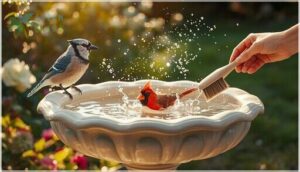
A clean bird bath is the difference between a thriving backyard habitat and a neglected water source that birds will ignore. Fresh water prevents disease and keeps your feathered visitors coming back day after day.
Here’s how to maintain your bird bath so it stays safe and inviting for the birds in your yard.
Daily Rinsing and Water Changes
Fresh water isn’t a luxury for your feathered visitors—it’s essential for their health. Here’s your daily water cleaning routine:
- Empty the bath completely to remove bird droppings and debris
- Rinse with a strong hose jet to flush away bacteria and algae
- Refill immediately with fresh, cool water
- Check depth to keep it under 2 inches for safe bathing
- Repeat daily in summer when disease prevention matters most
This simple rinsing frequency protects birds from illness while maintaining water freshness.
Weekly Scrubbing and Cleaning Methods
Beyond your daily water cleaning routine, a deeper weekly scrub keeps bacteria and algae from taking hold in your bird bath. Empty the basin and use a stiff brush with hot water to remove organic debris. Then choose a safe disinfectant solution for bird bath maintenance:
| Cleaning Solution | Ratio | Best For |
|---|---|---|
| Vinegar solutions | 1:9 (vinegar to water) | Routine weekly cleaning and light mineral deposits |
| Bleach ratios | 1:9 (bleach to water) | Monthly deep cleaning or disease outbreaks |
| Peroxide disinfectants | 1:9 (3% peroxide to water) | Safe alternative without chlorine residue |
| Hot water + brush | Plain | Daily or twice-weekly quick scrubs |
| Enzyme cleaners | As directed | Reducing organic buildup between scrubbings |
Material considerations matter—concrete baths need longer soak times to penetrate porous surfaces. During seasonal cleaning in hot weather, increase scrubbing frequency to twice or three times weekly when contamination accelerates.
Preventing Algae and Mosquito Breeding
When water sits still for too long, algae growth rates accelerate and mosquitoes find a perfect breeding ground. Water change frequency matters because mosquito larvae develop in just four to fourteen days. Moving water benefits your setup by disrupting egg-laying.
Here’s your mosquito control checklist:
- Replace water every three days during warm seasons
- Add a solar-powered agitator to keep surfaces rippled
- Scrub visible algae immediately with vinegar solutions
Non-bleach solutions work beautifully for keeping bird baths clean without harming feathered visitors.
Using Non-toxic Materials and Avoiding Chemicals
Your birdbath cleaner matters more than you’d think. Safe cleaning agents like diluted white vinegar won’t harm birds the way bleach does.
Material leaching risks from degraded plastic or old coatings can poison clean water.
Garden chemical impact extends beyond pesticides—drift contaminates baths.
Air quality concerns arise when harsh sprays settle on surfaces, threatening birds during their next visit.
Winter Bird Bath Care and Tips

Winter can be a tough time for birds when natural water sources freeze over. Providing fresh water during cold months is just as important as offering it in summer.
Here’s what you need to know to keep your bird bath functional and safe when temperatures drop.
Importance of Bird Baths in Cold Weather
When temperatures plummet, your bird bath becomes a lifeline. Birds can lose 5% of their body mass overnight through respiration and evaporation during freezing conditions. Without liquid water, they face serious dehydration risk and must burn precious calories melting snow.
In freezing weather, birds lose up to 5% of their body mass overnight and risk dehydration without liquid water
- Energy Conservation: Drinking liquid water instead of melting ice saves essential calories when food is scarce
- Feather Maintenance: Regular bathing realigns plumage for better insulation against winter cold
- Habitat Refuges: Your yard becomes a critical sanctuary when natural water sources freeze solid
Preventing Freezing With Heated Baths or De-icers
A thermostatically controlled de-icer unit simplifies winter bird care. These submersible heaters activate when temperatures drop—usually below 35°F—keeping water from freezing without wasting electricity.
When choosing a model, consider heater wattage based on your bath size: 50–80 watts for small basins and 150–200 watts for larger ones. Material safety is also important: cast aluminum resists rust, while stainless steel guards prevent burns. Always plug heated bird baths into GFCI outlets for electrical safety.
For milder climates, alternative methods like solar bubblers are effective.
| Heater Type | Wattage Range | Best For |
|---|---|---|
| Thermostatic De-icer | 50–80W | Small baths, energy savings |
| Standard Heated Bath | 150–200W | Large basins, extreme cold |
| Solar Bubbler | N/A | Mild winters, off-grid setups |
| Fountain Heater | 70W | Circulating water features |
Safe Winter Water Maintenance
Keeping water from freezing is just the start—maintenance matters too. Refill your heated bird bath daily because splashing and evaporation lower levels fast. When water drops below the deicer unit, ice forms at the edges. Check depth each morning to keep it around 1–2 inches.
For non-heated baths, lift out the ice block gently rather than chipping it. This prevents material cracking.
What Not to Use in Winter Bird Baths
Just as important as what you do use is what you avoid. Never add antifreeze or salt to prevent freezing—both cause salt toxicity and organ damage in small birds. Glycerin creates feather matting that destroys insulation.
Skip harsh chemical residues from cleaners too. Unsafe heating methods like boiling water crack basins. Stick with a thermostatically controlled deicer unit or submersible heater designed for winterization instead.
Top 5 Bird Bath Products to Attract Birds
Choosing the right bird bath can make all the difference in attracting feathered visitors to your yard. The products below offer features that birds really respond to—from moving water to heated options for winter.
Here are five bird baths that deliver results throughout the year.
1. Saillong Granite Bird Bath Fountain Rock
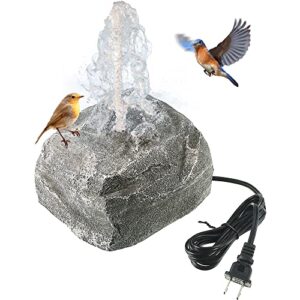
You can transform your bird bath into a bird magnet with the Saillong Granite Bird Bath Fountain Rock. This compact resin piece measures about 7.6 inches and includes a submersible pump that creates gentle water movement. Moving water catches birds’ attention far better than still water.
The fountain rock design looks natural and fits most small to medium baths. Setup is straightforward—just place it in your basin and plug in the pump. Keep the water level high enough for pump operation and clean the intake regularly to prevent clogs.
Best For: People who want to attract more birds to their garden with a simple plug-and-play fountain that adds movement and sound to an existing bird bath.
- Moving water attracts a wider variety of bird species than still basins and prevents surface film buildup
- Compact 7.6-inch design fits most small to medium bird baths without taking up too much bathing space
- Simple setup with submersible pump included—just place in basin and connect to power
- Lightweight resin construction may tip or shift in strong winds without added stabilizing weight
- Requires regular maintenance including water level checks and pump cleaning to prevent clogs from debris and algae
- Some customers report quality issues with durability and water flow not reaching expected heights
2. Heated Bird Bath De-Icer Shell

A heated bird bath keeps water ice-free when temperatures drop, giving birds an essential resource in winter months. De-icer shells with 50-watt to 80-watt ratings work well for most baths and maintain open water down to around −20°F.
Look for aluminum construction with a thermostat safety feature that activates near freezing and shuts off when warmer. Check the cord length before buying—most include 5 to 10 feet of cable.
This submersible heater draws more winter species to your yard when other water sources freeze solid.
Best For: Backyard birders in cold climates who want to attract more winter species by keeping a reliable water source available when natural sources freeze.
- Thermostat activates automatically near freezing and shuts off when temperatures rise, saving energy and preventing overheating
- Aluminum construction resists rust and sits flat on the bottom without floating, working in plastic, ceramic, or concrete baths
- 50-watt models keep water ice-free down to around −20°F while using minimal electricity, often just pennies per day
- Short power cords (5–10 feet) often require outdoor extension cords to reach outlets, adding installation hassle
- Thermostat may heat water up to 104°F during milder weather, requiring manual unplugging or a timer to avoid wasting energy
- Shell or rock-shaped housing adds decorative bulk that some users find unnecessary if function is the only priority
3. Ground Level Bird Bath Erva
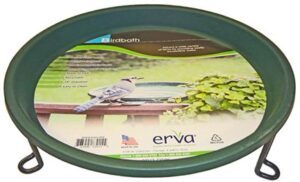
For ground-level access, the Erva Ground Level Bird Bath offers a shallow 1.25-inch dish that welcomes doves and other ground feeders. Its powder-coated steel ring weighs about 4 pounds, providing material durability and stability on soil or decking.
You can pair this 14-inch bath with a separate heated insert for heater compatibility in winter, keeping water open when temperatures plunge.
Place it at least 15 feet from dense shrubs to balance predator safety with nearby escape cover, attracting birds while providing water for birds and wildlife support year-round.
Best For: Bird watchers who want to attract ground-feeding species like doves and sparrows while providing safe, accessible water at ground level.
- Shallow 1.25-inch depth prevents small birds from drowning while giving them plenty of space to bathe and drink
- Heavy 4-pound powder-coated steel construction stays stable on any surface and resists rust for years
- Compatible with 14-inch heated inserts so you can keep water open all winter without buying a whole new bath
- Ground placement makes birds more vulnerable to cats and other predators unless you carefully position it with clear sightlines
- Lightweight plastic dish can warp if it dries out in hot weather or when used with a heater
- Needs frequent refilling during summer and regular scrubbing to prevent algae buildup and mosquito breeding
4. GESAIL Bird Bath Winter Heater

When frost blankets your yard, the GESAIL submersible heater keeps your bird bath in winter from turning into an ice rink. This 50-watt de-icer features thermostat control that kicks on only below freezing, saving you pennies daily while providing winter water for cardinals and chickadees.
Its cast-aluminum housing offers material durability against rust, while safety mechanisms require full submersion to prevent overheating. User feedback shows it withstands temperatures down to -20°F, though the 25-inch cord often needs an extension for outdoor outlets.
Best For: Homeowners who want an affordable, energy-efficient way to keep bird baths ice-free during winter without constant monitoring.
- Thermostat automatically turns on only when needed below freezing, keeping electricity costs low
- Durable cast-aluminum construction resists rust and works in temperatures down to -20°F
- Works with most bird bath materials including plastic, metal, stone, and ceramic
- Short 25-inch cord requires an extension cord for most outdoor setups
- Must stay fully submerged to prevent overheating and ensure safe operation
- Some users report durability issues with units failing within months or paint flaking into water
5. API Heated Bird Bath Winter
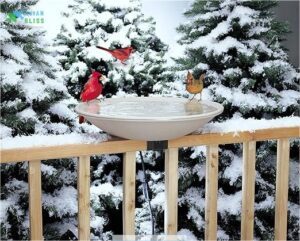
The API Heated Bird Bath Winter features a 150-watt thermostat control, keeping water liquid down to -20°F. This ensures reliable winter hydration for birds when natural sources freeze solid.
The submersible heater comes in a 20-inch plastic basin and can be mounted via deck rail or pedestal. However, users note mounting stability issues with the included stand. For safety, connect it to a GFCI outlet. The fully enclosed element prevents birds from contacting electrical parts.
While you’ll pay more to run this heated bird bath compared to lower-wattage models, jays and crows won’t mind the warmth.
Best For: Bird lovers in cold climates who want to provide reliable winter water for songbirds and larger species without dealing with constant ice.
- Powerful 150-watt heater keeps water liquid down to -20°F, even during harsh winter cold snaps
- Thermostat control only heats when needed, reducing energy waste compared to always-on models
- Fully enclosed heating element keeps birds safe from electrical contact during use
- Included metal stand can be unstable and prone to breaking under regular use
- Higher wattage means increased electricity costs throughout the winter season
- Some users report difficult assembly and leveling issues with mounting hardware
Frequently Asked Questions (FAQs)
How often should I change bird bath water?
You should replace your bird bath water daily during warm weather to prevent disease transmission and mosquito breeding.
In winter, refresh it every one to two days to maintain fresh water availability.
Can bird baths spread diseases between birds?
Yes, bird baths can spread diseases between birds. Shared water becomes a breeding ground for bacteria, viruses, and parasites. Regular cleaning and fresh water are essential for bird health and hygiene.
What time of day do birds prefer bathing?
Most birds prefer morning bathing, especially around sunrise, when activity peaks. Midday heat draws some species seeking relief, while late afternoon sees modest bird activity.
Seasonal shifts and species variation influence avian visitors’ bird bathing behavior throughout the day.
Do different bird species have bathing preferences?
Different strokes for different folks. Bird species display distinct bathing behavior. Warblers prefer shallow water depth while robins wade deeper. Swallows bathe on the wing. Ground-level baths attract quail.
Environmental influence and site fidelity shape these preferences.
Should I add anything to bird bath water?
Fresh water alone is best. Most additives like chemically treated water and algaecides harm birds.
Clean regularly to stop mosquitoes and algae growth. Safe cleaners include vinegar or hydrogen peroxide when rinsed completely.
Conclusion
Like Noah opening the ark’s window to welcome weary travelers, you’re now equipped to create a sanctuary birds can’t resist. Attracting birds to your bird bath comes down to thoughtful choices: the right depth, strategic placement, moving water, and consistent care.
Each element works together to signal safety and refreshment. Your once-ignored basin can become the neighborhood gathering spot where feathered visitors bathe, drink, and return day after day with their flock.
- https://growthmarketreports.com/report/bird-bath-market
- https://www.linkedin.com/pulse/what-bird-bath-uses-how-works-top-companies-2025-imfye
- https://fountainful.com/blogs/news/where-to-place-a-bird-bath
- https://voice.gardenbird.co.uk/4-ways-to-make-sure-your-bird-bath-is-safe/
- https://www.youtube.com/watch?v=RbJoL0NNhE8