This site is supported by our readers. We may earn a commission, at no cost to you, if you purchase through links.
 Avian feather plucking behavioral causes often stem from psychological stress, boredom, or environmental disruptions that push your bird beyond its comfort zone.
You’ll notice this destructive habit when daily routines change, social interaction decreases, or mental stimulation disappears from your pet’s environment.
Anxiety-driven behaviors like excessive preening escalate into compulsive feather removal, creating a cycle that’s tough to break.
While medical issues can trigger plucking, behavioral factors frequently drive the problem deeper, and understanding your bird’s emotional needs can mean the difference between a quick fix and months of rehabilitation, by recognizing early warning signs.
Table Of Contents
- Key Takeaways
- Feather Plucking Signs
- Behavioral Causes
- Medical Causes Diagnosis
- Feather Plucking Treatment
- Prevention and Management
- Seeking Professional Help
- Frequently Asked Questions (FAQs)
- Why are my birds plucking their feathers?
- Can birds recover from feather plucking?
- How do I know if my bird is feather plucking?
- Can feather plucking become permanently habitual behavior?
- Do certain bird species pluck more frequently?
- How long does behavioral feather plucking recovery take?
- Can multiple birds trigger contagious plucking behaviors?
- Does rehoming stop established feather plucking patterns?
- Conclusion
Key Takeaways
- You’ll recognize stress-driven plucking through early warning signs – bald patches, red irritated skin, excessive vocalization, and aggressive behavior that signal your bird’s psychological distress needs immediate attention.
- Behavioral triggers like boredom and isolation cause most plucking cases – inadequate mental stimulation, lack of social interaction, environmental changes, and compulsive behaviors create destructive cycles that worsen without intervention.
- You can prevent plucking through consistent environmental management – maintain daily routines, provide interactive toys, minimize stressors, and create enriching surroundings that address your bird’s emotional needs.
- Professional veterinary care distinguishes between medical and behavioral causes – blood tests, skin analysis, and diagnostic imaging help identify underlying health issues while behavioral therapy addresses psychological factors driving the destructive habit.
Feather Plucking Signs
Recognizing feather plucking signs early helps you address this concerning behavior before it becomes severe.
You’ll notice distinct physical and behavioral changes that signal your bird needs immediate attention and care.
Bald Patches Formation
When you spot bald patches forming on your bird’s chest, wings, or legs, you’re witnessing the telltale signs of feather plucking disorder.
**Bald patches on your bird’s body signal serious behavioral distress requiring immediate attention.
These bare areas develop gradually as your feathered friend systematically removes healthy plumes, creating distinctive patterns that differ from natural molt patterns.
Unlike normal feather loss causes, plucking creates symmetrical bald patches indicating underlying avian anxiety disorders affecting flock behavior.
Identifying feather plucking causes is essential to address the root of the problem and provide appropriate care for your bird.
Red Irritated Skin
When you notice irritated skin beneath missing feathers, you’re witnessing your bird’s distress signals.
This redness often indicates underlying skin infections or inflammatory conditions that require immediate attention to prevent further complications.
- Bacterial skin infections – causing warm, swollen patches around plucking sites
- Fungal irritation causes – creating circular, scaly red areas with distinct borders
- Self-inflicted skin lesions – from aggressive feather pecking behavior and scratching
- Chemical irritation causes – from cleaning products or environmental toxins exposure
- Inflamed skin – showing heat, swelling, and tenderness from avian stress causes
Dull Feathers Appearance
Healthy feathers display vibrant colors and smooth texture, but feather plucking behavior creates a telltale dulling effect.
Your bird’s plumage health deteriorates as stress-damaged feathers lose their natural luster and flexibility.
Color fading occurs when avian stress causes affect feather texture, making them brittle and lackluster.
Proper feather care and addressing feather picking anxiety helps restore normal feather condition and prevents further beak problems.
Excessive Vocalization
During feather plucking episodes, your bird’s Vocalization Patterns often shift dramatically, signaling underlying distress.
Increased vocalizing—ranging from persistent squawking to unusual screaming—serves as essential Stress Signals indicating behavioral causes like anxiety or environmental stressors.
This altered Vocal Behavior disrupts normal Bird Communication, requiring immediate attention to preserve avian behavioral health through targeted Noise Reduction strategies.
Aggression Behavior
Aggressive outbursts often accompany feather plucking as birds redirect their frustration into territorial defense and beak biting behaviors.
You’ll witness fear responses escalating into social aggression toward cage mates or handlers.
This behavioral pattern signals underlying stress that requires immediate bird behavioral therapy intervention, which helps identify the root behavioral causes affecting your bird’s avian behavioral health and feather plucking behavior.
Behavioral Causes
When your bird starts plucking its feathers, behavioral factors often play a significant role in this destructive pattern.
Understanding these psychological triggers helps you identify whether stress, boredom, or environmental changes might be causing your feathered companion’s self-destructive behavior.
Boredom and Lack Stimulation
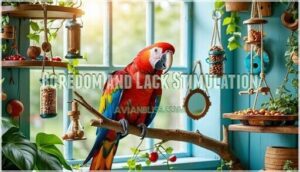
Beyond the visible signs of feather damage, boredom represents one of the most significant behavioral triggers for feather plucking behavior.
Looking at the paragraph you provided, here’s a short, engaging blockquote in the same tone:
When entertainment becomes self-destruction, your feathered friend needs immediate intervention to break this dangerous cycle.
When you don’t provide adequate Mental Stimulation and Environmental Enrichment, your bird may resort to destructive self-grooming as entertainment. A stimulating environment prevents this compulsive behavior through engaging activities.
- Foraging Toys rotation – Change puzzle feeders weekly to maintain novelty and challenge your bird’s problem-solving abilities
- Scheduled Playtime Activities – Dedicate 2-3 hours daily for interactive play sessions outside the cage environment
- Social Interaction opportunities – Include your bird in family activities and conversations to prevent isolation-induced plucking
- Environmental enrichment variety – Incorporate natural branches, mirrors, and music to create dynamic surroundings that engage multiple senses
Stress and Anxiety Factors

When environmental triggers overwhelm your bird’s coping mechanisms, Psychological Distress manifests through destructive feather plucking behavior.
Noise Pollution from household activities creates chronic bird stress, while Social Stress from isolation amplifies bird anxiety management challenges.
Emotional Trauma from sudden changes triggers anxiety responses, and understanding these stressors helps you identify Environmental Triggers affecting your companion’s mental well-being and feather plucking behavior patterns.
Addressing the root cause of feather plucking requires knowledge of feather plucking issues, which is crucial for managing feather plucking behavior and ensuring the well-being of your bird.
Compulsive Behaviors
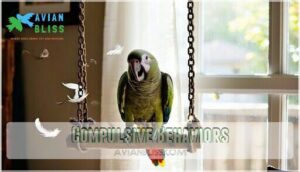
Your bird’s compulsive behaviors mirror obsessive compulsive tendencies found in humans.
These abnormal repetitive behaviors create destructive cycles where feather destructive behavior becomes self-reinforcing. Compulsive preening escalates beyond normal grooming, leading to feather fixation and potential self mutilation.
Understanding the underlying feather destructive factors is essential for addressing this issue.
- Repetitive motions intensify during anxiety triggers or environmental changes
- Compulsive disorder patterns become harder to break without professional intervention
- Systematic damage typically starts in one area before spreading to others
Social Isolation Effects

Social isolation creates a devastating cycle where Lonely Birds withdraw from their environment, leading to compulsive feather destruction.
Birds experiencing social withdrawal often develop Isolation Stress, manifesting as self-destructive behaviors when deprived of essential social interaction and companionship.
| Isolation Factor | Behavioral Response | Plucking Pattern |
|---|---|---|
| Lack of Bird Companions | Attention-seeking behaviors | Chest and wing areas |
| Reduced human interaction | Excessive vocalization | Symmetrical patches |
| Cage isolation | Repetitive head bobbing | Back and neck regions |
| Limited social stimulation | Aggressive tendencies | Under-wing locations |
| Prolonged solitude | Withdrawal symptoms | Full-body plucking |
Environmental Changes

Changes in your bird’s environment can trigger feather plucking behaviors faster than you’d expect.
Moving cages, new household members, or altered daily schedules create environmental stress that manifests through destructive behaviors.
- Noise Pollution: Sudden loud sounds or constant background noise disrupts natural behavioral patterns
- Cage Location: Relocating enclosures affects territorial security and comfort levels
- Lighting Effects: Modified illumination cycles disrupt circadian rhythms and hormonal balance
Environmental changes affect humidity levels and social dynamics, requiring careful environmental enrichment adjustments.
Medical Causes Diagnosis

When your bird’s behavioral interventions don’t stop the feather plucking, it’s time to investigate medical causes through diagnostic testing.
Your veterinarian will use specific tests to identify underlying health issues that might be driving this destructive behavior, using diagnostic testing to find the root cause.
Blood Tests for Health
Blood tests reveal hidden medical conditions that trigger destructive feather behaviors.
Your veterinarian analyzes blood chemistry to detect infections, metabolic disorders, and nutritional deficiencies affecting your bird’s wellbeing.
| Test Type | Purpose | Detects |
|---|---|---|
| Complete Blood Count | Infection screening | White cell elevation, anemia |
| Blood Chemistry | Organ function | Liver disease, kidney problems |
| Hormone Levels | Endocrine health | Reproductive triggers, stress markers |
| Glucose Testing | Metabolic status | Diabetes, energy disorders |
| Protein Analysis | Nutritional assessment | Dietary deficiencies, muscle wasting |
These diagnostic tools provide your avian veterinarian with concrete data to distinguish between medical and behavioral causes of feather plucking behavior.
Skin Scraping Analysis
Your veterinarian performs skin scraping analysis to examine microscopic details of skin conditions affecting your bird.
This diagnostic test involves gentle tissue sampling from affected areas, allowing detailed cell analysis of potential infections, parasites, or inflammatory processes.
The microscopic exam reveals bacteria, fungi, mites, or abnormal skin cells that blood tests can’t detect, providing targeted treatment for your bird’s feather plucking behavior and promoting avian feather health recovery.
Understanding the feather plucking causes is essential for effective diagnosis and treatment of affected birds.
X-Rays for Organ Evaluation
X-rays provide essential insights into your bird’s internal health when feather plucking persists.
This diagnostic tool reveals organ damage, foreign objects, and tumor detection that aren’t visible externally.
Veterinarians use bird x-rays to evaluate respiratory diseases, examine air sacs, and conduct bone analysis.
Internal injuries often manifest through plucking behaviors, making radiographic evaluation essential for thorough diagnosis and treatment planning.
Endoscopy for Internal Assessment
When X-rays can’t reveal everything, avian endoscopy becomes your veterinarian’s window into your bird’s internal world.
This minimally invasive diagnostic tool allows direct visualization of respiratory health and internal organ function that other medical imaging methods might miss.
Key endoscopic assessment areas include:
- Respiratory system examination – Airways, air sacs, and lung tissue evaluation
- Internal organ evaluation – Liver, kidneys, and reproductive organs inspection
- Bird internal tumors detection – Identifying masses or abnormal growths
- Tissue biopsy collection – Sampling suspicious areas for laboratory analysis
- Real-time diagnostic capabilities – Immediate visual confirmation of conditions
This bird endoscopy procedure helps pinpoint medical causes behind your bird’s feather plucking when standard tests fall short, giving you clearer answers for targeted treatment.
Feather Plucking Treatment
Once you’ve identified the behavioral causes behind your bird’s feather plucking, implementing the right treatment approach becomes essential for stopping this destructive behavior.
Treatment typically involves a combination of dietary adjustments, environmental modifications, medical interventions, and temporary protective measures to give your feathered friend the best chance at recovery.
Dietary Changes Implementation

After thorough diagnostic testing reveals underlying health issues, you’ll need to revamp your bird’s nutritional foundation.
Gradual diet changes prevent stress-induced plucking behaviors that worsen during phases. Pelleted Diets should comprise 75-80% of balanced meals, supplemented with fresh fruits and vegetables.
Introduce food rotation slowly over 2-3 weeks, monitoring acceptance patterns. Address nutritional deficiencies through species-specific diet modifications and nutrient supplements when veterinary-approved, ensuring proper hydration supports healthy feather development.
A well-planned balanced diet approach is vital for maintaining healthy feathers and preventing feather plucking, which requires a careful dietary approach to support overall bird health.
Environmental Enrichments

Environmental enrichment transforms your bird’s habitat into a stimulating sanctuary.
Provide foraging toys that encourage natural behaviors, rotating them weekly to maintain interest.
Create flying space with varied perches and natural elements like branches.
Incorporate sensory stimulation through textures, sounds, and interactive puzzles.
Social interaction remains essential—spend quality time daily to reduce environmental stress and combat boredom-induced plucking behaviors.
Using the right bird toy options can greatly enhance the enrichment process to create a more stimulating environment.
Medical Treatments Options

Once you’ve enhanced your bird’s environment, medication therapy becomes the next treatment frontier.
Your avian veterinarian might prescribe antibiotics for bacterial infections or antifungal medications for skin conditions causing discomfort.
Pain management helps reduce plucking triggers, while omega supplements support healthy feather growth.
Proper wound care prevents secondary infections from self-inflicted damage during feather plucking treatment episodes.
The use of antibiotic medication, including antibiotic treatments, is essential in managing bacterial infections that may contribute to feather plucking behavior.
Elizabethan Collar Usage
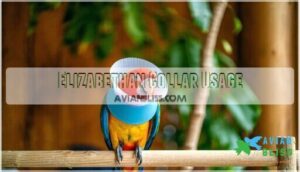
When should you consider an Elizabethan collar for your feather-plucking bird? This temporary intervention prevents further self-trauma while addressing underlying causes.
Proper collar fitting guarantees bird comfort without restricting essential activities like eating or drinking. Monitor your bird closely during collar usage, as prolonged wear can increase bird stress relief needs.
Remove the collar once plucking behavior solutions take effect and bird anxiety subsides. The effectiveness of an Elizabethan collar can be a vital factor in determining the success of feather plucking treatment.
Prevention and Management
Prevention remains your most powerful tool against feather plucking, requiring consistent effort and environmental awareness.
You’ll need to establish regular veterinary checkups, maintain daily routines, minimize stress factors, and provide engaging toys to keep your bird mentally stimulated and emotionally balanced.
Regular Veterinary Check-Ups
Regular veterinary checkups serve as your first line of defense against feather plucking complications.
Schedule appointments with an experienced avian vet every six months, or sooner if symptoms develop.
Essential Vet Visit Schedules include:
- Bi-annual wellness exams – Catch problems before they escalate
- Immediate consultations – When plucking behavior first appears
- Follow-up appointments – Monitor treatment progress effectively
- Emergency visits – Address sudden health changes quickly
- Nutritional assessments – Confirm proper bird nutrition standards
Consistent veterinary care enables early detection of underlying medical conditions that trigger destructive behaviors.
Consistent Daily Routine
By establishing a bird routine with scheduled feedings, consistent playtime activities, and regular sleep patterns, you’ll create predictability that reduces anxiety.
Your feathered friend thrives on knowing what comes next—it’s like having their personal day planner.
Maintain the same social interactions and environmental adjustments daily, as routine establishment helps prevent stress-induced plucking behaviors through structured bird schedule consistency.
Implementing effective disease prevention methods can also contribute to a healthier environment for your birds, promoting overall well-being.
Minimizing Stressors Factors
Strategic cage location away from high-traffic areas prevents environmental stress that triggers plucking behaviors.
You’ll want noise reduction through soft furnishings and calming techniques like gentle music to create peaceful surroundings.
Focus on social bonding during quiet periods while maintaining environmental stimulation through natural lighting cycles.
Effective stress management requires identifying specific bird stressors and implementing targeted stress minimization strategies for ideal bird stress reduction, which involves stress management and calming techniques to achieve environmental stimulation.
Providing Interactive Toys
Something as simple as interactive toys can break the cycle of destructive feather plucking behavior.
You’ll need strategic toy rotation, foraging activities, and sensory stimulation to keep your bird mentally engaged and physically active.
- Toy Rotation Strategy – Swap bird toys weekly to maintain novelty and prevent boredom-induced behavioral issues
- Foraging Activities – Hide treats in puzzle feeders to encourage natural hunting instincts during playtime scheduling
- Environmental Enrichment – Provide textured perches, mirrors, and sound-making toys for thorough sensory stimulation
Seeking Professional Help

When you’ve tried environmental changes and your bird continues plucking, it’s time to contact an avian veterinarian who specializes in behavioral disorders.
A professional can run diagnostic tests to rule out underlying medical conditions and develop a thorough treatment plan that addresses both physical and psychological factors, including behavioral disorders.
Identifying Underlying Causes
Successful feather plucking treatment starts with pinpointing the root cause through systematic evaluation.
You’ll need thorough feather analysis and behavioral pattern documentation to identify specific plucking triggers and stress factors.
This detective work involves tracking when, where, and how your bird exhibits plucking behavior reasons, creating a roadmap for effective bird stress management and targeted avian feather plucking interventions.
Consulting Avian Veterinarian
Once you’ve identified potential causes, your next step involves scheduling a vet consultation with an avian veterinarian who specializes in bird health issues.
These professionals conduct thorough bird examinations using their avian expertise to provide accurate medical diagnosis and develop effective treatment plans.
Here’s what to expect during veterinary care:
- Thorough vet exam including feather pattern assessment
- Blood work to identify underlying medical conditions
- Skin scraping analysis for parasites or infections
- Discussion of behavioral factors with a bird behaviorist if needed
Addressing Health Issues Promptly
Time is of the essence when addressing your bird’s health concerns.
Medical intervention shouldn’t wait when you spot feather plucking symptoms—prompt diagnosis can prevent minor issues from becoming major problems.
Health monitoring through regular veterinary care guarantees early detection of medical conditions like nutritional deficiencies or skin infections.
Quick emergency response protects your bird’s overall health and accelerates effective feather plucking solutions.
Creating Calm Environment
Your avian veterinarian will help you establish Calm Spaces with Soft Lighting and Quiet Areas to reduce environmental stress.
Creating a Peaceful Atmosphere involves minimizing stressors through Gentle Sounds and proper bird environment optimization.
This stimulating environment supports positive avian behavior changes while addressing underlying anxiety triggers effectively, promoting a Quiet Areas setting that is essential for the well-being of birds.
Frequently Asked Questions (FAQs)
Why are my birds plucking their feathers?
Your birds are likely plucking feathers due to stress, boredom, medical issues, or environmental changes.
Common triggers include inadequate mental stimulation, social isolation, skin infections, nutritional deficiencies, or hormonal imbalances requiring veterinary evaluation.
Can birds recover from feather plucking?
Miraculously, your feathered friend can absolutely bounce back from this destructive habit.
With proper veterinary care addressing underlying medical causes and environmental enrichment reducing stress, you’ll see new feather growth within weeks to months once plucking stops.
This approach allows for a full recovery, and the environmental enrichment is key to reducing stress.
How do I know if my bird is feather plucking?
You’ll spot missing feathers, bald patches, or broken plumage on your bird’s chest, wings, or back.
Watch for excessive grooming, red irritated skin, and behavioral changes like agitation or repetitive motions that signal distress.
Can feather plucking become permanently habitual behavior?
Like a habit that’s hard to break, feather plucking can become permanently ingrained behavior in your bird.
Without proper intervention, this compulsive behavior transforms into a lifelong pattern that’s extremely difficult to reverse completely.
Do certain bird species pluck more frequently?
Yes, certain species are more prone to feather plucking.
You’ll find that parrots, cockatoos, and macaws top the list due to their high intelligence and complex social needs, making them particularly susceptible to stress-induced plucking behaviors.
How long does behavioral feather plucking recovery take?
Behavioral feather plucking recovery typically takes weeks to months, depending on your bird’s underlying triggers and how quickly you address environmental stressors, provide enrichment, and establish consistent routines.
Can multiple birds trigger contagious plucking behaviors?
Birds don’t directly "catch" plucking behaviors like infections, but they’ll mimic stressed companions.
You’ll notice birds copying destructive patterns when housed together, especially if one bird’s already anxious or bored, creating a domino effect.
Does rehoming stop established feather plucking patterns?
Rehoming doesn’t guarantee you’ll eliminate established feather plucking patterns. While new environments can reduce stress triggers, compulsive behaviors often persist across locations, requiring continued behavioral modification and veterinary care.
Conclusion
Prevention truly remains the best medicine when addressing avian feather plucking behavioral causes.
You’ll find success by maintaining consistent routines, providing mental stimulation, and monitoring your bird’s emotional well-being.
Early intervention prevents minor stress from escalating into compulsive behaviors.
When you notice warning signs, consult an avian veterinarian immediately.
Remember, patience and environmental management create lasting solutions for your feathered companion’s psychological health.
- https://birdsinthetree.com/why-do-birds-pluck-their-feathers-out/
- https://vetpomedix.com/feather-plucking-treatment/
- https://thepawfolk.com/bird-feather-plucking-causes-solutions-and-prevention/
- https://www.rvc.ac.uk/Media/Default/Beaumont%20Sainsbury%20Animal%20Hospital/EXOTICS/Animal%20Care%20Factsheets/Feather-plucking-in-parrots-Dec-2022-vb.pdf
- https://veterinaryblog.com/10-ways-why-do-birds-pluck-their-feathers/