This site is supported by our readers. We may earn a commission, at no cost to you, if you purchase through links.
Feather plucking rarely starts with behavior—it starts with the body. A bird stripping its own chest bare is almost always signaling something: skin irritant, a nutrient gap, a stress response that’s quietly built up over months.
What surprises most bird owners is that diet sits at the center of all three.
The amino acid methionine, for example, forms the protein backbone of every feather your bird grows, and a shortage shows up fast—frayed shafts, slow regrowth, and skin that’s already irritated before a parasite or stressor ever enters the picture.
Choosing the best bird food to prevent feather plucking means understanding what your bird’s body actually needs to stay calm, healthy, and fully feathered.
Table Of Contents
- Key Takeaways
- Feather Plucking Causes in Birds
- Nutrients That Support Feather Health
- Top 5 Bird Foods for Feather Plucking
- Feeding Plan to Reduce Plucking
- Frequently Asked Questions (FAQs)
- How do I Stop my parrot from plucking feathers?
- What is the best way to pluck feathers?
- What is feather plucking in a parrot?
- Why do birds pluck their feathers?
- What can I Feed my plucking bird?
- How do I supplement my plucking bird?
- How do I stop my bird from plucking feathers?
- What is a natural remedy for feather plucking?
- Why is my bird plucking all his feathers?
- Do plucked feathers grow back?
- Conclusion
Key Takeaways
- Feather plucking almost always signals an underlying issue—skin irritation, a nutrient gap, or chronic stress—so treating it as a "bad habit" means you’re missing the real problem.
- Diet sits at the center of feather health: deficiencies in methionine, zinc, vitamin A, and omega-3 fatty acids directly weaken feather structure and irritate the skin that grows them.
- Adding omega-3 sources like hemp hearts, flaxseed, or a quality seed blend to your bird’s existing diet is one of the most practical first steps you can take before exploring other interventions.
- If nutritional and environmental changes don’t improve things, an avian vet visit isn’t optional—symptoms like abnormal droppings, bleeding, or breathing changes point to something that diet alone can’t fix.
Feather Plucking Causes in Birds
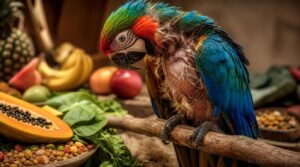
Feather plucking rarely has just one cause, and that’s what makes it so tricky to address. Before you can find the right food or fix, it helps to understand what’s actually driving the behavior in the first place.
Most cases involve a mix of triggers—diet, stress, boredom, or health—which is why a comprehensive guide to feather plucking prevention can help you work through each possibility systematically.
Here are the most common root causes to be aware of.
Medical Triggers Like Parasites and Skin Infections
Sometimes the skin is the real culprit. Ectoparasite itching from lice or mites keeps your bird in a constant itch-scratch cycle, and Demodex mite overgrowth can quietly inflame the skin until plucking feels like relief. Bacterial skin infections and fungal skin irritation deepen that damage further.
Even myiasis larval infestation from fly larvae can trigger aggressive feather picking around open wounds.
Nutritional Gaps That Weaken Feather Health
What your bird eats directly shapes every feather it grows. A methionine shortfall weakens the protein scaffolding feathers depend on, while zinc deficiency causes fraying and shaft blisters near the follicle base.
Every feather your bird grows is a direct reflection of what it eats
Here’s what nutritional deficiencies actually look like:
- Dull, brittle feathers from poor fatty acid ratio in seed-heavy diets
- Frayed wing feathers linked to zinc deficiency
- Slow regrowth caused by low vitamin A and inadequate high potency diets for pet birds
- Increased skin irritation driven by low omega‑3 fatty acids and magnesium imbalance
Dietary solutions for feather health start with understanding these gaps. A high‑fat seed diet can lead to obesity and fatty liver disease in pet birds.
Stress, Boredom, and Anxiety in Pet Birds
Nutrition isn’t the only piece of the puzzle. Bird anxiety, boredom, and chronic stress are just as likely to trigger compulsive plucking. Without mental stimulation, environmental enrichment, and routine predictability, your bird’s nervous system stays on edge.
Poor sleep hygiene makes everything worse — birds need 10–12 uninterrupted hours nightly. Social interaction and a stable daily schedule genuinely matter for feather health.
Hormonal and Environmental Triggers
Your bird’s hormonal behavior doesn’t happen in isolation — environmental factors quietly drive it. Light Cycle Disruption, Temperature Drafts, Air Quality Irritants, Endocrine Disruptors from household chemicals, and Nesting Cue Overload can all push hormone activity into overdrive.
Watch for these common triggers:
- Inconsistent lighting or light leaks at night
- Cold drafts or sudden temperature swings
- Fumes from aerosols or cleaners
- Nest boxes left accessible year‑round
Nutrients That Support Feather Health
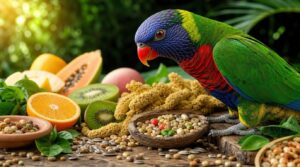
What your bird eats directly shapes the quality of every feather on their body. Getting the right nutrients in place is often the most powerful step you can take before anything else.
A closer look at feather condition and bird nutrition shows exactly which nutrients matter most and how to make sure your bird is actually getting enough of them.
Here are the key nutrients worth paying attention to.
High-quality Pellets and Balanced Protein
Think of pellets as a complete foundation — one that delivers Amino Acid Balance, Protein Digestibility, and Pellet Stability, your bird simply can’t get from seeds alone. A balanced species-appropriate diet built on Life-stage Formulation and Batch Consistency ensures your bird gets consistent protein every meal.
As a diet supplementation strategy, quality pellets are your first real step toward lasting feather health.
Vitamin A, Vitamin E, and B-complex Support
When feathers start failing, vitamins are often the missing piece.
Vitamin A drives Vision Health and Skin Regeneration at the cellular level, while vitamin E provides critical Antioxidant Defense against free‑radical damage. B‑complex vitamins fuel Metabolic Energy and Immune Boost through enzyme support.
You’ll find these nutrients in quality pellets, fresh fruits and vegetables, and targeted supplements like Avian Naturals Nutraceuticals.
Omega-3 Fatty Acids for Skin and Plumage
Skin health sits at the root of healthy plumage, and omega-3 fatty acids are where that story begins. Here’s what they actually do:
- Skin Barrier Hydration – Omega-3 fatty acids reinforce moisture retention, keeping skin supple and less prone to irritation.
- Anti-inflammatory Benefits – Omega-3 Metabolites like resolvins calm inflammatory pathways that trigger feather plucking.
- Feather Luster Enhancement – Dietary Fat Balance between omega-3s and omega-6s visibly improves plumage sheen.
- Reduced Itch Signals – Lower skin irritation means less motivation to self-groom destructively.
- Deficiency Prevention – Avian nutraceutical supplementation with flaxseed or hemp hearts corrects fat gaps that compromise feather health.
Add a quality nutritional supplement with omega-3 fatty acids — your bird’s skin and coat will thank you.
Fresh Fruits and Vegetables for Feather Repair
Fresh produce is one of the most underrated tools for feather repair.
Carotene rich greens like kale and leafy antioxidant benefits from spinach help correct a vitamin deficiency that seeds alone can’t fix.
fiber rich veggies, a citrus hydration boost, and seasonal fruit variety, and you’re supporting your bird’s healthy diet from multiple angles — naturally complementing any omega-3 fatty acids or nutritional supplement already in rotation.
Calcium Balance and Vet-guided Supplementation
Calcium isn’t something you want to guess at. The right Calcium-Phosphorus Ratio — roughly 2:1 — matters for feather formation, and Vitamin D Synergy is what makes absorption actually work.
Low calcium levels can show up as weakness or poor plumage before you notice anything else.
An avian veterinarian can guide Supplement Form Selection, Species-specific Dosage, and Monitoring Blood Levels, so nutritional supplementation helps feather plucking recovery without tipping into excess.
Top 5 Bird Foods for Feather Plucking
Finding the right food can make a real difference when your bird is plucking. The five options below are chosen with feather health in mind, covering everything from omega-rich blends to natural seed mixes.
Let’s look at what each one brings to the bowl.
1. UnRuffledRx OmegaGlow Feather Growth Blend
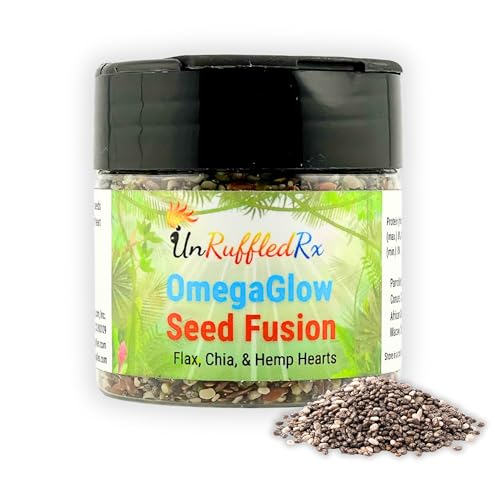
If your bird’s plumage needs some serious backup, the UnRuffledRx OmegaGlow Feather Growth Blend is worth keeping on your radar. This seed blend — chia, flax, and hemp hearts — delivers omega-3 and omega-6 fatty acids that directly support skin health and feather regrowth.
You simply shake it over pellets or chopped food, and it mixes in easily.
At around $15.79 for a 2-oz jar, it’s a small but targeted addition to your bird’s daily routine.
| Best For | Bird owners dealing with feather-plucking or dull plumage who want a simple, natural supplement they can mix right into their bird’s existing food. |
|---|---|
| Primary Ingredient | Chia, flax, hemp seeds |
| Omega Fatty Acids | Omega-3 and omega-6 |
| Feather Support | Reduces feather plucking |
| GMO Status | Not specified |
| Packaging | Resealable BPA-free shaker jar |
| Refrigerate After Opening | Yes |
| Additional Features |
|
- Three-seed blend (chia, flax, hemp) covers both omega-3 and omega-6 in one shake — no complicated prep needed.
- Resealable shaker jar keeps things fresh and makes serving a breeze.
- Works with basically any diet — pellets, chopped food, or seed mixes.
- Two ounces goes fast, especially for larger birds — expect to reorder often.
- At ~$15.79 for a small jar, the price-to-quantity ratio stings a little.
- Needs refrigeration after opening, and results can vary from bird to bird.
2. Hemp Well Organic Hemp Hearts
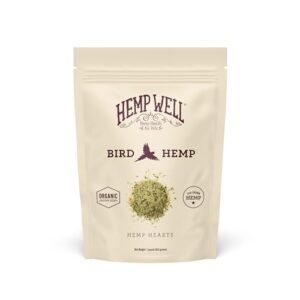
Another option worth adding to your bird’s bowl is Hemp Well Organic Hemp Hearts — and if you’re already using a seed-based blend, this one layers in nicely. These non‑GMO shelled hemp seeds deliver 10 grams of complete protein per serving alongside 12 grams of omega‑3 and omega‑6 fatty acids in a 3:1 ratio that promotes skin and plumage from the inside out.
Just mix a small amount into pellets or regular seeds — no fuss, no special prep required.
| Best For | bird owners looking for a natural, non‑GMO supplement to help reduce feather‑plucking, support plumage health, and calm stress‑prone birds. |
|---|---|
| Primary Ingredient | Organic hemp hearts |
| Omega Fatty Acids | Omega-6 to omega-3 (3:1) |
| Feather Support | Reduces plucking and barbering |
| GMO Status | GMO-free |
| Packaging | Resealable 1-lb bag |
| Refrigerate After Opening | Yes |
| Additional Features |
|
- Organic, U.S.–grown hemp hearts with a balanced 3:1 omega‑6 to omega‑3 ratio.
- High‑quality complete protein (10 g per serving) and easy to mix into any seed or pellet diet.
- Resealable 1‑lb bag keeps the product fresh; refrigeration after opening extends potency.
- May be rejected by picky eaters or species sensitive to hemp oil.
- Only a supplement; does not replace a complete balanced diet.
- Effects can vary; some birds show only modest improvements in plucking or calmness.
3. Hemp Well Organic Bird Health Oil
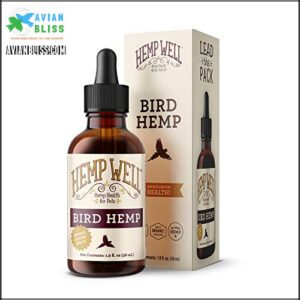
If bird won’t eat hemp hearts, the oil version might be your workaround. Hemp Well Organic Bird Health Oil delivers the same omega-3 and omega-6 support — 171 mg and 504 mg per serving respectively — in a liquid you can drop directly into food or water.
It’s 100% organic hemp seed oil, no fillers, no carrier oils.
Many owners report calmer behavior and improved feather condition within a few weeks of consistent daily use.
| Best For | Bird owners who struggle to get their pet to eat hemp hearts and want an easy, flexible way to add omega and calming support to their daily routine. |
|---|---|
| Primary Ingredient | Organic hemp oil |
| Omega Fatty Acids | Omega-3 and omega-6 |
| Feather Support | Aids molting and feather shine |
| GMO Status | Organic, GMO-free |
| Packaging | 2 oz dropper bottle |
| Refrigerate After Opening | Not specified |
| Additional Features |
|
- Pure organic hemp oil with no fillers — just drop it into food or water for a hassle-free daily supplement
- Many owners notice calmer behavior and shinier feathers within a few weeks of consistent use
- Works double duty — you can use it orally or apply it topically to help with dry skin and molting
- Some birds, especially macaws, flat-out refuse the taste, which limits your options for oral use
- The dropper markings can be hard to read, making it tricky to nail down an exact dose
- A few users reported skin irritation or infection, so it’s worth monitoring your bird closely when starting out
4. Birds Love Natural Mixed Seed Food
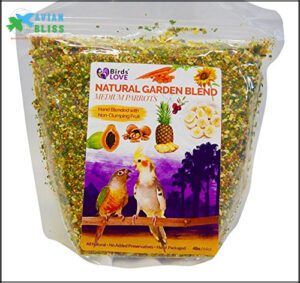
Sometimes your bird just needs real food — not supplements, not oils, just something close to what they’d find in the wild. Birds LOVE Natural Mixed Seed Food brings that to the bowl: real fruits, nuts, vegetables, and seeds, hand-blended with no artificial additives.
At $49.90 for 4 lbs, it’s a mid-range investment, but the nutrient variety — vitamins, minerals, and healthy carbohydrates — promotes feather health at every life stage.
Mix it with pellets for the best balance.
| Best For | Bird owners who want a natural, additive-free seed mix for medium-sized birds like cockatiels, conures, or parrots at any life stage. |
|---|---|
| Primary Ingredient | Fruits, nuts, seeds, vegetables |
| Omega Fatty Acids | Present via seeds and nuts |
| Feather Support | Supports feather health |
| GMO Status | No artificial additives |
| Packaging | Resealable 4-lb bag |
| Refrigerate After Opening | Freezing recommended |
| Additional Features |
|
- Real fruits, nuts, veggies, and seeds — no artificial colors, preservatives, or sweeteners
- Hand-blended and nitrogen-flushed to lock in freshness, with a resealable bag for convenience
- Works as a standalone feed or pairs well with pellets for a more balanced diet
- At ~$12.48 per pound, it’s pricier than most standard seed mixes
- Batch variation can mean too many sunflower seeds, which bumps up fat content
- Can be hard to find, and improper storage risks mold or moths — freezing is recommended
5. Organic Hemp Hearts Bird Feed

If you want to keep things simple, organic hemp hearts are worth adding to your bird’s bowl. Just one ingredient — dehulled hemp seeds — and packed with complete protein, omega-3 and omega-6 fatty acids, and vitamin E. That combination directly promotes skin integrity and feather regrowth, especially during molt.
Start small, around half a teaspoon daily, and sprinkle it over your bird’s regular diet. Refrigerate after opening to keep it fresh.
It won’t replace a full diet, but it’s a clean, effective topper.
| Best For | Bird owners who want a simple, natural supplement to boost their flock’s protein intake and feather health at any life stage. |
|---|---|
| Primary Ingredient | Organic hemp hearts |
| Omega Fatty Acids | Omega-3 and omega-6 |
| Feather Support | Supports feather quality |
| GMO Status | Organic, additive-free |
| Packaging | 1-lb granule bag |
| Refrigerate After Opening | Yes |
| Additional Features |
|
- Single ingredient — just pure organic hemp hearts, no fillers or additives
- Packed with complete protein and omega-3/6 fatty acids that support feather quality and heart health
- Works for birds at every stage of life, from chicks to adults
- Needs refrigeration after opening, so it’s not the most low-maintenance option
- Doesn’t cover all nutritional bases on its own — you’ll still need a full diet alongside it
- Not safe around kids or other pets, so storage needs a little extra thought
Feeding Plan to Reduce Plucking
Getting your bird’s diet on track doesn’t have to feel overwhelming. A few practical shifts can make a real difference in how their feathers look and how calm they feel day to day.
Here’s what a solid feeding plan actually looks like in practice.
Switching Birds to a More Balanced Diet
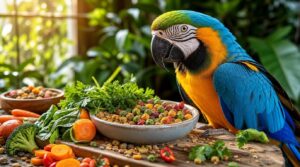
Switching your bird to a balanced, species-appropriate diet doesn’t happen overnight — and that’s okay. A gradual adjustment works best: replace a small portion of seeds with high-potency pellets daily, using palatability boosts like a sprinkle of organic feed or flavor enrichment from fresh vegetables.
Practice portion management and weight monitoring throughout to catch refusals early and keep feather health on track.
Limiting Seed-heavy Treats and Filler Foods
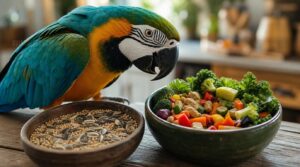
Even small seed-based treats can quietly tip your bird’s diet off balance. Think of them as empty calories crowding out the high-potency feed your bird actually needs.
Watch for these treat pitfalls:
- seed-heavy mixes displacing balanced, species-appropriate diet staples
- filler-laden snacks adding bulk without feather-support nutrients
- poor label reading hiding added sugars or sodium
- Skipping scheduled treats and losing calorie-counting control
Swap to low-fat snacks from organic feed sources instead.
Pairing Nutrition With Enrichment and Routine
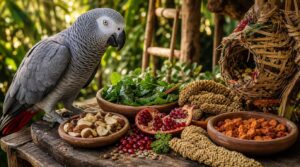
Nutrition works best when it’s part of a bigger routine.
Pairing a nutrient-rich bird diet with Scheduled Enrichment Sessions and Foraging Meal Puzzles turns mealtime into mental exercise. Use Interactive Feeding Stations and Texture Rotation to keep your bird engaged, and practice Timed Nutrient Delivery at consistent intervals.
These behavior modification techniques for birds, combined with organic bird nutrition products and environmental enrichment for pet parrots, reinforce calm, healthy habits naturally.
Knowing When Avian Vet Care is Needed
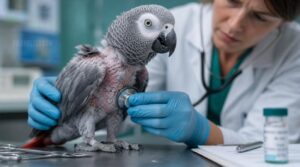
Sometimes diet and routine aren’t enough. If your bird shows Posture Changes, Respiratory Distress Signs like tail bobbing or open-mouth breathing, Abnormal Droppings, Bleeding Episodes, or Neurologic Symptoms such as tremors or loss of balance, don’t wait.
These go beyond causes of feather plucking in parrots — they signal something deeper. An avian veterinarian skilled in diagnosing feather plucking disorders can run bloodwork and identify what high potency diets for pet birds alone can’t fix.
Frequently Asked Questions (FAQs)
How do I Stop my parrot from plucking feathers?
Stopping feather plucking starts with understanding why your parrot is doing it.
Medical issues, a poor parrot diet, stress, or boredom are usually the culprits — and often, it’s a mix of all four.
What is the best way to pluck feathers?
Feather plucking in birds isn’t something you want to encourage — it’s actually a problem to prevent.
A healthy diet rich in omega-3 fatty acids and nutrient-rich foods is your best solution.
What is feather plucking in a parrot?
Parrots persistently picking and pulling their own feathers — that’s feather plucking.
It’s a compulsive behavior where birds chew or remove feathers, often progressing from excessive preening to visible skin lesions and bare patches.
Why do birds pluck their feathers?
Birds pluck their feathers for many reasons — skin irritation, dietary deficiency, social isolation, or routine disruption. It’s rarely one thing, but always worth investigating early.
What can I Feed my plucking bird?
pellet-based, nutrient-rich bird diet, add omega-3 sources like hemp hearts, and rotate fresh produce daily.
Consistent meal timing and hydration management make a real difference in feather plucking recovery.
How do I supplement my plucking bird?
Supplementing a plucking bird works best when you pair a healthy diet with targeted additions: omega-3 fatty acids, probiotic supplements, and a proper calcium phosphorus ratio guided by your avian vet.
How do I stop my bird from plucking feathers?
Stopping feather plucking starts with identifying the root cause.
A healthy diet, foraging puzzles, safe perches, and routine scheduling — paired with positive reinforcement and social companion time — can break the cycle.
What is a natural remedy for feather plucking?
Ironically, the simplest remedies are often overlooked.
A diluted Aloe Vera Spray soothes irritated skin, while a Chamomile Bath calms stress-driven plucking.
A balanced species-appropriate diet remains your most powerful natural intervention.
Why is my bird plucking all his feathers?
Your bird’s feather plucking usually signals something deeper — a dietary deficiency, chronic stress, poor cage placement, inconsistent routine consistency, or lack of social interaction and proper light exposure.
It’s rarely just a bad habit.
Do plucked feathers grow back?
Yes, plucked feathers can grow back — usually within 3 to 12 weeks — but follicle integrity is everything. Damage it repeatedly, and permanent baldness risk becomes very real.
Conclusion
Think of feathers like a garden—they only flourish when the soil beneath them is healthy.
When you choose the best bird food to prevent feather plucking, you’re not just filling a bowl; you’re rebuilding the foundation your bird needs to feel calm and whole.
Consistent nutrition, paired with routine and attentive care, gives your bird’s body the raw materials it needs to stop the cycle—and stay fully feathered.
- https://realitypathing.com/how-to-recognize-signs-of-stress-in-pet-birds/
- https://www.petservo.com.au/blogs/parrots-and-birds-articles/is-your-bird-stressed-signs-of-anxiety-and-depression-in-pet-birds
- https://www.furrycritter.com/pages/articles/birds/boredom_in_birds.htm
- https://www.veterinary-practice.com/article/minimising-stress-for-birds
- https://www.nhs.uk/conditions/vitamins-and-minerals/vitamin-a/