This site is supported by our readers. We may earn a commission, at no cost to you, if you purchase through links.
A Carolina chickadee needs to consume roughly 60% of its body weight in seeds each day just to survive a single winter night. When temperatures drop below freezing, backyard bird feeding during winter shifts from a pleasant hobby to a genuine lifeline for species that don’t migrate south.
Black oil sunflower seeds, suet cakes, and unsalted peanuts become critical fuel sources, delivering the fat and calories birds need to maintain their metabolic furnaces through long, cold nights.
Setting up the right feeders with high-energy foods doesn’t just bring colorful visitors to your window—it can mean the difference between survival and starvation for the chickadees, cardinals, and woodpeckers weathering the season in your neighborhood.
Table Of Contents
- Key Takeaways
- Essential Winter Foods for Backyard Birds
- Choosing and Placing Winter Bird Feeders
- Maintaining Feeders and Preventing Pests
- Providing Water and Shelter in Winter
- Tips for Successful Winter Bird Feeding
- Frequently Asked Questions (FAQs)
- Should bird feeders be left out in the winter?
- What is the 5 7 9 rule for bird feeders?
- What is the best thing to feed birds in the winter?
- When should I stop feeding my backyard birds?
- How can I prevent birdseed from molding?
- What are signs my feeders attract pests?
- How do I clean bird feeders safely?
- Can I make homemade suet alternatives?
- How do birds find feeders initially?
- What are the safest bird feeder materials for winter?
- Conclusion
Key Takeaways
- Winter bird feeding becomes a critical survival tool because small birds like chickadees must consume 60% of their body weight daily to survive freezing nights, making high-energy foods like black oil sunflower seeds and suet essential fuel sources.
- Strategic feeder placement using the 5-7-9 rule (5 feet high, 7 feet from structures, 9 feet from branches) combined with metal baffles effectively deters squirrels while keeping birds safe from window collisions and predators.
- Heated bird baths provide unfrozen water that’s just as vital as food during winter, while nest boxes offer roosting cavities that stay 18°F warmer than outside air, significantly improving survival rates for cavity-roosting species.
- Regular feeder maintenance through biweekly cleaning with soapy water and monthly bleach disinfection prevents deadly mold and disease spread, while consistent daily refilling schedules help birds establish reliable foraging patterns that reduce energy waste.
Essential Winter Foods for Backyard Birds
When temperatures drop, birds burn through calories at an astonishing rate just to stay warm through the night. Your feeder becomes a critical refueling station, but not all seeds and snacks offer the high-energy punch winter birds desperately need.
Choosing nutritious bird food for winter feeding can make the difference between survival and starvation during harsh cold snaps.
When winter temperatures plunge, your feeder becomes a critical refueling station birds desperately need to survive the night
Let’s look at the foods that truly make a difference when the stakes are highest.
High-Calorie Seed and Nut Options
When temperatures plunge, you’ll want to stock your feeders with black oil sunflower seeds—they pack around 1800 kcal per 100 grams and attract chickadees, finches, and nuthatches. Unsalted peanuts deliver 50–60% fat by weight, drawing jays and woodpeckers.
For a broader mix that includes fruit-loving species like orioles and tanagers, check out this guide to fruit and seed options for backyard birds.
Combine these high-energy foods in seed blends to provide the calorie content birds need during brutal cold snaps.
Stock up on winter bird food supplies like suet cakes, peanut butter blends, and black oil sunflower seeds to keep feeders full when temperatures plunge.
Benefits of Suet and Peanut Butter
Suet delivers nine calories per gram of pure fat—the densest fuel for winter survival. When you offer peanut butter mixed with bird-safe seeds, you support small passerines and woodpeckers through frigid nights.
Commercial suet blends with mealworms boost protein content, while peanut butter attracts broader species when paired with fruit pieces.
Pair these nutrient-rich options with a consistent feeding schedule for birds to maintain visitor patterns and minimize waste during colder months.
Research shows these high-energy fat supplements improve survival rates for garden birds facing harsh cold.
Foods to Avoid in Winter
While high-energy food keeps birds thriving, certain items harm cold weather survival. Don’t offer moldy suet or rancid fats—spoiled seeds and decomposed supplements spread disease when birds need strength most.
Salty snacks dehydrate winter visitors, and toxic foods like chocolate prove fatal even in trace amounts.
Skip cracked corn and white bread too; these low-value fillers compromise bird nutrition during the season’s toughest weeks.
Attracting a Variety of Bird Species
Your feeder choices shape which visitors arrive. Mix black oil sunflower seeds with safflower and nyjer to welcome chickadees alongside goldfinches. Add suet cakes for woodpeckers, then scatter mealworms to tempt bluebirds.
Keep feeders stocked with quality options and skip the foods that can harm backyard birds like bread or uncooked rice.
Different feeder types—tube, platform, suet cage—let multiple species feed without competing. This variety transforms your backyard birding into a winter gathering spot where species rotation keeps the show interesting all season long.
Choosing and Placing Winter Bird Feeders
Getting the right feeder in the right spot makes all the difference when winter arrives. The type of feeder you choose affects which birds visit and how easily they can access food during harsh weather.
Let’s look at the best options for cold-weather feeding and where to position them for maximum safety and success.
Best Feeder Types for Cold Weather
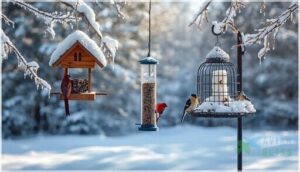
When snow piles up and icy winds blow, your feeder choice makes all the difference. Hopper feeders hold generous seed reserves and won’t spill during storms, while tube feeders with snug ports keep waste minimal. Platform feeders give you flexibility but need height to stay clear.
Don’t forget suet feeders—they’re lifesavers for woodpeckers and nuthatches hunting high-energy fat when insects disappear.
Feeder Placement for Safety and Access
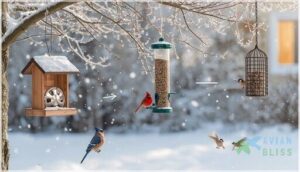
Beyond choosing the right feeder, where you put it determines whether birds thrive or flee. Mount your bird feeder at least 10 feet from windows—that window safety buffer cuts deadly collisions.
For predator deterrence, add a metal baffle and position feeders facing away from harsh winds.
Proper feeder spacing (15–20 feet apart) reduces squabbles and keeps everyone healthier during winter birdfeeding season.
Using The 5-7-9 Rule for Squirrel Deterrence
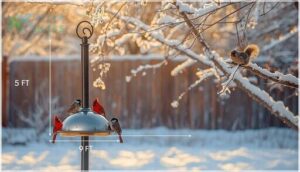
One proven deterrent follows the 5-7-9 rule: position your bird feeder 5 feet off the ground, 7 feet from structures, and 9 feet from branches. This placement limits squirrel behavior by exploiting their jumping range. Add a baffle below the feeder for extra defense.
While squirrels eventually adapt, combining these adaptive strategies with suet cages keeps winter birdfeeding successful.
Maintaining Feeders and Preventing Pests
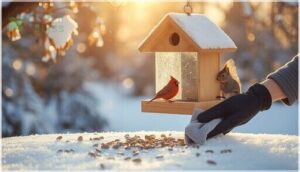
Your feeders work hard all winter, but they can’t do their job if they’re caked in debris or overrun by squirrels. Keeping them clean and pest-free protects the birds from illness while ensuring your seed actually reaches its intended diners.
Let’s look at three practical ways to maintain your feeding stations through the coldest months.
Cleaning and Sanitizing Feeders
You’ll want to clean your bird feeder every two weeks with warm, soapy water—this simple habit stops mold and bacteria before they become a problem.
Monthly disinfection using a 1:9 bleach-to-water solution (let it sit for two minutes) provides deeper bacterial control. Always rinse thoroughly and let feeders air-dry completely.
Check monthly for cracks that invite contamination.
Effective Squirrel-Proofing Techniques
Squirrels can empty a feeder faster than you can refill it—but the right defenses make all the difference. Here are proven squirrel deterrent methods for backyard bird feeding:
- Install squirrel baffles on poles—these reduce access by 80 percent when properly positioned
- Use weighted perches that close under heavy animals while welcoming songbirds
- Wrap small feeders in copper mesh to prevent gnawing damage
- Add motion deterrents alongside feeder guards to cut daytime visits by 40–70 percent
Keeping Feeders Clear of Snow and Ice
After a snowstorm, don’t let frozen feeders shut birds out. Regular snow removal and ice prevention methods work best when you act early. Here’s your winter feeder care guide:
| Winter Bird Feeding Task | Frequency & Method |
|---|---|
| Shake loose snow from roofs | After each snowfall |
| Clear feeding ports of ice | Daily during freezing weather |
| Install sloped or baffled designs | Once (prevents buildup) |
| Position feeders in open areas | Initial setup (reduces drifting) |
Gently brush ports and perches after each snowfall to keep them accessible. Pair frozen seed solutions with a heated bird bath, and you’ll ensure backyard bird feeding remains accessible all season.
Providing Water and Shelter in Winter
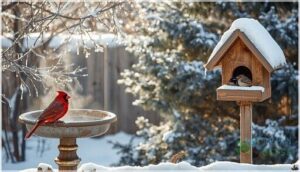
Food isn’t the only thing birds need to make it through winter—they also need clean water and safe places to escape harsh weather. Finding unfrozen water can be just as challenging as finding food when temperatures drop.
Here are three essential ways you can provide water and shelter for your backyard visitors this winter.
Heated Bird Baths and Water Sources
During cold snaps, birds need liquid water just as much as food. A heated bird bath with a thermostat-controlled element keeps water ice-free without wasting energy.
You’ll notice cardinals, finches, and sparrows visiting more often when they can drink reliably.
Place your birdbath in a sunny spot, and consider a submerged de-icer if you already own a sturdy bath that withstands freezing temperatures.
Creating Shelter With Native Plants and Brush Piles
Beyond providing fresh water, you can create year-round shelter by leaving leaf litter and spent seed-bearing plants standing through winter.
Native shrubs like winterberry holly and dense grasses act as windbreaks, reducing energy expenditure for ground-foraging birds.
Build a brush pile 3–4 feet high using coarse branches layered with finer twigs—this microhabitat development attracts wrens and chickadees seeking protection from harsh weather.
Using Nest Boxes as Winter Roosts
That brush pile will draw roosters by night, but nest boxes offer even better winter shelter. Cavity-roosting species like chickadees and bluebirds huddle inside boxes where temperatures stay 18°F warmer than outside air.
Proper nest box placement at least 3 meters high, facing away from prevailing winds, reduces heat loss. Clean boxes each autumn—roosting behavior depends on pest-free cavities for winter bird care and survival.
For effective winter roosting, consider installing roost box designs to provide birds with a warm and safe space.
Tips for Successful Winter Bird Feeding
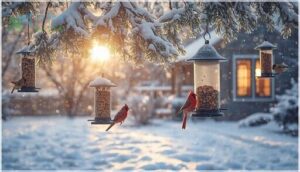
You’ve set up your feeders and created a welcoming habitat, but successful winter bird feeding depends on consistent routines and smart adjustments. Timing your refills, keeping food available during storms, and watching how birds respond to your setup will make all the difference.
Here’s how to fine-tune your approach throughout the cold months.
Daily Feeding Schedules and Timing
Think of your feeder as a diner with regular hours—birds notice patterns and return when they expect meals. Consistency beats sporadic generosity; stick to the same winter schedules to reduce stress and keep migration instincts sharp.
Fill stations in late afternoon so your visitors can tank up before nightfall, when energy reserves matter most. During cold snaps, add a smaller morning portion to help them recover from freezing nights.
Managing Food Supply During Harsh Weather
When blizzards hit or temperatures plummet below zero, birds can burn through a day’s worth of calories in just a few hours. Providing adequate high calorie sources is vital for their survival during such extreme weather conditions.
Stock emergency supplies like extra suet blocks and high-energy food before storms arrive. Refill feeders twice daily during harsh cold snaps, focusing on calorie-dense options that help small bodies maintain heat overnight.
Monitoring Bird Activity and Adjusting Strategies
Regularly observing which species visit your feeders reveals patterns that sharpen your winter bird feeding strategies. Chickadees and nuthatches usually increase visits as temperatures drop, signaling when to boost suet supplies.
Participating in citizen science programs like Project FeederWatch helps you track seasonal bird feeding strategies and species diversity over time. If you notice sick birds or unusual behavior, temporarily remove feeders and clean them thoroughly.
Adjust feeder placement, food types, and refill schedules based on what you see—successful backyard birding tips emerge from watching how winter adaptation unfolds in your own yard.
Frequently Asked Questions (FAQs)
Should bird feeders be left out in the winter?
Yes, winter bird feeders should stay out because they genuinely help birds survive harsh conditions—but only if you commit to regular cleaning, safe placement, and consistent food supply during cold spells.
What is the 5 7 9 rule for bird feeders?
Squirrels can leap five feet up, seven feet across, and drop nine feet down—so place your feeder at those minimum distances from ground, structures, and branches to keep raiders at bay.
What is the best thing to feed birds in the winter?
Black oil sunflower seeds and suet are the best winter foods for birds. These high-energy foods provide critical fat and calories, helping species like chickadees and woodpeckers survive cold nights.
When should I stop feeding my backyard birds?
Like spring cleaning your closet, seasonal feeding can end once nature’s pantry reopens—but watch for bear activity, disease risk, and migration patterns.
Tapering feeders in late spring keeps winter wildlife safe while respecting local regulations.
How can I prevent birdseed from molding?
Store bird seed in sealed containers below 70°F. Choose feeders with drainage holes and good airflow.
Clean feeders weekly with diluted bleach solution, then dry completely. Remove wet seed promptly to prevent harmful mold growth.
What are signs my feeders attract pests?
Watch for small dark droppings beneath feeders, fresh gnaw marks on posts, burrow holes nearby, or feeders knocked down overnight—all signs of pest droppings, rodent activity, squirrel damage requiring better deterrents and feeder sanitation.
How do I clean bird feeders safely?
You’ll need to scrub feeders with warm, soapy water every two weeks, then soak them in a 1-to-9 bleach disinfectant solution. Always wear gloves and work outdoors to protect yourself.
Can I make homemade suet alternatives?
You can absolutely whip up homemade suet alternatives that’ll fuel your feathered friends all winter long. Mix animal fat suet with peanut butter, seeds, and cornmeal, or try plant-based options using coconut oil for a high-energy food birds love.
How do birds find feeders initially?
Birds locate feeders through visual cues and flock behavior. Once a few birds discover your setup through seed dispersal or accidental encounters, others follow, making feeder visibility essential for attracting wild birds initially.
What are the safest bird feeder materials for winter?
The toughest feeders often fail first—unless you choose wisely. Stainless steel and powder coating resist corrosion, while ceramic feeders and untreated cedar handle freezing temperatures without cracking, ensuring reliable backyard wildlife conservation.
Conclusion
When the last songbird tucks its head beneath a wing tonight, the seeds in your feeder become its insurance against the cold. Backyard bird feeding during winter isn’t just generosity—it’s a partnership that echoes through frozen mornings and silent snowfalls.
You’ve stocked the feeders, cleared the ice, and created refuge. Now, as temperatures plummet and darkness stretches longer, the chickadees and cardinals depending on your care have what they need most: a fighting chance.