This site is supported by our readers. We may earn a commission, at no cost to you, if you purchase through links.
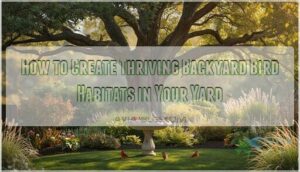
A single oak tree can host over 500 species of caterpillars—the protein-packed fuel that feeds nestlings from warblers to woodpeckers. Most suburban yards, dominated by Kentucky bluegrass and ornamental imports, offer birds little more than a green desert.
The difference between a yard that birds pass over and one that becomes a breeding territory often comes down to plant selection and habitat structure. Transforming your property into functional backyard bird habitats doesn’t require acreage or a degree in ecology. It starts with understanding what birds need to survive: native plants that support insects, layered vegetation for shelter, reliable water sources, and safe nesting sites positioned away from predators.
Table Of Contents
- Key Takeaways
- Selecting Native Plants for Bird Habitats
- Designing Diverse Backyard Bird Habitats
- Providing Essential Food and Water Sources
- Creating Safe Nesting and Shelter Areas
- Supporting Bird Conservation in Your Backyard
- Frequently Asked Questions (FAQs)
- How do I make a bird habitat in my backyard?
- What is the best habitat for birds?
- Where do backyard birds go at night?
- What is a certified backyard habitat?
- How long until birds discover my new habitat?
- When is the best time to photograph backyard birds?
- Should I remove old nests from birdhouses?
- What noise levels are acceptable near bird habitats?
- How do I keep cats away from birds?
- When should I clean my bird feeders?
- Conclusion
Key Takeaways
- Native plants form the backbone of bird-friendly yards because they host 2-3x more caterpillars than non-natives and provide the insects, berries, and shelter that local bird species have evolved to rely on for survival.
- Layered vegetation—ground cover, mid-story shrubs, and canopy trees—increases bird activity by roughly 28% and insect abundance by 35-60% by creating diverse foraging zones and year-round shelter at multiple heights.
- Reducing lawn coverage by 30-60% and replacing it with native garden beds boosts invertebrate biomass up to 2.5 times while providing critical food sources, nesting materials, and protective cover that standard turf grass cannot support.
- Strategic placement of water sources, feeders, and nest boxes combined with predator protection measures like baffles and dense evergreen screening can cut predation risk by 18-70% and significantly improve nesting success rates.
Selecting Native Plants for Bird Habitats
Native plants are the foundation of any bird-friendly yard because they provide the food and shelter that local species have relied on for thousands of years. When you choose the right mix of trees, shrubs, and flowering plants, you’re fundamentally setting a table that birds already know how to find.
Here are four key categories to keep in mind when selecting native plants for your backyard habitat.
Choosing Bird-Friendly Trees and Shrubs
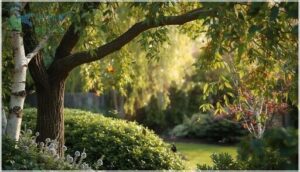
The right tree species and shrub selection form the foundation of wildlife gardening. Native canopy trees like oaks and hickories host 2–3x more caterpillars than non-natives, delivering essential bird food for insectivores. When choosing native plants for bird habitat creation, consider:
- Oaks, willows, and birches for protein-rich caterpillars
- Dense shrubs that offer year-round cover
- Species providing seasonal nesting sites
- Trees with varied heights for layered foraging
- Locally adapted varieties that thrive without intervention.
Understanding the text analysis process is key for effective habitat creation.
Berry-Producing and Nectar-Rich Plants
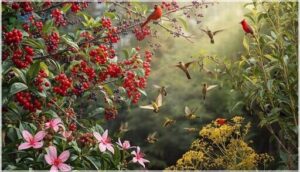
Beyond supporting insect life, native plants offer direct calories through fruit and nectar. Winterberry holly and highbush cranberry produce abundant berries that fuel cardinals and waxwings through migration and winter. Nectar sources like bee balm and goldenrod boost pollinator support, which drives insect availability for bird diets.
Berry-producing bushes such as serviceberry yield 1–2 dozen berries per cluster—practical, bird-friendly gardening for wildlife that strengthens sustainable gardening efforts and seed dispersal networks.
Understanding AP study resources can also improve knowledge of environmental science and conservation.
Plants for Year-Round Food Sources

To keep birds fed every season, you’ll need variety. Native plants like oaks and hickories deliver protein-rich mast crops, while serviceberry and viburnum ripen berries at different times. Layered plantings—tall trees, mid-story shrubs, and groundcovers—yield 40–60% more winter bird visits than single-layer setups.
- Native sunflowers and wild quince for steady seed production
- Elderberry for late-summer through early-winter fruit
- Evergreen shrubs that shelter wintering species
- Fruit trees like hawthorn for spring nesting fuel
- Pollinator plants supporting insect prey year-round
This staggered approach to seasonal food keeps your yard lively and bolsters sustainable gardening practices that strengthen local ecosystems.
Insect-Attracting Native Species
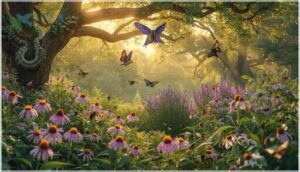
Native plants bring the insects that birds need. Oaks support 40% more caterpillar food than non-natives, while native beetles and lacewings handle pest control naturally.
Native Plant Gardening with milkweeds boosts Monarch Conservation, and pollinator gardens with four distinct plant types attract 30–60% more insect biodiversity.
You’re not just planting—you’re building a living buffet that keeps your feathered neighbors well-fed.
Designing Diverse Backyard Bird Habitats
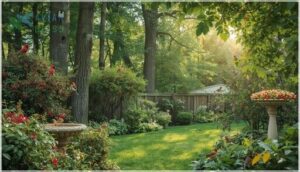
A thriving bird habitat isn’t just about planting the right species—it’s about creating a space where birds can find everything they need at different heights and in different areas. Think of your yard as a multi-level apartment building, where each floor offers something different for foraging, nesting, or just feeling safe.
A thriving bird habitat is a multi-level space where every layer offers food, shelter, and safety at different heights
Here’s how to design a backyard that welcomes a wider variety of birds throughout the year.
Layered Vegetation for Shelter and Foraging
Think of your yard as a multi-story building—birds use every floor. When you establish Vegetation Layers with ground cover, mid-layer shrubs, and a Native Canopy, you’ll boost bird activity by roughly 28% and create essential Bird Foraging zones.
This Habitat Complexity mirrors natural ecosystems, increasing insect abundance by 35–60% while providing year-round shelter and nesting opportunities. Native plants form the foundation of a true bird sanctuary with genuine Ecosystem Balance.
Reducing Lawn and Adding Garden Beds
By swapping even 30–60% of your lawn for garden beds packed with native plants, you’ll create gardening for wildlife zones that attract backyard birds year-round. This yard renovation boosts invertebrate biomass 1.2–2.5 times, offering critical food.
Soil preparation matters—loosening compacted turf and adding compost sets the stage for eco-friendly, bird-friendly garden diversity that transforms your space.
Incorporating Brush Piles and Leaf Litter
You can boost insect abundance by 2.5–3.5 times by piling fallen branches, twigs, and logs in quiet corners—these brush piles offer critical wildlife shelter provision and microhabitat diversity for backyard birds.
Leaving leaf litter in place elevates ground-foraging diversity by 18–34%, fueling over 40% of available invertebrate biomass.
Together, these simple wildlife gardening moves turn your yard into a thriving bird habitat.
Creating Quiet, Safe Spaces for Birds
Birds thrive when they feel protected—dense native plantings can lower disturbances by up to 22%, creating genuine bird sanctuaries right in your yard. Strategic quiet zones with layered shelter boost successful fledging by 40% and cut predation by 18%.
- Plant thorny shrubs for predator protection near feeders
- Position evergreen screening to form wildlife corridors
- Establish safe havens with understory cover
- Keep bird-friendly habitat zones calm and undisturbed
Providing Essential Food and Water Sources
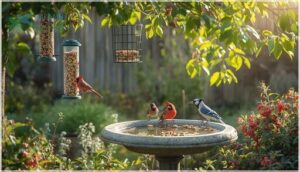
Birds need consistent access to food and water to thrive in your backyard throughout the year. You can support their survival by offering multiple feeding options and keeping fresh water available in all seasons.
Here’s how to create reliable sources that attract a wide variety of species to your yard.
Installing Bird Feeders for Different Species
Tube feeders with small perches draw finches and chickadees, while platform designs welcome larger species like cardinals. Offering sunflower seeds, nyjer, and suet creates feeder variety that attracts different bird species throughout the season.
You’ll see 25% more daily visits when you position feeders 4–6 feet off the ground and 10–15 feet from cover—close enough for quick escapes, far enough to discourage predators.
Growing Plants With Seeds, Berries, and Nectar
Your best feeder can’t compete with a thriving native plant buffet. Studies show native berry-producing shrubs boost fruit availability by 40% during breeding season, while nectar-rich perennials increase hummingbird visits up to 60%. Focus on biodiversity with these bird-friendly choices:
- Early-blooming nectar plants for spring migrants
- Berry-producing bushes ripening at different times
- Seed-head flowers left standing through fall
- Native grasses supporting ground-feeding species
- Oak or willow trees hosting protein-rich caterpillars
Setting Up Birdbaths and Water Features
Fresh water draws more species than any single feeder. During hot weather, 60–80% of urban birds visit water features daily, so place a shallow birdbath (2–4 cm deep) within 5–10 meters of cover.
A gentle fountain keeps water clear and inviting while reducing algae by 25%. Clean your bird bath every 2–3 days to maintain water quality—birds rely on these backyard bird conservation spots year-round.
Supporting Insect Populations for Bird Diets
Beyond fresh water, your yard’s insect life forms the backbone of bird diet diversity. Native plants host 26% more insects than non-natives, fueling critical food web dynamics.
Skipping pesticides boosts insect survival by 35%, while leaf litter fosters native pollinators and insect life cycles that ground-foragers depend on.
A thriving, bird-friendly habitat starts with a pesticide-free ecosystem balance that keeps birds well-fed year-round.
Creating Safe Nesting and Shelter Areas
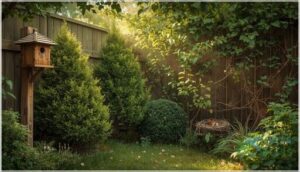
Birds need more than food and water to thrive—they need safe places to raise their young and escape harsh weather or predators. The right combination of natural and human-made structures can turn your yard into a secure haven where birds feel comfortable nesting season after season.
Here’s how to create those protective spaces in your backyard.
Positioning Birdhouses and Nest Boxes
When installing birdhouses, you’ll want to mount them 6 to 10 feet high on solid poles with predator baffles at the base—this slashes raccoon and snake threats by up to 70%. Face entrance holes east or southeast to prevent afternoon overheating.
Match hole size to your target species: 1 1/8 inches attracts bluebirds, while chickadees prefer 1-inch openings. Clean boxes annually to boost next-season occupancy.
Using Dense Bushes and Evergreen Trees
Your birdhouses now have neighbors. Dense evergreen trees and compact shrubs create year-round shelter that increases winter roosting sites by 28% in suburban yards.
Native conifers and thick understory plants cut predation risk by 18% for ground-feeders while supporting higher insect populations.
Choose species like spruces or viburnums that reach 2–3 meters—they extend daily foraging windows by up to 25% and provide reliable cover from wind and hawks.
Supplying Natural Nesting Materials
Your birds already have shelter—now give them what they need to build. About 38% of backyard species gather grasses, leaves, and pine needles from ground cover and shrubs for nesting, and the right materials boost fledging success by 12–18%.
Scatter these natural fibers near nesting sites:
- Fine native grasses and mosses for cavity-nesters
- Dry leaves and soft plant down for open-cup builders
- Twigs and bark strips for larger species
Material diversity within 100 meters attracts more bird-friendly species and strengthens nesting success across seasons.
Protecting Birds From Predators and Weather
When hawks circle overhead or raccoons prowl at dusk, your bird sanctuary needs strategic defenses. Dense evergreen trees cut wind exposure by up to 34% and reduce winter nest failures, while layered shrubs create escape routes from mammalian predators that cause 40% of nest losses.
Position birdhouses 150 meters from open fields where raptors hunt, and add thick understory plantings for climate adaptation during heatwaves and storms.
Supporting Bird Conservation in Your Backyard
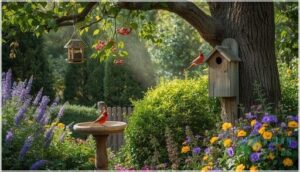
Your backyard can be more than a refuge for birds—it becomes part of a larger conservation effort when you make thoughtful choices. Simple shifts in how you manage your landscape help protect declining species and restore balance to local ecosystems.
Here’s how you can turn everyday actions into meaningful support for bird populations.
Enhancing Biodiversity With Native Landscaping
Native plant selection transforms your yard into a thriving ecosystem that nurtures local wildlife conservation. When you replace traditional lawns with native species, you boost biodiversity by 20–60% across different landscapes.
These bird-friendly plants create sustainable landscaping that requires less water while delivering year-round food. By embracing ecological gardening and habitat creation, you’re building connections that ripple through your entire local ecosystem.
Participating in Local Bird Conservation Programs
Joining local bird conservation efforts puts you at the heart of a growing movement—volunteer participation jumped 12–25% between 2019 and 2023. Through citizen science projects like Project FeederWatch, you’ll gain hands-on experience while supporting wildlife conservation that matters.
- Bird monitoring training typically requires 20–40 hours annually and furnishes you with identification skills
- Community engagement connects you with fellow enthusiasts and conservation funding opportunities
- Certification programs in habitat assessment show 70–85% pass rates among new volunteers
- Collaborative projects between municipalities and organizations boost conservation funding by 10–15% yearly
- Environmental conservation networks provide access to hundreds of resources and local professionals
Promoting Sustainable Bird Habitat Practices
Your commitment to environmental stewardship extends beyond planting—sustainable gardening practices turn your yard into a true bird sanctuary design that thrives for years.
Eco conservation means choosing native species that require less water and zero pesticides, protecting wildlife preservation through chemical-free sustainable landscaping.
Bird friendly gardens flourish when you maintain leaf litter, practice sustainable bird feeding with locally sourced seeds, and create a birdfriendly environment where natural cycles support ongoing wildlife conservation.
Frequently Asked Questions (FAQs)
How do I make a bird habitat in my backyard?
Start by layering native plants—ground cover, shrubs, and trees—to mimic natural ecosystems. Add fresh water sources, diverse feeders, and shelter spots. This bird-friendly design transforms your garden into a thriving habitat.
What is the best habitat for birds?
The best bird habitat offers layered vegetation with native plants, reliable water sources, safe nesting sites, and abundant food chains.
Habitat diversity and ecological balance support bird migration, foraging, and year-round survival across multiple species.
Where do backyard birds go at night?
At dusk, most songbirds settle into dense shrubs and evergreens, while woodpeckers seek hollow trees or nest boxes.
Ground-foragers tuck into leaf litter, choosing cover that shields them from predators and wind overnight.
What is a certified backyard habitat?
A certified backyard habitat is a Wildlife Habitat Creation designation confirming your yard meets specific Habitat Criteria.
These criteria include providing food, water, shelter, and bird-friendly nesting sites through the Certification Process.
This ensures Bird Safety and supports Backyard Bird Conservation efforts.
How long until birds discover my new habitat?
Most backyard bird species begin arriving within one to three weeks after you establish native plantings. Insectivores often appear first, drawn by emerging insects, while berry-eaters arrive as fruiting shrubs mature.
When is the best time to photograph backyard birds?
Early morning captures the dawn chorus when bird behavior peaks and birdwatching enthusiasts favor Golden Hour light.
Spring’s seasonal migration offers prime photography tips for backyard bird habitat conservation and birdfriendly encounters.
Should I remove old nests from birdhouses?
Yes, you should remove old nests to prevent parasites and disease buildup. Clean birdhouses with a bleach solution after breeding season ends, ensuring they’re ready for new occupants next spring.
What noise levels are acceptable near bird habitats?
Think of noise as an invisible fence—it can push birds away just as surely as a wall. Bird song thrives below 50 dB; quiet zones near nature conservation areas protect avian habitat and support acoustic monitoring for wildlife conservation.
How do I keep cats away from birds?
Install motion-activated sprinklers and fencing to create a bird sanctuary with predator control. Dense shrubs offer shelter, while elevated feeders improve bird safety.
Keep cats indoors at dawn and dusk to protect your bird-friendly environment.
When should I clean my bird feeders?
Clean your bird feeders every one to two weeks during warm months—think of it like changing your rotary phone’s position to avoid dust buildup.
Regular feeder maintenance prevents mold growth and protects bird health year-round.
Conclusion
Think of your yard as a train station: birds won’t stop if there’s nothing worth the visit. By layering native plants, providing water, and protecting nesting zones, you transform empty space into essential habitat.
Each oak you plant, each feeder you fill, each pesticide you skip becomes part of a larger network—one that connects fragmented landscapes and gives birds what suburban sprawl has taken away.
Your backyard bird habitats matter more than you think.