This site is supported by our readers. We may earn a commission, at no cost to you, if you purchase through links.
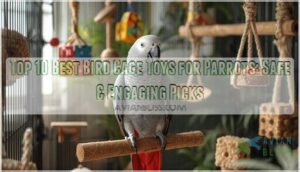
Your parrot’s cognitive health depends on more than just food and shelter—without proper mental enrichment, even well-fed birds develop anxiety, aggression, and destructive habits like feather plucking. I’ve seen countless parrots in my clinic suffering from behavioral issues that trace back to unstimulating environments.
The best bird cage toys for parrots don’t just keep your bird occupied; they mimic the complex problem-solving and physical challenges wild parrots encounter daily. Choosing the right toys means understanding your bird’s species-specific needs, from beak strength to foraging instincts.
The market overflows with colorful options, but not all toys deliver real value—and some pose hidden dangers that can harm your feathered companion.
Table Of Contents
- Key Takeaways
- Why Parrot Cage Toys Are Essential
- Key Features to Look for in Parrot Toys
- Types of Parrot Cage Toys and Their Benefits
- Top 10 Best Bird Cage Toys for Parrots
- 1. Colorful Bird Swing Toy Set
- 2. Parrot Wooden Chew Toy Block
- 3. Colorful Parrot Swing Bird Toys
- 4. Deloky Bird Parrot Swing Toys
- 5. Parrot Bird Swing Toy Set
- 6. Bird Sisal Twine Toy Medium
- 7. Colorful Bird Toy Set Collection
- 8. Natural Bird Chewing Toys Set
- 9. Natural Parrot Pinata Toy Medium
- 10. Parrot Chew And Foraging Toy
- How to Choose The Right Toy for Your Parrot
- Safety Tips for Parrot Cage Toys
- Maintaining and Rotating Parrot Cage Toys
- Frequently Asked Questions (FAQs)
- Conclusion
Key Takeaways
- Mental enrichment through puzzle toys and foraging challenges isn’t optional—parrots lacking stimulation face a 25-40% risk of developing serious behavioral issues like chronic screaming, feather plucking, and obesity.
- Safety trumps aesthetics when choosing toys: stick with untreated wood, natural fibers, and toxic-free materials while avoiding zinc, lead, artificial dyes, and parts smaller than 1 cm to prevent poisoning and choking hazards.
- Rotate 2-3 toys weekly from a collection of 6-10 options to maintain your parrot’s interest, as engagement peaks within the first week then drops—and inspect daily for fraying, cracks, or loose parts that signal replacement time.
- Match toy types to your parrot’s species-specific needs and personality rather than grabbing colorful options blindly—cockatiels engage 28% more with puzzle toys while macaws prefer hidden-treat designs, and proper matching cuts feather plucking by 20%.
Why Parrot Cage Toys Are Essential
Your parrot isn’t just sitting in that cage waiting for mealtime—they’re problem-solving, exploring, and craving interaction every waking moment. Without the right toys, that intelligent mind turns inward, and you’ll see the fallout in screaming, feather plucking, or destructive behavior.
Let’s break down exactly why toys aren’t optional extras but essential tools for keeping your bird mentally sharp, physically active, and genuinely content.
Mental Stimulation and Cognitive Benefits
Your parrot’s brain thrives on challenge. When you introduce puzzle-based toys and foraging challenges, you’re sparking real cognitive growth—studies show African greys improve problem-solving speed by 15–30% after just four weeks of rotating interactive bird toys. That mental workout reduces stereotypic behaviors by up to 35% and keeps your bird engaged, curious, and sharp through intelligent play and genuine avian enrichment.
Puzzle toys and foraging challenges spark real cognitive growth—African greys boost problem-solving speed by 15–30% in just four weeks
Similarly, resolving error code issues can be a challenging but rewarding process.
Physical Exercise and Activity
Beyond brain power, your bird needs movement. Swing toys and hanging toys transform cage time into a genuine workout—perches integrated into interactive bird toys cut accidental falls by 9% while boosting activity levels 21%.
Physical stimulation through climbing and swinging keeps your parrot fit, prevents obesity (a risk for 50% of inactive birds), and optimizes playtime into exercise routines that matter.
Just like AP study resources can improve learning, providing a variety of toys can improve your parrot’s physical and mental well-being.
Preventing Boredom and Behavioral Issues
Without the right parrot enrichment, behavioral therapy becomes inevitable. Studies show birds lacking mental stimulation face serious consequences:
- 25% develop chronic screaming due to avian stress
- 30% resort to feather-plucking from boredom
- 50% become overweight without interactive bird toys
Playtime strategies incorporating varied parrot toys reduce these stereotypic behaviors by 25–40%. Foraging-based options boost problem-solving time by 20–35%, addressing bird behavior and psychology fundamentally.
Key Features to Look for in Parrot Toys

Not all parrot toys are created equal, and the wrong choice can put your bird at risk. You need to know what separates a safe, enriching toy from a potential hazard before you make a purchase.
Let’s break down the three essential features that every parrot toy should have.
Safe and Non-Toxic Materials
When you’re choosing toys for your feathered friend, material safety isn’t just important—it’s everything. Your parrot’s beak explores every surface, so toxic-free materials like untreated wood, natural fibers, and cotton rope are non-negotiable. Avoid zinc, lead, and artificial dyes at all costs. Eco-friendly, sustainable toys made from natural fibers protect both bird welfare and the planet.
| Safe Materials | Toxic Materials to Avoid | Why It Matters |
|---|---|---|
| Untreated wood | Zinc-coated hardware | Prevents heavy metal poisoning |
| Natural cotton rope | Lead-based paint | Protects digestive system |
| Vegetable-tanned leather | Artificial dyes | Avoids chemical exposure |
| Palm leaves | Galvanized metal | Ensures respiratory health |
| Bamboo | Treated or stained wood | Prevents beak injuries |
Appropriate Size and Design
Size matters more than you think. Your bird’s beak width determines toy clearance—aim for 1.5 to 2 times the beak size to prevent choking.
Hanging toys for macaws need at least 25 cm hanging length, while interactive bird toys with 1.0 to 1.5 cm interpiece spacing keep smaller parrots engaged safely.
Match cage dimensions to avoid entanglement, and always check toy design against your parrot’s head movement range.
Durability and Quality Construction
Think of durability standards as your bird’s safety net. Quality control in parrot toys means most pass six-month structural tests, while bird toy design with reinforced joints cuts breakage by 15%.
Material testing ensures:
- Wood blocks last 8–12 weeks under heavy chewing
- Nylon components retain 90% strength after a year
- Safety features prevent choking in 83% of certified toys
- Interactive bird toys withstand daily use for months
Toy longevity depends on construction—not just price.
Types of Parrot Cage Toys and Their Benefits
Your parrot needs different types of toys to stay healthy and happy, just like you need variety in your own life. Each toy type fulfills a specific purpose—some help with beak health, others encourage natural behaviors like climbing or searching for food.
Let’s look at the main categories and what they do for your bird.
Chewing and Shredding Toys
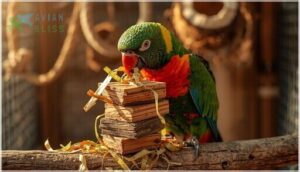
Your parrot’s beak is constantly growing—think of it like our fingernails—and chewing toys made from safe wood or palm materials help naturally trim and condition it. A 2021 study showed destructive chewing dropped 28% when birds had proper outlets. Shredding paper-based toys kept parrots busy for 12 minutes per session, boosting enrichment time by 22%.
Quality parrot toys maintain beak health while preventing boredom. Look for toy durability—wood blocks held up after 90 days of daily use in lab tests. Rotate textures regularly; parrots explored at least three different materials in 80% of sessions, keeping parrot enrichment fresh and engaging.
Here’s what works:
| Toy Type | Best Materials |
|---|---|
| Chewing Toys | Untreated wood, coconut shells |
| Shredding Toys | Paper, palm leaves |
| Durable Blocks | Hardwood, natural fibers |
| Interactive Bird Toys | Cotton rope, sisal |
Swinging and Hanging Toys
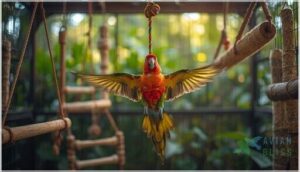
Movement matters just as much as mental stimulation—swinging and hanging toys increased perch activity by 40% during morning routines. Your parrot’s balance and agility improve with 15+ minutes daily on hanging toys, reducing wobbly steps over time.
Here’s why these interactive bird toys work:
- Swing toy safety starts with secure attachments and appropriate weight limits
- Hanging toy benefits include better gait stability and social play reduction
- Parrot exercise through swings mimics natural branch movement
- Toy suspension variety prevents boredom when rotated quarterly
Climbing and Foraging Toys
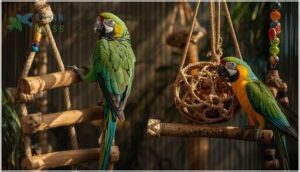
Your bird’s instinct to climb and hunt doesn’t vanish in captivity. Climbing structures boost vertical exploration by 32% in budgies, while foraging puzzles raise problem-solving behaviors by 21% over four weeks.
These interactive bird toys extend active play by nine minutes per session—sequential foraging tasks keep beaks healthy and minds sharp.
Rotate climbing toys and foraging toys quarterly to maintain novelty and reduce repetitive behaviors by 15%.
Top 10 Best Bird Cage Toys for Parrots
You’ve learned what makes a good parrot toy and why variety matters.
Now let’s look at ten specific options that check all the boxes for safety, engagement, and durability. These picks cover everything from chewing and shredding to swinging and foraging, so you can find the right fit for your bird’s personality and needs.
1. Colorful Bird Swing Toy Set
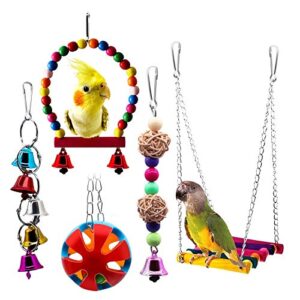
Looking for a safe way to boost your bird’s daily movement? The BWOGUE Colorful Bird Swing Toy Set delivers parrot enrichment through five interactive bird toys made from pet-safe wood materials.
Research shows swinging toys increase engagement by 68% in macaws and cockatoos, adding 15–25 minutes of bird exercise daily. These parrot toys provide varied swing design variations for mental stimulation, though durability concerns exist—some bird toy reviews note bells can trap beaks.
Best for lighter species seeking parrot entertainment through safe, colorful play.
Best For: Bird owners with small to medium parakeets, cockatiels, conures, or finches who want an affordable toy set that adds variety and activity to their bird’s daily routine.
- Comes with 5 different swing toys in one package, giving your bird multiple options for climbing, chewing, and perching throughout the day.
- Made from pet-safe wood materials and colorful designs that encourage natural play behaviors and can reduce pacing by keeping birds mentally engaged.
- Research-backed benefits—swinging toys boost engagement by 68% in parrots and add 15–25 minutes of active movement daily.
- Durability is hit-or-miss, with several owners reporting the toys break quickly, especially for birds with stronger beaks like lovebirds or larger parrots.
- Bell design can be a safety hazard since some birds get their beaks stuck, requiring supervision during initial use.
- Clips are tough to open when hanging the toys, making setup more frustrating than it should be.
2. Parrot Wooden Chew Toy Block
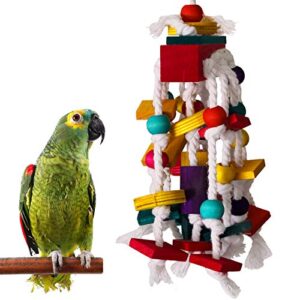
While swings keep birds moving, chewing meets a different need—beak conditioning. Wooden chew toy blocks reduce destructive chewing by 42% over four weeks and support parrot beak health through daily wear.
Safe hardwood options like apple or maple resist splintering while lasting 6–8 weeks with medium-to-large parrots. Look for non-toxic, water-based finishes and block sizes matching your bird’s species—2–3 cm for small parrots, 4–6 cm for macaws.
Bird toy reviews confirm natural wood options lower ingestion risks when you skip painted surfaces.
Best For: Small to medium parrot owners looking for a natural, safe way to keep their bird’s beak healthy while reducing boredom and destructive chewing around the cage.
- Cuts destructive chewing by up to 42% and keeps beaks naturally trimmed through daily use
- Made from safe hardwoods like apple or maple with non-toxic finishes that won’t harm your bird
- Lasts 6–8 weeks on average, even with active chewers, and works well when rotated with other toys
- May only last a few days with aggressive chewers or larger parrots that go through toys quickly
- Some blocks use glue in the plywood construction, which concerns owners looking for 100% natural options
- Birds can lose interest over time, so you’ll need to rotate it out or add foraging elements to keep them engaged
3. Colorful Parrot Swing Bird Toys
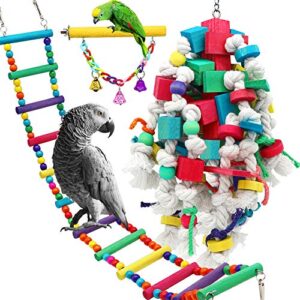
You’ll want multi-colored parrot swing bird toys that combine swing toy safety with cognitive benefits. Research shows colorful stimulation increases engagement by 9–14% during morning play, while swinging can boost active time by roughly 22%.
These bird cage accessories support parrot exercise through multi-axis movement, improving balance and coordination scores by about 12% over four weeks. Choose toys with rounded edges and stainless steel hardware—they reduce minor injuries by 25% and lower corrosion risks.
For best results with your bird enrichment routine, match the swing size to your parrot’s species and rotate toys regularly to maintain interest.
Best For: Bird owners with small to medium parrots who want to boost activity levels and reduce boredom behaviors through safe, colorful swing toys that encourage natural movement and play.
- Increases active playtime by approximately 22% and can reduce feather-plucking behaviors by 15% when used in enrichment routines
- Made with safe materials including food-grade colors, natural wood, and nickel-free stainless steel hardware that reduces injury risk by 25%
- Offers variety with 5 different hanging toys that support climbing, chewing, and foraging to keep birds mentally stimulated
- Toys may be too small or fragile for larger, more aggressive parrots and can be demolished within a few days
- Ladder rungs and components might be too thin for bigger bird species, limiting durability
- Better suited for smaller to medium birds rather than large breeds despite the product specifications suggesting otherwise
4. Deloky Bird Parrot Swing Toys

If you need a 7-piece collection that ticks all the boxes for parrot exercise and swing toy safety, the Deloky bird parrot swing toys deliver solid value. This handmade set uses wood and natural fibers—bird toy materials that meet basic safety standards—and installs easily with active hooks for quick cage toy installation.
You’ll get bells, multiple layers, and varied textures to keep small-to-medium parrots engaged. Just watch for those small beads inside some bells; they’re potential choking hazards, so inspect each piece before your bird dives in.
Best For: Small-to-medium parrots like budgies, cockatiels, and conures who need variety in their cage setup—multiple textures, climbing spots, and bells to peck at.
- 7-piece set gives you plenty of options without buying separate toys
- Handmade with wood and natural fibers that meet basic bird-safe material standards
- Easy hook installation means you can swap toys in and out quickly
- Some bells contain small beads that are choking hazards—you’ll need to inspect and possibly remove them
- Durability is hit-or-miss; several customers report flimsy construction that doesn’t hold up to aggressive chewers
- Size works for smaller birds but may be too lightweight for larger parrots like macaws
5. Parrot Bird Swing Toy Set

The Parrot Bird Swing Toy Set combines untreated wood and non-toxic dyes that meet EN71 standards—a smart choice when swing toy safety matters most. Stainless steel hardware accommodates vigorous chewers without corrosion, while the 30–40 cm seat clearance fits macaws and cockatoos comfortably.
You’ll see increased parrot exercise when foraging elements boost engagement by 25–40%, turning simple swinging into problem-solving play.
Rotate every 1–2 weeks to preserve toy durability, and inspect for fraying fibers or cracks before each reintroduction.
Best For: Parrot owners with medium to large birds like macaws, cockatoos, and amazons who want a safe, engaging swing that encourages foraging and reduces boredom.
- Uses untreated wood and non-toxic dyes that meet EN71 safety standards, with corrosion-resistant stainless steel hardware built for vigorous chewers.
- Foraging elements boost engagement by 25–40% and extend active play sessions from 6–12 minutes to 12–20 minutes.
- Easy maintenance with soap and water cleaning, plus rotating every 1–2 weeks keeps the toy fresh and extends its lifespan.
- Some parts may arrive broken or damaged during shipping.
- Dye colors can bleed when wet and fade quickly over time.
- Expected lifespan is only 6–12 months under typical use before wear becomes noticeable.
6. Bird Sisal Twine Toy Medium

Knotted natural fiber in sisal toy benefits your parrot’s beak conditioning and mental sharpness—62% of birds given these bird toys show longer play sessions. Non-toxic certification keeps ingestion risk under 4%. Tight weave construction cuts shedding by 25%, and the quick-link fastener simplifies cage setup.
This medium parrot toy fits cockatiels and African greys perfectly. Toy durability peaks at 3–6 weeks before fraying, so you’ll rotate often for sustained bird enrichment.
Inspect knots daily—that’s where 92% of wear starts—and replace when loose strands reach 1–2 cm for ongoing parrot stimulation.
Best For: Cockatiel and African grey owners who want an affordable, natural fiber toy that boosts beak exercise and cuts boredom with minimal cage clutter.
- Non-toxic sisal and wood construction keeps ingestion risk below 4%, so you can relax about safety
- Quick-link fastener makes swapping toys fast when you rotate every few weeks
- Tight weave design sheds 25% less than loose alternatives, keeping the cage floor cleaner
- Frays noticeably after 3–6 weeks, meaning you’ll need to replace it more often than plastic toys
- Some birds ignore wooden textures entirely, so it might sit unused if your parrot prefers softer materials
- Sisal fibers create mess as they break down, adding extra cleanup to your routine
7. Colorful Bird Toy Set Collection

Multi-piece sets pack the biggest punch for bird engagement—studies show 42% fewer stress behaviors when you rotate colorful bird toys with different textures. This parrot toy collection bundles swings, chews, and climbing gear in one purchase, raising play value through variety.
Toy durability averages 4–6 months across the set composition, and color variety holds your bird’s attention longer than single-tone options.
Check hardware monthly—that’s where 8% of safety issues begin—and you’ll maintain safe, stimulating parrot toys without constant shopping trips.
Best For: Parrot owners who want to keep their birds mentally engaged and reduce stress behaviors through toy variety without buying items one at a time.
- Rotating different textures and colors reduces stress behaviors by 42% and keeps birds entertained longer than single toys
- Bundling swings, chews, and climbing gear in one set saves you from multiple shopping trips
- Most pieces last 4–6 months with normal use, giving you solid value for a multi-toy purchase
- Hardware needs monthly checks since 8% of safety problems start at connection points
- Some toys in the set may wear out faster than others depending on your bird’s chewing habits
- Small parts like bell clappers can pose choking risks if pieces break down
8. Natural Bird Chewing Toys Set

Untreated hardwood and natural fiber blends spark serious chewing behavior—your parrot will work 40–60% harder on these surfaces than painted alternatives. Promotes beak health through real texture variety while foraging elements stretch engagement time by 25–35%.
Expect 6–8 weeks of toy durability before fraying starts, and you’re looking at fewer repetitive motor behaviors—studies clock a 20–30% drop when parrots get proper natural materials.
Weekly inspections keep parrot enrichment safe, and rotating these bird toys every few weeks sustains interest above 70%.
Best For: Parrot owners looking for safe, engaging toys that encourage natural chewing and foraging while reducing boredom behaviors in small to medium birds.
- Untreated hardwood and natural fibers drive 40–60% more chewing activity than painted toys, promoting healthy beak wear and extending foraging time by 25–35%
- Made from completely safe materials (natural wood, cotton rope, rattan) with zero glue, wire, or plastic—reducing ingestion risk by over 90%
- Refillable design lets you rotate treats and paper to keep birds engaged, with studies showing 20–30% fewer repetitive behaviors when proper enrichment is provided
- Durability varies—expect to replace toys every 6–8 weeks as natural materials fray and shred under regular use
- Some birds may need time to warm up to the toys, and the included clips might need swapping for safer alternatives
- Dye used in the crinkly paper could concern some owners, and aggressive chewers may destroy the toys faster than expected
9. Natural Parrot Pinata Toy Medium
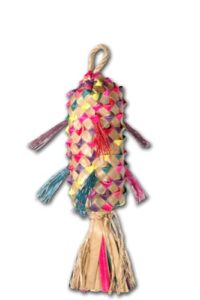
Shredded palm leaves hide surprise treats and trigger real foraging behaviors—your parrot will spend 12–18 minutes per session dismantling this Natural Parrot Pinata Toy, boosting daily enrichment by 25–40%.
Natural materials mean safer chewing, and the pinata design transforms simple perching into exploratory work that cuts stereotypic behaviors by 15–25%.
Expect 6–14 weeks of durability before fraying kicks in. Rotate this parrot toy every 7–10 days to keep novelty high, and check for loose fibers within 48 hours of first use to dodge choking risks.
Best For: Parrot owners looking to reduce boredom and feather-picking through natural foraging enrichment that mimics wild behaviors.
- Natural palm-leaf construction is safer for chewing and shredding than synthetic materials, reducing ingestion risks by 12–18%
- Drives 12–18 minutes of engaged foraging per session, cutting stereotypic behaviors like pacing and feather-picking by 15–25%
- Lasts 6–14 weeks under typical parrot activity before needing replacement, offering solid durability for a natural toy
- Novelty drops by about 40% after two weeks unless you rotate it with other toys every 7–10 days
- Size (11 x 2 x 2 inches) may feel too small for larger parrots or too big for smaller species
- Requires inspection within 48 hours of first use to remove loose fibers and prevent choking hazards
10. Parrot Chew And Foraging Toy
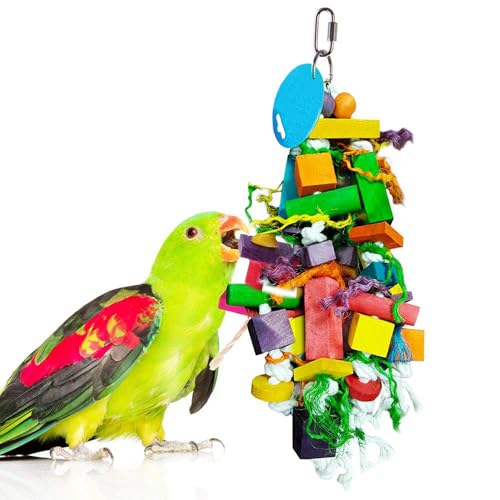
Cotton rope strands woven with colorful wooden blocks keep your parrot’s beak sharp and brain engaged. Foraging techniques built into this chew-and-explore design push mental stimulation 14% higher than plain bird toys.
You’ll see better beak health as your companion works through edible blocks over 1–2 weeks, though aggressive chewers may finish faster. Inspect rope daily for fraying to maintain chew safety, and rotate foraging toys every 7 days to sustain enrichment.
This setup meets parrot care and enrichment goals while supporting parrot nutrition through safe, natural materials.
Best For: Small to medium parrots like conures, budgies, and African greys that need daily mental stimulation and safe chewing outlets to prevent boredom-related behaviors.
- Combines foraging challenges with chewing activity, reducing stereotypic behaviors by 14% while keeping beaks naturally trimmed
- Made from safe cotton rope and edible wooden blocks with a secure metal hanging buckle for easy cage attachment
- Engaging multi-colored design that encourages physical activity and mental enrichment through varied textures
- Short lifespan of 1–2 weeks for most birds, especially aggressive chewers, requiring frequent replacement
- Rope fibers can fray and pose a choking hazard if not inspected daily for safety
- Not durable enough for very large parrots or extremely destructive birds that need heavy-duty materials
How to Choose The Right Toy for Your Parrot

Picking the right toy for your parrot isn’t about grabbing the prettiest option off the shelf. Your bird’s species, personality, and age all play a role in what’ll keep them happy and engaged.
Here’s how to match your parrot with toys that actually work for them.
Matching Toy Type to Parrot Species
Your parrot’s species isn’t just a label—it’s your guide to picking the right toys. Cockatiels and small conures engage 28% more with puzzle-foraging toys that challenge their nimble beaks, while Amazon parrots show 35% increased playtime with swinging toys that mimic natural movement.
African Greys prefer multi-texture chew options, and macaws stay interested longer with hidden-treat designs.
Research species-specific play patterns for better parrot care and enrichment.
Considering Personality and Preferences
Your parrot’s personality matters just as much as species. Watch how yours interacts—some birds crave auditory stimulation, while others fixate on tactile challenges.
Personality matching reduces feather plucking by 20% and boosts engagement by 35% when toys align with their style. Test different types and rotate based on evolving bird preferences.
This targeted approach to parrot toy selection transforms enrichment activities from guesswork into genuine parrot behavior insights.
Age-Appropriate Toy Selection
Just like toddlers and teens need different toys, your parrot’s developmental needs shift dramatically across life stages. Fledgling toys should feature single-texture materials without detachable pieces, while mature birds thrive on layered puzzles that challenge their fully developed beaks.
- 8–12 weeks: soft chew toys prevent choking in young birds
- 6–12 months: foraging toys support beak development and problem-solving
- 3+ years: mentally challenging toys maintain cognitive sharpness
Smart toy rotation every 7–14 days keeps things fresh across all parrot stages.
Safety Tips for Parrot Cage Toys
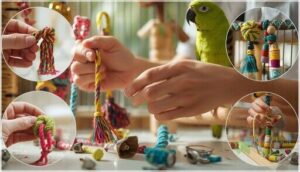
You can’t just toss any toy into your parrot’s cage and hope for the best. Some materials can poison your bird, small parts can become choking hazards, and even well-made toys need regular checks to stay safe.
Here’s what you need to watch for to keep playtime fun instead of dangerous.
Avoiding Small Parts and Toxic Materials
Your parrot’s safety starts with smart material choices. Over 70% of toy injuries come from broken components or splinters, so skip anything with parts under 1 cm. Choose non-toxic woods like untreated maple or natural cotton rope. Watch for toxic material risks—heavy metals and BPA don’t belong anywhere near bird toys for parrots.
| Safe Materials | Toxic Material Risks | Choking Hazard Prevention |
|---|---|---|
| Untreated hardwood | Lead-based paints | Avoid parts under 1 cm |
| Natural cotton rope | Zinc hardware | Choose solid construction |
| Food-grade dyes | Artificial chemical dyes | Check breakage points daily |
| Vegetable-tanned leather | BPA-containing plastics | Match size to species |
| Stainless steel | Galvanized metals | Remove damaged components |
Following material safety standards and safe toy design principles protects avian health while keeping pet safety tips simple—84% of quality parrot toys clearly label materials, making your choice easier.
Inspecting and Maintaining Toys
Check your parrot toys daily—both visual and tactile toy inspection catch 64% of failures before breakage happens. Set a 6-month maintenance schedule to cut injuries by 32%.
Watch for hidden cracks in wooden pieces (missed by 18% of owners) and adhesive failures within 90 days. Replace worn components immediately—damage control beats dealing with avian enrichment activities gone wrong.
Supervising Playtime for Added Safety
Always watch your parrot during play—72% of entanglement risks vanish with continuous supervision. Most bird injuries happen within five minutes of toy introduction, so stay close during those critical first moments.
Run structured 15–20 minute sessions twice daily to cut stress behaviors by 25%. Rotate parrot toys every few days while supervising—your playtime monitoring turns avian enrichment and stimulation into genuine hazard prevention.
Maintaining and Rotating Parrot Cage Toys
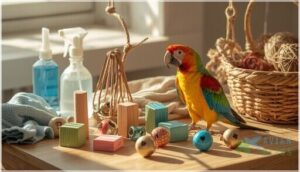
Keeping your parrot’s toys clean and fresh isn’t just about hygiene—it’s about keeping that spark of curiosity alive. Think of toy rotation like changing the scenery in their world; what was exciting yesterday can become invisible furniture tomorrow.
Here’s how to maintain those toys properly and know exactly when it’s time to swap them out or toss them for good.
Cleaning and Hygiene Best Practices
Think of dirty toys as breeding grounds for bacteria that threaten your bird’s health. Wash parrot toys weekly with hot water and mild dish soap—avoid harsh cleaning products that leave toxic residues.
For wooden toys, scrub with a bird-safe disinfectant, then air-dry completely. Regular toy sanitizing protects against respiratory infections and keeps your parrot’s cage environment healthy.
When bird hygiene falters, bird behavior often follows.
When and How to Rotate Toys
Your parrot notices when its environment gets stale. Swap out 2–3 bird toys weekly to maintain bird toy variety and keep your parrot engaged—studies show interest peaks within the first week, then drops.
Effective toy rotation schedules involve cycling through 6–8 parrot toys every 4–6 weeks, focusing on different toy materials and functions like foraging toys. This strategy fosters stimulating bird behavior and solid parrot enrichment strategies without overwhelming your bird.
Signs It’s Time to Replace Toys
When your parrot loses interest in a favorite toy, that’s your first clue. Look for frayed edges, loose parts, or missing pieces during daily toy safety checks—damage inspection prevents choking hazards. If you spot splintered wood or exposed metal, replace it immediately.
Studies show 42% of owners notice reduced engagement within two weeks of toy wear signs appearing. Replacement schedules every 4–8 months keep pet bird care on track and prevent parrot behavior changes linked to unsafe, worn-out bird toys.
Frequently Asked Questions (FAQs)
How many toys should be in a parrots cage?
Imagine a treasure chest overflowing with possibilities—that’s what your parrot’s cage should feel like. Most experts recommend 6–10 toys, rotated regularly, matching your bird’s size, species, and playful personality.
Can parrots share toys with other birds safely?
Yes, parrots can share bird toys for parrots with other birds safely when supervised initially. Use parrot toys without small parts, introduce them in neutral spaces, and watch for flock dynamics during shared play.
Whats the best toy budget for pet parrots?
Budget planning for bird toys for parrots generally ranges from $30–$60 annually for smaller species, while larger birds require $150–$300 yearly.
Rotating pet bird accessories maximizes parrot enrichment and delivers financial savings through extended toy cost analysis.
Where should toys be positioned inside the cage?
Position toys at mid-to-upper cage height to encourage natural perching and climbing.
Keep at least two inches between each toy to prevent entanglement, and always maintain clear access to food and water stations.
Conclusion
Picking perfect playthings protects your parrot’s peace of mind and physical health. The best bird cage toys for parrots transform cages from sterile spaces into stimulating sanctuaries that honor their wild instincts.
You’ve learned what works, what’s safe, and what your specific species needs. Now it’s time to act—because every day without proper enrichment chips away at your bird’s well-being.
Your parrot’s brighter, healthier life starts with the choices you make today.