This site is supported by our readers. We may earn a commission, at no cost to you, if you purchase through links.
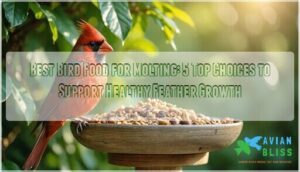 You’re looking for the best bird food for molting to support your bird’s healthy feather growth.
During molting, birds need a boost of protein and fat to regrow feathers.
You’ll want to think about foods rich in these nutrients, such as mealworms, peanuts, and suet doughs.
The right blend can make all the difference – think high-protein seeds and supplements specifically designed for molting birds.
Choosing the best bird food for molting can be tricky, but with the right guidance, you can help your bird shine – and that’s just the beginning of their beautiful transformation.
Table Of Contents
- Key Takeaways
- Bird Molting Process
- 5 Best Bird Foods for Molting
- Molting Bird Health Considerations
- Supporting Molting Birds
- Frequently Asked Questions (FAQs)
- How do I help my bird during molting?
- Do birds need more food when molting?
- What is the best food for molting chickens?
- What is molting supplement for birds?
- Can I mix supplements with regular food?
- How long does molting last in parrots?
- What foods help with feather plucking issues?
- Do all birds require extra protein during molting?
- Can I use human vitamins for my bird?
- Conclusion
Key Takeaways
- You’ll want to provide your bird with a nutrient-rich diet that’s high in protein and fat to support healthy feather growth during molting, so consider foods like mealworms, peanuts, and suet doughs.
- It’s crucial to choose the right supplements, like high-protein seeds and vitamins, to ensure your bird gets all the necessary nutrients for a smooth molting process, and you can mix these with their regular food after consulting a vet.
- You’ll need to create a comfortable environment for your bird during molting, which includes maintaining humidity levels, providing heated perches, and reducing stress through gentle care and emotional support, to help them feel more at ease.
- Don’t forget to keep an eye on your bird’s health and behavior during molting, as they may be more prone to infections, parasites, and nutritional deficiencies, and be prepared to adjust their diet and care accordingly to ensure they come out of molting with a beautiful, new plumage.
Bird Molting Process
When your bird starts shedding feathers, it’s all part of a natural process called molting, where old feathers fall out and get replaced with stronger, shinier ones.
Molting is a natural process where old feathers fall out and new ones grow in
You’ll notice a few stray feathers floating around, but don’t worry—your bird’s just trading in its old suit for a fresh new look.
Molting Season and Feather Regrowth
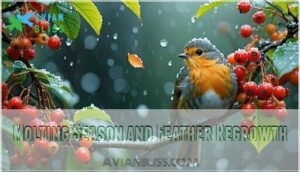
Watching your bird shed and sprout new feathers is like seeing nature’s cycle in action.
Seasonal molting triggers, stress, and age are Molting Frequency Factors that shape Feather Development Stages.
For smoother feather regrowth, make sure to:
- Offer feather growth food rich in protein
- Boost Regrowth Nutrient Needs with supplements
- Focus on Post-Molting Care and ideal bird nutrition molting
Signs of Molting in Birds
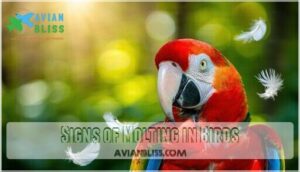
You’ll spot several molting symptoms when your bird begins this natural process.
Feather loss becomes noticeable as old plumage drops around the cage, while pin feathers emerge as small, waxy tubes.
Increased preening behavior intensifies as birds work to remove old feathers.
Appetite changes and altered sleep patterns often accompany these behavioral changes, making your feathered friend seem restless or irritable during this periodic phase.
Birds require high-protein foods to support feather regrowth.
Importance of Nutrition During Molting
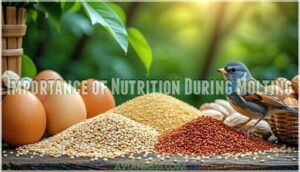
Your bird’s body works overtime during molting to rebuild feathers.
Feather Composition requires specific Protein Sources like eggs and quinoa to fuel keratin production.
Vitamin Deficiencies can stunt growth, while adequate Mineral Needs support strong feather development.
Supplement Timing matters – boost molting bird nutrition before peak shedding, with Quality feather growth food and high protein bird food creating the foundation for healthy avian molting diet success.
5 Best Bird Foods for Molting
When your feathered friend starts molting, you’ll want to switch to specialized nutrition that supports healthy feather regrowth.
The right molting supplements provide essential proteins, vitamins, and minerals that regular bird food might lack during this demanding process.
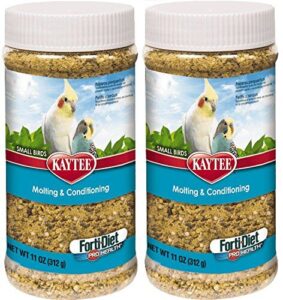
1. Kaytee Small Bird Molting Supplement
 View On Amazon
Feather fallout can feel like a feathered confetti party, but Kaytee Small Bird Molting Supplement keeps things under control.
Mixed into their daily food, this blend supports parakeets, cockatiels, canaries, and finches through the challenges of molting.
Nutrient-packed with Omega-3, prebiotics, and probiotics, it helps reduce itchiness and shortens the dreaded pin feather stage.
Birds love the flavor, and you’ll notice less mess around the cage, resulting in happier—and dare we say, shinier—companions.
Just sprinkle a bit with each meal for a cleaner and more enjoyable experience.
Best For: Small bird owners seeking an easy way to reduce molting mess and improve feather health for parakeets, cockatiels, canaries, and finches.
- Supports healthy molting with Omega-3, prebiotics, and probiotics
- Birds enjoy the taste and eat it eagerly
- Less feather mess and improved overall bird comfort
- About half the blend is powder, which can be messy
- May require combining with mineral blocks or cuttlebone for best results
- Not a substitute for a balanced, varied diet
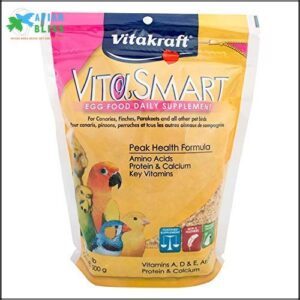
2. Vitakraft VitaSmart Bird Food Supplement
 View On Amazon
Shake things up in your bird’s diet with Vitakraft VitaSmart Bird Food Supplement—it’s like a feathered power snack.
This egg-based mix packs in protein, amino acids, and a truckload of vitamins to help your parakeet, canary, or parrot sail through molting.
Birds especially seem to rebound during stressful times or after illness, showing more pep in their step.
Blend it with water for easy eating, and watch as your birds slowly warm up to its taste—and enjoy shiny, healthy new plumage.
Best For: Bird owners looking to boost nutrition, feather health, and recovery during molting, stress, or illness for canaries, parakeets, parrots, and more.
- High in protein, amino acids, and essential vitamins for feather regrowth and energy.
- Birds usually become more active and show better plumage after consistent use.
- Can be served moist, dry, or mixed with other foods for variety.
- Some birds may be hesitant to try it at first and need time to adjust.
- Requires daily preparation and bowl cleaning to prevent spoilage.
- Needs refrigeration after opening, which may not suit every setup.
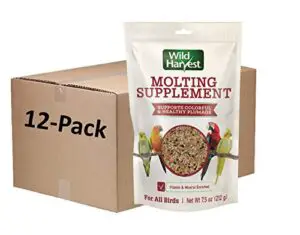
3. Wild Harvest Bird Molting Supplement
 View On Amazon
When supporting your bird’s molting process, consider Wild Harvest Bird Molting Supplement.
It’s formulated with millet, oat groats, and canary grass seed to promote healthy feather growth.
This supplement is enriched with vitamins and minerals, making it a great addition to your bird’s regular diet, and it’s suitable for various bird species, including parakeets, finches, and canaries, to enhance their overall health and support their molting process.
Best For: bird owners who want to support their birds’ molting process and overall health, particularly those with parakeets, finches, and canaries.
- Small package size requires sparing use
- Larger packaging options offer no cost advantage per ounce
- Not intended as a sole source of nutrition, must be used as a supplement to regular diet
- Supports healthy feather growth and plumage with added vitamins and minerals
- Suitable for various bird species, including parakeets, finches, and canaries
- Reasonably priced compared to in-store options
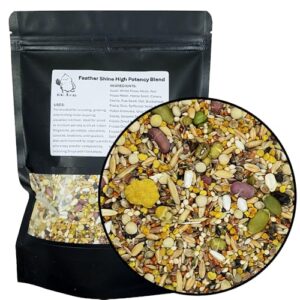
4. KikiBirds Parrot Food Feather Shine Blend
 View On Amazon
Looking for a food blend that gives your parrot’s feathers some extra shine? KikiBirds Parrot Food Feather Shine Blend packs a scientific punch with 53.8% omega-3 and -6 fatty acids from flax, hemp, and safflower seeds.
You’ll notice sprouted legumes and bee pollen in the mix, all carefully chosen for protein and health benefits. A balanced diet is essential for feather health, so consider supplementing with vitamin-rich foods.
This blend skips fillers and common allergens, keeping it simple—and your bird happy. Just remember, acceptance varies, so introduce it slowly for best results, ensuring a smooth transition to the new parrot food.
Best For: Parrot owners seeking a natural, high-omega, allergy-friendly blend to support feather health, especially for small to medium parrots.
- Some birds may be picky and leave parts of the mix uneaten
- Smaller quantity and higher price compared to mainstream options
- Mixed acceptance may lead to waste for selective eaters
- High in omega-3 and -6 fatty acids for feather and skin health
- Made with minimally processed, high-quality ingredients and no artificial additives
- Resealable, sturdy packaging maintains freshness for up to 6 weeks
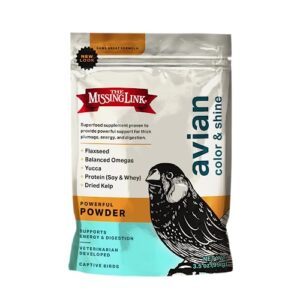
5. Avian Color and Shine Superfood Supplement
 View On Amazon
For birds dealing with the challenges of molting, the Avian Color and Shine Superfood Supplement acts like a nutritional upgrade.
Packed with fresh-ground flaxseed for healthy fats, soy and whey proteins for feather strength, plus bonus superfoods like kelp and yucca, this powder mixes into food or water.
It’s a veterinarian-formulated blend supporting energy, mood, and digestion, which many bird owners say brings back feather shine and plumpness—even for older, crankier birds still trying to look their best.
Best For: Bird owners dealing with molting challenges, feather plucking issues, or aging/ailing birds needing nutritional support to restore feather quality and energy levels.
- Comprehensive nutritional profile with omega fatty acids, high-quality proteins, and superfoods that significantly improve feather condition and shine within weeks
- Veterinarian-formulated blend made in USA with non-GMO ingredients supports energy, digestion, and reduces feather plucking behaviors
- Effective across diverse bird species from budgies to macaws, with positive results reported for older birds and those with chronic health issues
- Difficult administration requiring mixing with water, juice, or food, which can be challenging for picky eaters
- Poor packaging in ziplock bags leads to caking and sealing issues, making storage and handling problematic
- Higher cost burden, especially for owners with multiple birds, and limited availability in smaller quantities for larger populations
Molting Bird Health Considerations
During molting season, your bird’s immune system becomes more vulnerable, making them susceptible to infections, parasites, and nutritional deficiencies that can seriously impact their health.
You’ll need to watch for warning signs and take preventive measures to keep your feathered friend healthy throughout this challenging period, which can be achieved by understanding the importance of complete concepts in bird care.
Infections and Diseases in Molting Birds
During the vulnerable molting period, your bird’s immune system weakens substantially, making infections more likely.
Molting birds face immune suppression that opens doors to various health threats requiring your attention.
Common molting bird infections include:
- Bacterial Infections – Salmonella and Chlamydia can cause systemic illness
- Viral Outbreaks – Polyomavirus triggers French molt and feather loss
- Fungal Diseases – Ringworm affects compromised skin and feathers
- Feather Mites – External parasites exploit weakened defenses
- Secondary infections – Multiple pathogens attack simultaneously
During this process, birds may experience patchy feather loss, which is normal.
Regular checkups help catch these issues early, preventing serious complications during this stressful time.
Parasites and Pests Affecting Molting Birds
When the feathers start flying, molting bird parasites like mites and lice can become hitchhikers, irritating your pet and stalling feather regrowth.
Keep an eagle eye out for mite infestations or feather mites—early Lice Prevention and strong Hygiene Practices are your best defense.
Prioritize Parasite Control to dodge molting bird infections and those sneaky symptoms that tag along.
For example, feather cysts can develop if a feather can’t emerge.
Nutritional Deficiencies in Molting Birds
After you’ve checked for pests, it’s smart to think about molting bird nutritional deficiencies.
Protein deficiency, vitamin imbalance, and mineral depletion can show up quickly, leaving birds stressed and looking dull.
Meeting calcium needs, addressing Omega-3 lack, and prioritizing complete bird nutrition will help smooth out molting bird diet hiccups.
High-protein foods are essential during this time to support feather regrowth.
Good molting bird nutrition keeps them their chirpy selves.
Supporting Molting Birds
You’ll need to fine-tune both your bird’s diet and environment to help them through the molting process, ensuring they stay healthy while new feathers come in.
It’s a bit like having a houseguest who keeps changing clothes—you’ll want to keep them comfortable, well-fed, and a little less cranky.
Providing Comfort and Reducing Stress
During molting, your feathered friend needs extra TLC to stay comfortable.
Give your molting bird extra TLC for comfort
Creating a calm environment helps reduce stress and supports healthy feather development.
Here are five key comfort measures for molting bird care:
- Humidity Levels – Maintain 30% or higher to soften new pin feathers
- Heated Perches – Provide extra warmth during vulnerable molting periods
- Soothing Sprays – Use aloe vera mists to moisturize irritated skin
- Foraging Toys – Encourage natural behaviors that relieve molting stress
- Social Interaction – Keep birds engaged through gentle out-of-cage time
A molting friendly environment shields birds from drafts and temperature swings while promoting stress reduction.
Consider using a heated bird perch for added comfort.
Offering Alternative Preening Opportunities
Your bird needs healthy outlets for their natural preening instincts during molting.
Provide toy variety like rope toys and wooden blocks to redirect excessive preening behavior.
Offer foraging options such as hidden treats in paper cups to keep them mentally engaged.
Increase bathing frequency and use soothing sprays containing aloe vera to moisturize irritated skin.
Always make certain supervised preening sessions to monitor their bird care needs effectively.
Nutrition and Diet for Molting Birds
During this challenging time, your bird’s nutritional needs skyrocket like a rocket ship launching into space.
Focus on protein sources like cooked quinoa, eggs, and beans to fuel feather growth.
Vitamin supplements containing A, D, and E support skin health, while mineral intake guarantees strong keratin production.
Healthy fats from omega-rich seeds nourish developing plumage. Don’t forget hydration needs – fresh water supports overall metabolism during this demanding process.
Creating a Suitable Environment for Molting Birds
Creating the perfect molting bird environment requires attention to several key factors that directly impact your feathered friend’s comfort and recovery.
Proper environmental control helps reduce stress during this vulnerable time.
- Humidity Levels: Maintain household humidity at 30% or above to soften new pin feathers
- Temperature Control: Keep birds away from drafts, ceiling fans, and provide heated perches
- Lighting Needs: Provide 12-hour natural daylight cycles with adequate darkness for rest
Sympathizing With Your Bird’s Discomfort During Molting
During molting, it helps to put yourself in your bird’s shoes (or claws). You’ll spot emotional support needs, behavioral changes, and signs of bird discomfort.
Reducing irritation and handling sensitivity go a long way in minimizing molting bird discomfort. Don’t overlook simple environmental enrichment—sometimes, fresh toys and a cozy perch are all they need for relief.
One key aspect is understanding the impact of environmental factors on molting. Don’t overlook simple environmental enrichment—sometimes, fresh toys and a cozy perch are all they need for relief.
| Symptom | Relief Method |
|---|---|
| Feather Loss | Soft Perch, Quiet |
| Behavioral Changes | Toys, Foraging |
| Molting Stress | Emotional Support |
Frequently Asked Questions (FAQs)
How do I help my bird during molting?
You’ll be a feathered friend hero by providing a nutrient-rich diet, maintaining humidity, and offering gentle care to ease your bird’s molting woes, ensuring a smooth transformation.
Do birds need more food when molting?
You’ll need to increase your bird’s food intake during molting to support feather growth, as they require more protein and nutrients to replenish energy and promote healthy molting.
What is the best food for molting chickens?
You’ll want high-protein foods like eggs, mealworms, and sunflower seeds to support your molting chickens’ feather growth and overall health during this critical period.
What is molting supplement for birds?
Like a master builder, you’re constructing a healthy molting process with supplements, providing essential nutrients for your bird’s feather growth and overall well-being, including protein and amino acids naturally.
Can I mix supplements with regular food?
You can mix supplements with regular food, but consult a veterinarian first to guarantee the right balance and avoid over-supplementation, which can harm your bird’s health.
How long does molting last in parrots?
You’ll find that molting in parrots typically lasts one to three months, depending on the species and individual bird’s health, with some experiencing more frequent or prolonged molting periods naturally.
What foods help with feather plucking issues?
You can try offering nuts, seeds, and pellets rich in protein, vitamins, and minerals to help alleviate feather plucking issues in birds.
Do all birds require extra protein during molting?
You’d think all birds need extra protein during molting, but actually, it depends on the species, with some requiring more than others to support feather growth and overall health effectively.
Can I use human vitamins for my bird?
You shouldn’t use human vitamins for your bird, as they can be toxic and don’t meet avian nutritional needs, potentially causing harm or deficiency.
Conclusion
Notably, 70% of birds molt annually.
You’ll support your bird’s health by choosing the best bird food for molting, rich in protein and fat, to promote healthy feather growth.
Selecting the right food, like high-protein seeds and supplements, is vital, so consider the best bird food for molting to guarantee your bird shines with a beautiful, new plumage.
- https://www.walmart.com/ip/Vitakraft-VitaSmart-Egg-Food-for-Birds-Daily-Supplement-for-Parrots-Parakeets-Cockatiels-and-Canaries-Bird-Calcium-Supplement/200844100
- https://www.vitakraft.us/users/u221/221513/vitakraft/no_cache/service-menu/products2578.html?tx_salsifycatalog_salsify-catalog%5Bspecies%5D=Finch&tx_salsifycatalog_salsify-catalog%5Baction%5D=list&tx_salsifycatalog_salsify-catalog%5Bcontroller%5D=Product&cHash=98a1bef40f0973d9384286c9df4b8cd0
- https://www.vitakraft.com/us/en/product-world/birds/vitakraft-vitasmart-parakeet-food-2-lb-51233344935
- https://www.reddit.com/r/pidgeypower/comments/1g92m8y/my_boys_favorite_supplements_hes_molting_but_hes/
- https://407localmarket.com/product/wild-harvest-molting-supplement-for-all-birds-7-5-oz