This site is supported by our readers. We may earn a commission, at no cost to you, if you purchase through links.
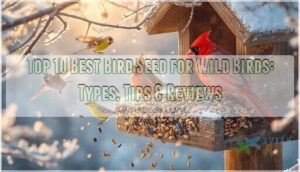
Your backyard feeder could be the difference between a cardinal surviving a brutal winter night or succumbing to the cold—and it all comes down to the seed you choose. Not all bird seed delivers the same nutritional punch, and wild birds instinctively know it, which explains why some feeders stay crowded while others sit ignored.
Black oil sunflower seeds pack nearly twice the fat content of striped varieties, fueling the relentless metabolic demands of chickadees and finches as temperatures plummet, while Nyjer seeds offer the protein goldfinches desperately need during their grueling migrations.
Understanding these nutritional differences transforms casual feeding into genuine wildlife support, and selecting the best bird seed for wild birds means matching energy-dense options to the specific species visiting your yard and the seasonal challenges they face.
Table Of Contents
- Key Takeaways
- Factors to Consider When Choosing Bird Seed
- Types of Bird Seeds for Wild Birds
- Top 10 Bird Seeds for Wild Birds
- 1. Wagner’s Wild Bird Food Blend
- 2. Lyric Fruit And Nut Bird Seed Mix
- 3. Wagners Black Oil Sunflower Bird Food
- 4. Shafer Safflower Seed For Wild Birds
- 5. Wagner’s Nyjer Seed Bird Food
- 6. Shafer Seed White Proso Millet Bird Food
- 7. Kaytee Natural Spray Millet Treat
- 8. Wagner’s Cracked Corn Bird Food
- 9. Lyric Wild Bird Peanut Seed
- 10. Morning Song Wild Bird Food Seed Mix
- Benefits of Feeding High-Quality Bird Seed
- Tips for Successful Backyard Bird Feeding
- Frequently Asked Questions (FAQs)
- What is the best seed for wild birds?
- What is the best food to give to wild birds?
- What kind of bird feeder attracts the most birds?
- Which seed is best for birds?
- How often should I clean bird feeders?
- What attracts unwanted birds to my feeders?
- How do I store bird seed properly?
- When is the best time to feed birds?
- Can moldy bird seed harm wild birds?
- How often should I refill my bird feeders?
- Conclusion
Key Takeaways
- Black oil sunflower seeds deliver nearly twice the fat content of striped varieties, packing 38-40% crude fat that fuels small songbirds through brutal winter nights when metabolic demands skyrocket and natural food sources vanish.
- Matching seed type to species preferences transforms casual feeding into targeted wildlife support—Nyjer attracts goldfinches during migration, safflower’s bitter taste deters squirrels while feeding cardinals, and white proso millet draws ground-feeders like doves and sparrows.
- High-quality seeds with minimal filler reduce waste dramatically because birds actually consume what you offer instead of tossing cheap ingredients onto the ground, cutting down on mess while delivering concentrated nutrition that supports feather health and immune function.
- Proper storage in airtight containers at 32-40°F with humidity below 60% prevents mold growth and rancidity that can poison wild birds, while cleaning feeders every two weeks during peak season stops disease transmission at your backyard station.
Factors to Consider When Choosing Bird Seed
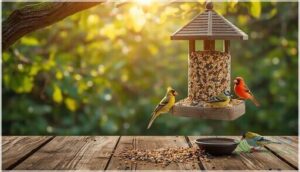
Choosing the right bird seed isn’t just about grabbing the cheapest bag at the store, because what you put in your feeder directly impacts which birds visit, how healthy they stay, and how much waste you’ll end up sweeping off your deck.
Understanding the types of bird seeds available helps you match the right mix to your backyard visitors and avoid attracting pests or creating mess.
The bird seed you choose determines which species visit, their health, and how much mess you clean up
Understanding nutritional content, seed quality, and seasonal needs will help you create a backyard feeding station that truly benefits your feathered friends.
A balanced bird seed diet ensures you’re offering the right mix of fats, proteins, and nutrients throughout the year.
Let’s walk through the five essential factors that’ll transform you from a casual bird feeder into a savvy bird host!
Choosing the right bird feeder for small seeds can make all the difference in attracting finches, chickadees, and other tiny songbirds to your yard.
Nutritional Value for Wild Birds
Wild bird nutrition starts with understanding what fuels flight, feather growth, and winter survival. When you’re selecting bird seed, you’re really choosing the building blocks of avian health—proteins for strong plumage, fats for energy reserves, and essential vitamins that support immunity.
Understanding wild bird food nutrition helps you match seed blends to seasonal demands, from migration fuel to breeding season calcium needs.
- Black oil sunflower seeds deliver high fat and protein to fuel daily foraging and maintain body warmth
- Nyjer seed provides protein for finches without excessive fat, supporting muscle development during migration
- Balanced nutrient profiles prevent deficiencies that weaken birds’ ability to ward off disease
A well-rounded understanding of key wild bird food nutrition can help you tailor feeding choices to meet seasonal and species-specific needs.
Seed Types and Bird Preferences
Once you understand bird nutrition, matching seed types to bird preferences transforms your feeder from a refueling stop into a neighborhood hotspot.
Sunflower seeds attract the broadest range of backyard birds—cardinals, chickadees, and finches all crack those shells with ease, while Nyjer seed specifically draws goldfinches with its tiny size and protein punch that fuels migration and muscle development throughout the year.
For a complete breakdown of which seeds work best for specific species, including regional preferences and seasonal considerations, you’ll find detailed comparisons worth exploring.
For a more detailed overview of the most popular types of bird seed, explore how different options appeal to various bird species.
Ingredient Quality and Filler Content
Choosing seeds with high purity levels means you won’t watch birds toss half the contents onto the ground searching for nutritious kernels.
Seed freshness directly affects nutrient balance—rancid sunflower seeds or stale nyjer seed lose essential oils that fuel feather growth and energy.
Responsible ingredient sourcing reduces mold risk, so check bird seed reviews for brands that prioritize clean, whole seeds over cheap fillers.
Seasonal and Regional Considerations
Once you’ve tackled ingredient purity, your local climate effects and bird migration patterns become the deciding factors in bird seed selection. Winter’s arrival in northern regions drives up demand for fat-rich black oil sunflower from January through March, while southern habitats require seeds that resist spoilage in heat. Regional seeds formulated for your flyway attract more species during seasonal shifts, supporting wild bird conservation and enhancing your backyard bird feeding success—bird seed reviews confirm this again and again.
- Coastal yards benefit from blends that match diverse weed and seed availability in your habitat influence zone
- Prairie landscapes naturally favor millet-heavy mixes that ground-feeding sparrows and juncos adore
- Mountain feeders need shelf-stable options during shorter growing seasons when natural food vanishes
- Urban bird watching thrives with region-specific blends that mimic the mixed foraging resources birds expect
- Migratory corridors require calorie-dense suet and nyjer during peak spring and fall movement periods
Storage and Freshness Tips
Beyond bird seed selection, proper seed storage methods protect your investment and bird nutrition and health year-round.
Store types of bird seeds in BPA-free airtight containers at 32 to 40 degrees Fahrenheit, keeping humidity below 60 percent with desiccant packs.
Practice seed rotation using First In, First Out, and conduct freshness testing by checking for sour odors or discoloration—bird seed storage directly impacts feeder success!
Types of Bird Seeds for Wild Birds
You’ll find a fascinating variety of seeds at your local bird supply store, and each type attracts different species to your backyard. Understanding which seeds work best for your feathered visitors helps you create a feeding station that truly meets their nutritional needs throughout the year.
Let’s explore the most popular seed types and what makes each one valuable for the birds you want to attract.
Black Oil Sunflower Seeds
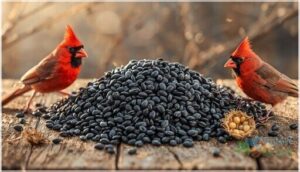
If you’re serious about wild bird nutrition, black oil sunflower seeds are the benchmark you can’t ignore. These small, dark seeds pack roughly 38 to 40 percent crude fat, making them a sumptuous energy source that attracts cardinals, chickadees, finches, and nuthatches to your feeder with exceptional consistency.
- Thin shells crack easily, so even smaller songbirds access the kernel without struggle
- High oil content fuels winter vitality, supporting feather maintenance and insulation through cold months
- Protein levels around 15 to 20 percent provide essential amino acids for growth and molt recovery
Nyjer (Thistle) Seeds
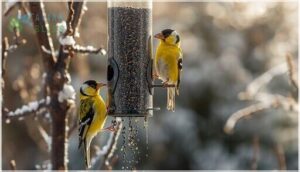
Nyjer seed, harvested from the African yellow daisy, delivers impressive oil content that fuels goldfinches, siskins, and other small songbirds through winter’s demands. It’s a targeted choice that reliably attracts finches when sunflower seeds don’t quite do the trick.
You’ll need specialized mesh or small-hole feeder designs to prevent waste, and storing this tiny seed in airtight containers preserves freshness while keeping the fats from turning rancid.
Safflower Seeds
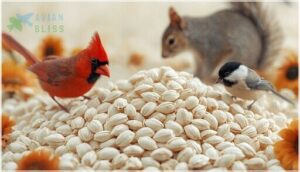
Safflower seeds pack 38 to 48 percent oil by weight, with linoleic acid making up roughly 71 percent of that fat profile, delivering essential fatty acids that support feather health and energy reserves in cardinals, grosbeaks, and chickadees.
The thick, hard shell deters squirrels and grackles while offering your favorite songbirds a nutritious alternative to sunflower, especially in warm climates where safflower’s stability prevents molding and rancidity when you store it properly in cool, dry conditions.
White Proso Millet
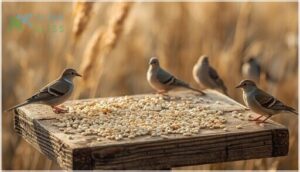
White proso millet (Panicum miliaceum) produces creamy oval seeds about 2.5 millimeters long that ground feeding sparrows, doves, juncos, and quail can’t resist! These small powerhouses deliver roughly 11 percent crude protein and 4 percent fat, making them a readily digestible energy source you’ll find in quality wild bird seed blends.
You can find white proso millet in:
- Platform and tray feeders for easy access
- Wildlife habitat mixes that tolerate drought
- Summer annual crops maturing in 65 to 90 days
- Non GMO seed production with 98 percent purity
Peanuts and Suet
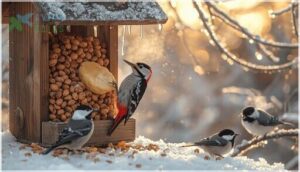
When cold winds howl, peanuts and suet become the premier high-energy duo for your backyard birding station! Peanuts deliver around 27 percent crude fat alongside essential fatty acids, while rendered beef suet packs dense calories that help woodpeckers, nuthatches, and chickadees maintain body warmth during winter feeding. You’ll find no-melt formulations perfect for year-round use, supporting migrations in spring and territorial defense in fall.
| Nutrient Component | Peanut Contribution | Suet Contribution |
|---|---|---|
| Crude Fat | 26–27% | High-density calories |
| Crude Protein | 7–10% | Minimal |
| Energy Benefit | Steady release | Quick warmth |
| Best Season | Year-round | Winter peak |
| Target Species | Chickadees, jays | Woodpeckers, nuthatches |
Cracked Corn and Specialty Mixes
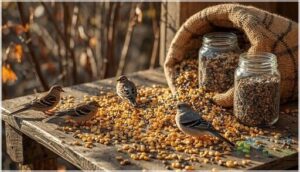
Cracked corn delivers concentrated kernels that ground-feeding sparrows, doves, and juncos eagerly consume, especially when temperatures drop and fat reserves matter most. You’ll discover specialty mixes blending cracked corn with black oil sunflower and safflower—usually around 10–30 percent corn—to balance protein and energy for diverse backyard birding.
Store these seed blends in cool, dry containers to prevent mold and maintain wild bird nutrition through every season!
Top 10 Bird Seeds for Wild Birds
You’ve learned what seeds birds prefer, and now it’s time to see which products deliver the best results in real backyards.
The following ten options range from single-seed favorites that attract specific species to premium blends formulated for maximum variety, so you can find exactly what works for your feeder setup.
Each recommendation includes the key details you need to make a confident choice for the birds visiting your yard.
1. Wagner’s Wild Bird Food Blend
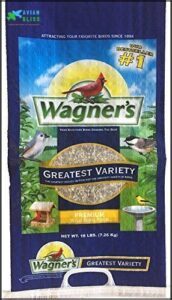
Wagner’s Wild Bird Food Blend offers a gourmet formulation that draws cardinals, finches, sparrows, and chickadees right to your feeder! This blend variety combines black oil sunflower seed with white proso millet and safflower, delivering outstanding nutrition value through 40% sunflower content and minimal filler.
You’ll appreciate how the seed quality attracts wild birds while reducing waste beneath your bird feeders. Made in the USA, this wild bird food works beautifully in tube, hopper, or platform setups, making bird attraction easier than ever for backyard enthusiasts.
| Best For | Backyard bird enthusiasts who want to attract a diverse mix of songbirds like cardinals, finches, and sparrows with a premium, high-quality seed blend. |
|---|---|
| Weight | 16 pounds |
| Brand | Wagner’s |
| Item Form | Seed |
| Country | United States |
| Age Range | All Life Stages |
| Primary Use | Outdoor feeders |
| Additional Features |
|
- Contains 40% sunflower seed with 11 different ingredients that attract multiple bird species while minimizing waste
- Versatile enough to use in tube, hopper, or platform feeders for easy setup in any backyard
- Made in the USA with high-quality grains that provide excellent nutrition for wild birds
- Higher price point compared to basic bird seed options on the market
- Bag isn’t waterproof, so you’ll need to store it carefully to prevent moisture damage and mold
- May attract squirrels and other wildlife that can become pests around your feeders
2. Lyric Fruit And Nut Bird Seed Mix
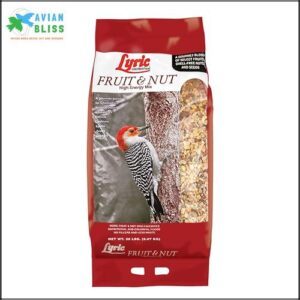
If you’re looking to spoil your backyard visitors with something truly sumptuous, Lyric Fruit and Nut Bird Seed Mix delivers superb nutrient balance through shelled peanuts, almonds, cashews, pecans, pistachios, and dried cranberries!
This wild bird food blend ensures superb bird attraction, drawing cardinals, woodpeckers, chickadees, and grosbeaks with its fruit variety and high-energy formula.
The feeder compatibility works well across hopper, platform, and tray bird feeders, though larger nut pieces mean you’ll want to avoid tiny tube designs. Seed freshness stays excellent in the resealable bag, and the filler-free formulation means you’re investing in actual nutrition rather than waste.
| Best For | Birders who want to attract premium songbirds like cardinals and woodpeckers with a high-quality, nutritious mix and don’t mind paying more for less waste. |
|---|---|
| Weight | 20 pounds |
| Brand | Lyric |
| Item Form | Granule |
| Country | Not specified |
| Age Range | Not specified |
| Primary Use | Outdoor feeders |
| Additional Features |
|
- All-natural ingredients with no cheap fillers mean less mess under feeders and better nutrition for birds
- Attracts a wide variety of desirable species including cardinals, woodpeckers, chickadees, and grosbeaks
- High-energy blend of nuts and dried fruit keeps birds coming back, especially during cold weather
- Significantly more expensive than standard birdseed mixes
- Large nut pieces can be difficult for smaller birds to handle
- Contains corn which may attract squirrels and other unwanted wildlife to your feeders
3. Wagners Black Oil Sunflower Bird Food
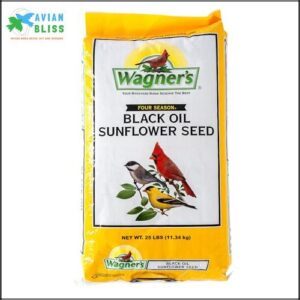
For single-ingredient simplicity, Wagners Black Oil Sunflower Bird Food stands out as the benchmark wild bird food, offering 100 percent black oil sunflower seeds with no fillers!
This wild bird nutrition powerhouse delivers 24 percent crude fat and 14 percent protein, fueling cardinals, chickadees, finches, nuthatches, and woodpeckers through every season. The thin-shelled sunflower seeds open easily for small-beaked species, and the oil sunflower varieties provide concentrated energy that’s especially valuable during cold snaps.
You’ll appreciate the seed quality control and compatibility with tube, hopper, and tray feeders, though regular bird feeder maintenance keeps things flowing smoothly!
| Best For | Bird enthusiasts who want a pure, high-energy food that attracts a wide variety of songbirds without the mess of mixed seed blends. |
|---|---|
| Weight | 25 pounds |
| Brand | Wagner’s |
| Item Form | Seed |
| Country | United States |
| Age Range | Not specified |
| Primary Use | Outdoor feeders |
| Additional Features |
|
- 100% black oil sunflower seeds with no fillers means less waste and more birds at your feeder
- Thin shells make it easy for small-beaked birds like chickadees and finches to crack open
- High fat and protein content keeps birds energized year-round, especially during winter
- Some customers report finding wood chips or debris mixed in with the seeds
- The 25-pound bag lacks a resealable closure, making storage and freshness a challenge
- Can attract squirrels and other critters you might not want at your feeder
4. Shafer Safflower Seed For Wild Birds
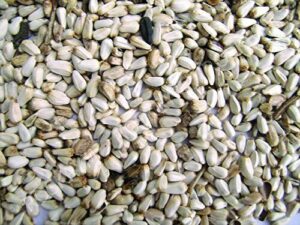
When squirrels and grackles monopolize your feeders, Shafer Safflower Seed For Wild Birds offers a strategic solution that lets cardinals, chickadees, and grosbeaks reclaim their feeding space! This straight safflower delivers protein and oil without the filler grains found in bargain mixes, and its naturally bitter flavor discourages most pest species while attracting colorful songbirds you actually want to watch.
You can use safflower exclusively in tube or platform feeders, and proper seed storage in cool, dry conditions maintains freshness across the 25-pound bag, giving you reliable bird feeding results season after season!
| Best For | Bird enthusiasts dealing with squirrels, grackles, or blackbirds who want to attract cardinals, chickadees, and grosbeaks without feeding unwanted visitors. |
|---|---|
| Weight | 25 pounds |
| Brand | Shafer Seed |
| Item Form | Seed |
| Country | Not specified |
| Age Range | All Life Stages |
| Primary Use | Outdoor feeders |
| Additional Features |
|
- Naturally deters squirrels and pest birds like grackles due to its bitter taste, letting desirable songbirds feed in peace
- High in protein and oil with no filler grains, providing quality nutrition for wild birds
- Fresh, clean seeds in a 25-pound bag that stays good when stored properly in cool, dry conditions
- More expensive than standard birdseed mixes
- Some batches may contain more chaff or non-seed material than expected
- Not all bird species enjoy safflower, so you might see fewer varieties at your feeder
5. Wagner’s Nyjer Seed Bird Food
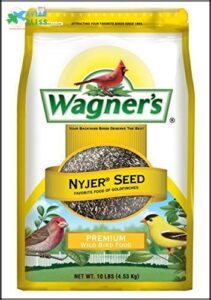
If goldfinches are your garden favorites, you’ll want to keep Wagner’s Nyjer Seed Bird Food stocked in your finch feeders year-round, since each pound delivers 150,000 tiny, oil-rich seeds that American Goldfinches, Purple Finches, and Pine Siskins absolutely adore!
This single-ingredient bird seed provides high fat and protein for bird nutrition and feather health, especially during winter when wild birds need concentrated energy.
You can maintain seed freshness by storing bags in cool, dry spots, and the extra-clean nyjer benefits your backyard bird attraction by creating minimal waste and consistent feeder maintenance results!
| Best For | Bird lovers who want to attract goldfinches and other small finches to their yard with a high-energy, clean seed that minimizes waste. |
|---|---|
| Weight | 10 pounds |
| Brand | Wagner’s |
| Item Form | Seeds |
| Country | Not specified |
| Age Range | Not specified |
| Primary Use | Finch feeders |
| Additional Features |
|
- Packed with 150,000 oil-rich seeds per pound that finches love, providing the high fat and protein they need
- Extra clean formula means less mess and waste under your feeders
- Convenient resealable bag keeps seeds fresh between refills
- Costs more than standard birdseed blends
- Shells still create some mess around feeding areas
- Some bags have quality control issues like small leaks
6. Shafer Seed White Proso Millet Bird Food
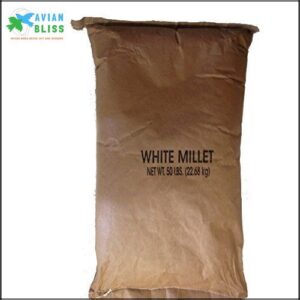
Ground-feeding birds like doves, juncos, and sparrows can’t resist white proso millet, which makes this 50-pound bag of Shafer Seed a smart choice if you want to draw in species that prefer nibbling near the earth!
The small, round seeds deliver protein, fiber, and essential fats for wild bird health, and you can scatter them on platform feeders or mix them into custom blends for better bird attraction.
Store your millet in airtight containers to maintain seed freshness and prevent sprouting after rain!
| Best For | Birders who want to attract ground-feeding species like doves, juncos, and sparrows with a nutrient-rich seed that can be used alone or in custom mixes. |
|---|---|
| Weight | 50 pounds |
| Brand | Shafer Seed |
| Item Form | Seeds |
| Country | United States |
| Age Range | Not specified |
| Primary Use | Outdoor feeders |
| Additional Features |
|
- Attracts a wide variety of birds, especially ground feeders that love foraging near the earth
- 100% natural seed grown in the USA with high nutritional value (protein, fiber, and essential fats)
- Versatile enough to use solo in feeders or blend with other seeds for custom formulas
- Can be messy to clean up and may attract unwanted pests like rats if not used carefully
- Requires proper storage in airtight containers to prevent spoilage and maintain freshness
- May sprout quickly after rainstorms if left exposed, creating cleanup hassles
7. Kaytee Natural Spray Millet Treat
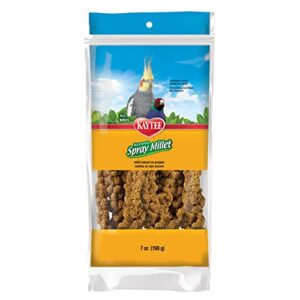
If you’re looking for a playful way to bond with smaller songbirds while boosting their energy reserves, Kaytee Natural Spray Millet Treat delivers both entertainment and bird nutrition in one convenient package! This all-natural treat variety hangs easily from clips or perches, encouraging natural foraging behavior that keeps finches, canaries, and parakeets mentally engaged.
With 7.5 percent protein and 3.0 percent fat, millet benefits include extra calories for weaning fledglings and molting adults.
Store your wild bird seed in a cool, dry spot to maintain seed freshness, and remember these feeding tips: offer spray millet as an occasional supplement rather than a daily staple to keep your backyard bird feeding balanced!
| Best For | Bird owners who want to encourage natural foraging behavior in finches, canaries, and parakeets while providing a high-energy treat for bonding and playtime. |
|---|---|
| Weight | 0.38 pounds |
| Brand | Kaytee |
| Item Form | Seeds |
| Country | France |
| Age Range | Adult |
| Primary Use | Indoor enrichment |
| Additional Features |
|
- All-natural ingredients with no artificial colors or flavors, offering a healthy energy boost with 7.5% protein and 3.0% fat
- Promotes mental stimulation through natural foraging, making it especially useful for weaning young birds and supporting molting adults
- Convenient spray format that clips easily to cages or perches for mess-free feeding and interactive play
- High fat content means it should only be offered occasionally rather than as a daily staple to maintain balanced nutrition
- Some packages may arrive dry or stale due to quality control issues, and expiration dates can be difficult to read
- Regular purchases can add up over time, increasing overall bird care costs
8. Wagner’s Cracked Corn Bird Food
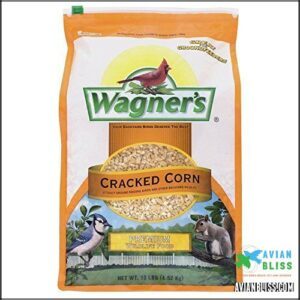
When you want to welcome jays, cardinals, doves, and juncos to your feeding station without breaking the bank, Wagner’s Cracked Corn Bird Food offers a budget-friendly solution that ground-feeding species genuinely appreciate! This 10-pound bag of cracked corn benefits your yard by providing quick carbohydrate energy, though you’ll notice corn seed quality delivers less protein and fat than oil-rich seed types.
For smart bird feeding tips, spread this wild bird seed on ground trays rather than tube bird feeders, pair it with sunflower for balanced wild bird nutrition, and mind feeder placement away from dense brush to keep your visitors safe!
| Best For | Budget-conscious bird enthusiasts who want to attract ground-feeding species like jays, cardinals, doves, and juncos to their backyard without spending much. |
|---|---|
| Weight | 10 pounds |
| Brand | Wagner’s |
| Item Form | Seed |
| Country | Not specified |
| Age Range | Adult |
| Primary Use | Ground feeding |
| Additional Features |
|
- Extremely affordable at $12.98 for 10 pounds, making it one of the most cost-effective bird food options
- Attracts a variety of ground-feeding birds and can also feed other backyard wildlife
- Versatile enough to use on its own or mixed with other seeds like sunflower for better nutrition
- Lower nutritional value than oil-rich seeds since it provides mainly carbohydrates with less protein and fat
- Can attract unwanted wildlife to your yard if not managed carefully
- Requires proper storage to stay fresh and may not work well in standard tube feeders
9. Lyric Wild Bird Peanut Seed
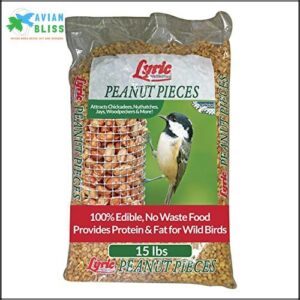
If you’re ready to bring woodpeckers, nuthatches, and chickadees right to your feeders, Lyric Wild Bird Peanut Seed delivers exactly what these arboreal acrobats crave! With 25 percent protein and 40 percent fat, this no-waste peanut nutrition powerhouse ensures bird attraction year-round, especially when winter’s cold demands dense calories.
You’ll find these shelled peanuts work beautifully in mesh or platform bird feeders, though proper feeder maintenance and seed freshness matter since moisture can cause mold—store your wild bird seed in a cool, dry spot to keep wildlife management simple and your backyard visitors healthy!
| Best For | Birdwatchers who want to attract high-energy species like woodpeckers, nuthatches, and chickadees with a protein-rich, zero-waste feeding option that works year-round. |
|---|---|
| Weight | 15 pounds |
| Brand | Lyric |
| Item Form | Pellet |
| Country | Not specified |
| Age Range | All Life Stages |
| Primary Use | Outdoor feeders |
| Additional Features |
|
- High protein (25%) and fat (40%) content provides essential nutrition, especially during cold winter months when birds need dense calories
- 100% edible with no shells or waste, making cleanup easy and keeping your feeding area tidy
- Compatible with multiple feeder types (mesh, platform, tube, hopper) and includes Stay Fresh Technology to maintain quality
- Requires careful monitoring for mold since rain and moisture can spoil peanuts quickly, demanding regular maintenance
- May attract unwanted visitors like raccoons, opossums, squirrels, and chipmunks that can raid feeders or cause damage
- Whole peanuts can be too large for smaller bird species to handle without breaking them into smaller pieces first
10. Morning Song Wild Bird Food Seed Mix
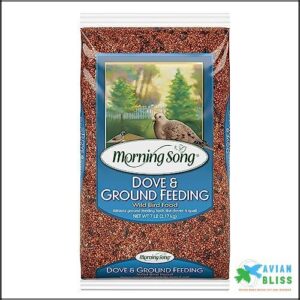
Morning Song Wild Bird Food Seed Mix brings seasonal flexibility and nutrient balance to your feeding station with its white proso millet, black oil sunflower seed, and grain products—a simple formula that attracts doves, sparrows, quail, and juncos without filler waste!
This best bird seed brand works beautifully in table feeders or scattered on the ground, making feeder compatibility easy for ground-feeding species. Though some birds need time to adjust, you’ll appreciate how this wild bird seed blend fosters year-round bird attraction with wholesome ingredients that stimulate appetite naturally.
| Best For | Backyard birders who want to attract ground-feeding birds like doves, sparrows, quail, and juncos with a simple, no-filler seed mix that works in table feeders or scattered directly on the ground. |
|---|---|
| Weight | 7 pounds |
| Brand | Not specified |
| Item Form | Seed |
| Country | United States |
| Age Range | Not specified |
| Primary Use | Ground feeding |
| Additional Features |
|
- Simple three-ingredient formula (white proso millet, black oil sunflower, grain products) with no wasted filler
- Versatile feeding options—works in table feeders or spread on the ground for natural foraging behavior
- Attracts a variety of ground-feeding species and stimulates bird appetite naturally
- Some birds may take time to adjust to the mix and won’t eat it immediately
- Gets consumed quickly when birds do like it, requiring frequent refills
- Not all bird species find the blend palatable based on customer feedback
Benefits of Feeding High-Quality Bird Seed
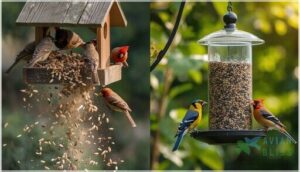
When you choose high-quality bird seed instead of bargain blends, you’re doing much more than simply filling a feeder. You’re investing in the health of your backyard visitors, reducing the mess around your feeding stations, and creating a more vibrant birdwatching experience that benefits both you and the birds.
Let’s explore the key advantages that make premium seed absolutely worth it.
Supporting Bird Health and Vitality
The vitality you see at your bird feeders reflects choices that matter more than you might realize, because high-quality wild bird seed directly fuels feather care, immune systems, and overall bird nutrition and health. When you invest in nutritious bird seeds designed around what wild birds actually need, you’re giving them the building blocks for thriving through every season:
- Dense calories from black oil sunflower maintain body heat during freezing nights, supporting wing strength and daily flight
- Balanced protein feeds feather replacement during molt, when birds grow thousands of new feathers demanding steady amino acid intake
- Essential vitamins like A and E boost immune systems, helping birds resist infections and maintain waterproof plumage
- Reduced foraging stress means less exposure to predators and cold while birds still meet energy budgets at your bird feeders
- Year-round support through seasonal blends matches changing calorie needs, from lighter summer mixes to higher-fat winter formulas that sustain beak health and vitality
Attracting a Wider Variety of Birds
When you combine diverse types of bird seeds with thoughtful yard layout tips and feeder placement strategies, you’ll watch your backyard transform into a hub for attracting backyard birds. Bird watchers know that offering black oil sunflower alongside millet draws both perching finches and ground-feeding sparrows.
While adding bird friendly plants and water feature designs near feeders attracts warblers and thrushes that ignore seed entirely.
Reducing Waste and Feeder Mess
High-quality bird seed naturally cuts down on bird feeder maintenance and waste reduction because birds eat what you offer rather than kicking filler seeds onto the ground. Smart seed tray placement catches hulls before they scatter, and mess-free feeders paired with proper bird seed storage keep your feeding station tidy.
Routine feeder cleaning every two weeks prevents mold buildup, and choosing shelled options for bird feeding eliminates most shell debris under your bird feeders.
Enhancing Backyard Birdwatching
Quality wild bird seed transforms your yard habitat into a bird-friendly garden where you can study bird behavior up close.
When you keep feeders stocked with premium bird seeds and maintain a consistent feeder maintenance schedule, backyard birds linger longer at your bird feeders, giving you extended bird watching sessions that support wildlife conservation right from your window.
Tips for Successful Backyard Bird Feeding
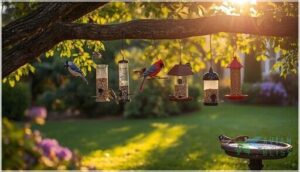
Choosing the right seed is just the beginning—you’ll also need to set up your feeding station in a way that keeps birds healthy, happy, and coming back for more.
From selecting appropriate feeders to timing your seasonal offerings, a few strategic decisions can transform your backyard into a thriving avian hub.
Let’s walk through the essential practices that’ll help you boost bird activity while minimizing common feeding challenges.
Choosing The Right Feeder for Each Seed
Matching feeder types to seed compatibility isn’t just smart, it’s essential for attracting your favorite birds! Nyjer seeds demand tube feeders with port sizes under 2 mm, while safflower works best in hopper-style bird feeders with sturdy feeder materials. Black oil sunflower suits most feeder design options, though squirrel-proof models with weight-activated perches protect your bird seed blends from unwanted visitors.
Proper Feeder Placement Strategies
Beyond feeder design, seed placement, and yard layout transform your backyard into a bird sanctuary where feeder height and predator control work together for bird safety. Strategic bird feeding setups improve bird watching experiences while using smart bird attraction techniques:
- Mount bird feeders 5 to 6 feet high to deter ground predators while keeping them accessible for backyard birds seeking safe dining spots.
- Position feeders 10 to 15 feet from natural cover like shrubs, giving birds quick escape routes without creating ambush zones.
- Space multiple stations throughout your yard to reduce crowding and let different species forage comfortably without competition stress.
Keeping Seed and Feeders Clean
Clean feeders aren’t just about aesthetics—they’re essential for wild bird care and bird nutrition and health. Disassemble your bird feeders every two weeks during peak feeding season, scrubbing ports and perches thoroughly to remove mold and bacteria.
Proper feeder sanitation and seed storage in airtight containers prevent contamination, while consistent cleaning schedules and feeder maintenance protect your backyard visitors from disease, ensuring vibrant bird feeder activity year-round.
Adjusting Seed Choices by Season
Just as you swap your wardrobe from winter coats to summer shorts, wild birds need different fuel throughout the year—and adjusting your seed selection with the seasons can mean the difference between a thriving backyard haven and an empty feeder. Here’s your seasonal seed strategy:
- Winter feeding demands high-fat black oil sunflower and suet for energy
- Spring migration calls for protein-rich nyjer and peanuts
- Summer diet shifts to lighter millet blends
- Regional blends match local seed preferences year-round
Frequently Asked Questions (FAQs)
What is the best seed for wild birds?
Black oil sunflower seeds stand head and shoulders above the rest, attracting chickadees, cardinals, and finches with their thin shells and 28 percent fat content—making them the benchmark for wild bird nutrition.
What is the best food to give to wild birds?
The best food to give wild birds includes black oil sunflower seeds for energy, Nyjer for finches, safflower for cardinals, and suet cakes for woodpeckers, ensuring ideal bird nutrition and avian health year-round.
What kind of bird feeder attracts the most birds?
Open platform feeders draw the most diverse crowds—they welcome nervous ground feeders and bold jays alike—yet combining hopper, tube, and specialized nyjer feeders at varied heights truly maximizes backyard bird activity and species count.
Which seed is best for birds?
For versatility and broad appeal across species, you can’t beat black oil sunflower seeds. Their thin shells crack easily for chickadees, cardinals, finches, and nuthatches, delivering high-fat nutrition that fuels backyard birds year-round.
How often should I clean bird feeders?
You should clean bird feeders every two weeks under normal conditions, but increase to weekly during wet weather or heavy bird traffic to prevent mold growth and protect backyard bird health.
What attracts unwanted birds to my feeders?
Like uninvited guests at a party, nuisance birds crash your feeders when you offer abundant ground-level seed, high-fat mixes, or cracked corn near dense cover—especially during competitive winter months when feeder placement and seed spoilage matter most.
How do I store bird seed properly?
Store bird seed in airtight metal or thick plastic containers with tight lids, kept cool and dry away from sunlight. This prevents moisture control issues and pest prevention problems, while maintaining freshness for your bird feeders.
When is the best time to feed birds?
You’ll see the busiest feeding activity during morning peaks, especially in the first two hours after sunrise.
Though daily feeding schedules matter less, keeping bird feeders consistently stocked through seasonal shifts and weather effects is crucial.
Can moldy bird seed harm wild birds?
Ah, what a delightful way to poison your feathered friends! Absolutely—moldy bird seed harbors Aspergillus fungi producing deadly aflatoxins, plus spores triggering aspergillosis respiratory infections, so spoiled seed presents serious mold toxicity and fungal infection risks to wild birds.
How often should I refill my bird feeders?
Most backyard bird experts suggest checking feeder levels daily and refilling every one to three days during peak activity, though large hopper feeders can stretch three to five days between refills.
Conclusion
Your feathered neighbors won’t make it through the lean times without your help, and now you’ve got the knowledge to provide exactly what they need. Selecting the best bird seed for wild birds isn’t about filling feeders—it’s about fueling survival, one calorie-rich kernel at a time.
Stock your stations with species-specific selections, keep everything fresh and clean, and watch your yard transform into a refuge where thriving birds reward your efforts with color, song, and endless fascination.
- https://janesville.wbu.com/all-about-bird-seed
- https://www.allaboutbirds.org/news/types-of-bird-seed-a-quick-guide/
- https://georgiawildlife.com/out-my-backdoor-best-seeds-backyard-bird-feeders
- https://www.kaytee.com/learn-care/wild-bird/value-of-wild-bird-ingredients
- https://feedthebirds.com/collections/bundles-with-free-feeders