This site is supported by our readers. We may earn a commission, at no cost to you, if you purchase through links.
 You’ll find the best birding locations east coast stretch from Florida’s Everglades to Maine’s rocky shores.
Cape May, New Jersey stands out as migration central, where thousands of warblers funnel through each fall like nature’s own highway.
Parker River National Wildlife Refuge in Massachusetts offers incredible shorebird viewing, while Hawk Mountain Sanctuary in Pennsylvania provides front-row seats to raptor migrations.
Don’t overlook Blackwater National Wildlife Refuge in Maryland, where bald eagles soar overhead like living symbols of freedom.
Each location offers unique species and seasonal spectacles that’ll keep your binoculars busy.
Timing your visits correctly can mean the difference between decent sightings and truly memorable encounters.
Table Of Contents
- Key Takeaways
- East Coast Birding Spots
- Top Birding Locations
- Best Times for Birding
- East Coast Birding Trails
- Coastal Birding Habitats
- Frequently Asked Questions (FAQs)
- What is the best state for birding?
- What is the best month for bird watching?
- What is the best birding spot in the world?
- What birding gear is essential for beginners?
- How do weather conditions affect bird activity?
- Are birding permits required at these locations?
- What parking and accessibility options are available?
- Which dangerous wildlife should birders avoid?
- Conclusion
Key Takeaways
- You’ll find exceptional birding opportunities from Florida’s Everglades to Maine’s rocky shores, with each location offering unique species and seasonal spectacles that’ll keep your binoculars busy year-round.
- You should time your visits around migration seasons – spring (March-May) offers the most diverse species counts, while fall (August-October) provides longer viewing windows as birds aren’t rushing to breeding grounds.
- You can’t miss Cape May, New Jersey as migration central where thousands of warblers funnel through each fall, plus other must-visit spots like Hawk Mountain Sanctuary in Pennsylvania for raptor migrations and Parker River National Wildlife Refuge in Massachusetts for incredible shorebird viewing.
- You’ll discover three distinct coastal habitats – tidal marshes with salt-tolerant vegetation, freshwater wetlands teeming with aquatic life, and mixed forests providing shelter – that work together to create perfect conditions for both resident and migratory birds.
East Coast Birding Spots
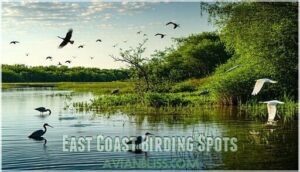
You’re heading to the East Coast to spot some amazing birds, and you’re in luck because this region is a haven for birders.
From the Everglades to Cape May, you’ll find incredible birding spots that are sure to impress, with diverse habitats and species to discover.
Everglades National Park
Anyone seeking exceptional east coast birding will find the Everglades National Park absolutely enchanting.
This UNESCO World Heritage Site protects Florida’s unique Everglades Ecosystem, where wildlife conservation efforts have restored essential habitats.
You’ll discover incredible park accessibility through well-maintained trails, making birdwatching east coast adventures unforgettable.
Many visitors enhance their experience with guided birding excursions.
- Anhinga Trail – wheelchair-accessible boardwalk perfect for photographing aquatic birds
- Snake Bight Trail – premier location for spotting Roseate Spoonbills and occasional flamingos
- Mahogany Hammock – ideal for warbler migration viewing during spring months
- Nine Mile Pond – best birding spots accessible by canoe for close wildlife encounters
Parker River National Wildlife Refuge
Moving north from Florida’s tropical waters, you’ll discover Parker River National Wildlife Refuge in Massachusetts.
This 4,662-acre sanctuary has protected Atlantic Flyway migrants since 1942, thanks partly to Carson’s advocacy.
The refuge’s diverse wetland habitats support over 300 species during shorebird migration seasons.
It’s among the best birding spots for east coast birdwatching enthusiasts, and birders often seek specialized gear here to enhance their experience.
Cape May Birding Locations
Cape May’s strategic location creates a birding funnel that concentrates Migration along the east coast.
You’ll find incredible Shorebird Diversity at Avalon Sea Watch, while Higbee Beach Birds offer spectacular warbler viewing.
CMBO Programs provide expert guidance for exploring these premier birding locations, from hawks soaring overhead to sandpipers scurrying below, Cape May delivers unforgettable encounters with nature’s migrations.
Top Birding Locations
You’ll discover three premier birding destinations that consistently rank among the East Coast’s most rewarding locations for both seasoned ornithologists and weekend bird enthusiasts.
Discover where America’s most spectacular bird migrations converge along the Atlantic coastline.
These carefully selected hotspots, including Pennsylvania’s legendary Hawk Mountain Sanctuary, Maryland’s waterfowl-rich Blackwater National Wildlife Refuge, and New Jersey’s migration magnet Cape May Point State Park, offer distinct habitats and seasonal opportunities that’ll keep your binoculars busy year-round.
Hawk Mountain Sanctuary

You’ll witness history at Hawk Mountain Sanctuary, where Rosalie Edge’s legacy transformed raptor conservation in 1934.
This Pennsylvania ridge migration hotspot showcases incredible species diversity during peak season, with over 20,000 raptors soaring through annually.
September and October offer prime viewing for hawks, eagles, and falcons along the Appalachian Flyway, making it essential among birding locations across Eastern United States.
Birders often equip themselves with essential Hawk Mountain gear for ideal viewing.
Blackwater National Wildlife Refuge

You’ll find Blackwater National Wildlife Refuge hosting over 250 bird species across 28,000 acres of prime wetland habitats.
This refuge’s tidal marsh ecosystem supports massive migratory waterfowl populations, including tens of thousands of Tundra Swans and Canada Geese.
The refuge history showcases remarkable Eagle Population recovery, making it a standout among birding locations for east coast birding enthusiasts.
Many other locations, such as Bear River refuge, also protect critical habitats for waterfowl.
Cape May Point State Park

Perched at New Jersey’s southernmost tip, Cape May Point State Park transforms into a hawk migration superhighway each fall.
You’ll witness thousands of raptors funneling through this bottleneck, making it one of the premier East Coast birdwatching locations.
Here’s what makes this coastal birding paradise special:
- Peak hawk migration occurs September through November
- Historic lighthouse provides elevated viewing platforms
- Coastal erosion creates diverse shoreline habitats
- Modern birding technology helps track migration patterns
- Park conservation efforts protect critical stopover sites
Best Times for Birding
Your birding success on the East Coast depends largely on timing, since migrating birds follow predictable seasonal patterns that can make or break your experience.
You’ll find spring migration from March through May offers the most diverse species counts, while fall migration from August through October provides longer viewing windows as birds aren’t rushing to breeding grounds.
Spring Migration
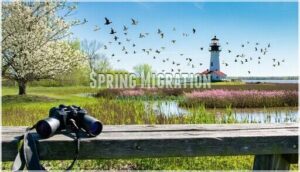
Spring’s symphony begins when you’ll witness spectacular Spring Arrivals along the Atlantic Flyway.
Nesting Season kicks off as birds establish territories, performing elaborate Mating Rituals that’ll make you smile.
The Songbird Chorus crescendos at dawn, while shorebird migration east creates incredible viewing opportunities.
East coast bird sanctuaries buzz with activity as Migration Patterns shift northward through April and May.
These routes are influenced by Earth’s magnetic field.
Fall Migration
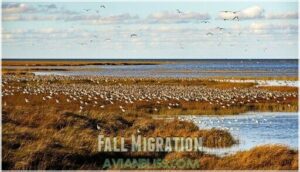
As summer’s heat fades, fall bird migration transforms the Atlantic flyway into nature’s highway.
You’ll witness spectacular peak season action from August through November, when weather impacts create perfect birding conditions along east coast states.
Here’s what makes fall migration special:
- Massive shorebird migration east brings thousands of sandpipers, plovers, and turnstones to coastal mudflats
- Bird identification becomes easier as species concentrate in predictable migration patterns
- Bird sanctuaries east offer prime viewing spots where conservation efforts protect critical stopover habitats
Winter Birding Hotspots
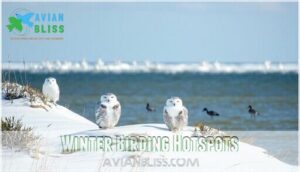
Winter transforms East Coast birding into a spectacular showcase of Cold-Weather Species.
You’ll spot Snowy Owls hunting across frozen marshes while thousands of waterfowl seek Coastal Shelters from harsh Ice Effects.
Winter Feeding stations at bird sanctuaries east attract rare visitors, making birding hotspots east particularly rewarding.
Atlantic flyway birds concentrate in protected areas, offering incredible winter birding east coast opportunities, with a focus on Coastal Shelters.
East Coast Birding Trails
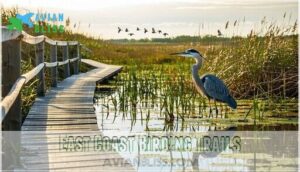
You’ll find some of the East Coast’s most rewarding birding experiences along carefully designed trails that wind through diverse ecosystems, from Florida’s wetland boardwalks to New England’s coastal paths.
These established routes offer you the perfect combination of accessibility and wildlife viewing opportunities, whether you’re tracking warblers through morning mist or watching herons fish in shallow waters.
Anhinga Trail
Walking the 0.8-mile Anhinga Trail offers you one of the best birding locations along the East Coast for viewing wildlife up close.
This accessible birding boardwalk through Everglades National Park puts aquatic birds like Purple Gallinules and Anhingas at eye level.
Trail accessibility makes it perfect for all birders seeking prime birding spots in east coast states.
Mahogany Hammock Trail
You’ll find the Mahogany Hammock Trail’s 0.5-mile boardwalk perfectly designed for Trail Accessibility, making it one of the top birding spots along the East Coast.
This elevated path showcases diverse Hammock Flora while offering exceptional Bird Photography opportunities of warblers and Bald Eagles.
The unique Hammock Wildlife thrives in this freshwater marl prairie ecosystem, creating unforgettable birding east coast states experiences for visiting enthusiasts.
Birders will also find similar experiences in Texas birding locations that attract enthusiasts worldwide.
Snake Bight Trail
You’ll discover Snake Bight Trail offers exceptional shorebird viewing and songbird sightings along its 1.6-mile route through hardwood hammock.
This coastal birding trail ends at a boardwalk overlooking the bight ecosystem, where flamingo spotting becomes possible.
Trail accessibility makes it one of the best birding spots among east coast states, connecting birding locations through diverse habitats and rewarding birding trails.
Coastal Birding Habitats
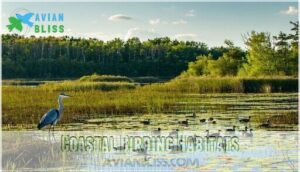
You’ll encounter three distinct coastal habitats along the East Coast, each offering unique birding opportunities that attract different species throughout the year.
These ecosystems—tidal marshes with their salt-tolerant vegetation, freshwater wetlands teeming with aquatic life, and mixed forests providing shelter and nesting sites—work together like a well-orchestrated symphony, creating the perfect conditions for both resident and migratory birds.
Tidal Marshes
Tidal marshes pulse with life as salt water floods and retreats twice daily.
You’ll spot shorebirds probing mudflats for crustaceans while waterfowl dabble in shallow pools.
These wetlands face serious habitat loss from coastal erosion and development.
Conservation efforts protect these essential habitats where marsh ecology supports diverse bird diets along coastal birding trails, which is crucial for coastal birding.
Freshwater Wetlands
Beyond the salt water lies freshwater wetlands, where birding takes on a different character entirely.
These habitats support incredible bird diversity, though habitat loss threatens their future. Water availability impacts wetland health.
Here’s what makes freshwater wetlands special:
- Pristine water quality creates thriving ecosystems
- Native plants flourish without invasive species
- Migrating waterfowl find essential rest stops
- Wetland conservation protects countless species
- Birdwatching opportunities abound year-round
Mixed Forests
Mixed forests create nature’s apartment complexes for songbirds and raptors.
You’ll spot warblers flitting through oak canopies while woodpeckers hammer away at dead snags below.
These diverse habitats offer prime nesting site selection opportunities, from ground-level shrubs to towering pines.
Edge effect impacts where forests meet meadows boost bird species diversity, making mixed woodlands among the best birding spots along eastern corridors.
Frequently Asked Questions (FAQs)
What is the best state for birding?
You’ll find Texas offers unmatched birding diversity with over 500 species.
Each state has unique strengths, but Texas consistently ranks highest nationwide, and Florida’s wetlands excel for waterfowl.
While California’s coastlines attract Pacific migrants, Texas is notable for its diversity.
What is the best month for bird watching?
Peak migration in May transforms ordinary backyards into avian highways.
You’ll spot the most species during spring migration when warblers flood through, though autumn’s September-October window offers excellent hawk watching and shorebird diversity.
What is the best birding spot in the world?
You’ll find incredible birding worldwide, but Costa Rica’s cloud forests and Peru’s Amazon rainforest consistently top birder lists.
These tropical hotspots offer unmatched species diversity, with over 800 bird species in relatively small areas.
What birding gear is essential for beginners?
Picture yourself stepping into nature’s theater, binoculars in hand.
You’ll need quality binoculars (8×42 works great), a field guide, notebook, comfortable walking shoes, and weather-appropriate clothing.
These basics transform casual walks into bird-watching adventures.
How do weather conditions affect bird activity?
Weather dramatically impacts your birding success.
Cold fronts trigger major migrations, while storms concentrate birds in sheltered areas.
Dawn after rain often produces exceptional activity as birds resume feeding after waiting out harsh conditions, with dramatically and major events influencing bird behavior.
Are birding permits required at these locations?
Planning your birding adventure? Most East Coast locations don’t require permits—national parks charge entrance fees, while wildlife refuges and state parks typically offer free access for your binocular-wielding expeditions.
What parking and accessibility options are available?
Most East Coast birding hotspots offer free parking, though spaces fill quickly during peak migration.
You’ll find accessible trails at places like Everglades’ Anhinga Trail and Cape May’s boardwalks, designed for wheelchairs and mobility aids.
Which dangerous wildlife should birders avoid?
Like Hansel and Gretel making their way through the forest, you’ll want to watch for venomous snakes, alligators in southern wetlands, and aggressive nesting birds.
Keep your distance, wear protective gear, and you’ll bird safely.
Conclusion
While some birders chase rare species across continents, you’ll discover the best birding locations east coast offer world-class wildlife right in your backyard.
From Cape May’s warbler waves to Everglades’ exotic species, these hotspots deliver consistent, spectacular viewing opportunities.
You don’t need expensive international trips when destinations like Hawk Mountain and Parker River provide front-row seats to nature’s greatest shows.
Pack your binoculars, check migration timing, and prepare for unforgettable encounters with America’s incredible avian diversity.