This site is supported by our readers. We may earn a commission, at no cost to you, if you purchase through links.

Your backyard birds showed up right on schedule this morning—and that’s no coincidence. Wild birds develop mental maps of reliable food sources and time their daily foraging routes around them. When you establish a consistent feeding schedule, you’re not just tossing out seeds randomly; you’re becoming an essential stop on their survival circuit.
This matters most during harsh weather, nesting season, and migration periods when energy demands spike and natural food sources dwindle. The difference between haphazard feeding and a well-planned schedule can mean the difference between birds thriving in your yard or simply passing through.
Getting the timing right—along with seasonal adjustments and species-specific considerations—transforms casual bird watching into genuine wildlife support.
Table Of Contents
- Key Takeaways
- Why Birds Need a Feeding Schedule
- Best Times to Feed Birds Daily
- Seasonal Adjustments for Bird Feeding
- Choosing The Right Foods by Season
- Creating a Consistent Feeding Routine
- Special Feeding Schedules for Different Species
- Adapting Feeding Schedules to Weather
- Feeder Placement and Maintenance Tips
- Monitoring Bird Health Through Feeding
- Supporting Birds Beyond Feeding Times
- Frequently Asked Questions (FAQs)
- Conclusion
Key Takeaways
- Birds develop mental maps of reliable food sources and time their foraging routes around consistent feeders, making your schedule a critical part of their survival circuit during harsh weather, nesting season, and migration periods.
- Morning feeding within an hour of sunrise matters most because birds burn through energy overnight and need immediate refueling, while evening top-ups before dusk help them survive cold nights without dangerously depleting energy reserves.
- Seasonal adjustments are essential—winter demands high-fat seeds and suet for warmth, spring requires protein-rich foods like mealworms for nesting, and migration periods need energy-dense options to fuel long journeys.
- Consistent feeding schedules should support natural foraging rather than create dependency, so rotate feeder locations, incorporate feeder-free days during abundant seasons, and pair supplemental feeding with native plants that provide year-round natural food sources.
Why Birds Need a Feeding Schedule
You might wonder whether backyard birds really need you to set out food on a schedule, or if they’d do just fine on their own. The truth is, a reliable feeding routine can mean the difference between survival and struggle, especially when natural food runs scarce.
A reliable feeding routine can mean the difference between survival and struggle when natural food runs scarce
Let’s look at how your feeders fit into the bigger picture of wild bird health and behavior.
Natural Foraging Vs. Supplemental Feeding
In the wild, birds spend hours foraging for insects, seeds, and berries—strategies that shape their nutritional intake and energy balance. Smart feeder placement and thoughtful seed selection support wildlife conservation while respecting their instinctive foraging strategies and need for diverse bird nutrition.
When you offer supplemental feeding at your feeder, you’re not replacing natural food sources, but filling gaps when seasonal bird feeding matters most. Understanding the importance of scientific study summaries can also inform bird conservation efforts.
Impact of Consistent Feeding on Bird Health
A reliable feeding schedule bolsters avian wellness by stabilizing energy intake and reducing starvation risk during harsh conditions. When you maintain consistent bird feeding, you help small birds preserve body condition and fat reserves—key markers of bird health.
This dietary balance also influences molt timing and reproductive readiness. Regular access to appropriate bird nutrition fortifies immune function, creating measurable improvements in overall well-being that any backyard observer can witness.
Understanding language patterns is also essential for effective communication about bird care and nutrition.
Effects on Local Bird Populations
Your feeding efforts reach far beyond your backyard. Supplemental feeding shifts population dynamics by boosting bird numbers during lean months, yet it can also reshape species interactions and tip the balance toward aggressive competitors. Without proper sanitation, concentrated feeders heighten disease transmission risks.
A thoughtful bird feeding schedule respects local biodiversity, aids bird migration patterns, and maintains ecosystem balance rather than disrupting it. Your habitat impact matters.
Understanding when to start feeding birds helps you align your support with seasonal migration and breeding cycles.
Best Times to Feed Birds Daily

Just like you feel better starting your day with breakfast, birds need fuel early in the morning when they’re most active. Timing your feeder refills around their natural rhythms helps them stay healthy and strong throughout the day.
Let’s look at the best times to put food out so your backyard visitors get what they need when they need it most.
Placement matters too—position feeders near protective cover but not so close that predators can hide, and consider safe heating solutions for winter water sources to keep birds hydrated year-round.
Morning Feeding for Maximum Benefit
Think of dawn as breakfast rush hour for your backyard visitors. Morning nutrition matters most because birds burn through energy overnight and need to refuel quickly.
Pairing feeders with natural food sources in your yard ensures birds get balanced nutrition beyond just seeds.
Set up your feeders within an hour of sunrise to match their natural feeding habits. Offer energy boosters like sunflower hearts or suet, and you’ll support their daily routines while making your yard their favorite stop.
Keep your feeders clean with regular maintenance—proper hummingbird feeder care prevents mold and keeps birds healthy all season long.
Optional Afternoon and Evening Refills
Most backyard birds don’t require midday meals, but you can adjust your feeding schedule based on bird activity patterns and local conditions. Here are afternoon refill tips and evening feeding strategies to enhance your supplemental feeding approach:
- Keep afternoon portions small – limit refills to under 50% of morning amounts to encourage natural foraging
- Time evening refills before dusk – help birds fuel up for cold nights without disrupting roosting behavior
- Monitor feeder traffic – adjust refill scheduling based on how quickly birds empty stations throughout the day
Avoiding Overnight Fasting
Small birds burn through energy reserves quickly, especially during cold nights when their metabolism runs high. You’ll want to keep feeders stocked until dusk and refill them at dawn to prevent overnight fasting. This feeding schedule aids nocturnal foraging species and ensures energy reserves don’t drop dangerously low. Proper feeder timing means your supplemental feeding provides morning and evening coverage when birds need it most.
| Time Period | Feeding Action | Energy Impact |
|---|---|---|
| Before Dusk | Final refill | Fuel for cold nights |
| Overnight | Food available | Prevents energy deficit |
| Dawn | Early refill | Restores metabolism |
| Throughout Day | Monitor levels | Maintains reserves |
Seasonal Adjustments for Bird Feeding

Birds’ nutritional needs shift dramatically throughout the year, and your feeding strategy should shift right along with them. What works in January won’t cut it in July, and understanding these seasonal patterns helps you support your backyard visitors when they need it most.
Let’s break down how to adjust your feeding approach across each season.
Winter High-Energy Feeding
When temperatures drop below freezing, your backyard visitors need extra calories to stay warm and healthy. Cold weather nutrition becomes critical—small passerines burn through energy reserves quickly in winter.
Offer high energy bird food like commercial suet blends (30–50% fat) and sunflower seeds daily to support avian metabolism and frost tolerance. This winter bird care approach prevents weight loss and keeps your flock resilient through the coldest months.
Spring and Nesting Season Schedules
As spring arrives, your bird feeding schedule shifts to support nesting habits and breeding energy demands. Birds increasingly rely on protein-rich foods during nesting season to fuel egg production and chick development.
- Stock feeders with mealworms and soaked cat kibble for nestling growth
- Maintain morning refills to match peak foraging when parents provision young
- Clean feeders bi-weekly to prevent parasite transmission near active nests
- Adjust feeder placement away from nesting sites to reduce competition
This seasonal bird feeding strategy helps adults meet elevated nutritional needs while protecting vulnerable young.
Autumn Pre-Migration Support
As autumn feeding aids bird migration, you’re helping them build vital energy reserves before takeoff. Focus on high-fat seeds like sunflower and nyjer for maximum fat deposition during pre-flight prep.
Fill feeders early morning to match natural foraging rhythms and minimize disturbance during migratory rest periods.
Consistent supplemental feeding and clean water access fuel the energy storage birds need for their demanding seasonal journeys ahead.
Summer Feeding Exceptions
Summer feeding shifts toward early morning and late evening to help birds avoid heat stress management challenges.
You’ll notice increased fruit consumption and nectar evaporation—clean hummingbird feeders every 1–2 days with fresh solution.
Supplement your bird feeding schedule with shallow water dishes during heat waves to meet hydration needs.
Replace damp seeds promptly to prevent seed spoilage and illness in your seasonal bird feeding routine.
Choosing The Right Foods by Season
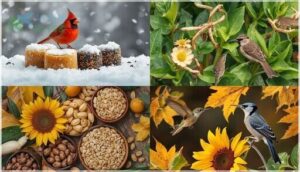
Feeding birds the right foods at the right time makes a real difference in their survival and health. What works in January won’t cut it in June, and understanding these seasonal shifts helps you support the birds in your yard year-round.
Let’s look at the key food types that match up with what birds need during different times of the year.
High-Fat Seeds for Cold Months
When winter temperatures plunge, your feathered visitors rely heavily on energy-dense foods to stay warm. Black oil sunflower seeds are your best bet—they pack roughly 40–50% fat content and have thinner shells than striped varieties, making them easier to crack.
Here’s what you need to know about winter feeding:
- Choose high-fat seeds like sunflower cores to meet birds’ increased energy demands during cold snaps
- Store bird food in airtight containers to prevent moisture damage and maintain seed quality
- Refill feeders early each morning when birds need energy most after cold nights
These cold weather strategies help chickadees, nuthatches, and finches maintain body temperature when natural food sources disappear.
Protein Sources During Nesting
Once nesting season arrives, adult birds shift their focus to protein-rich foods that support bird egg development and chick growth. Protein supplements give parent birds the nutrition they need during this demanding period of raising their young.
Offer mealworms—they contain roughly 50 percent protein by weight—alongside suet cakes mixed with insect-based foods. Protein-rich seeds like sunflower (20 percent protein) work well too.
Nectar and Nyjer for Hummingbirds and Goldfinches
Hummingbirds and goldfinches have unique nutritional needs that don’t follow typical bird feeding schedules. Here’s what works best:
- Mix nectar using 4–6 parts water to 1 part pure granulated sugar—no dyes or honey
- Replace nectar every 2–3 days in warm weather to prevent fermentation
- Store nyjer seeds in cool, dry conditions to avoid moisture-induced clumping
- Clean feeders weekly between refills to maintain feeder sanitation and prevent mold
These specialized foods support hummingbird migration timing and goldfinch diet requirements during breeding season when energy demands spike.
Creating a Consistent Feeding Routine
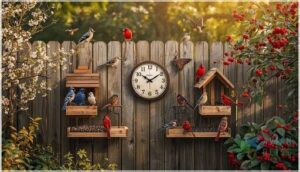
Birds thrive when they know what to expect from your feeders. A steady routine helps them plan their day around reliable food sources without becoming too dependent on you.
Let’s look at how to build a feeding schedule that aligns with their natural instincts while keeping them healthy year-round.
Establishing a Daily Feeding Window
Think of a feeding window as your birds’ dinner bell—they’ll learn when to show up. Set a clear daily start and end time, usually a 2–4 hour stretch in the morning when bird activity peaks. You can add a brief evening top-up before dusk to help them through the night. Track your schedule for two weeks, then fine-tune based on what you observe at the feeder.
| Time of Day | Feeding Window Action |
|---|---|
| Early Morning (6–10 AM) | Primary feeding window—fill feeders when birds are most active |
| Mid-Morning (10 AM–12 PM) | Optional refill during cold weather or high traffic |
| Early Afternoon (1–3 PM) | Brief secondary window (up to 50% of daily intake) |
| Late Afternoon (4–6 PM) | Evening top-up to support overnight energy needs |
| Overnight | Maintain access to food and water for small passerines |
Monitoring and Adjusting for Bird Activity
Each week, track your bird activity tracking to spot visitor patterns and seasonal shifts. Record daily flock sizes, species variety, and peak foraging times. Compare current trends to typical seasonal bird feeding norms before adjusting your bird feeding schedule.
- Count daily visitors at each feeder placement location
- Document weather conditions affecting avian behavior
- Note changes in species diversity
- Adjust feeding schedules only after consistent activity shifts
Preventing Overdependence on Feeders
Rotate your feeders every few weeks to prevent birds from relying solely on one feeding station. Pair Feeder Rotation with Habitat Diversity—plant native shrubs and flowering species that offer natural food sources year-round.
Use Supplement Timing strategically: incorporate feeder-free days during abundant seasons to encourage natural foraging.
Track Bird Monitoring logs to detect dependency signs, adjusting your bird feeding schedule when visitors ignore Food Variety options.
Special Feeding Schedules for Different Species

Not all birds eat the same foods or follow the same daily rhythms. Hummingbirds need fresh nectar at specific times, while goldfinches prefer particular seeds that other species might ignore.
If you’re feeding a variety of birds or supporting those passing through during migration, adjusting your schedule to fit their unique needs makes all the difference.
Hummingbird Nectar Timing
Your hummingbird feeding schedule revolves around daylight hours, when metabolic demand peaks. Offer fresh nectar in early morning and late afternoon—these windows match natural foraging patterns and support energy needs.
Daily refills prevent fermentation and maintain proper nectar concentration (one part sugar to four parts water). Feeder placement in shade stabilizes temperature, while multiple feeders reduce competition.
During hummingbird migration, consistent timing becomes even more critical for stopovers.
Goldfinch Seed Preferences
Goldfinches aren’t just picky eaters—they’re specialists. Your best bet is nyjer seed, which packs the high oil content their metabolism demands. Black-oil sunflower seeds work as a backup when nyjer runs low.
Use tube feeders with small ports to match their feeding style, and store seed in airtight containers to prevent moisture damage. Clean feeders every two weeks to keep your goldfinch visitors healthy and coming back.
Supporting Migratory Birds
Migratory birds depend on your feeders as refueling stations along their flyway routes. Fill feeders with high-fat seeds and suet during spring and fall migration peaks to support their energy-intensive journeys.
Align your bird feeding schedule with seasonal migration patterns—usually March through May and August through October. This simple step strengthens bird conservation efforts and helps maintain healthy avian nutrition during critical travel periods.
Adapting Feeding Schedules to Weather

Weather can turn your backyard into a real challenge for birds, especially when storms roll in or temperatures swing to extremes. During these times, your feeding schedule becomes even more important to help birds survive and stay healthy. Let’s look at how you can adjust your routine to support your feathered visitors when the weather gets rough.
Feeding During Storms and Cold Snaps
When storms roll in, your winter feeding plans need to shift fast. Increase high-energy foods like suet and sunflower hearts, and prioritize early morning refills when temperatures drop.
Keep feeders sheltered and clean to prevent mold in damp conditions.
Cold weather strategies and emergency food supplies help birds survive harsh periods, while your bird feeder maintenance prevents disease during stressful weather.
Adjusting for Heat and Drought
While cold snaps demand extra fat, heat waves flip the script entirely. Your bird feeding schedule needs drought strategies focused on bird hydration and water conservation during the dry season.
When temperatures soar, adjust your supplemental feeding techniques:
- Provide multiple shallow water dishes in shaded spots
- Refresh water stations morning and late afternoon
- Use energy-dense seeds to optimize caloric intake per visit
- Clean feeders daily to prevent mold in hot conditions
- Offer moisture-rich foods for seasonal changes and bird feeding strategies
Monitoring Food Availability After Extreme Weather
After storms pass, you’ll need to watch how often birds visit your feeders—increased traffic signals food scarcity from weather impacts. Check surrounding trees and shrubs for remaining berries and seeds.
If natural food sources look depleted and you’re seeing anxious foraging, ramp up your feeder management. Storm responses should include daily stock checks and extra refills until bird behavior returns to normal seasonal patterns.
Feeder Placement and Maintenance Tips
Where you place your feeders and how you care for them can make all the difference in keeping your backyard birds healthy and safe. A well-positioned feeder protects birds from predators, while regular cleaning prevents the spread of disease.
Let’s look at three essential practices that will help you maintain a thriving feeding station.
Positioning Feeders for Safety
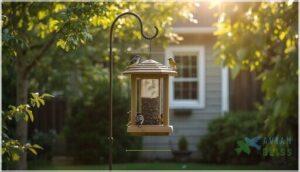
When you set up your bird feeder, placement makes all the difference between a safe haven and a hazard zone. Position feeders at least 10 feet from windows to prevent deadly collisions.
Mount them 4–6 feet above ground with baffles to stop squirrels and climbing predators.
Keep 10 feet of clear flight space around each feeder, avoiding low tree branches where ambush predators lurk.
Cleaning Frequency and Methods

Clean your bird feeder every two weeks with hot, soapy water to control bacterial growth and prevent mold. During humid weather, increase cleaning frequency—feeder sanitation directly impacts bird health.
Disassemble all components, scrub away debris, rinse thoroughly, and dry completely before refilling.
These hygiene practices keep your feeding schedule safe year-round, protecting birds from preventable illnesses that spread through contaminated feeders.
Storing and Preserving Bird Food
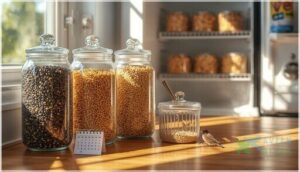
Store bird food in airtight containers to keep moisture and pests away from your seed preservation system. Place suet and nyjer seeds in cool, dry spots away from sunlight—moisture control protects nutritional value.
Check containers weekly for mold or rancidity, and label them with dates for food storage tips that work. Refrigerate high-fat foods between feedings to maintain bird food safety year-round.
Monitoring Bird Health Through Feeding
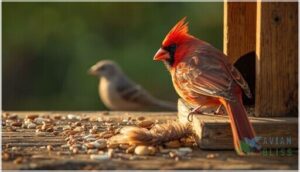
Your feeder can tell you a lot about the birds visiting your yard if you know what to look for. Small changes in how much they eat or how they act can signal health problems before they get serious.
Paying attention to eating patterns, physical appearance, and what’s left behind helps you catch issues early and keep your backyard flock thriving.
Observing Changes in Eating Patterns
Pay attention to your birds’ feeding habits—they’re your first clue that something’s off. Changes in bird appetite can reveal health concerns or seasonal shifts before other symptoms appear. Here’s what to watch for:
- Sudden drops or spikes in seed and suet consumption
- Shifts in meal timing at your feeders
- Body weight changes over several days
- Altered avian nutrition preferences between food types
- Duration changes in feeding sessions
Document unusual eating patterns to spot real problems versus normal seasonal cravings.
Signs of Illness or Nutritional Imbalance
Understanding bird behavior and avian health means recognizing when something’s wrong. Weight loss despite regular feeding signals poor avian nutrition or illness. Feather condition deteriorates—dull, ruffled plumage issues appear when nutrition falters. Beak problems like overgrowth suggest dietary gaps.
Dropping analysis reveals digestive troubles through color or consistency changes. These signs highlight the importance of bird nutrition in maintaining overall avian health and wellbeing.
Weight Monitoring and Droppings Assessment
Track avian weight weekly using a calibrated scale—record body weight at the same time daily to spot trends. Compare your data against species-specific ranges to catch problems early. Dropping analysis reveals health indicators through color and consistency changes.
Document any feeding adjustments or weather shifts alongside these measurements. This bird nutrition monitoring helps you fine-tune your feeding schedule and maintain proper nutrient balance for ideal bird behavior and wellbeing.
Supporting Birds Beyond Feeding Times

Feeding birds is just one piece of the puzzle in creating a thriving backyard habitat. Your feathered visitors need more than food to stay healthy and raise their young successfully.
Let’s look at three simple ways you can support birds even when the feeders are empty.
Providing Water Year-Round
Just as you wouldn’t skip watering your garden, birds need fresh sources daily—especially during dry spells. Clean, shaded containers reduce algae growth and keep water cooler, making hydration easier year-round.
Dripper systems attract more visitors while supporting wildlife conservation. Change water every two days in hot weather to maintain water quality and protect bird health through proper bird feeding strategies.
Offering Nesting Materials and Shelter
Offering shelter transforms your yard into a true haven. Install nesting boxes with predator guards and species-appropriate entrance holes to support bird nesting season preparation. Position them away from heavy traffic while creating sheltered habitats using brush piles or native shrubs.
Provide clean, untreated fibers like dried grasses for material availability. Understanding bird behavior patterns during nesting season helps different bird species thrive in your birdfriendly environment through thoughtful habitat creation.
Maintaining a Bird-Friendly Environment
Beyond bird feeder maintenance, creating a bird-friendly environment requires thoughtful habitat restoration. Native plantings attract insects that birds need, while bird baths provide year-round hydration. Your backyard birding space becomes eco-friendly when you:
- Plant native vegetation for shelter and natural foraging
- Minimize pesticides to protect insect populations
- Position feeders away from windows and predators
- Maintain wildlife corridors between feeding areas
- Reduce noise and disturbances near bird feeding zones
Frequently Asked Questions (FAQs)
Can I stop feeding birds once I start?
You can stop, but don’t do it abruptly—gradual feeder removal over several weeks helps birds adjust to seasonal shifts and prevents food scarcity while they shift back to natural foraging patterns.
Do bird feeders attract unwanted pests or predators?
Yes, bird feeders can draw rodents, raccoons, and squirrels if you don’t use baffles or clean regularly. Proper feeder sanitation and predator deterrents like secure positioning help maintain a bird-friendly environment while minimizing unwanted wildlife attraction.
How much food should I put out daily?
Like filling a coffee cup just enough to stay warm, your daily ration depends on bird consumption and feeding frequency—start with one to two cups per feeder, adjusting to minimize food waste.
What happens if I miss a feeding day?
Missing a feeding day can cause birds to experience a caloric shortfall, leading to temporary bird weight loss and increased foraging time. Most recover within one to three days once your feeding schedule resumes.
Should I use different feeders for different foods?
You’ll want dedicated feeders for each food type—nectar, seeds, suet—to prevent cross-contamination and mold.
Separate stations support better feeder hygiene, match bird preferences, and simplify your bird feeder maintenance routine.
Conclusion
Picture a cardinal pausing mid-flight, recognizing your feeder as the steady refuge it’s come to trust. That’s the power of a well-executed feeding schedule—it turns your yard into a lifeline birds can count on when nature falls short.
The best feeding schedule for birds isn’t about flawlessness; it’s about showing up consistently, adapting to seasonal shifts, and observing the creatures you’re helping thrive. Your commitment becomes their survival advantage.
- https://academichelpexpress.blog/2024/08/please-use-the-bulleted-points-and-the-rubric-below-to-guide-your-work-your-pa/
- https://www.onelook.com/?loc=olthes1&w=subpoint
- https://www.sciencedirect.com/science/article/pii/S0749208123000268
- https://pmc.ncbi.nlm.nih.gov/articles/instance/9553038/bin/pone.0275964.s005.docx
- https://www.scribd.com/document/356795007/Research-Methods-Knowledge-Base