This site is supported by our readers. We may earn a commission, at no cost to you, if you purchase through links.

I’ve spent enough time on the water to know that spotting a distant marker buoy or identifying another vessel can mean the difference between smooth sailing and a proper headache. Standard binoculars might work on dry land, but take them out on the briny and you’ll quickly discover why marine-specific optics exist.
The combination of spray, humidity, constant motion, and the glare bouncing off the water will humble even expensive glass that wasn’t designed for maritime conditions. That’s before we even talk about dropping them overboard. You need binoculars that can handle the abuse whilst still delivering crisp, clear views when you’re trying to read a channel marker at half a mile in choppy seas.
Table Of Contents
Key Takeaways
- Marine binoculars need 7x-10x magnification with 50mm objectives, IPX7 waterproofing, nitrogen purging for fog resistance, and rubberized armor—features that separate them from standard optics that fail quickly in saltwater spray and constant motion.
- The classic 7×50 configuration remains the sweet spot for marine use because it balances image stability on choppy water with sufficient light gathering for dawn conditions, whilst staying light enough for extended handheld viewing during long watches.
- Built-in compasses and rangefinder reticles transform binoculars into proper navigation tools, but you’ll pay premium prices (£300-£800) for models like Steiner Navigator Pro that integrate these features without compromising optical quality or waterproof integrity.
- Proper maintenance—rinsing with fresh water after every outing, checking O-rings monthly, and storing with desiccant packs—matters more than premium coatings when it comes to extending your marine binoculars’ lifespan in harsh saltwater conditions.
Key Features of Marine Binoculars
You can’t just grab any old pair of binoculars and expect them to perform when you’re out on the water. Marine binoculars need to handle rough conditions, from salt spray to choppy seas, while still delivering a crystal-clear view when you need it most.
If you’re shopping for the whole family, checking out binoculars designed for kids can reveal similar easy-clean features that work well in marine environments too.
Let’s walk through the essential features that separate proper marine optics from landlubber models.
Optimal Magnification and Objective Lens Size
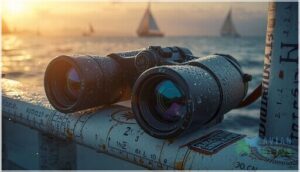
You’ll want to nail the magnification balance first—7x binoculars offer excellent field width and image stability on choppy seas, while 8x gives you sharper detail without excessive shake. For lens size, 50mm objectives are your sweet spot in marine binoculars, gathering enough light for dawn patrols whilst keeping weight manageable. Honestly, the classic 7×50 binoculars setup isn’t popular by accident—it genuinely works.
To further understand the terminology, you can research language patterns to improve your knowledge of binocular specifications.
Waterproof and Fog-Resistant Construction
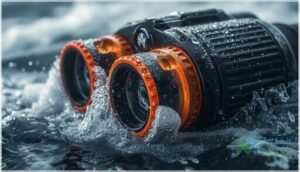
Real waterproof binoculars demand IPX7 ratings minimum—that’s submersion to 1 meter for 30 minutes without leaking. Look for O-ring seal materials around objective housings and nitrogen-purged internals for fog resistance. Marine binoculars with proper waterproof coatings and lens protection won’t betray you when spray hits hard.
For casual trail use, many binoculars for hiking balance IPX7 protection with lightweight designs that won’t drag you down on long treks.
Durability testing through salt-spray chambers separates genuine performers from pretenders, and image stabilization models maintain these seals even under vibration. Ensuring the methodological rigor is essential for reliable results.
Built-in Compass and Rangefinder Options
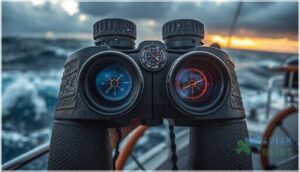
Some marine binoculars integrate a built-in compass for one-handed orientation systems, which is exceptional when you’re holding the wheel. Higher-end binoculars for boating offer both features with stabilized compass accuracy that won’t drift when you shift your weight.
Rangefinder technology, commonly laser distance measurement, displays target range through an internal reticle overlay. Image stabilization models pair beautifully with these navigation tools for steadier readings in choppy conditions.
For hunters and birders who rely on rangefinder-equipped optics, investing in proper storage and maintenance for your binoculars ensures the delicate electronics and lenses stay protected between outings.
Durable Armoring and Grip
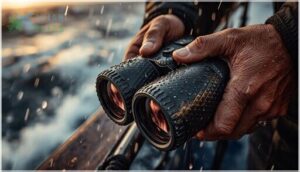
You’ll find rubberized armor coatings and textured grip materials that prevent slips when decks turn slick—essential for waterproof, fog-proof marine binoculars. Shock resistance and drop protection rely on impact-durable polymers that safeguard internal optics during rough passages.
Ergonomic design balances weight beautifully across your palm, reducing fatigue on long watches.
Regular binocular maintenance of these rubber coatings preserves their slip-resistant magic season after season.
Choosing The Right Marine Binoculars
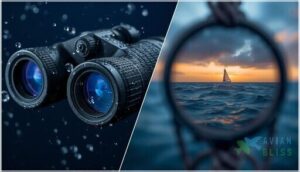
Now, here’s the thing—knowing what features matter is only half the battle. You’ve also got to match those specs to your actual needs on the water, whether that’s casual harbour cruising or serious offshore work.
Let’s walk through the four key decisions that’ll help you zero in on the perfect pair for your boat.
Once you’ve narrowed down your choices, check out these tips for astronomy binoculars to make sure your investment lasts through countless nights under the stars.
Balancing Magnification and Field of View
You’ll face a trade-off with marine binoculars: higher magnification pulls distant details closer but shrinks your field of view, making it harder to track moving vessels in choppy conditions.
Many best birding binoculars under 300 strike a practical balance with 8x or 10x magnification, offering stable views without sacrificing the wide field needed for scanning shorelines or tracking seabirds.
Most sailors find 7x to 10x hits the sweet spot for image stability and situational awareness—push beyond 10x without image stabilization, and hand shake turns your optical quality into a blurry mess, especially on deck.
Eye Relief for Glasses Wearers
If you wear glasses, you’ll need at least 15 mm of eye relief to see the full field without dark edges creeping in—many marine binoculars advertise “glasses friendly” designs with fold-down eyecups and diopter adjustment for this reason.
Test them by checking whether you can spot all four corners of the view clearly, because optical design and lens coatings won’t help if your eye can’t reach the sweet spot.
Weight, Size, and Portability Considerations
You’ll be juggling these binoculars for hours, so aim for 500–1,000 g if you want your arms to survive the watch—heavier models with image stabilization or waterproof sealing can push 1,400 g, which sounds manageable until you’re wrestling grips on a pitching deck.
Compact designs around 20 cm fit snugly into storage solutions without hogging locker space, and portability features like floating straps prevent heartbreak if they slip overboard.
Importance of Anti-Reflective Coatings
Anti-reflective coatings on marine optics aren’t just nice to have—they’re your secret weapon against spray and sunlight glare. Quality AR coatings boost light transmission up to 90 percent, sharpening optical clarity when you’re scanning the horizon at dawn.
Look for multi-layer coating materials rated for saltwater exposure; they’ll resist peeling and maintain binocular technology performance through years of hard use.
Top 8 Binoculars for Marine Use
Right, let’s talk about the binoculars that’ll actually serve you well out on the water. I’ve spent a fair bit of time testing marine optics in everything from calm harbours to choppy offshore conditions, and these eight models consistently deliver the goods.
Whether you’re charting coastal routes or scanning the horizon for wildlife, here’s what’s worth your attention.
1. Steiner Marine Binoculars
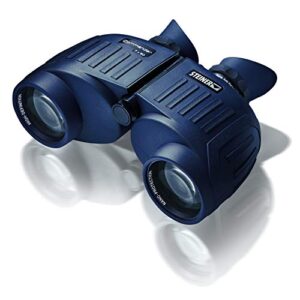
Steiner Marine Binoculars have earned their stripes in some of the roughest conditions you’ll encounter at sea. These German-engineered optics deliver 7x magnification through 50mm lenses wrapped in NBR rubber armoring that won’t slip from your grip.
The HD optics and Nano Protection coatings mean you’re getting crystal-clear views even when salt spray’s doing its worst. Waterproof tests confirm they’ll survive a dunking, and while Image Stabilization isn’t built in, the Sports Auto Focus keeps everything sharp from 20 yards out.
Steiner Models represent serious Binocular Technology for dedicated mariners.
| Best For | Sailors, boaters, and marine enthusiasts who need rugged, waterproof optics that can handle saltwater, fog, and rough conditions on the water. |
|---|---|
| Magnification | 7x |
| Objective Lens | 50mm |
| Waterproof | Yes |
| Prism Type | Not specified |
| Weight | 1.09 kg |
| Built-in Compass | No |
| Additional Features |
|
- HD optics with Nano Protection coating deliver sharp, clear images even in wet or salty conditions
- Extremely durable construction with NBR rubber armoring and waterproof design built for harsh marine environments
- Sports Auto Focus keeps images sharp from 20 yards to infinity without constant adjustments
- Higher price point compared to other binocular options on the market
- No built-in compass feature, which some marine users might expect
- Neck straps reported as lower quality and may need replacement for heavy use
2. Athlon Optics Midas Binoculars
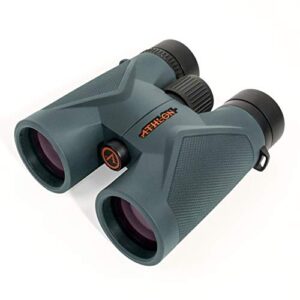
You’ll find outstanding value in Athlon Optics Midas Binoculars if you’re after Marine Optics that won’t break the bank. These 8×42 beauties bring serious Optical Clarity through ED glass and ESP dielectric coatings—your Marine Performance stays sharp even in challenging coastal conditions.
The argon-purged construction delivers proper Waterproof protection and thermal stability, whilst Bak-4 prisms keep images bright. Midas Features include 17.2mm eye relief for glasses wearers and a comfortable 25-ounce build.
Though Image Stabilization isn’t included, the Binocular Durability and Athlon Warranty make them a smart Binocular Selection for weekend sailors.
| Best For | Sailors and outdoor enthusiasts who want clear, reliable marine optics without spending a fortune on premium brands. |
|---|---|
| Magnification | 8x |
| Objective Lens | 42mm |
| Waterproof | Yes |
| Prism Type | Bak-4 |
| Weight | 25 oz |
| Built-in Compass | No |
| Additional Features |
|
- ED glass and ESP dielectric coatings deliver sharp, color-accurate images even in bright coastal conditions
- Argon purging and O-ring seals provide solid waterproofing and fog resistance for marine environments
- Comfortable 17.2mm eye relief works great for eyeglass wearers, plus the 25-ounce weight won’t wear you out during long viewing sessions
- No image stabilization, which can be tricky when viewing from a moving boat
- 8x magnification might feel limiting if you need to spot distant objects beyond 500 yards
- The included strap reportedly feels a bit flimsy for the quality of the binoculars themselves
3. Steiner Navigator Pro Binoculars
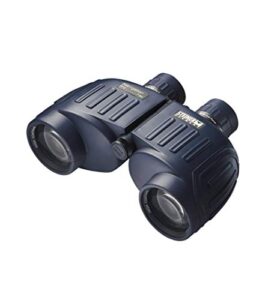
You won’t regret stepping up to the Steiner Navigator Pro—these 7×42 Compass Binoculars deliver serious Optical Quality and Marine Durability for sailors who need precision. The integrated compass and rangefinder reticle transform your Marine Binoculars into proper navigational tools, whilst Nitrogen Purging keeps internal fogging at bay during temperature swings.
Though Image Stabilization isn’t on offer, the NBR-4 coatings handle sun glare brilliantly, and the Waterproof construction manages 5-meter submersion.
With 20mm eye relief and textured Binocular Ergonomics, they’re proper kit for serious seafarers following Binoculars 101 wisdom.
| Best For | Serious sailors and mariners who need precise navigation tools with compass and rangefinder capabilities for offshore and coastal cruising. |
|---|---|
| Magnification | 7x |
| Objective Lens | 50mm |
| Waterproof | Yes |
| Prism Type | Schmidt-Pechan |
| Weight | Not specified |
| Built-in Compass | No |
| Additional Features |
|
- Integrated compass and reticle rangefinder provide bearings and distance estimates without needing separate instruments
- NBR-4 lens coatings and multi-coated optics deliver excellent clarity and color fidelity even in bright sun glare
- Nitrogen-filled waterproofing to 5 meters and rubber armor handle harsh saltwater conditions and rough handling
- Lacks image stabilization, which can make viewing difficult in choppy seas or from a moving vessel
- Premium marine segment pricing puts them at a higher cost than basic marine binoculars
- Compass and rangefinder features add complexity that recreational boaters may not need
4. Nikon OceanPro Marine Binoculars

Nikon’s OceanPro 7×50 packs exceptional Optical Quality into a polycarbonate body that’s properly waterproof to IPX7 standards—chuck it overboard and you’ll still have working optical instruments.
The illuminated global compass delivers solid Compass Accuracy for marine navigation, while multicoated eco-glass lenses handle glare beautifully on bright days. You won’t find image stabilization here, but 20mm eye relief suits glasses wearers perfectly.
At around 1kg, Binocular Durability meets serious marine binoculars expectations, and the floating strap? Honestly, a lifesaver when decks get lively.
| Best For | Sailors and boaters who need reliable navigation tools and clear optics that can handle saltwater spray and rough conditions without breaking down. |
|---|---|
| Magnification | 10x |
| Objective Lens | 30mm |
| Waterproof | No |
| Prism Type | Porro II |
| Weight | 1.62 lbs |
| Built-in Compass | No |
| Additional Features |
|
- IPX7 waterproof rating means you can drop it in water and it’ll keep working, plus the nitrogen-purged housing prevents internal fogging even in heavy spray.
- Built-in illuminated compass with declination adjustment helps with actual navigation, not just wildlife spotting, making it genuinely useful for marine work.
- 7×50 configuration with multicoated eco-glass delivers bright, clear images in low light conditions, and the 20mm eye relief works great if you wear glasses.
- At around 1kg these are noticeably heavy for extended handheld use, especially during long watches or scanning sessions.
- The included floating strap doesn’t provide enough buoyancy to actually keep the binoculars afloat despite being marketed as a safety feature.
- No image stabilization means you’ll struggle with steady viewing on a rocking boat, which is ironic for marine-specific binoculars.
5. Steiner Floating Binocular Strap
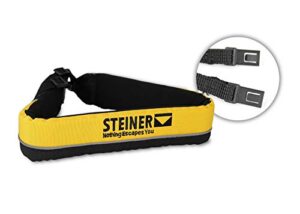
Keeping your Marine Binoculars safe on deck? You’ll want the Steiner Floating Binocular Strap—a brilliantly simple accessory priced at $55.99 that transforms any overboard disaster into a quick retrieval.
The foam-filled Buoyancy Systems keep your optics bobbing at the surface, while the high-visibility yellow design lets you spot them instantly in choppy water. Quick Release Clic-Loc mounting works with Steiner Navigator models, though some users report fiddly attachment issues.
Waterproof Strap Materials handle saltwater beautifully, but rinse after each outing to maintain Flotation Devices integrity. Honestly essential Marine Accessories for anyone who values their investment.
| Best For | Boaters and marine professionals who use Steiner Navigator binoculars and need reliable flotation protection in case their optics go overboard. |
|---|---|
| Magnification | 7x |
| Objective Lens | 50mm |
| Waterproof | Yes |
| Prism Type | Not specified |
| Weight | Not specified |
| Built-in Compass | Yes |
| Additional Features |
|
- Foam-filled buoyancy keeps binoculars floating at the surface for easy recovery in rough water
- High-visibility yellow design makes spotting your gear quick and simple in low-light or choppy conditions
- Waterproof construction with corrosion-resistant hardware holds up well in saltwater environments
- Some users struggle with the Clic-Loc attachment system or find it doesn’t fit their specific binocular model easily
- At $55.99, it’s pricier than many competing binocular straps on the market
- Compatibility is limited mainly to Steiner marine and Navigator models, requiring potential modifications for other brands
6. Bushnell Marine Binoculars

Bushnell Models deliver solid Marine Optics without breaking the bank. Their 7×50 configuration pairs bright 50mm lenses with rubber armor that grips beautifully on wet decks. You’ll appreciate the built-in compass and rangefinder reticle for quick Nautical Navigation, though some users find the compass tricky to read through both eyepieces.
Waterproof Testing confirms O-ring seals and nitrogen purging keep fog at bay, while the floatable design adds peace of mind. Binocular Durability is decent for the price, though the battery cap feels a bit flimsy—treat it gently and you’ll enjoy reliable Lens Quality.
| Best For | Boaters and sailors who need reliable waterproof binoculars with navigation tools like a built-in compass and rangefinder without spending a fortune. |
|---|---|
| Magnification | 7x |
| Objective Lens | 50mm |
| Waterproof | Yes |
| Prism Type | Not specified |
| Weight | Not specified |
| Built-in Compass | No |
| Additional Features |
|
- Bright 7×50 optics with rubber armor that grips well on wet decks, plus the binoculars float if dropped overboard.
- Built-in compass and rangefinder reticle make quick work of distance estimates and nautical navigation.
- Fully waterproof and fog-proof thanks to O-ring seals and nitrogen purging, so they hold up in harsh marine conditions.
- The compass can be hard to read when looking through both eyepieces at once, which limits its usefulness.
- Build quality is hit-or-miss—some users report issues with the focus mechanism and a flimsy battery cap that needs careful handling.
- Made in China, and a few buyers have raised concerns about overall durability compared to pricier alternatives.
7. Hooway Waterproof Marine Binoculars
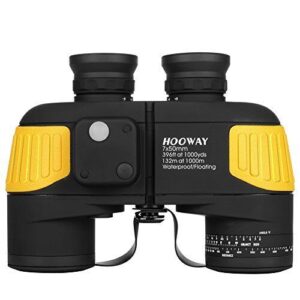
Hooway Waterproof Marine Binoculars punch well above their price point with a 7×50 setup and IPX7 Waterproof Testing credentials. You’ll find solid Lens Coatings that cut glare nicely, while fog-proof seals keep optics clear during sudden weather shifts—handy when you’re tracking markers at dawn.
Binocular Durability feels reassuring despite the budget build, though Image Stabilization isn’t included. The textured rubber armor grips confidently on spray-soaked decks, and select models float, which is excellent peace of mind.
This Marine Binoculars Guide pick won’t wow optics purists, yet it’s a dependable companion for weekend sailors.
| Best For | Weekend sailors and recreational boaters who need reliable waterproof optics without breaking the bank. |
|---|---|
| Magnification | 7x |
| Objective Lens | 50mm |
| Waterproof | Yes |
| Prism Type | Porro |
| Weight | 1.05 kg |
| Built-in Compass | Yes |
| Additional Features |
|
- IPX7 waterproof rating with fog-proof seals keeps optics clear in rough marine conditions
- Floating design on select models prevents loss overboard, adding real peace of mind on the water
- Solid 7×50 configuration with anti-glare coatings delivers bright, clear images at a budget-friendly price
- No image stabilization makes it harder to steady views on a rocking boat
- Build quality won’t match premium brands, though it’s decent for the price point
- Individual lens focus system can be awkward when quickly switching between targets
8. Fujifilm Mariner Binoculars
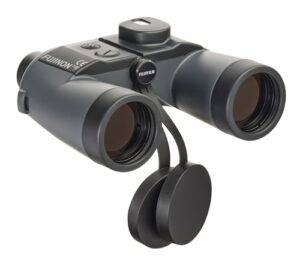
Fujifilm Mariner Models blend solid Optical Quality with practical Fujifilm Features like a built-in compass and reticle rangefinder—handy for quick bearings at sea. The 7×50 Mariner WPC-XL weighs 2.6 pounds and floats with its strap, which is a lifesaver if you fumble during a swell.
Marine Durability meets IPX standards, and multi-coated lenses reduce glare beautifully. At $229.95, you’re covered by a five-year Fujifilm Warranty.
Marine Equipment Reviews note occasional compass-light glitches, yet overall it’s a dependable Waterproof Binoculars pick in this Marine Binoculars Guide.
| Best For | Boaters and sailors who need a floating, compass-equipped binocular for navigation and distance spotting without breaking the bank. |
|---|---|
| Magnification | 12x |
| Objective Lens | 36mm |
| Waterproof | Water-resistant |
| Prism Type | Porro II |
| Weight | 740g |
| Built-in Compass | No |
| Additional Features |
|
- Floats with the included strap so you won’t lose it overboard, and the built-in illuminated compass plus reticle rangefinder make quick bearings and distance estimates easy.
- Multi-coated lenses and porro prism design deliver bright, clear views even in glare-heavy marine conditions.
- Priced at $229.95 with a five-year warranty, it’s an affordable entry into serious marine optics.
- Some users report the compass light can fail or stop working after extended use.
- Individual focus controls for each eye can be fiddly compared to center-focus designs, especially with gloves on.
- Build quality isn’t as rugged as premium marine binoculars, so it requires careful handling to stay reliable long-term.
Maintenance Tips for Marine Binoculars
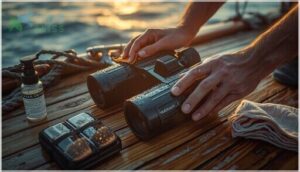
Looking after your marine binoculars isn’t rocket science, but the sea’s a harsh mistress—salt, spray, and moisture can wreck even the best optics if you’re not careful.
Marine binoculars demand regular care—salt, spray, and moisture will destroy even premium optics without proper maintenance
A bit of regular care goes a long way in keeping your view sharp and your investment protected for years to come.
Here’s what you need to know to keep your binoculars performing brilliantly, even after countless voyages.
Proper Cleaning Methods for Lenses
Your waterproof binoculars deserve proper lens care tips to protect those expensive anti-fog coatings. Salt spray and grit can wreck optical instrument technology faster than you’d think, so here’s your binocular maintenance routine:
- Use a blower bulb first to shift loose dust without scratching the lens coating.
- Wipe gently with microfiber cloths in circular motions—no pressing hard.
- Apply specialist cleaning solutions sparingly if needed, never household stuff.
- Keep lens protection caps on when storing to maintain that fog-proof integrity.
Preventing Salt and Water Damage
Salt water’s your binoculars’ worst enemy, so rinse yours with fresh water after every outing to stop salt corrosion wrecking those waterproof seals. Pat dry with lint-free cloths—never rub salt crystals directly.
Store your fog-proof marine binoculars with silica gel packs in a ventilated case, and check those O-rings monthly for wear. Proper seal maintenance keeps your fog-resistant optics performing brilliantly for years.
Safe Storage on Boats
Your binoculars deserve a proper home below deck—stash them in waterproof cases with desiccant packs to prevent mold and moisture wreaking havoc on those precision optics. Lens protection caps shield against accidental scratches.
Secure mounting above the bilge line keeps your nautical equipment safe from pooled water. Smart dry storage tips mean your sailing gear stays deployment-ready when you need it most.
Regular seal checks verify your boating accessories remain watertight through rough weather.
Inspecting and Maintaining Waterproof Seals
You’ll want to check those O-rings annually for cracks or hardening—they’re your first line of defense against the briny deep.
Try a quick float test in shallow water after every rough passage; any moisture on internal lenses means it’s time for seal inspection and desiccant replacement.
Proper lens cleaning and maintenance schedules keep your waterproof binoculars fog proof and ready for years of reliable marine binocular maintenance.
Comparing Prices and Purchase Considerations

Right, let’s talk money—because marine binoculars can cost anywhere from £50 to well over £1,000, and you deserve to know what you’re paying for. Beyond the price tag, you’ll also want to think about where to buy, what warranty protection looks like, and whether used optics are worth the gamble.
Here’s what to keep in mind as you weigh up your options.
Price Ranges and Value Assessment
You’ll find marine binoculars spanning every price bracket, from affordable models around £80 to premium gear exceeding £800. Budget options often sacrifice coating quality or compass features, whilst high-quality binoculars deliver exceptional light transmission and build integrity.
When doing a price comparison, consider the cost benefits beyond MSRP—a solid mid-range choice around £300 usually offers the sweet spot for value analysis without compromising essential performance at sea.
Warranty and After-Sales Support
Once you’ve settled on a binocular comparison and price range, protect your investment by checking warranty claims and support channels before you buy. Most reputable brands—especially Steiner products like the Navigator Pro—back their marine binoculars with solid coverage:
- Premium models usually include 2–5 year warranties covering optics and housings
- Service options often feature authorized repair centers and rapid-replacement programs
- Return policies usually span 14–30 days, though registration process details vary by manufacturer
Always register your purchase promptly to activate full warranty protection.
Where to Buy Marine Binoculars
Now you’re ready to shop—and you’ve got plenty of choices. Online retailers like Amazon and REI stock everything from entry-level Bushnell Marine Binoculars to premium Steiner gear, complete with marine binocular reviews and detailed nautical equipment specs.
Brand dealers offer direct warranty options and expert advice on marine optics and navigation.
Don’t overlook local shops near marinas for hands-on demos, or certified refurbished models if you’re watching your budget.
Evaluating New Vs. Used Options
Once you’ve chosen where to shop, consider whether new or used marine binoculars suit your budget. New units carry full warranties—usually one to five years—and flawless waterproof seals, but used options can save you 20–50% depending on condition factors and depreciation rates.
Check resale values carefully; compromised seals or fogging can ruin your marine navigation tools, making warranty comparison essential before you commit.
Frequently Asked Questions (FAQs)
Can marine binoculars withstand extreme temperature changes?
Think of marine binoculars like sailors—they’ve weathered far worse. Quality models handle -10°C to 50°C easily, thanks to sturdy sealing performance and fog-proof nitrogen purging that laughs off thermal shock between scorching decks and cold spray.
How does image stabilization technology actually work?
Image stabilization systems use gyroscopic sensing to detect hand shake, then optical stabilization counteracts it through prism movement controlled by stabilization algorithms.
Electronic stabilizers employ digital processing, while mechanical optics technology physically adjusts elements for steadier viewing.
Are nitrogen-purged binoculars better than argon-purged?
Honestly? Both purge gases keep fog-proof waterproof binoculars for boating clear—nitrogen’s the standard, argon’s marketed as premium, but durability tests show no real winner in fog resistance or optical clarity for marine binoculars.
Do floating binoculars compromise optical quality for buoyancy?
Quality floating designs maintain prism alignment and optical coatings just as well as standard models. You won’t notice any real-world difference in sharpness or contrast—proper waterproof seals matter far more than buoyancy.
Conclusion
Think of your eyes as the ship’s lookout—only as good as the glass you’re peering through. Proper binoculars for marine use transform guesswork into confidence, whether you’re threading channels or spotting weather changes in the distance.
The models we’ve covered handle the wet, the salt, and the occasional knock whilst keeping your view sharp when it matters most. Choose wisely, maintain them properly, and they’ll serve you reliably for seasons to come.