This site is supported by our readers. We may earn a commission, at no cost to you, if you purchase through links.
Something shifts the moment a kid spots a hawk circling overhead and can actually follow it—not squinting, not guessing, but locked in through a pair of binoculars sized for their hands. That moment often turns casual nature walks into genuine obsessions, and it happens faster than most parents expect.
The catch is that most binoculars for kids aren’t built equally. Some are glorified toys with plastic lenses that blur anything past 20 feet. Others are scaled-down adult optics that weigh enough to guarantee neck strain before the trail bends.
The nine picks here are the ones that hold up—across magnification, durability, weight, and the unpredictable chaos of a child actually using them outdoors.
Table Of Contents
- Key Takeaways
- Best Binoculars for Kids: Top 9 Picks
- How to Choose Kids Binoculars
- Kid-Friendly Binocular Features
- Magnification and Optics Explained
- Safety and Outdoor Learning Benefits
- Frequently Asked Questions (FAQs)
- Is binoculars a good gift for kids?
- Can kids use binoculars with glasses on?
- How do you clean kids binoculars properly?
- Whats the ideal interpupillary distance for children?
- Are theater binoculars suitable for outdoor use?
- Do kids binoculars work in low light?
- Can kids use binoculars for stargazing at night?
- How do I clean my childs binoculars safely?
- What accessories pair well with kids binoculars?
- How long do budget kids binoculars typically last?
- Conclusion
Key Takeaways
- Magnification sweet spot for most kids is 6x–8x — high enough to bring birds up close, low enough that shaky hands don’t ruin the view.
- Weight matters more than parents expect: keep it under 300g so kids can hold them steady for more than five minutes without complaining.
- Rubber armor, a simple center focus wheel, and soft eyecups aren’t bonus features — they’re what separates a binocular that a kid will actually use from one that lives in a drawer.
- Budget pairs ($15–$40) work for casual use, but midrange options ($40–$80) with rubberized grips and basic warranties hold up far better once your kid treats them like outdoor gear.
Best Binoculars for Kids: Top 9 Picks
Finding the right binoculars for your kid doesn’t have to be a guessing game. We’ve narrowed it down to nine solid options that cover everything from rugged durability to lightweight designs built for small hands. Here’s what made the cut.
Whether you’re just starting out or upgrading a well-worn pair, this guide to bird watching binoculars for kids walks you through exactly what features matter most at every age and budget.
1. Scotamalone Kids Adventure Binoculars
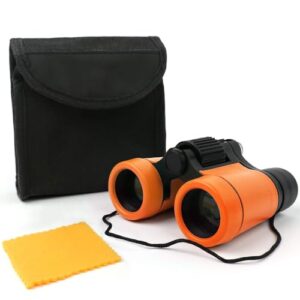
The Scotamalone Kids Adventure Binoculars are a solid starting point for any young explorer just finding their feet outdoors. Built around a 4×30 magnification setup, they keep things close-up without overwhelming small eyes. The soft rubber outer coating cushions inevitable drops, and rubber-surrounded eyepieces protect little faces during use.
At just 120 g, they won’t tire out a three-year-old’s arms. A neck strap and carry bag are included — practical touches that actually get used.
| Best For | Young children aged 3 and up who are just starting to explore the outdoors through bird watching, nature walks, camping, or backyard adventures. |
|---|---|
| Magnification | 4× |
| Rubber Protection | Natural rubber housing |
| Neck Strap | Included |
| Carrying Bag | Canvas carrying bag |
| Recommended Age | 3+ |
| Eye Protection | Rubber-surrounded eyepieces |
| Additional Features |
|
- Lightweight at just 120 g with a pocket-size design that’s easy for small hands to hold and carry
- Durable soft rubber housing with shock-proof construction handles the inevitable drops that come with young kids
- Comes with a neck strap, canvas carry bag, and lens cloth — everything needed to get started right away
- Optical range is limited, so clear detail only holds up within a few meters
- Plastic lenses can produce glare and deliver lower image quality than higher-grade optics
- The focus mechanism has been reported to break under rough handling, which is a real concern for young children
2. Essenson Kids 4×30 Binoculars

The Essenson Kids 4×30 Binoculars cover similar ground to the Scotamalone but bring a few welcome differences. At 5.29 oz, they’re light enough for a full morning hike without complaint.
The 4x magnification keeps distant objects visible without the shaky image problem that higher-powered models cause for fidgety hands. Rubber eyepieces protect young eyes, and the simple focus wheel means kids can adjust independently — no adult hovering required.
A canvas bag and neck strap are included.
| Best For | Kids aged 3–12 who love outdoor adventures like hiking, birdwatching, or camping and need a lightweight, easy-to-use pair of binoculars they can handle on their own. |
|---|---|
| Magnification | 4× |
| Rubber Protection | Rubber-surrounded eyepieces |
| Neck Strap | Included |
| Carrying Bag | Canvas carry bag |
| Recommended Age | 3–12 years |
| Eye Protection | Rubber-surrounded eyepieces |
| Additional Features |
|
- At just 5.29 oz, they’re light enough for young kids to carry comfortably on long outdoor trips
- 4x magnification gives a clear, steady view — perfect for small hands that can’t hold heavier, high-powered optics still
- Comes with a canvas bag, neck strap, and lens cloth, so everything kids need is included right out of the box
- Rubber eyepieces have been known to detach with regular use, which could be a frustration for active kids
- Durability is a concern — some units show wear after just a few months of use
- The narrow field of view limits how much kids can see at a distance, which may disappoint older children in the age range
3. Kids Binoculars Compass Magnifier
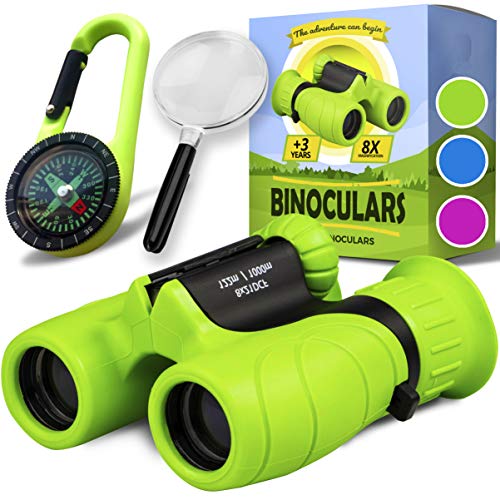
If the Essenson felt like a solid starter, this one adds a bit more to the adventure.
The Kids Binoculars Compass Magnifier bundles 8× magnification with a built-in compass and a handheld magnifying glass — so your child isn’t just watching the world, they’re actually exploring it.
The rubber-coated housing cushions drops, the focus wheel is sized for small fingers, and everything under 300 grams.
Recommended for ages 4–8.
| Best For | Kids ages 4–8 who love outdoor adventures and are ready to explore nature with more than just their eyes. |
|---|---|
| Magnification | 8× |
| Rubber Protection | Rubber-coated housing |
| Neck Strap | Included |
| Carrying Bag | Cloth storage bag |
| Recommended Age | 4–8 years |
| Eye Protection | Rubber eyecups |
| Additional Features |
|
- Comes with a full adventure kit — compass, magnifying glass, cleaning cloth, storage bag, and neck strap all included
- Rubber-coated housing helps protect against everyday bumps and drops
- Builds real skills like focusing, navigation, and observation in a hands-on way
- Durability can be hit or miss — some users report breakage after just a few minor drops
- The "neck strap" is more of a wrist loop, which may not work well for younger kids
- Eyepieces tend to fog up, and the small compass isn’t precise enough for serious navigation
4. Obuby Kids 8X Binoculars
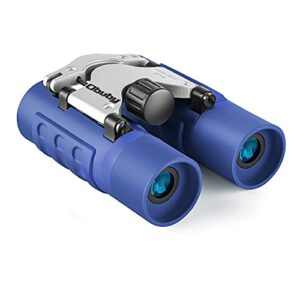
The Obuby Kids 8X Binoculars hit a sweet spot that’s harder to find than you’d think at this price.
8× magnification with a 21mm lens keeps things compact without sacrificing a reasonably clear view. The rubber-armored body cushions the inevitable drops, and the center focus wheel is easy enough for small hands to manage solo. Diopter adjustment lets you fine-tune clarity per eye — a genuinely useful detail. Comes with a neck strap and protective case.
Recommended for ages 3–12.
| Best For | Kids aged 3–12 who love the outdoors and are ready to start exploring birds, wildlife, and the night sky on their own. |
|---|---|
| Magnification | 8× |
| Rubber Protection | Rubber armor body |
| Neck Strap | Nylon lanyard included |
| Carrying Bag | Hard carrying case |
| Recommended Age | 3–12 years |
| Eye Protection | Soft rubber eyepiece protection |
| Additional Features |
|
- Tough rubber-armored body handles drops and rough handling without a fuss
- 8× magnification with a BAK4 FMC prism gives surprisingly clear views for the price
- Lightweight and compact enough to toss in a backpack, plus it comes in 13 color options
- Not waterproof, so rainy hikes or dewy mornings could be a problem
- The rubber eyepiece may arrive slightly bent and need reshaping out of the box
- The basic nylon neck strap can get uncomfortable quickly during longer outdoor trips
5. Pink Kids Binoculars 8×21
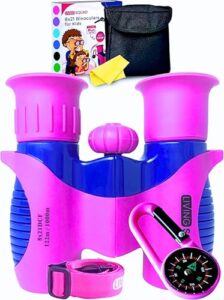
Sometimes the color really does matter — and for many kids, pink binoculars mean the difference between leaving them in a drawer and actually using them.
These pink binoculars built for little hands also feature rubber armor coating and thumb grip indents that make them easy to hold — even for kids who tend to squirm.
These 8×21 binoculars deliver a clear, upright image through BAK4 prisms and FMC multi-coated lenses. The rubberized body absorbs knocks, the adjustable eyepiece spacing fits small faces, and the center focus knob is straightforward enough for young hands. Lightweight at under 10 oz, they’re easy to carry on any outing.
Recommended for ages 3–12.
| Best For | Kids ages 3–12 who are drawn to exploring nature and need a durable, easy-to-use pair of binoculars that they’ll actually want to take outside. |
|---|---|
| Magnification | 8× |
| Rubber Protection | Shock-proof rubber armor |
| Neck Strap | Breakaway safety strap |
| Carrying Bag | Belt case included |
| Recommended Age | 3–12 years |
| Eye Protection | Soft rubber eyecups |
| Additional Features |
|
- Lightweight and compact at under 10 oz, so it fits comfortably in a child’s hand or backpack
- Shock-proof rubber armor and a breakaway safety strap make it genuinely kid-proof for rough outdoor use
- Comes with a full accessory kit — belt case, carabiner, cleaning cloth, and adjustable strap — so everything is ready to go out of the box
- The 21 mm objective lenses limit how well it performs in low light, so it’s really a daytime-only option
- Not waterproof, meaning a rainy hike or accidental splash could damage the lenses or housing
- Optics may fog or haze over time with heavy use or moisture exposure, which could shorten the lifespan
6. BeBison Kids 8×21 Binoculars
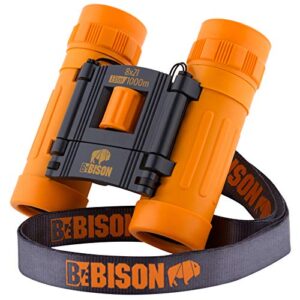
The BeBison Kids 8×21 Binoculars are a solid everyday pick for young explorers who are just getting started. The rubberized grip absorbs drops without drama, the center focus wheel sits right where small fingers naturally rest, and adjustable eyepiece spacing means the fit actually works for different‑sized faces.
At 8x magnification with military‑grade, anti‑reflective glass, the view is sharp without being overwhelming.
They’re not waterproof, so skip them on rainy days — but for backyard birding or trail walks, they get the job done.
| Best For | Kids ages 4 and up who love outdoor adventures like bird watching, hiking, or backyard nature exploration. |
|---|---|
| Magnification | 8× |
| Rubber Protection | Rubber-covered exterior |
| Neck Strap | Wide adjustable strap |
| Carrying Bag | Cotton-nylon pouch |
| Recommended Age | 4+ years |
| Eye Protection | Soft rubber eyepieces |
| Additional Features |
|
- Rubberized exterior and metal frame handle drops and rough play without fuss
- Military-grade, anti-reflective glass delivers sharp, clear images even for young eyes
- Lightweight and ergonomic design fits small hands comfortably for long stretches of use
- Not waterproof, so rainy days or high humidity can affect performance
- 8x magnification may fall short for spotting distant wildlife compared to higher-power options
- The actual product runs about 25% smaller than it appears in online photos
7. Makino Kids Outdoor Binoculars
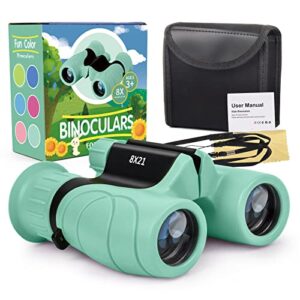
The Makino Kids Outdoor Binoculars are a dependable first pair for kids aged 5–12 who are ready to start exploring seriously. The rubberized grip and slim body keep things secure even with sweaty hands, while the center focus wheel is sized for smaller fingers.
Optical coatings reduce glare and keep colors true to life. They handle light rain but aren’t waterproof, so keep that in mind on overcast hiking days.
| Best For | Kids aged 5–12 who love outdoor adventures like hiking, birdwatching, and camping and are ready for their first real pair of binoculars. |
|---|---|
| Magnification | 8× |
| Rubber Protection | Rubberized outer shell |
| Neck Strap | Adjustable strap included |
| Carrying Bag | Soft carrying bag |
| Recommended Age | 3–12 years |
| Eye Protection | Soft rubber eyepiece padding |
| Additional Features |
|
- Soft rubberized shell with a non-slip grip keeps the binoculars secure even in active little hands
- Lightweight build (under 250 g) with a neck strap and carrying bag makes it easy to bring anywhere
- Adjustable focus wheel and diopter deliver a clear 8× view sized for younger users
- Lenses can fog up in cold or humid conditions, which may interrupt outdoor use
- Focus adjustment can be tricky for children under 5
- May show wear faster than expected with heavy or rough daily use
8. Kids Waterproof 8x Binoculars
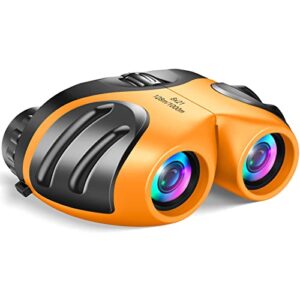
If your kid often treats gear like a crash test dummy, these might be worth a look. The Kids Waterproof 8x Binoculars are built with rubber armor coating that resists splashes and light rain, plus O-ring seals around the objective lenses to keep moisture out.
At 8×21 magnification, they bring birds and bugs into sharp focus without overwhelming small hands. The oversized focus wheel and non-slip grip make them genuinely easy for kids to use independently.
| Best For | Kids who love outdoor adventures like hiking, bird-watching, or camping and need durable, easy-to-use binoculars that can handle rough treatment. |
|---|---|
| Magnification | 8× |
| Rubber Protection | Shock-proof rubber armor |
| Neck Strap | Included |
| Carrying Bag | Soft carrying bag |
| Recommended Age | Kids and adults |
| Eye Protection | Soft rubber-surrounded eyepieces |
| Additional Features |
|
- Shock-proof rubber armor and a non-slip ergonomic grip make these tough enough for active, clumsy kids
- FMC green multi-layer coating delivers crisp, colorful views great for wildlife and nature exploration
- Soft rubber eyepieces protect little eyes and faces during use
- The focus adjustment can slip, meaning kids may need to refocus more often than ideal
- Some users have reported scratches or internal alignment problems after drops, despite the rugged design
- On the heavier side for a kids’ binocular, which could make long sessions tiring for smaller children
9. Blackice Kids 8×21 Binoculars
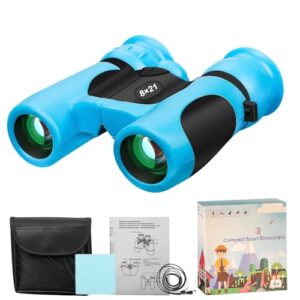
The Blackice Kids 8×21 Binoculars round out this list as a solid, no‑fuss starter option. BAK4 Porro prisms with blue coating deliver surprisingly clear, bright images for the price, and the fully rubber‑armored body copes with the inevitable drops without drama.
Focus is simple enough for small hands to manage independently.
The set includes a neck strap, cleaning cloth, and carry pouch — everything you need out of the box. Just note the neck strap can be flimsy, so an upgrade is worth considering.
| Best For | Young kids aged 3 and up who love exploring the outdoors — whether hiking, birdwatching, or spotting wildlife on camping trips. |
|---|---|
| Magnification | 8× |
| Rubber Protection | Fully rubber-coated body |
| Neck Strap | Adjustable strap included |
| Carrying Bag | Soft carrying bag |
| Recommended Age | 3+ years |
| Eye Protection | Soft flexible rubber eye cups |
| Additional Features |
|
- BAK4 Porro prisms with blue coating produce clear, bright images that genuinely punch above their price point
- Fully rubber-armored body handles drops and bumps without missing a beat — perfect for active, rough-and-tumble kids
- Easy independent focus adjustment means children can use them confidently on their own
- The neck strap is known to be flimsy and may break quickly, so a replacement is often worth budgeting for
- Some units develop diopter sleeve issues over time, including loosening and residue buildup
- Image quality won’t satisfy older kids or adults looking for sharper, more precise optics
How to Choose Kids Binoculars

Not every pair of binoculars works for every kid, and picking the wrong one can turn a fun outing into a frustrating squint-fest. A few key factors — age, fit, weight, budget, and what you’re actually planning to do with them — will point you straight to the right choice. Here’s what to look for before you buy.
Age and Skill Level
Age matters more than you’d think when picking age-appropriate binoculars.
Preschool-age kids (4–6) do best with low magnification — a 4×30 or 6×21 keeps images steady and frustration low.
As coordination improves around 7–9, 6×30 to 8×25 becomes manageable.
By 10–12, 8×32 binoculars suit their steadier hands and longer attention spans perfectly.
Size and Hand Comfort
Once you’ve matched magnification to age, the next question is whether the binoculars actually fit small hands.
Ergonomic grip textures — rubberized surfaces, thumb indents, finger ridges — make a real difference when hands are sweaty or moving fast.
A compact design with closely spaced eyepieces also helps younger kids align both eyes comfortably without awkward contortions.
Weight for Easy Carrying
Grip matters, but so does weight — and this is where many parents overlook something important. Lightweight binoculars in the 200–300 gram range genuinely reduce viewing fatigue, letting kids stay focused longer.
Most compact designs use lightweight plastics that enable one-handed use without strain. That makes portable binoculars a practical win for nature walks, not just a nice-to-have.
Choosing models under 300 g aligns with recommendations that lighter devices reduce fatigue during extended use.
Price and Long-term Value
Weight helps, but so does price — and they’re more connected than you’d think. Budget-friendly options ($15–$40) cover the basics, though plastics wear quickly.
Midrange models ($40–$80) offer rubberized grips, better durability, and often a two-year warranty. That’s where most families find the sweet spot: solid optics without overpaying for features a seven-year-old won’t notice.
Birdwatching Suitability
Birdwatching puts everything to the test.
You need smooth focus wheels for tracking moving birds without losing them behind a branch, plus wide field of view to spot movement before a bird disappears.
Feather color perception improves with coated lenses, and a built-in compass helps young explorers navigate trails confidently — small features that make birdwatching equipment genuinely useful for kids.
Kid-Friendly Binocular Features
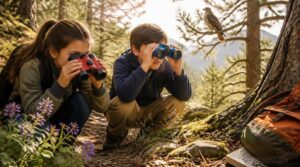
Not all binoculars are built with kids in mind, and that gap shows up fast once a child actually tries to use a pair. The right design details make a real difference — turning something frustrating into something a kid will actually want to carry outside. Here are the features worth looking for.
Soft Rubber Eyepieces
Soft rubber eyecups might seem like a minor detail, but they make a real difference for kids. Cushioned rubber eyepieces mold gently to a child’s face, reducing pressure during long viewing sessions and helping seal out stray light for a cleaner image. They also offer solid impact absorption, protecting eyes if the binoculars knock against a face mid-adventure.
Eyewear compatibility matters too — the pliable material flexes around glasses without digging in, so kids who wear corrective lenses don’t get left out. Many models include removable cups, which simplifies hygiene maintenance after muddy nature walks. A quick wipe-down, and they’re ready for the next outing.
Simple Center Focus
A single center focus wheel is one of those small design decisions that separates a frustrating toy from a genuinely useful pair of best binoculars for kids. Instead of fiddling with two separate barrels, your child turns one knob — both eyes lock onto the target together.
That adjustment stability means less overshooting, clearer views, and more time actually watching the bird.
Shockproof Outer Coating
Kids drop things. That’s not a character flaw — it’s physics.
Shockproof outer coating is what stands between a tumble onto rock and a ruined lens. The rubberized layer absorbs impact, while reinforced polycarbonate spreads the force away from optics. Three reasons it matters:
- Corner buffering zones protect the most vulnerable drop points
- UV-stabilized materials prevent cracking after sun exposure
- Textured grip surfaces reduce fumbling on sweaty hands
Waterproof Protection
Rain, mud puddles, and the occasional "accidental" stream crossing are just part of the deal when kids explore outdoors. That’s why waterproof protection matters.
Look for IPX7-rated binoculars — they handle immersion up to a meter deep. Nitrogen-purged waterproofing prevents internal fogging when temperatures shift. After wet adventures, rinse and dry the seals to keep hydrophobic lens coatings performing long-term.
Secure, Easy-grip Design
A good grip isn’t a luxury — it’s what keeps binoculars in small hands and not on the ground. Finger-holding ridges, tactile grip patterns, and non-slip rubber grips work together to give kids real control.
Balanced weight distribution and ergonomic handle shapes reduce fatigue fast. Features like easy focus knobs and shockproof shells round out a genuinely child-friendly design.
Magnification and Optics Explained
The numbers on a pair of binoculars aren’t random — they actually tell you a lot about whether they’ll work for your kid. Knowing what to look for makes the difference between a pair that sits in a drawer and one that goes on every hike. Here’s what those specs really mean, and how to use them.
What 8×21 Means
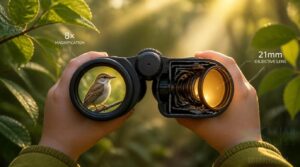
Think of binoculars like a fraction: 8×21 means 8× optical magnification with a 21mm objective lens. The lens diameter directly controls brightness — smaller means less light, but also less bulk.
For daytime birdwatching, that’s a fair trade. The exit pupil works out to roughly 2.6mm, which is fine in sunshine but noticeably dim at dusk.
Best Magnification for Children

Once you move past exit pupils and lens diameters, the magnification number is really what shapes the experience.
6x to 8x hits the sweet spot for most children — steady enough to hold still, bright enough to enjoy. Ten‑power can reveal tiny details, but it also amplifies every hand tremor.
For beginners, lower optical magnification wins on comfort every time.
Field of View Basics

Magnification tells you how close things look — field of view tells you how much you can see at once.
Think of it like a window. A wider window means more scene, faster spotting. For kids tracking moving animals, that visual area width matters more than power.
- Wider views improve target acquisition speed
- Scanning horizon skills develop naturally
- Optical performance stays balanced with a large field of view
Plastic Versus Glass Lenses

Field of view and lens material are two sides of the same coin.
With kids’ binoculars, plastic lenses win on safety — they’re impact-resistant and won’t shatter during rough play.
Glass offers sharper optical clarity, but it’s heavier and fragile.
For most children, quality plastic with scratch-resistant coatings hits the sweet spot: lighter, safer, and surprisingly capable.
Clear Focus for Birdwatching

Your kids’ binoculars make birdwatching less of a guessing game.
Steady viewing techniques, resting elbows or leaning against a tree, stop the shakes that cause motion blur.
Eye alignment tips matter: centering pupils on lenses sharpens distance tracking skills and reduces your eye strain.
Sharper, high resolution imaging turns nature observation into a real lesson, proving educational toys deliver skills.
Safety and Outdoor Learning Benefits

Getting a pair of binoculars into your kid’s hands is just the start — knowing how to use them safely and what to look for outside is what makes the difference. A few simple habits can protect their eyes, prevent accidents, and turn every backyard or trail into a real discovery. Here’s what to keep in mind.
Safe Strap Use
The strap is one of those things you don’t think about until something goes wrong. For toddlers, especially, always choose a breakaway design — it releases under pressure, so a sudden tug won’t become a hazard.
Keep the length short to avoid snagging on branches.
Check straps weekly for fraying, and practice the two-step on/off routine until it’s second nature.
Eye Safety Reminders
Binoculars bring the world closer — but a few simple habits keep young eyes safe while doing it.
- Never look at the sun through any lens, even briefly.
- Follow the 20-20-20 rule: every 20 minutes, rest eyes on something 20 feet away for 20 seconds.
- Check for cracked or chipped eyepieces before every session.
- Don’t share eyecups — germs transfer easily.
Backyard Birdwatching Activities
Your backyard is already a birdwatching classroom — you just need to make the most of it. Place a feeder 3 to 5 feet from windows so chickadees and sparrows land close enough for real detail. Keep a simple log of species, dates, and times. A shallow birdbath adds drinking and bathing action. Hand your child their binoculars and watch curiosity take over.
| Activity | What to Do | Learning Benefit |
|---|---|---|
| Feeder Watch | Track visiting species daily | Builds observation habits |
| Log & Sketch | Record birds by color and shape | Develops scientific thinking |
| Seasonal Check | Note which birds arrive each month | Introduces migration patterns |
Nature Walk Observation Skills
A nature walk turns into a real lesson the moment your child starts asking why.
Hand them their kid’s binoculars and shift the focus beyond birds — track wildlife signs like prints, scat, and nests. Notice leaf shapes and bark texture for plant identification. Read weather cues. Sketch quick field notes.
Patterns emerge, and suddenly nature exploration feels like detective work.
When children learn to ask why, nature exploration becomes detective work
STEM Learning Through Exploration
Binoculars are quietly one of the best STEM learning tools you can hand to a child.
Before a nature walk, have them write a simple hypothesis — "I think I’ll see more birds near the water" — then test it. They collect data on a basic observation sheet, compare results, and start building real scientific vocabulary without realizing it’s school.
Frequently Asked Questions (FAQs)
Is binoculars a good gift for kids?
Yes — kids binoculars make a genuinely great gift. They’re portable, instantly engaging, and quietly build observation skills every time a child steps outside. Few educational toys earn that kind of natural enthusiasm.
Can kids use binoculars with glasses on?
Absolutely — glasses aren’t a dealbreaker. Look for adjustable eyecups and long eye relief so your child sees the full picture without dark edges. A quick diopter tune corrects any focus difference between eyes.
How do you clean kids binoculars properly?
Wipe lenses gently with a microfiber cloth in circular motions. Apply lens cleaning solution to the cloth — never directly onto the glass. Use a blower first for loose dust, and store in a padded case.
Whats the ideal interpupillary distance for children?
For most kids, ideal IPD falls between 40–60 mm. It grows roughly 1–2 mm yearly through elementary school, reaching around 52–58 mm by age ten — so always verify adjustability before buying.
Are theater binoculars suitable for outdoor use?
Theater binoculars technically work outdoors, but barely. Limited light gathering, low magnification, and no weatherproofing make them a poor fit — fine for a sunny afternoon glance, but not for serious nature observation or kids’ outdoor adventures.
Do kids binoculars work in low light?
Yes, but with limits. Larger objective lenses and light transmission coatings help gather more light at dusk, revealing silhouettes and movement — though fine detail fades. Lowlight performance improves with steady hands.
Can kids use binoculars for stargazing at night?
Absolutely — and young amateur astronomers often get their start this way. An 8×21 or 8×30 binocular paired with a simple star map makes Moon craters and bright planets surprisingly easy to spot.
How do I clean my childs binoculars safely?
Use a dry microfiber cloth in gentle circular motions, blowing off dust first. Apply lens cleaning solution to the cloth — never directly to the lens — to protect coatings.
What accessories pair well with kids binoculars?
A lens cleaning kit, adjustable neck strap, and protective carrying pouch round out any kit nicely. Toss in a compass and magnifying glass for extra trail fun.
How long do budget kids binoculars typically last?
Most budget optical gear lasts 1 to 3 years with regular use. Rough handling, moisture, and worn focus mechanisms cut that short — but basic care and a protective case can stretch every season further.
Conclusion
The trail doesn’t wait for squinting.
When your kid raises the right pair of binoculars for kids and a red-tailed hawk snaps into sharp focus—wings spread, completely still against the sky—something clicks that no screen ever quite captures.
That moment builds curiosity, sharpens observation, and turns a simple walk into a real adventure.
Pick the pair that fits their hands, trust their instincts, and let the field come to them.
- https://www.foreseenoptics.com/the-best-binoculars-for-kids-in-2026
- https://www.space.com/best-binoculars-for-kids
- https://www.digitalcameraworld.com/buying-guides/best-binoculars-for-kids
- https://www.livescience.com/best-binoculars-for-kids.html
- https://ligo.co.uk/blogs/binoculars/rspb-puffin-jr-childrens-binoculars-review