This site is supported by our readers. We may earn a commission, at no cost to you, if you purchase through links.
 That faint green shimmer creeping across your bird bath isn’t harmless—it’s a breeding ground for bacteria that can sicken or kill the birds you’re trying to help. Within just 72 hours of neglect, invisible biofilm coats the basin, while mosquito larvae hatch in standing water after only a week. Your good intentions can quickly turn into a health hazard for local wildlife.
Proper bird bath maintenance and care transforms this risk into real support for your feathered visitors, protecting them from disease while encouraging more species to your yard. The difference between a lifeline and a danger zone comes down to a few simple habits that take minutes but make all the difference.
Table Of Contents
Key Takeaways
- Dirty bird baths spread deadly diseases like salmonellosis and trichomoniasis through stagnant water, while mosquito larvae hatch within 7-10 days and carry West Nile virus to both birds and humans.
- Clean your bird bath every 1-2 days in summer heat and every 1-2 weeks during cooler seasons, using natural solutions like distilled white vinegar (97% algae reduction) or 3% hydrogen peroxide (99.9% effectiveness) instead of harsh chemicals.
- Placement matters significantly—shaded locations cut algae growth by 65%, while adding moving water features like fountains or wigglers reduces mosquito larvae by 95% and increases bird visits by 50%.
- Regular maintenance with proper scrubbing, thorough rinsing, and daily water changes during warm weather prevents 90% of harmful bacteria and creates a safe water source that attracts 25% more bird species to your yard.
Why Bird Bath Maintenance Matters
Your bird bath isn’t just a decorative garden feature—it’s a lifeline for local birds. When you keep it clean, you protect visiting birds from diseases and create a safe space they’ll return to again and again.
Let’s look at three key reasons why regular maintenance makes all the difference.
Impact on Bird Health and Safety
Water quality directly affects bird health and safety in ways that can be life-threatening. Contaminated bird baths put your backyard visitors at risk through:
- Disease transmission – Stagnant water harbors Salmonella bacteria and parasites like Trichomonas, causing salmonellosis and trichomoniasis that spread rapidly among congregating species
- Mosquito breeding – Female mosquitoes lay eggs in standing water within days, creating vectors for West Nile virus
- Behavioral impacts – Sick birds show lethargy and avoid dirty water sources, reducing hydration when they need it most
Preventing Algae and Bacteria Growth
Sunlight acts like a green light for algae, with direct exposure over six hours daily spiking growth rates by 80%. Shaded placement cuts this back by 65%, while bacteria thrive in still water, doubling every day or two. Biofilm—a slimy layer of microbes—forms within 72 hours if you skip cleaning.
Regular water changes every 24 to 48 hours wipe out over 90% of these microbes, and water circulation systems reduce algae by 80%. Copper elements like pre-1982 pennies release ions that curb algae by 50%, and weekly scrubbing removes 60% of the nutrients fueling regrowth.
| Prevention Method | Algae Reduction | Bacteria Control |
|---|---|---|
| Shaded placement | 65% decrease | Limits warm-water growth |
| Water circulation | 80% decrease | 90%+ microbe reduction |
| Copper elements | 50% decrease | Inhibits biofilm |
| Daily water changes | 70–90% decrease | 90%+ pathogen removal |
| Weekly scrubbing | 60% nutrient removal | Disrupts biofilm formation |
Mosquito and Disease Control
Standing water breeds mosquitoes in 7–10 days, making bird baths prime spots for disease vectors like West Nile virus. Change water daily to prevent mosquito larvae from developing, and add water agitation devices to disrupt egg-laying.
Bti application targets larvae safely without harming birds, while natural predators encourage larvae consumption.
Regular cleaning blocks avian encephalitis spread and stops stagnant water from becoming a health hazard for both birds and humans.
How Often to Clean Your Bird Bath
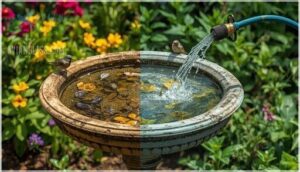
Knowing when to clean your bird bath is just as important as knowing how. The right schedule depends on your local weather, the season, and how quickly the water gets dirty.
Let’s look at three key factors that will help you determine the best cleaning routine for your specific situation.
Seasonal Cleaning Recommendations
Your cleaning schedule should shift with the seasons to match bird activity and environmental conditions.
In spring, clean your bird bath every one to two weeks as breeding season ramps up. Summer heat demands daily or every-other-day cleaning to stop bacteria and algae from taking over. Autumn prep involves biweekly scrubbing as temperatures cool and migration begins. Winter care requires weekly attention if you’re using a heater.
General indicators like cloudy water or slimy surfaces tell you it’s time to act, regardless of your routine.
Climate and Location Considerations
Where you place your bath and what your local weather brings both shape how often you need to clean. Regional climate considerations and temperature effects matter more than you might think.
- Urban vs. Rural: Urban birdbaths pick up pollutants like hydrocarbons faster, needing cleaning every one to two days, while rural baths collect leaves and sediment after storms.
- Temperature Effects: When temperatures exceed 30 °C, replace water daily because summer heat speeds evaporation and bacteria growth. In freezing climates, use heaters to prevent ice below 0 °C.
- Humidity Levels: High humidity above 60 % drives faster algae growth, requiring weekly scrubbing. Arid regions lose over 1 cm of water daily through evaporation.
- Sunlight Exposure: Direct sun raises water temperature by 8–10 °C and doubles algae growth, while shade keeps water cooler and cleaner.
Warm climates with standing water also attract mosquitoes within 48–72 hours, increasing regional disease risks. During winter months, heated baths need weekly checks, but seasonal maintenance shifts to daily or every-other-day cleaning during peak summer.
Signs Your Bird Bath Needs Cleaning
Even when bird droppings or debris start showing up, you mightn’t notice right away that water discoloration signals a problem. Cloudy water appears within two to three days during summer, while algae formation creates green or red films within 48 to 72 hours under sunlight.
Watch for changes in bird behavior, like hesitancy at the basin edge, because contamination discourages visits. Insect presence, especially mosquitoes after 48 hours, reveals stagnant conditions.
Residue buildup and mineral deposits form visible rings indicating algae growth requires immediate attention.
Essential Tools and Safe Cleaning Solutions
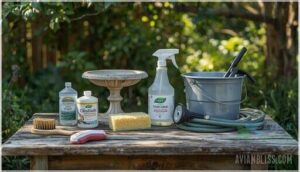
You’ll need the right tools and safe cleaning products to keep your bird bath in good shape without putting birds at risk. The tools are simple and inexpensive, and the cleaning solutions work just as well as harsh chemicals without the danger.
Here’s what you should have on hand before you start cleaning.
Recommended Cleaning Tools
You need the right tools to do the job safely and effectively. Start with a heavy-duty scrub brush or nylon-bristled scrub brush, which 93% of bird bath hygiene guides recommend for removing algae and organic buildup. Rubber gloves protect your hands from bacteria and contaminants, reducing pathogen transmission risk by up to 82%.
Use a dedicated bucket for mixing cleaning solutions and rinsing, with separate containers for clean and dirty water. A garden hose with an adjustable nozzle helps rinse away debris efficiently, and 68% of commercial cleaning kits include brushes, sponges, and biodegradable cleaning products designed specifically for bird baths.
Natural Cleaning Solutions for Bird Baths
You want solutions that work without harming your feathered visitors. Natural cleaning solutions for bird baths keep the water safe while eliminating harmful contaminants.
- Distilled white vinegar – Mix one part vinegar to nine parts water for a 97% reduction in algae and bacterial biofilm after a 10-minute soak, with vinegar efficacy proven in eliminating mineral buildup within 15 to 20 minutes.
- Hydrogen peroxide (3%) – Apply directly for 99.9% green algae reduction in 5 minutes, offering peroxide benefits that maintain water clarity 7 days longer than water alone.
- Copper pennies or strips – Drop one in the basin to slow algae growth by 70% through copper integration, reducing cleaning frequency by half.
- Baking soda paste – Scrub stubborn stains with this gentle abrasive, or add mild biodegradable dish soap (one drop per liter) for soap safety that removes 95% of oil residue. Boost prevention with plant additions like floating water hyacinth, which absorbs nutrients fueling algae.
Step-by-Step Guide to Cleaning Bird Baths
Cleaning your bird bath doesn’t have to be complicated if you follow a simple routine. The process breaks down into four straightforward steps that keep the water fresh and safe for your feathered visitors.
Let’s walk through each one so you can maintain a healthy bathing spot year-round.
Dumping Old Water and Debris Removal
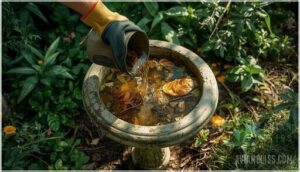
Your first step in cleaning bird baths is dumping all the stagnant water. This simple act addresses waterborne diseases, mosquito prevention, and algae control at once. Stagnant water breeds mosquitoes within a week and harbors pathogens that threaten bird safety.
Remove the old water every two to three days, increasing cleaning frequency during warm weather. While dumping, clear out leaf debris and droppings to guarantee effective cleaning.
These steps for cleaning bird baths protect visiting birds from salmonellosis and other illnesses.
Scrubbing The Basin Effectively
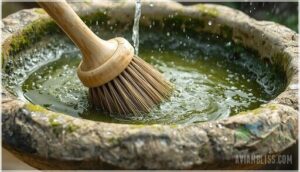
After you dump the water, you need to scrub the basin to remove biofilm and algae. Use a stiff-bristled scrub brush to scour the entire surface for three to five minutes. This physical action removes up to ninety percent of visible algae and bacteria-laden films.
Apply your cleaning solution during scrubbing, letting it dwell on stubborn spots for ten minutes. Focus on corners where contaminants hide when cleaning bird baths.
Rinsing and Drying Properly
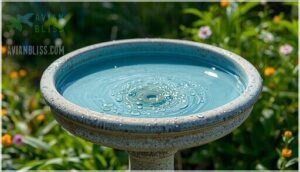
Once you’ve scrubbed away the grime, thorough rinsing removes any cleaning solution or vinegar residue that could harm birds. Rinse the basin under steady water flow for at least thirty seconds, ensuring no odor remains and the water runs clear. This residue removal step protects feather oils and prevents toxicity.
After rinsing, let your bird bath air-dry completely in direct sunlight for thirty to sixty minutes. This UV disinfection kills up to ninety-nine percent of bacteria on exposed surfaces, creating safe water conditions for your feathered visitors.
Refilling With Clean Water
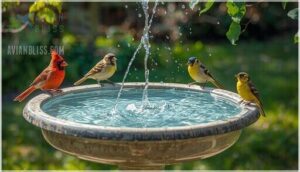
After your bird bath dries, fill it with fresh water to about two inches deep, perfect for most songbirds. Water quality matters because stagnant water fosters harmful bacteria like Salmonella, increasing infection risks by up to forty percent in heavily visited baths.
- Refill daily during summer when evaporation and bird activity peak
- Use filtered or dechlorinated water to prevent nutrient imbalances
- Add drippers or bubblers to maintain continuous freshwater sources and improve aeration
- Monitor clarity levels to guarantee safe water conditions for bird health
Consistent refilling breaks pathogen life cycles and can attract twenty-five percent more species to your maintained bath.
Preventive Maintenance and Best Practices
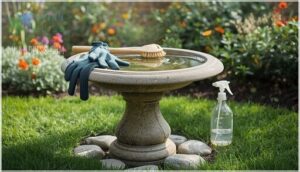
Keeping your bird bath clean is just the start. A few simple habits and tools can help you prevent problems before they begin.
Here’s how to make maintenance easier and keep your feathered visitors safe year-round.
Minimizing Algae and Contaminants
You can cut algae growth dramatically by placing your bird bath in a shaded spot and dumping the water daily during warm months. Adding a copper penny to the basin works as a natural algicide, while frequent water changes lower algae and bacteria by up to 80%.
Remove leaves and droppings before refilling to prevent biofilm buildup, and consider adding a wildlife-safe enzyme to break down contaminants naturally.
Using Bird Bath Accessories
Adding accessories like solar fountains, water wigglers, or heated baths transforms your bird bath into a safer, more inviting space. Solar fountains increase bird visits by up to 50%, while moving water from wigglers cuts mosquito larvae by 95%. Heated baths prevent freezing in winter, attracting more species when natural water sources disappear.
These bird bath accessories also reduce bacteria growth by over 40%, making birdbath maintenance easier year-round.
Winter and Summer Maintenance Tips
Seasonal care demands shift dramatically throughout the year. During winter bird bath maintenance, heated baths or submersible heaters keep water temperature between 4–10 °C, preventing freezing and supporting overwintering species. Position your bath in sunny, sheltered spots to retain heat and reduce freeze time by 20–25%.
In summer bird bath maintenance, place your clean birdbath in shade to cut evaporation by 50% and slow algae control challenges. Replace water daily when temperatures exceed 30 °C. Bath placement near shrubs offers predator control while moderating climate adaptation needs year-round.
Expert Recommendations for Disease Prevention
Regularly, disease transmission through shared water demands vigilant pathogen control to protect bird health and avian safety. The CDC recommends wearing disposable gloves during water sanitation to reduce H5N1 avian influenza exposure risk.
Remove feeders and baths entirely during active disease outbreaks to stop disease prevention in birds from failing. Watch for lethargic behavior at your bath—it signals local infection spread.
Separate wild bird and domestic poultry water sources completely, preventing cross-species flu transmission. Weekly bleach disinfection controls algae issues while eliminating biofilm that harbors Salmonella within 48 hours, ensuring effective water quality management and mosquito prevention.
Proper bird bath hygiene is essential for maintaining a safe environment for birds.
Frequently Asked Questions (FAQs)
What materials are safest for bird bath construction?
Choose tempered glass, lead-free ceramic, or food-grade plastics for your bird bath basin. These bird-friendly materials resist bacteria and protect bird health. Avoid toxic material risks like lead or zinc, which harm birds.
When selecting materials, consider the importance of bird bath safety to guarantee a healthy environment for the birds.
How deep should a bird bath be?
Your bird bath should be 1 to 2 inches deep for small birds’ safety. This depth prevents drowning while allowing easy access.
If you want to accommodate larger birds, you can include a deeper section of 2 to 3 inches.
Where should I place my bird bath?
Placing your bird bath seems simple, but the right spot makes all the difference. Position it 6 to 10 feet from shrubs or trees for quick predator avoidance, yet at least 3 feet from windows for window safety.
Shaded areas reduce algae growth and keep water cool, making your water source location ideal for backyard bird care and bird safety.
Can I use tap water in bird baths?
Yes, tap water works fine for bird baths. Municipal water contains chlorine or chloramine, but these chemicals dissipate if you let the water sit uncovered for 24-48 hours.
For immediate use, activated carbon filters effectively remove these chemicals, ensuring safe bird bath water quality and protecting bird health.
How do I attract more birds to my bath?
Think of moving water as nature’s dinner bell—it catches both the eye and ear. Adding a dripper or fountain to your water source for birds dramatically increases visitation rates.
Ideal placement near cover, shallow basin design with 1-2 inch water depth, and textured surfaces turn your bird bath into prime bird habitat.
Conclusion
Think of your bird bath as a water cooler in the wild—everyone gathers there, but nobody wants to drink from a contaminated source. Regular bird bath maintenance and care isn’t just about aesthetics; it’s about creating a safe haven where birds can thrive without risk.
A few minutes of weekly attention prevents disease, protects wildlife, and ensures your yard remains a trusted stop on their daily route. Clean water isn’t a luxury for birds—it’s survival, and you hold the key.
- https://www.audubon.org/news/three-easy-important-ways-keep-your-bird-feeder-disease-free
- https://www.birdwatchingdaily.com/beginners/birding-faq/how-often-to-clean-your-birdbath-in-summer/
- https://njaudubon.org/caring-for-your-backyard-birds/
- https://wildlife.ca.gov/COQA/should-i-take-down-my-bird-feeders-because-of-avian-influenza
- https://www.cdc.gov/bird-flu/risk-factors/bird-hobbyists.html