This site is supported by our readers. We may earn a commission, at no cost to you, if you purchase through links.
 You’ve got options in the area of bird bath water treatment. Enzyme cleaners break down organic waste naturally, targeting bird droppings and algae without harsh chemicals that harm wildlife. These biological treatments use beneficial bacteria to digest contamination while maintaining safe water quality.
Change water every 2-3 days in warm weather, and watch for cloudy water or green tints as warning signs. Strategic placement away from feeders reduces debris, while partial shade controls algae growth.
Regular maintenance prevents disease transmission—contaminated water spreads deadly pathogens like Salmonella between bird populations. The secret lies in understanding which enzyme formulas work best for different contamination challenges.
Table Of Contents
Key Takeaways
- Change your bird bath water every 2-3 days during warm weather to prevent harmful bacteria like Salmonella from spreading between bird populations—dirty water can kill your feathered visitors.
- Use enzyme cleaners as nature’s cleaning crew that break down bird droppings and algae into harmless byproducts without toxic chemicals that could harm wildlife drinking the water.
- Position your bird bath away from feeders and trees in partial shade to reduce debris contamination and control algae growth, cutting your cleaning time in half.
- Watch for cloudy water, green tints, or slimy algae coatings as warning signs that it’s time to clean—birds will instinctively avoid contaminated water sources.
Why Bird Bath Water Gets Dirty
Your bird bath turns into a murky mess faster than you’d expect because it’s basically a magnet for contaminants. Bird droppings, fallen seeds, leaves, and airborne dust all combine with stagnant water to create the perfect breeding ground for algae and harmful bacteria.
Common Sources of Contamination
Your bird bath becomes a magnet for contamination from multiple sources. Bird droppings create fecal contamination that breeds harmful bacteria in stagnant water. Here’s what pollutes your water:
- Debris accumulation from nearby trees dropping leaves and seeds
- Algae growth thriving in warm, nutrient-rich conditions
- Water pollution from dust, pollen, and general environmental particles
This contamination turns your bird bath into a breeding ground for bacterial infection.
Impact on Bird Health and Safety
Contaminated water threatens your feathered visitors’ well-being in ways you mightn’t expect. Dirty bird baths become breeding grounds for deadly pathogens like Salmonella and avian pox, compromising Bird Health and Safety through poor Water Quality. These Health Risks affect Feather Health and overall Avian Safety, making clean water essential for algae prevention and proper bird bath maintenance. Regular cleaning and maintenance are vital to prevent the spread of diseases, and learning about safe water practices can help mitigate these risks.
| Health Risk | Cause | Impact |
|---|---|---|
| Bird Diseases | Salmonella, Trichomonas | Population decline, mortality events |
| Pathogen Spread | Stagnant water, organic debris | Disease transmission between species |
| Toxin Exposure | Chemical residues, algae blooms | Feather damage, immune suppression |
| Dehydration Risk | Avoiding contaminated sources | Heat stress, poor maintenance |
| Breeding Disruption | Unsafe water conditions | Reduced reproductive success |
How Often to Clean and Change Bird Bath Water
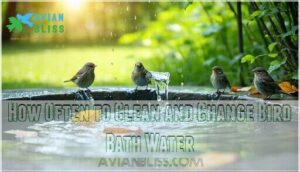
You’ll need to refresh your bird bath water every 2-3 days during warm weather, though heavy bird traffic or nearby feeders can make daily changes necessary.
Watch for cloudy water, floating debris, or that telltale green tint that signals it’s time to grab your scrub brush and start fresh.
Factors Affecting Cleaning Frequency
Several factors determine your bird bath maintenance schedule and water quality needs. Usage patterns matter most – busier backyard flocks require more frequent cleaning schedules. Environmental factors like temperature and humidity accelerate algae growth during warm months. Hot weather demands daily water changes and scrubbing.
Your bath location influences contamination rates – spots near feeders or under trees collect more debris, affecting cleaning bird baths frequency. Regular cleaning is essential for maintaining clean bird health.
Signs Your Bird Bath Needs Cleaning
Your bird bath’s telling you it’s time for action when you spot these telltale signs. Water clarity drops dramatically, and algae blooms create that familiar green film. Watch for changes in bird behavior too—they’ll avoid dirty water instinctively.
- Murky water that looks like green soup instead of crystal-clear refreshment
- Slimy algae coating the basin edges like unwelcome party crashers
- Birds landing but refusing to drink or bathe in the contaminated water
- Visible debris floating on the surface or settled at the bottom
- Unpleasant odors wafting from your once-flawless bird bath
Clean bird bath maintenance prevents these issues from spiraling out of control. Regular water hygiene checks are essential to guarantee the health and safety of visiting birds.
What Are Enzyme Cleaners and How Do They Work?
Think of enzyme cleaners as nature’s own cleaning crew that work around the clock in your bird bath. These specialized proteins break down organic waste like bird droppings, leaves, and algae into harmless byproducts such as carbon dioxide and water.
This process keeps your feathered visitors’ drinking spot fresh without harsh chemicals, ensuring a safe and clean environment for the birds.
Enzyme Action Against Algae and Contaminants
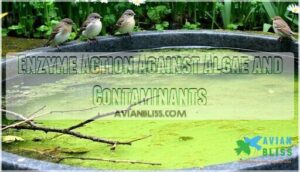
Think of enzymes as nature’s cleaning crew that work around the clock. These specialized proteins break down organic waste through hydrolysis and oxidation, transforming bird droppings, leaves, and algae into harmless CO₂ and water.
Your enzyme cleaner targets the polysaccharide matrix that algae creates, disrupting biofilms while beneficial bacteria flourish. This microbial balance keeps contaminant removal steady without harsh algaecide chemicals, making water purification gentle yet effective for ongoing bird bath maintenance.
Effective water circulation systems are also essential in preventing the growth of algae and maintaining a healthy environment for birds.
Safety and Environmental Considerations
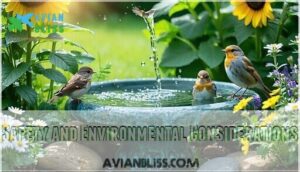
When selecting an enzyme cleaner, you’re making a choice that affects your wildlifefriendly yard. Quality enzyme cleaners offer a natural solution that’s eco-friendly, avoiding toxic chemicals that create water pollution.
These products support wildlife protection while reducing algae growth without environmental impact. Your clean naturally approach protects birds from harmful residues that chemical alternatives leave behind.
By using enzyme cleaners, you’re promoting the use of eco friendly products that are better for the environment.
Choosing The Best Bird Bath Water Treatment
You’ll want to pick an enzyme cleaner that’s safe for birds to drink and won’t harm visiting wildlife if they accidentally consume treated water.
The best products combine strong algae-fighting power with animal-safe ingredients, so you can keep your bird bath sparkling without worrying about your feathered friends’ health.
What to Look for in Enzyme Cleaners
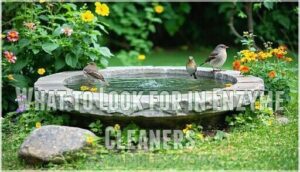
Look for enzyme cleaners labeled "safe for all wildlife" with food-grade, biodegradable ingredients. Birdbath Protector and Carefree Enzymes rank highly for Environmental Impact and Enzyme Safety in backyard settings.
Check Consumer Reviews for Cleaner Effectiveness against algae and organic matter. Consider Product Cost – concentrates offer better value than ready-to-use solutions.
Regular cleaning using proper cleaning methods is essential to maintain a healthy bird bath.
Tips for Keeping Bird Bath Water Clean Longer
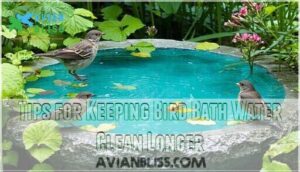
You don’t need to constantly battle algae and debris if you know the right tricks for preventing contamination in the first place. Strategic placement away from feeders and trees, combined with simple maintenance habits, can keep your feathered friends’ water source fresher for days instead of hours.
Best Practices for Placement and Maintenance
Smart Bird Bath Placement makes all the difference in keeping your water clean longer. Position your bath away from feeders and trees to reduce debris contamination. Here’s what works:
- Choose partial shade locations to control algae-promoting sunlight
- Raise baths 3-5 feet for better Water Circulation and bird safety
- Select non-porous Bath Material like ceramic or metal over concrete
- Establish weekly Maintenance Schedules for consistent water quality
These simple placement strategies cut your cleaning time in half. Considering vital bird bath placement is essential for maintaining clean water and attracting various bird species.
Natural and DIY Cleaning Solutions
Beyond enzyme cleaners, you can clean naturally using distilled white vinegar mixed 1:9 with water. This homemade cleaner safely removes algae without harsh chemicals. Baking soda works great for scrubbing stubborn stains – just sprinkle and rinse thoroughly.
These eco-friendly products keep your feathered friends safe while maintaining crystal-clear water naturally. Regular bird bath maintenance involves checking for bath cleaner products to guarantee the water stays clean and healthy for birds.
Frequently Asked Questions (FAQs)
Can rainwater alone keep bird baths clean?
Unfortunately, rainwater’s like a band-aid on a broken dam—it dilutes contaminants temporarily but won’t eliminate bird droppings, algae, or debris.
You’ll still need regular cleaning and water changes for truly healthy conditions.
Do copper pennies really prevent algae growth?
Copper pennies don’t effectively prevent algae growth in bird baths. While copper has antimicrobial properties, pennies contain too little copper to make a meaningful difference in water quality or algae prevention.
What water depth attracts most bird species?
Picture a toddler stepping into a kiddie pool – they need that perfect shallow splash zone. You’ll want water depths of 1-2 inches maximum, with edges starting at just 1 inch deep.
This shallow approach attracts songbirds while keeping everyone safe and happy.
Should bird baths be heated during winter?
You’ll want heated bird baths during winter – they provide essential unfrozen water when birds can’t find natural sources.
Many birds that rarely visit feeders will stop by a heated bird bath for a drink year-round.
Conclusion
Telegraph operators once knew that clear signals meant reliable communication—the same principle applies to effective bird bath water treatment today. Enzyme cleaners offer a natural, wildlife-safe approach to maintaining crystal-clear water quality. These biological solutions tackle organic waste while preserving the delicate ecosystem birds depend on.
Consistent maintenance beats intensive cleaning sessions. When you combine proper enzyme treatments with strategic placement and regular water changes, you’ll create a thriving backyard habitat that nurtures healthy bird populations year-round.
- https://www.paws.org/resources/providing-safe-food-and-water-for-birds/
- https://www.birdforum.net/threads/is-bird-bath-algae-bad.94619/
- https://www.homesandgardens.com/gardens/how-to-clean-a-bird-bath
- https://www.skedaddlewildlife.com/location/oakville/blog/are-bird-baths-a-threat-to-birds/
- https://feedmybirds.com/best-way-to-clean-a-bird-bath/