This site is supported by our readers. We may earn a commission, at no cost to you, if you purchase through links.
 Successful bird breeding techniques advice starts with choosing healthy, genetically compatible pairs. You’ll want birds that have reached sexual maturity – small parrots at 6-12 months, though waiting until 1-4 years guarantees better outcomes.
Look for bright eyes, vibrant plumage, and stable body weight as health indicators. Genetic testing prevents inbreeding by screening for common pathogens and tracking lineage diversity.
Compatible pairs show mutual preening, shared feeding, and peaceful interactions without aggression. Beginners should start with hardy species like budgies or cockatiels, which mature quickly and have straightforward care requirements.
The secret lies in understanding what these feathered matchmakers really need to thrive. Choosing healthy and genetically compatible pairs is crucial, and ensuring they have reached sexual maturity is key to successful breeding.
Table Of Contents
- Key Takeaways
- Selecting Compatible Bird Breeding Pairs
- Choosing The Right Birds for Breeding
- Setting Up The Ideal Breeding Environment
- Nutrition and Health Management for Breeders
- Managing Breeding, Mating, and Chick Care
- Frequently Asked Questions (FAQs)
- How do you breed a bird in a cage?
- How do I find a beginner bird species to start breeding?
- How do you know if a bird is breeding?
- Do birds mate for life?
- Is pet bird breeding a good hobby?
- How does a bird cage work?
- What are the three mating strategies for birds?
- How to discourage mating behavior in birds?
- How long should birds rest between breeding cycles?
- When to remove breeding pairs from communal aviaries?
- Conclusion
Key Takeaways
- Choose healthy, mature breeding pairs – You’ll want birds that have reached sexual maturity (1-4 years for best results) with bright eyes, vibrant plumage, and stable weight. Don’t rush with immature birds.
- Set up a proper breeding environment – You’ll need spacious cages (minimum 5’x3’x3′), correct lighting (13-16 hours daily), a stable temperature (65-80°F), and proper humidity (55-65%) for successful reproduction.
- Provide species-specific nutrition – You’ll want high-quality pellets as the base diet, plus calcium supplements during egg-laying. Different species need different protein levels and fresh foods for optimal breeding health.
- Monitor breeding behaviors and health closely – You’ll need to watch for courtship signs, such as mutual preening and food sharing, then provide proper incubation conditions and daily health checks throughout the process.
Selecting Compatible Bird Breeding Pairs
Selecting the right breeding pair starts with understanding that successful reproduction depends on more than just putting two birds together.
You’ll need to evaluate age, health, genetics, and behavioral compatibility to create the foundation for healthy offspring and a stress-free breeding experience, which is crucial for successful reproduction.
Age and Health Indicators
Everyone wants their feathered friends to produce healthy offspring, but timing matters.
Your breeding birds need proper maturity signs and thorough health checks before pairing begins.
Key age factors and breeding readiness indicators include:
- Sexual maturity timing – Small parrots mature at 6-12 months, but ideal breeding starts at 1-4 years
- Physical health assessments – Bright eyes, vibrant plumage, and maintained body weight signal fitness
- Reproductive organ evaluation – Check for abnormal swelling or discharge that indicates problems
- Genetic testing protocols – Screen for common avian pathogens before breeding season
Bird breeding health issues emerge when you rush the process with immature birds.
Genetic Compatibility and Lineage
Beyond health assessments, you’ll need genetic testing and lineage research to prevent devastating inbreeding risks.
Research your birds’ breed history going back three generations minimum. This heritage preservation work protects genetic diversity and guarantees stronger offspring.
Smart breeders maintain detailed records of genetic compatibility between potential pairs. Understanding the importance of golden eagle breeding strategies can inform decisions on selecting compatible bird breeding pairs.
| Genetic Factor | Testing Method | Risk Prevention |
|---|---|---|
| Inbreeding coefficient | Pedigree analysis | Avoid related pairs |
| Genetic disorders | DNA screening | Select healthy carriers |
| Lineage diversity | Ancestral mapping | Maintain gene pool |
The use of detailed records and understanding of genetic compatibility are crucial for making informed decisions in bird breeding, ultimately leading to stronger offspring and preventing inbreeding risks.
Behavioral Signs of Pair Harmony
You’ll spot pair bonding through mutual preening sessions and shared feeding behaviors.
Watch for courtship behaviors like head bobbing, wing displays, and synchronized movements.
Compatible breeding pairs demonstrate social interactions without aggression – they’ll sit close together, vocalize softly to each other, and show relaxed body language.
Bonded pairs sit close, vocalize softly, and share peaceful moments together
Harmony signs include the male bringing food to his potential mate and both birds exploring nesting areas together.
These mating behaviors indicate successful mate selection, and are characterized by behaviors such as the male bringing food to his potential mate, and both birds exploring nesting areas together, which show relaxed body language.
Avoiding Inbreeding Risks
You’ll protect your breeding program by tracking genetic diversity through careful lineage research and pedigree analysis.
Modern breeding strategies use four-generation records to identify risky pairings before they happen.
DNA testing provides over 99% accuracy in detecting related birds, while dispersal distances under 200 meters increase inbreeding risks threefold.
Smart record-keeping prevents genetic compatibility reduction that threatens your flock’s future success.
Accurate avian DNA testing is essential for making informed decisions about bird breeding, and services like avian health checks can provide valuable insights.
Choosing The Right Birds for Breeding

Choosing the right birds for breeding requires careful selection based on species characteristics, temperament, and your experience level.
Start with beginner-friendly species like budgies or cockatiels that offer proven breeding success and forgiving care requirements.
Budgies
Budgies make excellent starter birds for breeding enthusiasts. These intelligent, social creatures adapt quickly to captive environments and show clear breeding behaviors.
- Budgie Care: Provide spacious cages with room for flight and exercise
- Feather Health: Monitor molting patterns and supplement with vitamin A-rich foods
- Color Mutation: Select pairs carefully to achieve desired genetic outcomes
- Socialization Tips: Allow supervised interaction time outside breeding season
- Budgerigar Intelligence: Use their problem-solving skills for environmental enrichment
Cockatiels
Cockatiels make excellent beginner bird breeding species due to their hardy nature and straightforward cockatiel cages requirements.
These charming birds exhibit clear Cockatiel Behavior patterns during breeding season, making your bird breeding journey predictable.
Focus on proper Socialization Tips and Feather Care to maintain healthy breeding stock.
Consider Color Mutations when selecting pairs, as genetic diversity strengthens offspring, and Regular Beak Trimming keeps breeding birds in prime condition for successful reproduction and chick rearing.
Lovebirds
Lovebirds bring vibrant personalities and stunning color mutations to your breeding program.
These spirited parrots form strong bonds but can develop feather plucking issues without proper socialization techniques.
You’ll need specialized bird breeding equipment and carefully designed nesting boxes to support their unique requirements.
- Lovebird Care: Provide spacious flight cages and interactive toys to prevent destructive behaviors
- Color Mutation: Plan breeding pairs to achieve desired genetic combinations and avoid lethal mutations
- Beak Trimming: Monitor overgrowth regularly as lovebirds’ beaks grow continuously throughout their lives
- Socialization Techniques: Handle chicks daily from 2-3 weeks old to guarantee hand-tame, friendly adults
- Nesting Box Design: Use 8"x8"x10" boxes with 2.5" entrance holes positioned away from perches
Green-cheeked Conures
Choosing Green-cheeked Conures for breeding opens doors to fascinating color mutation possibilities.
Their intelligent nature requires careful socialization tips and consistent feather care routines.
You’ll need proper bird breeding supplements and understand conure behavior patterns to ensure successful breeding.
Their playful nature makes beak trimming essential for safety, and they respond well to structured parrot breeding programs.
When you follow proven bird breeding techniques and maintain detailed breeding bird supplements schedules, Green-cheeked Conures can thrive in a breeding program.
Beginner-Friendly Breeding Species
When you’re starting your bird breeding journey, certain species offer a clear path to success.
Budgies top the list for beginner bird breeding due to their hardy nature and quick maturation.
Their straightforward Parakeet Health requirements and adaptable temperament make them forgiving for newcomers learning breeding bird supplements and proper Bird Nutrition.
Cockatiels follow closely, offering gentle dispositions perfect for bird breeding for beginners seeking rewarding experiences.
For more information on suitable species, consider researching best pet birds to find the ideal match for your breeding program.
Setting Up The Ideal Breeding Environment
You’ll need a spacious, well-equipped setup to create the perfect breeding environment for your feathered friends.
The right cage size, proper nesting arrangements, and controlled environmental conditions make all the difference between breeding success and frustration.
Cage Size and Materials

Your bird breeding cage design needs strategic planning for ideal results. Size matters – aim for minimum dimensions of 5’x3’x3′ to give your breeding pairs room to flourish.
Quality materials make the difference:
- Wire Mesh: Choose 1/2-inch bar spacing for cockatiels and similar species
- Cage Frames: Select powder-coated steel for durability and easy cleaning
- Ventilation Systems: Install proper airflow without creating drafts
Cage depth should accommodate flight patterns while maintaining security. Well-designed aviary design plans incorporate these elements seamlessly.
Ensuring the right cage size requirements is vital for the health and wellbeing of the birds.
Nesting Box Placement and Preparation
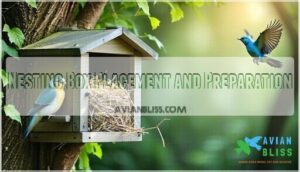
Proper nesting box placement can make or break your breeding efforts.
Position boxes at cage height to reduce stress during egg-laying.
Use secure mounting systems that prevent swaying or falling.
Line boxes with clean pinewood shavings treated with Sevin dust for parasite control.
The entrance should face away from high-traffic areas, creating a quiet sanctuary for your pairs to focus on reproduction.
Understanding proper nesting box design is vital for a successful breeding program.
Lighting, Temperature, and Humidity Control

After securing your nesting box placement, environmental monitoring becomes your next priority.
Maintaining ideal climate systems directly impacts breeding success rates and chick survival.
Here’s your environmental control checklist:
- Light Control: Provide 13-16 hours daily using full-spectrum bulbs at 1,000 lux intensity for hormone regulation
- Temperature Regulation: Keep adult birds at 65-80°F, with chicks starting at 90-95°F initially
- Humidity Management: Maintain 55-65% during incubation, increasing to 65-75% for hatching
- Environmental Monitoring: Use digital thermometers and hygrometers for 24/7 tracking
- Climate Systems: Install automated controls to minimize daily temperature variations under 2°C
Using the right full spectrum bulbs is vital for simulating natural daylight conditions.
Essential Equipment and Hygiene Practices

Keep your bird breeding equipment spotless with daily cage cleaning and weekly deep sanitization.
Install proper ventilation systems to prevent ammonia buildup from droppings. Replace nesting materials regularly—dirty bedding breeds bacteria faster than rabbits multiply.
Your hygiene protocols should include disinfecting water dishes, food containers, and nesting boxes between breeding cycles. Clean equipment means healthy birds and successful hatches.
Providing a suitable bird cage environment is essential for the health and well-being of the birds.
Nutrition and Health Management for Breeders

You’ll need to provide your breeding birds with proper nutrition to support egg production and healthy chick development.
Regular health monitoring prevents disease outbreaks that can devastate your entire breeding program.
Balanced Diet and Supplementation
Achieving nutrient balance requires more than throwing seeds in a bowl.
Your breeding birds need a foundation of high-quality pellets (70-80% of diet) plus fresh foods for dietary variety.
Calcium needs spike during egg production, so offer cuttlebone or crushed oyster shell.
Vitamin supplements like Calcivet support reproductive health, while vitamin E boosts male fertility.
This nutritional support creates the perfect breeding conditions.
Species-Specific Nutritional Needs
Different bird species have unique nutritional support requirements that directly impact breeding success.
You can’t feed budgies the same diet as conures and expect ideal results.
Here’s how to match nutrition with your breeding pairs:
- Budgies thrive on pellets (30-50%) with leafy greens – their small bodies need concentrated nutrition for egg production
- Cockatiels require elevated protein and vitamin D3 – essential since plant foods lack this critical reproductive vitamin
- Lovebirds need high-quality pellets (60-70%) with colorful fruits – berries and papaya provide vitamin A for immune health
- Green-cheeked conures benefit from enriched seed mixes – digestive enzymes boost nutrient absorption during breeding stress
Seed preferences vary dramatically between species, while protein requirements increase across all birds during reproduction.
Calcium supplements become non-negotiable for strong eggshells.
Understanding these bird dietary needs prevents costly breeding failures.
Water and Food Hygiene
Clean water and fresh food form the foundation of successful bird breeding programs. You’ll need to change water daily and replace food every 4-6 hours to prevent bacterial growth.
Proper food storage in airtight containers maintains nutritional value while supporting ideal bird health checks and hydration maintenance. Maintaining good bird health sanitation is vital for preventing diseases.
| Hygiene Practices | Frequency | Benefits |
|---|---|---|
| Water Quality checks | Daily | Prevents bacterial infections, supports hydration |
| Fresh Food rotation | Every 4-6 hours | Maintains nutritional requirements, reduces spoilage |
| Food Storage maintenance | Weekly cleaning | Preserves calcium and protein content |
The provided table outlines the necessary hygiene practices for maintaining the health and well-being of birds, including water quality checks, fresh food rotation, and food storage maintenance.
Routine Health Checks and Disease Prevention
Beyond proper feeding lies the foundation of successful breeding: proactive bird health monitoring. Regular avian health screenings catch problems before they derail your breeding program. Smart breeders schedule monthly health checks with certified veterinarians who understand disease prevention protocols.
Here’s your health monitoring checklist:
- Weekly weight checks using digital scales to track fluctuations
- Daily visual inspections of eyes, nostrils, and vent areas
- Monthly fecal examinations for parasites and abnormal bacteria
- Quarterly blood panels for nutritional deficiencies and infections
- Annual vaccine options discussions with your avian veterinarian
Disease diagnosis becomes simpler when you maintain detailed health records. Document eating habits, behavior changes, and breeding performance. This data helps veterinarians identify bird breeding health issues quickly.
Nutrition therapy often addresses minor problems before they become major setbacks. Proper avian hygiene practices, including regular cage cleaning and quarantine protocols for new birds, prevent most common ailments from spreading through your breeding facility.
Managing Breeding, Mating, and Chick Care
Once you’ve established compatible breeding pairs, you’ll need to monitor their courtship behaviors and prepare for the demanding egg-laying and chick-rearing phases.
Understanding these natural processes helps you provide proper support during incubation and guarantees healthy development of both parents and offspring, which is crucial for the success of the breeding program and ensures the healthy development of the young.
Recognizing Breeding Behaviors
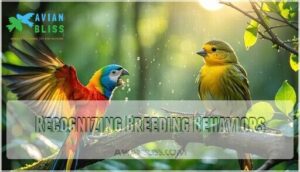
Once your birds have proper nutrition and health protocols in place, watch for tell-tale breeding signs that signal readiness to reproduce.
Males typically display vibrant courtship behaviors like head bobbing, wing spreading, and melodic vocalizations to attract females.
You’ll notice increased territorial tendencies as breeding pairs compatibility develops through mutual preening and food sharing.
Nesting behaviors emerge when birds start gathering materials and exploring potential nest sites, while flock dynamics shift as pairs become more bonded and less social with others, exhibiting vibrant behaviors and forming strong breeding pairs.
Mating and Egg-Laying Process

Once courtship succeeds, mating rituals intensify as pairs engage in synchronized behaviors.
The fertilization process begins when males mount females, transferring sperm during brief copulation. Egg formation occurs within 24-48 hours, with females laying 2-8 eggs depending on species.
You’ll notice increased nesting behavior as birds prepare cozy spots. The bird breeding process requires patience—eggs appear every other day until the clutch completes, marking the start of your incubation techniques phase.
Understanding the cloacal kiss process is essential for successful bird breeding and reproduction.
Incubation and Hatching Tips

Maintaining ideal egg incubation requires precise temperature control at 99.5–100.5°F with 50-55% humidity during early stages.
Turn eggs 2-5 times daily until lockdown—three days before hatching.
Increase humidity to 65-70% during this final phase to prevent shrink-wrapping.
Monitor weight loss of 13-15% by hatch day for proper development.
Candling at days 5-6 reveals fertility, but avoid disturbing eggs during days 11-14 to ensure proper development.
Post-Hatching Care for Parents and Chicks
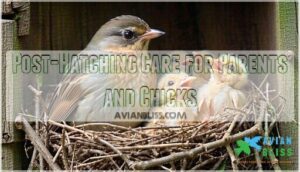
Once your chicks hatch, they’ll need constant warmth and proper Chick Nutrition to thrive.
Parents naturally provide excellent Parental Care, but you’ll want effective Brooder Management as backup.
Keep temperatures steady at 85-90°F for ideal chick growth.
Watch for Health Monitoring signs like active begging and steady weight gain.
These hatchling care basics guarantee strong Fledgling Support development.
Monitoring Health and Troubleshooting Issues
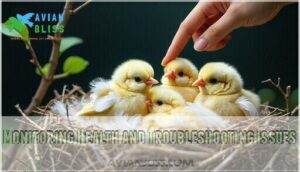
Once your chicks have hatched and the initial excitement settles, you’ll need sharp eyes for spotting potential problems.
Quick Disease Diagnosis and Health Screening can make the difference between thriving babies and heartbreak. Watch for signs like labored breathing, abnormal droppings, or listless behavior that signal trouble ahead.
- Nutrition Deficits show up as stunted growth, poor feather development, or parents abandoning feeding duties
- Environmental Hazards like temperature swings, drafts, or contaminated nest boxes can quickly turn fatal
- Emergency Care requires having an avian vet’s contact ready and basic first aid supplies on hand
- Regular bird health checks should include weighing chicks daily and monitoring parental feeding patterns
Frequently Asked Questions (FAQs)
How do you breed a bird in a cage?
Unlike wild birds that soar freely, caged breeding requires careful setup. You’ll need spacious cages, compatible pairs, proper nutrition, nesting boxes, and quiet environments to encourage natural mating behaviors successfully.
How do I find a beginner bird species to start breeding?
Start with beginner-friendly species like budgies, cockatiels, or finches—they’re hardy, forgiving, and breed reliably. These species handle mistakes well while you’re learning the ropes of breeding basics.
How do you know if a bird is breeding?
Jake noticed his cockatiels spending more time together, grooming each other constantly, and the male started modifying their nesting box.
You’ll spot breeding behavior through mutual preening, increased vocalization, nesting activity, and the female adopting a crouching posture when approached by her mate, which includes mutual preening.
Do birds mate for life?
Most birds don’t mate for life. Only about 10% of bird species form lifelong partnerships, including swans, geese, and some raptors. You’ll find most species choose new partners each breeding season.
Is pet bird breeding a good hobby?
Ready to venture into feathered parenthood? Pet bird breeding can be rewarding but demands serious commitment.
You’ll need proper equipment, veterinary care, genetic knowledge, and substantial time investment. Success requires patience, expertise, and financial resources for unexpected challenges.
How does a bird cage work?
You’ll place your feathered friend inside a secure metal or wire enclosure that contains perches, food dishes, and water dispensers.
The cage’s bars provide ventilation while keeping your bird safely contained for daily care.
What are the three mating strategies for birds?
You’ll encounter three main mating strategies in avian species: monogamy, where pairs bond for life or seasons.
Polygamy, involving multiple partners; and promiscuity, featuring random mating without lasting bonds or territorial commitments.
How to discourage mating behavior in birds?
Looking to turn down your feathered friend’s romantic enthusiasm?
Reduce daylight hours to 8-10, remove nesting materials, avoid petting near wings or back, and maintain cooler temperatures around 65-70°F to naturally discourage breeding behaviors.
How long should birds rest between breeding cycles?
Give your birds at least six months between breeding cycles.
This rest period lets females replenish calcium stores and recover physically.
Males also need recovery time to maintain healthy sperm production and energy levels.
When to remove breeding pairs from communal aviaries?
You’ll want to separate breeding pairs when they show aggression toward other birds, monopolize food sources, or start claiming territory. Remove them before eggs are laid for everyone’s safety.
Conclusion
Research shows that 85% of breeding failures stem from improper pair selection and environmental setup.
Following these bird breeding techniques advice guidelines substantially improves your success rate. You’ve learned to select compatible pairs, create ideal environments, and provide proper nutrition and care.
Remember that patience and consistent monitoring are essential throughout the breeding process.
Start with beginner-friendly species like budgies or cockatiels to build your confidence and experience before advancing to more challenging birds, which will help you achieve a higher breeding success.
- https://digitalcommons.gaacademy.org/cgi/viewcontent.cgi?article=2239&context=gjs
- https://tricolor.ice.ucdavis.edu/sites/g/files/dgvnsk3096/files/inline-files/Managing-Breeding-Habitats-for-Tricolored-Blackbirds-Guidelines-to-Benefit-California%25u2019s-Blackbird-.pdf
- https://www.nps.gov/im/midn/breeding-birds.htm
- https://hari.ca/avian-care/artificial-incubation-applied-to-bird-eggs/
- https://pubs.usgs.gov/publication/70003460