This site is supported by our readers. We may earn a commission, at no cost to you, if you purchase through links.
When a third-grader can identify a ruby-throated hummingbird by its wing-beat pattern, or a high school student maps critical nesting sites for threatened shorebirds, bird conservation education programs are working exactly as designed. These initiatives blend rigorous field science with hands-on discovery, transforming students into skilled observers who contribute real data to conservation efforts.
From Audubon Adventures classroom kits to Smithsonian-led migration tracking projects, programs nationwide are equipping learners with both ecological literacy and practical survey skills. The most effective approaches don’t just teach about birds—they engage participants in meaningful stewardship that produces measurable habitat improvements and population recovery data.
Understanding which programs deliver genuine conservation outcomes helps educators, parents, and community leaders invest in experiences that turn curiosity into lasting environmental action.
Table Of Contents
- Key Takeaways
- What Are Bird Conservation Education Programs?
- Leading Bird Conservation Education Organizations
- Popular Bird Conservation Education Programs
- Educational Strategies and Community Engagement
- Measuring Impact and Expanding Access
- Frequently Asked Questions (FAQs)
- How to become a bird conservationist?
- How do I get involved in bird conservation?
- What is the best charity for bird conservation?
- What is the National conservation education Program?
- How can individuals start bird conservation at home?
- What are the best tools for bird watching?
- How does climate change affect bird migration?
- What plants attract birds to urban gardens?
- How can schools integrate bird studies into curricula?
- How can teachers get certified in bird education?
- Conclusion
Key Takeaways
- Bird conservation education programs transform students into active field scientists who contribute real population and habitat data through hands-on monitoring, migration tracking, and citizen science initiatives that directly inform regional conservation decisions.
- Organizations like Audubon Society and Smithsonian Migratory Bird Center reach over 100,000 students annually through structured programs combining classroom curricula with outdoor field experiences, proving that accessible entry points like feeder monitoring and eBird submissions deliver authentic scientific engagement without requiring substantial funding.
- Effective programs measure success through concrete metrics including 15-35% increases in participant engagement with bird monitoring within six months and improvements in nest monitoring accuracy from 60% to 85%, demonstrating that conservation education produces measurable outcomes beyond simple awareness.
- Community-based approaches like Urban Oasis and family festivals expand conservation impact by connecting diverse audiences—including underserved urban communities—to local habitat restoration projects and standardized data collection protocols that build long-term stewardship networks.
What Are Bird Conservation Education Programs?
Bird conservation education programs are structured initiatives that teach people about protecting birds and their habitats through hands-on learning experiences. These programs combine classroom instruction with outdoor activities to help participants understand how birds serve as indicators of ecosystem health and biodiversity.
Whether you’re an educator, parent, or community member, understanding what these programs offer and how they work can help you choose the right opportunities for meaningful conservation engagement.
Definition and Core Objectives
Bird conservation education programs are structured activities that teach you about bird ecology, species preservation, and habitat restoration through both classroom instruction and field experiences. These wildlife conservation initiatives aim to meet education standards while advancing conservation goals, combining scientific knowledge with hands-on data collection. These programs often connect participants with bird species conservation efforts that rely on community-collected data to inform habitat protection strategies worldwide.
You’ll find that effective conservation education programs foster measurable outcomes in science literacy, environmental stewardship behaviors, and long-term commitment to bird conservation efforts.
Importance for Bird Populations
Education is the engine that powers successful bird conservation efforts. When you understand habitat needs and migration patterns, you become part of the solution. Here’s how conservation education directly helps bird populations: Community-led initiatives like bird habitat restoration techniques create lasting sanctuaries while building momentum for policy changes that protect migratory corridors.
Conservation education turns habitat knowledge and migration awareness into measurable protection outcomes for bird populations
- Raising awareness of threats reduces nest disturbance in key breeding areas
- Community habitat restoration projects increase local bird densities and breeding success
- Teacher training expands evidence-based conservation practices to youth audiences
- Citizen science generates essential data on population trends for regional decisions
- Bird-friendly practices reduce predation and habitat loss around vulnerable populations
These programs turn ecological awareness into measurable conservation biology outcomes. Effective conservation relies on rigorous scientific study methods to inform decision-making.
Role in Ecosystem Health
Beyond protecting individual species, bird conservation education reveals how birds sustain entire ecosystems through ecosystem services like insect control, seed dispersal, and pollination. When you monitor bird migration patterns and species diversity, you’re actually conducting conservation biology fieldwork that measures habitat restoration success.
These wildlife conservation efforts build ecological awareness—teaching communities that healthy bird populations signal thriving ecosystems where nutrient cycling, soil stability, and ecosystem conservation benefits extend far beyond avian life alone. Joining local bird conservation and birdwatching groups connects you with like-minded advocates working to protect these critical habitats in your own backyard.
Leading Bird Conservation Education Organizations
You don’t have to build a bird conservation program from scratch—several established organizations have already done the heavy lifting. These groups offer educator training, classroom materials, and community engagement frameworks that you can tap into right away.
Let’s look at three major players that are making conservation education accessible and effective across the country. Programs often incorporate hands-on birdhouse kits designed for kids to teach habitat stewardship through tangible building and monitoring experiences.
Audubon Society Initiatives
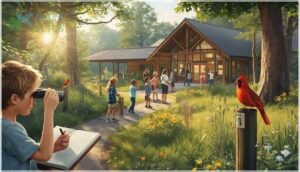
When you think about wildlife preservation that reaches millions, the Audubon Society leads conservation action. Their environmental education framework combines classroom learning with hands-on conservation methods that transform passive observers into active participants. Their approach draws from decades of field research in bird species preservation, ensuring each program addresses real threats facing vulnerable populations today.
- Audubon Adventures delivers curriculum-aligned education tools to over 100,000 school children annually, integrating bird research concepts with state standards
- Audubon Nature Camps provide place-based learning experiences that connect young people directly to wildlife conservation efforts
- Flying WILD engages 5th-8th graders through inquiry-based activities including bird surveys and habitat monitoring
- Urban Oasis mobilizes urban communities in community outreach projects that protect city parks and green spaces
- Network of nature Centers welcomes over one million visitors each year, building conservation literacy across generations
These programs don’t just teach about birds—they create pathways for you to participate in meaningful conservation work that yields measurable results for threatened species and degraded habitats.
Smithsonian Migratory Bird Center Programs
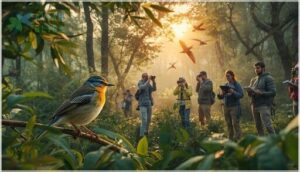
The Smithsonian Migratory Bird Center connects conservation research directly to wildlife education through field experiences, classroom resources, and citizen science opportunities that track migratory birds across hemispheres.
You’ll find bilingual materials, training sessions on data collection protocols, and habitat restoration projects that welcome community scientists at accessible locations—transforming bird migration patterns into actionable conservation knowledge that informs environmental policy and stewardship decisions.
Partnerships With Zoos and NGOs
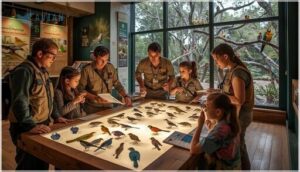
Through collaborative conservation networks, zoos and NGOs enhance bird conservation education by pooling museum partners’ expertise with joint outreach programs that engage zoo visitors in hands-on citizen science activities.
You’ll discover co-developed lesson plans, synchronized wildlife conservation monitoring, and shared educator training—all sustained through creative conservation funding arrangements that combine foundation grants, government support, and institutional resources to expand your community’s access to enriching learning experiences.
Popular Bird Conservation Education Programs
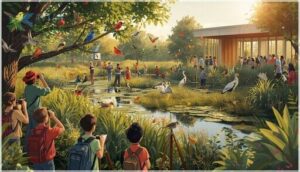
Regarding connecting people with birds, several standout programs have proven their ability to inspire real conservation action. These initiatives reach different audiences—from elementary classrooms to urban neighborhoods—and each offers a unique pathway into bird protection and habitat stewardship.
Let’s look at four programs that have made measurable impacts on both learning outcomes and conservation participation.
Audubon Adventures
When you’re looking for a thorough Environmental Education Programs framework, Audubon Adventures delivers experiential learning at its finest. This flagship Audubon Education initiative reaches over 100,000 students annually through structured curricula that emphasize:
- Bird Surveys and hands-on Citizen Engagement activities
- Conservation Science aligned with K–12 standards
- Habitat Stewardship projects connecting classroom theory to field practice
You’ll find digital and print resources designed to strengthen Wildlife Conservation Strategies through Bird Conservation Education that turns your students into active participants in Education and Outreach.
Audubon Nature Camps
Hands-on Wildlife Education transforms young people into stewards through immersive experiences. Audubon Nature Camps serve 1,000–1,500 participants annually at sites nationwide, offering Bird Identification, habitat Nature Restoration, and citizen science training for ages 6–18. These Environmental Education Programs build Conservation Skills through field biology and data collection that strengthen Wildlife Conservation Strategies.
| Camp Activities | Age Range | Key Conservation Skills |
|---|---|---|
| Migration monitoring | 6–18 years | Standardized observation methods |
| Habitat restoration | Youth & families | Invasive species control, seed planting |
| Citizen science reporting | All participants | Data entry, wildlife observation ethics |
| Field bird surveys | 10+ years | Species identification, avian ecology |
Scholarships and sliding-scale fees guarantee accessibility, while Education and Outreach through Audubon Education partner Nature Centers extends impact beyond camp sessions.
Flying WILD
Flying WILD, developed by the US Fish and Wildlife Service and Cornell Cooperative Extension, transforms Wildlife Education through experiential Bird Biology lessons for grades 5–8. This Conservation Training program integrates Birds Across the Curriculum with field-based Citizen Science activities that deepen understanding of Bird Migration and ecological systems.
Key program components include:
- Facilitator training guides for educators implementing Conservation Education standards
- Hands-on observation protocols connecting classroom learning to Ecological Research methods
- Migratory bird monitoring activities engaging youth in real-world data collection
- Cross-disciplinary modules integrating science, language arts, and social studies objectives
- Safety-focused field experiences building confident outdoor investigation skills
Urban Oasis Program
Urban Oasis transforms city parks into thriving Bird Habitats through hands-on Community Engagement that connects students and residents with local avifauna. This Wildlife Conservation initiative teaches Urban Planning principles while participants restore Green Spaces, monitor neighborhood bird populations, and implement Conservation Strategies customized to urban ecosystems.
Education Outreach activities include native plantings, citizen science surveys, and family festivals that build Community Outreach networks supporting long-term Sustainability and environmental stewardship.
Educational Strategies and Community Engagement
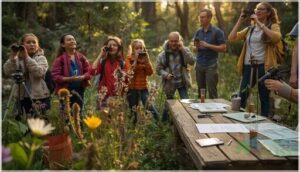
Effective bird conservation education doesn’t happen in a vacuum—it thrives when you combine sound teaching methods with meaningful community involvement. The most successful programs blend hands-on fieldwork with classroom learning, giving participants direct experiences that turn abstract concepts into lasting understanding.
Let’s explore the key strategies that transform casual interest into active conservation participation.
Classroom and Outdoor Learning Approaches
Experiential Learning bridges theory and practice when you combine indoor curricula with outdoor education programs. Field Research becomes tangible as students conduct bird surveys and habitat assessments, building skills in observation and data recording.
Consider these three proven Conservation Methods for your Environmental Studies program:
- Align bird content with national science standards to guarantee curricular relevance
- Use Flying WILD activities that integrate computer-based data collection platforms
- Schedule structured outdoor lessons in schoolyards with native plantings to optimize species encounters
Education Outreach through Science and Nature experiences transforms passive learners into active stewards, particularly when safety protocols enable participation across diverse physical abilities in Education and Environment settings.
Citizen Science Initiatives
You’ll empower your students through Data Collection projects that contribute to Conservation Research on Migratory Birds. Species Monitoring programs like eBird offer real-time Volunteer Engagement, turning observations into actionable datasets for Wildlife Preservation Initiatives.
These Community Outreach efforts bolster Environmental Education Programs by connecting classroom learning with authentic Conservation work, while standardized protocols guarantee your participants’ contributions advance scientific understanding of ecosystem health.
Family Festivals and Public Events
Beyond structured data collection, you can engage entire families through Festival Activities that blend hands-on bird identification walks with interactive exhibits and live demonstrations. These Public Engagement opportunities boost Environmental Awareness while supporting Community Outreach goals through partnerships with local parks and nature centers.
- Bird identification walks with expert guides
- Interactive exhibits featuring live bird demonstrations
- Conservation Workshops for all ages
- Multilingual materials ensuring accessible participation
Community Outreach Projects
You can deepen Community Engagement through targeted outreach that puts conservation tools directly in residents’ hands. Volunteer Training in standardized Bird Surveys equips community members to collect rigorous Citizen Science data, while Habitat Restoration days transform neighborhood green spaces into thriving bird habitats.
These Community Science initiatives unite Environmental Education with hands-on Wildlife Conservation, building local capacity to monitor species and advocate for bird-friendly policy changes.
Measuring Impact and Expanding Access
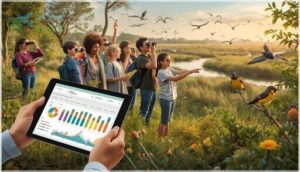
Understanding whether your conservation education program actually works isn’t just about feeling good—it’s about tracking real changes in knowledge, attitudes, and behaviors that help birds thrive.
Evaluation metrics give you the evidence you need to improve your approach, demonstrate value to funders, and expand your reach to new communities.
Let’s explore how organizations measure success and secure the resources needed to bring bird conservation education to more people.
Evaluation and Success Metrics
You can track program impact through evaluation frameworks that capture knowledge gains, behavioral shifts, and conservation outcomes. Pre- and post-surveys reveal average learning increases of 0.8 to 1.2 standard deviations, while data analysis shows 15–35% more participants engage in bird monitoring within six months.
Success metrics for ecological education include improved nest monitoring accuracy, rising from 60% to 85%, and measurable habitat restoration gains in wildlife sustainability education initiatives.
Funding and Support Opportunities
You can secure resources through federal aid programs that distribute over $50 million annually for wildlife and environmental education, alongside foundation grants averaging $25,000 to $150,000. Grant writing skills access competitive funds from agencies like U.S. Fish and Wildlife Service, while corporate sponsorships and nonprofit partnerships provide equipment, field guides, and transportation.
Community funding through local governments assists schoolyard habitat projects, expanding sustainability education and conservation reach in underserved areas.
Frequently Asked Questions (FAQs)
How to become a bird conservationist?
You’ll need a bachelor’s degree in biology or environmental science, field experience through internships, and relevant certifications like bird banding. Volunteer opportunities and professional networks accelerate your conservation career path.
How do I get involved in bird conservation?
Join citizen science initiatives through local Audubon chapters, participate in bird monitoring projects, or volunteer at wildlife preservation efforts.
Community engagement and environmental education programs offer hands-on conservation opportunities for all skill levels.
What is the best charity for bird conservation?
While no single “best” charity exists, Charity Navigator ratings highlight strong conservation impact: American Bird Conservancy, National Audubon Society, and BirdLife International excel in funding priorities, volunteer opportunities, and measurable wildlife conservation outcomes.
What is the National conservation education Program?
The National Conservation Education Program is a coordinated environmental education framework that aligns conservation literacy curricula, program governance, and community outreach efforts across partnering organizations.
This alignment aims to advance wildlife conservation knowledge and stewardship nationwide.
How can individuals start bird conservation at home?
Become backyard biologists by building Bird Friendly Gardens with native plants, installing a Bird House, and practicing Eco Friendly Practices.
Home Habitat improvements support migratory bird research, while Bird Watching through Neighborhood Nestwatch reveals bird migration patterns.
What are the best tools for bird watching?
You’ll want quality binoculars with 8×42 magnification, a regional field guide or birding app with offline capabilities, a notebook for logging sightings, and comfortable walking shoes for tracking migratory birds through varied terrain.
How does climate change affect bird migration?
While seasons once guided migratory birds with precision, climate change now disrupts their ancient rhythms. Warming temperatures shift arrival times, alter stopover habitats, and create mismatches between food availability and migration schedules, threatening species adaptation.
What plants attract birds to urban gardens?
You can draw birds to your urban garden by choosing native plant selection that provides seasonal bloom management, bird-friendly trees, and layered vegetation.
This creates wildlife habitat creation that fosters biodiversity through natural food sources and shelter.
How can schools integrate bird studies into curricula?
Schools can integrate bird studies through cross-curricular units, outdoor lessons with species research, and programs like Flying WILD. These approaches connect avian biology studies across science, math, and language arts while fostering environmental education through bird-friendly schools initiatives.
How can teachers get certified in bird education?
Many conservation organizations offer teacher training in bird biology, conservation ethics, and educator resources through certification pathways like Flying WILD. These programs blend nature education with Birds Across the Curriculum frameworks to foster meaningful community engagement.
Conclusion
Even if your school lacks funding for elaborate field trips, bird conservation education programs offer free or low-cost entry points—from simple feeder monitoring to eBird data submission—that deliver authentic scientific engagement.
When you connect young observers to migration patterns, habitat restoration, and population trends, you’re building a generation fluent in ecological problem-solving.
Start small, measure progress, and watch students transform from passive learners into active stewards whose contributions ripple through local and global conservation networks.
- https://insider.si.edu/2016/11/feathered-diplomats-unite-pupils-north-south-america/
- https://x.com/godofprompt/status/1990526288063324577
- https://www.sciencedirect.com/science/article/pii/S2949916X23000464
- https://www.linkedin.com/posts/bohdanlukianets_tasks-study-research-activity-7373377539521667072-UTEi
- https://arxiv.org/html/2507.17948v2