This site is supported by our readers. We may earn a commission, at no cost to you, if you purchase through links.
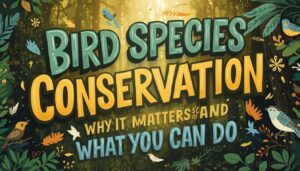
Three billion. That’s how many birds North America has lost since 1970—a staggering one in four vanished from skies that once carried their songs across every landscape imaginable.
Warblers that once threaded through Appalachian forests, shorebirds that traced coastlines from Alaska to Patagonia, grassland sparrows that filled prairie mornings with sound—all quietly disappearing.
Behind each lost species sits a broken thread in an ecosystem that took millions of years to weave together.
Bird species conservation isn’t a niche concern for birdwatchers with binoculars; it’s about the forests that regenerate, the crops that survive pest pressure, and the wetlands that filter your drinking water.
What you do—and what communities choose to protect—shapes which species make it through the next fifty years.
Table Of Contents
- Key Takeaways
- Why Bird Species Need Conservation
- Current State of Bird Populations
- Habitat Loss Driving Declines
- Climate Change and Bird Survival
- Pollution Threats to Birds
- Invasive Species and Predators
- Restoring Bird Habitats
- Protecting Rare and Migratory Species
- Research and Monitoring Birds
- Public Action for Bird Conservation
- Frequently Asked Questions (FAQs)
- How do birds contribute to pollination and seed dispersal?
- What role do birds play in controlling insect pests?
- Which bird species have successfully recovered from near extinction?
- How do different cultures incorporate birds into traditional practices?
- How do birds benefit mental health and well-being?
- Which bird species are most important for cultural traditions?
- How do zoos contribute to bird species recovery?
- What role do birds play in nutrient cycling?
- How does ecotourism support bird conservation funding?
- Conclusion
Key Takeaways
- North America has lost 3 billion birds since 1970, and the damage ripples far beyond birdwatching — it weakens the pest control, pollination, and water filtration that ecosystems provide for free.
- Habitat loss, climate change, plastic pollution, and outdoor cats aren’t separate problems; they stack on top of each other, and birds can’t outpace all of them without your help.
- Restoration works — reforestation with native plants, wetland recovery, and connected migration corridors have brought species back from the edge, proving that what we protect today shapes what survives tomorrow.
- You don’t need a biology degree to make a difference: planting native species, keeping cats indoors, and supporting conservation policy are three of the most effective tools available right now.
Why Bird Species Need Conservation

Birds do more for this planet than most people realize. They keep ecosystems running in ways that quietly affect everything — including us. Here’s why their survival deserves your attention.
From tracking migration routes to finding rare bird species habitats, understanding where birds live is the first step toward keeping those ecosystems intact.
Biodiversity and Ecosystem Balance
Think of biodiversity as nature’s safety net. A rich habitat mosaic — forests, wetlands, grasslands woven together — creates the food web stability that keeps ecosystems functioning.
Genetic diversity within species builds resilience against disease and climate shifts. Functional redundancy means if one species declines, others step in.
These ecosystem services don’t replace themselves. That’s why species protection and conservation partnerships aren’t optional — they’re essential.
Achieving the 30 by 30 goal(https://www.greenpeace.org/mena/en/what-is-biodiversity-and-why-is-it-important/) helps safeguard biodiversity.
Birds as Pollinators, Seed Dispersers, and Pest Controllers
Birds do more than sing — they hold ecosystems together.
Through nectar feeding dynamics, hummingbirds drive pollination across flowering plants.
Frugivory seed networks move seeds across landscapes, regenerating forests.
Insectivory pest suppression keeps crop damage in check naturally.
- Bird plant mutualisms support fruit set in tropical forests
- Landscape connectivity services link habitats through seed dispersal
- Bird-friendly farming reduces pesticide reliance
- Sustainable agricultural practices welcome insectivorous birds as allies
Why Population Declines Matter Now
When bird population declines accelerate, the ripple effects touch nearly everything. Food Web Disruption spreads fast — fewer insectivores mean more pest outbreaks, higher farm costs, and real Human Health Implications from chemical overuse.
Nutrient Cycling Collapse quietly reshapes forests.
Ecotourism Revenue Loss drains rural economies.
And as numbers fall, Policy Funding Shifts away from conservation, making public engagement and targeted habitat loss responses harder to sustain.
Current State of Bird Populations
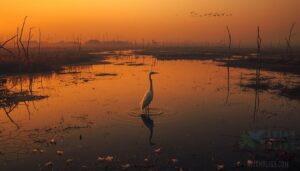
The numbers tell a sobering story about where bird populations stand today. Across the globe, species are facing pressures that didn’t exist a generation ago — and some are running out of time.
Here’s a closer look at what’s happening, who’s most at risk, and why migratory birds face some of the steepest odds.
Global Trends in Bird Declines
The numbers are hard to ignore. Bird population declines have accelerated across every major biome, driven by habitat loss, climate change impacts, and plastic pollution choking migratory pathways.
Urban Heat Islands fragment stopover zones. Airborne Contaminants reduce reproductive success.
Disease Outbreaks spread faster through stressed populations, while Genetic Diversity Loss quietly erodes resilience.
The economic valuation of what we’re losing — pest control, pollination, seed dispersal — runs into billions annually.
Species at Greatest Risk
Some birds are already at the edge. Low Reproductive Output, Small Population Size, and Restricted Geographic Range make recovery incredibly fragile — here’s what that looks like in practice:
- The Kakapo numbers fewer than 200 individuals.
- California condors rebounded from just 27 birds.
- High Predation Pressure erodes Critical Genetic Diversity fast.
Habitat loss accelerates these crises. Conservation funding and policy advocacy drive species recovery forward.
Migratory Birds and Annual-cycle Pressures
Every migratory bird runs a tight energy budget. Fuel Scarcity at degraded stopovers stretches Stopover Duration and drains Migration Energy Use before birds even reach breeding grounds.
Wintering Food Shortage cuts fat reserves heading north, while shifting Breeding Insect Peaks leave chicks underfed — a direct impact of climate change on migratory birds.
Migratory Bird Joint Ventures and Migratory Bird flyway networks guide Habitat protection and restoration across the Americas, keeping bird migration viable.
Habitat Loss Driving Declines

Habitat loss is the single biggest driver behind bird population declines worldwide.
It shows up in different forms depending on where you look — from the edges of a shrinking forest to a drained marsh to a grassland swallowed by suburbs.
Here are the three main ways this loss is playing out right now.
Forest Clearing and Fragmentation
When a forest is cleared, it doesn’t just shrink — it fractures.
Edge Microclimate conditions push heat and wind deeper inside, stressing trees and birds alike.
Fragment Size Impacts hit interior specialists hardest, while Invasive Edge Species colonize boundaries fast.
Patch Shape Effects and Bird Movement Barriers cut off habitat connectivity, making forest restoration and habitat protection urgent priorities.
- Temperature at edges can spike 2–4°C above interior forest
- Smaller fragments lose interior habitat faster due to Patch Shape Effects
- Invasive predators concentrate along edges, raising nest predation by up to 40%
- Habitat restoration and connectivity corridors can double species persistence rates
Wetland Drainage and Shoreline Development
Wetlands don’t just hold water — they hold entire communities of life together.
When Hydrological Alteration drains these systems, the damage runs deep. Sediment Transport shifts, turbidity rises, and Carbon Emissions spike as exposed soils release stored gases. Shoreline Armoring strips away tidal marsh edges. Impact Assessments now guide wetland conservation efforts, but habitat loss outpaces habitat restoration.
| What’s Lost | Who Suffers Most |
|---|---|
| Standing water | Migratory shorebirds |
| Aquatic vegetation | Waterbird breeding colonies |
| Tidal marsh edges | Coastal bird habitat protection |
| Shoreline complexity | Community engagement in conservation |
You can help push for smarter coastal planning.
Grassland Conversion and Urban Expansion
Urban Sprawl Impacts don’t stop at city limits — they quietly erase the grasslands that ground‑nesting birds depend on.
Grassland Fragmentation splits habitats into isolated patches, cutting off movement and breeding. Infrastructure Corridors accelerate this loss, channeling development deeper into the native range.
Zoning Reform and Green Belt Planning can hold the line.
You can support bird‑friendly farming and policies that treat habitat loss as the emergency it is.
Climate Change and Bird Survival

Climate change isn’t just a future threat for birds — it’s reshaping where they live, when they migrate, and whether their young survive right now. From disrupted breeding seasons to shrinking habitats, the pressure is real and growing.
Here’s how climate change is hitting birds hardest, and what conservation planning is doing to push back.
Shifting Ranges and Migration Timing
climate change is quietly rewriting the rules of bird migration. Temperature-Driven Range shifts are pushing species northward or to higher elevations, while Phenology Shifts disrupt Seasonal Mismatch between arrival and peak food windows.
Birds with strong Dispersal Capacity adapt faster, but habitat loss along migration corridors limits options. Understanding these climate impacts helps you support smarter, climate resilience-focused conservation planning.
Extreme Weather and Breeding Failure
Beyond shifting migration windows, extreme weather is hitting birds where it hurts most — at the nest. Cold Snap Mortality cuts tree swallow survival by 40% in just seven days. Heat Wave Feeding drops by 25–40% during scorching spells.
Three patterns define the damage:
- Flood Nest Loss doubles fledgling failure after prolonged rain
- Drought Food Shortage slashes insect prey by 60%
- Storm Nest Damage destroys nearly a third of monitored nests
Climate impacts on breeding are measurable and urgent.
Climate Resilience in Habitat Planning
Habitat planning can’t just react to today’s climate — it has to anticipate tomorrow’s.
Thermal Mass Materials in structures and Shade Tree Networks reduce surface temperatures by up to 8°C, buffering nesting sites during heat extremes.
Stormwater Harvesting and Biodiversity Buffer Zones hold moisture when drought cuts insect prey.
Resilient Soil Amendments support native root systems that anchor the ecosystem resilience through habitat connectivity, birds depend on year-round.
Pollution Threats to Birds

Pollution hits birds from multiple directions, and it’s doing real damage. Beyond habitat loss and climate shifts, the toxins and light we release into the environment are quietly disrupting bird behavior, health, and survival.
Here are three pollution threats that deserve your attention.
Plastic Ingestion and Entanglement Risks
Plastics pose a threat to birds in ways most people never see. Seabirds like albatrosses mistake marine litter for food, filling their stomachs with fragments that block nutrients and leach toxins into their tissues — a quiet crisis moving through the microplastic food chain.
Debris cleanup strategies, bird-safe material design, and entanglement monitoring protocols are all part of a growing plastic pollution policy response you can support.
Pesticides and Insect Prey Loss
Neonicotinoid impact doesn’t stop at insects — it quietly hollows out the prey base that birds depend on during breeding season. These systemic pesticides move through plant tissues, shrinking leaf and flower feeders that chicks need to grow.
Sublethal effects impair insect recovery for weeks.
Integrated pest management and native plant buffers can reverse this — and agricultural practices and bird decline are more connected than most realize.
Light Pollution and Navigation Disruption
Every night, artificial light rewrites the sky that birds have navigated for millennia. Skyglow Disorientation pulls migrants off course — Blue Light Impacts scatter celestial cues, collapsing reliable migration routes into confusion.
- Lighted towers spike Migration Collision Risk near urban corridors
- Spectral Lighting Strategies using warm amber tones reduce harm
- Lighting Curfew Policies protect peak migration stopover habitat protection windows
- Urban Development Effects on Avian Diversity compound darkness loss
- Impact of Habitat Loss on Bird Populations worsens when lit skies fragment remaining refuges
Invasive Species and Predators

Habitat loss isn’t the only battle birds face — sometimes the danger shows up right in the neighborhood. Invasive predators and nonnative competitors have quietly become one of the biggest threats to bird populations on islands, coastlines, and in cities.
Here’s a closer look at three key ways this plays out.
Nest Predation on Islands and Coasts
Island and coastal nests are battlegrounds. Rats and feral cats can drive nest failure rates up by 60 percent in seabird colonies — numbers that should stop you cold.
Nest Site Concealment through Beach Vegetation Planting gives species like Marbled Murrelets and ʻIʻiwi a fighting chance.
Predator Monitoring Technology paired with Community Predator Watch programs tracks Seasonal Predator Activity before it peaks, strengthening Marine and coastal bird habitat protection.
Research and monitoring of bird population trends, and Habitat restoration and species recovery efforts.
Competition With Nonnative Species
When invasive species move in, native birds don’t just lose neighbors—they lose resources. Interspecific Resource Overlap cuts native foraging events by 20 percent, while Nest Site Displacement forces birds into riskier locations with 1.5 times higher predation exposure.
Here’s what Aggressive Interference actually costs native birds:
- Hybridization Threats weaken gene pools, slowing recovery
- Predator Driven Decline accelerates when habitat loss compounds competition pressure
- Species monitoring gaps leave bird habitat protection of endangered and migratory bird species underfunded
Cat Predation and Urban Bird Mortality
Outdoor cats are one of the most overlooked threats in urban bird conservation. In dense neighborhoods, cat populations exceed 200 per square kilometer — that’s a serious predation pressure on sparrows, warblers, and ground-foraging species.
| Challenge | Solution |
|---|---|
| Cat Density Hotspots | Predation Risk Mapping |
| Bird Behavior Shifts | Catios Installation |
| Habitat loss from urban development effects on avian diversity | Community Outreach Programs |
| Public engagement gaps | Bird conservation education |
Restoring Bird Habitats
Habitat loss is one of the biggest reasons bird populations are struggling today, but the good news is that restoration works.
Scientists and conservationists have found real, proven ways to bring landscapes back to life — and birds follow.
three key approaches making a measurable difference.
Reforestation With Native Trees and Shrubs

Planting the right trees in the right places can rebuild entire bird habitats from the ground up. Thoughtful site preparation — soil testing, mulching, and protective fencing — gives saplings a real chance.
Restoration of forest and shrub ecosystems works best when you combine a Native Species Mix with understory plantings that shelter birds year‑round. Landscape‑scale conservation guided by scientific data makes the difference.
- Edge management reduces fragmentation, helping interior forest species thrive
- Adaptive management adjusts planting methods based on annual survival monitoring
- Planting and restoration projects connect corridors so migratory birds can move freely
Wetland and Shoreline Restoration
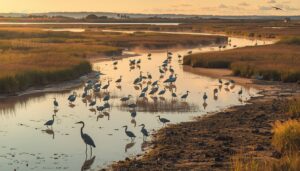
Wetlands are some of the most productive bird habitats on Earth — and among the most overlooked.
Restoring Rivers, Lakes, and Wetlands alongside Coasts and Oceans means rebuilding Hydrologic Reconnection, so seasonal flooding patterns return naturally.
Native Plant Seeding stabilizes shorelines while Living Shorelines protect shorebird nesting sites.
These projects also support Carbon Sequestration and Community Job Creation, turning wetland preservation into migration stopover habitat protection that benefits everyone.
Creating Connected Migration Corridors

Restored wetlands are just the beginning. Birds don’t stop at property lines — they follow Global Flyways stretching across continents.
That’s where Migration Stopover Habitat Protection gets real: connecting patches into living corridors. Effective Corridor Buffering, Riparian Strip Design, and Road Crossing Structures reduce mortality and guide birds safely through fragmented land.
Cross-Border Coordination and Habitat Suitability Modeling drive smarter Transnational bird conservation strategies.
- Corridors need at least 300 meters wide for safe passerine passage
- Riparian strips deliver water and insects during critical stopovers
- Crossborder collaboration for bird habitats formalizes shared monitoring responsibilities
Protecting Rare and Migratory Species
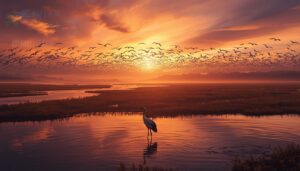
Some birds travel thousands of miles every year, and the ones with nowhere safe to land don’t make it back. Protecting rare and migratory species takes more than goodwill — it takes coordinated, strategic action across borders and habitats.
Here’s how that work actually gets done.
Species Recovery Planning
Every strong recovery plan starts with honest answers: How many birds are left? What’s killing them?
Threat Prioritization shapes the whole strategy — you can’t fix everything at once. Science-based conservation planning then drives Recovery Goal Setting with clear timelines and measurable targets.
| Recovery Element | What It Means |
|---|---|
| Stakeholder Coordination | Agencies, landowners, and communities working together |
| Funding Strategies | Grants, private partners, and government programs |
| Adaptive Management | Adjusting actions as monitoring reveals new data |
| Research & Monitoring | Tracking population trends to measure real progress |
Flyway and Stopover Habitat Protection
Think of flyways as highways in the sky — and right now, many rest stops along the way are disappearing. Migratory Species Mapping shows which stopover habitats birds depend on most, yet habitat loss continues to shrink these areas fast.
Stopover Habitat Funding, International Wetland Partnerships, and a strong Flyway Policy Framework keep these corridors intact.
Learn about flyways through Global Flyways programs and the Migratory Bird Initiative to see why Flyway Connectivity Index data guides every protection decision.
Cross-border Conservation Strategies
Birds don’t check passports — and neither should conservation efforts.
Transboundary Governance agreements, Binational Species Agreements, and Joint Habitat Corridors let countries protect shared populations without losing momentum at border crossings.
Shared Data Platforms keep everyone informed in real‑time, while Cross-border Funding sustains long-term work.
BirdLife International and Global Flyways programs make cross‑border collaboration for bird habitats — true international collaboration for wildlife protection — a practical, working reality.
Research and Monitoring Birds

Knowing what’s happening to bird populations is the first step toward actually helping them. Scientists and everyday bird watchers alike have built some powerful tools to track where birds are, how they’re doing, and what they need.
Here’s a look at the key approaches driving that work.
Long-term Bird Counts and Surveys
Long-term bird counts are the backbone of conservation science. Using standardized protocols, trained observers, and careful site selection criteria, researchers track bird population trends across decades.
Data quality assurance and statistical modeling help separate real bird declines from natural variation. These surveys power the "Road to Recovery" program, targeting over 100 at-risk species with evidence you can trust.
Community Science and Citizen Observations
You don’t have to be a scientist to make a real difference. Community science platforms let you submit bird sightings through mobile apps, and volunteer training resources help you nail species identification quickly.
Feedback loops keep your data honest through community partnerships and data validation reviews.
Together, these community-driven conservation initiatives power research and monitoring of bird population trends at a scale no single lab ever could.
Remote Sensing and Habitat Tracking
Satellites and drones now do what field teams can’t — watching entire landscapes shift in real time.
Spectral Indexing and Multispectral Classification reveal vegetation health across vast regions, while Time-Series Change Detection flags habitat loss before it’s irreversible.
LiDAR Canopy Modeling and UAV High-Resolution Mapping sharpen those findings locally.
Together, they build species distribution maps that drive science-based conservation planning, research and monitoring of bird population trends, and landscape-scale conservation across habitat conservation in the Americas.
Public Action for Bird Conservation

You don’t have to be a scientist or a landowner to make a real difference for birds. Some of the most effective conservation actions start right where you live.
Here are a few practical ways you can help.
Backyard Habitat and Native Planting
Your backyard can be a lifeline — a small but real piece of bird habitat conservation in the Americas. Layered Planting mimics natural structure, giving birds shelter, nesting spots, and food year‑round. A Seasonal Bloom Sequence keeps something always flowering or fruiting.
- Plant Native Berry Plants like serviceberry and elderberry
- Leave Leaf Litter Habitat undisturbed for ground‑foraging birds
- Use Low‑maintenance Irrigation like drip systems to support your urban canopy
- Choose native grasses to add vertical structure birds need
Indoor Cat Policies and Safer Communities
Outdoor cats kill up to 4 billion birds annually in the U.S. alone — a number that should stop you cold. Cat Containment Programs and Leash Enforcement reduce this dramatically.
Outdoor cats kill up to 4 billion birds annually in the U.S. — and cat containment programs can stop it
Community Cat Shelters, Neighborhood Wildlife Zones, and Pet Owner Education give communities practical tools. Supporting these efforts is real Bird Conservation Education in action, protecting urban avian diversity one neighborhood at a time.
Advocacy, Donations, and Conservation Partnerships
Your voice matters more than you think. Joining hands with others — through Legislative Advocacy Training, Cross-Border Coalitions, or Community Stewardship Grants — turns individual care into lasting change.
Here’s how you can plug in:
- Support Policy Brief Development targeting protected area legislation
- Fund Donor Impact Reporting that holds programs accountable
- Participate in collaborative conservation partnerships and joint ventures
- Champion funding strategies for long-term conservation projects
- Donate today to power public engagement and fundraising for birds
Frequently Asked Questions (FAQs)
How do birds contribute to pollination and seed dispersal?
Think of birds as nature’s delivery service. Through nectar feeding dynamics and migratory pollen transport, they fertilize plants across vast distances.
Frugivory-driven regeneration and epizoochory mechanisms guarantee long-distance seed flow, sustaining wildlife habitat and supporting sustainable agriculture.
What role do birds play in controlling insect pests?
Birds are nature’s pest control. Insectivorous bird diets include caterpillars, beetles, and aphids — keeping crop damage in check without chemicals. That’s habitat-driven pest suppression working exactly as it should.
Which bird species have successfully recovered from near extinction?
Some species have come back from the brink. The Guam rail resurgence, Kakapo rebound, Black robin recovery, and Takahe revival all prove extinction isn’t always the final word.
How do different cultures incorporate birds into traditional practices?
Across cultures, birds carry deep meaning. Ritual Feather Use, Mythical Bird Symbols, and Ceremonial Bird Offerings appear in powwows, temple festivals, and harvest rites — weaving birds into human identity worldwide.
How do birds benefit mental health and well-being?
Oddly enough, you don’t have to travel anywhere special to feel better. Mindful birdwatching and therapeutic birdsong offer real stress reduction and mood enhancement, right outside your door.
Which bird species are most important for cultural traditions?
Eagles inspire courage, peacocks light up festivals, cranes embody longevity, ravens weave trickster tales, and doves anchor peace rituals. These birds don’t just symbolize culture — they carry it forward.
How do zoos contribute to bird species recovery?
Zoos do far more than display birds behind glass — they’re lifeboats.
Through Captive Breeding and Genetic Management, they protect endangered species until Reintroduction Programs can return them to restored wild habitats.
What role do birds play in nutrient cycling?
Birds enrich soils through guano fertilization and dropping soil enrichment, cycle nutrients via migratory nutrient transport, and support food web mediation — making avian ecology central to habitat nutrient hotspots and thriving ecosystems.
How does ecotourism support bird conservation funding?
As the old saying goes, "It takes a village".
Tourism Entry Fees, Guided Tour Revenue, and Community Lodge Profits fund habitat restoration, monitoring, and ranger programs — turning every birdwatching visit into a direct conservation investment.
Conclusion
Think of bird species conservation as a thread you’re either pulling tighter or cutting loose—your daily choices do one or the other.
Native plants in your yard feed insects that feed birds. A kept-inside cat means dozens of birds survive the season.
Your voice behind a conservation bill carries real weight. Three billion birds are already gone. The still singing outside your window are counting on what you decide to do next.
- https://www.science.org/doi/10.1126/science.aaw1313
- https://r2rbirds.org/
- https://www.mdpi.com/2073-445X/14/11/2243
- https://www.washingtonpost.com/wellness/interactive/2023/birds-song-nature-mental-health-benefits/
- https://www.kcl.ac.uk/news/feeling-chirpy-being-around-birds-is-linked-to-lasting-mental-health-benefits