This site is supported by our readers. We may earn a commission, at no cost to you, if you purchase through links.
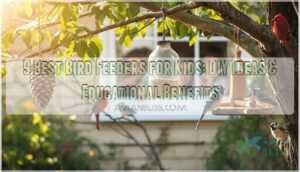
Last spring, a robin built her nest in the crook of my porch light, and suddenly my kids were glued to the window every morning, counting eggs and watching for tiny beaks to appear. That’s when I learned something important: kids don’t need fancy gadgets to fall in love with birds—they just need a reason to pay attention.
Bird feeders for kids turn your backyard into a living classroom where cardinals, chickadees, and woodpeckers become daily visitors. Whether you’re slathering peanut butter on pine cones or building feeders from recycled bottles, these projects combine creativity with real science.
You’ll discover which materials keep everyone safe, how different seeds attract specific species, and why a simple homemade feeder often beats expensive store-bought versions.
Table Of Contents
Key Takeaways
- Simple DIY bird feeders made from household items like pine cones, cereal, orange halves, and recycled bottles turn your backyard into a hands-on science classroom where kids learn observation, species identification, and environmental stewardship without expensive equipment.
- Quality seed blends containing sunflower seeds, peanuts, and dried fruits attract diverse species like cardinals, chickadees, and woodpeckers, while proper feeder placement at 5-6 feet high and regular cleaning every two weeks keeps both birds and kids safe.
- Non-toxic materials including water-based glues, blunt-tipped scissors, bamboo, and shatterproof plastics ensure kid-friendly construction that meets safety standards while teaching sustainable practices through recycled and eco-friendly components.
- Recording bird sightings in journals and participating in citizen science projects doubles kids’ likelihood of maintaining conservation habits long-term, transforming casual backyard feeding into data analysis skills and genuine wildlife awareness.
Best Bird Feeders for Kids: Top 9 Products
You don’t need fancy equipment to create impressive bird feeders with kids—just a few simple materials and a little creativity.
I’ve rounded up nine products that make building feeders easier, safer, and way more fun for young hands. These picks include everything from quality birdseed blends to kid-friendly tools and even books that’ll turn your backyard into an outdoor classroom.
1. Wild Bird Nut And Fruit Blend
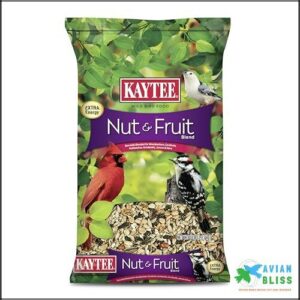
You’ll want a birdseed mix that actually brings the birds in, and this Wild Bird Nut And Fruit Blend delivers exactly that. It packs high-energy peanuts, sunflower seeds, and dried fruits—cherries and raisins—that attract cardinals, woodpeckers, and nuthatches straight to your yard.
The nutrient balance aids migration and winter survival, which makes bird watching for kids genuinely rewarding. Pair it with DIY bird feeders for nature-inspired crafts that keep young learners engaged.
Just check for mold regularly and skip any salt-heavy alternatives to keep your feathered visitors healthy.
| Best For | Families with kids who want to attract a variety of colorful songbirds like cardinals, woodpeckers, and nuthatches while teaching children about wildlife and nature. |
|---|---|
| Primary Use | Bird feeding |
| Age Suitability | All ages |
| Material Type | Seed blend |
| Weight/Size | 5 pounds |
| Origin/Brand | Kaytee |
| Indoor/Outdoor Use | Outdoor |
| Additional Features |
|
- High-energy blend with peanuts, sunflower seeds, and dried fruits keeps birds coming back during migration and cold months
- Attracts multiple species at once, making backyard birdwatching more exciting and educational for kids
- Works great with DIY feeders for hands-on nature crafts and learning activities
- Pricey compared to basic seed mixes, and some customers say it’s mostly sunflower seeds
- Fruit content can be hit-or-miss, with some bags having less than expected
- Needs regular checks for mold and can attract squirrels or other critters you might not want
2. Natural Bamboo Skewers For BBQ
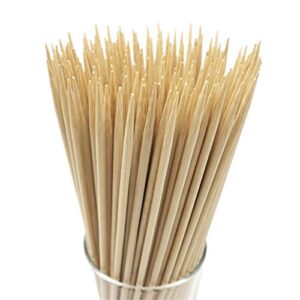
Plain bamboo skewers open up simple, safe bird feeder crafts when you use untreated, 6-inch lengths without metal tips. They work beautifully as natural perches or fruit holders in DIY bird feeders, giving kids hands-on practice with eco-friendly materials and sustainable birding habits.
You’ll want to check for splinters regularly and swap them out as they weather—rain and sun speed up wear.
These kid-friendly outdoor activities blend nature crafts with real bird watching for kids, and the lightweight design keeps assembly stress-free for young builders keen to see their creations in action.
| Best For | Parents and educators looking for safe, eco-friendly materials to build simple DIY bird feeders with kids during hands-on nature projects. |
|---|---|
| Primary Use | Crafting/DIY projects |
| Age Suitability | All ages |
| Material Type | Natural bamboo |
| Weight/Size | 0.15 kg |
| Origin/Brand | Bamboo |
| Indoor/Outdoor Use | Indoor/Outdoor |
| Additional Features |
|
- Untreated bamboo is safe for birds when you skip metal tips and coatings, making it a worry-free choice for backyard wildlife crafts.
- Lightweight 6-inch skewers are easy for children to handle and assemble into perches or fruit holders without complicated tools.
- Eco-friendly and biodegradable material teaches kids about sustainability while they create functional bird-watching stations.
- Exposure to rain and sun breaks down bamboo quickly, so you’ll need to inspect for splinters and replace skewers regularly to keep feeders safe.
- Thin diameter means they’re only good for lightweight use—heavier foods or aggressive bird activity can snap or bend them.
- Some packages arrive with fewer skewers than advertised, and quality control issues can leave you short on supplies mid-project.
3. Wagner’s Deluxe Wild Bird Food Blend
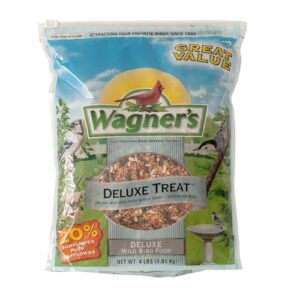
Wagner’s Deluxe Wild Bird Food Blend combines black oil sunflower seeds and safflower in a 4-pound bag that cardinals, chickadees, and finches absolutely love.
You’ll attract different bird species to your DIY bird feeders whether you’re using tube, hopper, or platform styles—the seed composition works across feeder types.
Store your birdseed in a cool, dry spot to keep it fresh, and you’ll notice minimal waste since birds eat most of the mix.
Just watch out for squirrels, and keep feeders clean for healthy bird watching sessions with your kids.
| Best For | Families who want an easy, versatile bird seed that attracts cardinals, chickadees, and finches to tube, hopper, or platform feeders without a lot of wasted seed on the ground. |
|---|---|
| Primary Use | Bird feeding |
| Age Suitability | All ages |
| Material Type | Seed blend |
| Weight/Size | 4 pounds |
| Origin/Brand | Wagner’s USA |
| Indoor/Outdoor Use | Outdoor |
| Additional Features |
|
- Attracts multiple backyard bird species including cardinals, chickadees, and finches with its sunflower and safflower blend
- Works in any feeder style you already own—tube, hopper, or platform feeders all work fine
- Birds eat most of the mix so you’re not sweeping up piles of wasted seed under your feeder
- Some bags have bugs or quality control issues with the sunflower seed content
- Squirrels will go after it, so you might need a baffle or squirrel-proof feeder
- Picky birds in certain areas refuse to eat it, so results vary by location
4. Karlash Jumbo Craft Sticks
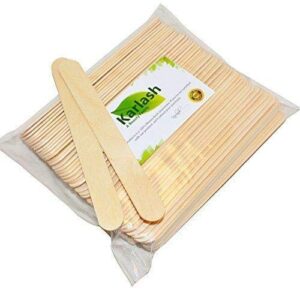
Karlash Jumbo Craft Sticks give you the perfect base for bird feeder crafts. These 6-inch birch wood pieces are smooth, sturdy, and easy for kids to handle during outdoor crafts.
You’ll get 100 sticks per pack, which means plenty for classroom projects or backyard DIY bird feeder crafts with multiple children. They work beautifully for craft stick designs like platform feeders or decorative frames.
They’re part of eco-friendly materials you can combine with kid-safe scissors and glue for safe, hands-on kids’ art projects that teach wildlife appreciation.
| Best For | Parents, teachers, and scout leaders looking for affordable, kid-friendly craft supplies for DIY bird feeder projects and hands-on nature activities. |
|---|---|
| Primary Use | Crafting/DIY projects |
| Age Suitability | Kids & adults |
| Material Type | Birch wood |
| Weight/Size | 100 pieces |
| Origin/Brand | Karlash |
| Indoor/Outdoor Use | Indoor/Outdoor |
| Additional Features |
|
- 100-piece pack gives you enough for multiple projects or large groups without running out
- Smooth birch wood is easy for kids to handle, glue, and decorate safely
- 6-inch jumbo size works perfectly for building sturdy platform feeders and larger craft designs
- Not ideal for professional or heavy-duty applications beyond basic crafts
- No information on whether the birch wood is sustainably sourced
- May crack or splinter if not handled carefully during cutting or assembly
5. Natural Jute Twine String
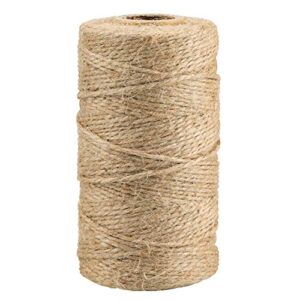
This natural jute twine is perfect for hanging your DIY bird feeders securely. The 656-foot roll gives you plenty of eco-friendly materials for kid-friendly outdoor activities, and the 2mm thickness is strong enough to support lightweight pine cone or cereal feeders.
You’ll love that it’s biodegradable, which teaches sustainable crafting principles during nature-inspired crafts. Just check it monthly for fraying—natural fiber benefits come with a trade-off since jute twine uses include outdoor projects where moisture can speed up breakdown. Bird feeder safety means replacing worn twine promptly.
| Best For | Parents and educators looking for an affordable, eco-friendly material to create lightweight hanging bird feeders with kids while teaching sustainability. |
|---|---|
| Primary Use | Crafting/DIY projects |
| Age Suitability | All ages |
| Material Type | Natural jute |
| Weight/Size | 5.6 ounces |
| Origin/Brand | Natural jute |
| Indoor/Outdoor Use | Indoor/Outdoor |
| Additional Features |
|
- The 656-foot roll provides tons of material for multiple projects at a great value, so you won’t run out mid-craft
- Biodegradable jute is planet-friendly and reinforces environmental lessons during outdoor activities with children
- The 2mm thickness strikes a nice balance—sturdy enough for lightweight feeders but still easy for small hands to tie and work with
- Natural jute breaks down faster than synthetic options when exposed to rain and moisture, requiring monthly checks and replacement
- It’s not strong enough for heavier feeders, so you’re limited to pine cones, cereal rings, or other lightweight designs
- Some users report the twine can be thinner or weaker than expected, and it may fray if kids pull too hard or tie knots too tight
6. Elmer’s White School Glue
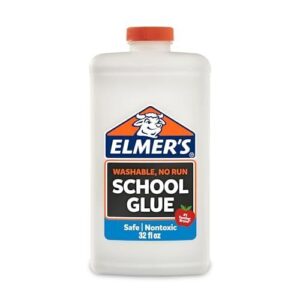
You can’t build sturdy DIY bird feeders without reliable adhesive types, and this 32-ounce bottle delivers exactly that. The non-toxic formula makes glue safety a non-issue during kid-friendly outdoor activities, while the washable feature saves you from sticky disasters during nature-inspired crafts.
It bonds materials like cardboard, craft sticks, and fabric in 15–60 minutes, perfect for bonding materials on multiple craft projects. Keep glue sticks as backup for quick fixes, but this bottle manages serious DIY crafts where your feeder components need a dependable hold.
| Best For | Parents and teachers looking for a safe, mess-forgiving adhesive for kids’ craft projects and classroom activities. |
|---|---|
| Primary Use | Crafting/bonding |
| Age Suitability | Children |
| Material Type | Liquid adhesive |
| Weight/Size | 2.3 pounds |
| Origin/Brand | Elmer’s |
| Indoor/Outdoor Use | Indoor |
| Additional Features |
|
- Non-toxic and washable formula means less worry when kids get glue on their hands or clothes
- Adjustable before setting gives you time to reposition pieces without ruining your project
- Large 32 oz size offers great value for frequent crafters and classrooms
- Drying time of 15-60 minutes requires patience, especially with impatient kids
- Bond strength isn’t suitable for heavy-duty projects or structural repairs
- Big bottle size can be awkward for small hands to handle during detailed work
7. Backpack Explorer Bird Watch Book

Transform your kids’ DIY bird feeders into year-round outdoor education adventures with this interactive activity book. You’ll get 50 stickers, 12 field guides on wildlife habitats, and three scavenger hunts that turn birdwatching into ecological literacy fun.
The 48-page format includes a real magnifying glass and pull-out journal, perfect for recording species during nature exploration.
Ages 4–8 will learn bird conservation basics while building observation skills that last a lifetime—exactly what your feeder projects need to inspire genuine connection with local ecosystems.
| Best For | Parents looking to deepen their kids’ connection with nature through hands-on activities that teach bird identification, habitats, and conservation basics for ages 4-8. |
|---|---|
| Primary Use | Bird education |
| Age Suitability | Ages 4-8 |
| Material Type | Paper/plastic |
| Weight/Size | 2.31 pounds |
| Origin/Brand | Storey Publishing |
| Indoor/Outdoor Use | Indoor/Outdoor |
| Additional Features |
|
- Comes with practical tools like a real magnifying glass, 50 stickers, and a pull-out journal that make outdoor exploration more engaging and interactive
- Packs serious educational value with 12 field guides, scavenger hunts, and activities that teach ecological concepts without feeling like a textbook
- Durable format designed for actual outdoor use, so kids can take it on nature walks and record real-time observations
- The 48-page length and small format may feel limited for families wanting more in-depth content or longer-term use
- Kids under 4 or advanced readers above age 8 might find the content either too complex or not challenging enough
- Some activities require a higher reading level than expected, which means younger kids will need more adult help than anticipated
8. Bird Watching Guide for Kids
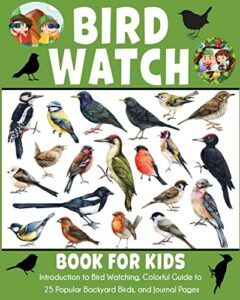
Your kids can move from feeder crafts to serious bird identification with this 65-page guide built for ages 8–12. It features full-color photography of 25 popular North American species, plus journal pages where young naturalists record real sightings—perfect for nature-based learning that sticks.
The 8×10 inch format pairs beautifully with kid-friendly optics during outdoor education sessions, teaching wildlife conservation through hands-on birdwatching. It’s outdoor safety meets nature-based learning in one spiral-bound package that turns your backyard into a living classroom for kid-friendly outdoor activities.
| Best For | Parents and educators looking to introduce children aged 8-12 to bird watching through a colorful, interactive guide that combines species identification with journaling activities. |
|---|---|
| Primary Use | Bird education |
| Age Suitability | Ages 8-12 |
| Material Type | Paper |
| Weight/Size | 65 pages |
| Origin/Brand | Independent |
| Indoor/Outdoor Use | Indoor/Outdoor |
| Additional Features |
|
- Features 25 common North American birds with full-color photos and illustrations that make identification easy for beginners
- Includes journal pages where kids can document their own sightings, creating a personalized record of their bird watching adventures
- The 8×10 inch spiral-bound format is practical for outdoor use and pairs well with binoculars during field trips
- Some buyers feel the price is high relative to the 65-page content length
- May not provide enough depth for older children or those already familiar with basic bird watching
- The spiral-bound version costs more than the standard format, which could be a consideration for budget-conscious families
9. Inspiring Growth Mindset Book For Kids

You’ll watch your child’s confidence soar alongside a baby bird’s first flight in this 32-page growth mindset treasure. The rhyming watercolor story (ages 3–8) teaches perseverance through a feathered friend who learns that trying beats quitting—every time.
It’s educational psychology wrapped in kid literacy magic, perfect for sparking conversations about environmental education after your DIY bird feeders for kids are hanging.
Book reviews praise how these nature-inspired crafts and child development lessons merge into one kid-friendly outdoor activities package.
| Best For | Parents and teachers looking for a picture book that helps kids ages 3-8 build confidence and learn that effort matters more than immediate success. |
|---|---|
| Primary Use | Bird education |
| Age Suitability | Ages 3-8 |
| Material Type | Paper |
| Weight/Size | 32 pages |
| Origin/Brand | Dawn Publications |
| Indoor/Outdoor Use | Indoor |
| Additional Features |
|
- Rhyming text and watercolor illustrations keep young kids engaged while teaching them it’s okay to fail and try again
- Includes hands-on STEM activities that extend the learning beyond just reading the story
- Works well both at home and in classroom settings for discussions about facing fears and sticking with hard things
- Some copies arrive with bent covers or damaged pages, which is frustrating for a book you’re giving to kids
- The bird-and-flying theme might not grab children who aren’t into nature topics
- The story can feel a bit simple or repetitive for kids on the older end of the age range
DIY Bird Feeder Ideas for Children
You don’t need fancy materials or a big budget to create bird feeders that actually work. Most of these projects use things you already have at home, like cardboard tubes, old fruit, and pantry staples.
Let’s look at five simple designs that kids can make in under an hour.
Pine Cone Feeders With Peanut Butter

This classic Pine Cone Craft is hands-down one of the easiest DIY Bird Feeders for Kids you’ll ever make. You just need pinecones, natural peanut butter (no salt or sugar), bird seed, and twine. Peanut Butter Safety matters—always supervise young kids and wash hands afterward.
Here’s your quick guide:
- Check pinecones for mold before starting
- Smear a thin peanut butter layer on each cone
- Roll in bird seed mix until fully coated
- Tie secure twine for hanging
- Practice Feeder Maintenance and refresh weekly
You’ll attract chickadees, nuthatches, and woodpeckers while teaching Wildlife Conservation up close. By using this DIY project, kids can learn about the importance of scientific study summaries and their role in understanding bird behavior.
Cereal and Bagel Bird Feeders
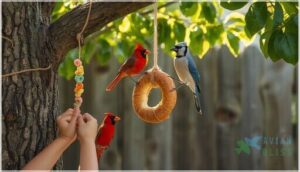
Beyond pinecones, you can thread plain cereal or bagel slices onto twine for super simple DIY bird feeder projects. Stick with unsweetened Cereal Types and whole-grain Bagel Varieties—sugary stuff attracts ants and mold fast.
For Bird Feeder Safety, skip hot glue and use child-safe materials. With regular Feeder Maintenance, you’ll boost Bird Attraction and turn bird seed into a kid-friendly outdoor activity that sparks curiosity.
Orange Half and Muffin Feeders
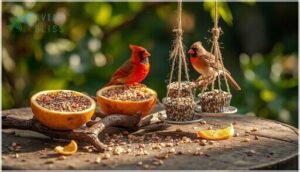
Fresh orange halves make fantastic natural dishes for Bird Seed Types—just slice, scoop, and skewer onto a twig for instant Feeder Designs. Muffin Feeders work the same way: nestle seed-filled cups into a hanging tray for easy observation.
With Orange Halves, you’re creating nature-inspired crafts that double as Homemade Bird Feeders. Skip citrus oils near birds, supervise assembly for Kid Safety, and you’ve got kid-friendly outdoor activities that actually attract feathered friends.
Craft Stick and Canning Lid Feeders
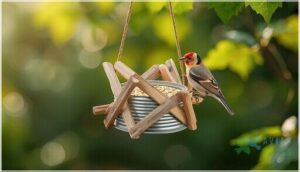
Canning lids paired with craft sticks create sturdy Feeder Designs you can hang anywhere. Here’s what makes Lid Assembly work for kid-friendly outdoor activities:
- Glue sticks in a lattice frame around a clean canning lid.
- Drill small holes for UV-resistant cord (cotton frays fast).
- Add a perch stick so birds feel secure.
- Fill with sunflower hearts or mixed seed.
- Place 4–6 feet high for Bird Safety.
These nature-inspired crafts turn recycling and reuse into real science—just supervise drying time and watch Feeder Placement attract finches and sparrows all season.
Recycled Bottle and Tube Feeders
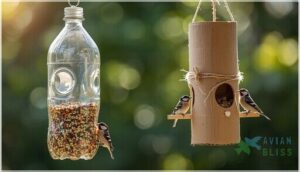
Empty plastic bottles become clever tube designs when you cut feeding ports and seal sharp edges. Clear containers let kids track seed levels and watch bird activity up close—I absolutely love seeing their faces light up! Here’s your recycling and reuse blueprint:
| Feature | Bottle Feeder | Tube Feeder |
|---|---|---|
| Material | 2-liter soda bottle | Paper towel tube |
| Assembly Time | 15–20 minutes | 10 minutes |
| Best Seed | Mixed sunflower | Nyjer or millet |
These eco-friendly, kid-friendly outdoor activities make feeder maintenance simple and bird attraction guaranteed.
Choosing Safe Materials for Kids’ Bird Feeders
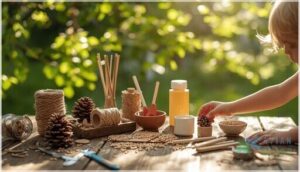
When you’re building bird feeders with kids, safety comes first—and that means choosing materials that won’t cause harm if little hands get curious. You want supplies that are sturdy enough to hold up outdoors but gentle enough for children to handle without worry.
Let’s look at the key materials that keep your bird-feeding projects both fun and safe.
Non-Toxic Glues and Finishes
When you’re building feeders with little ones, look for water-based glues and finishes labeled non-toxic and low-VOC—these eco-friendly options meet child safety standards without harsh fumes. Natural oils like linseed oil offer a toxic-free, biodegradable finish that’s perfect for nature-inspired crafts.
Always check labels for toy safety certification, and let everything cure fully before your kid-friendly outdoor activities begin.
Child-Safe Scissors and Tools
You’ll want blunt-tipped, kid-safe scissors with plasticized grips and large finger holes—they meet ASTM safety standards and reduce puncture risk during nature DIY projects. Look for stainless steel blade materials with rust-resistant finishes and ergonomic finger rests that help small hands control cuts.
Storage tips matter too: keep tools in a case when not in use, wipe off glue residue, and store them dry for kid-friendly outdoor activities year-round.
Eco-Friendly and Recycled Materials
Sustainable woods like bamboo and recycled plastics make feeders that last through rain and snow while keeping chemicals away from birds and kids. FSC-certified lumber, jute rope, and repurposed bottles are featured in the best eco-friendly DIY bird feeder ideas—they’re nature-inspired crafts that teach wildlife conservation through hands-on recycling crafts. Biodegradable materials and renewable resources turn everyday items into functional, safe designs.
Shatterproof and Lightweight Designs
Shatterproof materials and lightweight frames transform DIY bird feeder ideas into kid-friendly designs you won’t worry about during outdoor activities. High-density polyethylene frames resist cracking, while polycarbonate viewing panels let kids watch seeds disappear without risk. Safe construction matters when little hands are building homemade bird feeders.
- Braided nylon rope withstands weather and won’t fray in your backyard
- Durable finishes with non-toxic, UV-resistant coatings protect surfaces year-round
- Snap-fit components eliminate glass parts that might shatter
- Rounded edges and smooth corners prevent scrapes during assembly
Educational Benefits of Bird Feeders for Kids

Bird feeders aren’t just about attracting colorful visitors to your yard—they’re powerful learning tools that connect kids to the natural world in ways that stick. When children hang a feeder and watch what happens next, they’re actually building skills in observation, critical thinking, and empathy for wildlife.
Bird feeders transform backyards into living classrooms where kids build observation skills, critical thinking, and real empathy for wildlife
Let’s look at how these simple backyard setups create real educational moments that go way beyond what any textbook can offer.
Encouraging Nature Observation and Bird Watching
You’ll love watching your kids lean into bird watching with a simple feeder outside the window. Regular, short observation sessions sharpen their identification skills—studies show visual field guides boost species recognition by 15–25 percent in elementary learners.
Keep a tally together, practice nature journaling, and explore bird habitats through outdoor activities for kids. These nature-inspired crafts make environmental education feel like an adventure, not a lesson.
Supporting Science and Math Learning
Watching birds at feeders transforms your backyard into a living classroom for science literacy and math concepts. Kids can count visitors, measure birdseed consumption in grams, and graph sightings against weather—turning data analysis into something tangible.
These observations sharpen understanding of bird behavior and feeder design while building real-world skills in nature. It’s conservation meets computation, and it sticks.
Promoting Environmental Awareness
Building feeders with recycled materials shows kids firsthand how sustainable living works—they’re creating wildlife preservation tools from household items.
Exposure to nature through bird feeding boosts attention to environmental cues by 20–30 percentage points, and hands-on projects like these strengthen pro-environmental attitudes in measurable ways. You’re not just feeding birds; you’re nurturing conservation methods that stick.
Inspiring Wildlife Conservation in Children
When kids join citizen science projects—like counting birds at the feeder—they’re twice as likely to keep up environmental stewardship habits long-term. Introducing wildlife education through hands-on, kid-friendly outdoor activities builds real eco awareness, and exposure to conservation role models in nature-inspired crafts boosts their intention to participate in wildlife conservation for kids initiatives as they grow.
Bird feeding and conservation go hand in hand.
Tips for Successful Bird Feeding With Kids

Getting kids excited about bird feeding is one thing—keeping that excitement alive takes a bit of know-how. You’ll want to think about which birds actually live in your area, where to hang those feeders, and how to adjust your approach as the seasons shift.
Let’s walk through some practical tips that’ll help you and your kids turn bird feeding into a habit that sticks.
Attracting Local Bird Species
Your neighborhood already hosts a surprising variety of feathered visitors—cardinals, chickadees, robins, and even ruby-throated hummingbirds during summer months. Attracting local species to your bird feeders starts with understanding their preferences and seasonal habits, which makes bird watching even more rewarding for kids.
- Seed selection matters: Black oil sunflower seeds draw cardinals and chickadees, while nyjer attracts finches
- Bird habitat needs vary: Eastern bluebirds prefer open spaces with native fruits near backyard habitats
- Bird migration timing counts: Mild winters bring more wintering birds to accessible feeders throughout bird feeding season
Proper Placement and Maintenance
Once you’ve drawn birds to your feeder, smart placement keeps them safe and your kids engaged. Set feeders about 5 to 6 feet high for easy bird watching while deterring predators—at least 10 feet from windows for window safety.
Clean feeders every two weeks with hot, soapy water to prevent mold in seed storage, and refresh birdseed daily during peak seasons.
Seasonal Bird Feeding Practices
You’ll notice winter feeding becomes essential as birds burn through calories fighting the cold—they need high-fat seeds like sunflower and suet to stay warm. Adjust your feeder placement and birdseed mix with the seasons, swapping in fruit during bird migration windows.
Kids love tracking these shifting seed preferences, turning nature observation into hands-on lessons about habitat conservation and survival.
Recording Bird Sightings and Activities
A simple sightings log turns casual bird watching into real science for kids. Have them jot down species, counts, and behaviors in a reusable notebook during 15-minute observation windows. Cross-check identifications together using field guides, then compile the data weekly to spot patterns in which birds love your bird seed most.
It’s nature and wildlife education that sticks, building outdoor activities into lasting data analysis skills.
Frequently Asked Questions (FAQs)
How often should we refill bird feeders?
You’ll want to refill every one to three days during spring and fall migration peaks.
Check daily for seed spoilage in warm weather, and watch bird activity closely to adjust your schedule.
What birds visit feeders in our region?
Your feeder will likely attract American goldfinches, northern cardinals, Carolina chickadees, blue jays, and mourning doves—each preferring different birdseed types.
Seasonal feeder activity shifts as local avian diversity changes with bird migration routes throughout the year.
Can squirrels damage homemade bird feeders?
Yes, squirrels chew through many homemade bird feeders, spilling birdseed and breaking components. You’ll want metal or puncture-resistant feeder materials with squirrel-proofing guards—wildlife interaction gets tricky, but smart bird feeder design and pest control methods really help.
Do bird feeders spread diseases among birds?
Bird feeders can spread diseases when pathogens accumulate on shared surfaces.
Regular cleaning with soap and water between feeding cycles reduces transmission risk, protecting bird health and supporting wildlife safety through proper feeder hygiene.
When is the best time to start feeding birds?
Late winter to early spring works best—think February through March in most areas. That’s when natural food runs low, migration kicks in, and kids can watch birds discover fresh birdseed right outside your window.
Conclusion
You could spend hundreds on a tech toy that’ll gather dust in three weeks, or you could hang a simple bird feeder and watch your kids race outside every morning to check for visitors.
Bird feeders for kids aren’t just crafts—they’re invitations to wonder, tiny doorways into ecosystems thriving right outside your window. Once they’ve spotted their first chickadee or counted cardinal visits, they won’t just look at your yard the same way. They’ll see it alive.