This site is supported by our readers. We may earn a commission, at no cost to you, if you purchase through links.
A single chickadee needs roughly 10,000 caterpillars to raise one brood from hatching to fledging. That’s why your backyard feeding station becomes more than just a convenience during nesting season—it’s a lifeline.
When parent birds juggle the demands of incubating eggs and feeding hungry nestlings, they burn energy at an astonishing rate. Natural food sources don’t always keep pace with these nutritional needs, especially in suburban areas where insect populations have declined.
You can bridge that gap by offering the right foods at the right time. Smart feeding practices, proper feeder placement, and a few strategic habitat improvements transform your yard into a sanctuary where birds don’t just visit—they raise their families.
Table Of Contents
- Key Takeaways
- Essential Nutrients for Nesting Birds
- Best Foods to Offer During Nesting Season
- Foods to Avoid for Bird Health
- Choosing The Right Bird Feeder
- Safe Placement of Bird Feeders
- Cleaning and Maintaining Bird Feeders
- Providing Nesting Materials and Sites
- Supporting Birds Year-Round
- Preventing Risks at Feeders and Nests
- Creating a Bird-Friendly Backyard Habitat
- Frequently Asked Questions (FAQs)
- What to feed birds that are nesting?
- What do birds eat while nesting?
- Why is it illegal to keep a bird’s nest?
- How often should I clean my birdbath?
- What camera features work best for birds?
- Can I relocate active bird nests safely?
- Which native plants attract nesting birds locally?
- How do I stop squirrels from feeders?
- When should I stop feeding birds in summer?
- Can birds become dependent on my feeders?
- Conclusion
Key Takeaways
- Nesting birds require high-protein foods like mealworms and insects (a single chickadee needs roughly 10,000 caterpillars to raise one brood), plus calcium for strong eggshells and antioxidant-rich berries to combat reproductive stress.
- Position feeders 10-12 feet from protective cover to balance predator safety with escape routes, clean them weekly to prevent disease transmission, and place them either within 3-4 meters of windows or beyond 10 meters to reduce fatal collisions.
- Avoid feeding birds toxic human foods like avocado, chocolate, and anything with xylitol, and never offer processed junk food, moldy seed, or synthetic nesting materials that can trap or poison nestlings.
- Create a complete habitat by planting native species that provide natural food sources year-round, offering fresh water changed daily, and adjusting your feeding strategy seasonally to match birds’ changing nutritional demands from breeding through migration.
Essential Nutrients for Nesting Birds
When nesting season arrives, birds need more than their regular diet to stay healthy and raise strong chicks. You’ll want to focus on three key nutritional areas that make the biggest difference during this demanding time.
One of the most critical steps is ensuring their diet covers essential vitamin requirements, which directly impact egg quality and chick survival rates.
Let’s look at what nesting birds need most to thrive in your backyard.
Protein and Calcium Needs
Nesting birds need protein and calcium to thrive. Protein aids feather growth, muscle development, and immune function during the demanding nesting period. Calcium strengthens bone health and forms rigid eggshells that protect developing embryos.
Nesting birds thrive on protein for growth and calcium for strong eggshells that protect their developing young
You’ll find excellent protein sources in mealworms and insects, while calcium supplements can include mineral-rich seeds. Together, these nesting foods provide the essential avian nutrition your backyard birds require for successful reproduction.
Importance of Antioxidants
Beyond protein and calcium, antioxidants protect nesting birds from oxidative stress by neutralizing free radicals that damage cells. These compounds support cellular defense, helping birds maintain healthy tissues during reproduction’s physical demands.
You can boost bird nutrition and avian health with antioxidant-rich foods:
- Fresh berries like blueberries and blackberries
- Dark leafy greens and vegetables
- Colorful fruits including apples and oranges
- Seeds with natural vitamin E
- Insects that provide diverse antioxidant compounds
These foods improve nutrient absorption and overall bird feeding success.
Hydration and Fresh Water Access
Just as antioxidants fuel healthy cells, clean water keeps nesting birds thriving. Water availability aids backyard birds during nesting, turning your bird feeder area into a complete wildlife habitat. This simple step enhances bird watching while keeping visitors healthy and hydrated.
You’ll need to provide fresh sources daily—birds drink regularly and bathe to maintain feathers. Water quality matters; rinse dishes each morning to prevent bacteria buildup at clean stations.
| Water Feature | Best Placement | Maintenance |
|---|---|---|
| Bird bath | 1-2 meters from perch | Rinse daily |
| Ground dish | Near shelter | Change twice daily |
| Elevated bowl | Open sightline | Clean every morning |
| Drip fountain | Shaded spot | Weekly scrub |
| Shallow basin | Garden center | Remove debris daily |
Best Foods to Offer During Nesting Season
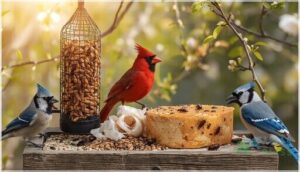
Nesting season brings unique nutritional demands that you’ll want to meet with the right foods. Your backyard visitors need specific options that fuel breeding, egg-laying, and raising their young.
Here are the three best food categories to offer during this critical time.
Insects and Mealworms
When parent birds are raising baby birds, they rely on insects and mealworms for high-quality protein. Understanding mealworm biology helps you choose between live vs dried options—both work, but live larvae contain more moisture.
Offer them in a clean feeder with moderation to prevent dependency on one food source. Nesting birds will eagerly seek these nutrient-packed treats during breeding season.
Thanks to their, mealworms are considered an outstanding dietary supplement for birds and other animals.
Suet, Nuts, and Seeds
High energy foods like suet, seeds, and nuts fuel nesting birds through their most demanding season. Suet cakes blend animal fat with sunflower seeds and roasted peanuts, delivering calories that help parents maintain stamina.
Black oil sunflower seeds and white proso millet attract songbirds to your bird feeders, while almonds and walnuts offer protein-rich nutrition during brood rearing.
Fresh Fruits and Berries
Fresh fruit brings natural sugars and vitamin C to nesting birds right when they need extra energy. Strawberries, blueberries, and raspberries deliver antioxidants that protect against stress during egg laying and chick rearing.
Pair these berry offerings with native shrubs and flowering plants that attract insects to create a complete feeding ecosystem in your yard.
Sliced apples and oranges add variety to your bird feeding station, while fresh picks keep backyard birds hydrated.
Rinse berries gently, offer small portions daily, and rotate seasonal fruit for balanced bird nutrition.
Foods to Avoid for Bird Health
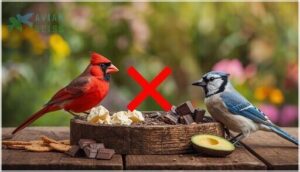
Not all foods are safe for your backyard birds. Some items you might’ve in your kitchen can actually be toxic or harmful, even if they seem harmless.
Let’s look at what you should keep out of your feeders to protect bird health.
Toxic Human Foods
Never share human snacks with nesting birds or feeder visitors. Avocado toxicity strikes fast, damaging heart muscle even in tiny amounts.
Chocolate poisoning and caffeine hazards disrupt heartbeat and breathing. Fruit pit risks come from cyanide in apple seeds and cherry pits. Xylitol dangers upset blood sugar balance.
These foods threaten avian health and wildlife conservation efforts, so keep bird feeding and bird nutrition truly safe. For a full understanding of toxic foods for birds, always check updated safety resources.
Processed and Junk Food Risks
Junk food risks and processed meal dangers aren’t limited to human health—they harm birds too. Salty chips and sugary treats create toxic food effects through artificial additives your feathered visitors can’t handle. Sugar overload strains tiny systems, while greasy foods disrupt digestion.
Bird feeding means bird nutrition matters, so supplemental feeding should protect avian health and wildlife conservation, not undermine it.
Recognizing Spoiled or Moldy Food
Moldy food at your bird feeders can poison the very creatures you’re trying to help. Visual inspection reveals food spoilage signs faster than you might expect—mold detection begins with your eyes and nose.
- Fuzzy green, white, or black patches spreading across bird seed surfaces
- Sour or musty odors wafting from suet cakes or stored seed
- Slimy textures on once-dry foods signaling bacterial growth
Texture checks and odor analysis prevent deadly mistakes in bird feeding.
Choosing The Right Bird Feeder
The type of feeder you choose determines which birds visit your yard and how safely they can feed. Different feeders work best for specific foods, from tiny seeds to suet cakes.
Let’s look at the most effective options for attracting and supporting nesting birds.
Tube Feeders for Seeds and Nuts
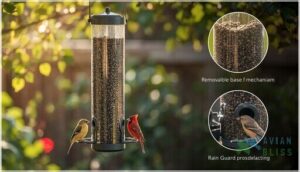
Tube feeders work beautifully for seeds and nuts because their cylindrical design keeps food fresh and dry. You’ll find models with large ports for black oil sunflower seed or narrow slits for Nyjer that attract finches.
Choose feeders with removable bases for easy cleaning every week or two, and look for metal ports that resist squirrel damage. Mounting at five to six feet gives birds safe access.
Platform and Hopper Feeders
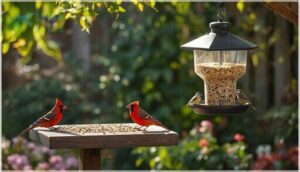
Platform feeders offer a flat, open surface where larger birds can land comfortably while you serve multiple seed types at once. Hopper feeders use a gravity-fed bin that dispenses seed gradually into a tray below, keeping food fresh and reducing waste.
Both designs support backyard bird feeding by accommodating varied species. Choose models with drain holes and removable trays for easy feeder maintenance.
Suet Cages and Mesh Feeders
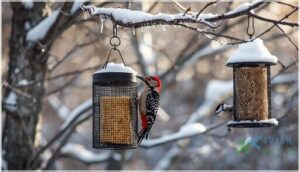
Suet cages hold standard suet cakes in vinyl-coated wire mesh that resists rust and weather year-round. Most feature a flip-down front for easy suet refilling.
Mesh feeder options use PVC-coated wire with openings sized to welcome clinging birds while excluding larger species. Both bird feeders attract woodpeckers, nuthatches, and chickadees.
Hang them from hooks or branches, positioning feeders 5 to 10 feet high for ideal bird attraction and safe feeder placement.
Safe Placement of Bird Feeders
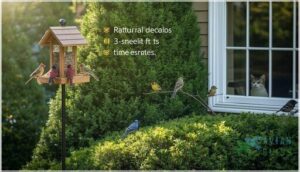
Where you place your feeders can mean the difference between a safe haven and a danger zone for your backyard birds. You’ll want to think about predators lurking nearby, windows that might cause collisions, and natural cover that gives birds a quick escape route.
Let’s look at three key factors that’ll help you find the perfect spot.
Protection From Predators
With predator proofing, you’ll give your backyard visitors a fighting chance against prowlers. Bird safety depends on smart feeder guards and thoughtful placement that disrupts predator prey dynamics. Understanding bird behavior and nesting birds’ vulnerability helps you minimize predation at feeding stations.
- Use dense shrubs or low hedges around feeders to block ground predators’ line of sight by about 40 percent.
- Install pole mounted feeders with baffles to reduce mammal access by roughly 50 percent.
- Place feeders 12 feet from protective cover like brush piles or evergreens so birds can escape quickly.
- Add motion activated lights near feeding areas to startle nocturnal predators and reduce visits by 30 percent.
Distance From Windows
Beyond predator threats, window strike poses another deadly risk to your feathered guests. Position feeders at least 10 meters from house windows to reduce bird strike risk and provide clear bird flight paths.
If space is tight, place them within 3 to 4 meters so birds won’t build dangerous momentum. Set feeder height between 15 and 30 centimeters above ground for collision reduction while maintaining safe viewing distances.
Shelter and Cover Considerations
With the right protective setup, you’ll give nesting birds the security they need to raise healthy chicks. Choose strategic shelter zones that blend safety with accessibility.
- Wind Shelter placement within 12 feet of feeders cuts exposure and keeps nesting materials dry
- Predator Guard mesh and anti-climb coatings on bird houses protect vulnerable nesting birds
- Thermal Insulation with R-values of 11 to 15 stabilizes temperatures inside nesting cover
- Shelter Height of 6 to 7 feet allows air circulation while deterring ground threats
- Native Vegetation within 3 to 6 feet provides concealment for habitat enrichment
Cleaning and Maintaining Bird Feeders
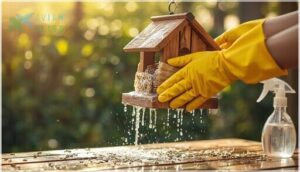
A dirty feeder can make your backyard birds sick faster than you might think. Regular cleaning protects the birds you’re working hard to support and keeps them coming back healthy.
Here’s what you need to know about keeping your feeders clean and safe.
Cleaning Frequency and Methods
Keeping bird feeders clean isn’t just good housekeeping—it’s essential for avian health and wellness. Daily cleaning of high-touch surfaces and water replacement prevents disease transmission among wild birds.
You’ll want to sanitize your feeder weekly with hot, soapy water, followed by thorough rinsing and complete air drying. Seasonal maintenance adjustments help you reduce disease risk while supporting nesting birds throughout the year.
Preventing Disease and Mold
Disease control starts with moisture management. Keep humidity around your bird feeders below 50 percent to prevent mold growth, which can trigger serious avian diseases. Dry any wet seed within 24 hours to reduce disease risk.
Regular feeder sanitation and proper ventilation stop bacteria like salmonella from spreading. Cleaning your feeder frequently and storing food in sealed containers protects bird health through essential hygiene practices.
Safe Cleaning Solutions
You need toxic-free cleaners that won’t harm avian health when cleaning your feeder. Choose plant-based formulas labeled safe for birds and free from volatile organic compounds. Dilute according to package directions, then rinse thoroughly with clean water.
Bird-safe disinfecting solutions, using gentle cleaning tips and eco-friendly methods, reduce disease risk at bird feeders while protecting nesting birds from chemical exposure with non-toxic formulas.
Providing Nesting Materials and Sites
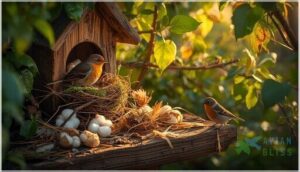
Birds need safe places to raise their young, and you can help by offering the right materials and shelter. Some birds prefer natural fibers they gather themselves, while others thrive in well-placed birdhouses.
Here’s what you should know about supporting nesting birds in your backyard.
Natural Vs. Commercial Nesting Materials
You can offer nesting birds natural fibers like dried grasses, feathers, and pine needles, which provide excellent natural insulation and match what birds instinctively seek during nesting season.
Commercial blends containing cotton, hemp, and plant-based fibers from sustainable sources work well too.
Always prioritize nest material safety by avoiding synthetic threads that can trap nestlings and fledglings, and skip anything with dyes or chemicals.
Birdhouses and Nestbox Placement
You should place nestbox designs between 6 and 12 feet high to protect nesting birds from predators. Mount birdhouses on metal poles with predator guards to prevent raccoons from climbing up.
The entrance hole size matters—bluebirds need 1.5 inches, while chickadees prefer 1.25 inches.
Use untreated cedar or pine for birdhouse materials and face the box away from afternoon sun.
Avoiding Harmful Materials
While choosing safe birdhouse materials matters, nesting materials need equal attention. Avoid synthetic fabrics with flame retardants and plastic components containing BPA or phthalates—these toxic materials harm birds through chemical exposure. Skip metal with lead solder or zinc coatings too.
Instead, offer natural fibers and untreated wood. These eco-friendly, non-toxic sustainable options protect nesting birds from human-wildlife conflict and support environmental ethics in your backyard.
Supporting Birds Year-Round
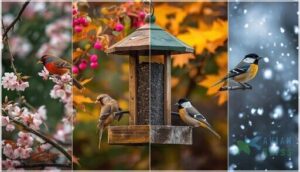
Bird feeding isn’t just a spring and summer activity. Your backyard visitors face different challenges throughout the year, and what they need changes with the seasons.
Let’s look at how you can adjust your feeding approach to support birds during every season.
Seasonal Feeding Strategies
You’ll want to implement consistent feeding schedules at dawn and dusk to match peak bird activity throughout the year.
Increase energy-dense foods during late fall to prepare birds for colder nights, and reduce grain exposure during wet periods to minimize mold risk.
Track seasonal changes and adjust your feeding plans every 4 to 6 weeks for ideal nutrient balance and dietary adjustments.
Adjusting Food Types by Season
Seasonal diet plans help you rotate foods naturally. Winter feeding tips emphasize high-fat seeds and suet for warmth, while spring migration foods blend protein-rich mealworms with mixed seeds. Summer insect supplements should be lighter since birds hunt live prey. Fall fattening strategies include sunflower seeds and peanuts to build reserves.
Adjust your backyard bird feeding every few weeks to meet changing nesting foods and seasonal bird needs.
Species That Need Year-Round Support
While most species find food on their own during warm months, some birds need your help all year. Hummingbird care and goldfinch diet requirements make year-round feeders necessary for these high-energy species:
- Hummingbirds burn calories fast and require nectar feeders through all seasons
- Goldfinches nest late and depend on nyjer seeds during summer
- Chickadees and nuthatches rely on consistent seed crops through winter
- Resident songbirds benefit from stable backyard bird feeding during temperature extremes
These wintering strategies support bird migration patterns and wildlife conservation efforts.
Preventing Risks at Feeders and Nests
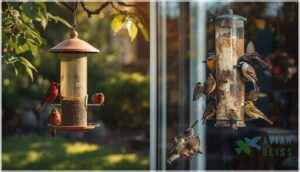
Feeding birds brings joy, but it also comes with real responsibilities. Feeders and nesting areas can expose birds to disease, predators, and dangerous collisions if you’re not careful.
Here’s how to keep your backyard safe so the birds you’re helping can truly thrive.
Reducing Disease Transmission
Disease surveillance starts with your eyes. Watch for birds with ruffled feathers, lethargy, or abnormal droppings, and remove feeders immediately if you notice these signs.
Clean feeders every one to two weeks during nesting season using hot water and non-toxic cleaners. Space feeders 10 to 15 meters apart to reduce crowding, which helps lower pathogen control risks and promotes overall avian health and nutrition.
Deterring Predators and Pests
Protecting your feeding stations from predators requires layered wildlife management strategies. Visual barriers like reflective tape or owl decoys reduce mammal visits by up to 60 percent, while motion-activated lights deter nocturnal intruders within 24 hours.
Core predator control methods include:
- Feeder security: Heavy-duty metal baffles prevent climbing raccoons and squirrels
- Habitat modification: Clear ground cover within 10 feet to eliminate hiding spots
- Pest deterrents: Ultrasonic devices and capsaicin-based scent repellents discourage unwanted visitors
Preventing Window Collisions
Glass reflections fool birds into seeing open sky, turning windows into invisible hazards. You can prevent bird-strike tragedies with simple visual markers that make glass surfaces visible during birdwatching season.
| Solution Type | Application Method | Effectiveness |
|---|---|---|
| Bird Decals | Apply at 2-4 inch intervals on exterior | Reduces collision risks 80% |
| Window Film | Static cling across entire pane | Visible to birds, clear to humans |
| Glass Markers | Matte patterns on both surfaces | Breaks reflections year-round |
| Exterior Screens | Install 3 inches from glass | Creates texture barrier |
| Feeder Placement | Position 10+ feet from windows | Lowers approach speed |
Position feeders away from glass surfaces to support feather safety while maintaining your backyard wildlife habitat. UV-reflective films work best for wildlife conservation during migration periods when bird feeding strategies require extra protection.
Creating a Bird-Friendly Backyard Habitat

A bird-friendly habitat goes beyond feeders and nesting boxes to create a complete backyard ecosystem. You’ll want to focus on three key elements that work together to support birds throughout the year.
Let’s look at how native plants, water features, and wildlife certification can transform your yard into a true sanctuary.
Planting Native Species
Native plants create the foundation for gardening for wildlife in your backyard. Use a Native Plant Finder to identify species that support local biodiversity, conserve water, and control soil erosion naturally.
These adapted plants need less care once established and provide familiar food sources year-round.
You can work toward a Certified Wildlife Habitat through ecosystem restoration with native plant selection.
Providing Water Sources
Clean, accessible water matters just as much as the food you put out. Place shallow dishes at least 10 meters from feeders to reduce disease spread. Keep water quality high by replacing daily and rinsing weekly.
A small fountain feature mimics natural sources and attracts more birds to your habitat. Position water near native plants for shade and natural cover while gardening for wildlife.
Certifying Gardens for Wildlife
You can formalize your commitment by certifying your garden as a Backyard Wildlife Habitat through the National Wildlife Federation’s Garden for Wildlife program. The process verifies you provide food, water, shelter, and space to raise young—the four core elements. Native plants play a key role in meeting landscape standards.
Certification benefits include habitat verification, a visible sign for your garden, and connection to a community of wildlife gardeners. Regular garden maintenance keeps your certification valid year-round.
Frequently Asked Questions (FAQs)
What to feed birds that are nesting?
Nesting birds need protein like nothing else, so offer mealworms and suet to fuel parent birds and chick development.
Fresh water and calcium-rich foods support strong eggshells and healthy baby birds too.
What do birds eat while nesting?
During the nesting season, parent birds focus on high-protein foods like insects and mealworms to support egg formation and chick growth.
Suet, seeds, and berries supplement their nesting diet with essential fats and nutrients.
Why is it illegal to keep a bird’s nest?
Federal penalties protect nesting birds under the Migratory Bird Treaty Act. You can’t possess active nests because disturbing them disrupts breeding and violates wildlife conservation laws designed for bird habitat preservation and environmental ethics.
How often should I clean my birdbath?
You should clean your birdbath every 1 to 2 days during hot weather for proper bird health and water quality.
In cooler seasons, cleaning every 1 to 2 weeks maintains adequate birdbath maintenance and algae control.
What camera features work best for birds?
You’ll want fast autofocus speed, high ISO performance, and image stabilization for sharp shots.
A wide aperture helps in low light, while fast shutter freezes quick bird behavior during bird watching.
Can I relocate active bird nests safely?
Is moving a nest really the right call? Relocating active nests violates federal Wildlife Laws protecting nesting birds during nesting season.
You’ll need Permit Requirements unless immediate danger exists—contact wildlife rehabilitators for Bird Safety guidance.
Which native plants attract nesting birds locally?
Native Nesting Shrubs like spicebush and wetland plant benefits from buttonbush attract nesting birds by offering shelter and insects. Berry-producing trees such as serviceberry feed parent birds, while native plant finder tools help identify regional species for gardening for wildlife habitat.
How do I stop squirrels from feeders?
You can stop squirrels at bird feeders by installing baffles, using weight-activated feeders, offering safflower seeds, choosing cage feeders with small gaps, and positioning feeders ten feet from trees where squirrels launch.
When should I stop feeding birds in summer?
You should gradually reduce feeder foods by late June to mid-July, easing birds off supplemental energy over two to four weeks while maintaining fresh water availability throughout summer’s heat.
Can birds become dependent on my feeders?
Small songbirds won’t lose their wild foraging skills from bird feeding. Feeders provide supplemental energy, but chickadees and other species naturally balance bird seed with insects, showing flexible feeding strategies rather than dependency risks.
Conclusion
Your backyard becomes a bustling breeding ground when you balance bird feeding and nesting support with care. Every mealworm you offer, every feeder you clean, every native plant you add creates ripples that reach far beyond your fence line.
Chickadees, finches, and wrens don’t just survive in your space—they thrive, raise families, and return year after year. That’s the quiet power of showing up for wildlife when it matters most.