This site is supported by our readers. We may earn a commission, at no cost to you, if you purchase through links.
A backyard feeder left full of cheap mixed seed can actually drive birds away—robins and warblers, and other desirable species will pass right over it while house sparrows pick through the filler. Most people don’t realize that what you put in a feeder matters as much as putting one up at all.
Black oil sunflower seeds alone attract over 40 North American species, yet they’re absent from most bargain blends. Getting your bird feeding food tips right means understanding how different species forage, what fuels them through cold snaps, and why a few smart choices turn a quiet yard into a genuine wildlife hub.
Table Of Contents
- Key Takeaways
- Essential Foods for Healthy Bird Feeding
- Choosing The Right Bird Feeders
- Seasonal Bird Feeding Food Tips
- Attracting a Variety of Bird Species
- Safe and Nutritious Bird Food Practices
- Feeder Placement and Bird Safety Tips
- Feeder Cleaning and Maintenance Essentials
- Creating a Bird-Friendly Feeding Environment
- Top 10 Bird Feeding and Care Products
- 1. Kingsyard Metal Finch Bird Feeder
- 2. Kaytee Wild Bird Seed Blend
- 3. Cardinal Bird Seed Cylinder Mix
- 4. BestNest Heated Bird Bath
- 5. Occer Compact Binoculars For Adults And Kids
- 6. Monarch Butterfly Wildflower Seeds Mix
- 7. Worx Electric Leaf Blower Mulcher Vacuum
- 8. Baby Bird Feeding Syringe Set
- Gisurem Baby Bird Feeding Syringe Set
- 9. Baby Bird Feeding Syringe Tool
- Frequently Asked Questions (FAQs)
- How to properly feed birds?
- How do you feed a bird?
- Should you feed wild birds?
- Do birds eat a feeder?
- How do you stop birds from eating your bird feeders?
- How do birds eat?
- How do you keep birds healthy?
- Can birds become dependent on backyard feeders?
- What temperature is too cold for feeding?
- How do weather conditions affect bird feeding?
- Conclusion
Key Takeaways
- Black oil sunflower seeds attract over 40 North American species and deliver up to 35% fat content, making them the single most effective food you can offer any backyard bird.
- Matching your feeder type and height to specific species—ground trays for sparrows, suet cages at 6–10 feet for woodpeckers—matters just as much as what you put inside it.
- Cleaning seed feeders every one to two weeks with a nine-to-one water-bleach solution prevents disease outbreaks that can quietly spread through an entire visiting flock.
- Seasonal adjustments like switching to no-melt suet in summer heat and stocking high-fat foods during winter cold snaps keep your feeding station genuinely useful year-round, not just convenient.
Essential Foods for Healthy Bird Feeding
What you put in your feeder matters just as much as where you put it. Different birds have different nutritional needs, and offering the right foods can turn a quiet yard into a lively gathering spot.
Matching the right seeds to each species is easier when you have a solid reference like this bird seed feeding guide for attracting wild birds.
Here are the five essentials worth keeping on hand.
Black Oil Sunflower Seeds
Black oil sunflower seeds are the cornerstone of any smart winter bird feeding strategy. With around 30 to 35 percent fat and nearly 2,500 calories per pound, they’re outstanding energy boosters for wild bird diets in cold weather.
Their thin shells let chickadees, cardinals, and finches crack them easily — making this bird seed your single best investment for attracting more birds.
For more details on their nutritional value and animal benefits, see this informative overview of essential nutrients and feeding guidelines.
Nyjer and Safflower Seeds
Two seeds that often get overlooked are nyjer and safflower — and honestly, they’re worth knowing about.
Nyjer seed’s oil content sits above 35 percent fat, making it a powerhouse for finches. Safflower, meanwhile, is a quieter gift to cardinals and chickadees while naturally deterring squirrels and grackles. Safflower is also prized as a high-quality food source for birds.
Three bird feeding tips to remember:
- Store nyjer seed in airtight containers for freshness
- Match feeder placement to species preferences
- Never mix safflower with other bird seed blends
Suet and High-Fat Foods
Beyond seeds, suet and high-fat foods give birds something seeds simply can’t match — pure, concentrated energy.
A quality suet cake delivers over 700 calories per 100 grams, which is exceptional suet nutrition for a small block. That fat-dense bird diet helps chickadees, woodpeckers, and nuthatches survive bitter nights when their bodies burn calories just staying warm.
| Suet Type | Best For | Temperature Limit |
|---|---|---|
| Classic suet cakes | Woodpeckers, chickadees | Below 95°F |
| No-melt suet | Year-round winter feeding | Up to 130°F |
| Suet alternative blends | Bluebirds, nuthatches | Varies by formula |
| Spreadable bark butter | Tree-clinging species | Moderate climates. |
High energy foods like these are your backyard birds’ best allies when natural insects disappear under snow.
Peanuts and Mealworms
Peanuts and mealworms are two of the most rewarding bird feeding tips you can act on. Peanuts bring roughly 45–50% fat and 20–25% protein — wild bird nutrition that rivals suet. Mealworm benefits are equally impressive, offering up to 50% protein in dried form.
Four smart bird feeding strategies to remember:
- Offer shelled peanuts in mesh feeders for chickadees, nuthatches, and woodpeckers
- Use whole in-shell peanuts on platform feeders to attract jays and larger birds
- Sprinkle dried mealworms into seed blends to boost wild bird health year-round
- Limit portions once or twice daily so birds still forage naturally
Both are calorie-dense high fat foods, so a little goes a long way at your bird feeders.
Fruit Offerings for Berry-Eating Birds
Fruit is often the secret handshake between your yard and birds like robins, orioles, and cedar waxwings. Berry Nutrition runs deep — dark elderberries and dogwood fruit deliver carbohydrates, fats, and micronutrients that seeds simply can’t match.
For Fruit Placement, try halved oranges or fresh fruit slices on platform feeders. Seasonal Fruits like winterberries and dried fruit clusters support Bird Attraction through cold months, while planting berry shrubs turns your garden into a bird-friendly haven.
Choosing The Right Bird Feeders
The feeder you choose matters more than most people think — it shapes which birds show up and how often they visit.
Different species have very specific preferences, and matching the feeder to the food (and the bird) makes a real difference. Here are the main feeder types worth knowing about.
Tube Feeders Vs. Platform Feeders
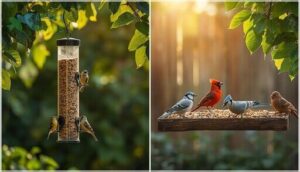
Choosing between a tube bird feeder and a platform feeder really comes down to who you want at your table. Tube feeders offer better seed protection from rain and naturally limit larger “bully birds,” making feeder maintenance easier.
Platform feeders, though, draw the widest crowd — cardinals, jays, and doves all welcome. Smart wildlife management often means using both for maximum bird attraction.
Suet and Nyjer Feeders
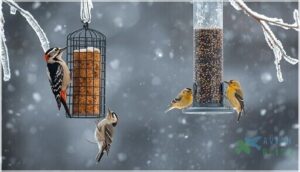
Two specialized bird feeders — suet cages and nyjer tube feeders — quietly become your winter feeding superstars when temperatures drop.
- Suet feeders hold standard 4.5-inch suet cakes, attracting woodpeckers, nuthatches, and chickadees
- Nyjer seed feeders use tiny ports, keeping larger birds out naturally
- Upside-down suet feeders discourage starlings while welcoming true cling feeders
- Sock-style nyjer seed feeders let finches cling anywhere along the surface
Ground-Feeding Options
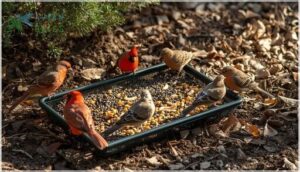
Some birds simply won’t visit hanging feeders — they need flat ground to feel safe eating.
Low-profile ground trays with mesh bases keep seeds like black oil sunflower seeds, mealworms, and cracked corn dry and accessible for cardinals, doves, and sparrows.
| Ground Tray Feature | Why It Matters |
|---|---|
| Mesh drainage base | Prevents soggy, moldy seed |
| Raised rim edges | Reduces waste and monitors intake |
| Removable insert | Speeds up bird hygiene cleaning |
| Open placement | Facilitates predator control sightlines |
Feeder Materials and Weather Protection
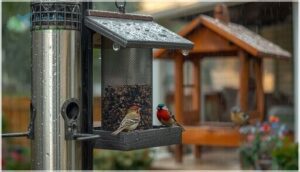
The material your bird feeder is made from quietly determines how long it lasts and how safe the seed stays inside it. Here’s what holds up best outdoors:
- Metal durability wins in stormy yards — stainless or powder-coated steel resists rust across seasons
- Feeder insulation is a cedar advantage — wood keeps seed cooler in summer, less icy in winter
- Roof designs with extended overhangs protect suet feeders and perches during rain
- Moisture control matters most in tray and platform feeders — mesh bases drain fast
- Weather resistance in UV-stabilized plastic prevents cracking through freeze-thaw cycles
Smart feeder placement under eaves adds an extra layer of protection.
Seasonal Bird Feeding Food Tips
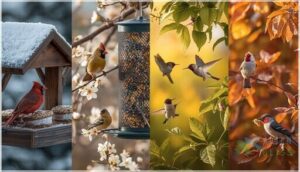
Birds don’t eat the same way in January as they do in June, and what you offer them really does matter.
Your feeder can become a lifeline when natural food sources shift with the seasons.
Here’s how to feed smarter through every part of the year.
Winter High-Energy Food Strategies
Winter is brutal for backyard birds — they’re burning fat reserves overnight just to stay alive. That’s why a continuous food supply matters so much during cold spell feeding.
In winter, backyard birds burn fat reserves overnight just to survive — a continuous food supply is their lifeline
Stock sheltered feeder spots with suet cakes, black oil sunflower seeds, peanuts, and nyjer seed to keep calories within easy reach. Hydrating dried mealworms also helps birds stay nourished when water is scarce.
Spring and Summer Feeding Adjustments
As the cold eases, your feeding routine deserves a refresh. Keep black oil sunflower seeds and nyjer seed stocked, but shift your Summer Seed Options toward peanuts and high protein foods like mealworms.
Switch to Warm Weather Suet formulas once temperatures climb past 70°F — regular suet turns rancid fast. Seasonal Feeder Placement in shadier spots also slows birdseed spoilage considerably.
Foods for Migrating and Nesting Birds
Migration brings its own hunger — and your yard can be the rest stop that has a lasting impact. Migratory Fuel matters most when birds are burning calories by the mile, so stock up on High Energy Foods and Seasonal Diets that deliver real nutrition.
- Black oil sunflower seeds — thin shells, rich oil, fast energy
- Suet and peanuts — concentrated fat and protein for long flights
- Bird Seed Blends — mixed millet and safflower draw a wider range of species
- Nyjer Seed — small but calorie-dense for finches passing through
- Mealworms — roughly 53% protein when dried, ideal Nesting Nutrition for feeding chicks
Adapting to Local Climate Conditions
Your region shapes everything about bird feeding strategies. In northern climates, lean into black oil sunflower seeds and suet to help winter birds survive bitter cold snaps.
Coastal or southern yards need lighter, spoilage-resistant options. Regional Seed Selection, Climate Adjustments, and Seasonal Flexibility aren’t just buzzwords — they’re how you build a truly bird friendly space with real Weather Resilience and Local Bird Adaptation.
Attracting a Variety of Bird Species
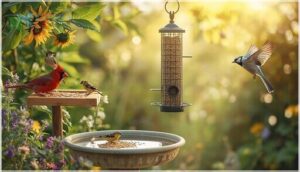
Different birds have different tastes, and knowing what each species prefers makes a real difference in who shows up at your bird feeders.
A thoughtful mix of foods and feeder types, and placement can turn your yard into a busy little hub of wings and song.
Here’s what to keep in mind as you start matching your setup to the birds you want to attract.
Matching Foods to Bird Preferences
Every bird that visits your yard has a preferred menu. Cardinals light up for black oil sunflower seeds and safflower, while tiny finches work best with Nyjer in narrow tube feeders.
Woodpeckers and chickadees crave suet and peanuts — high-fat fuels that support bird nutrition through brutal cold snaps. Even mealworms earn loyal fans among wrens and bluebirds.
Matching bird seed types to species makes all the difference.
Offering a Diverse Food Selection
Think of your feeding station as a buffet, not a single dish. Offering food variety — Black Oil Sunflower Seeds, suet, peanuts, and Mealworms alongside smart seed selection — covers the full range of bird nutrition needs.
These feeding strategies honor each species’ unique dietary needs, drawing in both everyday visitors and surprising newcomers who might otherwise pass your yard by.
Placement for Different Bird Types
Where you hang your feeders matters just as much as what’s inside them. Smart placement is the heart of any successful backyard birding setup, and each species has a comfort zone.
- Ground feeders like juncos prefer low platform feeders under 2 feet, with open sightlines and nearby ground cover
- Cardinals and finches favor shrub-level feeders at 4–6 feet, where shrub density provides quick escape routes
- Chickadees and woodpeckers naturally seek tree proximity, preferring suet and tube feeders at 6–10 feet
Matching feeder height to natural bird flight paths turns your yard into a welcoming stop.
Safe and Nutritious Bird Food Practices
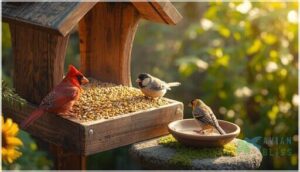
Feeding birds well isn’t just about what you put in the feeder — it’s also about making sure what you’re offering is actually safe and wholesome. A few simple habits can protect the birds you love to watch and keep them coming back healthy.
Here’s what every backyard birder should know.
Avoiding Moldy or Spoiled Food
Spoiled seed is one of the sneakiest threats in backyard bird feeding. For wild bird care and bird nutrition and health, fresh seed storage and seed rotation matter more than most people realize.
Watch for spoilage signs like musty odors, clumping, or visible mold — any of these mean it’s time to discard the batch. Consistent mold prevention keeps your feeder a safe, nourishing stop for bird health all season.
Human Foods Unsafe for Birds
Sharing your snack with a backyard visitor might seem kind, but certain human foods are genuinely dangerous for birds. Toxic food list includes chocolate, avocado, salty snacks, and onions, all of which rank high, threatening avian health through seizures, organ damage, or worse.
For responsible wild bird care and solid bird nutrition and health, keep these poisonous substances and food hazards far from your feeders.
Storing Bird Food Properly
Good storage is the quiet backbone of wild bird nutrition. Keep your black oil sunflower seeds, suet, and other bird food in galvanized metal or airtight plastic storage containers, away from heat and moisture.
For pest prevention and moisture control, aim for around 65°F. Proper seed storage tips like these protect your investment and keep every visit to your bird feeders safe and fresh.
Recognizing Signs of Poor Nutrition
Wild bird nutrition shows up on the outside. Dull plumage changes, frayed feathers, and unexpected beak problems are classic malnutrition signs worth watching for.
A bird feeding at your station but showing weight loss, fluffed posture, or low energy may not be getting enough fat or protein. Adjusting your bird feeding strategies, especially winter bird feeding, can genuinely turn things around for your backyard visitors.
Feeder Placement and Bird Safety Tips
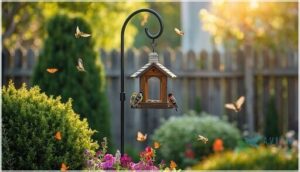
Where you hang your feeder matters just as much as what you put in it.
The right placement keeps birds safe, discourages unwanted visitors, and makes your yard a spot birds actually want to return to.
Here are some practical tips to help you get it right.
Distance From Windows and Shrubs
For safer feeder positioning, the 3 or 30 rule is one of the most reliable window safety tips in backyard birding. Place feeders either within 3 feet of windows or at least 30 feet away to reduce bird collision risk.
- Keep feeders 10–12 feet from dense shrubs for quick cover
- Avoid placing feeders inside thick shrubs where predators ambush birds
- Add window decals when shrub placement forces intermediate feeder distances
- Trim lower shrub branches to improve visibility around feeding stations
Height for Different Bird Species
Feeder height matters more than most backyard birding enthusiasts realize. Ground-level trays suit sparrows and doves naturally, while mid-height setups around 5–6 feet serve cardinals and finches perfectly. For bird watching enthusiasts focused on Winter Bird Feeding, suet placement at 6–10 feet benefits woodpeckers. Nectar feeders work best at 4–6 feet for hummingbirds.
| Bird Group | Ideal Height | Feeder Type |
|---|---|---|
| Sparrows, Doves | Ground–1 ft | Ground Level tray |
| Cardinals, Finches | 5–6 ft | Tube/hopper |
| Woodpeckers | 6–10 ft | Suet Placement cage |
| Hummingbirds | 4–6 ft | Nectar Feeder |
| Chickadees | 5–10 ft | Tree Climbing suet |
Squirrel-Proofing and Predator Prevention
Once you’ve dialed in the right heights, keeping that carefully arranged feeding station safe becomes the next priority.
Squirrel Baffles — cone-shaped guards mounted about 4 feet up your pole — stop climbers cold. Weight Activated feeders close automatically under a squirrel’s heavier load, protecting your seed and supporting Bird Health and Safety.
Predator Guards below suet feeders block cats from sneaking up on perching birds.
Reducing Wildlife Conflicts
Keeping squirrels out is just the beginning — other wildlife wants in too. Smart Feeder Management means filling only what birds eat daily, so overnight leftovers don’t invite rodents. That’s solid Rodent Control right there.
In bear country, bring feeders inside at dusk; Bear Deterrents like motion-activated lights help too. These small steps keep your Bird Friendly Yard Design safe for everyone.
Feeder Cleaning and Maintenance Essentials
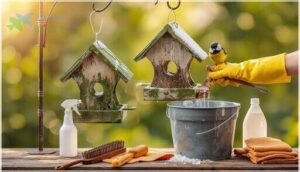
Keeping your feeders clean is just as important as keeping them full. A dirty feeder can quietly spread disease through an entire flock before you even notice something’s wrong.
Here’s what you need to know to stay on top of feeder care.
Cleaning Frequency and Methods
Think of your feeder as a tiny restaurant — your regulars deserve clean plates. For solid backyard bird feeding strategies, aim to clean seed feeders every one to two weeks, stepping that up weekly in humid or hot weather.
Use a nine-to-one water-bleach ratio for feeder sanitizing, scrub all parts separately, rinse completely, and air-dry before refilling.
Preventing Disease Outbreaks
Disease spreads fast when birds crowd a single feeder, which is why bird hygiene and feeder sanitation are central to backyard bird conservation. Spread feeders several meters apart to reduce contact.
For outbreak response, remove feeders immediately if you spot lethargic or fluffed birds. Good avian ecology starts with you watching closely — winter bird care and wildlife health depend on that daily awareness.
Safe Use of Cleaning Solutions
For bleach safety, mix one part unscented household bleach with nine parts water, soak feeders for about ten minutes, then rinse thoroughly — twice if possible.
This disinfectant method protects winter bird feeding stations without harsh residue. Always wear gloves, work outdoors for ventilation, and never mix bleach with vinegar or ammonia, as both combinations produce toxic gases dangerous to birds and people.
Managing Spilled Seeds and Debris
Spilled seeds under your feeder aren’t just messy — they’re an open invitation for rodents and mold. For solid bird feeder maintenance, sweep or rake beneath feeders every two to three days, and attach a seed catcher tray to cut spillage substantially.
Black oil sunflower seeds help with waste reduction strategies since birds eat nearly every one. Incorporate seedheads, leaf litter, and ground cleanup routines into your garden wildlife conservation habits for smarter, cleaner winter bird feeding.
Creating a Bird-Friendly Feeding Environment
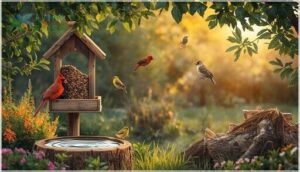
Filling your feeders is just one piece of the bird puzzle — the space around them matters just as much.
Birds need more than bird food to feel safe and come back regularly.
Here are a few simple ways to turn your yard into a place they’ll actually want to stay back.
Providing Clean Water Sources
Water is every bit as essential as food — birds need fresh sources year-round for drinking and bathing. A clean bird bath promotes garden wildlife conservation by keeping your feathered visitors healthy.
For ideal water quality, follow these five essentials:
- Change water every one to three days
- Place a heated bird bath outdoors during freezing temperatures
- Keep water temperature just above freezing with a deicer
- Position the bath near sheltering shrubs
- Scrub the basin weekly for ice prevention and algae control
Planting Native Seed and Berry Plants
Think of your yard as a living pantry — native plants for garden design for birds stock it all year without any extra effort from you. Native plant selection matters here: mix serviceberry, elderberry, and winterberry holly to create natural food sources across every season.
Berry shrub care is simple with this quick guide:
| Plant | Season |
|---|---|
| Serviceberry | Spring–Summer |
| Elderberry | Late Summer |
| Winterberry Holly | Winter |
This wildlife habitat creation approach complements native plant gardening beautifully.
Minimizing Chemical Use in Yards
Native plants set the stage, but what happens in the soil matters just as much. Organic lawn care and chemical free gardening protect the insects birds depend on for protein.
Neonicotinoid grub treatments, for instance, can be thousands of times more toxic than older pesticides — and birds eat those contaminated insects. Sustainable yard management through natural pest control and eco friendly landscaping keeps your yard genuinely safe.
Adding Shelter and Nesting Spots
Clean yards and chemical-free soil bring birds closer, but shelter keeps them there.
Thoughtful nest box placement and bird shelter design complete your backyard birding setup:
- Mount boxes 5–15 feet high for predator control
- Face entrance holes south or east
- Use safe nesting materials like dry grass and leaves
- Plant dense evergreens for natural habitats and wind protection
- Add berry-producing bird friendly plants for food and cover
This kind of wildlife habitat creation is garden design for wildlife done right — and it’s the heart of real wildlife conservation.
Top 10 Bird Feeding and Care Products
The right gear can make all the difference between a quiet yard and a backyard full of life.
From feeders designed for specific birds to tools that keep your setup clean and welcoming, there’s a product for every need. Here are ten worth knowing about.
1. Kingsyard Metal Finch Bird Feeder
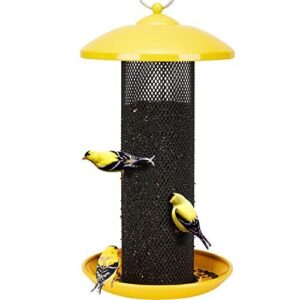
If finches are your target visitors, the Kingsyard Metal Finch Bird Feeder is worth a close look. Its all-metal, squirrel-proof mesh tube holds up to 1.5 pounds of nyjer seed, which is exactly what goldfinches, pine siskins, and house finches love.
The brushed copper finish resists rust and UV fading, so it holds up through harsh winters. A removable base makes cleaning straightforward, and built-in drainage holes help keep seed dry and fresh between refills.
| Best For | Bird lovers and gardeners who want to attract finches like goldfinches, chickadees, and pine siskins while keeping squirrels out of the feeder. |
|---|---|
| Target Species | Goldfinches, Chickadees, Sparrows |
| Material | Metal with powder-coat |
| Capacity/Size | 2.5 lbs |
| Weather Resistance | Rust-resistant coating |
| Ease of Use | Easy refill and clean |
| Brand | Kingsyard |
| Additional Features |
|
- Squirrel-proof metal mesh design means less seed wasted and more for the birds you actually want
- Holds up to 2.5 lbs of nyjer seed, so you’re not refilling it every other day
- Easy to clean and refill with a twist-off top and removable tray — no tools, no hassle
- The hood could be wider — some users noticed rain and snow still getting into the seed
- The mesh openings might be too small for birds to easily access thistle seeds
- Larger birds are basically locked out by design, so it’s strictly a small-bird feeder
2. Kaytee Wild Bird Seed Blend
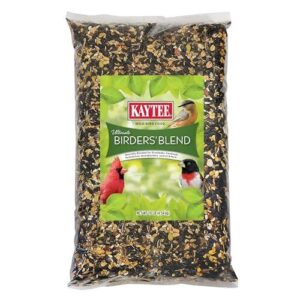
Once your nyjer feeder is full, you’ll want a reliable all-around mix for your other feeders. The Kaytee Wild Bird Seed Blend packs safflower, peanuts, striped sunflower, and millet into one 10-pound bag — a solid spread that draws cardinals, blue jays, woodpeckers, and finches without a lot of fuss.
It’s crafted in the USA and suits all life stages. One heads-up: the peanuts may invite squirrels, so pairing it with a squirrel-resistant feeder helps.
| Best For | Backyard bird enthusiasts who want one versatile mix that pulls in a wide range of colorful songbirds like cardinals, woodpeckers, and finches. |
|---|---|
| Target Species | Cardinals, Woodpeckers, Blue Jays, Finches |
| Material | Seed blend |
| Capacity/Size | 10 lbs |
| Weather Resistance | All life stages |
| Ease of Use | Ready to use |
| Brand | Kaytee |
| Additional Features |
|
- Attracts a solid variety of birds with a well-rounded blend of safflower, peanuts, sunflower, and millet
- Made in the USA and suitable for birds at all life stages
- Easy to use — just fill a feeder, add fresh water nearby, and let the birds come to you
- Peanuts in the mix can draw squirrels, so you may need a squirrel-resistant feeder
- Seeds and shells drop to the ground, which can get messy under the feeder
- Some buyers have noticed the price creeping up, making it harder to justify over competing brands
3. Cardinal Bird Seed Cylinder Mix
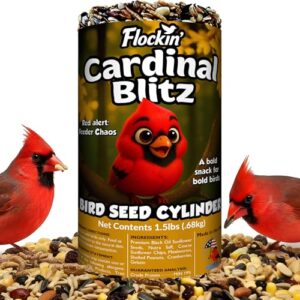
If cardinals are your favorite backyard visitors, the Flockin’ Cardinal Bird Seed Cylinder is worth a close look. Packed with black oil sunflower seeds, shelled peanuts, mealworms, and even cranberries, it delivers real nutrition — no cheap filler grains.
One cylinder lasts up to two to three weeks, which means less refilling for you. It fits most rod-style feeders and works year-round. Just know that heavy rain or heat can shorten its lifespan a bit.
| Best For | Bird lovers who want to attract cardinals and other colorful backyard birds without constantly refilling a feeder. |
|---|---|
| Target Species | Northern Cardinals, Blue Jays, Woodpeckers |
| Material | Premium natural ingredients |
| Capacity/Size | 4″ x 7.75″ |
| Weather Resistance | All seasons use |
| Ease of Use | Built-in center hole |
| Brand | Flockin’ |
| Additional Features |
|
- Packed with premium ingredients like sunflower seeds, shelled peanuts, mealworms, and cranberries — no filler grains
- Lasts up to 2–3 weeks, so you’re not out there topping it off every few days
- Works year-round and fits most rod-style feeders right out of the box
- Heavy rain or high heat can cause it to break down faster than expected
- A few buyers have received cylinders that arrived already falling apart
- It costs more upfront, which might give budget-conscious shoppers pause
4. BestNest Heated Bird Bath
Winter is tough on birds — finding unfrozen water burns precious energy they can’t afford to lose. The BestNest Heated Bird Bath solves that quietly and reliably.
Its 18.5-inch basin stays ice-free thanks to a thermostatically controlled 150W heater, which only kicks on when temperatures actually drop near freezing. The 2-inch depth keeps smaller songbirds safe while larger species drink comfortably.
Mount it on your deck rail, plug it into a GFCI outlet, and you’ll notice more species stopping by almost immediately.
| Best For | Bird lovers who want to keep fresh, unfrozen water available for backyard birds all winter long without a lot of fuss. |
|---|---|
| Target Species | Small and large bird species |
| Material | Textured resin plastic |
| Capacity/Size | 18.5″ diameter basin |
| Weather Resistance | Sub-zero tested |
| Ease of Use | Tilt-up bracket cleaning |
| Brand | Farm Innovators |
| Additional Features |
|
- The thermostatically controlled heater only runs when it needs to, so you’re not burning electricity around the clock.
- At 18.5 inches wide and just 2 inches deep, it works for everything from tiny finches to bigger birds like robins or jays.
- The tilt-up bracket makes cleaning and refilling pretty straightforward — no unbolting or wrestling with it.
- It can tip in strong wind or if a larger bird lands awkwardly, so you may need to add some stabilization.
- The tilt range for cleaning is a bit limited, which a few users have found frustrating when scrubbing the basin.
- Like any outdoor electric setup, it needs regular upkeep — algae and debris build up fast, especially in winter when you’re less likely to want to head outside.
5. Occer Compact Binoculars For Adults And Kids
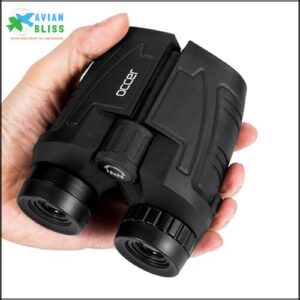
Bird watching gets so much better when you can actually see what’s at your feeder. The Occer 12×25 compact binoculars bring that closer look without the bulk — they weigh just 0.65 pounds and fold small enough to slip into a jacket pocket.
With 12x magnification and BAK4 prisms, you’ll pick up sharp, natural colors on even quick-moving birds. The adjustable eyecups make them comfortable for glasses wearers, and kids can easily handle them too.
| Best For | Bird watchers, travelers, and families who want a lightweight, easy-to-use binocular that works for both adults and kids without breaking the bank. |
|---|---|
| Target Species | Various bird species |
| Material | ABS plastic, rubber |
| Capacity/Size | 25mm objective lens |
| Weather Resistance | Water-resistant |
| Ease of Use | Adjustable eye cups |
| Brand | Not specified |
| Additional Features |
|
- Sharp, clear images thanks to BAK4 prisms and FMC broadband coating — colors look natural and true
- Compact and light enough to toss in a bag or pocket, making it great for hikes, concerts, or day trips
- Adjustable eyecups make it comfortable for glasses wearers and non-wearers alike
- Struggles in low-light situations, so dawn or dusk birding sessions may disappoint
- A few buyers reported the actual magnification felt closer to 8x than the advertised 12x
- Small build quality issues — the strap can come loose and the lens cap tends to fall off
6. Monarch Butterfly Wildflower Seeds Mix
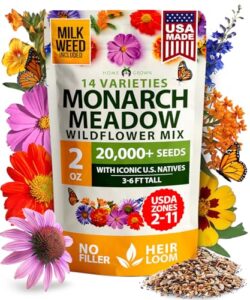
Imagine stepping outside to find monarch butterflies drifting through a garden you grew yourself. This Monarch Butterfly Wildflower Seeds Mix makes that surprisingly doable, even for beginners.
Each 2-ounce package holds over 20,000 seeds — a blend of milkweed, butterfly weed, coneflowers, cosmos, and more — covering a meaningful patch of habitat. Since monarch caterpillars can only survive on milkweed, that inclusion really matters.
Seeds germinate in 7–14 days, and plants thrive in full sun across zones 3–9 with very little fuss.
| Best For | Anyone who wants to attract monarch butterflies and pollinators to their yard — from first-time gardeners to seasoned growers looking to add a low-maintenance wildflower patch. |
|---|---|
| Target Species | Monarch butterflies, bees, hummingbirds |
| Material | Non-GMO seeds |
| Capacity/Size | 2oz (20000+ seeds) |
| Weather Resistance | Drought-tolerant |
| Ease of Use | Easy growing (7-14 days) |
| Brand | Not specified |
| Additional Features |
|
- Over 20,000 seeds in a single 2oz package, so you get serious coverage without needing to buy multiple bags.
- Milkweed is included in the mix, which is the one plant monarch caterpillars actually need to survive — that’s a big deal for conservation.
- Drought-tolerant and beginner-friendly, with seeds that sprout in as little as 7 days and work across a wide range of climates (zones 3–9).
- Germination can be inconsistent — some varieties take much longer than others, and a few customers reported lower-than-expected sprout rates.
- Patience is required, since certain seeds won’t bloom until their second year, so don’t expect a full garden show right away.
- Not a fit for every yard — you’ll need a full-sun spot, and results can vary depending on your local climate and soil conditions.
7. Worx Electric Leaf Blower Mulcher Vacuum
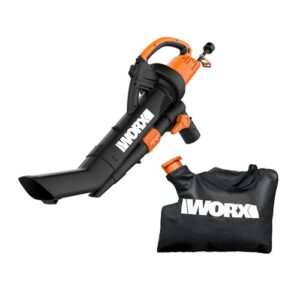
Ever wish you could tidy up under your feeders without stirring up a dust storm or scaring off every chickadee? The Worx Electric Leaf Blower Mulcher Vacuum is a real ally for bird lovers.
Its 3-in-1 design lets you clear leaves, vacuum up seed hulls, and mulch debris into compost—all with one tool. You’ll appreciate its quieter, electric motor and the way it keeps feeding areas clean, reducing pests and mold, while the 18:1 mulch ratio means less waste and fewer trips to the compost pile.
| Best For | Bird enthusiasts and homeowners who want a simple, all-in-one tool to keep feeding areas and yards clean without a lot of fuss. |
|---|---|
| Target Species | N/A (leaf management) |
| Material | ABS plastic |
| Capacity/Size | 350 CFM airflow |
| Weather Resistance | Outdoor rated |
| Ease of Use | Quick-release bag |
| Brand | WORX |
| Additional Features |
|
- Does the job of three tools in one—blow, vacuum, and mulch—so you’re not juggling a bunch of gear
- The 18:1 mulch ratio cuts down on waste fast, meaning fewer trips to the compost pile
- Easy to assemble and use, with variable speeds so you can dial it in for delicate spots around feeders
- The cord limits how far you can roam, and managing it around the yard gets old quick
- The bag fills up faster than you’d expect and needs frequent emptying
- Skip it if your yard has thick sticks or dense debris—it’s not built for that kind of heavy lifting
8. Baby Bird Feeding Syringe Set
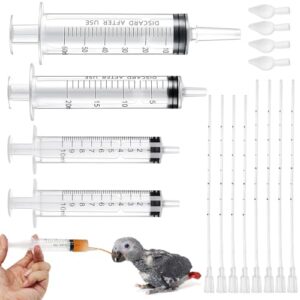
Hand-feeding a fragile chick is a bit like threading a needle—precision matters. The Baby Bird Feeding Syringe Set gives you control and safety, with clear markings and several syringe sizes (10ml, 20ml, 60ml) to suit birds from tiny finches to larger parrots.
You’ll find soft feeding tubes and spoon-shaped tips, which help minimize injury and stress. Just remember, tubes and spoons don’t fit the largest syringe, and always secure the spoon tip—small birds can swallow it if it comes loose.
| Best For | Anyone hand-raising baby birds or other tiny animals like kittens, hamsters, or rabbits who need precise, stress-free feeding. |
|---|---|
| Target Species | Baby birds, small animals |
| Material | Plastic |
| Capacity/Size | 10ml, 20ml, 60ml |
| Weather Resistance | Indoor/outdoor |
| Ease of Use | Interchangeable tips |
| Brand | LhyBtm |
| Additional Features |
|
- Comes with three syringe sizes and interchangeable tips, so you’re covered from newborn finches to larger parrots
- Clear measurement markings make it easy to give the right amount of food or medicine every time
- Soft tubes and spoon-shaped tips are gentle on fragile little mouths
- The tubes and spoon tips don’t fit the 60ml syringe, which limits how versatile the bigger syringe actually is
- The spoon tip can come loose, which is a real swallowing hazard for small birds—you may need to tape it down
- Not a great fit if you’re working with animals larger than small pets
Gisurem Baby Bird Feeding Syringe Set
The Gisurem Baby Bird Feeding Syringe Set takes hand feeding one step further with two dedicated sizes — 10ml for tiny chicks and 20ml for growing parrots — so crop management stays precise without guesswork. Clear walls help you spot air bubbles, and the soft tubes reduce mouth injury. Syringe cleaning is straightforward: rinse immediately after each feeding.
| Feature | 10ml Syringe | 20ml Syringe |
|---|---|---|
| Best For | Hatchlings, finches | Cockatiels, lovebirds |
| Feeding Technique | Slow, small drops | Steady measured flow |
| Crop Management | Tiny crop capacity | Moderate crop capacity |
| Baby Bird Care | Electrolytes, thin formula | Thicker formula blends |
| Cleaning Ease | Quick rinse | Slightly longer flush |
9. Baby Bird Feeding Syringe Tool
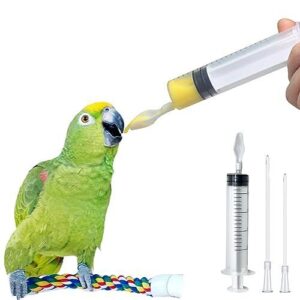
When one syringe set isn’t quite enough, the Giiiiump Baby Bird Feeding Syringe Tool adds a clever twist: it combines a spoon and syringe in one reusable tool, made from food-safe resin and silicone.
That combo works well when you’re caring for fledglings, seniors, or sick birds who need both feeding and medication in a single session. Keep in mind the spoon can detach if a bird bites down, so close supervision is non-negotiable during every feeding.
| Best For | Bird owners who handfeed baby birds, fledglings, or sick and senior birds that need both food and medication regularly. |
|---|---|
| Target Species | Songbirds, parrots |
| Material | Resin, silicone |
| Capacity/Size | 10ml, 12ml, 20ml, 60ml |
| Weather Resistance | Durable resin |
| Ease of Use | Easy to disassemble |
| Brand | Not specified |
| Additional Features |
|
- Combines a spoon and syringe in one tool, so feeding, watering, and medicating all happen without swapping equipment
- Made from durable, reusable resin and silicone — easy to take apart, clean, and put back together
- Works across a wide range of bird species, making it a versatile pick for mixed aviaries or rehab situations
- The spoon can pop off if a bird bites it, which is a real choking hazard — you can’t step away during feedings
- Takes some practice to figure out the right plunger pressure, so expect a learning curve at first
- Not a great fit for smaller birds like parakeets, so check your bird’s size before buying
Frequently Asked Questions (FAQs)
How to properly feed birds?
Think of your backyard as a small refuge. To properly feed birds, offer clean, species-appropriate foods in well-maintained feeders, keep portions fresh, and place them safely away from predators and windows.
How do you feed a bird?
Start with the right food for the species you want to attract, place it in a clean, appropriate feeder, and set it somewhere safe, sheltered, and easy for birds to find.
Should you feed wild birds?
Yes, feeding wild birds is generally a good idea, especially in winter. It helps small songbirds survive cold snaps, boosts their fat reserves, and can raise juvenile survival rates substantially.
Do birds eat a feeder?
Backyard birds are after the food, not the feeder itself. Their beaks are built for seeds and insects, so they’ll pick through ports and mesh without gnawing on the frame.
How do you stop birds from eating your bird feeders?
Birds can’t actually eat the feeder itself, but they do cause wear over time. Using metal or chew-resistant feeders prevents damage while keeping your setup intact and welcoming for years.
How do birds eat?
Without teeth, every bird relies on its beak to grab, crack, or tear food, then tips its head back, letting gravity slide each bite straight down the throat.
How do you keep birds healthy?
Keeping birds healthy starts with clean feeders, fresh food, and safe water. Rinse baths every few days, toss moldy seed immediately, and place feeders near shrubs for natural cover.
Can birds become dependent on backyard feeders?
The short answer is no — healthy wild birds don’t truly become dependent on your feeder.
Studies show chickadees still get 75–80% of their daily energy from natural foraging, even with feeders nearby.
What temperature is too cold for feeding?
There’s no temperature too cold to feed birds. In fact, the colder it gets, the more they need you. Keep feeders stocked through every freeze.
How do weather conditions affect bird feeding?
Weather acts like a thermostat for bird behavior. Cold snaps push small birds to visit feeders more urgently, while rain spoils seed fast and heat speeds up dangerous mold growth.
Conclusion
Some worry that starting a feeding station means committing to it forever—but even seasonal efforts make a real difference for local wildlife.
The best bird feeding food tips aren’t about flawlessness; they’re about consistency and intention. Offer the right seeds, keep things clean, and match your setup to the species around you. Do that, and your yard becomes something birds genuinely return to, season after season, because it’s worth the trip.
- https://everyday.fleetfarm.com/articles/feed-for-local-birds
- https://askavet.com/blogs/news/feeding-birds-in-your-backyard-2025-%F0%9F%90%A6-vet-guide-by-dr-duncan-houston-bvsc
- https://blog.nwf.org/2024/01/year-round-bird-feeding/
- https://www.kaytee.com/learn-care/wild-bird/how-to-feed-birds-in-summer
- https://www.dnr.sc.gov/news/2021/jan/jan04-birdfeeder.php