This site is supported by our readers. We may earn a commission, at no cost to you, if you purchase through links.

You spot a flash of yellow in the oak tree and reach for your binoculars, but by the time you find the right page in your field guide, the bird has vanished. This frustration ends when you choose a guide designed for quick identification in real field conditions.
The best bird field guides for beginners balance thorough species coverage with accessible features like visual indexes and durable bindings that survive morning dew and trail dust. Your success in identifying that warbler or sparrow depends less on memorizing Latin names and more on having the right reference tool at your fingertips.
Regional guides narrow your options to likely candidates, while quality illustrations show the subtle field marks that separate similar species.
Table Of Contents
- Key Takeaways
- Key Features of Beginner Bird Field Guides
- How to Choose The Right Bird Guide
- Top 10 Bird Field Guides for Beginners
- 1. Peterson Field Guide Birds Eastern Central North America
- 2. Bird Identification Guide Book
- 3. National Geographic Bird Field Guide
- 4. North American Birdwatching Guide
- 5. North American Bird Watching Guide
- 6. Birding Guide For Beginners
- 7. Backyard Bird Identification Guide Book
- 8. National Geographic Bird Guide
- 9. Minnesota Bird Field Guide Book
- 10. Kaufman Field Guide To Midwest Nature
- Essential Tips for Using Field Guides
- Digital Vs. Print Bird Field Guides
- Frequently Asked Questions (FAQs)
- Conclusion
Key Takeaways
- Choose a field guide that matches your specific region and habitat rather than a nationwide guide, since regional editions filter out unlikely species and help you identify birds faster.
- Prioritize guides with clear visual indexes, durable bindings, and illustrations that highlight field marks like wing bars and eye rings over dense text or low-quality photos.
- Combine your printed field guide with digital apps and audio recordings to cross-verify tricky identifications, especially when birds look similar or hide in foliage.
- Learn to use range maps and behavior cues before relying solely on photos, since where a bird lives and how it moves often narrows your options faster than memorizing plumage details.
Key Features of Beginner Bird Field Guides
Your first field guide shouldn’t weigh you down or confuse you with endless technical details. The best beginner guides strike a balance between portability, clear visuals, and enough species coverage to keep you learning without feeling overwhelmed.
Look for field guides designed specifically for beginners that focus on common local species rather than trying to cover every bird you might encounter.
Let’s break down the five features that separate a solid starter guide from one that’ll just gather dust on your shelf.
Portability and Size

You’ll want a field guide that won’t weigh you down when you’re chasing a warbler through the woods. Compact designs measuring 4 to 6 inches fit comfortably in one hand, while lightweight materials like laminated pages keep most guides under 14 ounces.
Pocket guides and portable formats slip easily into daypacks, so beginner birders can focus on bird identification instead of lugging around heavy books.
Visual Clarity and Illustrations
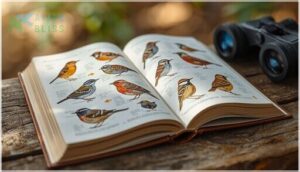
Clear illustrations separate a helpful field guide from one that leaves you guessing. Peterson Field Guide uses bold arrows to highlight wing bars and eye rings, while National Geographic Field Guide pairs sharp photos with detailed color consistency.
The Sibley Guide to Birds offers graphic design finesse with vector-quality images that stay crisp when you’re squinting at a perched sparrow. Visual finesse transforms bird identification from frustrating to liberating.
Sibley’s vector-quality images stay crisp when you’re squinting at a perched sparrow, transforming identification from frustrating to liberating
Range of Species Covered

A broad field guide unlocks bird identification across taxonomic groups, from backyard robins to migratory warblers. National Geographic Field Guide covers nearly 1000 species with detailed regional coverage, while compact alternatives focus on 600 common birds.
Species diversity matters—you’ll want guides that represent passerines, raptors, and waterfowl with habitat variations noted. Range breadth transforms guesswork into confident species recognition across forests, wetlands, and urban spaces.
Habitat and Range Maps

Range boundaries and habitat mapping transform your field guide from a photo album into a predictive tool. Regional maps show where bird species actually live across North America, often broken down by season and elevation limits.
Geographic masking filters out unsuitable terrain, so you’re not searching for waterfowl in deserts. These layers support habitat conservation by pinpointing where species distribution meets environmental reality.
Ease of Use Features

Quick indexing powers your bird identification when a warbler disappears into foliage. You’ll flip straight to warblers using clear navigation tabs, not thumb through 400 pages.
Sectional color codes and pocket checklists trim search time from minutes to seconds. Accessibility features like marginal glossaries decode field marks instantly, so choosing the right field guide means finding user interface tools that keep pace with live bird watching for beginners.
How to Choose The Right Bird Guide

You’ve learned what makes a good field guide, but choosing the right one for your needs takes a bit more thought.
Not every guide works in every situation, and what suits a birder in Maine won’t necessarily help someone in Arizona. Let’s break down the key factors that’ll help you find the guide that fits your birding style and location.
Matching Guides to Your Region
Your field guide won’t reveal every mystery if it covers birds from the wrong part of the continent. Regional guides focus on species that actually show up in your area, making bird identification far more reliable.
- North America has distinct regional species lists that match local habitats like wetlands or prairies
- Geographic boundaries on maps align sightings with species likely in your county or state
- Seasonal maps show migration timing specific to your climate zone
- Bird field guides with regional focus reduce confusion from rare visitors
- Birding laws and etiquette notes reflect local protected areas and access rules
Durability and Outdoor Suitability
You’ll drag your guide through rain, mud, and brush, so water resistance and binding quality matter more than you’d think.
Look for matte laminate or plastic coated covers that repel light rain, reinforced bindings that won’t crack with heavy use, and tear resistant pages that survive rough handling. These outdoor materials keep your birding equipment functional when weatherproofing counts most during bird watching and other outdoor activities.
Guide Organization and Indexing
A clumsy index turns a field guide into dead weight. You need alphabetical entries, taxonomic order sections, and visual aids that help you flip straight to the right bird family—not fumble through pages while your target flies away.
Look for cross references linking similar species, a sectional layout grouping warblers or sparrows together, and thumb tabs that make Peterson Field Guide, Sibley Guide to Birds, and Kaufman Field Guide so quick in the field.
Quality of Descriptions and Photos
Blurry photos sabotage bird identification before you even start. You want sharp, well-lit images showing field marks like wing bars and eye rings with precision.
Peterson Field Guide uses illustrations for Visual Accuracy, while Sibley Guide to Birds relies on detailed drawings. Description Detail matters too—look for size comparisons, behavior notes, and color variations that match what you’ll actually see outdoors.
Top 10 Bird Field Guides for Beginners
You’ve narrowed down what matters in a field guide, so now it’s time to see which ones actually deliver.
The guides below span different styles and regions, but they all share one thing: they won’t leave you squinting at blurry images or flipping through hundreds of pages just to identify a sparrow. Each one brings something useful to the table, whether you’re in your backyard or hitting the trails.
1. Peterson Field Guide Birds Eastern Central North America
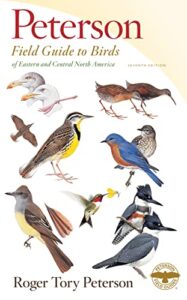
You’ll recognize the Peterson Field Guide as the benchmark for serious beginners. This classic spans 392 pages with color plates showing multiple poses and plumages side by side. Range maps mark breeding and wintering areas, while arrows highlight field marks on detailed paintings.
The Seventh Edition fits your jacket pocket despite covering hundreds of species. It’s built tough with durable binding and pages that handle light moisture, so you won’t baby it outdoors.
| Best For | Birders who want a trusted, portable reference that balances detail with portability—perfect if you’re learning field marks and need quick, accurate IDs on the trail. |
|---|---|
| Page Count | 392 pages |
| Language | English |
| Publication Year | 2020 |
| Visual Format | Illustrations |
| Target Audience | All levels |
| Geographic Coverage | Eastern and Central North America |
| Additional Features |
|
- Classic Peterson arrow system points out key field marks that make identification faster and more accurate
- Updated range maps and illustrations reflect current ornithology knowledge across hundreds of Eastern and Central species
- Durable construction holds up to outdoor use while still fitting in a jacket pocket
- Too thick for pants pockets despite being marketed as portable
- Binding can be stiff and requires careful handling to avoid damage
- Cover is laminated cardstock rather than true hardcover, which may disappoint some buyers
2. Bird Identification Guide Book
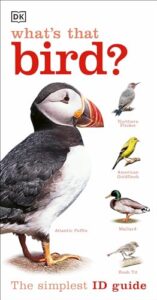
Rob Hume’s compact Bird Identification Guide Book weighs just 5.4 ounces and measures 4 by 7.56 inches, slipping easily into your pack or pocket. You’ll find labeled photographs of over 150 common birds across Britain and Europe, grouped by color in a handy bird-finder section.
The 128-page guide helps you identify species by shape, flight pattern, and sound. It’s perfect for backyard watching and teaching kids, though experienced birders may want more species and plumage variations.
| Best For | Beginners and casual birdwatchers in Britain and Europe who want a portable, easy-to-use guide for identifying common backyard birds. |
|---|---|
| Page Count | 128 pages |
| Language | English |
| Publication Year | 2012 |
| Visual Format | Photographs |
| Target Audience | Beginners and seasoned |
| Geographic Coverage | Britain and Europe |
| Additional Features |
|
- Compact size (4 x 7.56 inches, 5.4 ounces) fits easily in a pocket or backpack for field trips
- Color-coded bird-finder section makes quick identification simple, especially for newcomers
- Clear photos and straightforward descriptions cover shape, flight patterns, and sounds
- Limited to 150 species, which may not satisfy advanced birders looking for comprehensive coverage
- Doesn’t show both male and female plumage for all species, missing key identification details
- Only covers Britain and Europe, so it’s not useful for birdwatchers in other regions
3. National Geographic Bird Field Guide

The National Geographic Bird Field Guide packs over 1,023 species into a 592-page volume you can carry comfortably at 1.96 pounds. You’ll see hand-painted illustrations alongside range maps that show where birds live throughout the seasons.
Thumb tabs and a color-coded visual index help you flip straight to the species you’re tracking. Updated with 37 new species and 250 fresh illustrations, it covers field marks beginners need without overwhelming you with technical detail.
| Best For | Birders of all levels who want a portable, illustrated guide covering North America’s complete bird diversity with up-to-date taxonomy. |
|---|---|
| Page Count | 592 pages |
| Language | English |
| Publication Year | 2017 |
| Visual Format | Illustrations |
| Target Audience | Beginning to advanced |
| Geographic Coverage | North America |
| Additional Features |
|
- Hand-painted illustrations from expert artists show field marks more clearly than photos sometimes can
- Thumb tabs and color-coded index make it fast to find species while you’re out in the field
- Covers 1,023 species with updated taxonomy, so you’re working with the most current bird classifications
- Range maps might not reflect recent shifts caused by climate change
- The new taxonomic ordering takes some adjustment if you’re used to older guides
- Illustrations can be overly detailed for quick glances, and there’s no photo option
4. North American Birdwatching Guide

If you’re ready to step beyond basic overviews, the North American Birdwatching Guide offers over 800 species with color-coded illustrations and clear plumage details. You’ll find range maps showing summer and winter distributions, plus habitat notes for forests, wetlands, and grasslands.
Each species account includes size comparisons, behavior descriptions, and vocalization cues to distinguish similar birds. At 92 pages and 10.6 ounces, it’s light enough for trail use while covering migratory and resident species across the United States and Canada.
| Best For | Beginners and families who want an accessible introduction to North American birds with visual guides and audio support. |
|---|---|
| Page Count | 92 pages |
| Language | English |
| Publication Year | 2025 |
| Visual Format | Illustrations |
| Target Audience | Beginners |
| Geographic Coverage | North America |
| Additional Features |
|
- Covers 200 species with full-color illustrations and real bird sounds via QR codes
- Compact and lightweight (10.6 oz) for easy carrying on hikes or camping trips
- Breaks down identification by shape, plumage, and song—great for learning the basics
- Limited to 200 species, not the 800 mentioned in the text description
- Needs internet access to use the QR code audio features
- May feel too basic for experienced birders looking for in-depth technical details
5. North American Bird Watching Guide
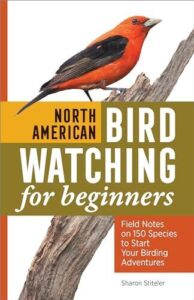
Covering more than 700 species across the continent, this guide pairs full-color illustrations with seasonal range notes for breeding and wintering areas. You’ll see labeled field marks—eye-stripes, wing bars, tail patterns—that make quick comparisons possible in the field.
Each profile lists size, shape, and plumage details, while maps show state-by-state distribution to help you narrow choices fast. Water-resistant covers and sturdy binding stand up to dew and dirt, and the compact size slides into your pack without weighing you down.
| Best For | Beginner birders who want a portable, easy-to-use guide for identifying common North American species during backyard watching or casual nature walks. |
|---|---|
| Page Count | 176 pages |
| Language | English |
| Publication Year | 2022 |
| Visual Format | Photographs |
| Target Audience | Beginners |
| Geographic Coverage | North America |
| Additional Features |
|
- Full-color photos make it simple to match what you’re seeing with species profiles
- Covers essential birding basics like terminology, equipment, and logging tips
- Compact size fits easily in a backpack or jacket pocket
- Limited to 150 species, so you won’t find rarer or less common birds
- Small format might be hard to read in low light or for those who need larger text
- Higher price point compared to some other beginner guides
6. Birding Guide For Beginners

This illustrated 256-page guide from Skyhorse Publishing combines basic identification keys, bird songs, calls, and behavior tips in one portable package. You’ll find instructions for photographing birds and creating a bird-friendly yard alongside profiles of popular species across North America.
At 6 by 9 inches and just over two pounds, it slips into a daypack without strain. The book covers vacation planning for birders and walks you through attracting more species to your neighborhood, though some readers prefer guides with more photos and fewer pages of text.
| Best For | Hobbyists and beginners who want to learn bird identification, behaviors, and backyard attraction techniques in a single comprehensive guide. |
|---|---|
| Page Count | 256 pages |
| Language | English |
| Publication Year | 2021 |
| Visual Format | Illustrated guide |
| Target Audience | Beginners |
| Geographic Coverage | North America |
| Additional Features |
|
- Covers multiple aspects of birding in one book—identification, songs, behaviors, photography tips, and habitat creation
- Portable size (6×9 inches) makes it easy to bring along on birdwatching trips or vacations
- Includes practical advice for attracting birds to your yard and planning birding outings
- Heavy on text with fewer photos than some users prefer for quick visual identification
- Focuses on popular species, so advanced birders may need supplementary field guides
- At 2.31 pounds, it’s heavier than pocket-sized guides despite the compact dimensions
7. Backyard Bird Identification Guide Book

You’ll recognize over 90 backyard birds quickly with this full-color guide from Stillwater Press. Clear photos and simple ID tips help you spot field marks without wading through technical language, and feeder advice shows you exactly what food attracts each species to your yard.
At 79 pages and just 7.4 ounces, it won’t weigh you down during morning walks. The quick reference format cuts through confusion for brand-new birders, though experienced watchers may want broader species coverage beyond common yard visitors.
| Best For | Beginners and casual backyard enthusiasts who want a simple, no-fuss way to identify common North American birds and learn what food brings them to the feeder. |
|---|---|
| Page Count | 79 pages |
| Language | English |
| Publication Year | 2025 |
| Visual Format | Photographs |
| Target Audience | Brand-new birders |
| Geographic Coverage | North American backyard |
| Additional Features |
|
- Full-color photos and straightforward ID tips make recognition easy without technical jargon
- Lightweight and portable at 7.4 ounces, perfect for quick reference during outdoor walks
- Includes practical feeder and food advice to attract specific species to your yard
- Limited to 90 common species, so it won’t cover every bird you might spot
- Some readers may find the photo selection too minimal for confident identification
- Not ideal for advanced birders or those outside North America looking for comprehensive coverage
8. National Geographic Bird Guide

You’ll find over 960 North American species in National Geographic’s thorough guide, organized with thumb tabs and color-coded sections for quick lookups.
Four thousand full-color illustrations show field marks like wing patterns and seasonal plumage changes, while updated range maps track migration routes and regional distributions.
The reinforced spine and non-glossy pages handle dirt and bright sun well. At 14 ounces, it’s heavier than pocket guides, but the breadth of coverage makes it worth carrying for serious identification work.
| Best For | Serious birdwatchers who want comprehensive coverage of North American species and don’t mind carrying a heavier field guide. |
|---|---|
| Page Count | 256 pages |
| Language | English |
| Publication Year | 2019 |
| Visual Format | Artwork |
| Target Audience | Casual and experienced |
| Geographic Coverage | North America |
| Additional Features |
|
- Covers 960 species with 4,000 detailed illustrations showing wing patterns and seasonal plumage
- Color-coded tabs and updated range maps make identification fast and accurate
- Durable design with reinforced spine and non-glossy pages stands up to field conditions
- At 14 ounces, it’s significantly heavier than compact pocket guides
- May be too detailed or overwhelming for casual backyard birdwatchers
- Size and weight make it less practical for long hikes or travel
9. Minnesota Bird Field Guide Book

You’ll navigate 123 Minnesota species sorted by color in this region-specific guide, making backyard identification faster than flipping through national field guides.
Full-page professional photographs capture plumage in typical lighting conditions, while Stan Tekiela’s naturalist notes add practical birding tips you won’t find in broader references.
Updated range maps show seasonal distribution across Minnesota habitats, and the compare feature settles look-alike debates. At 328 pages for $11.50, it’s a compact resource that fits your jacket pocket for local adventures.
| Best For | Minnesota birders who want quick, color-based identification without wading through hundreds of species they’ll never see in their state. |
|---|---|
| Page Count | 328 pages |
| Language | English |
| Publication Year | 2019 |
| Visual Format | Photographs |
| Target Audience | Beginners and experienced |
| Geographic Coverage | Minnesota |
| Additional Features |
|
- Color organization gets you to the right bird faster than alphabetical or taxonomic sorting
- Full-page photos show birds as they actually look in the field, not idealized studio shots
- Compact size slips into a pocket while covering the species you’ll actually encounter in Minnesota
- Color-sorting breaks down when birds have multiple prominent colors or seasonal plumage changes
- Range maps and migration patterns might confuse beginners unfamiliar with birding terminology
- Repeated field use will likely wear down the binding given the slim profile and page count
10. Kaufman Field Guide To Midwest Nature

You’ll cover birds, mammals, trees, wildflowers, insects, reptiles, and more in this multi-taxon guide designed for Ohio, Indiana, Illinois, Michigan, Minnesota, Wisconsin, and Iowa.
Over two thousand color photographs help you identify species across taxonomic groups without carrying separate references. Quick-access color tabs let you jump between categories, and nontechnical descriptions work for beginners exploring Midwest habitats.
At 416 pages for portable field use, it’s your Swiss Army knife for regional nature—though serious birders might want a specialized avian guide alongside it.
| Best For | Nature enthusiasts in the Midwest who want a single, portable reference covering multiple species types—from birds and mammals to mushrooms and rocks—without juggling separate field guides. |
|---|---|
| Page Count | 416 pages |
| Language | English |
| Publication Year | 2015 |
| Visual Format | Photographs |
| Target Audience | Nature lovers |
| Geographic Coverage | Midwest |
| Additional Features |
|
- Over 2,000 color photos and color-coded tabs make identifying species across 13 categories quick and straightforward in the field
- Nontechnical language works for beginners while still providing useful family and order information for identifying unfamiliar species
- Compact size (4.5 x 7.5 inches) and regional focus mean you’re carrying only what’s relevant to seven Midwest states
- Tight binding makes one-handed browsing difficult when you’re trying to hold binoculars or a specimen at the same time
- Broad coverage means less depth on any single topic—specialists may need additional references for birds, plants, or insects
- No Kindle version available if you prefer digital field guides on your phone or tablet
Essential Tips for Using Field Guides

Owning a field guide is one thing, but knowing how to use it effectively changes everything.
The right techniques help you identify birds faster and avoid common mistakes that trip up beginners. Here’s what you need to master to get the most out of your guide in the field.
Understanding Range Maps
Range maps in bird identification guides use color-coded boundaries to show where species occur across North America during different seasons. You’ll see resident, breeding, and non-breeding zones layered together, helping you confirm whether a sighting makes sense.
The Peterson Field Guide and similar resources validate this data through verified observations, so map interpretation becomes your first step in ruling out unlikely candidates and focusing on real possibilities.
Identifying Birds by Behavior and Habitat
Once you’ve checked range maps, watch how a bird moves and where it hangs out. Behavioral cues and habitat adaptation narrow your options fast.
Look for:
- Perching posture—horizontal for woodland species, tail-bobbing for ground foragers
- Flight style—gliding passes in open fields versus zigzag bursts in dense cover
- Foraging habits—probing mudflats or picking insects from leaves
- Vocal patterns during nesting habits or migration rest stops
Bird behavior reveals identity when field marks hide. In fact, instinctive birders often rely on bird behavior identification principles to confidently distinguish species when visual cues are subtle.
Comparing Photos Vs. Illustrations
Your Peterson Field Guide uses illustrations, while many newer bird identification guides feature photos. Both help with bird species identification, but they work differently.
Illustrations offer detail enhancement and artistic license—key field marks pop out with arrows and labels. Photos deliver image quality and color accuracy under real lighting.
Visual clarity depends on your learning style: some birders grasp shapes faster through drawings, others need lifelike feather patterns from photos.
To better understand how visual choice depends on project goals, consider the specific needs of your birdwatching guide.
Utilizing Quick Reference Tabs
Once you’ve chosen between photos and illustrations, built-in tabs accelerate your bird identification techniques even further. Many field guides include tab placement along page edges sorted by bird grouping—ducks, hawks, warblers—so quick indexing cuts search time from minutes to seconds. Tab customization matters: some birders add homemade markers for backyard species or regional birds, turning any Peterson Field Guide into a customized reference speed tool.
- Pre-tabbing common families keeps the bird in view while you flip
- Color-coded edge tabs match section headers for faster navigation
- Sticky tabs mark your most-visited pages during field trips
Digital Vs. Print Bird Field Guides

You don’t have to choose between digital guides and print guides—each format brings something different to the field.
Apps offer instant updates and interactive features, while printed books give you reliable detail without screens or signals. Understanding what each option does best helps you build a toolkit that works wherever you’re watching birds.
Advantages of App-Based Guides
App-based guides transform bird identification techniques by fitting dozens of field guides into your pocket with zero extra weight. You can download them for offline capability during remote birding adventures, while digital updates push automatically without reprinting. Interactive learning features include high-resolution zoom, audio playback of calls, and location-aware species suggestions that make bird watching for beginners more accessible and engaging than ever.
| Feature | Benefit | Best For |
|---|---|---|
| Offline downloads | No data charges in remote areas | Wilderness birders |
| Audio playback | Confirms identifications by call | Species differentiation |
| Location filters | Suggests local species automatically | Beginning learners |
| Regular updates | Reflects taxonomy changes instantly | Accurate field work |
Benefits of Printed Field Guides
Printed field guides offer a tactile experience that connects you directly to bird identification without screen glare or battery worries. You can flip pages with wet hands, mark sightings in margins, and rely on offline access in remote spots where digital tools fail.
Beginner bird watchers appreciate durable bindings and high-quality paper that survive rain, mud, and countless hikes.
| Feature | Why It Matters |
|---|---|
| Tactile experience | Builds muscle memory for visual learning |
| Binding durability | Withstands years of field use |
| Paper quality | Resists moisture and wear outdoors |
| Offline access | Works anywhere, no signal needed |
Integrating Multiple Identification Tools
You won’t master bird identification by sticking to one tool alone. Cross validation combines field guides, mobile apps, and audio recordings to confirm tricky sightings and reduce false calls.
Match visual verification from printed illustrations with real-time app comparisons, then add audio analysis to nail down vocal signatures. Data alignment across tools builds confidence fast.
| Tool Type | Strength | Best Use Case |
|---|---|---|
| Field guides | Standardized plumage patterns | Learning classic field marks |
| Mobile apps | Real-time image databases | Quick comparisons outdoors |
| Audio libraries | Vocal signature matching | Identifying hidden or similar species |
Keeping Your Guide Updated
Revision discipline separates accurate beginner birding guides from obsolete ones. You need quarterly updates to catch taxonomy changes, range expansions, and new plumage illustrations. Set a fixed annual review date and track every adjustment in a changelog.
| Update Type | Recommended Frequency |
|---|---|
| Range maps | Every 6 months |
| Taxonomy changes | Annually |
| Image refresh | Every 2 years |
| Field notes | Quarterly |
Digital bird identification guides push updates automatically, while printed bird field guide reviews require manual tracking and replacement editions.
Frequently Asked Questions (FAQs)
How do I identify birds by their calls?
An ear in the field is worth two eyes in the book.
Bird calls vary by tone, rhythm, and context, so use audio recordings and field guides to compare species recognition patterns and build your vocal learning skills.
What binoculars work best with field guides?
You’ll want 8×42 binoculars with ED glass and phase coatings for sharp detail.
Look for close focus under six feet, good eye relief around 17mm, and weather sealing that protects your birding equipment and gear outdoors.
When is the best time for bird watching?
During spring bird migration, the dawn chorus peaks just after sunrise when warblers and thrushes flood North America’s forests.
For beginners, early morning birding offers ideal weather conditions and clearest bird identification opportunities.
How do I record my bird sightings effectively?
Record your sightings in a notebook or app, noting date, location, and key field marks.
Use sighting logs to track patterns, and pair observation tips with wildlife photography for better bird identification and data management.
What clothing should I wear while birding?
Fashion runways won’t help you spot warblers. Layer moisture-wicking base layers with fleece and waterproof shells, choosing muted earth tones over neon.
Sturdy waterproof boots, breathable fabrics, and sun-blocking hats keep beginner bird watchers comfortable during outdoor activities.
Conclusion
A thousand birds won’t wait while you fumble through dense text and confusing indexes. Your field guide becomes your trusted companion when it matches your region, fits your pack, and opens to the right page before that warbler disappears.
The best bird field guides for beginners transform confusion into confidence with clear illustrations and organized layouts. Choose one that works with your eyes and hands, then head outside where identification happens in real time.
- https://birdingbeyondthefieldguide.com/choosing-a-field-guide-or-field-guides-you-can-never-have-too-many/
- https://www.littlebrown.com/titles/donald-stokes/stokes-beginners-guide-to-birds/9780316818124/
- https://www.opticscentral.com.au/blog/how-to-use-a-bird-field-guide/
- https://www.basicsofbirding.com/blog/how-to-identify-birds-becoming-familiar-with-your-field-guide-1
- https://www.allaboutbirds.org/news/whats-the-best-book-or-field-guide-for-bird-identification/