This site is supported by our readers. We may earn a commission, at no cost to you, if you purchase through links.

You’re two miles into a ridge trail when a flash of cobalt blue darts across the canopy—too quick for a clear look, too intriguing to ignore. Without a reliable reference in your pack, that fleeting encounter becomes just another “mystery bird” added to your mental list.
The right field guide transforms these frustrating moments into satisfying identifications, but choosing one means exploring a crowded market where portability clashes with detailed coverage and illustrations compete with photographs.
A guide that works brilliantly in your backyard might prove useless on alpine switchbacks, while regional specialists outperform generalists in targeted terrain. The best bird field guides for hiking balance weight against detail, durability against cost, and speed against accuracy—giving you exactly what you need when a warbler won’t wait.
Table Of Contents
- Key Takeaways
- Key Features of Bird Field Guides for Hiking
- Choosing The Best Field Guide for Your Region
- Comparing Illustrated Vs. Photographic Guides
- Essential Identification Features in Field Guides
- Evaluating Guide Organization and Usability
- Digital Bird Field Guides and Mobile Apps
- Tips for Using Field Guides on The Trail
- Top 10 Bird Field Guides for Hiking
- 1. Peterson Field Guide Birds Eastern Central North America
- 2. Bird Identification Guide Book
- 3. National Geographic Bird Field Guide
- 4. North American Birdwatching Guide
- 5. North American Bird Watching Guide
- 6. Birding Guide For Beginners
- 7. Backyard Bird Identification Guide Book
- 8. National Geographic Bird Guide
- 9. Minnesota Bird Field Guide Book
- 10. Kaufman Field Guide To Midwest Nature
- Factors to Consider Before Buying a Bird Field Guide
- Frequently Asked Questions (FAQs)
- Conclusion
Key Takeaways
- The best bird field guides for hiking balance portability (4-6 inches, under 12 ounces) with durability (waterproof covers, reinforced bindings) while providing visual clarity through high-contrast illustrations that highlight field marks faster than photographs in varying trail conditions.
- Regional guides outperform national editions for most hikers by filtering out irrelevant species and providing precise range maps with habitat details specific to local ecosystems, though cross-country trekkers benefit from comprehensive continental coverage.
- Illustrated guides excel at rapid identification through standardized poses and exaggerated field marks, while photographic guides capture real-world plumage variation—savvy birders often choose guides that combine both formats with visual indexes for quick reference.
- Effective field use requires mastering a three-step identification process: noting distinctive field marks (wing bars, beak shape, size), confirming with range maps and habitat context, then cross-referencing behavioral cues across multiple tools to transform fleeting glimpses into confident species recognition.
Key Features of Bird Field Guides for Hiking
Not all field guides are built for the trail. When you’re hiking, you need a guide that won’t slow you down or fall apart after a few rainstorms.
That’s why experienced birders often carry compact, waterproof bird identification books designed specifically for travel that can handle rough conditions without adding extra weight.
The best hiking field guides share a handful of core features that make them practical companions in the field.
Portability and Lightweight Design
You won’t get far on the trail if your field guide weighs as much as your water bottle. Compact designs measuring 4 to 6 inches fit snugly in your pocket, while lightweight materials keep the load under 12 ounces.
Portable formats like the National Geographic Field Guide use flexible bindings that lay flat on rocks or stumps, transforming bird watching from a juggling act into smooth identification.
Durable Bindings and Materials
Your field guide needs to survive rain, dust, and the occasional tumble down a talus slope. Look for triple-stitched spines that hold through 50-plus opening cycles and high-density fiberboard covers with waterproof lamination.
Peterson Field Guide and National Geographic Bird Field Guide use binding materials rated for extreme temperatures—minus 20 to 120 Fahrenheit.
Corner guards and anti-skid edging protect against trail wear, keeping durable covers intact season after season.
Visual Clarity and Illustrations
Illustrations trump photos when milliseconds count. Peterson Field Guide pioneered visual indexes that cluster species by shape and field marks—wing bars, eye rings, tail patterns—using high-contrast plates at 300 to 600 dpi resolution.
National Geographic Bird Field Guide employs color accuracy calibrated for real-world lighting, standardizing hues so you won’t mistake a rust flank for orange.
Graphic design matters: bold outlines highlight primary features, while visual hierarchy keeps secondary cues—bill shape, leg color—organized in adjacent panels without clutter.
Range Maps and Habitat Information
Once you’ve spotted field marks, range maps reveal geographic distribution and tell you whether that warbler is supposed to be within a thousand miles of your trail. National Geographic Bird Field Guide layers breeding, wintering, and migration zones in shaded overlays, while habitat preferences—wetlands, open forest, and elevation ranges from valley to 8,000 feet—clarify microhabitats and support habitat conservation and species identification.
Recent advancements in GIS-informed range mapping are transforming how bird distribution and habitat needs are documented for conservation efforts.
Key habitat information includes:
- Seasonal presence windows showing when migrants pass through your region
- Vegetation types and proximity to water bodies that predict likely encounters
- Elevation bands that help hikers anticipate species at different trail heights
User-Friendly Organization
You want a field guide that opens to the right page in seconds, not one that leaves you flipping while your warbler vanishes. Clear Indexing by family mirrors how bird identification works in Peterson Field Guide and National Geographic Field Guide, while Quick Tabs and Species Grouping by habitat or color create an Easy-to-Follow Layout. Visual Hierarchy through edge markers and bold headers accelerates trail lookups when light fades.
Choosing The Best Field Guide for Your Region

Your field guide’s geographic scope matters more than you might think. A regional guide customized to your area will outperform a thorough national edition nearly every time, filtering out species you’ll never encounter and helping you identify birds faster.
Let’s break down how to match your guide to the landscapes you actually hike.
Importance of Regional Coverage
When you’re hiking the Appalachian Trail, you don’t need a guide listing desert thrashers from Arizona. Regional focus narrows your search to local species you’ll actually encounter—birds with plumage variations and seasonal variations unique to your area.
Range maps in regional birding guides provide geographic accuracy, showing where birds live month by month. National Geographic Field Guide covers continents, but regional editions deliver habitat details that make bird identification faster and far more reliable on the trail.
Local Vs. National Guides
Local bird field guides zero in on ecosystem-specific species you’ll encounter on nearby trails, with updates reflecting regional birding guides and recent field sightings.
National Geographic Field Guide and similar national editions provide continent-wide species coverage and broad taxonomy differences, useful when you’re hiking across regions.
Regional focus wins for day hikes; national guides serve cross-country trekkers who need wider habitat emphasis and range comparisons.
Guides for Different North American Regions
Regional birding field guides divide North America into distinct habitat zones—Pacific Northwest conifer stands, Southeastern wetlands, Desert Southwest canyons—each tuned to local species distribution and migration patterns. National Geographic regional editions excel at county-level range maps and seasonal shifts.
Conservation efforts also influence guide updates, tracking vagrant arrivals and population changes. Match your hiking ground to the guide’s coverage, and you’ll spend less time flipping pages and more time watching birds.
Comparing Illustrated Vs. Photographic Guides
The choice between illustrated and photographic guides isn’t just aesthetic—it directly affects how quickly you’ll identify birds in the field. Illustrations can exaggerate key field marks and show birds in standardized poses, while photographs capture natural plumage variation and real-world lighting conditions.
Understanding the strengths of each format helps you select a guide that matches how your brain processes visual information.
Advantages of Illustrations

Illustrated bird field guides offer something photographs cannot: crystal-clear field marks free from shadows and clutter. The Peterson Field Guide pioneered the use of arrows to highlight wing bars and eye rings, while the Sibley Guide to Birds refines this approach with consistent color palettes and graphic design that eliminate seasonal lighting variables. These features allow birders to spot plumage patterns faster, as artistic accuracy emphasizes the most critical details.
| Visual Clarity Feature | Why It Matters on the Trail | Example Application |
|---|---|---|
| High contrast colors | Emphasizes wing bars and eye rings under sun glare | Quickly distinguish warblers in bright canopy light |
| Side-by-side comparisons | Highlights subtle differences between similar species | Separate confusing flycatchers or sparrows at a glance |
| Compact illustration scales | Facilitates rapid scanning without reorienting to varied image sizes | Flip through pocket guide without losing visual continuity |
| Flat color rendering | Minimizes shading ambiguity in changing field conditions | Identify field marks regardless of sun angle or cloud cover |
| Direct annotations | Points to key features on the illustration itself | Learn diagnostic traits without cross-referencing text blocks |
Illustration styles in quality guides maintain color consistency across seasonal plumages, ensuring birders are not misled by variations between winter and breeding appearances. This consistency, combined with proven effectiveness for learners of all ages, makes illustrated guides indispensable tools for accurate bird identification.
Benefits of Photographic Guides

Photographic bird field guides capture what you’ll actually see: real feathers under real light. Unlike artistic renderings, high-quality photos show subtle variations in field marks—leg color, beak thickness, wing patterns—exactly as they appear when you’re squinting through binoculars. The Peterson Field Guide and similar references increasingly pair illustrations with photos, recognizing that image quality directly impacts your confidence in bird identification.
| Photo Feature | Trail Advantage | Identification Impact |
|---|---|---|
| Natural plumage tones | Matches field conditions | Confirms visual accuracy under varying light |
| Habitat context | Shows typical perch and surroundings | Links bird behavior to environment |
| Action poses | Captures flight and foraging styles | Reveals diagnostic movement patterns |
Visual Indexes for Quick Reference

When you’re scanning a trail and spot a flash of yellow, visual indexes become your shortcut to species identification. These compact layouts group birds by color and shape, letting you flip to likely matches in seconds rather than thumbing through hundreds of pages. The Peterson Field Guide uses arrows and labels pointing directly at field marks—wing bars, eye rings, tail notches—so quick reference doesn’t mean guesswork.
| Index Feature | Visual Benefit | Field Efficiency |
|---|---|---|
| Color-coded headers | Groups similar species together | Reduces search time by half |
| Annotated thumbnails | Highlights diagnostic field marks | Confirms ID without full description |
| Side-by-side comparisons | Shows subtle plumage differences | Separates look-alikes instantly |
Essential Identification Features in Field Guides

A field guide is only as good as the features it provides for identification. The best guides zero in on specific visual markers, behaviors, and sounds that actually help you tell one species from another.
Here’s what separates a useful guide from one that just looks pretty on your shelf.
Highlighting Field Marks and Plumage
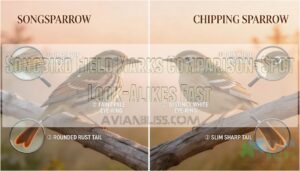
You won’t nail species identification without mastering field marks—those diagnostic visual details that separate a Song Sparrow from a Swamp Sparrow. Focus on these high-value features:
- Wing bars and feather edging that catch light differently across species
- Beak shapes ranging from thick seed-crackers to slender insect-probes
- Tail feathers showing notches or terminal bands
- Plumage patterns including crown stripes and eye lines
Peterson Field Guide arrows point exactly where to look.
Behavioral and Habitat Cues
Once you’ve locked in field marks, pay close attention to bird behavior and habitat cues. Field guides spotlight Foraging Styles—like nuthatches probing bark or flycatchers sallying for insects. Perching Postures, Flight Patterns, Habitat Layers, and Seasonal Behaviors all drive species identification techniques. Notice where, how, and when birds act; it’s a shortcut to mastery.
| Behavior | Habitat Layer | Season |
|---|---|---|
| Ground feeding | Understory | Winter flocks |
| Canopy sallying | Canopy | Spring display |
| Bark probing | Mid-story | Year-round |
| Tail cocking | Brush piles | Early summer |
| Soaring/gliding | Open sky | Migration |
Audio and Vocalization Descriptions
Sonic Variations seal the deal when field marks fall short. Audio Cues in Peterson Field Guide and others describe bird songs by frequency range—many songbirds hit 2 to 5 kHz—and Call Patterns like whistles, trills, and buzzes. Look for guides that pair spectrograms with text, helping you match what you hear to what you see:
- Vocal Frequency bands for quick species sorting
- Rhythmic tempo shifts signaling behavior change
- Regional dialect notes flagging local populations
- Onset-to-termination structure anchoring bird identification
Evaluating Guide Organization and Usability

A field guide’s organizational system determines whether you’ll identify a bird in seconds or flip through pages while it flies away. The way species are indexed, the clarity of reference features, and the quality of supporting information all shape your experience on the trail.
Let’s examine the structural elements that separate fast, reliable guides from frustrating ones.
Indexing by Color, Shape, or Taxonomy
Field guides organize birds by color coding, shape recognition, or taxonomic order—each method sharpens your visual identification skills differently. Color indexes align hue assignments to speed filtering, while shape charts group silhouettes by flight profile. Taxonomic grouping follows evolutionary families, linking related species. Hybrid indexing blends these approaches, so you can cross-check field marks and pinpoint a bird faster on the trail.
| Index Type | Best Use Case |
|---|---|
| Color Coding | Bright light, clear views |
| Shape Recognition | Poor lighting, distant birds |
| Taxonomic Order | Learning related species |
Quick Reference Tabs and Glossaries
Thumb-indexed tabs and glossaries access bird field guides during fast-paced trail encounters. Tab design features high-contrast icons and color-coded sections for quick navigation, while glossary updates keep pace with taxonomy shifts and regional name changes. Visual cues—silhouettes, wing bars, eye rings—reduce cognitive load when you’re squinting through binoculars. Some guides embed audio references noting trills or whistles, helping confirm identifications when birds stay hidden in the canopy.
- Bite-sized word lists for rapid lookup during hikes
- Plain-language definitions paired with sample species
- Thumbnail silhouettes for on-trail matching
- Short vocalization notes labeled by region and season
Quality of Descriptions and Range Maps
Accurate range maps and crisp descriptions separate outstanding bird field guides from mediocre ones. Look for seasonal boundaries stacked on maps, core habitat zones marked clearly, and plain-language plumage notes that highlight field marks—wing bars, eye rings, facial patterns.
Description clarity matters when you’re distinguishing a warbler from a vireo at dawn. Check update frequency; taxonomy shifts and range expansions demand current data.
Digital Bird Field Guides and Mobile Apps

Digital field guides have transformed how you identify birds on the trail, putting thousands of species, range maps, and audio recordings in your pocket. These apps work alongside printed guides—or replace them entirely for hikers who prefer traveling light.
Understanding their strengths and limitations will help you choose the right digital tools for your next outing.
Benefits of Digital Formats for Hiking
Digital field guides deliver real-time updates and interactive maps that print never could, letting you layer terrain, weather, and bird ranges in seconds. You’ll cut pack weight while going eco-friendly—no paper, no waste.
Digital navigation guides you through remote trails with precision, and bird field guide reviews confirm what hikers already know: these tools transform bird identification into something immediate and adaptable.
Offline Access and Search Features
When you’re deep in the backcountry and the signal drops, offline maps and data caching keep your bird field guides running at full resolution. You’ll run local search queries for field marks—plumage colors, habitat terms, behavior notes—without waiting on a network.
Audio support lets you play vocalizations right on the species page, while quick reference tabs pull up range maps instantly. Bird identification doesn’t pause when connectivity does.
Integrating Apps With Printed Guides
QR code links on many bird field guides launch companion apps like Merlin Bird ID or eBird within seconds—scan the cover, hear the species. NFC tagging triggers instant lookups, while AR overlays align digital silhouettes with live views.
Cloud sync notes let you log sightings in the app and cross-reference them in your printed guide, merging analog reliability with digital search power for sharper bird identification.
Tips for Using Field Guides on The Trail

Having the right guide in your pack means nothing if you can’t use it efficiently when a mystery bird lands fifteen feet away. The trail demands quick, confident identification techniques that work under real conditions—wind flipping pages, glare washing out illustrations, or that warbler refusing to hold still.
The right field guide becomes worthless if you can’t use it quickly when a bird appears fifteen feet away on the trail
Here’s how to make your field guide actually useful when it counts most.
Efficient Species Identification Techniques
On the trail, you’ll sharpen your species recognition by narrowing options quickly. Focus on three visual cues at once—plumage pattern, beak shape, and size—then verify with range maps. Here’s how to simplify bird identification:
- Scan distinctive field marks like wing bars or eye rings before flipping pages
- Note bird behavior: ground foragers versus canopy gleaners reveal family groups
- Match habitat context—riparian zones favor different species than coniferous forests
- Use quick reference tabs to jump directly to relevant sections for your current environment
Cross-Referencing With Multiple Tools
Once you’ve narrowed candidates with your primary guide, confirm the ID by cross-validation with at least two more sources. Compare range maps across a digital app and a secondary field guide, then check vocalization descriptions for data corroboration. This tool integration—matching field marks, habitat notes, and audio cues—transforms guesswork into fact-checking confidence.
Here’s a quick source verification matrix:
| Feature | Printed Guide | Mobile App | Audio Tool |
|---|---|---|---|
| Range Maps | Geographic zones | GPS overlay | N/A |
| Field Marks | Illustrations | Photo galleries | N/A |
| Vocalizations | Text descriptions | Spectrograms | Live recordings |
| Habitat Context | Narrative notes | Location tags | N/A |
| Behavior Cues | Brief summaries | Video clips | Call context notes |
Adapting Guides for Changing Conditions
Your printed guide won’t track live taxonomy updates or climate shifts, but you can layer in user contributions from apps to catch recent vagrancy records.
When storm glare washes out field marks, lean on behavioral cues—feeding posture, flight rhythm—and vocalization context.
For bird watching for beginners, flexible range maps with seasonal shading plus quick reference tabs help bird identification stay accurate despite weather, terrain, or fading light.
Top 10 Bird Field Guides for Hiking
You’ve narrowed down what matters in a field guide—now it’s time to see which ones actually deliver on the trail. The guides below range from exhaustive national references to focused regional tools, each offering distinct advantages for hikers.
Here’s what stands out in the current lineup of field guides built for real-world identification.
1. Peterson Field Guide Birds Eastern Central North America

The Peterson Field Guide to Birds of Eastern and Central North America remains the benchmark for hikers covering over 500 species across the region. You’ll find 159 color plates that emphasize field marks—wing bars, tail shapes, head patterns—paired with concise notes on size, voice, and habitat.
The seventh edition updates range maps to reflect current distribution patterns, while its compact 5 x 8-inch format slips easily into a daypack. At 392 pages, it balances thorough coverage with trail-ready portability, making identification swift when that warbler won’t sit still.
| Best For | Birders who want a trusted, field-tested guide with clear illustrations and range maps for identifying Eastern and Central North American species on the trail or in the backyard. |
|---|---|
| Page Count | 392 pages |
| Language | English |
| Publisher | Mariner Books |
| Publication Year | 2020 |
| Illustration Type | Hand-drawn illustrations |
| Geographic Coverage | Eastern/Central North America |
| Additional Features |
|
- 159 color plates highlight key field marks like wing bars and tail shapes, making quick identification easier when birds are in motion
- Updated range maps reflect current distribution patterns, giving you accurate information for the region
- Compact 5 x 8-inch size fits in a daypack without the bulk of larger guides
- Too large to slip into a pants pocket for casual walks
- Stiff binding requires careful handling to avoid damaging the spine
- Not a hardcover despite some listings—it’s laminated cardstock that may not hold up to heavy field use as well as expected
2. Bird Identification Guide Book

Rob Hume’s compact guide distills 150 common European and British birds into a pocket-sized 128 pages that won’t weigh down your daypack. You get labeled photos, color-coded finder sections, and clear ID cues—though males and females don’t always appear together on the page.
At 5.4 ounces and 4 x 7.56 inches, it’s lighter than most trail snacks, ideal for backyard feeders or European rambles.
Beginners appreciate the straightforward layout; seasoned watchers may find the species list too limited for exhaustive field use.
| Best For | Beginner birdwatchers and casual nature enthusiasts in Britain and Europe who want a lightweight, portable guide for backyard or trail identification. |
|---|---|
| Page Count | 128 pages |
| Language | English |
| Publisher | DK |
| Publication Year | 2012 |
| Illustration Type | Photographs |
| Geographic Coverage | Britain and Europe |
| Additional Features |
|
- Compact and light at 5.4 ounces, easy to carry on hikes or keep by the window
- Color-coded finder sections make it simple to narrow down species quickly
- Clear photos and ID tips help distinguish similar birds without overwhelming detail
- Limited to 150 species, which may not cover rarer birds advanced watchers seek
- Doesn’t always show both male and female images for comparison
- Only useful for European and British birds, not applicable in other regions
3. National Geographic Bird Field Guide

National Geographic’s seventh edition packs 1,023 species into 592 pages, blending hand-painted illustrations with the latest American Ornithological Society taxonomy. Beginners and veterans alike appreciate the bold artwork—though range maps can lag behind climate-driven shifts.
You’ll navigate quickly through new thumbtabs and a color visual index inside the covers, while 250 fresh illustrations and 80 updated maps reflect recent citizen-science data. At 1.96 pounds and 5.5 × 8 inches, it’s heftier than ultralight options but rewards you with field marks, behavioral notes, and habitat cues that separate lookalikes.
| Best For | Birders of all levels who want a comprehensive, portable guide with detailed illustrations and the latest taxonomy for North American species. |
|---|---|
| Page Count | 592 pages |
| Language | English |
| Publisher | National Geographic |
| Publication Year | 2017 |
| Illustration Type | Hand-painted illustrations |
| Geographic Coverage | North America |
| Additional Features |
|
- Covers 1,023 species with hand-painted artwork that highlights key field marks and behaviors
- Quick-find thumbtabs and visual index make navigation easy in the field
- Updated with 37 new species, 250 fresh illustrations, and current AOS taxonomy
- Range maps don’t always reflect recent climate-driven bird movements
- Heavier than ultralight guides at nearly 2 pounds
- Bold illustration style may not suit birders who prefer photographic references
4. North American Birdwatching Guide

This extensive volume gives you more than 800 species with illustrated plates and range maps that track summer and winter distributions across North America. Concise behavioral notes and flight patterns are presented alongside habitat cues for forests, wetlands, and urban edges.
Regional subspecies pop up on localized maps, while observer tips point you toward migratory hotspots and peak movement windows. At modest weight and practical dimensions, it balances taxonomic thoroughness with trail-ready organization—ideal when elevation or seasonal timing matters.
| Best For | Beginners and families who want an easy introduction to birdwatching in North America without getting overwhelmed by advanced details. |
|---|---|
| Page Count | 92 pages |
| Language | English |
| Publisher | Independently published |
| Publication Year | 2025 |
| Illustration Type | Full-color illustrations |
| Geographic Coverage | North America |
| Additional Features |
|
- Includes bird sounds through QR codes, making it easier to identify species by ear
- Full-color illustrations help you quickly recognize birds in the field
- Compact size at 92 pages makes it easy to carry on hikes or camping trips
- Only covers 200 species, which is limited compared to comprehensive guides with 800 birds
- Requires internet access to use the audio features via QR codes
- Lacks the detailed technical information that experienced birdwatchers might need
5. North American Bird Watching Guide

You’ll appreciate a guide that covers 150 species common across the United States and Canada without drowning you in rarities. This 176-page volume from Callisto includes full-color photos paired with range maps that clarify year-round versus migratory presence.
Regional pages help you predict which species show up during peak seasons, while habitat notes—forests, wetlands, urban parks—narrow your search.
At 5.5 by 8.5 inches, it won’t weigh you down, though some hikers find the compact print a bit small on bright trails.
| Best For | Beginner birders who want a portable reference for common North American species during backyard observations, nature walks, and trail outings. |
|---|---|
| Page Count | 176 pages |
| Language | English |
| Publisher | Callisto |
| Publication Year | 2022 |
| Illustration Type | Full-color photos |
| Geographic Coverage | North America |
| Additional Features |
|
- Covers 150 common species with full-color photos and range maps showing year-round and migratory patterns
- Compact 5.5 x 8.5-inch size makes it easy to carry on hikes and birding trips
- Includes helpful sections on birding terminology, equipment basics, and how to log sightings
- Small print size can be difficult to read in bright outdoor conditions
- Organization and indexing system requires some time to learn
- Price point may seem high for a 176-page guide
6. Birding Guide For Beginners

If you’re brand new to birding, this illustrated Skyhorse guide delivers core identification skills alongside behavioral notes and songs. At 256 pages, it walks you through field marks, attracting local species, and basic photography tips without overwhelming technical detail.
The 6 by 9 inch format balances portability with readability, though some hikers note heavy text-to-photo ratios.
You’ll find habitat sketches and backyard birding tips more useful for learning identification logic than for rapid trail lookups.
| Best For | Beginners who want to learn bird identification basics, understand behaviors and songs, and attract birds to their backyard rather than advanced birders needing comprehensive field references. |
|---|---|
| Page Count | 256 pages |
| Language | English |
| Publisher | Skyhorse Publishing |
| Publication Year | 2021 |
| Illustration Type | Photos and illustrations |
| Geographic Coverage | North America |
| Additional Features |
|
- Combines identification keys with practical tips on attracting birds and creating bird-friendly habitats
- Covers bird behaviors, songs, and calls to help you recognize species beyond just visual identification
- Includes beginner-friendly photography guidance for documenting your finds
- Heavy text-to-photo ratio may disappoint readers looking for abundant visual references
- Limited to popular species, so you’ll likely need additional field guides for comprehensive coverage
- At 2.31 pounds, it’s bulkier than most trail-ready pocket guides
7. Backyard Bird Identification Guide Book

Stillwater Press released this 79-page book in May 2025 to help you identify 90+ common backyard species without technical jargon. Full-color photographs highlight field marks, while feeder and food advice helps you attract cardinals, sparrows, and finches to your yard.
The 8.5 by 11 inch format—larger than typical trail guides—suits porch identification better than hiking. You’ll appreciate the quick reference layout and simple language, though the species count stays modest and the coverage limits itself to familiar North American yard visitors rather than exhaustive regional diversity.
| Best For | Beginners and casual bird enthusiasts who want a simple, approachable guide to identify common backyard birds and learn how to attract them with the right feeders and food. |
|---|---|
| Page Count | 79 pages |
| Language | English |
| Publisher | Stillwater Press |
| Publication Year | 2025 |
| Illustration Type | Full-color photographs |
| Geographic Coverage | North American backyard |
| Additional Features |
|
- Features 90 profiles with full-color photos and straightforward ID tips that skip the technical jargon
- Includes practical feeder and food recommendations to help you bring specific birds to your yard
- Large 8.5 x 11 inch format makes it easy to reference from your window or porch
- Limited to common North American species, so it won’t cover every bird you might spot
- Some readers may want more photos or deeper technical details for each species
- The 79-page length means advanced birders will likely outgrow it quickly
8. National Geographic Bird Guide

National Geographic’s seventh and eighth editions give you 960+ North American species backed by 4,000 full-color illustrations from top bird artists. You’ll navigate quickly using thumb tabs and a color-coded index, while updated range maps show current distribution and migration routes.
Each species page labels key field marks—wing patterns, tail shapes, bill dimensions—right on the artwork. The durable cover and reinforced binding withstand trail abuse, and the taxonomically organized layout lets you locate related species fast when that mystery warbler won’t hold still.
| Best For | Beginner to intermediate birdwatchers who want a portable, visually rich field guide for identifying common backyard and regional species across North America. |
|---|---|
| Page Count | 256 pages |
| Language | English |
| Publisher | National Geographic |
| Publication Year | 2019 |
| Illustration Type | Identification artwork |
| Geographic Coverage | North America |
| Additional Features |
|
- Clear identification artwork highlights key field marks like wing patterns and bill shapes right on the illustrations
- Compact size (5.4 x 8 inches) and durable construction make it easy to carry on trails and birding trips
- Includes practical “Backyard Basics” section with tips on attracting birds and creating bird-friendly spaces
- Covers only 150 species, which may feel limiting compared to comprehensive guides with 900 birds
- Smaller physical size means less detailed information per species compared to larger reference books
- May be too basic for advanced birders looking for in-depth behavioral analysis or rare species coverage
9. Minnesota Bird Field Guide Book

Stan Tekiela’s Minnesota guide narrows your identification work to 123 local species—no wasted pages on birds you won’t see at Itasca or along the Mississippi flyway. You’ll flip straight to color-coded sections matching the bird in your binoculars, then compare look-alike photos until field marks click into place.
The compact 4×6-inch format slides into cargo pockets, and Stan’s naturalist notes add context you won’t find in range maps alone.
For $11.50, it’s regionally focused field intelligence that saves time on every Minnesota trail.
| Best For | Minnesota birders who want quick, confident identifications without flipping past hundreds of species they’ll never see in-state. |
|---|---|
| Page Count | 328 pages |
| Language | English |
| Publisher | Adventure Publications |
| Publication Year | 2019 |
| Illustration Type | Professional photos |
| Geographic Coverage | Minnesota |
| Additional Features |
|
- Color-coded sections let you match birds fast—no taxonomy degree required
- Pocket-sized durability means it actually comes with you on hikes instead of sitting on a shelf
- Stan’s naturalist notes give you conversation-worthy context beyond just “what is it”
- Range maps and migration patterns can feel dense if you’re brand new to birding
- Won’t help with rare visitors or species just outside Minnesota borders
- Repeated field use might wear down the binding faster than a coffee-table hardcover
10. Kaufman Field Guide To Midwest Nature

Midwest birders need more than just feathers—you’re tracking mushrooms after rain, naming wildflowers along the trail, and sorting out whether that flash of copper is a fox or a rust-spotted salamander.
Kaufman’s all-terrain approach covers 2,000+ color photographs spanning birds, mammals, trees, insects, reptiles, amphibians, fish, and night-sky constellations across seven states.
At 416 pages and 2.31 pounds, it’s heavier than single-focus guides, but you’ll stop hauling three books when one manages oak identification and warbler song in the same outing.
| Best For | Midwest nature enthusiasts who want one portable reference that covers everything from identifying birds and wildflowers to naming mushrooms and reading the night sky—without carrying multiple field guides. |
|---|---|
| Page Count | 416 pages |
| Language | English |
| Publisher | Mariner Books |
| Publication Year | 2015 |
| Illustration Type | Color photographs |
| Geographic Coverage | Midwest USA |
| Additional Features |
|
- Covers an impressive range—over 2,000 color photos spanning birds, mammals, trees, wildflowers, insects, reptiles, fish, mushrooms, and even constellations across seven Midwest states
- Written in plain language with color tabs for quick navigation, making it accessible whether you’re a beginner or experienced naturalist
- Doubles as a teaching tool by grouping species into families, so you can identify similar plants and animals even if the exact species isn’t pictured
- At 2.31 pounds and 416 pages, it’s noticeably heavier than single-topic guides—not ideal for ultralight backpacking
- The tight binding makes one-handed browsing difficult, which can be frustrating when you’re trying to flip through sections in the field
- No Kindle or digital version available, so you’re stuck with the physical book if you prefer electronic references
Factors to Consider Before Buying a Bird Field Guide

Not every field guide fits every birder, and choosing the wrong one can turn a promising hike into a frustrating guessing game. Your ideal guide depends on where you hike, how much experience you have, and what you’re willing to carry in your pack.
Here are the four main factors that’ll help you pick a guide that actually works for you on the trail.
Target Audience and Skill Level
Your skill level shapes which bird field guides will actually serve you on the trail. Beginner birders need guides with color-coded sections and high-contrast illustrations that emphasize quick visual matches.
Consider these learning paths:
- Novice hikers benefit from simplified terminology and step-by-step identification tips
- Intermediate users appreciate habitat preferences and conservation notes woven into descriptions
- Expert birders require subspecies distinctions and nuanced plumage details
Match the guide’s audience needs to your current birding for beginners experience, not where you hope to be someday.
Area Coverage and Species Range
Geographic boundaries in bird field guides determine how many North American bird species you’ll actually encounter. Range maps show seasonal presence—breeding, migrant, or year-round resident—so you don’t waste time chasing vagrants. Habitat zones and taxonomy updates affect species distribution data, making edition year critical for accurate field marks and bird identification on your hikes.
| Coverage Type | Best For | Typical Species Count |
|---|---|---|
| Continental | Cross-country hikers | 900+ birds |
| Regional | State or multi-state trips | 300–500 birds |
| Local | Weekend trail outings | 150–250 birds |
| Coastal | Shoreline and wetland zones | 200–400 birds |
| Montane | Elevation-based habitats | 180–320 birds |
Price and Value for Hikers
Most field guides run fifteen to thirty-five dollars in paperback, while durable hardcover editions push twenty-five to fifty. Regional specialty guides often carry a premium—thirty to sixty bucks—but deliver focused species lists that save you time. Here’s your cost analysis for value assessment:
- Paperback national guides offer the best price comparison at fifteen to thirty-five dollars
- Hardcover editions with weather-resistant bindings justify higher costs on wet trails
- Digital apps provide discount options at five to fifteen dollars with searchable databases
- Bundle sets cut ten to twenty percent off when buying paired regional coverage
Regional bird field guides beat continental tomes for hikers working specific trail systems, even at premium prices.
Update Frequency and Taxonomy Changes
Publishers generally revise bird field guides every three to eight years, though taxonomy updates from the AOU can outpace print cycles. Digital companions sync faster—some quarterly—while printed editions lag behind naming splits and range shifts. Track edition years and check online errata before buying; outdated field marks cost you accurate bird identification on the trail.
| Update Type | Typical Frequency | Impact on Hikers |
|---|---|---|
| Taxonomy Updates | Annual to quarterly | New species splits affect ID decisions |
| Range Map Revisions | Every 3-8 years | Habitat shifts change where you look |
| Field Mark Changes | Per edition cycle | Plumage notes align with current names |
Frequently Asked Questions (FAQs)
How do weather conditions affect bird identification accuracy?
Weather impacts bird identification through reduced visual clarity in rain or fog, altered bird behavior during temperature extremes, and shifting lighting conditions that obscure field marks—all critical challenges when consulting range maps during bird watching expeditions.
What binocular magnification works best with field guides?
Most bird watching for beginners thrives with 8×42 binoculars—offering a generous field view for quick bird detection while balancing optical quality and image detail.
Upgrade to 10x magnification only when you prioritize close inspection over scanning speed.
How do you identify birds during dawn chorus?
Listen for distinctive vocal patterns and repetitive phrases starting about an hour before sunrise.
Focus on common species recognition through bird calls and morning habitat cues, then verify field marks as light improves for accurate bird identification.
Should you carry multiple guides on long hikes?
Carrying two compact field guides offers redundancy if one gets wet or damaged on the trail.
Pairing a regional guide with a national one balances portability and bird variety while improving map accuracy for confident identification during your hike planning.
Conclusion
Think of your field guide as a translation tool—converting wing bars, tail spots, and habitat clues into confident identifications when seconds matter. The best bird field guides for hiking don’t just catalog species; they become extensions of your observational skills, sharpening pattern recognition with every use.
Choose one matching your region and experience level, then let repetition build fluency. Soon those fleeting glimpses transform into names, behaviors, and stories worth remembering long after the trail ends.
- https://www.birdwatchingdaily.com/news/birdwatching/report-86-million-americans-watched-wildlife-2016-20-percent-jump-2011/
- https://birdinguniversity.substack.com/p/foundations-of-field-id-habitat
- https://blog.mybirdbuddy.com/post/how-to-identify-birds-behaviour
- https://nature-mentor.com/bird-behavior/
- https://www.birdwatchingweekly.com/p/what-is-the-best-time-of-day-for-birdwatching-activities