This site is supported by our readers. We may earn a commission, at no cost to you, if you purchase through links.
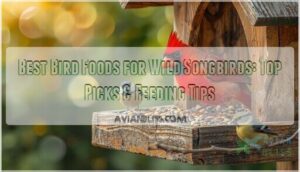
A cardinal lands on your feeder, cracks open a black oil sunflower seed, and gets 40 percent more fat than it would from a striped variety. That single nutritional difference can mean the difference between a struggling bird and one that thrives through a harsh winter.
Choosing the right bird foods for wild songbirds isn’t just about attracting pretty visitors to your yard—it’s about supporting their health through breeding seasons, migrations, and temperature extremes. Different species need different fuel at different times, and understanding what each ingredient brings to the table helps you create a feeding station that actually aids the birds stopping by.
Table Of Contents
Key Takeaways
- Black oil sunflower seeds deliver 40% more fat than striped varieties and contain 18-21% protein, making them the top choice for attracting cardinals, finches, and grosbeaks while supporting their energy needs through harsh winters and migrations.
- Seasonal feeding strategies matter because spring birds need 20-30% fat content with high protein for breeding (making 10-20 nest trips hourly), while winter visitors require 15-25% fat in seed blends plus frozen suet at 60-70% fat to maintain body heat during freezing nights.
- Store bird food in cool, dry, airtight containers and clean feeders every two weeks (weekly in winter) to prevent mold, aflatoxin from rancid peanuts, and disease—spoiled or contaminated food drives birds away and threatens their health.
- Premium blends with minimal fillers (avoiding milo and excess cracked corn), proper feeder placement 10 feet from windows near natural cover, and fresh water sources create refuges where exhausted migrants refuel and breeding pairs find the strength to raise their young successfully.
Top Bird Foods for Wild Songbirds
You want to give your backyard songbirds the best food possible, but with so many options out there, it’s tough to know where to start. The good news is that a handful of quality bird food blends consistently attract colorful visitors like cardinals, finches, and grosbeaks throughout the year.
Let’s look at five top-rated wild bird foods that’ll turn your feeder into the neighborhood hotspot.
1. Kaytee Wild Bird Seed Food
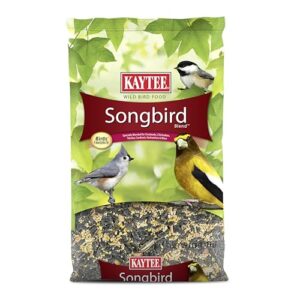
Kaytee Wild Bird Seed Food stands out as a high-energy choice that’ll bring cardinals, grosbeaks, and finches right to your backyard. You’re getting a blend of black oil and striped sunflower seeds, peanuts, and millet—all ingredients songbirds can’t resist.
The seed quality stays fresh when stored in a cool, dry spot, and it works great in tube feeders or hoppers. With 22% crude fat and added vitamins, this Kaytee Songbird Blend promotes wild bird health year-round while minimizing dust and debris.
| Best For | Backyard birders who want to attract a colorful mix of songbirds like cardinals, finches, and grosbeaks with a high-energy, premium seed blend. |
|---|---|
| Brand | Kaytee |
| Weight | 7 pounds |
| Item Form | Chunk |
| Primary Ingredient | Sunflower seeds |
| Target Birds | Colorful songbirds |
| Feeder Compatibility | Different feeder types |
| Additional Features |
|
- Contains black oil and striped sunflower seeds, peanuts, and millet—ingredients that appeal to a wide variety of songbirds
- High fat content (22% crude fat) with added vitamins supports bird health throughout the year
- Minimal dust and broken seeds mean less mess and waste in your feeding area
- Higher price point compared to basic seed mixes may not fit every budget
- Dropped seeds can sprout in your yard, creating unwanted plant growth
- Not ideal if you’re trying to attract smaller birds that avoid sunflower seeds
2. Wagner’s Supreme Wild Bird Food Blend
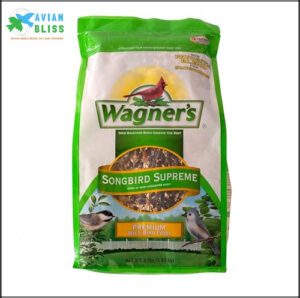
If you’re after another top-tier bird seed option, Wagner’s Deluxe Wild Bird Food Blend packs 50% sunflower content—one of the highest you’ll find. This 8-pound mix combines black oil sunflower seeds with corn, millet, and peanut pieces to draw in finches, nuthatches, and doves.
You can use it in tube, hopper, or platform feeders without worrying about compatibility. The resealable slider keeps your bird food storage fresh between fillings, though some folks find the closure a bit tricky.
It’s made in the USA and aids wild bird health through balanced nutrition and minimal fillers.
| Best For | Backyard birders who want a high-sunflower-content mix to attract a wide variety of songbirds like finches, nuthatches, and doves year-round. |
|---|---|
| Brand | Wagner’s |
| Weight | 8 pounds |
| Item Form | Seeds |
| Primary Ingredient | Sunflower seeds |
| Target Birds | Backyard songbirds |
| Feeder Compatibility | Tube, hopper, platform |
| Additional Features |
|
- 50% sunflower seed content provides high energy and appeals to many popular backyard species
- Works with multiple feeder types including tube, hopper, and platform setups
- Resealable slider helps maintain freshness between refills
- Higher price point makes it feel expensive for some buyers
- High sunflower percentage can create messy debris under feeders and attract squirrels
- Packaging closure can be difficult to operate and may not seal securely
3. Wagner’s Wild Bird Food Blend
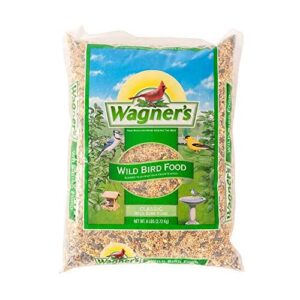
When you’re working with a tighter budget, Wagner’s Wild Bird Food Blend offers a practical six-pound option. This grain blend mixes millet, milo, cracked corn, and sunflower seeds to attract jays, cardinals, doves, and finches year-round. You can fill tube, hopper, or platform feeders with confidence, though some buyers note higher filler content than premium options.
Seed freshness matters for bird health, so check for debris before serving. It’s a solid entry point for feeding strategies that support wildlife conservation without breaking the bank.
| Best For | Budget-conscious bird feeders who want to attract a variety of species without spending too much on a starter mix. |
|---|---|
| Brand | Wagner’s |
| Weight | 6 pounds |
| Item Form | Grains |
| Primary Ingredient | Millet |
| Target Birds | Wide range wild birds |
| Feeder Compatibility | Tube, hopper, platform |
| Additional Features |
|
- Attracts multiple bird species like cardinals, jays, and finches with its seed variety
- Works in any feeder type and all seasons, giving you flexibility
- Six-pound size is manageable and easy to store
- Contains more filler seeds like milo and cracked corn that some birds ignore
- Quality can be inconsistent with debris like sticks and chaff mixed in
- May attract aggressive house sparrows that push out other birds
4. Wild Bird Food Cherry Blend
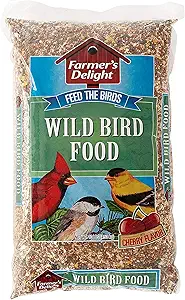
If you’re looking for something different, cherry blend wild bird food adds dried cherries to standard black oil sunflower seeds, millet, and cracked corn. The cherry flavor appeals to house finches and chickadees especially.
You’ll want a ten-pound bag stored in a cool, dry spot to keep seed freshness high—rancid fats drive birds away fast.
This blend composition promotes wild bird nutrition through varied ingredients, though you should rotate feeding strategies with other mixes to prevent dietary monotony in your backyard songbirds.
| Best For | Birders who want to attract house finches and chickadees with a unique cherry-flavored seed mix while keeping costs reasonable. |
|---|---|
| Brand | Wagner’s |
| Weight | 10 pounds |
| Item Form | Seeds |
| Primary Ingredient | Sunflower seeds |
| Target Birds | Wide variety backyard birds |
| Feeder Compatibility | Ground, hopper, tube |
| Additional Features |
|
- Cherry flavor appeals to specific songbirds like house finches and chickadees, giving you variety in your backyard visitors
- Made in the USA with quality grains and comes in an economical 10-pound bag
- Works well in multiple feeder types including hoppers, tubes, and ground feeding setups
- Can attract unwanted visitors like squirrels, chipmunks, and raccoons to your feeding area
- Seeds may go rancid quickly if not stored properly in a cool, dry location
- Some larger birds like crows and ravens can’t open the seeds, limiting which species will visit
5. Wagner’s Songbird Wild Bird Food
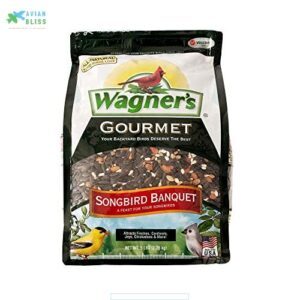
Wagner’s Songbird Wild Bird Food delivers a rich mix of black oil and striped sunflower seeds blended with peanuts to attract cardinals, nuthatches, and grosbeaks year-round. You’ll notice the high-quality ingredients—22% crude fat minimum—provide excellent energy for wild bird attraction during seasonal feeding peaks.
The blend’s seed types work well in tube, hopper, or platform feeders, though peanuts can clog smaller openings. Keep up with feeder maintenance by cleaning regularly and discarding old seed to prevent mold, ensuring maximum bird feeding success.
| Best For | Backyard bird enthusiasts who want to attract colorful songbirds like cardinals, nuthatches, and grosbeaks with a high-energy seed mix that works across multiple seasons. |
|---|---|
| Brand | Wagner’s |
| Weight | 5 pounds |
| Item Form | Seeds |
| Primary Ingredient | Sunflower seeds |
| Target Birds | Small and large beak songbirds |
| Feeder Compatibility | Bird feeders |
| Additional Features |
|
- Rich blend of sunflower seeds and peanuts delivers 22% crude fat for excellent energy during migration and winter months
- Attracts a diverse range of small and large-beaked songbirds for year-round birdwatching entertainment
- All-natural, high-quality ingredients with no artificial colors or fillers reduce waste and support bird health
- Peanuts can clog smaller tube feeders and require more frequent maintenance to prevent jamming
- May attract unwanted visitors like squirrels and mice looking for an easy meal
- Regular cleaning is necessary to prevent mold buildup, especially in warm or humid conditions
Key Ingredients That Attract Songbirds
Not all bird seeds are created equal regarding attracting songbirds to your yard. The ingredients you choose make a real difference in which species show up and how healthy they stay.
Let’s look at the key foods that’ll turn your feeder into a songbird hotspot.
Sunflower Seeds (Black Oil & Striped)
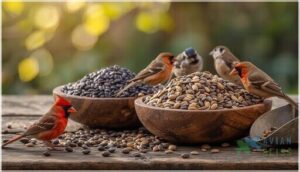
Sunflower seeds are the benchmark in wild bird food, and you’ll notice black oil varieties pack more punch than striped ones. Black oil sunflower seeds deliver 18–21% protein and roughly 40–50% fat—that’s serious energy for songbirds. Striped seeds offer 15–18% protein but come with thicker shells. Birds prefer black oil because kernel nutrition is easier to access, making seed storage and shell removal simpler for smaller beaks.
Understanding research methodology is essential for analyzing the nutritional value of different bird foods.
Peanuts and Cracked Corn
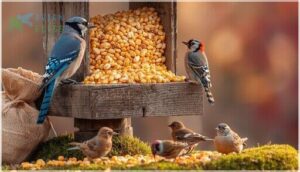
Peanuts bring high-fat energy that songbirds crave, especially jays, woodpeckers, and Titmice. Cracked corn draws ground-foraging juncos and sparrows right to your feeder.
Keep these wild bird food staples fresh to avoid aflatoxin risk from mold:
- Store peanuts in cool, dry bins
- Check corn varieties for freshness weekly
- Discard wet or clumped seed storage batches
- Offer shelled peanuts for easier access
- Monitor bird preferences and adjust portions.
Proper research techniques involve using clear science methods to guarantee accurate information.
Millet and Nyjer Seeds
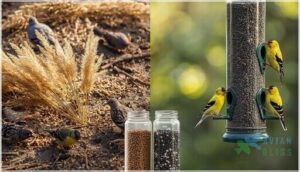
Millet appeals mostly to ground feeders like doves and sparrows, but cardinals and bluebirds won’t touch it as their main wild bird food.
Nyjer seeds, packed with fat and protein, attract goldfinches and siskins when you use specialized finch feeders.
Store both in airtight containers to prevent mold and preserve seed purity for ideal wild bird nutrition during bird migration and year-round songbird feeding.
Dried Fruits (Cherries, Raisins)
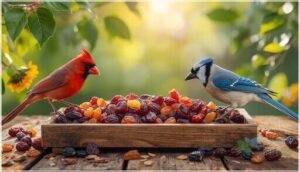
Dried cherries and dried raisins give your songbirds quick energy when they need it most. These dried fruit nutrition powerhouses attract cardinals and jays, but you’ll want to follow a few bird feeding safety rules:
- Choose unsweetened, pitted options to prevent choking hazards
- Mix small fruit pieces with seeds for balanced wild bird food
- Replace fruit remnants within 48 hours to avoid mold
Cherry benefits and raisin supplements shine during migration periods.
Nutrition and Health Considerations
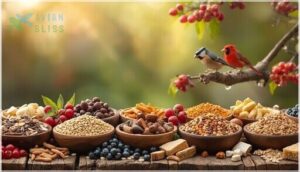
You can’t just toss any seeds in a feeder and call it a day—songbirds need the right balance of nutrients to stay healthy and active. Their diet should include proper amounts of protein, fat, and fiber, along with essential vitamins and minerals that support everything from feather growth to egg production.
Let’s break down what your feathered friends really need to thrive.
Protein, Fat, and Fiber Requirements
Your backyard songbirds rely on balanced macronutrient intake to thrive. Bird nutrition science shows that protein fosters growth and feather health—aim for 18–30 percent during breeding season. Energy balance depends on fat, which should make up 8–20 percent of wild bird food for fuel. Fiber aids digestion and nutrient absorption.
Understanding these dietary needs and nutrient ratios helps you choose seed quality that promotes peak bird health.
Essential Vitamins and Minerals
Beyond protein and fat, your feathered friends need Vitamin A Supplement for feather health and immune function. Calcium Sources support strong eggshells—especially for cavity-nesters like chickadees. Vitamin D3 Supplement helps birds metabolize calcium, while manganese aids bone formation.
Mineral Supplements, including trace sodium, maintain electrolyte balance during migration.
Bird Nutrition experts agree that Vitamin Balance drives reproductive success and overall vitality in songbirds.
Freshness, Quality, and Minimal Fillers
Once vitamins and minerals are covered, you need to think about Seed Storage Tips and Freshness Testing. Quality Control matters—check for a neutral odor and avoid seed with white coating or insects.
Packaging Matters too; store Bird Seed in cool, dry spots using airtight containers.
High-quality Wild Bird Food minimizes Fillers Reduction, keeping YearRound Feeding effective. Good Seed Quality and Storage protects Bird Nutrition and Health.
Dietary Needs of Specific Songbird Species
Different songbirds have unique wild bird nutrition and diet needs. Northern cardinals need high-fat black oil sunflower seeds for winter energy, while American goldfinches favor nyjer and sunflower for avian health. Black-capped chickadees rely on suet during cold months, and bluejays cache peanuts and cracked corn.
Understanding species feeding patterns helps you support bird energy and nutritional needs year-round.
Seasonal Feeding Tips for Wild Songbirds

Your backyard birds don’t eat the same foods year-round, and understanding their seasonal needs makes a real difference in keeping them healthy. Spring nesters need extra protein, while winter visitors burn through high-fat foods just to stay warm.
Let’s look at how to adjust your feeding strategy through the seasons to support the songbirds that visit your yard.
Spring and Summer Nutrition
Spring brings wild bird food choices that work a bit differently than winter blends. During warm weather feeding and breeding nutrition tips, your songbirds find plenty of natural bugs and berries, so you’ll want to offer black oil sunflower seeds in moderation.
These support bird migration patterns and summer diet needs without creating dependence. Clean feeders at dawn help prevent disease while providing seasonal food variety that complements wild bird nutrition during peak activity times.
Fall and Winter High-Energy Foods
Cold weather nutrition demands high energy foods that keep your songbirds fueled when temperatures drop. Winter seed blends with 15-25% fat and sunflower seeds work like winter coats—they help birds maintain body heat through long, freezing nights.
- Frozen suet options deliver 60-70% fat content for peak energy
- Nyjer seeds provide 20% protein in tiny, calorie-dense packages
- Black oil sunflower seeds offer 21% protein with essential fats for seasonal feeding strategies
Feeding During Migration and Breeding
When spring arrives, migrating songbirds need 20–30% fat content in their wild bird food to fuel those remarkable journeys. Offer mealworms and sunflower seeds to match their shifting breeding habits, and keep water sources fresh. Parents make 10–20 trips hourly to feed nestlings during this demanding time.
Spring migrants need high-fat foods like mealworms and sunflower seeds to fuel their journeys and feed nestlings up to 20 times per hour
You’ll see better results with feeder placement near shrubs—birds visit these spots 40–60% more during breeding season.
Adjusting Food Types by Season
You’ll need to rotate your feeder offerings as temperatures shift—it’s one of the smartest bird feeding strategies for year-round bird feeding success. Climate adaptation drives seasonal bird feeding patterns, and matching that rhythm strengthens nutrient balance across bird migration cycles.
- Spring/Early Summer: High-protein, insect-rich foods support molting and breeding energy demands
- Late Summer: Seed blends with fruit and nectar diversify wild bird nutrition and diet
- Fall: Energy-dense, high-fat options prepare migrants for long journeys
- Winter: Fat-rich seeds with low moisture prevent spoilage during winter feeding
- Year-Round: Food rotation reduces monotony and broadens the seasonal diet spectrum
Frequently Asked Questions (FAQs)
How often should I clean bird feeders?
You should clean bird feeders at least every two weeks during peak feeding months.
In winter, when moisture increases, bump it up to weekly cleanings to prevent mold growth and keep your feathered visitors healthy.
What feeder types work best for songbirds?
Tube feeders with large feeding ports, along with hopper feeders and platform feeders, work best. These bird feeder designs protect seeds while accommodating songbird preferences.
You can also scatter food on the ground following smart bird feeding tips.
Where should I place feeders in my yard?
Perfect feeder placement protects precious songbirds. Position feeders 10 feet from windows, near natural cover like shrubs, and 4–6 feet high.
Keep pets away to create a safe backyard oasis for bird watching.
Can wild bird food attract unwanted pests?
Yes, wild bird food can attract squirrels, rodents, ants, and insects. Secure feeders properly, clean spills quickly, and store bird seed in sealed containers to maintain pest control methods while enjoying backyard birding.
Should I provide water along with food?
Water is the well of life—and your backyard birding setup isn’t complete without it. Offering fresh water sources alongside wild bird food bolsters bird hydration, feeder placement strategy, and creates bathing stations that improve bird health in wildlife-friendly gardens.
Conclusion
The next cardinal that visits your yard might be deciding whether to stay for the season or move on to richer ground. Your feeder holds that answer.
When you stock quality bird foods for wild songbirds—packed with the fats, proteins, and nutrients they actually need—you’re not just feeding birds. You’re creating a refuge where exhausted migrants refuel, where breeding pairs find strength, and where winter survivors beat the odds.
- https://academichelpexpress.blog/2024/08/please-use-the-bulleted-points-and-the-rubric-below-to-guide-your-work-your-pa/
- https://www.writingclearscience.com.au/category/writing-guides/writing-research-papers/page/2/
- https://www.sciencedirect.com/science/article/pii/S0749208123000268
- https://pmc.ncbi.nlm.nih.gov/articles/instance/9553038/bin/pone.0275964.s005.docx
- https://x.com/godofprompt/status/1990526288063324577