This site is supported by our readers. We may earn a commission, at no cost to you, if you purchase through links.
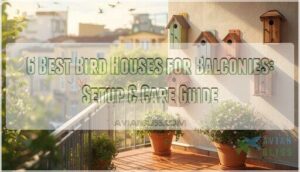
You don’t need a sprawling backyard to become a bird landlord—just a few square feet of balcony space and the right setup. Urban birds are actively scouting apartment terraces and high-rise ledges for safe nesting spots, especially as natural habitats shrink.
The catch? Not every birdhouse works in tight quarters or withstands weather exposure from every angle. Balcony bird houses need smart designs—compact footprints, weatherproof materials, secure mounting systems, and proper ventilation to keep feathered tenants comfortable.
Whether you’re attracting chickadees to your third-floor perch or hoping hummingbirds discover your railing setup, choosing the right house makes all the difference between empty real estate and a thriving avian neighborhood just outside your door.
Table Of Contents
Key Takeaways
- Urban balconies need compact, weatherproof birdhouses with proper ventilation, drainage holes, and entrance sizing (1.5-2 inches for songbirds, 0.5-1 inch for hummingbirds) to attract specific species while withstanding weather exposure from all angles.
- Successful balcony bird habitats combine secure mounting systems (rail clamps, wall brackets, or suction mounts) with strategic placement facing north or east, positioned 4-6 feet high and away from windows to prevent collisions and reduce predator access.
- Regular maintenance—including seasonal cleaning, nest material removal, and monthly pest prevention—protects bird health and extends birdhouse longevity while preventing neighbor complaints from droppings or odors.
- Creating a complete bird sanctuary requires pairing birdhouses with native plants, fresh water sources changed every two days, and appropriate feeders with high-quality seed rotated monthly to attract and retain diverse bird species year-round.
Top 6 Bird Houses for Balconies
You don’t need a sprawling backyard to welcome feathered visitors—your balcony can be the perfect bird sanctuary with the right setup. Whether you’re drawn to curious chickadees or flash-fast hummingbirds, there’s a house designed for your space and your winged neighbors.
Here are six standout options that work beautifully in compact urban settings.
1. Hanizi Outdoor Bird Feeder
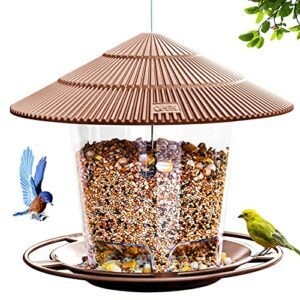
You’ll love the Hanizi Outdoor Bird Feeder if you’re ready to turn your apartment balcony bird house into a bird-watching hotspot.
This bird-friendly balcony bird feeder packs 47 oz of seed capacity into a compact 15.7″ frame—perfect for sparrows, finches, and cardinals. The durable plastic construction and inclined roof keep seeds dry, while the twist-lock hanging options deter squirrels (mostly!). For more tips on keeping feeders safe and welcoming territorial species, check out these hummingbird feeding techniques.
Maintenance tips? The wide opening makes refills a breeze. Just watch those small openings—they can limit seed choices for best bird attraction. For setups that need more durability or portability, check out these durable bird feeders for indoors that handle frequent refills without wear.
| Best For | Apartment dwellers and balcony bird lovers who want a compact, easy-to-maintain feeder that attracts small songbirds without taking up much space. |
|---|---|
| Material | Plastic |
| Primary Color | Brown |
| Weight | 10.2 ounces |
| Installation Type | Hanging |
| Target Birds | Finches, sparrows, cardinals |
| Easy Cleaning | Yes |
| Additional Features |
|
- Holds 47 oz of seed in a compact design—plenty of capacity for small balconies while minimizing refill trips.
- Wide opening and clear plastic make filling and monitoring seed levels super easy.
- Inclined roof and drainage holes keep seeds dry even in rainy weather.
- Not fully squirrel-proof—some persistent critters can still get to the seeds despite the twist lock.
- Small seed openings limit your options and can clog with larger seed types.
- Refill door occasionally sticks, making access frustrating when you’re in a hurry.
2. Window Bird House with Clear Viewing Panel
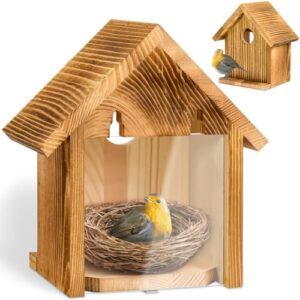
Want to watch nesting habits up close without leaving your couch? A window bird house with a clear viewing panel brings bird watching right to your balcony. Just remember to follow proper bird house placement tips when mounting it to your window, aiming the entrance toward the east or southeast for the best results.
The ANSTEEP model (5.5″ x 7″ x 8.2″) features shatterproof acrylic that lets you observe chickadees and wrens building nests—no binoculars needed. The 1-1.5″ entrance holes support bird conservation by keeping predators out while attracting small space gardening for birds enthusiasts. Its durable acrylic walls strike the ideal balance that quality birdhouse wood achieves—resisting extreme temperatures without moisture buildup.
Easy hook installation and removable panels make cleaning simple, though consider window safety with anti-collision stickers to protect your new feathered neighbors. A hanging bird house with drainage prevents water buildup that could harm nesting birds or damage the structure over time.
| Best For | Bird enthusiasts and families who want to observe nesting activity up close from inside their home without disturbing the birds. |
|---|---|
| Material | Wood |
| Primary Color | Brown |
| Weight | 0.61 Kilograms |
| Installation Type | Window mount |
| Target Birds | Bluebirds, wrens, chickadees |
| Easy Cleaning | Yes |
| Additional Features |
|
- Clear acrylic viewing panel lets you watch birds build nests and raise young from your couch without needing binoculars
- Easy installation with sturdy hooks and simple cleaning with removable panels means low maintenance
- Attracts small songbirds like chickadees, wrens, and tree swallows while keeping predators out with properly sized entrance holes
- Some units arrive damaged or fall off windows due to mounting issues
- May be too small for certain bird species to nest comfortably, and birds might take months to use it—or never show up
- Included stickers often don’t stay attached, and the box can overheat in direct afternoon sun without proper positioning
3. Deck Mounted Bird Bath Bowl
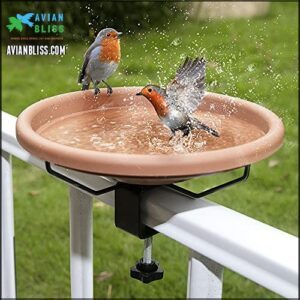
Birds need water just as much as shelter—that’s where a deck mounted bird bath bowl comes in. The adjustable clamp design (fits decks up to 2 inches thick) lets you offer a 12″ drinking and bathing spot without sacrificing precious balcony space.
Choose durable resin or ceramic bird bath materials that resist UV damage, and keep water depth management around 1-2 inches to prevent drowning.
Regular bowl cleaning tips include weekly scrubbing to stop algae and mosquito larvae. These deck mounting systems transform your outdoor decor into a bird watching paradise.
| Best For | Bird lovers with limited outdoor space who want an easy-to-install water source for feathered visitors without committing to a full yard setup. |
|---|---|
| Material | Plastic and Steel |
| Primary Color | Not specified |
| Weight | 1 pound |
| Installation Type | Deck clamp |
| Target Birds | Various birds |
| Easy Cleaning | Yes |
| Additional Features |
|
- Clamps onto railings up to 2 inches thick, so you can mount it without tools or permanent fixtures
- Detachable bowl makes refilling and weekly cleaning quick and hassle-free
- Lightweight design lets you reposition it easily to find the best spot for bird activity
- 12-inch size might feel cramped if you’re hoping to attract larger birds or multiple visitors at once
- Plastic construction can get brittle after months of sun exposure and temperature swings
- Some users report the actual dimensions don’t quite match expectations, leading to stability concerns
4. Winemana Hummingbird Swings and Perches
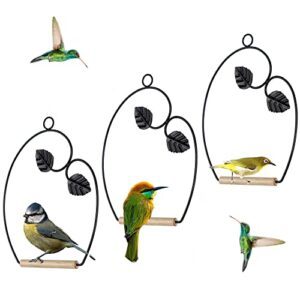
Hummingbirds need rest too—watching them hover is magical, but these tiny dynamos appreciate a perch between feeding frenzies. The Winemana set (3 pieces, 5.51″ x 7.28″ each) features leaf-shaped metal swing designs with rust-resistant frames and wooden dowels that invite birds to pause and recharge.
Perfect for urban birding on tight balconies, these perches attach easily to railings near your hummingbird feeder. You’ll attract more birds and observe hummingbird behavior up close—territorial displays, preening, even brief naps. Just check monthly that wind hasn’t loosened the mount.
| Best For | Urban balcony birders who want to give hummingbirds a resting spot near feeders and enjoy closer observation of their behavior. |
|---|---|
| Material | Alloy Steel and Wood |
| Primary Color | Metal |
| Weight | 3.2 ounces |
| Installation Type | Hanging |
| Target Birds | Hummingbirds |
| Easy Cleaning | No |
| Additional Features |
|
- Leaf-shaped metal design looks natural and gives tired hummingbirds a place to perch between meals
- Lightweight and rust-resistant—easy to hang on balcony railings, patios, or garden hooks
- Set of 3 pieces means you can spread them around or cluster them near feeders for better bird-watching
- Some buyers received broken or incomplete sets, so quality control seems inconsistent
- May need extra assembly or reinforcement to stay securely together in windy spots
- Designed specifically for hummingbirds, so won’t work as well for larger bird species
5. Neoguly Parakeet Nesting Box
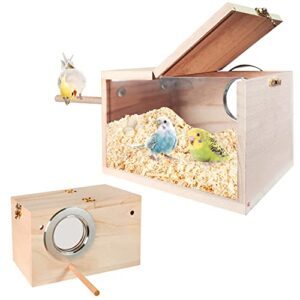
If you’re ready to welcome parakeets to your urban balcony, this clear-panel nesting box design (7.4″ x 4.7″ x 4.7″) lets you watch breeding up close without disturbing parakeet behavior.
The hinged pine-and-acrylic lid makes small birdhouses easy to clean—essential for bird-friendly urban birding on cramped balconies. Secure it to railings with proper mounting hardware for balcony safety.
Aggressive chewers may damage softer birdhouse materials, and some units arrive warped. Check ventilation openings regularly to prevent humidity issues in these compact bird houses.
| Best For | Bird owners who want to monitor their parakeets’ nesting and breeding activity while keeping the setup compact enough for small balconies or indoor spaces. |
|---|---|
| Material | Wood and Acrylic |
| Primary Color | White |
| Weight | 13.7 ounces |
| Installation Type | Wall mount |
| Target Birds | Parrots, lovebirds, budgies |
| Easy Cleaning | Yes |
| Additional Features |
|
- Clear acrylic panels let you watch the nesting process without opening the box and stressing the birds
- Hinged lid makes cleaning quick and straightforward between breeding cycles
- Natural pine construction creates a comfortable environment that parakeets respond well to
- Birds with aggressive chewing habits can damage the wood fairly quickly
- Quality control is inconsistent—some units arrive warped or poorly constructed
- Size may be too small for larger parakeet species or particularly active breeding pairs
6. LaElvish Glass Hummingbird Feeder
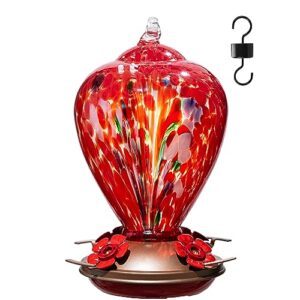
This hand-blown glass hummingbird feeder (34-ounce capacity, 9.1″H) transforms your balcony into a bird-friendly sanctuary. Its copper feeding ports won’t leak like cheaper bird house alternatives. The wide-mouth design simplifies nectar preparation and feeder sanitization, while the built-in ant moat keeps things squirrel proof.
However, the ant guard evaporates quickly in heat, demanding frequent refills. Position it away from windows for bird collision prevention, and clean it weekly to maintain safe hummingbird attraction on your balcony bird feeder setup.
| Best For | Gardeners and bird lovers who want a decorative, eco-friendly feeder that’s easy to clean and attracts hummingbirds to their balcony or backyard. |
|---|---|
| Material | Glass and Copper |
| Primary Color | Floral Balloon |
| Weight | 2.12 pounds |
| Installation Type | Hanging |
| Target Birds | Hummingbirds |
| Easy Cleaning | Yes |
| Additional Features |
|
- Hand-blown glass construction with leakproof copper ports offers durability and prevents nectar spills
- Wide-mouth opening makes filling and cleaning simple, helping you maintain proper hygiene
- Built-in ant moat and decorative design add both function and visual appeal to outdoor spaces
- Ant guard water evaporates quickly in hot weather, requiring frequent refills
- Some users report the 34-ounce feeder appears smaller than expected based on photos
- Needs weekly cleaning to prevent bacterial growth and maintain safe feeding conditions
Choosing The Right Balcony Bird House
Not every birdhouse works well on a balcony—you need one that fits your space, withstands the weather, and keeps your feathered friends safe and comfortable. The right choice depends on a few key factors that’ll make all the difference between an empty box and a thriving little sanctuary.
Let’s walk through what to look for so you can pick a birdhouse that actually works for both you and the birds.
Size and Space Compatibility
Your balcony might feel cozy, but is there room for feathered guests? Most small birdhouses designed for apartment balcony birdhouse setups need 6 to 12 inches in width to fit standard rail thickness without awkward overhang.
Check your balcony depth—aim for 6 to 9 inches—and guarantee 12 inches of vertical clearance above. Urban balconies demand wind resistance rated for 20 mph gusts, so secure mounting options are essential.
When designing your balcony birdhouse, consider the importance of methodological rigor in ensuring the structural integrity of your setup.
Weather-Resistant Materials
Your bird house faces rain, sun, and wind every day—material durability matters. Choose weather-proof options that handle outdoor space design challenges while simplifying birdhouse maintenance and care.
- Cedar or treated timber: Natural UV protection and water resistance
- Powder-coated metal: Corrosion control for apartment balcony bird house setups
- Marine-grade finishes: Enhanced moisture management in humid climates
- Stainless steel hardware: Keeps your squirrel proof bird house secure long-term
Drainage and Ventilation Features
Think of it like keeping a tent dry—your birdhouse needs smart water management and airflow design to avoid a soggy disaster. Look for drainage systems with bottom holes near the rear base (at least one per chamber) and ventilation gaps totaling 8–12 square centimeters per side.
Covered vent slots and mesh screens keep rain out while letting fresh air circulate, giving your feathered guests the moisture control they deserve.
Easy Cleaning and Maintenance Access
No one wants to wrestle with a stuck panel when cleaning time rolls around. Look for Access Doors with magnetic latches or hinged tops that swing open smoothly—some small birdhouses even include Removable Panels that snap out in seconds. Features like wipe-clean coatings and trays compatible with standard Cleaning Tools make easy maintenance a breeze, keeping your bird-friendly balcony fresh without the fuss.
- Hinged or removable top panels give you direct access to interior surfaces
- Front-facing doors with magnetic latches speed up nest removal and inspections
- Removable drainage trays prevent water pooling and simplify routine sanitation
- Wipe-clean interior coatings resist mold and work with portable vacuums
Proper Entrance Hole Sizing
Getting that hole diameter wrong can lock out your feathered friends or invite unwelcome guests. Small songbirds thrive with 1.5–2.0-inch openings, while hummingbird platforms need just 0.5–1.0 inches for nesting safety. Parakeet boxes? Aim for 3.0–4.0 inches.
Proper entrance placement—centered or slightly offset—boosts predator control and keeps your bird-friendly setup welcoming to the right bird species.
Installing Bird Houses on Your Balcony
Installing a birdhouse on your balcony isn’t rocket science, but it does require a bit of strategy to keep your feathered friends safe and comfortable. You’ll want to think about where you mount it, how you secure it, and what might stress out nesting birds in an urban setting.
Let’s walk through the key steps to get your balcony birdhouse set up the right way.
Mounting Options for Small Spaces
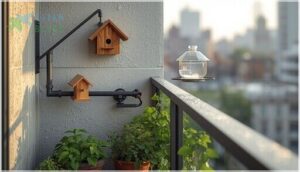
When your balcony feels like a postage stamp, you’ve got options that won’t eat up precious space. Wall brackets with adjustable angles keep small birdhouses secure without hogging floor room, while rail clamps slip onto standard rails—no drilling required.
Suction mounts work for lightweight birdhouse setups, and corner shelves tuck into unused nooks. Freestanding poles with weighted bases add stability to your small space gardening and outdoor decor vibe.
Ideal Placement and Orientation
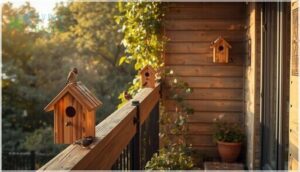
Once your bird house is up, wind direction and sun exposure matter big-time. Orientation tips: Face entrance holes north or east to dodge afternoon heat and prevailing winds.
Keep nesting height around 4–6 feet—high enough to feel safe, low enough for easy bird watching tips. Space multiple boxes 8–10 feet apart so backyard birds don’t squabble.
A bird friendly balcony layout balances shelter with open views!
Secure Attachment Methods
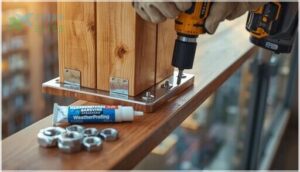
Now let’s lock that birdhouse down so it won’t budge during storms. Choose stainless steel or galvanized fasteners—they laugh off rain and humidity without rusting.
Here’s your attachment checklist:
- Use corrosion-resistant screws rated for outdoor duty
- Anchor into studs or solid rails, not flimsy trim
- Add weatherproofing sealant around penetrations to block water
- Install washers and lock nuts against vibration
- Test stability with manual force before birds move in
Avoiding Noise and Disturbances
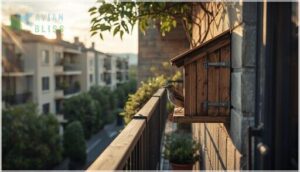
Surprisingly, noise reduction starts with design—soft-touch latches and rubber gaskets around entrance holes dampen the flutter and pecking sounds that echo across balconies. Face your bird house away from living spaces to minimize disturbance, and consider quiet designs that encourage calm bird behavior.
Pair your setup with partial shading to lower agitation, creating a bird-friendly environment that respects both backyard birding tips and your neighbors’ peace.
Safety Considerations for Urban Settings
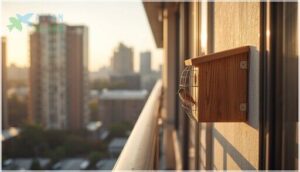
In cramped city quarters, your feathered guests face unique threats—but smart planning keeps them thriving. Here’s how to create a bird-friendly haven that addresses urban predator protection and collision risks head-on:
- Mount predator guards around entrance holes to block cats and rats
- Position away from glass to minimize collision risks and window strikes
- Use corrosion-resistant hardware rated for outdoor urban conditions
- Check wildlife regulations before installing your birdhouse
- Avoid heavy traffic zones where city noise pollution peaks at dawn
Maintaining Balcony Bird Houses
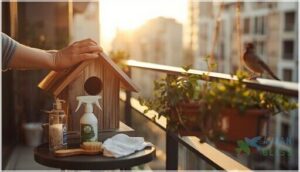
Once your birdhouse is up and welcoming feathered friends, the real work begins—keeping it clean, safe, and ready for the next nesting season. Regular maintenance isn’t just about tidying up; it’s about protecting bird health and making sure your balcony stays a reliable sanctuary.
Here’s what you need to do throughout the year to keep your setup in top shape.
Seasonal Cleaning Schedule
Think of your cleaning routine as your bird house’s health insurance—preventable problems stay that way when you’re proactive. Debris Removal and Nest Refresh should happen every spring, while a thorough Seasonal Disinfect keeps your balcony bird friendly year-round. Track everything in simple Cleaning Logs for easy maintenance:
| Task | Frequency |
|---|---|
| Birdhouse Inspection | Each season |
| Spring deep clean | Annual |
| Disinfect surfaces | Every 2–4 weeks |
Removing Old Nesting Materials
You wouldn’t sleep in yesterday’s dirty sheets—birds feel the same way. Clear out old nesting materials every spring before breeding season starts, using gentle Cleaning Tools and wearing gloves for Bird Safety.
Just like you wouldn’t sleep in dirty sheets, birds deserve fresh nests—clear out old materials every spring with gloves and gentle tools
Proper Nest Sanitation and Material Disposal cut down on parasites and mold that threaten your feathered tenants. Seal debris in bags for smart Waste Management, keeping your Birdhouse fresh and truly Bird Friendly.
Inspecting for Damage and Wear
Your Bird House won’t last if you ignore the warning signs. Check for cracks in Joint Integrity, warped panels blocking drainage and ventilation, and rusted mounting hardware—these flaws compromise Weatherproofing and predator protection.
Peek inside for mold or unwanted guests during Material Inspection and Ventilation Checks.
Choosing the Right Bird House means maintaining what makes it Bird Friendly and safe for your winged neighbors.
Pest Prevention Strategies
Keeping your birdhouse pest-free is just as essential as Choosing the Right Bird House—you’re protecting both Bird Safety and nest success. Smart Wildlife Management means taking action before trouble arrives:
- Clean feeding areas monthly with mild soap to maintain Feeder Sanitation and discourage bugs.
- Store seed in sealed containers to block rodents and maintain Nest Protection.
- Install mesh guards for predator protection against squirrels.
- Remove spilled seed promptly as part of Creating a Bird Friendly Environment.
Bird Health Monitoring
Once pests are handled, watch your feathered visitors for signs of trouble. Healthy Bird Behavior means active feeding and smooth feathers—ruffled plumage or lethargy signals illness. Schedule regular Health Checks to track Feather Condition and droppings.
Good Nesting Hygiene and Avian Nutrition keep your Bird House thriving. These observations protect Bird Health while Creating a Bird Friendly Environment with solid predator protection.
Creating a Bird-Friendly Balcony Environment
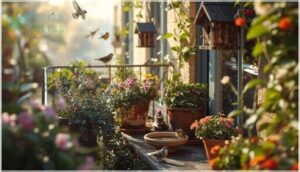
Setting up a birdhouse is just the first step—the real magic happens when you turn your balcony into a space birds actually want to visit. You’re basically creating a mini wildlife sanctuary where feathered friends feel safe, fed, and comfortable enough to stick around.
Let’s look at five simple ways to transform your balcony into a haven that’ll have birds lining up for a visit.
Adding Native Plants for Attraction
Your balcony can become a thriving urban wildlife habitat when you choose the right greenery—think coneflowers, zinnias, and nectar-rich natives that local bird species actually crave. Native plant selection transforms your space into a true balcony ecosystem, delivering food, shelter, and cover that nonnative plants simply can’t match.
Here’s why gardening for wildlife works:
- Protein boost – Natives support insects that feed growing nestlings
- Year-round buffet – Seasonal blooms and berries keep birds coming back
- Low maintenance – Native plants need less water and zero chemicals
Providing Fresh Water Sources
Once you’ve got those native blooms working their magic, it’s time to seal the deal with fresh water. A shallow basin with a gradual slope and textured rim lets birds perch safely without slipping—change it every two days to stop bacteria buildup.
Position your bird bath in shade to keep water cool, and place multiple sources at different heights for backyard birding success across species.
Selecting Appropriate Seed and Feeders
Mix high-quality bird seed—at least 60 percent black oil sunflower hearts—with nyjer for goldfinches and safflower for cardinals. Tube feeders minimize waste and keep things tidy, while platform feeders welcome ground-feeders if you’ve got room.
Rotate seed types monthly to prevent spoilage and attract different species. Clean feeders every 1–2 weeks to stop mold and disease—your feathered guests deserve fresh dining.
Preventing Window Collisions
Glass can be a death trap—birds don’t see it coming. Protect your feathered visitors with these collision prevention strategies for bird-friendly habitats:
- Apply anti-collision stickers or window decals spaced 2–4 inches apart to break reflections
- Install bird-friendly glass films with UV patterns visible to birds but discreet to you
- Hang ribbons or lightweight bird deterrents outside windows to signal barriers
- Position feeders either closer than 3 feet or farther than 30 feet from glass
- Angle birdhouse entrances away from windows to redirect flight paths
Wildlife conservation starts with simple tweaks—your balcony becomes a safer haven when you eliminate invisible hazards.
Balancing Shelter and Open Space
Your balcony needs breathing room—cramming in too much shelter chokes off flight paths and stresses birds. Aim for entrance holes sized to your target species, plus at least 12 inches of open perching space near each birdhouse. Vertical clearance inside lets birds exit safely, while weather buffering (like a sloped roof) protects without boxing in your balcony.
Adaptive features like detachable mounts let you reconfigure as seasons shift—birdhouse selection for backyard bird watching thrives when you balance cozy nooks with airy freedom for bird friendly gardening.
| Shelter Design Element | Open Space Guideline |
|---|---|
| Entrance hole sizing | Match species; prevent overcrowding |
| Perching zones | Leave 1+ foot unobstructed for takeoff |
| Mount placement | 1–2 feet from railings for sightlines |
Frequently Asked Questions (FAQs)
How do I attract specific bird species?
Start with species research—learn what birds live nearby and what they crave.
Then design your habitat around their behavior: native planting, proper feeders, and water sources matched to their specific needs.
Can birdhouses disturb neighbors or violate rules?
Worried your feathered guests might ruffle some human feathers? Balcony birdhouses can trigger neighbor complaints through noise pollution, droppings, and odors—plus local ordinances often regulate exterior attachments, so always check building rules first.
What if cats or predators visit frequently?
Frequent feline visitors call for serious cat proofing—install predator guards, raise bird houses above 2 meters, and add reflective deterrents.
These predator deterrents boost bird safety and support urban wildlife conservation efforts effectively.
Do birds return to the same house yearly?
Like loyal customers at their favorite café, many songbirds—especially bluebirds and chickadees—show strong site fidelity, returning to the same birdhouse yearly when habitat stability, nesting success, and backyard wildlife conditions remain favorable.
When is the best season to install?
Early spring wins the seasonal timing race—late winter through March gives birds installation windows to scout new spots before nesting kicks off.
Climate considerations and regional variations matter, so check local backyard wildlife patterns first.
Conclusion
Sure, you could keep pretending that pigeons don’t count as “real” birds while ignoring the chickadees eyeing your railing. Or you could finally claim your title as the coolest landlord on your floor—no lease paperwork required.
Setting up bird houses for balconies transforms forgotten outdoor space into a mini wildlife refuge where feathers meet ferro-concrete. Your morning coffee just got a lot more interesting, and your new tenants won’t even complain about rent increases.