This site is supported by our readers. We may earn a commission, at no cost to you, if you purchase through links.

Last spring, a flash of yellow at my feeder stopped me mid-coffee. Was it a goldfinch or a warbler? I grabbed three different bird guides from my shelf, and each one told the story differently. That moment crystallized something every backyard birder learns eventually: the right identification book doesn’t just name the birds—it transforms fleeting glimpses into confident recognition.
Your backyard hosts dozens of species throughout the year, but without reliable field marks and regional context, you’ll second-guess every sighting. The best bird identification books for backyard birding combine accurate illustrations, straightforward organization, and habitat specifics that match what’s actually visiting your feeders and trees.
Table Of Contents
- Key Takeaways
- Top 10 Bird Identification Books Reviewed
- 1. Backyard Birdwatcher Bible Book
- 2. Sibley Field Guide To Birds
- 3. Sibley Birds Field Guide Western North America
- 4. Bird Trivia Book
- 5. National Geographic Bird Field Guide
- 6. Ornithology Textbook Edition
- 7. National Audubon Bird Field Guide
- 8. The Bird Way Book
- 9. What It’s Like To Be A Bird Book
- 10. Florida Bird Field Guide Book
- Key Features of Bird Identification Guides
- Choosing Between Regional and Comprehensive Guides
- Factors to Consider When Selecting a Guide
- Best Bird Identification Books for Beginners
- Maximizing Your Backyard Birding Experience
- Frequently Asked Questions (FAQs)
- Conclusion
Key Takeaways
- The right field guide transforms backyard birding from guesswork into confident identification by combining accurate illustrations, regional range maps, and clear diagnostic field marks that match what’s actually visiting your feeders.
- Regional guides help you master local species faster by focusing only on birds in your area, while comprehensive national guides prepare you for vagrants and range shifts—choose based on whether you’re identifying from your porch or exploring new territory.
- Beginners benefit most from guides with user-friendly visual organization, clear field marks like wingbars and tail shapes, and streamlined species selection that focuses on the 10-20 birds you’ll actually encounter in your yard.
- Effective bird identification relies on cross-checking multiple visual cues beyond color alone—focus on diagnostic features like beak shape, size, and plumage patterns while pairing your guide with behavioral notes and habitat observations for accurate species verification.
Top 10 Bird Identification Books Reviewed
You’ve got plenty of options regarding bird identification books, from exhaustive national guides to specialized regional resources. Each book below brings something different to the table, whether it’s detailed illustrations, photographic accuracy, or insights into bird behavior.
Here’s a closer look at ten standout guides that’ll help you identify and understand the birds visiting your backyard.
1. Backyard Birdwatcher Bible Book
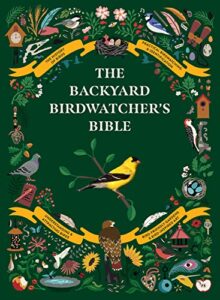
The Backyard Birdwatcher’s Bible is a stunning 416-page reference that blends bird identification with practical backyard tips. You’ll find detailed species profiles, bird behavior insights, and garden design ideas to attract more visitors.
It covers bird feeding strategies and includes maps showing species ranges across North America. The full-color photography showcases males, females, and habitat preferences beautifully.
While it’s too hefty for field work at nearly four pounds, it’s perfect for your coffee table or reference shelf when you’re planning your bird-friendly garden.
| Best For | Backyard bird enthusiasts who want a comprehensive home reference with gorgeous photography and practical tips for attracting and identifying local species. |
|---|---|
| Publisher | Abrams Books |
| Page Count | 416 pages |
| Language | English |
| Publication Year | 2020 |
| Primary Format | Hardcover reference |
| Target Audience | Backyard birders |
| Additional Features |
|
- Detailed species profiles with full-color photos of both male and female birds, plus range maps to help you know what to expect in your area
- Goes beyond identification with practical advice on creating bird-friendly gardens, feeding strategies, and backyard crafts
- Beautiful coffee table book quality that works as both a reference guide and conversation piece
- Too large and heavy (nearly 4 pounds) to bring outside for field identification
- Some buyers have reported quality control issues like damaged spines or cover problems upon arrival
- The size and weight make it strictly a home reference rather than a portable birding guide
2. Sibley Field Guide To Birds

If you want a field guide that’s actually portable, the Sibley Field Guide to Birds is your go-to companion. This compact book covers over 810 North American species with 4,600 detailed watercolor illustrations that capture realistic plumage and poses.
You’ll appreciate how Sibley organizes species accounts taxonomically, with clear field marks and habitat notes integrated right where you need them. The updated range maps show seasonal patterns, making bird identification straightforward whether you’re in your backyard or exploring new territory. At just 1.35 pounds, it slips easily into your bag.
| Best For | Birders who want a lightweight, highly portable field guide with detailed watercolor illustrations for accurate identification across North America. |
|---|---|
| Publisher | Knopf |
| Page Count | 464 pages |
| Language | English |
| Publication Year | 2016 |
| Primary Format | Compact field guide |
| Target Audience | All skill levels |
| Additional Features |
|
- Over 4,600 realistic watercolor illustrations showing nuanced plumage details and natural poses
- Compact size (1.35 lbs) makes it easy to carry on hikes and birding trips
- Updated range maps with seasonal patterns integrated directly into species accounts
- Text size is too small for many users, especially in field conditions
- Not suitable for people with vision impairments
- No large print edition available despite user requests
3. Sibley Birds Field Guide Western North America

For birders in the western states, the Sibley Field Guide to Birds of Western North America narrows the focus to 715 regional species with over 5,000 illustrations. You’ll find detailed field marks for species you’ll actually encounter, from backyard sparrows to mountain warblers.
The updated range maps reflect current distribution patterns across the region, and taxonomic order helps you compare similar species quickly.
At 504 pages, it’s heftier than the compact national edition, but the regional specialization means faster, more accurate bird identification in your area.
| Best For | Birders in western states who want a comprehensive regional guide with detailed illustrations and range maps specific to the birds they’ll actually see in their area. |
|---|---|
| Publisher | Knopf |
| Page Count | 504 pages |
| Language | English |
| Publication Year | 2016 |
| Primary Format | Compact field guide |
| Target Audience | All skill levels |
| Additional Features |
|
- Over 5,000 illustrations with clear field marks make identification fast and accurate, especially when comparing similar species
- Updated range maps and taxonomic order reflect current distribution patterns across Western North America
- Covers 715 regional species so you’re not wading through eastern birds you’ll never encounter
- At 504 pages, it’s bulkier and heavier than compact guides, making it less convenient for long hikes
- Illustrations and font size can be small and hard to read in some sections, especially in field conditions
- Organization may not be intuitive for quick lookups if you’re used to other field guide formats like Peterson’s
4. Bird Trivia Book

Stan Tekiela’s 80-page trivia collection shifts gears from traditional field guides, offering bird facts and behavior insights paired with striking wildlife photography. You’ll discover migration patterns, feather anatomy, and quirky feeding habits through multiple-choice quizzes and fact boxes—perfect for backyard birdwatchers looking to deepen their knowledge between sightings.
The book emphasizes rapid identification cues and practical tips for recognizing regional species in typical backyard habitats. At $9.49, it’s an affordable companion to exhaustive guides like the Backyard Birdwatchers Bible, though some birding book reviews note the binding feels a bit flimsy.
| Best For | Backyard birders who want to add fun trivia and behavior insights to their hobby without diving into heavy field guides. |
|---|---|
| Publisher | Adventure Publications |
| Page Count | 80 pages |
| Language | English |
| Publication Year | 2018 |
| Primary Format | Paperback |
| Target Audience | Enthusiasts |
| Additional Features |
|
- Blends engaging facts with gorgeous wildlife photography, making it entertaining for casual readers and serious enthusiasts alike.
- Multiple-choice quizzes and fact boxes help reinforce learning about migration, anatomy, and feeding habits.
- At just $9.49 for 80 pages, it’s an affordable gift or road trip activity that doesn’t require a huge time commitment.
- The binding is reportedly flimsy, which might not hold up to repeated use.
- With only 80 pages, the content is fairly light—not ideal if you’re looking for comprehensive species coverage.
- Focuses more on fun trivia than in-depth identification guidance, so it won’t replace a dedicated field guide.
5. National Geographic Bird Field Guide
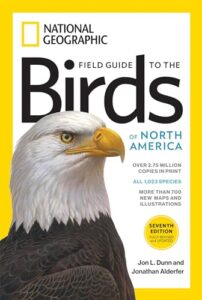
National Geographic’s 592-page field guide covers 1,023 species with concise descriptions and color illustrations that help you pin down diagnostic marks quickly. The 7th edition includes 250 fresh illustrations and revised range maps reflecting current American Ornithological Society taxonomy—essential for accurate bird identification in your backyard.
You’ll appreciate the quick-find index and seasonal distribution notes, though some birding books reviews mention the new taxonomic order takes adjustment. At under $20, it’s a solid pick for backyard birdwatchers seeking reliable species updates and practical birding tips.
| Best For | Birders of all skill levels who want a comprehensive, up-to-date field guide with detailed illustrations and range maps for identifying North American birds in their backyard or on the trail. |
|---|---|
| Publisher | National Geographic |
| Page Count | 592 pages |
| Language | English |
| Publication Year | 2017 |
| Primary Format | Field guide |
| Target Audience | Beginner to advanced |
| Additional Features |
|
- Covers 1,023 species with 250 new illustrations and 80 updated maps reflecting the latest taxonomy and distribution patterns.
- Quick-find index and seasonal notes make it easy to identify birds fast, whether you’re a beginner or experienced birder.
- Affordable at under $20 for a 592-page guide packed with reliable species info and practical birding tips.
- The new taxonomic order might feel unfamiliar at first if you’re used to older field guides.
- Range maps may not fully account for recent climate-driven shifts in bird distribution.
- At nearly 2 pounds, it’s a bit heavier than some pocket-sized alternatives, though still portable enough for fieldwork.
6. Ornithology Textbook Edition

If you’re curious about the science behind what makes your backyard birds tick, this 688-page textbook dives deep into bird anatomy, avian physiology, and conservation biology with over 400 color photographs.
While it’s not a traditional field guide for quick bird identification, it enriches your understanding of ornithology basics and research methods that inform all those birding books on your shelf.
At $90+, it’s pricey for casual bird watching, but serious backyard birders who want to truly understand their feathered visitors will find the investment worthwhile.
| Best For | Serious backyard birders and students who want to understand the scientific principles behind bird behavior, anatomy, and conservation rather than just identify species. |
|---|---|
| Publisher | W. H. Freeman |
| Page Count | 688 pages |
| Language | English |
| Publication Year | 2019 |
| Primary Format | Textbook |
| Target Audience | Students and laypeople |
| Additional Features |
|
- Comprehensive coverage of ornithology fundamentals with over 400 color photographs that bring avian biology to life
- Updated 4th edition includes modern research on population ecology and conservation, plus helpful end-of-chapter questions to test your knowledge
- Clean, approachable design makes complex scientific concepts more digestible than typical dense academic texts
- At $90, it’s a significant investment that may feel steep if you’re just getting into bird watching
- Written as a textbook rather than a pleasure read, so it requires more commitment than casual birding guides
- May need supplementary beginner materials since the technical focus assumes some baseline scientific knowledge
7. National Audubon Bird Field Guide
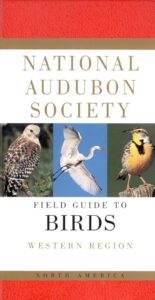
The National Audubon Society Birds of North America stands out for its concise species accounts and focus on field markers that help you identify backyard birds fast. You’ll find range-based organization that makes local species easy to spot, plus habitat notes showing where to expect each bird through the seasons.
The guide includes taxonomic updates aligned with current birding books, and conservation notes remind you which visitors need extra protection. It’s a solid choice for backyard birders who want quick, reliable bird identification without getting lost in technical details.
| Best For | Backyard birders who want quick, reliable identification of local North American species without wading through overwhelming technical details. |
|---|---|
| Publisher | Knopf |
| Page Count | 822 pages |
| Language | English |
| Publication Year | 1994 |
| Primary Format | Field guide |
| Target Audience | Birdwatchers |
| Additional Features |
|
- Range-based organization makes it easy to find birds common to your specific area
- Concise species accounts with clear field markers get you to an ID faster than dense guides
- Conservation notes and seasonal habitat info help you understand which birds to expect and protect
- The separated picture and description sections can slow you down when you need quick field identification
- At 1.32 pounds and over 800 pages, it’s bulky to carry on hikes or longer birdwatching trips
- Some users find the organization less intuitive than guides that use illustrations instead of photographs
8. The Bird Way Book
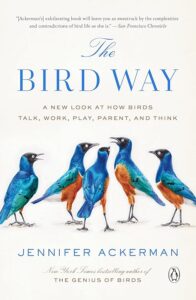
If you’re curious about why birds act the way they do in your yard, The Bird Way by Jennifer Ackerman digs deep into bird behavior and avian intelligence. It’s not strictly a field guide for bird identification, but it sharpens your bird watching by explaining backyard birding scenarios—why that robin chases off rivals or how flock dynamics shape feeding.
You’ll find conservation tips woven through the text, plus insights from bird ecology that make birding books and field guides feel more alive. It pairs well with traditional bird identification techniques.
| Best For | Backyard birders who want to understand the “why” behind what they’re seeing—bird intelligence, social behavior, and ecology—rather than just identify species. |
|---|---|
| Publisher | Penguin Books |
| Page Count | 367 pages |
| Language | English |
| Publication Year | 2020 |
| Primary Format | Paperback |
| Target Audience | Bird lovers |
| Additional Features |
|
- Blends recent scientific research with relatable observations you can connect to your own yard or local park
- Covers fascinating topics like communication, problem-solving, and play that make birds feel more complex and engaging
- Useful companion to field guides—adds depth and context to identification without replacing practical birding tools
- No photos included, which some readers expected given the subject matter
- Can get detailed or dense in places, especially when diving into scientific studies
- Print size and binding quality have been criticized by some customers
9. What It’s Like To Be A Bird Book
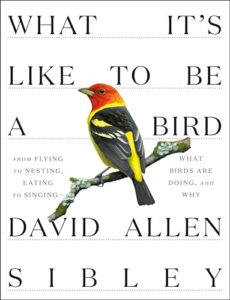
David Sibley’s What It’s Like To Be A Bird takes you inside avian perception and bird behavior in a way most field guides skip. You’ll explore bird identification techniques through a fresh lens—how your feathered friends actually see, hear, and navigate their world.
With over 330 illustrations and insights into avian ecology, this book enriches bird watching by explaining the “why” behind what you observe. It’s one of those birding books that makes winged wonders feel less mysterious and more relatable.
| Best For | Curious birders and nature lovers who want to understand not just what birds look like, but how they experience the world around them. |
|---|---|
| Publisher | Knopf |
| Page Count | 240 pages |
| Language | English |
| Publication Year | 2020 |
| Primary Format | Large-format hardcover |
| Target Audience | All ages |
| Additional Features |
|
- Over 330 life-sized illustrations bring species to life in a visually stunning, large-format book that works as both reference and coffee table centerpiece.
- Goes beyond identification to explain bird behavior, senses, and physiology in accessible language that works for beginners and experienced birders alike.
- Written by David Sibley, a trusted expert whose combination of scientific insight and personal observation makes complex ornithology feel relatable.
- Focuses on familiar backyard birds rather than comprehensive coverage, so you won’t find every species you might encounter.
- Some readers note the casual tone lacks technical depth, and certain statements may need independent fact-checking for precision.
- A few illustrations aren’t perfectly to scale, which might frustrate those seeking exact visual accuracy for field identification.
10. Florida Bird Field Guide Book
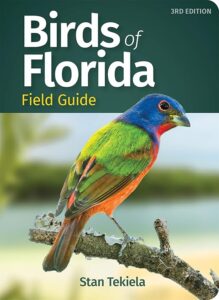
If you’re birding in Florida, regional guides beat generic Peterson Guides every time. This field guide zeroes in on 146 Florida birds with a color-coded system that simplifies species identification fast.
You’ll get crisp full-page photos, habitat notes customized to Everglades wetlands and coastal marshes, and a handy compare feature for tricky look-alikes. At 4.25 x 6 inches, it’s perfect for backyard birding or trail hikes.
Conservation status entries highlight Florida-specific threats, so you’re not just identifying—you’re understanding your local bird habitats.
| Best For | Birders in Florida—beginners or experienced—who want quick, accurate identification without lugging around a national guide. |
|---|---|
| Publisher | Adventure Publications |
| Page Count | 384 pages |
| Language | English |
| Publication Year | 2020 |
| Primary Format | Pocket guide |
| Target Audience | Beginners and experienced |
| Additional Features |
|
- Color-coded system and compare feature make identifying look-alikes way easier than flipping through random pages
- Full-page photos are sharp and clear, plus habitat notes are tailored to Florida ecosystems like the Everglades and coastal marshes
- Compact size (4.25 x 6 inches) fits in a pocket or backpack without weighing you down on trails
- Only covers 146 species, so rarer Florida birds might not make the cut
- Some photos could be better at showing key identifying features, according to a few users
- If you want deep dives into behavior or migration patterns, you’ll need a more comprehensive reference
Key Features of Bird Identification Guides
A good field guide does more than just show pretty pictures of birds. It needs to help you make quick, confident identifications while you’re standing in your backyard with binoculars in hand.
Let’s look at the features that separate a truly useful guide from one that’ll just gather dust on your shelf.
Identification Accuracy and Reliability
You need a field guide that won’t lead you astray when that mystery visitor lands at your feeder. Diagnostic features like wing bars and beak shape really matter—guides highlighting these details help you nail the right species 75–85% of the time.
Here’s what boosts identification accuracy:
- Multiple-view illustrations (topside, underside, in-flight) cut errors by 10–20%
- Photo plates achieve 70–80% success in tricky lighting
- Updated taxonomic content improves reliability by 5–12%
The Sibley Guide and Peterson Guide excel because they emphasize field mark accuracy with clear diagnostic features, giving you confidence in your species verification every time. Accurate identification also relies on scientific study methods to guarantee reliable information.
Range Maps and Habitat Information
Once you’ve nailed the field marks, range maps show where and when each species actually appears in your area. Seasonal distribution shading—breeding grounds in red, winter territories in blue—helps you predict which migrants will visit your feeder. Habitat notes narrow the list further: if a guide tags a warbler as “forest edge, deciduous,” you won’t waste time scanning open fields.
| Map Feature | What It Shows |
|---|---|
| Color-coded zones | Breeding vs. nonbreeding ranges |
| Habitat keywords | Preferred environments (wetlands, woodlands) |
| Regional overlays | Local microhabitat variation |
| Updated data | Range shifts from climate change |
The Sibley Guide and Peterson Guide offer detailed range dynamics paired with habitat analysis, while the National Geographic Field Guide refines species distribution with high-resolution ecosystem mapping. These field guides turn bird migration patterns into actionable backyard intelligence, so you’ll know exactly which visitors to expect each season.
Illustrations Versus Photographs
You’ll spot illustrations in classic field guides like the Sibley Guide, where each bird identification drawing highlights diagnostic field marks with exaggerated clarity. Illustrations boost identification ease by isolating key features.
Photos deliver photo realism—the Kaufman Guide excels here—capturing natural plumage variation and image clarity that matches what you’ll actually see. While photos show context, both formats improve visual accuracy.
So, pick the format that clicks for your birding books shelf.
Taxonomic Organization and Indexes
Once you’ve chosen your format, taxonomic organization becomes your secret weapon for bird identification. The Sibley Guide and Peterson Guide arrange species classification by evolutionary relationships—families grouped together—so you’ll spot patterns faster.
Extensive guides include indexing systems with both common and scientific names, plus taxonomic keys that reveal bird phylogeny. Look for field guides with color-coded tabs and clear species classification indexes to speed up every backyard search.
Conservation Status and Updated Content
Conservation efforts shape which birds you’ll see in your yard, so habitat loss and climate impact updates matter more than you’d think. Detailed guides with current threat assessment data help you track real changes:
- IUCN Red List categories (Vulnerable, Endangered, Critically Endangered)
- Population trend notifications reflecting habitat loss
- Climate impact zones showing shifting ranges
- Legal protection status by region
- Last update dates for cross-checking species updates
National Audubon Society Birds of North America includes these conservation insights for better bird identification.
Choosing Between Regional and Comprehensive Guides

Picking the right bird guide comes down to one big question: do you want every species in North America, or just the ones you’ll actually see in your yard? Regional guides keep things simple and focused on your local birds, while exhaustive guides cover the entire continent.
Let’s look at how each approach helps you identify birds faster and which one fits your backyard best.
Benefits of Regional Bird Guides
When you focus on regional guides, you’ll master local species faster since you’re not sorting through birds that never visit your area. These field guides offer sharp habitat insights tied to your ecosystem, highlight conservation efforts in your region, and connect you with birding communities nearby.
Regional birding becomes more rewarding when your guidebook selection matches the birds actually visiting your backyard feeder.
Advantages of Comprehensive National Guides
National coverage gives you standardized species descriptions and taxonomic updates, so you’re working with current scientific names across all regions. Extensive guides like the Sibley Guide and National Geographic Field Guide cover rare vagrants alongside common backyard visitors, boosting your species awareness.
You’ll also find conservation insights and ethical birding practices woven throughout, supporting responsible observation and citizen science contributions nationwide.
Matching Guide Scope to Your Backyard
Your backyard’s size, habitat, and species list should drive your guide choice. Regional guides deliver faster identification for local visitors, while national field guides prepare you for vagrants and range shifts. Consider these birding books essentials:
- Match regional focus to your typical species
- Check for habitat-specific identification keys
- Confirm guide portability fits your backyard planning
- Look for quick-index features for species tracking
- Verify updated range maps for bird habitat changes
Factors to Consider When Selecting a Guide

Finding the perfect bird guide isn’t just about picking the prettiest cover off the shelf. You need to think about how the book will actually work in your hands when you’re standing in your backyard, squinting at a mystery bird.
Let’s look at the practical factors that’ll make or break your field guide experience.
Size, Portability, and Durability
When you’re juggling binoculars and a guide in your backyard, weight matters. Most field guides weigh between 12 and 28 ounces, with lighter options reducing arm fatigue during extended sessions. Book binding quality directly impacts longevity; sewn spines outlast glued versions. Page quality and cover materials determine weather resistance, essential for birding books exposed to morning dew.
| Feature | Field-Ready Option | Home Reference |
|---|---|---|
| Weight | Under 1.5 lbs | 1.5–2.5 lbs |
| Binding | Spiral/lay-flat | Sewn hardcover |
| Cover | Laminated/waterproof | Standard dust jacket |
| Dimensions | 5.5×3.5 inches | 7.5×5.5 inches |
| Portability | Pocket-friendly | Shelf-stable |
In-depth guides offer depth but sacrifice portability—choose based on whether you’re identifying from your porch or hiking trails.
Visual Layout and Usability
You’ll flip pages faster when color coding and clear navigation tools cut your search time in half. The Sibley Guide uses bold field marks and consistent page design, while the Kaufman Field Guide relies on high-contrast photos with minimal clutter. Peterson Field Guide arrows point directly to diagnostic features.
Strong illustration quality and user-friendly layout transform bird identification from frustrating guesswork into confident recognition—even for backyard beginners scanning multiple species quickly.
Best Bird Identification Books for Beginners
Starting out with bird identification can feel overwhelming when you’re staring at a flock and everything looks the same. The best beginner guides cut through the confusion with simple layouts, focus on common species, and show you exactly what to look for.
Here’s what makes a field guide work for someone just getting into backyard birding.
User-Friendly Visual Organization

When you’re starting out, a well-designed field guide makes all the difference. Look for books that use clear visual hierarchy and color coding—the Sibley Guide excels at grouping similar species with consistent illustration styles.
Smart page layout and graphic design help you scan quickly, comparing wingbars or tail shapes without flipping back and forth. Good birding books organize information so identification feels natural, not overwhelming.
Clear Field Marks and Descriptions
Once the layout works, you need field marks that actually help. The best birding books highlight distinct plumage patterns—wingbars, eyebrow stripes, tail shapes—with annotated diagrams that point exactly where to look.
Sibley Guide excels here, pairing illustrations with descriptive captions that emphasize diagnostic features. Look for guides offering visual cues and identification keys that distinguish similar species, making bird identification straightforward rather than guesswork.
Streamlined Species Selection

You’ll appreciate a field guide that narrows the field. Extensive bird guides pack in hundreds of species, but beginners benefit most from simplified species selection—focusing on 10–20 birds you’re likely to see.
Regional focus matters here: a simplified taxonomy highlighting local feeders and backyards accelerates identification workflows.
Look for visual cues and practical bird identification frameworks that prioritize what’s actually in your yard.
Practical Tips for New Birders

Once you’ve picked the right field guide, put it to work. Start a simple birding notebook recording date, location, and three key field marks—size, color pattern, and bill shape.
Spend at least ten seconds observing before flipping pages; that pause sharpens your observation skills and cuts down misidentifications. Regular note taking turns casual bird watching into real species tracking progress.
Maximizing Your Backyard Birding Experience

You’ve got your field guide, and now it’s time to put it to work in your own backyard. The real magic happens when you combine book knowledge with hands-on observation and a few smart strategies.
Let’s look at how you can turn your yard into a birding hotspot while deepening your identification skills along the way.
Using Guides for Accurate Identification
You’ll get the most out of your field guide when you cross-check visual cues like wingbars and tail shape against multiple sources. The Kaufman Field Guide excels at highlighting field markers that matter most.
Focus on diagnostic features—beak shape, size, plumage patterns—rather than color alone. Species verification improves dramatically when you pair detailed guides with behavioral notes and range maps for confident bird identification.
Tracking Local Bird Migration and Habitats
Range maps in regional guides reveal migration patterns and seasonal movements for local species. Track arrivals during spring and fall by noting weather fronts and habitat features like wetland edges or forest fringes.
Climate impact shifts timing, so regular counts help you spot changes. Habitat conservation efforts protect these stopover sites, and your bird tracking data strengthens regional datasets for bird habitat preservation.
Incorporating Conservation Insights
Conservation ethics transform backyard bird watching into meaningful wildlife protection. Extensive bird guides now include species preservation details and eco-friendly tips that support bird conservation efforts alongside identification. You’ll strengthen habitat restoration when you:
Modern bird guides weave conservation ethics into identification, turning backyard observation into active wildlife protection
- Choose native plantings that support threatened species
- Reduce pesticides to protect foraging birds
- Track population changes through citizen science programs
- Respect nesting sites during breeding seasons
- Report unusual findings to conservation authorities
Building a Backyard Birding Library
You’ll want more than one field guide to capture the full picture. Start with a regional backyard guide and a thorough national reference for cross-checking tricky species.
Add a beginner-friendly birding book with identification tips, then organize your library by scope—local versus nationwide.
Smart guide selection builds tailored collections that grow with your bird watching skills and deepen your birding resources over time.
Frequently Asked Questions (FAQs)
How do I identify juvenile versus adult birds?
Look for plumage patterns and molt cycles first—juveniles often show streaked or duller colors. Eye color, beak shape, and behavioral cues like tentative flight help distinguish young birds from adults.
What binoculars work best with field guides?
Balanced binoculars boost birding success. Choose 8x–10x magnification with 40–50 mm objective lenses for optical quality and ergonomic design.
Coated lenses improve field views, while 6–9 feet close focus aids bird identification using regional guides.
Can apps replace physical bird identification books?
Field guide apps excel at real-time updates and digital identification for mobile birding, yet birding books offer reliable, distraction-free reference.
Combining birding technology with extensive guides maximizes bird identification accuracy despite app limitations in variable field conditions.
How do I identify birds by sound alone?
Identifying bird species by sound patterns starts with distinguishing songs from calls. Record short audio clips of vocalizations, compare them to field guide references, and focus on pitch, tempo, and repetition to build reliable sonic identification skills.
What time of day is best for identification?
Dawn breaks like a town crier announcing the day—Early Morning birding delivers peak visibility 30-60 minutes post-sunrise. Overcast Conditions improve plumage detail, while Dusk Periods and Seasonal Timing also influence identification success in your Backyard Guide adventures.
Conclusion
Finding your flock starts with the right guide in hand. The best bird identification books for backyard birding turn confusion into clarity, helping you distinguish warblers from finches with confidence.
Whether you choose a regional favorite or an extensive national guide, you’re building more than identification skills—you’re deepening your connection to the species that visit daily.
Grab your book, step outside, and let every sighting become a moment of discovery worth celebrating.
- https://www.youtube.com/watch?v=veex4I491Wc
- https://www.ai-literacy.se/research-prompts.html
- https://x.com/godofprompt/status/1990526288063324577
- https://www.linkedin.com/posts/bohdanlukianets_tasks-study-research-activity-7373377539521667072-UTEi
- https://www.sciencedirect.com/science/article/pii/S0749208123000268