This site is supported by our readers. We may earn a commission, at no cost to you, if you purchase through links.
 You’ll master bird identification color patterns by focusing on key features that remain consistent across species.
Start with overall color distribution – notice where bright patches appear on the head, wings, or tail.
A cardinal’s all-red body differs from a tanager’s red head and black wings.
Pay attention to contrast patterns like wing bars, eye rings, and breast streaks.
Don’t rely solely on color intensity, which changes with lighting and season.
Instead, look for distinctive markings like the white outer tail feathers on a dark-eyed junco or the rusty shoulder patches on a red-winged blackbird.
These reliable field marks reveal nature’s visual code system, helping you to master bird identification.
Table Of Contents
- Key Takeaways
- Bird Color Identification
- Color Patterns and Markings
- Additional Identification Characteristics
- Advanced Identification Methods
- Effective Bird Identification Techniques
- Frequently Asked Questions (FAQs)
- What are the 4 keys to bird identification?
- What are the plumage patterns of birds?
- What are the 5 S’s of birding?
- What is the best free app for identifying birds?
- How do camera settings affect bird color photography?
- Which bird colors are hardest to photograph accurately?
- Do birds see colors differently than humans?
- How does weather affect bird color visibility?
- What causes rare color mutations in birds?
- Conclusion
Key Takeaways
- You’ll identify birds faster by focusing on distinctive markings like wing bars, eye rings, and tail spots rather than relying solely on overall color, which changes with lighting conditions
- You should look for consistent color patterns and contrast between light and dark areas, such as a cardinal’s all-red body versus a tanager’s red head with black wings
- You cannot depend on color intensity alone since weather, seasonal molting, and age differences dramatically alter how birds appear in the field
- You’ll achieve accurate identification by combining color patterns with size, shape, behavior, and habitat preferences instead of using visual cues in isolation
Bird Color Identification
When you spot a bird in the field, color patterns serve as your first and most reliable identification clue.
However, lighting conditions, seasonal changes, and individual variations can make color-based identification tricky, requiring you to look beyond just the obvious hues.
Importance of Color Patterns
Color serves as your primary identification tool when spotting birds in the field.
You’ll recognize species faster by focusing on their most obvious visual feature first.
Here’s what makes color patterns essential for quick bird ID:
- Overall color combinations help you narrow down species families immediately
- Bright patches like red wing bars or yellow rumps serve as instant field marks
- Hue contrast between light and dark areas creates distinctive silhouettes
- Pattern recognition of streaks, bars, and solid blocks speeds identification
- Visual cues from feather texture and color morphs distinguish similar species
Bird species colors range from subtle browns in sparrows to vibrant reds in cardinals.
Your eye naturally catches these plumage types first, making color your gateway to successful bird identification before considering size or behavior.
Understanding color identification techniques is vital for accurate bird recognition.
Challenges in Using Color
Using bird coloration for identification isn’t foolproof.
Lighting effects dramatically alter how you perceive colors—that "blue" jay might look gray in shadows.
Molting patterns create confusion as birds shed old feathers, revealing patchy appearances.
Sex differences mean males often sport vibrant plumage while females wear muted tones.
Age factors complicate things further since juveniles rarely match adult field guide photos.
Variability in Plumage Colors
Why does bird coloration seem to shift before your eyes? Plumage undergoes dramatic changes that can fool even experienced birders.
Key variability factors:
- Molting Patterns – Birds replace feathers seasonally, creating temporary mixed appearances between old and new plumage
- Age Variation – Juveniles often display completely different color patterns than adults, with some species requiring years to develop full coloration
- Sex Differences – Males typically showcase brighter breeding colors while females maintain cryptic tones for nesting protection
- Iridescence Effects – Metallic sheens change dramatically with lighting angles, making hummingbirds appear black or brilliant depending on your position
Color Patterns and Markings
Once you’ve spotted a bird, your next step is identifying its specific color patterns and markings—these visual clues will quickly separate similar species and confirm your identification.
The combination of overall pattern, bright patches, and special color effects like iridescence creates a unique "fingerprint" that experienced birders rely on for instant recognition.
Overall Color Pattern
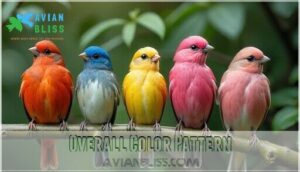
When field-birding, your eye naturally catches dominant hue patterns first—that "big picture" view before details emerge.
Overall color patterns serve as your primary sorting mechanism, helping eliminate unlikely species quickly.
Pattern recognition improves with practice as you learn to distinguish subtle hue contrast differences.
Light effects can dramatically alter perceived bird colors, making plumage texture assessment vital for accurate identification.
Understanding a bird’s identification guide is essential for mastering these identification skills, which involve pattern recognition and color patterns to achieve accurate identification.
Bright Patches and Markings

Those flashy color patches act like nature’s neon signs, grabbing your attention instantly.
Wing bars, tail spots, and bright plumes serve as distinctive features that’ll clinch your identification.
A red-winged blackbird’s scarlet shoulder patches or a cedar waxwing’s yellow tail band become unmistakable calling cards.
These feather markings often shine brightest during breeding season, making spring perfect for spotting these eye-catching bird identification features, which can be considered as nature’s neon signs.
Iridescence and Metallic Colors

Metallic colors shimmer like tiny mirrors embedded in feathers.
These feathered jewels catch light like nature’s own disco balls.
These iridescent hues shift dramatically based on viewing angle and lighting conditions, making field identification particularly challenging yet rewarding when mastered.
- Hummingbirds display the most extensive iridescence – over 95% of species show this feature
- Grackles and starlings exhibit purple-green metallics that appear black in poor light
- Structural coloration creates interference effects through microscopic nanostructures in barbules
- Angle-dependent color changes require multiple viewing positions for accurate identification
Additional Identification Characteristics

While color catches your eye first, seasoned birders know that size, shape, and behavior often seal the identification deal.
These additional characteristics become your go-to tools when lighting conditions make colors tricky to judge or when you’re dealing with those frustratingly similar brown sparrows, which can make identification more challenging due to their similar appearance.
Size and Shape
Beyond color patterns, body proportions and bird size offer reliable identification anchors.
A crow’s robust silhouettes contrast sharply with a robin’s compact frame.
Wing shapes reveal flight styles—hawks display broad wings while swallows sport narrow, swept designs.
Beak sizes match feeding habits, from finch seed-crackers to heron spears.
Tail lengths and shapes provide additional clues, distinguishing species even at distance, based on their robust silhouettes and overall body proportions.
Behavior and Habitat
You’ll find that watching how birds act often reveals more than color alone.
Migration Patterns shift feeding habits seasonally—warblers hunt insects differently during spring versus fall.
Flocking Behavior varies by species: goldfinches travel in loose groups while starlings form tight formations.
Territorial Markings include specific perching spots and flight displays.
Habitat modeling helps predict which species you’ll encounter in marshes versus forests, making bird identification color patterns more meaningful when combined with behavioral traits and migration patterns, and understanding flocking behavior and territorial markings.
Beak Shape and Wing Markings
Observing beak types and wing patterns reveals critical identification details that behavior alone can’t provide.
Each species develops specialized features that match their lifestyle and diet perfectly.
- Beak colors often match or contrast with head plumage, creating distinctive facial patterns
- Wing bars appear as light stripes across darker wing feathers, visible during flight and rest
- Feather edges show contrasting borders that create subtle but consistent wing identification markers
- Wing tips display unique color markings when birds extend or fold their wings
Understanding the role of beak shape functions is essential for accurate bird identification.
Advanced Identification Methods
Once you’ve mastered basic color identification, advanced methods will sharpen your field skills beyond what casual observers can achieve.
These techniques combine experience-based pattern recognition with modern tools like spectrophotometry to distinguish even the trickiest species variations, which will help you achieve a deeper understanding of advanced methods.
Experience and Expertise

As your birding skills develop, you’ll rely less on bird identification color patterns for quick field ID.
Expert insights reveal that experienced birders use size, shape, and behavior as primary identification tips.
Field experience teaches you to spot subtle differences that beginners miss.
Advanced observation techniques help you distinguish tricky species through posture, flight patterns, and habitat preferences rather than just color markings.
Utilizing reliable birding guides can substantially enhance your identification skills.
This approach allows for a more nuanced understanding of bird species, enabling you to become a more proficient birder by leveraging expert insights.
Nuanced Identification Techniques

Mastering color patterns requires sharp plumage analysis and feather texture evaluation.
You’ll notice wing bars create distinct identification markers, while tail feathers reveal species-specific patterns.
Examine beak patterns alongside overall coloration—they’re your secret weapon for tricky identifications.
Seasoned birders develop an eye for subtle feather patterns that separate similar species, making avian identification feel like second nature.
Spectrophotometry and Digital Analysis

Modern technology takes bird identification beyond what your eyes can see.
Spectrophotometry measures light reflection across wavelengths, revealing hidden UV patterns invisible to humans.
Digital imaging captures precise color measurements and analyzes complex patterns automatically.
These tools provide objective data visualization, eliminating guesswork from avian color assessment.
Scientists now quantify spectral analysis results, creating detailed databases that improve field identification accuracy substantially.
By understanding the principles of color pattern identification, researchers can develop more effective methods for classifying bird species, using modern technology and spectrophotometry to aid in avian color assessment and spectral analysis.
Effective Bird Identification Techniques

You’ll master bird identification faster when you combine color patterns with behavioral cues and habitat preferences.
Field guides and birding apps become powerful tools once you understand how to use multiple identification features together rather than relying on color alone.
Combining Visual Cues
You’ll spot birds faster when you combine multiple visual cues instead of relying on color alone.
Check the beak colors against body patterns – a yellow bill with streaked brown plumage screams sparrow.
Notice how feather textures catch light differently, creating subtle pattern recognition clues.
Smart birders scan for distinctive features like wing bars, eye rings, and tail spots.
These color combinations work together like puzzle pieces, making field marks pop even in tricky lighting conditions.
Understanding bird recognition techniques is essential for identifying species accurately in the field, using complete concepts.
Observing Behavior and Habitat
When you watch how birds move and where they hang out, you’re building a complete picture that color alone can’t provide.
Different species have distinct signatures in their daily routines.
- Habitat Selection: Forest birds like warblers prefer dense canopy layers, while meadowlarks stick to open grasslands
- Feeding Habits: Woodpeckers hammer bark vertically, nuthatches walk headfirst down trees, and flycatchers dart from perches
- Flocking Behavior: Mixed winter flocks reveal species associations, helping distinguish similar-looking birds through their companions
Using Field Guides and Apps
Today’s birding apps revolutionize field identification by combining color-based filtering with AI-powered recognition systems.
Apps like Merlin Bird ID let you search using dominant plumage colors, narrowing thousands of species to likely candidates within seconds.
Field guides remain valuable for detailed color pattern comparisons, while mobile identification tools provide real-time geographic filtering and community-sourced photos showcasing color variations you’ll encounter.
The use of birding software has become essential for many bird enthusiasts to improve their skills.
Frequently Asked Questions (FAQs)
What are the 4 keys to bird identification?
The four keys to bird identification are size, shape, color, and behavior. You’ll use these traits together to distinguish species effectively in the field.
What are the plumage patterns of birds?
You’ll encounter streaks, bars, spots, and solid patches across bird plumage.
These patterns include wing bars, eye rings, breast streaking, and tail markings that help distinguish species when combined with color observations, including breast streaking.
What are the 5 S’s of birding?
Like a birder’s compass guiding you through nature’s maze, the five S’s reveal identification secrets: Size, Shape, Sound, Site, and Situation.
You’ll master these fundamentals to distinguish species confidently in the field.
What is the best free app for identifying birds?
Merlin Bird ID by eBird stands out as the top free bird identification app. You’ll get photo ID, sound recognition, and extensive species information all in one reliable package.
How do camera settings affect bird color photography?
Camera settings shape bird photos like a painter’s brush strokes define art.
You’ll capture accurate colors using proper white balance, faster shutter speeds, and appropriate ISO levels to freeze motion while maintaining true-to-life plumage hues for identification.
This allows for the creation of high-quality images that are useful for identification.
Which bird colors are hardest to photograph accurately?
You’ll struggle most with iridescent colors like hummingbird throats and starling sheens, which shift dramatically with lighting angles. Whites often blow out, while deep blacks lose detail in shadows.
Do birds see colors differently than humans?
Ever wonder why that ruby-throated hummingbird‘s throat seems to vanish in shadow?
Birds possess tetrachromatic vision, seeing ultraviolet wavelengths you can’t.
They detect four color channels versus your three, making their world dramatically more vibrant and complex than yours, due to their ability to see ultraviolet wavelengths.
How does weather affect bird color visibility?
Weather dramatically affects your ability to spot bird colors.
Overcast skies flatten vibrant hues, making reds appear brownish and blues look gray.
Bright sunlight enhances colors but creates harsh shadows that obscure details completely, highlighting the impact of light.
What causes rare color mutations in birds?
Picture a cardinal’s feathers shifting from crimson to pale yellow—genetic mutations disrupt melanin and carotenoid pigment production.
You’ll see leucism, albinism, and melanism when DNA errors affect enzyme pathways controlling feather coloration during development.
Conclusion
Mastering bird identification color patterns transforms field observation into precise species recognition.
You’ll develop confidence by systematically cataloging distinctive markings, understanding seasonal variations, and combining visual cues with behavioral observations.
Remember that lighting conditions affect color perception, so focus on consistent patterns rather than exact hues.
Practice builds expertise—each outing sharpens your ability to decode nature’s visual language and distinguish between similar species with increasing accuracy.