This site is supported by our readers. We may earn a commission, at no cost to you, if you purchase through links.
A flash of red at the feeder isn’t always a cardinal. Sun bleaching, molt cycles, and even the angle of morning light can shift a bird’s color enough to send you down the wrong path in your field guide. That’s the trap most beginners fall into.
Color grabs your eye first, but it only tells part of the story. Learning to identify birds by color means reading wing bars, eye rings, and rump patches together — not just guessing from a single glance.
Master that system, and confusing look-alikes start sorting themselves out in seconds.
Table Of Contents
- Key Takeaways
- Start With Overall Bird Color
- Spot Key Color Markings
- Match Colors to Common Species
- Check Factors That Change Color
- Confirm Identification Beyond Color
- Frequently Asked Questions (FAQs)
- Is there a website to identify birds?
- How can I identify a bird I took a picture of?
- What is the best free bird identification app?
- How do I identify a specific bird?
- How does artificial light affect bird color identification?
- Can weather conditions change a birds apparent colors?
- What role do seasonal molts play in coloration?
- How reliable are photos for identifying bird colors?
- Why do male and female birds have different colors?
- Can diet actually change a birds feather color?
- Conclusion
Key Takeaways
- Color is just a starting point for bird identification; you need to check specific markings like wing bars, eye rings, and tail patches for accurate results.
- Lighting, season, age, and even diet can change a bird’s apparent color, so always record your observations quickly and compare other features.
- Male and female birds often show different colors because of mating strategies and camouflage, making sex-based plumage a reliable clue.
- Size, shape, bill structure, behavior, and calls are essential to confirm species identity when color alone isn’t enough.
Start With Overall Bird Color
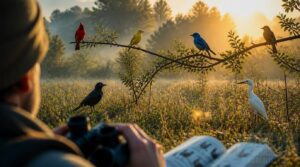
Color is the first clue your eyes catch, so it’s the best place to start. Before you worry about markings or songs, train yourself to read the big picture. Here’s how to break down overall color like a pro.
Start by scanning for bold patches of blue, red, or yellow, since this guide to common birds in Michigan shows how much color alone can narrow down a species.
Note Dominant Plumage Color
Scan the whole bird before zooming in. That first wash of color — the predominant color covering wings, back, and head — is your fastest clue.
It comes from either pigment or structure: carotenoids need diet, melanins don’t. Diet, molt timing, even region can shift the shade. Note it fast, before light or memory blurs the call. Research has even identified the genetic basis of plumage in specific duck breeds.
Check Light Versus Dark
Once you’ve got the dominant color, ask whether the bird reads light or dark overall. This light-versus-dark contrast shapes visibility — bright plumage stands out in shadowed habitat, while dark feathers vanish into branches at dusk.
Watch for high contrast edges along wings and tails; they sharpen a silhouette. Overcast skies flatten hues, so lean on brightness, not color, when the sun hides.
Look for Color Blocks
Beyond overall shade, look for color blocks — solid patches on the wing, tail, back, or crown that form a patterned look. Wing block arrangement and tail panel alignment often separate lookalikes fast.
A sharp crown color contrast, or any high-contrast pairing like black and white, gives your eye a shortcut when building bird identification guides in the field.
Compare Nearby Similar Birds
Once you’ve logged the color blocks, ask yourself what else nests in the same habitat. Habitat overlap often puts lookalikes side by side, so check:
- Tail shape and length
- Beak size and curve
- Flight silhouette
These field marks catch what coloration variations hide, sharpening species differentiation before you even open your bird identification guides.
Record Colors Immediately
Writing it down fast beats trusting memory later. Colors shift in your head within minutes, so jot the dominant hue the second you spot it.
Use a color chip for consistency and a standardized palette to cut ambiguity between observers.
| Practice | Benefit |
|---|---|
| Immediate notes | Prevents color drift |
| Color chip | Consistent reference |
| Standard palette | Reduces ambiguity |
| Dominant hue first | Clear priority |
| Quick capture | Reduces memory bias |
Spot Key Color Markings
Overall color gets you close, but the small details seal the deal. Once you know where to look, these markings turn a guess into a confident call. Here are the five spots on a bird you’ll want to check every time.
If a bird’s markings leave you stumped but its call rings clear, learning to recognize birds that sound like a whistle blowing can narrow down the species before you even spot the field marks.
Wing Bars and Patches
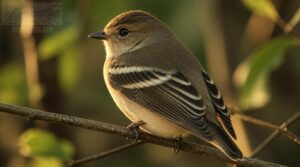
Two pale stripes on a folded wing can crack an ID wide open. The longer wing bar comes from greater coverts; a shorter one sits above it.
Watch for primary patch shapes—white, buff, or yellow—and any underwing color flashes during takeoff. Wing lining contrast sharpens visibility, though seasonal marking shifts can fade bars on juveniles or nonbreeding birds.
Tail Flashes and Rump Patches
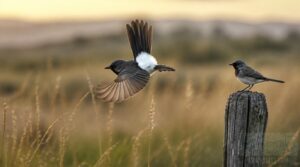
Watch the tail suddenly flick upward, and you’ll often catch a bright white flash against darker feathers. This quick raise exposes the rump patch, giving flock mates a visual beacon during takeoff or alarm. It’s a social cue as much as a color mark.
Open-country species tend to show larger patches, while forest dwellers keep it subtle—so habitat shapes what you’re likely to see.
Eye Rings and Lores
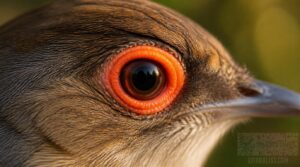
The eye’s ring isn’t feathers—it’s bare skin, and its color often reveals more than plumage ever could. Watch for breeding ring intensity, since blood flow brightens rings during courtship. Lores shift subtly too, darkening or lightening with mood.
Eye ring thickness varies by age and season, making it a reliable identifying characteristic once you train your eye to notice it.
Masks and Throat Colors
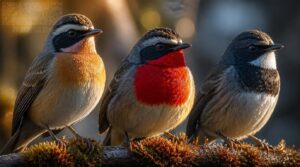
A dark mask isn’t just for looks—it cuts glare and shields sensitive skin from harsh sun.
Throat patches work differently, signaling fitness through color intensity:
- Bright red patches deepen during courtship
- White patches boost species recognition in flocks
- Black patches sharpen facial contrast for dominance cues
These markings shift seasonally, so note timing alongside color when building your identifying characteristic checklist.
Malar Stripes and Crests
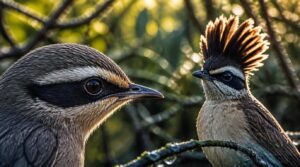
Below the eye, a thin dark line does more than decorate the face—it’s a built-in sun visor. That’s malar glare reduction at work, and stripe width varies by species and even by individual.
| Feature | Function |
|---|---|
| Malar stripe | Cuts glare, aids recognition |
| Crest | Signals courtship, dominance |
Crests tell their own story—crest courtship signals flare during breeding, often bigger in males.
Match Colors to Common Species

Once you know what to look for, it helps to connect those colors to actual birds you’re likely to see. Certain shades show up again and again in specific species, and learning these patterns speeds up identification in the field. Here’s how some of the most common color groups break down by bird.
Red Birds Like Cardinals
Nothing beats a flash of pure red against green leaves. The Northern Cardinal is your best starting point, with males fully red year-round and a black mask framing a stout, seed-cracking bill. That red comes from carotenoids in their diet.
Females stay brownish, showing clear sexual dimorphism. Cardinals favor shrubby edges and feeders, making them easy first finds when learning to identify birds by color.
Bluebirds and Blue Jays
Blue is trickier than red—two species share it, but proportions differ. The Eastern Bluebird shows blue upperparts against a rusty-orange breast; the Blue Jay pairs blue with white and black bars, plus a crest.
- Size: jay is noticeably larger
- Voice: jay’s calls are harsh, bluebird’s soft
- Diet: jay caches acorns, bluebird favors insects
Plumage saturation and social habits differ too—jays flock loudly, bluebirds stay quieter in pairs.
Orange Orioles and Tanagers
Orange jumps out fast, but two groups wear it: orioles and tanagers. Orioles pair bold orange with black wings, often near fruit or nectar feeders. Orange-headed tanagers show yellow throats and rufous crowns, foraging mid-canopy in mixed flocks.
Males run brighter in both—females stay duller for camouflage while nesting. Diet even shifts intensity, especially near ripe fruit sources.
Yellow Warblers and Finches
Yellow shows up in two very different birds. Yellow Warblers glow with uniform bright yellow feathers, a slim body, and a pointed bill built for gleaning insects from shrubs near water.
Finches wear yellow more selectively—head and breast only, with olive backs and stout conical beaks for cracking seeds. Warbler song rings fast and musical; finch calls stay softer.
Black, White, and Gray Birds
Don’t overlook birds without bold color—monochrome camouflage works just as well for survival. Chickadees, juncos, and magpies rely on high contrast signaling instead of pigment.
- Crisp black-and-white patterns catch a mate’s eye
- Gray plumage blends into bare winter branches
- Urban habitat adaptation lets them thrive near people
- Winter flocking behaviors boost safety in numbers
Watch bill shape and calls to confirm species.
Check Factors That Change Color
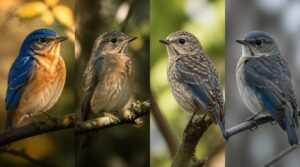
Color isn’t fixed—it shifts for reasons that have nothing to do with species. Sex, season, age, and even the sun can change what you’re looking at. Here are the main factors to keep in mind before you trust your eyes.
Male Versus Female Plumage
Why does the male cardinal blaze red while his mate wears muted brown? Sexual dimorphism answers that.
Males rely on carotenoid pigments and hormones to build bright colors that boost mate selection signals. Females stay duller for camouflage, protecting nests from predators.
This male-versus-female split shows up across species and gives you a quick, reliable clue for identifying birds by color.
Breeding and Winter Colors
Rarely does a bird’s color stay the same year-round. Seasonal molt cycles swap dull winter feathers for brighter breeding plumage, often triggered by rising temperatures and daylight. Watch for:
- Deeper throat colors
- Richer crown tones
- Sharper facial masks
These winter courtship signals help urban and mild-climate birds nest early, so habitat color adaptation becomes a real identification clue.
Juvenile Bird Appearances
Baby birds rarely look like miniature adults. Juvenile plumage runs brown, gray, or mottled — a camouflage strategy to hide fledglings while they learn to forage.
| Feature | Juvenile | Adult |
|---|---|---|
| Color | Mottled, dull | Bold, defined |
| Tail | Shorter | Full length |
| Feathers | Fluffy | Sleek |
Expect awkward proportions and pale gape flanges signaling parental care. Post-fledging molt sharpens patterns fast.
Lighting and Viewing Angle
Same cardinal, five different birds — depending on where the sun sits. Light direction impact shifts saturation fast, so check:
- Front light (boosts color)
- Side light (shadow detail)
- Backlight (silhouettes, iridescence)
- Overcast sky (diffuse, true tone)
- Rotate 15-30° to compare
Angle-based color shifts fool even sharp eyes. Don’t trust one glance for bird identification by color.
Faded or Unusual Feathers
Every bird tells a weathering story. Sun bleaching fades reds to rust, wear frays wing bars, and diet dulls carotenoid colors. Genetic quirks like leucism create patchy pale feathers, while true albinism wipes out pigment entirely, leaving pink eyes.
| Cause | Visual Effect |
|---|---|
| Sun bleaching | Faded, washed tones |
| Leucism | Patchy white areas |
| Albinism | All-white, pink eyes |
| Diet gaps | Duller reds/yellows |
| Feather wear | Lighter tips |
Confirm Identification Beyond Color

Color gets you close, but it won’t always seal the deal. Once you’ve ruled out lighting tricks and molting quirks, it’s time to bring in other clues. Here’s what else to look for when you want a confident, final call.
Compare Size and Shape
Ever notice how two brownish birds can look nearly identical until one flies off looking twice as big? That’s bird morphology at work.
Two similar brownish birds can look identical until one takes flight and reveals its true size
Compare wingspan, body length, and tail length side by side. Watch wing proportions and body silhouettes—long, slender shapes read larger than stocky ones. Tail lengths and flight postures round out the picture before color even enters the equation.
Study Bill Structure
The bill tells you everything about a bird’s lifestyle. Beak shape reveals feeding niche: thick, conical bills crack seeds, thin curved ones probe flowers, hooked tips tear flesh.
Check bill color too—it varies by species and season. These beaks are foraging tools shaped by evolution, each one fine-tuned for a specific diet through generations of adaptation.
Watch Feeding Behavior
How a bird eats backs up your color ID. Peak feeding times at dawn and dusk bring out cardinals, jays, and finches in bursts—quick visits, not long sits.
Watch seed selection cues: sunflower-loving finches versus millet-picking sparrows. Notice the feeding rhythm, too—grab-and-go versus pause-and-scan. Dominant birds claim the best perch first, revealing social feeder patterns that add another clue to species identity.
Notice Flight Patterns
Once feeding gives you a hunch, flight seals the deal. Watch wingbeat rhythm—steady flaps versus gliding arcs—plus turning patterns and altitude shifts near treetops.
- The tight, nervous flutter of a chickadee darting between branches
- The lazy, confident soar of a hawk riding a thermal
- The sudden burst of a startled sparrow diving for cover
Speed and arc shape tell their own story.
Use Songs and Calls
Close your eyes and listen—your ears often beat your eyes. Songs are learned during a critical period, refined through practice, and shaped by regional dialects. Rhythm, trill rate, and note pattern separate look-alike species instantly.
Territorial songs ring out at dawn, while simple calls signal alarm or contact. Mastering this skill sharpens your birdwatching techniques more than color ever will.
Frequently Asked Questions (FAQs)
Is there a website to identify birds?
Your smartphone can now be your field companion. Merlin Bird ID offers photo and sound modes, while BirdNET audio recognition catches songs offline. Together, these digital identification tools turn guesswork into confident, quick ID answers anywhere you wander.
How can I identify a bird I took a picture of?
Start with a digital photo review, noting feather coloration and patterns. Cross-reference against a field guide, compare multiple images, check habitat context, and verify metadata like location and date for accurate avian identification.
What is the best free bird identification app?
Don’t judge a book by its cover—apps vary by strength. Merlin Bird ID wins for photo and sound uploads with eBird data pulled in; BirdNET excels at pure audio analysis; Birda adds community features. All work offline.
How do I identify a specific bird?
Layer your clues: dominant color first, then field marks, habitat, and behavior. Cross-check with field guides, noting regional variations and diet-driven colors. Confirm with size, shape, and calls — color alone rarely nails a species.
How does artificial light affect bird color identification?
More light doesn’t always mean better vision — it can actually distort color truth. LED spectra and intensity shift carotenoid tones and tetrachromatic perception, washing out or exaggerating true plumage colors. Trust structural cues over color under artificial light.
Can weather conditions change a birds apparent colors?
Yes. Rain’s saturation effects dull reds and yellows, humidity darkens feathers, and fog softens contrast. Sunlight boosts carotenoid hues, while temperature shifts feather microstructure—so seasonal variation in weather genuinely alters plumage color and identification accuracy.
What role do seasonal molts play in coloration?
Think of molting as nature’s wardrobe change. Hormonal molt triggers driven by photoperiod prompt pigment deposition and feather renewal, shifting colors for camouflage survival strategies and seasonal signaling—so a bird’s coat always matches the season’s demands.
How reliable are photos for identifying bird colors?
Photos carry real risk: lighting distortions, digital zoom artifacts, and background contrast can all skew true feather colors. Without metadata verification or color calibration, a striking shot might mislead you entirely on species identity.
Why do male and female birds have different colors?
Male and female birds differ in color because sexual selection drives males to display brighter plumage for mate attraction, while females benefit from camouflage for nesting. Hormonal signals, mating systems, and even UV signaling shape these color differences.
Can diet actually change a birds feather color?
You might wonder if diet really changes a bird’s feather color. It does—carotenoid intake affects reds and yellows, protein shapes iridescence, and even flamingos turn pink from their food. Diet shifts often create noticeable plumage changes.
Conclusion
Identifying birds by color can feel like trying to solve a thousand-piece puzzle in seconds. Every feather, every flash—distinct markings—is a clue. If you train your eye to spot those patterns, you’ll find even the most confusing species start to make sense.
Don’t settle for quick guesses. Use your field guide and sharpen your skills. When you can identify birds by color confidently, you’re not just birdwatching—you’re reading nature’s secret language.
- https://www.pennington.com/all-products/wild-bird/resources/bird-identification-skills
- https://www.basicsofbirding.com/blog/how-to-identify-birds-looking-for-key-field-marks
- https://www.allaboutbirds.org/news/bird-id-skills-field-marks
- https://www.capecodtimes.com/story/special/special-sections/2018/10/12/birding-identifying-birds-by-style/9563381007
- https://www.aba.org/field-identification-of-subspecies