This site is supported by our readers. We may earn a commission, at no cost to you, if you purchase through links.
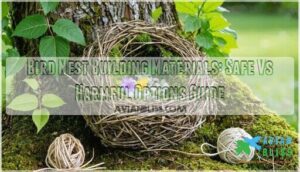 When choosing bird nest building materials, you’ll want to stick with natural options that won’t harm your feathered neighbors.
Safe choices include dead twigs, dry grass, moss, bark strips, and untreated plant materials. Cotton balls, natural feathers, and straw work well too.
However, avoid anything synthetic like dryer lint, plastic strips, or yarn—these can trap tiny feet or absorb water, creating dangerous conditions.
Human hair might seem helpful, but it’s often too strong and can constrict growing chicks. Even pet fur needs to be chemical-free since flea treatments can be toxic.
The secret lies in understanding which everyday materials transform from helpful to hazardous.
Table Of Contents
- Key Takeaways
- Natural Nesting Materials
- Safe Material Options
- Unsuitable Nesting Materials
- Providing Nest Materials
- Bird-Friendly Yard Practices
- Frequently Asked Questions (FAQs)
- What is the best material for a bird’s nest?
- What materials are used to build birds nests?
- What materials are used to build a Robin’s nest?
- What material is used for bird box nesting?
- What is the best material for bird nests?
- What materials are used to build a bird’s nest?
- What is the raw material for bird nest?
- What do birds use them to build their nest?
- How do birds choose their nesting location?
- What materials help birds in colder climates?
- Conclusion
Key Takeaways
- You’ll want to stick with natural materials like dead twigs, dry grass, moss, bark strips, and untreated plant materials that birds have safely used for thousands of years
- You should avoid synthetic materials like dryer lint, plastic strips, yarn, and human hair since they can trap birds, collapse when wet, or contain harmful chemicals
- You can easily provide nesting materials by placing them in wire-mesh suet cages, scattering piles on the ground, or tucking them into tree crevices where birds naturally forage
- You’ll create the best bird-friendly habitat by maintaining natural yard debris, avoiding pesticides and chemicals, and planting native vegetation that provides both nesting materials and food sources
Natural Nesting Materials
When you provide natural materials, you’re giving birds the building blocks they’ve used for thousands of years to create safe, durable nests.
These organic options include dead twigs and leaves that form sturdy foundations, dry grass and feathers that provide insulation, and specialized materials like moss, bark strips, pine needles, and plant fluff that birds carefully select based on their specific nesting needs.
Dead Twigs and Leaves
Dead twigs and leaves form the foundation of most bird nests, providing essential nest structure and camouflage value.
Nature’s building blocks: dead twigs and leaves create the perfect foundation for secure, camouflaged bird nests.
These natural nest materials offer perfect twig selection opportunities when gathered from your yard’s forest floor.
- Collect small twig fragments under 6 inches for ideal nest building materials
- Choose dry, intact dead leaves that resist leaf decomposition
- Avoid chemically treated yard waste that compromises species preference
- Place materials near dense shrubs where birds naturally forage
- Replace soggy materials after heavy rainfall to maintain quality
Dry Grass and Feathers
In the context of grass insulation and feather warmth, you’re offering birds premium nest building materials they instinctively crave.
Dry grass provides excellent structure and thermal protection, while feathers create soft, insulating layers that regulate temperature.
Always choose chemical-free grass clippings and natural feathers from untreated sources.
Budgies also benefit from nesting material, and untreated wood shavings are a safe option.
Bird preferences lean heavily toward these natural nest materials because they offer superior material safety and nest structure benefits.
Moss and Bark Strips
Two specific natural materials offer birds superior nest-building advantages.
Moss provides excellent moisture regulation and thermal insulation, while bark strips deliver structural support and natural camouflage.
You’ll find moss thriving in shaded, damp areas where sustainable harvesting won’t damage ecosystems.
Bark varieties from fallen branches work best—never strip living trees.
- Moss properties include natural antimicrobial benefits that help protect developing chicks from harmful bacteria
These bird nest materials create weatherproof homes through their combined strengths.
Pine Needles and Plant Fluff
Pine needles serve as natural materials with needle antiseptic properties that resist decay while providing excellent nest building materials.
Plant fluff from cattails and cottonwood delivers superior fluff insulation quality, creating warm pockets for eggs.
Different species preferences emerge—hummingbirds favor soft down while larger birds choose sturdier needles.
Practice sustainable harvesting by collecting fallen materials.
Smart material combinations blend textures perfectly for ideal bird nest materials.
Safe Material Options
You’ll find the safest nesting materials are those that nature provides or closely mimic natural options.
These materials support healthy nest construction without posing risks to adult birds or their vulnerable chicks.
Untreated Grass Clippings
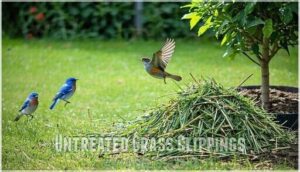
Untreated grass clippings offer birds flexible, bird-safe nesting materials when you skip pesticides and fertilizers.
Fresh clippings provide excellent safe length for weaving, while proper moisture content prevents mold during clipping decomposition.
Bird preferences vary, but robins and bluebirds frequently choose these natural materials.
You’ll want to dry clippings first to avoid chemical residue concerns.
Pile them in your yard where birds can easily access these valuable nesting materials for their spring construction projects.
Native Plants and Straw
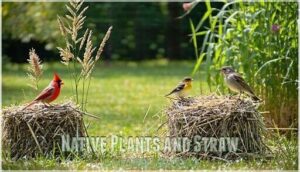
Native plants and straw represent excellent bird nesting materials that provide both safety and environmental benefits.
When you choose native sourcing for your yard, you’re supporting plant diversity while offering chemical-free straw that birds instinctively recognize. Native plants naturally produce seeds, fibers, and structural materials that local bird species have used for generations.
Straw benefits include excellent insulation properties and easy availability from farm supply stores. You’ll want to scatter loose straw around shrubs and trees, creating natural collection points where birds can gather materials.
Habitat enrichment occurs when you combine native plants with strategically placed straw, forming a thorough nesting resource system.
- Golden prairie grasses swaying gently while cardinals pluck perfect strands
- Wildflower stems providing sturdy framework pieces for robin construction projects
- Milkweed fluff drifting like tiny clouds for goldfinch nest lining
- Native sedge clumps offering flexible weaving material for oriole pouches
- Straw bales weathering naturally into soft, workable nesting components
Raw Cotton and Hemp
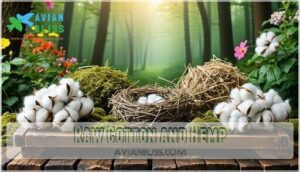
Cotton biodegradability makes it an excellent choice for environmentally conscious bird enthusiasts.
You’ll find that raw cotton provides exceptional softness for nest lining, while hemp strength creates durable structural support.
When considering fiber sourcing, choose organic options free from chemical treatments.
Safe alternatives like these natural materials align perfectly with bird preferences for biodegradable nesting materials.
Present these nest building materials in small bundles where birds can easily access them for their construction projects, using natural materials and keeping them chemical-free to ensure a safe and eco-friendly environment.
Natural Fibers and Feathers
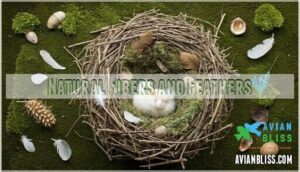
Several natural materials provide excellent fiber insulation and comfort for nesting birds. Natural fibers like untreated wool offer superior warmth, while feathers from chickens or ducks create soft linings that different species preferences require.
Here’s your safe sourcing guide:
- Use untreated wool or hemp fibers
- Collect poultry feathers without chemical treatments
- Gather moss and bark strips from clean areas
- Avoid synthetic materials prone to fiber degradation
These natural materials support healthy nest construction.
Unsuitable Nesting Materials
While natural materials create sturdy, safe nests, many common household items can seriously harm nesting birds and their young.
You should avoid providing plastic strips, tinsel, human hair, yarn, dryer lint, and chemically treated materials that can entangle birds or collapse when wet, as they pose a significant threat to the well-being of nesting birds.
Plastic Strips and Tinsel
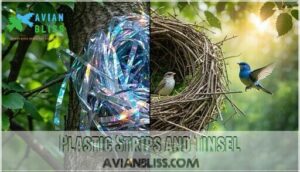
Shiny plastic strips and colorful tinsel create deadly traps for birds.
Research shows plastic ingestion causes internal scarring and organ damage, while entanglement hazards from these hazardous materials lead to limb loss in 12% of monitored nestlings.
Nest contamination introduces toxins affecting chick development, and microplastic risks contribute to widespread habitat degradation—making natural nesting materials essential for healthy bird nesting.
This is especially concerning, as many birds now incorporate harmful plastic debris into their nests.
Human Hair and Yarn
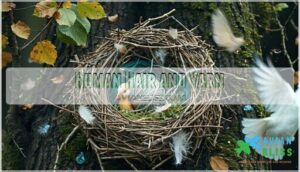
Human hair and yarn create serious Entanglement Hazards for nesting birds.
These materials wrap around wings, legs, or necks, causing Circulation Risks that can injure or kill nestlings.
Chemical residues from shampoos and synthetic dyes pose additional toxicity threats.
Yarn can kill birds by causing entanglement or internal obstruction, as seen in Yarn can kill birds.
Avoid these dangerous materials:
- Human hair – even chemical-free versions entangle birds
- Yarn – retains moisture and contains harmful synthetic fibers
- String – poses strangulation risks to adult birds and chicks
Choose Safe Options with better Biodegradability Concerns instead.
Dryer Lint and Synthetic Materials
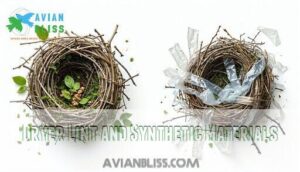
That fluffy dryer lint might look harmless, but it’s actually a death trap for baby birds.
That innocent-looking dryer lint turns deadly when rain hits the nest.
When wet, lint decomposition occurs rapidly, causing nest collapse and creating entanglement hazards around delicate legs and wings.
Synthetic materials like plastic strips pose similar synthetic toxicity risks, trapping nestlings fatally.
| Material Type | Primary Danger |
|---|---|
| Dryer lint | Disintegrates when wet, traps chemicals |
| Plastic strips | Bird entanglement, nest instability |
| Nylon fibers | Wing/leg binding, circulation loss |
| Synthetic fabrics | Bird injuries from toxic residues |
Choose material alternatives like natural twigs instead—your feathered friends deserve safe homes, not bird hazards.
Chemically Treated Pet Fur
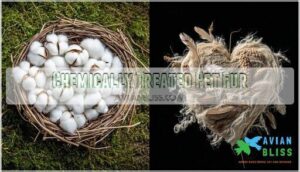
Unlike dryer lint that crumbles when wet, pet fur poses different Toxicity Risks through Chemical Exposure. Fur Contamination from flea and tick treatments creates serious Nestling Health problems.
Research shows 100% of nests containing treated pet fur had insecticide residues, directly linking chemical risks to increased chick mortality. These harmful materials persist for months, affecting multiple breeding cycles.
Budgies also need safe nesting material to avoid health risks.
Safe Alternatives protect our feathered neighbors:
- Use untreated natural cotton or wool instead of pet fur
- Collect fur only from pets never treated with pesticides
- Offer native plant fibers like milkweed fluff or cattail down
- Provide moss and lichen gathered from chemical-free areas
- Choose feathers from organic, untreated poultry sources
Providing Nest Materials
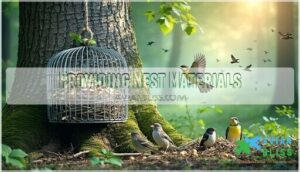
You can offer nesting materials to birds using several simple methods that make natural resources easily accessible during breeding season.
Place materials in wire-mesh suet cages, scatter them in ground piles, tuck them into tree crevices, or display them in open-topped berry baskets where birds can quickly gather what they need.
This allows birds to access nesting materials and natural resources efficiently.
Piles on The Ground
After identifying harmful materials, your next step involves Ground Pile Placement of safe natural materials. Simply scatter twigs, leaves, and grass clippings on the ground where birds easily access them.
This Material Accessibility approach mimics how Ground Nesting Birds naturally find resources. Birds often use mud and saliva as natural cement.
| Material Type | Best Pile Size |
|---|---|
| Small twigs | 6-inch diameter |
| Dry leaves | 12-inch spread |
| Grass clippings | 8-inch mounds |
| Bark strips | 4-inch clusters |
| Pine needles | 10-inch circles |
Keep Debris Pile Safety in mind—locate piles near mud sources for species like robins. Your Pile Size Matters strategy should create scattered collections that blend storage with accessibility, ensuring natural nesting materials remain available throughout breeding season.
Wire-Mesh Suet Cages
Wire-mesh suet cages transform into excellent nesting material feeders when you fill them with natural fibers like cotton or feathers.
Choose cages with appropriate size and spacing—openings should be large enough for birds to access materials but small enough to prevent entanglement.
Position these nesting material holders in shaded areas with weather protection to keep contents dry and mold-free.
Regular refilling frequency guarantees fresh materials remain available throughout nesting season, while cage material safety requires checking for sharp edges or rust that could harm visiting birds.
You can find various wire-mesh cage options online.
Mesh Bags and Tree Crevices
Mesh bags provide a controlled way to offer bird nesting materials without creating yard mess. Choose bags with fine mesh to prevent materials from falling out while allowing birds easy access.
Tree crevices serve as natural material storage spots that birds instinctively check for nesting supplies. Many retailers offer various mesh bag options suitable for this purpose.
Key placement strategies for optimal results:
- Position mesh bags 4-6 feet high on fence posts or tree branches for Crevice Accessibility
- Select tree crevices 2-4 inches deep for proper Crevice Material Choice storage
- Make certain Crevice Size Matters by choosing openings birds can easily navigate
- Follow Bag Placement Tips by securing mesh bags away from predator access points
Open-Topped Berry Baskets
Open-topped berry baskets offer convenient Basket Placement options for displaying nesting materials.
Choose medium Basket Size containers and secure them at eye level using wire hangers for ideal bird access.
Fill baskets with diverse Material Variety like twigs, moss, and grass clippings. Consider using specialized basket hangers for easier mounting.
Replace soggy materials after rain for proper Basket Maintenance and Weather Protection.
These simple dispensers make bird nesting materials easily accessible while supporting local bird nesting efforts throughout breeding season.
Bird-Friendly Yard Practices
Creating a bird-friendly yard goes beyond just offering nesting materials—you’ll need to transform your entire outdoor space into a habitat that supports nesting birds year-round.
Your yard practices directly impact whether birds choose to nest nearby and how successfully they raise their young, which is a critical factor in creating a yard that is bird-friendly.
Maintaining Natural Debris
Beyond providing specific nesting materials, your yard becomes a bird-friendly haven when you embrace natural debris. Think of fallen leaves and twigs as nature’s gift cards for nesting birds—they’re exactly what these creatures need to build secure homes.
Instead of rushing to clear every leaf, allow natural mulch to accumulate in designated areas. This debris composition creates perfect insect habitats while offering essential building materials. Yard waste becomes valuable resources when you shift your perspective.
Consider these natural debris strategies:
- Leave leaf litter under shrubs and trees undisturbed
- Create small brush piles from pruned branches
- Allow twig decomposition in quiet garden corners
- Maintain patches of natural materials year-round
- Keep fallen bark and dried plant stems accessible
This approach supports the complete ecosystem birds depend on for successful nesting, providing them with the necessary materials to build secure homes and creating a haven that is truly nature’s gift. By embracing this method, you can create a natural haven that benefits both the birds and the environment, ultimately leading to a more successful nesting experience.
Avoiding Chemical Use
Every chemical you skip protects birds and their food sources.
Pesticide alternatives like beneficial insects naturally control pests without poisoning songbirds.
Safe mulch from untreated wood provides clean water runoff, while organic gardens create thriving ecosystems.
When you avoid chemicals, you’re choosing safe materials over harmful ones—supporting bird nesting material safety by eliminating bird materials to avoid through responsible avoiding chemical use practices.
Planting Native Vegetation
Native vegetation creates the foundation for thriving bird-friendly gardens through ecosystem support and habitat restoration.
Native Plant Benefits include providing natural nesting materials like bark strips and plant down while supporting local biodiversity.
Choose regionally appropriate trees, shrubs, and wildflowers that offer seeds, shelter, and natural materials.
This birdfriendly landscaping approach creates a sustainable birdfriendly environment supporting bird nesting success.
Supporting Local Wildlife
Supporting your backyard bird habitat creates ripple effects throughout your local ecosystem.
When you provide safe bird nesting materials and maintain wildlife gardening practices, you’re actively participating in biodiversity support and habitat preservation.
Your efforts help sustain native insects that birds depend on, strengthening the entire bird population in your area:
- Ecosystem conservation starts in your own yard through chemical-free gardening and natural materials
- Native insects thrive when you avoid pesticides, providing essential protein for nestlings
- Birdfriendly environment development supports species facing urban habitat loss
To further enhance the habitat, consider adding water features to attract a wider variety of birds.
Frequently Asked Questions (FAQs)
What is the best material for a bird’s nest?
Natural materials work best for nests. You’ll want to provide twigs, dry grass, leaves, moss, and feathers. These biodegradable options offer structure, insulation, and safety without entanglement risks.
What materials are used to build birds nests?
Like nature’s architects gathering blueprints, birds collect twigs, grass, leaves, moss, feathers, and mud to craft their homes. You’ll find them using spider silk, bark strips, and plant fibers too.
What materials are used to build a Robin’s nest?
Robins construct their nests using grass, mud, and small twigs for structure.
You’ll find them lining the interior with soft feathers for insulation, creating cozy cup-shaped homes in trees and shrubs.
What material is used for bird box nesting?
You’ll find birds using similar materials in nest boxes as they do naturally: soft grasses, feathers, moss, and small twigs create cozy homes for your backyard visitors.
What is the best material for bird nests?
You’ll want to provide natural materials like small twigs, chemical-free grass clippings, moss, feathers, and plant fibers. These create sturdy, insulated nests while avoiding synthetic materials that can harm birds.
What materials are used to build a bird’s nest?
Birds use twigs, leaves, grass, moss, bark strips, feathers, mud, and plant fibers to build nests.
You’ll find them gathering these materials from your yard’s natural debris, creating sturdy structures lined with soft insulation for their eggs.
What is the raw material for bird nest?
You’ll discover that natural materials form the foundation of every nest. Twigs, leaves, grass, moss, bark strips, feathers, and plant fibers create sturdy, insulated homes for eggs and chicks.
What do birds use them to build their nest?
You’ll see them gather twigs for structure, grass and leaves for walls, then softer materials like feathers, moss, and plant down for cozy linings that keep eggs warm.
How do birds choose their nesting location?
Picture feathered real estate agents frantically house-hunting with checklists longer than mortgage applications.
You’ll find birds selecting nesting spots based on safety from predators, food availability nearby, suitable building materials, proper shelter from weather, and species-specific requirements like tree cavities or ground cover, which includes considering species-specific needs.
What materials help birds in colder climates?
Insulating materials like feathers, moss, cattail fluff, and plant down help cold-climate birds retain warmth.
You’ll notice species like chickadees using soft fibers while Arctic shorebirds invest heavily in nest lining.
Conclusion
Supporting local birds becomes incredibly easy once you understand proper bird nest building materials.
You’ll create safer habitats by providing natural options like twigs, moss, and untreated grass while avoiding synthetic materials that pose serious risks.
Your thoughtful material choices directly impact nesting success rates in your area.
Remember, even small efforts like maintaining natural yard debris and avoiding chemicals make significant differences for local bird populations, which is why choosing the right materials is so important for creating a safe environment, and every action counts towards safer habitats.
- https://centerofthewest.org/2023/04/06/bird-nests-types-material-how-you-can-help/
- https://www.perkypet.com/articles/please-don-t-give-birds-these-nesting-materials
- https://www.reddit.com/r/birding/comments/10tk24l/has_anyone_had_a_good_experience_providing/
- https://pmc.ncbi.nlm.nih.gov/articles/PMC4242575/
- https://phys.org/news/2025-07-plastic-death-revealed-birds.html