This site is supported by our readers. We may earn a commission, at no cost to you, if you purchase through links.
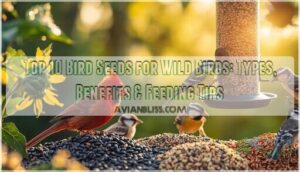
A single cardinal perches at your feeder, cracks open a safflower seed, and suddenly you realize: not all bird seed is created equal. That bright red visitor turned up its beak at the generic mix you scattered yesterday, but now it’s back for seconds.
Wild birds are surprisingly picky eaters, and what you offer determines who shows up at your backyard buffet. Black oil sunflower seeds attract chickadees and nuthatches, while finches won’t touch anything but Nyjer thistle. Understanding these preferences transforms your feeding station from a maybe-they’ll-come experiment into a guaranteed gathering spot for dozens of species.
The right seed blend doesn’t just fill bellies—it aids migration, winter survival, and nesting success for the birds that depend on your generosity.
Table Of Contents
- Key Takeaways
- Best Types of Bird Seed for Wild Birds
- Nutritional Benefits of Bird Seed
- Bird Seed Preferences by Species
- Top 10 Bird Seeds for Wild Birds
- 1. Pennington Ultra Songbird Seed Blend
- 2. Wagners Black Oil Sunflower Bird Food
- 3. Sunflower Meats Bird Seed Mix
- 4. Wagners Safflower Bird Seed
- 5. Lyric Nyjer Wild Bird Seed
- 6. Wild Bird Striped Sunflower Seeds
- 7. Wagner’s Cracked Corn Bird Food
- 8. Wagners Wild Bird Food With Cherry Flavor
- 9. Kaytee Wild Bird Food Seed Blend
- 10. Kaytee Wild Bird Seed Mix
- Tips for Feeding Wild Birds Safely
- Frequently Asked Questions (FAQs)
- What is the best bird seed for wild birds?
- Can wild birds have bird seed?
- What is the 5 7 9 rule for bird feeders?
- Is it okay to feed wild birds birdseed?
- Can I just throw bird seed on the ground?
- Can I just throw bird seed in the yard?
- What is the best thing to feed wild birds?
- What to avoid in wild bird seed?
- How do birds find seed feeders?
- Can wild birds eat flavored bird seeds?
- Conclusion
Key Takeaways
- Black oil sunflower seeds attract the widest variety of wild birds due to their thin shells and 38-40% fat content, making them the most versatile choice for any backyard feeder.
- Different bird species have distinct seed preferences—cardinals and jays prefer striped sunflower and safflower, finches require nyjer thistle, while ground-feeders like sparrows and doves favor white millet scattered low.
- Proper seed storage in airtight containers at 35-40°F with low moisture prevents mold and rancidity, while regular feeder cleaning every two weeks stops disease spread among visiting birds.
- Strategic seed selection directly impacts wild bird survival by providing essential fats and proteins that fuel migration, support winter thermoregulation, and enable successful nesting during breeding seasons.
Best Types of Bird Seed for Wild Birds
You’ve got dozens of seed options out there, and honestly, some work way better than others for attracting the birds you actually want to see. The right seed can turn your backyard into a bustling bird sanctuary, while the wrong one just sits there gathering dust (and squirrels).
If you’re not sure where to start, check out this guide to different types of bird seed mixes to find what works best for your local birds.
Let’s break down the top seed types that’ll have your feathered friends coming back for more.
Black Oil Sunflower Seeds
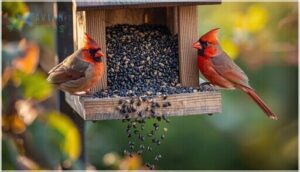
Black oil sunflower seeds are the heavyweight champions of wild bird seed! You’ll love their thin hulls and impressive 38-40% crude fat content—that’s serious energy for your feathered friends. Cardinals, chickadees, and finches can’t resist them.
Store these nutritional powerhouses in a cool, dry spot to maintain oil quality, and watch your backyard transform into a bustling bird sanctuary.
They’re also valued as a soil health improving cover crop, making them beneficial beyond just bird feeding.
Striped Sunflower Seeds
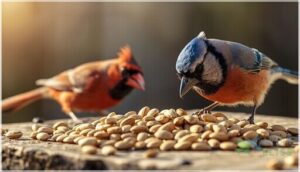
While black oil varieties dominate feeders, striped sunflowers bring their own charm to your backyard buffet! These larger seeds sport distinctive white and dark stripes that cardinals and blue jays absolutely love.
Their thicker shells require stronger beaks to crack, which naturally filters your visitors to bigger songbirds. The plump kernels inside deliver high fat content for energy, making them perfect for mixed blends that support wild bird nutrition year-round.
The shell thickness and seed size are key striped sunflower seed qualities that influence which birds can enjoy them.
Hulled Sunflower Seeds (Sunflower Hearts)
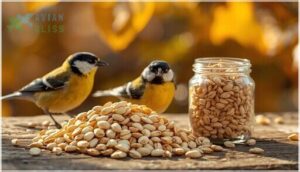
If you’re looking for maximum convenience in bird seed selection, sunflower hearts are your secret weapon! These hulled sunflower seeds eliminate the mess of scattered shells while packing 20 to 25 percent protein and essential fats that support wild bird health year-round.
Goldfinches and chickadees devour these 3-to-5-millimeter kernels faster than any other seed types, making them perfect for smaller feeders. Just remember proper seed storage in airtight containers prevents rancidity—they’re basically the no-waste champions of feeding strategies!
Safflower Seeds
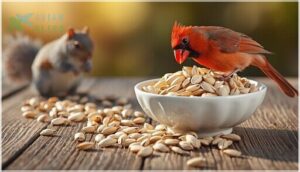
Safflower seeds flip the script on traditional bird seed selection—they’re high-energy powerhouses that squirrels and starlings actually ignore! With 38 to 48 percent oil content and linoleic acid supporting feather health, cardinals and grosbeaks can’t resist these 2-to-3-millimeter teardrop-shaped gems.
Here’s what makes safflower seeds exceptional:
- High fat content fuels migration and winter foraging
- Thick shells deter unwanted pests naturally
- Vitamin E from tocopherols boosts immune function
- Neutral flavor remains appealing year-round
Store them in airtight containers to prevent rancidity—proper seed storage keeps that precious oil fresh for months!
Nyjer (Thistle) Seeds
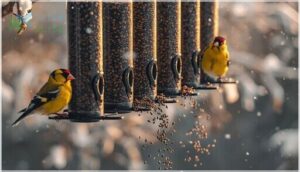
Tiny nyjer seeds—technically Guizotia abyssinica, not true thistle—pack twenty percent protein and enough fat to fuel goldfinches through brutal winters!
You’ll need specialized tube feeders with narrow ports since these paper-thin shells measure barely two millimeters.
Store them in airtight containers away from moisture, because waterlogged nyjer spoils fast and won’t attract your favorite finches.
White Millet
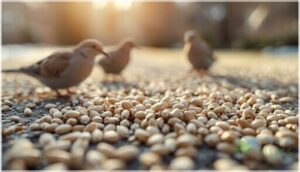
Ground-feeding champions like doves, sparrows, and juncos devour white millet scattered beneath your feeders! This round, beige grain—Panicum miliaceum—contains eleven to twelve percent protein plus B vitamins that support wild bird energy needs during migration.
Store it in cool, dry conditions below twelve percent moisture to prevent spoilage. You’ll find white millet shines in winter hungry-gap blends when natural forage disappears.
Peanuts and Suet
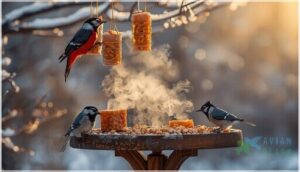
Woodpeckers, jays, and chickadees go wild for peanuts and suet—concentrated winter foods that fuel survival when temperatures plummet! Peanuts deliver thirty to fifty percent fat plus muscle-building protein, while rendered beef suet provides digestible calories that power thermoregulation.
- Store unsalted roasted peanuts in airtight containers to prevent rancidity
- Choose suet blocks with twenty-five to thirty percent crude fat for year-round feeding
- Clean specialized feeders weekly to minimize mold and bacterial growth
Specialty Blends and Mixes
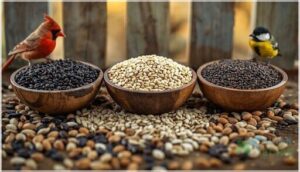
You’ll love custom blends that combine at least three seed types—black oil sunflower hearts, safflower seeds, and nyjer seed work beautifully together!
Smart seed formulations use specific blend ratios: quality mixes keep sunflower under sixty percent to encourage diverse seed selection.
Seasonal mixes boost fat content in winter, while pest resistance formulations include anti-mold additives. Bird seed blends should list exact percentages on packaging!
Nutritional Benefits of Bird Seed
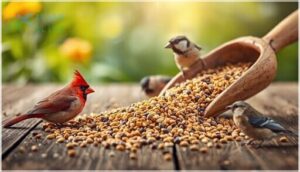
You’re not just tossing generic food out there—bird seed is packed with nutrition that keeps your feathered visitors thriving year-round. Different seeds deliver fats, proteins, and energy in ways that match what birds need to survive harsh winters, fuel migration, and raise healthy chicks.
Bird seed isn’t generic—it’s packed with fats, proteins, and energy that fuel survival, migration, and raising healthy chicks year-round
Let’s break down what makes bird seed such a powerhouse for wild birds and why it matters for their health.
Essential Fats and Proteins
When you’re setting up a backyard feeding station, understanding fatty acid balance and protein sources transforms your approach! Black oil sunflower hearts pack roughly 18 percent fat with excellent nutrient absorption for fat-soluble vitamins, while peanuts deliver 45 percent fat alongside high-quality protein.
Nyjer seed, suet, and even mealworms fuel energy metabolism during demanding seasons—your feathered friends genuinely thrive on this nutritional diversity.
Energy Content for Wild Birds
Caloric intake fuels every wing beat, migration, and shiver during chilly mornings. Black oil sunflower hearts deliver roughly 6 to 7 calories per gram, while nyjer seed and suet pack dense energy for fat metabolism. Understanding seed digestion helps you match nutrient absorption to seasonal demands:
- Sunflower hearts offer quick energy sources with high fat content
- Safflower seed aids steady caloric intake for cardinals and chickadees
- Suet provides sustained bird nutrition during cold snaps
Fresh seeds optimize energy availability year-round!
Vitamins and Minerals in Seeds
Beyond fuel, seeds pack vitamins and minerals that transform feather health and immunity. Sunflower hearts deliver about 35 mg of vitamin E per 100 grams, bolstering antioxidant properties and cellular defenses. Safflower seed contributes B vitamins for energy metabolism, while nyjer seed adds trace selenium for nutrient absorption.
Mineral content like magnesium and zinc strengthens bones and immune systems—smart seed selection means healthier backyard flocks!
Supporting Health Through Seasonal Changes
When autumn winds shift and migration patterns kick into gear, your seed selection becomes part of critical climate adaptation strategies. Winter feeding with nutrient supplements like omega-3 rich options aids wild bird food needs during lean months.
Smart seasonal diet choices—rotating protein-dense seeds and high-fat blends—strengthen backyard bird feeding success and contribute directly to bird conservation efforts while perfecting your bird attraction strategies!
Bird Seed Preferences by Species
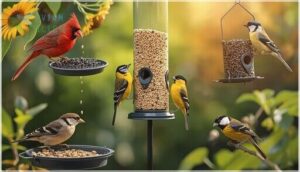
Not all birds eat the same seeds—your backyard regulars have surprisingly specific tastes! Cardinals and chickadees won’t necessarily go for the same options that attract goldfinches or ground-feeding sparrows.
Understanding these preferences helps you stock the right seeds and turn your feeder into the neighborhood hotspot.
Seeds for Songbirds (Cardinals, Chickadees, Finches)
Regarding songbird attraction, you’ll want to focus on seed selection that matches each species’ unique feeding style. Cardinals love perching near feeders filled with safflower seeds and black oil sunflower hearts, while chickadees dart in quickly for peanuts. Finches can’t resist Nyger thistle seeds in specialized feeders!
Here’s what works best for your backyard bird feeding setup:
- Cardinals: Offer safflower seeds and sunflower hearts for their strong beaks
- Chickadees: Mix peanuts with black oil sunflower for protein-rich bird nutrition
- Finches: Use Nyger thistle seeds in tube feeders with tiny ports
Smart feeder placement near shrubs gives these songbirds the shelter they need between visits.
Options for Ground-Feeding Birds
Ground feeding birds like sparrows, doves, and juncos prefer foraging close to earth rather than perched at elevated stations. Scatter white millet and cracked corn on low platform feeders within two inches of soil for maximum bird attraction.
You’ll draw mourning doves with larger grains, while dark-eyed juncos appreciate millet and sunflower hearts.
Keep seed placement away from dense brush to reduce predation risks and maintain proper feeder maintenance by replacing wet patches promptly!
Attracting Specialty Birds (Goldfinches, Nuthatches)
Goldfinches and nuthatches respond brilliantly to specialized seed preferences and strategic feeder placement! You’ll need nyjer thistle seeds and sunflower hearts in finch feeders with small ports, positioned five to eight feet from cover for bird attraction. Here’s your backyard birding action plan:
- Mount finch feeders four to six feet high for ideal nuthatch habitats
- Offer safflower seeds to reduce pest competition
- Place feeders near water sources year-round
- Provide fresh nesting materials during spring breeding seasons
- Store seed properly to maintain quality during bird migration periods
Avoiding Unwanted Pests (Squirrels, Blackbirds)
You’ll win the pest control battle by combining squirrel deterrents with smart seed protection strategies! Install bird feeders with weight-sensitive perches eight to ten feet from structures, and add safflower seeds since squirrels avoid their bitter taste while cardinals love them.
Switch to nyjer thistle seeds in tube feeders for finches, and store sunflower hearts in airtight containers to maintain bird feeder security.
Top 10 Bird Seeds for Wild Birds
Now that you know what different birds prefer, let’s talk about the actual products that’ll turn your backyard into bird central!
I’ve spent countless mornings testing these blends and watching which ones bring the most visitors to my feeders—some really do perform better than others.
Here are ten tried-and-true options that consistently attract a wide variety of wild birds without breaking the bank.
1. Pennington Ultra Songbird Seed Blend
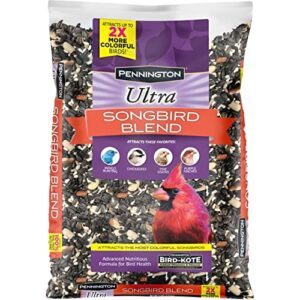
You’re about to discover my personal favorite backyard blend! Pennington Ultra Songbird Blend packs Black Oil Sunflower and Safflower with real peanuts, raisins, and dried cherries—no grass seed to clutter your feeder.
This 6-pound mix (also available in 20-pound bags) attracts Cardinals, Chickadees, Goldfinches, and even Woodpeckers. The high-energy formula nourishes birds year-round with essential fats, proteins, and fortified vitamins.
While it’s pricier than some local options, the quality ingredients and bird diversity you’ll see make it worth every penny!
| Best For | Birdwatchers who want to attract a colorful variety of songbirds like cardinals, finches, and chickadees with a premium, high-energy seed blend. |
|---|---|
| Weight | 6 lbs |
| Item Form | Seed |
| Made in USA | Not specified |
| Primary Ingredient | Mixed blend |
| Target Birds | Songbirds |
| Feeder Type | Various feeders |
| Additional Features |
|
- Packed with quality ingredients like black oil sunflower, peanuts, raisins, and dried cherries that birds actually love
- No grass seed filler means less waste and cleaner feeders
- Attracts a wide range of songbirds, making your backyard more vibrant and entertaining
- More expensive than similar blends you might find at local stores
- The 6-pound bag runs out quickly if you have multiple feeders or lots of hungry birds
- Some ingredients may attract birds you’re not trying to feed, depending on your preferences
2. Wagners Black Oil Sunflower Bird Food
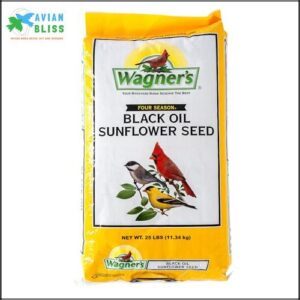
If you’re after pure nutrition at a wallet-friendly price, Wagner’s 25-pound bag of 100% black oil sunflower seeds is your go-to! These thin-shelled beauties attract Cardinals, Chickadees, Finches, and Woodpeckers with their high fat content—perfect for keeping your feathered friends energized year-round.
I love that they’re made in the USA from top-quality grains. Just heads up: the bag doesn’t have a velcro closure, so you’ll want an airtight container to keep them fresh and prevent spills!
| Best For | Bird enthusiasts who want to attract a wide variety of songbirds like Cardinals, Chickadees, and Finches without breaking the bank. |
|---|---|
| Weight | 25 lbs |
| Item Form | Seed |
| Made in USA | Yes |
| Primary Ingredient | Black oil sunflower |
| Target Birds | Cardinals, chickadees, finches |
| Feeder Type | Tray or hopper |
| Additional Features |
|
- High energy, thin-shelled seeds that small birds can easily crack open
- Attracts tons of popular bird species including Cardinals, Woodpeckers, and Nuthatches
- Made in the USA from quality grains at a great price point for a 25-pound bag
- No resealable closure on the bag—you’ll need to store it in an airtight container
- Some buyers have found wood chips or debris mixed in with the seeds
- Can attract squirrels and other critters you might not want at your feeder
3. Sunflower Meats Bird Seed Mix
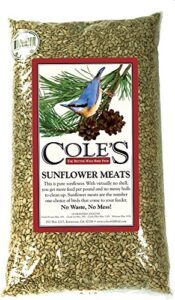
Cole’s 20-pound Sunflower Meats bag is a breakthrough if you hate cleanup! These hulled kernels deliver pure, shell-free nutrition that attracts Cardinals, Chickadees, and Finches without the messy debris beneath your feeders—ideal for apartment balconies or tidy patios.
The whole-kernel sunflower meats pack high fat and protein, keeping songbirds energized year-round. Just remember: they’re pricier than regular seeds, and you’ll need to transfer them to an airtight container since the bag isn’t resealable. Store properly to prevent spoilage!
| Best For | Bird lovers in apartments or condos who want mess-free feeding that attracts songbirds without leaving piles of shells on their balcony or patio. |
|---|---|
| Weight | 20 lbs |
| Item Form | Chunk |
| Made in USA | Not specified |
| Primary Ingredient | Sunflower kernels |
| Target Birds | Songbirds, woodpeckers |
| Feeder Type | All feeder types |
| Additional Features |
|
- Zero mess or waste since the kernels have no shells—perfect for small outdoor spaces
- Attracts a wide variety of desirable birds like Cardinals, Chickadees, and Finches with high-energy nutrition
- Works in any feeder type and contains no artificial additives or fillers
- Significantly more expensive per pound than traditional sunflower seeds with shells
- Bag isn’t resealable, so you’ll need to buy or use your own airtight container for storage
- Kernels can spoil faster than shelled seeds if exposed to moisture or not stored properly
4. Wagners Safflower Bird Seed
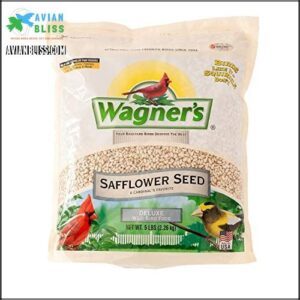
Wagner’s safflower seed is your secret weapon against feeder hogs! Cardinals, Chickadees, and Grosbeaks love its mild, nutty flavor—but squirrels and Grackles usually turn up their noses at it.
Made in the USA with high-quality grains, this $11.98 investment works beautifully in tray feeders or mixed blends.
You’ll need to watch for torn packaging on delivery, and placement still matters since some determined squirrels might give it a try. Store it properly, and you’ll create a songbird sanctuary without the usual pest chaos!
| Best For | Backyard birders who want to attract Cardinals and songbirds while keeping squirrels, Grackles, and Starlings away from their feeders. |
|---|---|
| Weight | Not specified |
| Item Form | Seeds |
| Made in USA | Yes |
| Primary Ingredient | Safflower |
| Target Birds | Cardinals, songbirds |
| Feeder Type | Tray feeders |
| Additional Features |
|
- Cardinals, Chickadees, Titmice, and Grosbeaks love the mild, nutty flavor
- Most squirrels and pest birds like Grackles and Starlings avoid safflower seeds
- Made in the USA with high-quality grains at an affordable $11.98 price point
- Packaging sometimes arrives damaged or torn during shipping
- Won’t deter every single squirrel—some determined ones may still try it
- Requires proper feeder placement and maintenance to get the best results
5. Lyric Nyjer Wild Bird Seed
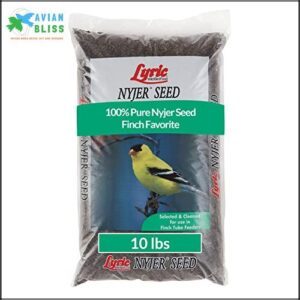
If safflower seeds aren’t quite cutting it for your finch friends, Lyric Nyjer Wild Bird Seed is the finch magnet you’ve been searching for! These tiny black seeds pack serious energy—perfect for American Goldfinches, Purple Finches, and Pine Siskins during harsh winters.
At $20 for 10 pounds, you’ll get carefully cleaned, sterilized seeds that won’t sprout beneath your feeders. Use them in tube or sock feeders for best results, but keep them dry since rain can create messy clumps!
| Best For | Backyard birders who want to attract goldfinches, purple finches, and other small songbirds with a high-energy seed that won’t sprout under feeders. |
|---|---|
| Weight | 10 lbs |
| Item Form | Seed |
| Made in USA | Not specified |
| Primary Ingredient | Nyjer thistle |
| Target Birds | Finches |
| Feeder Type | Finch feeders |
| Additional Features |
|
- Carefully cleaned and sterilized seeds won’t create a mess of unwanted plants in your yard
- High calorie content helps finches and small birds survive cold winter months
- Attracts multiple finch species including American goldfinches, purple finches, house finches, and pine siskins
- Seeds are tiny and only work with specific feeder types like tube or sock feeders
- Can clump up and create a gummy mess if exposed to rain in open feeders
- At $20 for 10 pounds, it’s pricier than some other birdseed options
6. Wild Bird Striped Sunflower Seeds
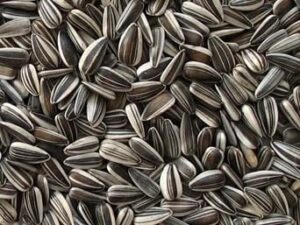
Now here’s where you’ll attract the big birds—Home and Country USA’s Striped Sunflower Seeds are built for cardinals, jays, and grosbeaks with serious jaw strength! These 25-pound bags feature thick-shelled seeds with distinctive light and dark bands that larger songbirds crack open like pros.
You’ll notice they’re pricier and may contain some debris, but those tougher shells deter smaller birds and squirrels. Pop them in hopper feeders, keep them dry, and watch woodpeckers show up for that 50-60% fat content!
| Best For | Birdwatchers who want to attract larger songbirds like cardinals, jays, and woodpeckers while naturally deterring smaller birds and squirrels. |
|---|---|
| Weight | 25 lbs |
| Item Form | Seed |
| Made in USA | Not specified |
| Primary Ingredient | Striped sunflower |
| Target Birds | Songbirds |
| Feeder Type | Various or ground |
| Additional Features |
|
- High fat content (50-60%) provides excellent energy for larger birds
- Thick shells act as a natural deterrent to squirrels and smaller birds
- Attracts impressive variety of bigger songbirds including woodpeckers and grosbeaks
- More expensive than other sunflower seed options
- May contain debris, stems, and impurities requiring cleaning
- Seeds can be small or inconsistent in quality
7. Wagner’s Cracked Corn Bird Food
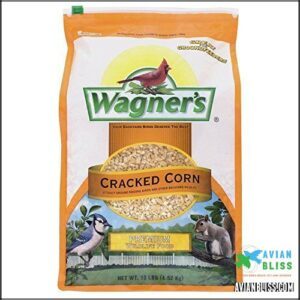
Looking for a budget-friendly way to bring ground-feeders to your yard? Wagner’s Cracked Corn offers exactly that in a convenient 10-pound bag for just $12.98! You’ll attract sparrows, juncos, and doves with this high-energy grain option—perfect for cold months when birds need quick calories.
Scatter it on the ground or use a platform feeder, though heads up: it might draw squirrels and other critters too. Store it properly in a cool, dry place to keep it fresh!
| Best For | Budget-conscious bird lovers who want to attract ground-feeding birds like sparrows, doves, and juncos without spending much. |
|---|---|
| Weight | 10 lbs |
| Item Form | Seed |
| Made in USA | Not specified |
| Primary Ingredient | Cracked corn |
| Target Birds | Ground feeders |
| Feeder Type | Ground feeding |
| Additional Features |
|
- Super affordable at $12.98 for 10 pounds—great value for the amount
- High-energy food that’s especially helpful for birds during cold weather
- Versatile enough to use alone or mix with other seeds for variety
- Will likely attract squirrels and other wildlife you might not want
- Needs proper storage in a sealed container to stay fresh
- Only appeals to ground-feeding species, so you’ll miss out on attracting other birds
8. Wagners Wild Bird Food With Cherry Flavor
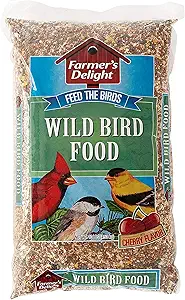
Here’s something different—cherry-flavored bird food! Wagner’s Farmer’s Delight adds a fruity twist to your standard seed mix, combining sunflower seeds, millet, cracked corn, and milo in a 10-pound bag.
The mild cherry scent catches birds’ attention without overwhelming them, and you might notice more finches and songbirds checking it out.
Use it in hopper or tube feeders, and grab the resealable bag to keep everything fresh. At under $15, it’s a fun experiment for attracting cardinals, blue jays, and chickadees!
| Best For | Backyard bird enthusiasts looking for an affordable, cherry-scented seed mix that attracts a variety of songbirds like cardinals, blue jays, and chickadees. |
|---|---|
| Weight | 10 lbs |
| Item Form | Seed |
| Made in USA | Yes |
| Primary Ingredient | Mixed blend |
| Target Birds | Cardinals, blue jays |
| Feeder Type | Hopper or tube |
| Additional Features |
|
- Value-priced 10-pound bag made with high-quality grains in the USA
- Cherry flavor adds unique appeal and may attract more finches and songbirds
- Works well in hopper or tube feeders with a resealable bag to keep seeds fresh
- Strong cherry odor may be off-putting to some users
- Can attract unwanted visitors like squirrels, chipmunks, and raccoons
- Birds may toss out seeds they don’t prefer, leading to some waste
9. Kaytee Wild Bird Food Seed Blend
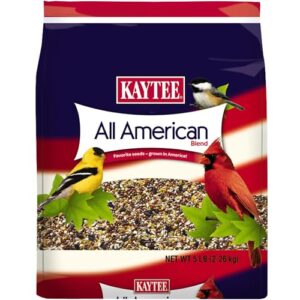
If you’re on a budget, Kaytee Wild Bird Food Seed Blend won’t let you down! This 5-pound bag packs black oil sunflower seeds with a mix of grains and millet—perfect for everyday backyard feeding. You’ll attract cardinals, chickadees, and sparrows without breaking the bank.
It works great in hopper or tray feeders, though some folks notice it has a bit more ground corn than they’d like. Store it in an airtight container to avoid pesky moth infestations, and you’re all set!
| Best For | Budget-conscious bird lovers who want to attract common backyard birds like cardinals, chickadees, and sparrows without spending too much. |
|---|---|
| Weight | 5 lbs |
| Item Form | Chunk |
| Made in USA | Packaged in USA |
| Primary Ingredient | Black oil sunflower |
| Target Birds | Common birds |
| Feeder Type | Hopper, tray, ground |
| Additional Features |
|
- Packed with black oil sunflower seeds that birds love
- Works well in multiple feeder types (hopper, tray, or ground)
- Great price point for everyday feeding
- Contains more ground corn and filler than premium blends
- Can attract moths if not stored in an airtight container
- May not bring in as many specialty bird species
10. Kaytee Wild Bird Seed Mix
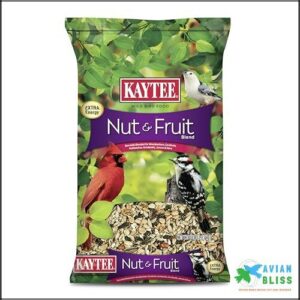
This flagship option from Kaytee delivers solid variety without the cherry extras. You’ll find black oil sunflower seeds, millet, and safflower working together to attract finches, cardinals, and chickadees to your yard. The mix comes in bags from 5 to 40 pounds, so you can choose what fits your feeding setup.
It’s an economical year-round choice, though you’ll want to store it properly in a cool, dry spot. Some birders appreciate the straightforward blend—no frills, just reliable seeds that get the job done!
| Best For | Backyard birders who want a premium, high-energy mix that attracts a wide variety of colorful songbirds without breaking the bank. |
|---|---|
| Weight | 5 lbs |
| Item Form | Chunk |
| Made in USA | Not specified |
| Primary Ingredient | Mixed blend |
| Target Birds | Cardinals, chickadees, woodpeckers |
| Feeder Type | Platform or tube |
| Additional Features |
|
- Attracts diverse species including Cardinals, Chickadees, Nuthatches, and Woodpeckers with its nutrient-rich blend
- High-energy formula with sunflower seeds, peanuts, and dried fruit keeps birds coming back year-round
- Backed by Kaytee’s 150 years of expertise in crafting quality bird food blends
- Higher price point at $13.98 for 5 lbs compared to basic seed mixes
- Can attract insects during storage if not kept in airtight containers in cool, dry conditions
- Birds may go through it quickly due to its appealing ingredients, requiring frequent refills
Tips for Feeding Wild Birds Safely
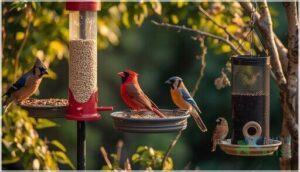
You’ve picked out the perfect seeds, but here’s the thing—how you offer them matters just as much as what you’re offering. Getting the setup right keeps your feathered visitors healthy and coming back for more.
Let’s walk through some practical tips that’ll make your backyard feeding station both safe and successful.
Choosing The Right Bird Feeder
You’ve got plenty of bird seed options—now let’s match them to the right feeders! Tube feeders excel with black oil sunflower and nyjer, while platform designs welcome ground-feeding species. Hopper feeders gradually dispense seed and suit most backyard birds.
Smart feeder placement 10 to 12 feet from shrubs balances safety with quick escape routes, turning your yard into a true bird sanctuary.
Proper Seed Storage and Freshness
Your bird seed won’t stay fresh forever! Keep it in airtight containers at 35 to 40 degrees Fahrenheit with moisture below 10 percent—sunflower hearts and suet degrade fast in heat or humidity.
Rotate stock every few months to prevent mold, and watch for pests that sneak into poorly sealed bins.
Fresh seed means healthier birds and better feeder maintenance tips down the line!
Cleaning and Maintaining Bird Feeders
Dirty feeders spread disease faster than you’d think! Scrub yours with warm soapy water every two weeks—or weekly during humid weather—then rinse thoroughly and let them air dry completely. Use a diluted bleach solution (1:9 ratio) quarterly for deep feeder sanitation, and swap out moldy seeds immediately to keep mold prevention on point.
Choose durable feeder materials like metal that dry quickly and make your bird feeding routine safer!
Creating a Bird-Friendly Environment
Your backyard can become a thriving bird sanctuary with smart habitat design! Combine quality feeders with these wildlife-friendly landscaping strategies:
- Native plant selection provides natural food sources and insects year-round
- Water feature installation with shallow baths attracts diverse species
- Layered vegetation from tall trees to ground cover creates safe nesting zones
- Chemical-free gardening for birds protects both visitors and their prey
- Strategic garden layout tips position feeders away from windows for safety
Frequently Asked Questions (FAQs)
What is the best bird seed for wild birds?
Black oil sunflower seeds reign paramount for wild birds! Their high fat content and thin shells attract cardinals, chickadees, and finches. You’ll see remarkable wild bird diversity at your feeders with this top choice.
Can wild birds have bird seed?
Wild birds thrive on quality seed blends, particularly those rich in fats and proteins like sunflower hearts and nyjer thistle seeds.
Their natural feeding habits align perfectly with what bird feeders offer, supporting ideal bird nutrition.
What is the 5 7 9 rule for bird feeders?
Squirrel deterrents don’t get much simpler than this! The 5-7-9 rule spaces your bird feeder five feet high, seven feet from structures, and nine feet below branches—creating gaps those acrobatic bandits can’t leap across.
Is it okay to feed wild birds birdseed?
Offering birdseed benefits wild birds when you choose quality seeds, maintain clean bird feeders, and understand bird health risks. Proper wildlife feeding promotes bird nutrition while respecting feeding ethics and creating a thriving bird watching sanctuary.
Can I just throw bird seed on the ground?
While ground feeding attracts sparrows and doves, it invites seed spillage, mold, and pests.
Platform feeders offer cleaner bird attraction with proper yard maintenance, combining bird watching joy with smart wildlife feeding and backyard control.
Can I just throw bird seed in the yard?
You can scatter seed directly on clean ground to attract doves, sparrows, and juncos, but use feeders for better hygiene.
Ground spreading risks mold, pests, and weed growth beneath your backyard wildlife sanctuary.
What is the best thing to feed wild birds?
Black oil sunflower seeds top the list for wild bird care. Their high fat content and easy-to-crack shells make them a favorite across species, supporting bird nutrition and energy needs year-round.
What to avoid in wild bird seed?
Skip moldy seeds, toxic fillers like milo, and salted seeds that harm birds. Contaminated feed spreads disease at bird feeders, so choose fresh, high-fat options for safe wildlife feeding!
How do birds find seed feeders?
While you’re busy perfecting feeder placement, birds rely on visual cues like contrasting colors and spatial memory of landmarks.
Seed scents and rustling sounds guide their bird behavior, turning your wildlife-friendly landscaping into a bird-watching paradise!
Can wild birds eat flavored bird seeds?
Wild birds can eat flavored seeds, but most species prefer plain options. Strong additives may mask natural aromas birds use to locate food, and plain seeds reduce mold risk while ensuring better nutrient value.
Conclusion
Think of your feeder as a 24-hour diner where the menu determines your regulars. Stock the right bird seed for wild birds, and cardinals become morning customers while goldfinches claim the evening shift.
You’re not just scattering food—you’re creating a lifeline through harsh winters and exhausting migrations. Every seed you pour strengthens wings, fuels journeys, and turns your backyard into a refuge where wild birds don’t just survive—they thrive.