This site is supported by our readers. We may earn a commission, at no cost to you, if you purchase through links.
A single birdhouse can turn a quiet yard into a lively chorus at dawn. It’s not luck—it’s careful design, smart placement, and the right materials that draw songbirds in and keep them coming back.
Cedar birdhouses with copper guards and well-sized entrances help bluebirds, wrens, and chickadees nest safely, while untreated wood keeps their homes breathable and dry.
If you want your backyard to become a magnet for songbirds, you’ll need more than a pretty box. The best birdhouses for attracting songbirds blend science, craftsmanship, and a touch of habitat magic—here’s how you can make it happen.
Table Of Contents
- Top 10 Birdhouses for Attracting Songbirds
- 1. Sisterbird Cedar Bird House Copper Guard
- 2. STARSWR Natural Wooden Hanging Birdhouse
- 3. LEOSYY Cedar Outdoor Birdhouse Kit
- 4. Wild Wings Cedar Blue Bird House
- 5. Clear View Window Bird House
- 6. Handmade Cedar Garden Birdhouse
- 7. Natural Wooden Hanging Bird House
- 8. GLOPHOK Five Hole Cedar Birdhouse
- 9. Wooden Outdoor Hanging Birdhouse
- 10. Sisterbird Cedar Bluebird Birdhouse Copper Guard
- Choose Songbird-Safe Birdhouse Materials
- Match Birdhouse Size to Species
- Place Birdhouses for Better Nesting
- Create a Backyard Habitat Songbirds Prefer
- Maintain Birdhouses for Long-Term Success
- Frequently Asked Questions (FAQs)
- Do songbirds use birdhouses?
- How to attract songbirds to your backyard?
- How can I deter ants from invading birdhouses?
- What is the best way to prevent mold inside?
- Are birdhouses safe during extreme cold or heat?
- Can I use cameras to monitor nesting activity?
- How do I attract migratory songbirds to my yard?
- Conclusion
Top 10 Birdhouses for Attracting Songbirds
If you’re hoping to welcome more songbirds to your yard, the right birdhouse makes all the difference. Here are ten standout options that offer safe, inviting spaces for nesting.
For even more tips on creating a safe haven, check out this expert guide to birdhouses that attract and protect wrens.
Take a look and see which ones fit your backyard and the birds you want to attract.
1. Sisterbird Cedar Bird House Copper Guard
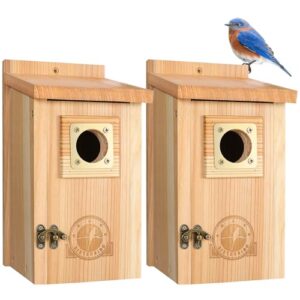
The Sisterbird Cedar Bird House Copper Guard stands out for its practical design and durability. You get a 1½-inch entrance—ideal for bluebirds, wrens, and chickadees—plus a copper guard that deters raccoons and squirrels.
The natural cedar shell resists rot, and the rough interior helps fledglings climb out.
Hinged doors make cleaning straightforward, while pre-drilled holes and supplied hardware simplify assembly.
If you want a safe, weather-resistant nest box that blends into your garden, this model covers all the basics.
| Best For | Families, bird enthusiasts, or anyone looking for a sturdy, easy-to-clean birdhouse that supports native species. |
|---|---|
| Material | Cedar wood |
| Entrance Hole | 1.5 in |
| Outdoor Use | Yes |
| Cleaning Access | Hinged front door |
| Assembly Required | Yes |
| Target Birds | Bluebirds, wrens, chickadees |
| Additional Features |
|
- Durable cedar construction resists weather and decay.
- Copper guard helps keep out common predators.
- Hinged door and pre-drilled holes make cleaning and assembly simple.
- Untreated wood may need extra weatherproofing for long-term use.
- Some buyers report a strong chemical smell out of the box.
- Costs more upfront compared to basic birdhouse options.
2. STARSWR Natural Wooden Hanging Birdhouse
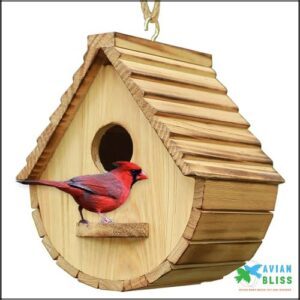
If you’re drawn to natural wood and want a birdhouse that feels at home in any backyard, the STARSWR Natural Wooden Hanging Birdhouse is a solid pick. Its drop-shaped design offers roomy shelter for bluebirds, finches, and cardinals.
A 1.57-inch entrance and rear cleaning door make upkeep easy. You can hang it from a tree or fence using the sturdy hemp rope.
For extra longevity, consider treating the wood—otherwise, its rustic look blends beautifully with garden surroundings.
| Best For | Backyard bird-watchers and nature lovers who want an easy-to-clean, rustic birdhouse for small birds. |
|---|---|
| Material | Untreated wood |
| Entrance Hole | 1.57 in |
| Outdoor Use | Yes |
| Cleaning Access | Rear access door |
| Assembly Required | No |
| Target Birds | Bluebirds, finches, sparrows |
| Additional Features |
|
- Natural wood and drop-shaped design look great in any garden.
- Rear door makes cleaning and maintenance simple.
- Easy to hang with included hemp rope and hardware.
- Untreated wood may not last long outdoors without extra protection.
- Entrance size limits use to small birds only.
- Can sway or rotate in wind if not anchored securely.
3. LEOSYY Cedar Outdoor Birdhouse Kit
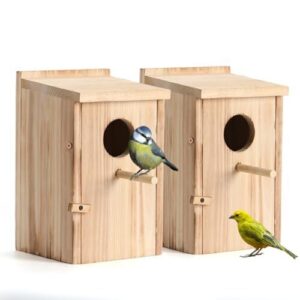
If you want a birdhouse that’s sturdy and simple to maintain, the LEOSYY Cedar Outdoor Birdhouse Kit fits the bill. Made from untreated cedar, it naturally resists rot and insects—no chemicals needed.
The front door swings open for easy cleaning, and drainage holes keep the nest dry. Interior grooves help fledglings climb out, while ventilation gaps regulate temperature.
You’ll find installation straightforward, thanks to pre‑drilled holes and included hardware. This kit offers a reliable shelter for wrens, chickadees, and other small songbirds.
| Best For | Homeowners or bird lovers looking for a low-maintenance, sturdy birdhouse that attracts small backyard birds like wrens and chickadees. |
|---|---|
| Material | Cedar wood |
| Entrance Hole | Small songbird-sized |
| Outdoor Use | Yes |
| Cleaning Access | Swing-open front door |
| Assembly Required | No |
| Target Birds | Bluebirds, wrens, chickadees |
| Additional Features |
|
- Solid cedar construction naturally resists rot and insects without chemicals.
- Easy to clean and install, with a front door that swings open and pre-drilled mounting holes.
- Interior grooves and ventilation provide a safe, comfortable space for fledglings.
- Only suitable for small songbirds, not larger species or hummingbirds.
- Supplied nesting material may not appeal to all birds and might need replacing.
- May require extra weatherproofing in areas with heavy rain or cold winters.
4. Wild Wings Cedar Blue Bird House
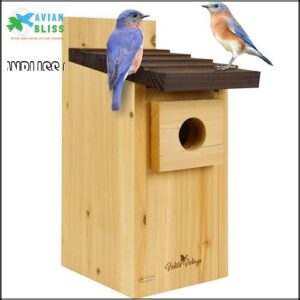
For families looking to welcome bluebirds, tree swallows, or wrens, the Wild Wings Cedar Blue Bird House stands out.
Its cedar wood shell resists rot and insects, while wall and floor vents keep nests cool and dry. A hinged clean-out door lets you check on chicks and clear out old material without hassle.
The built-in predator guard shields fledglings from raccoons and squirrels.
Mount it on a pole or fence, orienting the entrance away from strong winds for the safest, healthiest nesting.
| Best For | Families and backyard birders who want to attract and safely house bluebirds, tree swallows, or wrens. |
|---|---|
| Material | Cedar wood |
| Entrance Hole | Small songbird-sized |
| Outdoor Use | Yes |
| Cleaning Access | Clean-out door |
| Assembly Required | No |
| Target Birds | Bluebirds, swallows, wrens |
| Additional Features |
|
- Durable cedar wood resists rot and insects for long-lasting use.
- Easy access clean-out door makes maintenance simple.
- Predator guard and interior grip surfaces help protect and support fledglings.
- Entrance hole may need reinforcement to prevent squirrel damage.
- Packaging isn’t always sturdy; roof damage during shipping is possible.
- Requires separate mounting hardware if you don’t already have a pole or bracket.
5. Clear View Window Bird House
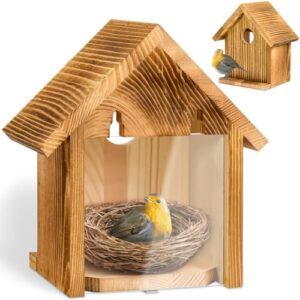
Even with a busy backyard, the Clear View Window Bird House lets you observe nesting birds up close without causing stress. Its transparent acrylic panel offers high-definition views, making it ideal for teaching children or sparking curiosity in adults.
Cedar construction resists decay, while a sloped roof and side ventilation help keep the nest dry and comfortable. The front access door means cleaning is simple and quick.
If you’re looking for a birdhouse that blends education and durability, this model stands out.
| Best For | Backyard bird lovers, families with kids, and anyone who wants an easy way to watch small nesting birds up close for learning or enjoyment. |
|---|---|
| Material | Wood |
| Entrance Hole | Small songbird-sized |
| Outdoor Use | Yes |
| Cleaning Access | Removable panel |
| Assembly Required | No |
| Target Birds | Bluebirds, wrens, chickadees |
| Additional Features |
|
- Transparent acrylic window gives a clear view of nesting activity without opening the house.
- Removable panel makes cleaning and adding seed or nesting material easier.
- Waterproof, corrosion-resistant wood build adds durability for outdoor use.
- Mounting hooks may be unreliable, and some users may find installation frustrating.
- Interior space is fairly small, which may limit which birds will actually use it.
- Birds may avoid the house unless the viewing window is covered for more privacy.
6. Handmade Cedar Garden Birdhouse
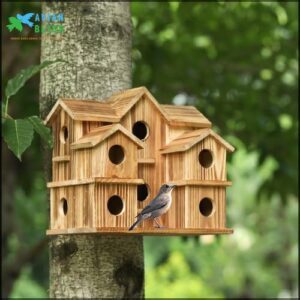
A handmade cedar garden birdhouse gives you a sturdy, natural-looking nest box that fits easily into a backyard landscape. Cedar holds up well outdoors because it resists rot, sheds water, and discourages insects without harsh chemicals.
If you’re curious about the birds that might visit your cedar birdhouse, exploring local bird population monitoring methods can give you insight into which species to expect.
This style works best when it includes a pitched roof, ventilation gaps, drainage holes, and a removable front for cleaning. Look for smooth interior edges and secure joints.
With proper seasonal checks, a well-built cedar box can protect small songbirds safely for many years.
| Best For | Garden owners, casual bird-watchers, and families who want a decorative multi-compartment birdhouse for small birds and simple backyard viewing. |
|---|---|
| Material | Cedar wood |
| Entrance Hole | 1 in (10 holes) |
| Outdoor Use | Yes |
| Cleaning Access | No removable part |
| Assembly Required | No |
| Target Birds | Finches, bluebirds, sparrows |
| Additional Features |
|
- Hand-crafted cedar construction with a waterproof varnish helps it handle rain, wind, and general outdoor use.
- The natural wood finish gives it a simple, rustic look that blends nicely into gardens, patios, and backyard spaces.
- Ten entrance holes and an assembled design make it convenient for hanging and may encourage nesting by smaller bird species.
- The entrance holes and interior compartments may be too small for comfortable nesting, and some birds may not use it.
- Cleaning is harder because it does not include a built-in floor or an easy-access removable roof.
- Quality control seems inconsistent, with some buyers reporting missing dividers, split roofs, or materials that felt lighter than expected.
7. Natural Wooden Hanging Bird House
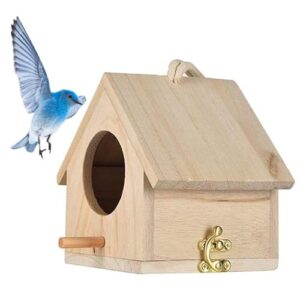
Why choose a natural wooden hanging bird house? It works well as a light, ready-to-hang option for small birds and for gardeners who want a decorative touch. This model comes fully assembled, with a hatch door, metal hanging ring, and side panel for cleaning or crafts.
Still, use it with care. Its light balsa-type wood can split, and the large opening with an exterior perch makes it better as a sheltered feeder or accent piece than a secure nest box.
| Best For | Gardeners, crafters, and casual bird lovers who want a lightweight, ready-to-hang decorative bird house for small birds, seasonal displays, or simple outdoor projects. |
|---|---|
| Material | Untreated wood |
| Entrance Hole | Large opening |
| Outdoor Use | Yes |
| Cleaning Access | Hatch door |
| Assembly Required | No |
| Target Birds | Finches, sparrows, hummingbirds |
| Additional Features |
|
- Fully assembled and easy to hang right away with the attached metal ring.
- Natural wood design looks charming outdoors and can be painted or decorated for crafts.
- Works well as a small sheltered feeder or decorative accent for gardens, balconies, and fairy-garden setups.
- Lightweight balsa-type wood may split if handled roughly or painted too aggressively.
- Large entrance and exterior perch make it less secure as a true nesting box.
- Small interior size limits use to very small birds and light feeding or display purposes.
8. GLOPHOK Five Hole Cedar Birdhouse

If you want one box to welcome several small species, this cedar design stands out. The GLOPHOK birdhouse uses weather-resistant cedar, four ventilation openings, and floor drainage holes, which help keep the nest cavity cooler and drier.
Its five entrances, sized from about 1 inch to 1.5 inches, can suit wrens, chickadees, finches, swallows, and bluebirds.
Still, the compact 9.7-by-5.5-by-7.3-inch body is modest, so inspect the joints and reinforce them if the wood feels loose after long use in the rain.
| Best For | Anyone who wants a simple, attractive birdhouse to attract a variety of small backyard birds and enjoys watching their nesting habits up close. |
|---|---|
| Material | Cedar wood |
| Entrance Hole | Multiple sizes |
| Outdoor Use | Yes |
| Cleaning Access | No removable part |
| Assembly Required | No |
| Target Birds | Bluebirds, finches, wrens |
| Additional Features |
|
- Multiple entrance sizes invite several small bird species at once.
- Made from weather-resistant cedar with good ventilation and drainage.
- Easy, tool-free installation with flexible mounting options.
- Smaller size may not fit larger birds or big broods.
- Some users report flimsy construction that may need reinforcement.
- Durability in harsh weather can vary; may require extra sealing over time.
9. Wooden Outdoor Hanging Birdhouse
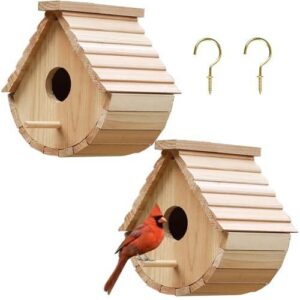
Looking for a birdhouse that blends right into your garden while giving songbirds a safe haven? The Wooden Outdoor Hanging Birdhouse checks those boxes.
With its natural wood shell, sloped roof, and compact size, it’s built for wrens, chickadees, and finches.
The attached rope or chain lets you hang it from a shaded branch or eave, keeping the nest cool.
Just remember, you’ll need to seal the wood and check for moisture since drainage and ventilation aren’t built in.
| Best For | Homeowners who want an easy-to-install, natural-looking birdhouse for attracting small backyard songbirds. |
|---|---|
| Material | Wood |
| Entrance Hole | Small songbird-sized |
| Outdoor Use | Yes |
| Cleaning Access | No removable part |
| Assembly Required | No |
| Target Birds | Bluebirds, finches, cardinals |
| Additional Features |
|
- Blends nicely with garden décor thanks to its natural wood finish
- Simple hanging system works for trees, eaves, or posts
- Sold as a set of two, so you can place them in different spots
- Wood needs sealing before outdoor use for better durability
- No built-in drainage or ventilation, so it requires occasional maintenance
- Interior is a bit small, limiting space for larger bird species
10. Sisterbird Cedar Bluebird Birdhouse Copper Guard
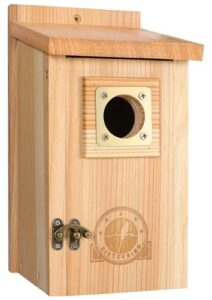
Ever notice how a well-built birdhouse can mean the difference between thriving bluebirds and empty nests?
The Sisterbird Cedar Bluebird Birdhouse with Copper Guard delivers exactly what songbirds need: a 1½-inch entrance, rough cedar for grip, and built-in grooves to help fledglings exit.
Its copper guard shields against predators, while ventilation and drainage keep the nest dry and safe.
Assembly is simple—no extra tools needed.
Mount this box about six feet high on a pole, and you’ll welcome bluebirds season after season.
| Best For | Homeowners, families, or schools looking to support small songbirds like bluebirds with a safe, easy-to-maintain nesting box. |
|---|---|
| Material | Cedar wood |
| Entrance Hole | 1.5 in |
| Outdoor Use | Yes |
| Cleaning Access | Swing-open front panel |
| Assembly Required | Yes |
| Target Birds | Bluebirds, wrens, chickadees |
| Additional Features |
|
- Copper guard and no perch help keep predators and non-target birds out.
- Easy assembly with pre-drilled holes and included tools—no extra tools needed.
- Front panel swings open for quick cleaning and reuse each season.
- Cedar is untreated and may need sealing or oiling for longer durability.
- Some parts are glued, so overtightening screws can cause wood splitting.
- Mounting hardware for poles or anchors may need to be purchased separately.
Choose Songbird-Safe Birdhouse Materials
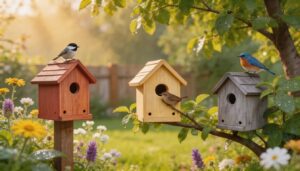
Choosing the right materials makes all the difference for songbird safety and comfort. You’ll want a birdhouse that stands up to weather and keeps nests healthy season after season.
Here’s what to look for when picking an enclosure that works for both you and your backyard birds.
Cedar Vs Pine for Outdoor Durability
When you’re weighing natural cedar or pine construction for birdhouses, cedar’s natural oil barrier stands out—it resists moisture and insects with impressive weather resistance. Pine offers cost efficiency but relies on treatment longevity for outdoor durability. Cedar’s dimensional stability means less warping, so weatherresistant cedar is ideal if material durability and weather resistance matter most in choosing appropriate birdhouse materials.
Why Untreated Wood is Best
Selecting natural wood over synthetic materials pays off for both birds and your wallet. Untreated cedar or pine construction offers moisture regulation and thermal stability, keeping nest interiors dry and comfortable.
Its eco-friendly lifecycle means no chemical residues, while wood grain camouflage blends the box into the landscape. Low cost DIY repairs are easy, making natural wood the practical choice.
Non-toxic Finishes and Natural Colors
You want finishes that protect birds and show off natural wood textures. Earthtone Stains and Natural Pigment Dyes keep colors muted—think browns and greens that blend with your garden.
Linseed Oil Finish offers a breathable, eco-friendly option. Low-VOC Sealants and Breathable Non-toxic Coatings won’t trap moisture or fumes.
Try:
- Linseed oil
- Beeswax blends
- Mineral-based stains
- Waterborne clear finishes
Ventilation Holes for Temperature Control
After choosing natural finishes, pay close attention to birdhouse ventilation.
Well-placed 1/8 to 1/4 inch holes near the roof enable Airflow Balancing and temperature regulation in nests. Vent Placement Strategies, such as paired vents and Adjustable Vent Flaps, support Seasonal Vent Tuning.
This Heat Mitigation Design keeps humidity controlled and prevents overheating, so your birds stay comfortable year-round.
Drainage Holes for Dry Nesting Floors
Even with the best birdhouse design principles, a nest floor can stay damp without proper drainage holes. For dry nesting, use four or five 1/4- to 3/8-inch holes at floor corners. Combine these with:
- Floor Slope Design to guide water toward holes
- Hole Reinforcement Strategies for lasting strength
- Simple Drain Cleaning Methods after each season
This boosts moisture escape efficiency and promotes healthy broods.
Rust-resistant Hardware and Reinforced Joints
Because outdoor birdhouses face constant moisture and weather swings, you need rust‑free stainless steel brackets, galvanized fasteners, and powder‑coated hardware to keep everything solid. Add corner gusset reinforcement and titanium joint connectors for strength that lasts.
Use copper guards, metal pole baffles, and metal hooks to block predators.
Hinged panels make cleaning easy, while these materials prevent rust and warping year after year.
Match Birdhouse Size to Species
Every bird species looks for a different kind of home, and the size of your birdhouse makes all the difference. Getting the entrance and interior just right means you’ll welcome the birds you want—and keep out those you don’t.
Here’s what you need to know to match each birdhouse to its perfect guest.
Entrance Hole Sizes for Wrens and Chickadees
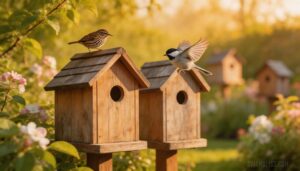
Did you know the entrance hole size can make or break a nest’s safety? For wrens and chickadees, an Ideal Hole Diameter of 1 1/8 to 1 1/4 inches offers strong Predator Exclusion and matches Species Tolerances.
Adjust seasonally if raccoons are active.
Place holes about six inches above the floor—this Ideal placement height for birdhouses keeps nestlings safer.
Best Dimensions for Eastern Bluebirds
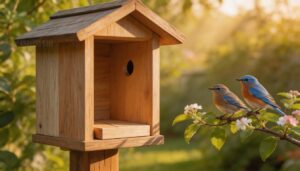
Want bluebirds to settle in your yard? The right birdhouse dimensions make all the difference.
For eastern bluebirds, follow these specifics:
- Interior floor: 4×4 inches for floor insulation
- Box Depth: 6–7 inches keeps the nest stable
- Entrance Height: 1.25 inches specific entrance dimensions
- Side Wall Thickness: ¾ inch for weather protection and roof overhang
Box Sizing for Swallows and Similar Songbirds
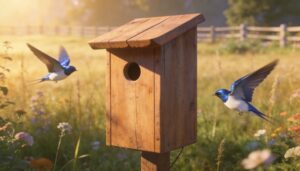
Think of a swallow’s nest as a custom home—details matter.
For tree swallows and similar songbirds, aim for a box height range of 9–12 inches, with a roof pitch angle of 12–18 degrees and a side wall thickness of ¾ inch.
Entrance hole size should be 1¼–1½ inches, placed high for safety, with a 1–2 inch roof overhang.
Interior Floor Space and Nesting Depth
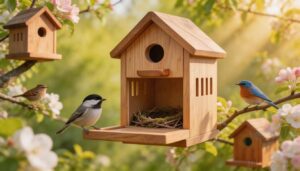
Picture a birdhouse as a nursery—room and depth make all the difference.
Floor Area Size matters: wrens and chickadees thrive with 5×5 inches; bluebirds need 6×6. Nesting Depth Guidelines suggest 8–12 inches for bluebirds; 6–9 for smaller species.
Entrance-Floor Gap of 7–9 inches deters predators. Floor Lip Elevation and Cup Placement keep nestlings safe in a ventilated nesting space.
Limiting Larger Birds and Invasive Species
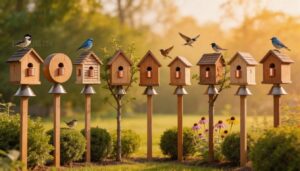
Small songbirds thrive when you match entrance hole sizes to their needs—1⅛ to 1½ inches keep out starlings and woodpeckers.
Install predator guards and use Exclusion Barrier Strategies like copper extenders for added defense. Pair these with Habitat Modification Tactics: trim dense shrubs, maintain open flight paths, and practice Seasonal Birdhouse Rotation, plus ongoing Invasive Species Monitoring and Legal Removal Protocols when needed.
Multi-hole Designs for Small Cavity Nesters
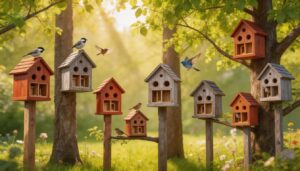
After you’ve blocked out larger birds, multihole birdhouse designs for multiple species let you welcome more songbirds at once. Compartment Partitioning with Modular Dividers keeps nests separate, while Entrance Spacing—two to three inches apart—reduces squabbles.
Rain Shedding Design, proper Weight Distribution, and species-specific entrance hole sizes support cavity nesting preferences.
Mount at ideal placement height for birdhouses for best results.
Place Birdhouses for Better Nesting
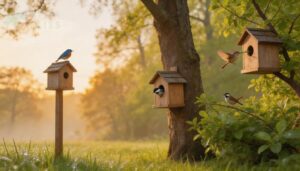
Where you place a birdhouse can make all the difference for nesting songbirds. Height, direction, and surroundings all shape which birds settle in and how safe their nest stays.
Let’s look at the best ways to mount and position your birdhouse for success.
Ideal Mounting Heights for Songbirds
While you’re mounting birdhouses, species-specific heights matter for both safety and comfort. For instance, wrens thrive at 5–10 feet, bluebirds at 4–6 feet, and swallows prefer 8–12 feet.
Adjust heights seasonally for predator avoidance and microclimate temperature effects. Follow these placement guidelines for ideal height and orientation:
- Mount them 4–6 feet high.
- Avoid canopy-level height.
- Use adjustable hardware.
Best Entrance Direction for Sun Exposure
Once you’ve set the right height, focus on direction. An eastfacing entrance gives songbirds early sun and keeps the nest cooler by afternoon—an East Entrance Benefit. South Sun Warmth works in colder zones, but watch for overheating. North Coolness limits glare but slows drying.
For most backyards, facing southeast offers the best balance. Try a Mixed Orientation Strategy for varied species.
optimal house exposure helps you align birdhouse entrances with the sun’s path for better comfort.
Positioning Away From Prevailing Winds
If you want a Turbulence-Free Zone for nesting, place your birdhouse facing away from prevailing winds. Try Leeward Positioning behind a Hedge Windbreak, and angle the entrance downward for extra draft protection. A Roof Overhang Shield helps too.
Ideal height and orientation for birdhouses means mounting at least five feet up, facing southeast, and keeping a 60-foot distance from feeders.
Spacing From Feeders and Other Boxes
Balancing bird feeder placement with nest boxes means keeping a Feeder Box Buffer of at least 60 feet. This Predator Buffer Zone helps reduce nest raiding and keeps territory overlap distance in check.
Evaluating birdhouse placement distance from feeders and between boxes—25 to 100 feet, depending on species—lets you make seasonal spacing adjustments and maintain clear Flight Path Clearance for safe, stress‑free nesting.
Clear Flight Paths in Front of Entrances
Think of the entrance like a runway — birds need a clear, unobstructed path to land safely. Keep your Approach Corridor Width at least 1.5 meters wide, with an Obstacle-Free Zone of about one meter directly below.
Trim back ground cover, remove stray ferns or rocks, and use natural wood tones for Visibility Contrast. A small Front Edge Overhang shields the opening from rain, keeping arrivals smooth and stress‑free.
Pole, Tree, and Hanging Placement Options
Every yard tells a story—yours should start with the right support. Pole-mounted bird houses thrive with Pole Base Anchors and Anti-Sway Stabilizers, keeping them steady at the ideal placement height for birdhouses (about 4–6 feet). Hanging birdhouses need Hanging Hook Hardware and short chains. For trees, use Tree Thimble Straps and Adjustable Mount Brackets to protect bark and follow birdhouse placement guidelines.
- Pole Base Anchors keep pole-mounted bird houses upright in storms
- Tree Thimble Straps secure boxes without harming bark
- Hanging Hook Hardware provides safe, sway-free hanging birdhouses
- Adjustable Mount Brackets let you fine-tune direction for sunlight or wind
- Anti-Sway Stabilizers add safety for exposed or windy spots
Create a Backyard Habitat Songbirds Prefer
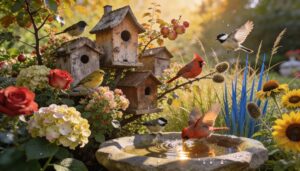
If you want songbirds to settle in your yard, the right habitat makes all the difference. Small changes—like planting native shrubs or adding a bird bath—can turn your space into a safe haven.
Here’s what you can add to help birds nest, feed, and thrive right outside your door.
Native Shrubs and Trees Near Birdhouses
Did you know dense native shrubs like Arrowwood Viburnum can turn a birdhouse into a safe haven? When you combine Shrub Species Selection with Tree Canopy Benefits, you regulate microclimate temperature and shield fledglings.
Layered native landscaping, placed near water sources, improves birdhouse placement and orientation.
| Shrub Species | Height (ft) | Density Effect |
|---|---|---|
| Viburnum | 6–8 | Thick cover |
| Hazelnut | 8–12 | Secure nests |
| Dogwood | 6–12 | Wind shield |
Berry-producing Plants That Support Nesting Birds
Want to see your birdhouse buzzing with songbirds? Berry Species Selection is key.
Native berry bushes—like serviceberry and beautyberry—offer Seasonal Fruit Production, attracting thrushes and waxwings.
For best habitat enrichment, choose bird-friendly plants that thrive with proper Soil Moisture Needs and Sunlight Requirements. Try these:
- Serviceberry
- Chokeberry
- Beautyberry
- Elderberry
- Viburnum
Bird Baths and Moving Water Features
After planting berry-rich shrubs, your next step is adding a bird bath or water fountain. Birds flock to gentle, moving water—especially when you adjust flow rate to 0.5–1.5 gallons per minute.
Solar-powered pumps keep things simple, while shaded placement and regular cleaning are top algae prevention techniques. Integrating native plants and water features near your birdhouse boosts songbird visits and keeps water temperature safe.
Safe Nearby Food Sources for Adults
While a birdbath draws thirsty visitors, nearby food sources keep songbirds close.
Local Berry Harvest and Wild Greens Foraging offer natural sugars and minerals. Unsalted Nut Supply and Probiotic Yogurt Snacks from trusted farms add healthy fats and gut support. Whole Fruit Picks, well-placed seed feeders, and thoughtful bird feeder placement all boost nutrition, especially when kept near a clean water source.
Layered Vegetation for Shelter and Insects
Pairing native plants and water sources with Shrub Layering forms a living shield—protecting nest boxes from predators and harsh winds.
Ground Cover Moisture helps regulate microclimate, keeping nests dry and cool.
Insect Microhabitat thrives in layered vegetation, fueling an insect diet for chicks.
Microclimate Regulation and Predator Visual Barriers from bird-friendly plants support eco-friendly gardening and backyard habitat restoration for songbirds.
Chemical-free Landscaping Around Nest Boxes
After building a microhabitat with layered plants, you can boost bird safety by using Compostable Mulch and Worm Casting Fertilizer around your nest boxes. Alfalfa Meal feeds nearby native plants and water sources, supporting insect prey.
Choose a Natural Stone Basin with a Solar Water Pump for clean water.
Avoiding chemical pesticides keeps your eco-friendly gardening in harmony with natural wood and ideal placement height for birdhouses.
Maintain Birdhouses for Long-Term Success
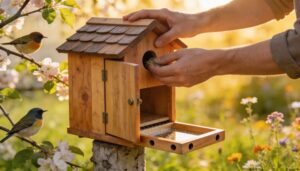
Keeping your birdhouses in good shape means more birds return each season. A few smart features make cleaning and upkeep much easier for you.
Here’s what to look for when choosing birdhouses built for long-term success.
Annual Cleaning After Breeding Season
Did you know annual cleaning after breeding season is as necessary as choosing the right box? A reliable Cleaning Schedule prevents parasites and disease, while Protective Gear keeps you safe. Use a bird-safe Disinfectant Choice, let boxes air out with a proper Drying Method, and follow an Inspection Checklist. These steps anchor strong maintenance and cleaning routines for birdhouses every year.
- Remove nesting debris and dust thoroughly
- Wear gloves and a mask for safety
- Scrub with hot water and bird-safe disinfectant
- Rinse, then air dry completely
- Inspect and repair any cracks or rust
Hinged Panels and Easy-access Doors
When you’re aiming for easy maintenance and safety, hinged panels and easy-access doors make all the difference. Magnetic Catch Systems, Removable Cleaning Trays, and Flush Door Design enable quick cleaning and nest checks without disturbing birds. These features provide secure closure, rapid debris removal, and predator protection, especially when positioned at the ideal height and orientation for birdhouses.
Quiet Hinge Lubrication and Weatherproof Door Gaskets ensure smooth operation and a dry interior, maintaining a comfortable environment. Combined with the ideal height and orientation, these elements further simplify your maintenance routine, ensuring a hassle-free experience.
| Feature | Benefit | Example Use |
|---|---|---|
| Magnetic Catch Systems | Secure closure | Front door, easy to clean |
| Removable Cleaning Trays | Quick debris removal | Rear ventilation door |
| Flush Door Design | Predator protection | Ideal height and orientation for birdhouses |
Sanitizing Interiors and Drying Thoroughly
Even after annual cleaning, moisture and residue can linger in hidden corners. To keep your birdhouse easy to clean and safe, follow these steps:
- Remove debris before EPA Disinfectant Use.
- Apply Non-toxic Cleaners with ventilation holes open for Ventilation During Drying.
- Use fans and humidity control for thorough drying.
- Monitor moisture—only reassemble when all parts are dry.
Predator Guards, Baffles, and Hole Protectors
Predator protection isn’t just an add-on—it’s your birdhouse’s insurance policy. Use galvanized or powder-coated steel for Guard Material Choices, and set baffles 6 inches below the entrance (Baffle Installation Height).
For small songbirds, Hole Protector Sizing matters—choose metal shields sized for 28–32 mm.
Predator Guard Maintenance keeps Integrated Guard Systems tight, blocking raccoons and squirrels season after season.
Replacing Damaged Wood and Resealing Joints
A birdhouse is only as strong as its weakest joint. Smart Material selection and sustainability in birdhouse construction mean longer birdhouse durability, season after season.
A birdhouse lasts only as long as the strength and care built into it
When you replace damaged panels, focus on Grain Matching and careful Surface Preparation—cut back to sound natural wood and fit new pieces tightly. Use Epoxy Bonding for strength, then apply a Flexible Sealant with Backer Rod Usage for weatherproofing.
Monitoring Occupancy and Nest Success
How do you know your birdhouse is truly working?
Occupancy Tracking lets you spot which cavities attract songbirds year after year, while careful Nest Survival Rate checks—using Observer Protocols—reveal if nestlings thrive or face Predation Monitoring issues. Monitoring birdhouse occupancy over years, paired with Data Visualization, guides placement tweaks for greater songbird nesting success and improved species compatibility.
Frequently Asked Questions (FAQs)
Do songbirds use birdhouses?
Songbirds often use cavity nesting boxes, choosing those with the right entrance hole size, ideal height, and orientation for birdhouses, and climate influence.
Human observation methods confirm species preference patterns and seasonal use patterns, boosting songbird nesting success.
How to attract songbirds to your backyard?
Imagine your yard as a welcoming inn: native shrubs, wildflower mix, bird-friendly fencing, and gentle lighting set the mood.
Add fresh water, reduce noise, and mimic natural cavity spaces—these details invite songbirds to settle and thrive.
How can I deter ants from invading birdhouses?
To keep ants out, install an ant moat and use smooth pole surfaces.
Sprinkle cinnamon deterrent or try a vinegar spray near the base.
Monthly inspection, copper guard, ventilation holes, drainage holes, seasonal cleaning, and a cleanout door help too.
What is the best way to prevent mold inside?
To prevent mold inside, Maintain Low Humidity with ventilation holes and drainage holes.
Install Exhaust Fans nearby.
Repair Water Leaks quickly.
Use Moisture Absorbers.
Apply Antimicrobial Sealant, and prioritize seasonal cleaning and weatherproofing for lasting moisture control.
Are birdhouses safe during extreme cold or heat?
Birdhouses can be safe in extreme cold or heat if you use insulation layers, reflective roofing, seasonal lining, and proper heat shielding.
Weatherproofing, weather resistant finishes, ventilation holes, and cold protection all support temperature regulation and climate resilience.
Can I use cameras to monitor nesting activity?
Worried about disturbing nesting birds?
With careful camera mounting techniques and solar-powered cameras featuring infrared night vision, you can monitor bird species occupancy in nest boxes, manage battery life, and uphold data privacy ethics without affecting songbirds’ natural behavior.
How do I attract migratory songbirds to my yard?
To attract migratory songbirds, plant native shrubs, reduce light pollution, and offer shallow water features.
Use acoustic monitoring or bird call playback to track migration timing cues.
Citizen science involvement helps you adjust seasonal placement and ideal height for birdhouses.
Conclusion
Sweet serenades surround you when songbirds settle into their new homes. By selecting birdhouses, like those mentioned, and thoughtfully placing them, you’ll create a haven for these melodic creatures.
Remember, the best birdhouses for attracting songbirds blend seamlessly into their surroundings. Choose wisely, and your yard will become a vibrant sanctuary, teeming with life and song.
Your efforts will be rewarded with a symphony of song, and a deeper connection to nature through birdhouses for attracting songbirds.