This site is supported by our readers. We may earn a commission, at no cost to you, if you purchase through links.
Most budgie owners assume a seed mix from the pet store covers nutritional needs—until their bird develops brittle feathers, lethargy, or worse. Seeds alone lack critical vitamins, amino acids, and minerals that budgies require for their high-metabolism physiology.
Wild budgies in Australia forage across diverse grasslands, consuming native grasses, sprouted grains, leafy greens, and seasonal vegetation that commercial seed blends can’t replicate. Your budgie’s ancestors evolved to thrive on complex carbohydrates, lean proteins, and fresh plant matter—not fatty sunflower seeds and millet.
A budgie species-specific diet honors their unique digestive system and metabolic demands, preventing deficiencies that shorten lifespan and compromise quality of life. Building this foundation starts with understanding which nutrients matter most and how daily food choices shape long-term health outcomes.
Table Of Contents
Key Takeaways
- Seed-only diets lack essential vitamins A and D, amino acids, and minerals that budgies need, leading to brittle feathers, lethargy, liver disease, and shortened lifespan—pellets should form 60–70% of daily intake with fresh vegetables and limited seeds.
- A proper budgie diet requires precise nutrient ratios: 12% protein with specific amino acids, omega-3 fats to prevent hepatic lipidosis, 1,000-3,000 IU/kg vitamin A from dark leafy greens, and calcium paired with vitamin D for bone health.
- Toxic foods that cause serious illness or death in budgies include avocado (persin causes heart failure), fruit seeds and pits (cyanide), chocolate (triggers seizures), onions and garlic (destroy red blood cells), and dairy products (cause digestive crises).
- Daily feeding practices matter as much as food choice: wash all produce thoroughly, replace water twice daily, sanitize bowls daily, provide cuttlebone and mineral blocks for calcium and beak health, and consult an avian veterinarian for periodic nutrition reviews.
Essential Nutrients in a Budgie’s Diet
Your budgie’s body runs on a precise mix of nutrients, just like a finely tuned engine needs the right fuel. Without the proper balance of proteins, fats, vitamins, and minerals, even the best intentions can leave gaps in your bird’s health.
That’s why understanding the best foods for bird health helps you build a diet that truly supports your budgie’s wellbeing.
Your budgie’s body runs on a precise mix of nutrients—without proper balance, even the best intentions can leave gaps in their health
Let’s break down the three foundational nutrient categories that keep your budgie thriving.
Protein, Carbohydrates, and Healthy Fats
Your budgie’s energy comes down to three powerhouses: protein, carbohydrates, and fat. Understanding their balance protects your bird from liver disease and deficiency.
Getting the ratios right takes more than guesswork—avian nutrition and wellness guidance helps you tailor your budgie’s diet to their specific needs.
- Protein sources should provide about 12 percent of the diet, emphasizing amino acid needs like lysine and methionine
- Carbohydrate balance from whole grains delivers sustained energy without excess
- Fat metabolism requires omega-3s to prevent hepatic lipidosis
- Nutrient interactions between these macronutrients determine your budgerigar’s long-term health
A balanced diet is essential, and learning about budgie food options can help you make informed decisions.
Vitamins and Minerals Budgies Need
Beyond protein and carbs, your bird’s body runs on micronutrients that shape everything from feather color to heart rhythm. Vitamin A bolsters vision and immunity—aim for 1,000-3,000 IU per kg through dark leafy greens and fortified pellets.
Mineral balance matters: calcium sources like cuttlebone pair with vitamin D for strong bones, while trace selenium benefits muscle function and iron supplements bolster oxygen transport in budgerigar nutrition.
Importance of Water Intake
Water quality and hydration needs power every cell in your budgie’s body. Fresh, clean drinking behavior aids digestion, feather growth, and kidney function in budgerigar nutrition. Watch for dehydration signs:
Poor water intake can worsen if you’re unknowingly feeding your budgie foods that disrupt hydration or cause digestive distress.
- Droppings that look dry or unusually thick
- Lethargy or reduced activity during play
- Flaky skin around the cere or feet
- Decreased appetite despite food availability
- Sticky mucous membranes inside the beak
Fluid intake changes with heat, diet, and stress—factors that shape avian health and pet bird nutrition daily.
Recommended Daily Foods for Budgies
Your budgie’s daily menu should be as varied and intentional as your own. Think of it as building a plate where each component fulfills a specific nutritional purpose—pellets for a balanced foundation, vegetables for vitamins, and small amounts of seeds for healthy fats.
Pairing a thoughtful diet with enrichment and regular vet visits can significantly extend your budgie’s lifespan, often reaching 10–15 years or more.
Let’s break down what should go into your budgie’s bowl every single day.
High-Quality Pellets as a Staple
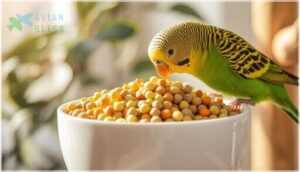
Think of pellets as your budgie’s nutritional insurance policy—formulated diets deliver balanced protein (12–18%) and fat (3–7%) in every bite. Unlike seed-only regimens, high-quality pellets provide consistent vitamin A, D3, calcium, and trace minerals your budgerigar needs for healthy plumage and beak health.
You’ll notice the difference: stable weight, vibrant feathers, and fewer nutritional gaps when pellets form 60–70% of their daily intake.
Fresh Vegetables and Safe Fruits

Parakeets thrive when you offer a rainbow of fresh vegetables alongside controlled fruit portions. Leafy greens like spinach and kale deliver calcium and iron—cornerstones of bird nutrition—while carrots, broccoli, and bell peppers round out their veggie prep needs. For fruit varieties, stick to apple slices (seeds removed), pear, and berries 1–2 times daily, balancing nutrient intake with natural sugars.
- Wash all fresh fruits and vegetables thoroughly before serving
- Remove seeds, cores, and pits to prevent choking hazards
- Offer bite-sized pieces 2–3 times weekly for ideal digestion
- Limit citrus fruits due to acidity concerns in sensitive birds
- Rotate produce regularly to maintain interest and nutrient balance
Limited Seeds and Whole Grains
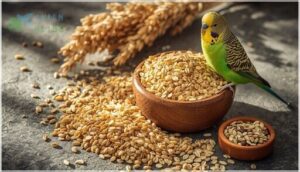
Seeds shouldn’t dominate your parakeet’s diet—they’re calorie-rich but lack calcium and vitamin A. Aim for 10–15% seed portion control in your bird food rotation, balancing limited seed diets with whole grain benefits like quinoa and barley.
Grain rotation strategies support digestive health, while seed-free enrichment through foraging toys keeps minds active. Pellets remain your foundation for consistent nutrient delivery.
| Grain Type | Preparation | Frequency |
|---|---|---|
| Quinoa | Rinse, cook plain | 2×/week |
| Brown rice | Steam without salt | Weekly |
| Barley | Soak, serve small portions | Weekly |
| Oats | Rolled, uncooked | 2×/week |
| Millet spray | Limit to training reward | 1×/week |
Weekly Feeding Rotation and Variety
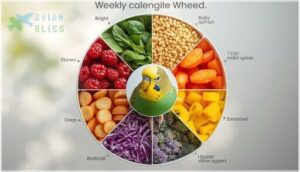
Your budgie thrives on variety, and rotating fresh foods throughout the week keeps mealtime interesting while covering all nutritional bases. A structured rotation prevents boredom and ensures your bird gets a full spectrum of vitamins, minerals, and antioxidants.
Here’s how to build a practical weekly menu, introduce new foods without digestive upset, and use seasonal options to enrich your budgie’s diet.
Sample Weekly Menu Ideas
A well-planned rotation promotes bird nutrition and health while keeping your budgie interested in meals. Weekly meal planning ensures nutrient balance and dietary variety that meets the dietary needs of birds effectively.
- Monday: High-quality pellets plus kale and shredded carrots deliver iron and vitamin A
- Tuesday: Pellets with apple slices (seeds removed) and bell peppers for antioxidants
- Wednesday: Sprouted millet mixed with broccoli florets for enzymes
- Thursday: Pellets alongside cucumber and parsley for hydration
- Friday: Fresh food rotation with berries and cooked quinoa
This parakeet diet framework balances pellets, fruits, and vegetables for menu customization.
Introducing New Foods Safely
Your budgie’s digestive health depends on a gradual shift when you introduce fresh fruits and vegetables. Mix 75 percent current food with 25 percent new items for three to seven days, preventing food allergies and upset. Monitor droppings daily—the dark fecal portion confirms adequate intake during safe introduction.
This structured approach aids nutrient balance in your parakeet diet while meeting the dietary needs of birds and ensuring proper nutrition for birds. A well-planned avian nutrition guide is essential for maintaining your budgie’s overall health.
Seasonal and Enrichment Foods
Summer melon and cucumber boost hydration when temperatures climb, while cooler months call for easily digestible pellets that prevent weight gain.
Fresh herb options like basil and mint alongside sprouted seed benefits—higher B vitamins through germination—add variety to your bird’s nutritional requirements.
Seasonal fruit rotation, limited to two or three weekly servings, delivers enrichment and food safety without excess sugar.
Foraging food ideas using dandelion bunches encourage natural pecking behavior while meeting dietary supplement needs through fresh foods, fruits, and vegetables.
Foods to Avoid for Budgie Health

Knowing what not to feed your budgie is just as important as knowing what they should eat. Some foods that seem harmless—or even healthy for us—can cause serious illness or death in these small birds.
Let’s look at the specific items you need to keep away from your budgie’s cage and why they’re dangerous.
Toxic Fruits and Vegetables
Certain fresh foods can turn deadly in your budgie’s bowl. Avocado toxicity tops the danger list—its persin causes heart failure within hours.
Remove all fruit seed risks before serving apples or cherries; those pits contain cyanide exposure threats. Green potato parts bring nightshade poisoning, while rhubarb leaves create oxalate hazards that rob calcium.
These dietary balance mistakes aren’t worth the gamble with your bird’s life.
Unsafe Human Foods and Additives
Your kitchen cabinet holds threats beyond produce—chocolate’s methylxanthines trigger seizures and cardiac arrest in minutes. Caffeinated drinks overstimulate tiny hearts.
Onions and garlic destroy red blood cells, causing fatal anemia. Dairy products lack the lactase enzyme budgies need, creating painful digestive crises.
Salty chips and processed meats strain kidneys while artificial sweeteners like xylitol crash blood sugar levels. These human food risks demand absolute avoidance.
Risks of Seed-Only Diets
Many owners think seed-heavy diets are natural, yet commercial mixes lack essential vitamins A and D—triggering malnutrition effects and obesity risks. Seed toxicity isn’t the issue; nutrient deficiencies are. Without proper pellets and vegetables, your budgie faces liver disease and shortened lifespan.
Avian nutrition science shows seed-only feeding causes fatty deposits in hepatocytes, weakening immunity and bone health. Balance matters more than tradition.
Feeding Practices and Environmental Factors
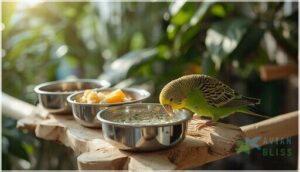
Feeding your budgie the right foods is only half the equation—how you prepare and offer those foods matters just as much. Clean bowls, fresh supplements, and the right environment can prevent illness and support long-term health.
Let’s cover three essential practices that’ll help your budgie thrive.
Proper Food Prep and Cleanliness
Hygiene in your budgie’s feeding routine isn’t just good practice—it’s the invisible shield protecting your bird from bacterial infections and foodborne illnesses that can turn serious fast. Here’s what proper food handling and cage sanitation look like in practice:
- Wash fresh fruits and vegetables thoroughly before food preparation to remove pesticides and contaminants that compromise budgie nutrition.
- Replace water twice daily to maintain water quality and prevent bacterial growth in feeding utensils.
- Sanitize food bowls daily with hot, soapy water, ensuring complete bowl cleaning between feedings.
Use of Cuttlebone and Mineral Blocks
Beyond clean dishes and fresh water, your budgie needs two simple tools that quietly support bone strength and beak health every single day. Cuttlebone benefits go beyond calcium supplements—it’s dietary enrichment that doubles as beak conditioning. Mineral blocks supply phosphorus, iodine, and trace elements your seed mix won’t provide, meeting core nutrient requirements in avian nutrition.
Mount one cuttlebone and one mineral block at perch height where your bird can rasp them freely. Replace when soiled or nearly gone—these dietary supplements work best as part of balanced nutrition, not miracle cures. If your budgie ignores or devours them obsessively, check with your avian vet.
| Supplement | Primary Function |
|---|---|
| Cuttlebone | Calcium source for skeletal health |
| Mineral Block | Multi-mineral support and beak wear |
| Liquid Calcium + D3 | Enhanced absorption during breeding |
| Kelp-Based Block | Iodine and trace mineral delivery |
| Charcoal Block | Digestive aid and mineral carrier |
Consulting Avian Veterinarians for Diet
Even experienced owners benefit from periodic veterinary nutrition reviews to refine diet planning and catch hidden deficiencies early. Board-certified avian veterinarians assess body condition, compare your current feeding against evidence-based guidelines, and tailor nutrition counseling to your budgie’s life stage.
During wellness visits, they monitor weight trends, recommend pellet-to-fresh-food ratios, and provide veterinary guidance on supplements—ensuring your bird health and wellness plan stays as individual as your feathered companion.
Frequently Asked Questions (FAQs)
Can budgies eat sprouted seeds every day?
Sprouting interest in seeds? Germinated millet and buckwheat pack extra B vitamins and amino acids, but you shouldn’t offer them daily.
Veterinarians recommend sprouted portions just two to three times weekly to maintain balanced Budgie Nutrition and prevent seed-heavy imbalances.
How much water does a budgie need daily?
Your budgie needs approximately 1 teaspoon (5 ml) of fresh water daily, though this varies with diet, temperature, and activity level. Watch for dehydration signs like sunken eyes or lethargy.
Are there specific foods for molting budgies?
When your budgie molts, does its diet need a boost? Yes—feather regrowth demands extra protein sources like cooked egg, plus omega fatty acids from flax, and vitamin supplements supporting healthy pellets-based nutrition during molting.
Can budgies share food with other bird species?
While budgies and other small birds can eat some similar foods, sharing dishes isn’t recommended. Disease transmission, nutritional mismatches, and aggression risks make separate feeding stations the safest practice for mixed flocks.
Do baby budgies need a different diet?
Yes—chicks rely on protein-rich crop milk, then hand-rearing formulas with elevated calcium for skeletal growth. The weaning process introduces soft solids gradually while monitoring weight, unlike adult parakeet care and feeding focused on balanced maintenance nutrition.
Conclusion
Think of your budgie’s body as a finely tuned engine—premium fuel keeps it running smoothly for years, while cheap shortcuts cause breakdowns. A budgie species specific diet isn’t about idealism; it’s about consistent, informed choices that mirror their evolutionary blueprint.
Fresh vegetables, quality pellets, and limited seeds create the foundation. Your veterinarian partners with you to fine-tune portions and address individual needs.
Small daily decisions compound into a vibrant, thriving companion who rewards your effort with years of joyful companionship.