This site is supported by our readers. We may earn a commission, at no cost to you, if you purchase through links.
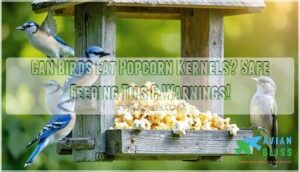 You can offer popcorn kernels to birds, but preparation matters.
Raw kernels are too hard and could cause choking, so you’ll need to either soak them in water until soft or air-pop them without salt, butter, or seasonings.
Birds enjoy this crunchy treat because it provides iron and calcium, but moderation is key – think of it as bird candy.
Popcorn shouldn’t replace their main diet of seeds, fruits, and natural foods.
Most backyard birds can handle small pieces of plain, air-popped corn just fine.
The secret lies in knowing which preparation methods work best for different bird species.
Table Of Contents
- Key Takeaways
- Birds Eating Popcorn
- Can Birds Eat Kernels
- Preparing Popcorn Safely
- Benefits of Popcorn Treats
- Feeding Popcorn Correctly
- Types of Popcorn Allowed
- Frequently Asked Questions (FAQs)
- Can birds eat popcorn?
- Can birds eat cracked corn?
- Can birds eat unpopped corn seeds?
- Can birds eat popped kernels?
- Can birds eat microwave popcorn?
- What happens if a bird eats too much popcorn?
- Can wild birds eat unpopped popcorn kernels?
- Do squirrels and birds eat popcorn kernels?
- What can you do with old popcorn kernels?
- Can you feed corn kernels to birds?
- Conclusion
Key Takeaways
- You can safely feed birds plain, air-popped popcorn or soaked unpopped kernels, but avoid salted, buttered, or flavored varieties that’ll harm their health.
- You’ll need to prepare kernels properly by air-popping without oil or soaking unpopped kernels in water for 30 minutes to soften them and prevent choking hazards.
- You should offer popcorn only as an occasional treat (1-2 times weekly) since it provides iron and calcium but can’t replace their main diet of seeds, fruits, and natural foods.
- You’ll find larger birds like crows and jays handle hard kernels easily, while smaller species like finches need softened kernels to avoid choking risks.
Birds Eating Popcorn
You’ve probably wondered if you can share your movie night snacks with the birds outside your window, and the good news is that many bird species can safely eat both popped and unpopped popcorn kernels.
However, you’ll need to follow specific preparation guidelines, serve it only as an occasional treat, and avoid any flavored varieties that contain salt, butter, or artificial additives.
General Guidelines
When considering popcorn kernels for birds, think of them as nature’s occasional snack rather than a daily meal.
Think of popcorn as nature’s movie theater snack—perfect for occasional bird entertainment, not their main feature.
You can safely offer both popped and unpopped kernels as treats, but maintain treat frequency at minimal levels.
Birds eat popcorn best when it’s part of a varied diet that includes nutritious seeds and grains for attracting birds while ensuring safe amounts through supervised feeding sessions.
Safety Precautions
While popcorn kernels can be a fun treat, you’ll want to play it safe with your feathered friends.
Never offer flavored or salted varieties – they’re toxic to birds. Unpopped kernels create choking hazards for smaller species, so consider kernel softening by soaking them first.
Safe preparation means plain, air-popped only. Remember, moderation matters in the context of bird feeding safety and avoiding unnecessary bird feeding precautions.
It’s best to offer popcorn as an occasional bird treat rather than a dietary staple.
Nutritional Benefits
While safety comes first, you’ll be happy to know popcorn offers real nutritional value for your feathered friends.
Your backyard birds deserve nutritious treats that fuel their flights while keeping them safe and healthy.
This whole grain snack provides several health benefits when served properly.
Here’s what makes popcorn nutritionally beneficial for birds:
- Fiber Content – Supports healthy digestion and gut function
- Iron Source – Helps prevent anemia and maintains oxygen levels
- Calcium Benefits – Strengthens bones and supports egg production
- Energy Boost – Carbohydrates fuel daily activities and flight
Popcorn can be an occasional treat for birds, offering both energy and supporting digestion.
Can Birds Eat Kernels
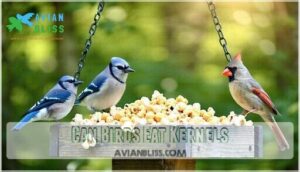
When it comes to uncooked popcorn, you’ll find that birds can eat popcorn kernels, but there’s more regarding this matter than you might think.
Kernel size matters substantially for different bird species – larger birds like jays and woodpeckers handle hard kernels easily, while smaller finches struggle with them.
| Bird Type | Kernel Preference | Safety Notes |
|---|---|---|
| Large Birds | Unpopped kernels | Can crack shells easily |
| Small Birds | Softened kernels | Risk of choking on hard ones |
| Pet Birds | Soaked kernels | Easier kernel digestion |
Soaking benefits can’t be overstated for smaller species. When you soak kernels in water, they become softer and safer to digest.
However, nutritional comparison shows that while popcorn for birds provides some carbohydrates, it lacks essential proteins and vitamins. Can birds eat uncooked kernels safely? Yes, but moderation is key for proper nutrition.
It’s also important to note that safe preparation matters when feeding popcorn to birds.
Preparing Popcorn Safely
You’ll want to use plain, air-popped popcorn without any salt, butter, or flavoring that can harm birds.
For smaller birds like finches and chickadees, you can soak unpopped kernels in water first to soften them, making them easier to eat and reducing choking risks.
Air-Popped Method
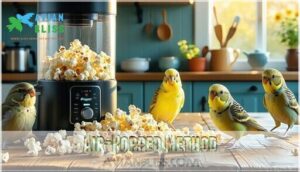
Your feathered friends deserve the healthiest option regarding popped popcorn.
Air-popping benefits include safer preparation with no oil needed and minimal additives compared to other methods.
This technique creates the perfect bird feeding treat without harmful substances.
Here’s how to air-pop correctly:
- Use a dedicated air popper machine for consistent, oil-free results
- Let popcorn cool completely before offering to prevent burns
- Store leftover portions in airtight containers for freshness
Avoiding Additives
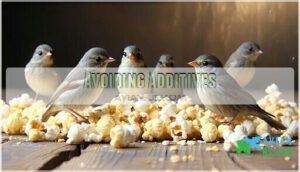
When preparing popcorn kernels for your feathered friends, you’ll want to steer clear of harmful seasonings and artificial flavors that make store-bought varieties dangerous.
Salt concerns and butter dangers top the list of bird feeding risks, as these toxic preservatives can seriously harm birds.
Is popcorn safe? Only when it’s completely plain, without any addins whatsoever.
To guarantee safety, consider additive-free popcorn options to ensure you are providing a safe and additive-free snack for your birds.
Soaking Kernels
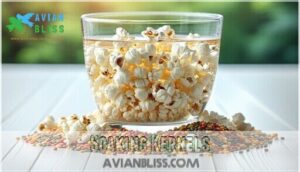
Softening kernels through soaking makes popcorn kernels much safer for smaller birds.
Simply place unpopped kernels in water for 30 minutes before serving. This digestive ease trick prevents choking hazards while providing a hydration boost.
Consider kernel soaking products for easier preparation.
Kernel safety improves dramatically with this simple step. Your feathered friends will appreciate the thoughtful preparation when birds eat popcorn treats safely, and this method ensures a safe experience.
Benefits of Popcorn Treats
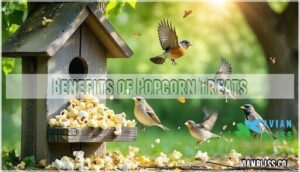
You’ll find that plain popcorn offers several nutritional advantages when you serve it as an occasional treat to your feathered visitors, providing essential minerals like iron for healthy blood circulation and calcium for strong bones.
This whole grain snack also delivers quick energy through complex carbohydrates, while its high fiber content supports proper digestion in birds.
Iron Benefits
Popcorn delivers essential iron that supports blood health and oxygen transport in your feathered friends.
This mineral acts like tiny delivery trucks, carrying oxygen throughout their bodies while preventing anemia.
Iron in popcorn for birds also boosts immune support and promotes healthy feather growth.
However, moderation’s key—too much iron can harm avian nutrition, so offer this treat sparingly.
Calcium Benefits
Calcium in popcorn kernels supports essential bone health and blood clotting functions in your feathered friends.
Female birds especially benefit from this mineral for egg production, creating shells with superior quality.
You’ll notice stronger chick growth when mothers consume calcium-rich treats like plain popcorn.
While popcorn isn’t calcium-dense compared to specialized supplements, it contributes to overall avian nutrition and bird diet balance, supporting essential bone health.
Energy Source
When your feathered friends need a quick energy boost, popcorn kernels deliver carbohydrates that fuel their daily activities.
This bird food provides sustained energy through its carb breakdown, making it excellent winter fuel when activity levels peak.
Here’s what makes popcorn kernels valuable for bird nutrition:
- Low caloric content won’t cause weight gain
- Complex carbohydrates provide steady energy release
- Perfect pre-flight fuel for migration periods
- Helps maintain body temperature in cold weather
- Supports active foraging and nesting behaviors
The benefits of popcorn kernels, including their ability to provide quick energy and support active behaviors, make them a great addition to a bird’s diet.
Feeding Popcorn Correctly
When you’re ready to share popcorn with your feathered friends, you’ll need to follow specific guidelines to keep them safe and healthy.
Start by offering only small portions mixed with their regular seed mix, and always break larger pieces into bite-sized chunks to prevent choking hazards.
Small Amounts Only
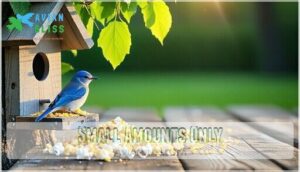
You wouldn’t feed your kids candy for breakfast every day, right? The same logic applies to popcorn for birds.
Treat frequency matters—offer this snack just once or twice weekly. Portion control prevents overfeeding risks while maintaining a balanced diet.
Remember, you’re supplementing food, not replacing their main meals.
| Feeding Aspect | Recommendation |
|---|---|
| Weekly Frequency | 1-2 times maximum |
| Portion Size | 1-2 tablespoons per bird |
| Diet Percentage | Less than 10% of total intake |
| Primary Purpose | Occasional treat only |
Mixing With Seed Mix
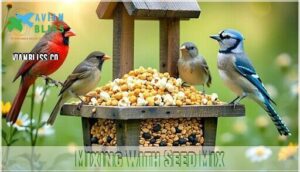
Most commercial birdseed mixes already include unpopped popcorn kernels alongside sunflower seeds and millet.
You can create your own bird food list by mixing one part kernels with three parts traditional birdseed for ideal Nutritional Balance.
This Seed Mix Variety attracts different species while maintaining Preferred Ratios.
You can find a premade quality birdseed mix for convenience.
Store your custom bird mixes in airtight containers for freshness.
Avoiding Choking Hazards
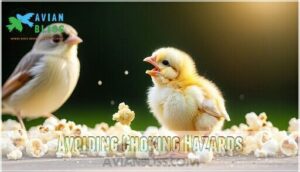
Kernel size matters in regards to bird safety. Unpopped popcorn kernels can pose serious choking hazards, especially for smaller birds.
You’ll want to remove any hard kernels before feeding or consider soaking duration of 15-20 minutes to soften them. Always supervise feeding sessions and offer alternative treats like cracked corn for safer bird feeding tips.
Plain popcorn offers fiber and carbohydrates, but should only be given as an occasional treat.
Types of Popcorn Allowed

You’ll want to stick with plain, air-popped popcorn or unpopped kernels when feeding birds, as these options provide the safest nutritional benefits without harmful additives.
Never offer flavored, buttered, or salted varieties, since these contain chemicals and excess sodium that can seriously harm your feathered visitors, and it’s also important to avoid flavored options.
Plain Air-Popped
Plain air-popped popcorn offers the safest option for bird treats. Your air popper creates fluffy kernels without harmful oils or seasonings that damage bird health.
Follow these popping techniques for ideal results:
- Use fresh kernel variety for better nutritional comparison
- Cool to room serving temperature before offering
- Store using proper storage guidelines in sealed containers
This method preserves natural benefits while ensuring safety. Some birds, like the plain chachalaca, primarily eat vegetation.
The air popper is a key tool in this process, and the popping techniques outlined are crucial for the health and well-being of the birds.
Unpopped Kernels
Unpopped kernels present a mixed bag for backyard bird feeding.
While larger birds with powerful beaks can crack these tough shells, smaller species struggle with kernel size and risk choking.
Soaking benefits include softening hard shells, making them safer for delicate bird beaks while maintaining nutritional retention.
| Bird Type | Unpopped Kernel Safety |
|---|---|
| Large Birds (Crows, Jays) | Safe – Strong beaks crack shells |
| Small Birds (Finches) | Risky – May cause choking |
| Medium Birds (Cardinals) | Moderate – Pre-soak recommended |
| Pet Birds (Parrots) | Safe with supervision |
Storage concerns arise quickly with unpopped popcorn exposed to moisture.
Avoiding Flavored Popcorn
Steering clear of flavored varieties protects your feathered friends from dangerous ingredients.
Microwave popcorn contains harmful additives like artificial flavorings and excessive salt that can seriously damage birds’ delicate systems.
Butter alternatives and commercial seasonings pose equal risks.
Instead, stick with plain air-popped kernels as safe bird treats.
Your backyard visitors deserve wholesome snacks, not processed junk that could harm their health.
Frequently Asked Questions (FAQs)
Can birds eat popcorn?
Picture feathered friends gathering around your backyard feeder, enthusiastically awaiting their next treat.
You can safely offer birds plain, air-popped popcorn as an occasional snack, but avoid salted or buttered varieties that harm their health.
Can birds eat cracked corn?
Yes, you can safely feed birds cracked corn as it’s easier to digest than whole kernels.
Many species love it, including cardinals, blue jays, and chickens.
It provides energy and attracts various backyard birds effectively.
Can birds eat unpopped corn seeds?
Birds can safely eat unpopped corn seeds, but you’ll want to soak them first to soften the hard kernels.
Larger birds handle them better than smaller species, who might struggle with the tough texture.
Can birds eat popped kernels?
You can safely feed birds plain, air-popped popcorn as an occasional treat.
Make sure it’s cooled and unseasoned—no salt, butter, or flavorings.
Break larger pieces into bite-sized portions for smaller birds.
Can birds eat microwave popcorn?
Like a red flag waving danger, microwave popcorn spells trouble for your feathered friends.
You shouldn’t feed it to birds because it’s loaded with harmful salt, butter, artificial flavors, and preservatives that can seriously damage their health, and this is due to the harmful effects of these ingredients.
What happens if a bird eats too much popcorn?
Feeding your feathered friend too much popcorn can cause digestive upset, nutritional imbalances, and weight gain.
You’ll notice reduced appetite for essential foods, potentially leading to malnutrition and health problems over time.
Can wild birds eat unpopped popcorn kernels?
Most backyard bird species can handle unpopped popcorn kernels just fine.
You’ll find larger birds like crows and woodpeckers crack them easily, while smaller songbirds benefit from soaking kernels first to soften them up.
Do squirrels and birds eat popcorn kernels?
Yes, both squirrels and birds can eat popcorn kernels.
You’ll find squirrels love unpopped kernels with their strong teeth, while birds prefer them too.
Just offer plain, unseasoned kernels as occasional treats, not daily meals.
What can you do with old popcorn kernels?
Old popcorn kernels stack up like forgotten treasures in your pantry.
You can plant them for decorative corn, grind into cornmeal, use as compost material, or soak and offer to larger backyard birds as treats.
Can you feed corn kernels to birds?
You can safely offer corn kernels to birds, but they’ll need soaking first to soften them.
Large birds handle hard kernels better, while smaller species prefer softened ones to avoid choking hazards.
Conclusion
Surprisingly, wild birds consume over 500 different seed varieties naturally, making popcorn kernels a unique addition to their diet.
Remember, you can birds eat popcorn kernels safely when properly prepared through air-popping or soaking methods.
Keep portions small, avoid all seasonings, and never substitute popcorn for their primary nutrition sources.
This crunchy treat offers valuable iron and calcium, but moderation remains essential.
Your feathered visitors will appreciate this occasional snack when you follow these simple safety guidelines consistently.
- https://explorejunglebirds.com/can-birds-eat-popcorn/
- https://blog.topsyspopcorn.com/popcorn-and-pets/do-birds-eat-popcorn/
- https://www.quora.com/Is-it-safe-for-birds-to-eat-unpopped-microwave-popcorn-kernels
- https://birdfact.com/articles/can-birds-eat-popcorn
- https://shumwaypopcorn.com/2022/02/what-animals-eat-popcorn-kernels/