This site is supported by our readers. We may earn a commission, at no cost to you, if you purchase through links.
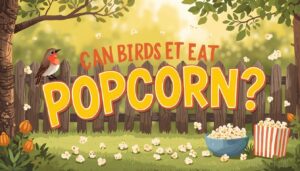
Tossing a piece of popcorn to a bird feels harmless—maybe even kind.
But whether that kernel does more good than harm depends entirely on what’s in it.
Plain air-popped popcorn won’t hurt most birds in small amounts, yet the buttered, salted bag you grabbed from the microwave is a different story.
Salt alone, even a light dusting, can stress a bird’s kidneys fast.
Knowing the difference between a safe snack and a risky one could protect the birds you’re trying to feed—and it’s simpler than you’d expect.
Table Of Contents
- Key Takeaways
- Yes, Birds Can Eat Plain Popcorn
- Safe Popcorn Types for Birds
- Is Popcorn Good for Birds?
- Popcorn Risks for Birds
- How to Prepare Bird-Safe Popcorn
- How Much Popcorn Can Birds Eat?
- Which Birds Eat Popcorn?
- Better Foods Than Popcorn
- Frequently Asked Questions (FAQs)
- Can birds eat microwave popcorn?
- Do birds eat popcorn?
- Can pigeons eat popcorn?
- Can birds eat unpopped corn seeds?
- Is popcorn ok to feed wild birds?
- Can birds and squirrels eat popped popcorn?
- What can I do with old popcorn kernels?
- How to pop popcorn for birds?
- Can birds eat stale popcorn?
- Is microwave popcorn safe to eat?
- Conclusion
Key Takeaways
- Plain, air-popped popcorn is safe for birds in small amounts, but anything with salt, butter, or seasonings can damage their kidneys and liver fast.
- Microwave and flavored popcorn are a hard no — the chemicals, sodium, and artificial additives are genuinely toxic to birds, even in small doses.
- Break popcorn into tiny pieces before offering it, since whole kernels can cause choking or crop impaction, especially in small birds like finches and sparrows.
- Popcorn works best as an occasional treat — once or twice a week at most — and should never replace the seeds, fruits, and grains birds actually need to stay healthy.
Yes, Birds Can Eat Plain Popcorn
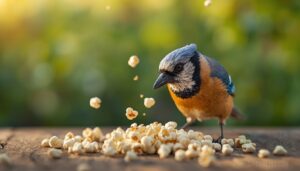
Yes, birds can eat plain popcorn — but a few ground rules make all the difference.
Uncooked kernels are a bit trickier — here’s what you need to know about feeding birds popcorn kernels safely.
The key is keeping it simple: no butter, no salt, no seasonings, just plain air-popped kernels offered as an occasional treat.
what you need to know before you share that bowl.
Plain Air-popped Popcorn is Safe in Moderation
Plain air-popped popcorn is one of those safe bird snacks you can feel good about offering.
It’s a whole-grain food with fiber that helps your bird’s digestive system and provides quick carbohydrate energy — useful for behavioral enrichment and seasonal feeding routines.
Think of it as a light snack with modest nutritional benefits of popcorn, but always in moderation.
Avoid Butter, Salt, Oil, Sugar, and Seasonings
Once you go beyond plain air-popped popcorn, things get risky fast.
Buttered or flavored popcorn brings real problems — butter toxicity stresses your bird’s liver, while salt toxicity can cause dehydration within hours.
Skip anything with:
- Sodium Concerns — even small amounts damage kidneys
- Oil Residue or Sugar Overload — leads to obesity and fatty liver
- Seasoning Additives — often contain compounds toxic to birds
Popcorn Should Be a Treat, Not a Daily Food
Think of popcorn the way you’d think of any snack in a caloric budget — a little goes a long way.
Even plain air-popped popcorn should only appear once or twice a week.
Moderation and portion control protect against nutritional gaps. Rotate it among alternative low-fat treats to keep your bird’s diet balanced, and always watch their behavior after feeding.
Fresh Water Should Always Be Available
Alongside portion control, don’t forget water.
Every time you offer fresh popcorn, set out a clean, shallow dish nearby — dish placement matters so weaker birds can reach it easily.
Refresh it regularly, since droppings and debris collect fast. check for freezing.
With multiple birds visiting, multiple water stations prevent competition.
Providing water alongside popcorn snacks keeps digestion smooth and reduces any choking hazard risk.
Safe Popcorn Types for Birds
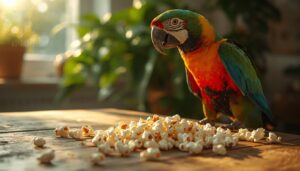
Not all popcorn is created equal with respect to feeding birds. The type you choose — and how it’s prepared — makes a real difference for their safety.
safe to offer what’s safe to offer and what you’ll want to skip.
Plain Air-popped Popcorn
If you’re looking for the safest option, plain airpopped popcorn is your best bet. Air-pop mechanics work by circulating hot air, so kernels expand three to four times their size — no oil needed.
That keeps calorie density low and fat nearly zero. The light texture crunchiness birds enjoy comes naturally.
Shelf life is short, so offer it fresh. It’s a genuinely bird safe food when served in moderation.
Stovetop Popcorn Made Without Oil or Salt
No oil? No problem. You can pop kernels safely on the stovetop using a deep, heavy pot with temperature control set to medium heat. Add popcorn kernels in a single layer, then shake at regular shaking intervals — every 20 to 30 seconds.
Keep the lid slightly open for lid venting to prevent soggy results. Choose medium kernel size for even popping. Unsalted oil‑free stovetop popcorn counts among genuinely bird safe foods when offered in moderation.
Fully Cooled Popped Kernels
Once popped, let the kernels cool completely before offering them to your bird. This isn’t just about burn prevention — cooling allows moisture equilibrium to settle, which maintains kernel structural integrity and crispness retention.
Fully popped kernels that reach room temperature break cleanly into smaller pieces without turning soggy or sticky. Plain air-popped popcorn stays among the safest bird-safe foods when served this way.
Softened Unpopped Kernels
Unpopped kernels aren’t automatically off-limits — soaking or boiling them overnight unlocks real moisture-softening benefits, creating a kernel texture shift that makes them far easier for birds to handle. This digestive compatibility matters, especially for smaller species.
That said, species suitability varies — tiny beaks still struggle with large pieces.
Always use plain popcorn, remove uneaten kernels promptly, and watch for spoilage.
The kernels’ 13% moisture content is essential for the steam pressure that creates the puff.
Microwave Popcorn to Avoid
Microwave popcorn is one to skip entirely when feeding birds. The bag itself is part of the problem — PFAS leaching from the inner lining transfers directly into the kernels during heating.
Add diacetyl vapors, susceptor hot spots, trans fat content, and high sodium levels, and you’ve got a real health hazard.
- PFAS chemicals migrate into popcorn while heating
- Diacetyl vapors irritate airways even at low exposure
- Susceptor hot spots create unevenly burnt, toxic kernels
- Trans fat content stresses birds’ livers over time
- High sodium levels cause dehydration and kidney damage
Flavored Popcorn to Avoid
Flavored popcorn is a hard no for birds. Artificial Butter Flavor irritates airways, while Trans Fat Additives strain the heart over time.
Caramel Sugar Coating and caramel or kettle corn spike weight with zero nutritional value. Artificial Colorings and Preservative Allergens can trigger sensitivities. Salted or buttered popcorn, popcorn with seasonings, and additive toxicity from seasoning toxicity all put your bird at real risk.
Is Popcorn Good for Birds?
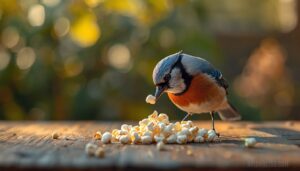
Plain popcorn does offer a few small nutritional perks for birds. It’s not a superfood, but there’s more going on in that kernel than you might think.
Here’s a quick look at what popcorn actually brings to the table — and where it falls short.
Carbohydrates for Quick Energy
Plain air-popped popcorn is mostly carbohydrates — about 78% of its calories come from them. That makes it a quick energy source for birds, especially active ones.
Think of it like a low sugar snack for birds that delivers an energy burst without heavy fat or protein. Complex carbohydrates in corn also support glycogen replenishment, giving birds steady fuel between feedings.
Fiber for Digestion
Popcorn also brings a small but useful dose of dietary fiber — and that matters more than you’d think.
Here’s what fiber does for your bird’s gut:
- Insoluble Fiber Bulk adds mass to stool, supporting smoother, more regular droppings.
- Soluble Fiber Benefits include softening waste and easing its passage.
- Prebiotic Fiber Effects feed beneficial gut bacteria through fermentation.
- Fermentation Byproducts help maintain a healthier colon environment overall.
Just remember — gradual fiber increase prevents bloating.
Trace Minerals Like Iron and Calcium
Beyond fiber, plain popcorn contains trace minerals worth noting — iron and calcium among them. Iron promotes hemoglobin formation, helping your bird’s blood carry oxygen efficiently. Calcium aids bone health and muscle function.
That said, phytate inhibition in corn can limit iron absorption, and mineral competition means your bird won’t optimize every nutrient.
Vitamin C synergy helps, but popcorn alone can’t meet full bird dietary requirements.
Low Fat When Prepared Plain
Here’s something worth knowing about fat percentage: plain air-popped popcorn has less than 0.4 grams of fat per cup. That’s a remarkably low calorie density — around 31 calories — making it ideal for weight management in birds.
Unsalted, oil-free stovetop popcorn works just as well. With a healthy nutrient ratio and energy balance, it won’t tip your bird’s fat intake.
Why Popcorn is Not Nutritionally Complete
Think of popcorn as a snack, not a meal. It’s mostly carbs and fiber — useful, but far from complete.
Birds need protein for feathers and growth, yet popcorn’s low protein content and incomplete amino acids can’t cover that.
Add in insufficient fatty acids, missing essential vitamins, and micronutrient gaps, and you’ll see the nutritional imbalance quickly.
Nutrient-dense foods always win here.
Risks of Replacing Balanced Bird Food
When birds fill up on popcorn instead of balanced food, real problems follow. Protein deficiency, vitamin gaps, and fat imbalance build slowly — often before you notice anything wrong.
Popcorn fills a bird’s belly while quietly starving it of protein, vitamins, and balance
That nutritional imbalance can lead to malnutrition, weight gain, and eventually obesity and organ issues.
Digestive strain and digestive blockages are also real risks, as is sodium toxicity and dehydration in avian species eating flavored varieties.
Popcorn Risks for Birds
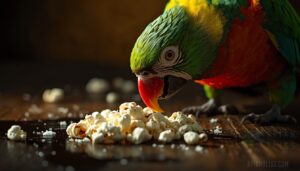
Plain popcorn has its perks, but it comes with a few real risks worth knowing. Even a small mistake in how you prepare or serve it can cause serious problems for your bird.
Here’s what to watch out for.
Choking From Large Pieces or Hard Kernels
Hard Kernel Hazards are real — unpopped kernels stay solid and don’t break down the way plain air-popped popcorn does. That creates a serious Airway Obstruction Risk, especially for Small Beak Species like finches and sparrows.
Chunky Piece Lodging happens fast when Rapid Gulping Dangers kick in during competitive feeding. Always offer bite-sized pieces, and treat unpopped popcorn kernels as a choking hazard unless softened first.
Crop Impaction in Small Birds
Crop impaction is a sneaky risk for small birds. When unpopped popcorn kernels or oversized chunks sit in the crop, normal emptying slows — similar to how thickened formula or wrong formula temperature disrupts crop motility in baby birds.
Feather ingestion carries the same risk.
Watch for a distended crop or fermentation odor on the breath.
Preventing digestive blockages in small birds means always offering bite-sized pieces of plain air-popped popcorn only.
Salt-related Dehydration and Kidney Stress
Even a light sprinkle of salt can trigger sodium dehydration fast in birds. High-sodium foods like salted popcorn force the kidneys to ramp up urine concentration to flush excess salt — and that spikes the kidney filtration load.
Over time, renal tubule dysfunction and oxidative kidney damage can follow.
Sodium toxicity and dehydration in avian species are a real health hazard. Skip salted popcorn entirely.
Butter and Oil Causing Excess Fat Intake
Butter and oil turn plain popcorn into a calorie-dense topping nightmare for birds. Fat provides 9 calories per gram, so even a small drizzle quickly tips the seasoning fat balance way out of range.
Saturated fat risks include fatty liver disease, and bird obesity prevention becomes harder when high-fat treats are routine.
Fat metabolism in birds is limited — keep it plain.
Moldy Popcorn and Toxin Exposure
Fatty food isn’t the only hidden danger lurking in popcorn. Moldy popcorn carries serious bird health risks through mycotoxin persistence — toxins that survive even after popping.
Mold detection methods like sniffing for musty odors help, but hidden toxin risk remains even without visible spots.
Storage moisture control is your best defense. When in doubt, throw it out.
Signs of Illness After Eating Popcorn
Stale or moldy popcorn can hit fast. Watch your birds closely after any feeding. Signs of trouble include:
- Stomach cramps — hunched posture or repeated shifting
- Nausea and vomiting — regurgitation or head-bobbing
- Diarrhea signs — loose, watery, or discolored droppings
- Fever symptoms — lethargy and fluffed feathers
- Allergic reaction — labored breathing or facial swelling
Call your vet immediately if any persist.
How to Prepare Bird-Safe Popcorn
Preparing popcorn for birds is simpler than you might think. The key is keeping it plain and handling it the right way before it ever reaches your feeder.
Here’s exactly what to do.
Choose Plain Kernels With No Additives
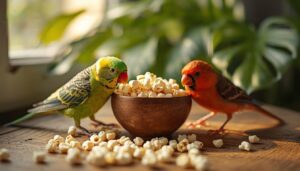
kernel variety selection — white, yellow, or blue plain kernels all work well.
packaging ingredient transparency first: the label should list only corn, nothing else.
gluten-free assurance, choose kernels from dedicated facilities.
shelf-life management by using bags within 6–12 months, and prioritize moisture control through airtight storage.
Plain organic kernels are your safest pick.
Air-pop Popcorn Without Oil
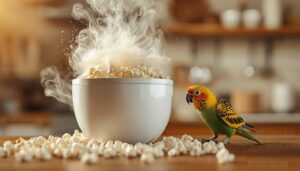
Once you’ve got your plain kernels ready, an air popper is your best friend here. It uses only hot air — no oil needed — making plain air-popped popcorn safe for birds.
Popper temperature reaches around 180–230°C, so kernel moisture converts to steam, creating that satisfying pop.
Keep batch size small. Air-popped popcorn is a safe popcorn variety birds can actually enjoy.
Let Popcorn Cool Completely

Once your air-popped popcorn is ready, let it cool completely before offering it to birds. Warm kernels trap moisture, preventing proper starch firming and ruining that texture crunchiness birds enjoy. Condensation prevention starts here — sealing fresh popcorn too early turns crisp pieces soft and soggy fast.
- Spread plain popcorn in a single layer
- Allow 10–15 minutes of cooling time
- Check that no warmth remains before handling
- Only then break into bite-sized pieces
Break Popcorn Into Small Pieces
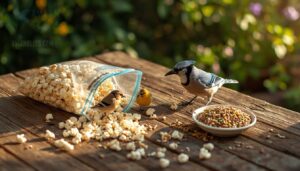
Once popcorn has cooled, break it into bite-sized pieces before offering it to birds.
For crushing techniques, a zip-top bag with gentle hand pressure works well — avoiding dust keeps pieces easy for birds to grab.
Match piece size guidelines to your bird’s beak.
Smaller finches need finer fragments, while jays handle larger bits.
Mix broken plain popcorn with seeds for better portion control and easier supervision.
Soak or Boil Unpopped Kernels First
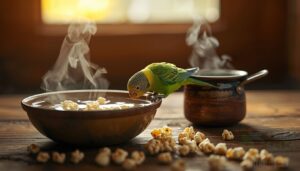
Unpopped or partially popped kernels aren’t automatically off the table — they just need a little prep first. A brief soak or short boiling time softens the tough outer shell, improving moisture ratio and pop quality impact without oversaturating the kernel. Keep soak duration to a few minutes, then spread them out for a quick drying process before popping.
Safe popcorn varieties for birds start with clean preparation.
Remove Uneaten Popcorn Before Nightfall

Once the birds wrap up for the day, don’t leave leftover popcorn sitting out. Dusk cleanup routine is a simple pest prevention strategy — stale popcorn draws rodents, insects, and moisture overnight.
Moisture control measures matter here: night air softens kernels fast, inviting mold.
Following bird feeding guidelines means keeping clean feeding areas and practicing solid feeder hygiene practices to protect your birds daily.
Store Leftovers Safely and Discard Old Popcorn
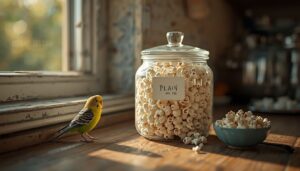
If you’ve made a batch of plain air-popped popcorn, store what’s left in an airtight container right away. Refrigeration guidelines suggest doing this within two hours. For shelf-life tracking, label it with the date — three to four days is your window.
Freezing popcorn extends that safely. Stale popcorn risks mold and toxins, so when in doubt, toss it.
Food safety for animals matters just as much as for us.
How Much Popcorn Can Birds Eat?
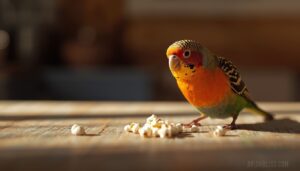
Popcorn is a fun little treat, but too much of a good thing can cause real problems for birds. Portion size and frequency matter more than most people realize.
Here’s what to keep in mind regarding how often and how much you should offer.
Offer Popcorn Once or Twice Weekly
Think of popcorn as a Friday treat — not an everyday snack. Snack timing matters more than most people realize. Sticking to a weekly routine of once or twice per week keeps your bird’s balanced avian diet intact.
- Behavior observation is easier when treat days are predictable.
- Spoilage prevention improves with less frequent, shorter feeding windows.
- Moderation is essential for weight management and long-term health.
Keep Portions Small and Controlled
Once you’ve nailed your weekly routine, portion size is the next piece of the puzzle. Offer just a small handful — a few bite-sized pieces per session are plenty.
Don’t top off the feeder mid-session, and keep each feed session length short.
Consistent serving size and overeating prevention go hand-in-hand. A controlled snack amount, offered with supervision, keeps things safe and simple.
Adjust Piece Size for Small-beaked Birds
Piece size really matters for small-beaked visitors. Sparrows, finches, and chickadees can’t manage whole popped kernels — their bills simply aren’t built for it.
Crush popcorn into bite-sized pieces and aim for fragment size consistency across your feeder surface.
This improves bite point distribution and helps small birds that may sample popcorn feed without struggling or dropping food repeatedly.
Supervise Feeding to Prevent Competition
Once small birds have their pieces, watch what happens next. Resource competition among birds can turn a peaceful feeder into a pushing match fast.
Set up separate feeding zones and multiple access points so no single bird guards the spread. Staggered feeding times, portion control monitoring, and rapid cleanup removal all help prevent aggression and resource guarding at feeders.
Avoid Feeding Popcorn as a Staple
Popcorn is a snack, not a meal plan. A Behavioral Preference Shift can happen fast — birds that eat it too often start skipping seeds and insects, which raises real Protein Shortfall Concerns over time. The Long-Term Health Impact adds up quietly.
Keep it occasional, especially during Seasonal Feeding Limits when natural food is scarce. Try these Alternative Grain Snacks instead:
- Cooked brown rice
- Plain millet
- Unsalted oats
- Sprouted wheat berries
- Cracked corn
Watch for Overeating or Weight Gain
Even with moderation and portion control in mind, birds can still overeat if you’re not paying attention.
Watch for these Behavioral Cues and signs during Feeder Competition:
| Warning Sign | What It Means |
|---|---|
| Lingering at feeder | Calorie count is climbing |
| Rounder body shape | Weight monitoring needed |
| Reduced activity | Possible obesity risk |
| Frequent return visits | Overfeeding is likely |
Keep Hydration Balance steady and adjust portions early.
Which Birds Eat Popcorn?
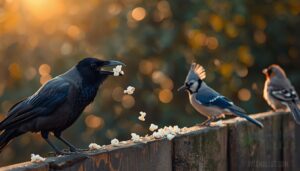
Not every bird will give popcorn a second glance, but plenty of backyard regulars are surprisingly into it. The species that actually eat it range from bold, beefy corvids to tiny finches that need their pieces crushed down small.
Here’s a look at which birds are most likely to show up for this crunchy little treat.
Crows and Ravens
Crows and ravens are probably the boldest visitors to your backyard feeder. Their cognitive problem-solving skills and urban adaptation make them quick to investigate anything new — including plain popcorn.
These larger birds handle whole popped kernels easily. Offer a small handful once or twice a week.
It won’t replace their diet, but it’s a safe, occasional treat they’ll gladly accept.
Blue Jays and Grackles
Blue Jays and grackles are opportunistic feeders with hard and thick bills built for cracking seeds and grabbing whole popped kernels. Blue Jays’ food caching behavior means they may carry pieces off to store nearby — don’t be surprised.
Both species display social hierarchy dynamics at feeders, so offer a small portion once or twice weekly and watch for competition.
Sparrows, Finches, and Chickadees
These three are small birds with beak morphology built for seeds — not big chunks. Break plain air-popped popcorn into tiny pieces before offering it.
- Sparrows forage low to the ground, near shrubs
- Finches prefer elevated feeders, especially during seasonal feeding shifts
- Chickadees — recognized by vocal identification like their "chickadee-dee-dee" call — dart in quickly
Keep portions small. Their habitat preferences and dietary needs demand balance over treats.
Doves and Pigeons
Doves and pigeons — both from family Columbidae — are grain eaters by nature, so plain airpopped popcorn, SAFE options fit right into their foraging style. Their short beaks handle whole popped kernels well. Urban adaptation means they’ll visit your yard regularly.
| Feature | Doves | Pigeons |
|---|---|---|
| Beak Size | Small | Medium |
| Popcorn Piece Size | Small–Medium | Medium–Whole |
| Feeding Location | Ground | Ground/Ledge |
Limit treats. Bird nutrition always comes first.
Woodpeckers and Goldfinches
Woodpeckers and goldfinches are an interesting pair. Both visit feeders, but their habits are worlds apart. Woodpeckers use Tail Feather Support and Drumming Communication to work tree bark for grubs — popcorn is a side snack, especially in winter. Goldfinches, with their strong Seed Preference, may nibble plain airpopped popcorn SAFE options when crushed small.
- Offer only plain airpopped popcorn SAFE or unsalted oilfree stovetop popcorn
- Break pieces small for goldfinches — their beaks aren’t built for big chunks
- Keep a birdseed mix as the main food; popcorn supplements never replace
- Watch for Cavity Competition at feeders — woodpeckers can dominate smaller birds
- During Seasonal Migration, energy demands rise — stick to bird dietary requirements and balanced diet over treats
Pet Birds That May Eat Plain Popcorn
Pet birds like parakeets, cockatiels, and African greys can enjoy plain airpopped popcorn, safe as an occasional treat. Urban feeder behavior shows these birds are naturally curious and may accept popcorn during seasonal feeding trends.
Keep nutrient balance concerns in mind — popcorn isn’t a meal replacement. Follow guidelines for feeding pet birds popcorn, and watch for any changes in droppings or energy as simple health monitoring tips.
Species That Need Smaller Crushed Pieces
Smaller birds need extra care regarding popcorn. Finch beak limitations and sparrow gizzard efficiency both depend on chickadee bite size — tiny, uniform pieces that pass through easily. Goldfinch crushed preference and warbler food fragmentation follow the same logic.
For small birds that may sample popcorn, always break plain air-popped popcorn into fine crumbs. Unpopped kernels, even softened, stay risky for petite beaks.
Better Foods Than Popcorn
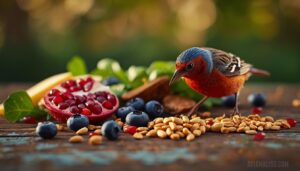
Popcorn makes a fun occasional snack, but it’s not exactly a nutritional powerhouse for birds.
If you want to give them something that actually benefits their health, there are much better options worth keeping on hand. Here’s what to reach for instead.
Quality Wild Bird Seed Mixes
A quality seed mix does far more for your birds than popcorn ever could. Look for Seed Freshness Indicators like labeled harvest dates and clean, whole seeds — no dust or debris.
A healthy birdseed mix covers Nutrient Balance with proteins, fats, and carbs, your birds actually need.
Include Squirrel Deterrent Seeds like safflower and adjust blends seasonally.
Good Packaging Protection keeps oils intact and mold out.
Lyric Supreme Wild Bird Seed as an Option
One solid upgrade from popcorn is Lyric Premium Wild Bird Seed. It’s built for serious wild bird feeding — ingredient diversity is baked right in, with black oil sunflower, shelled peanuts, nyjer, and millet all working together.
- Nutrient dense with 12%+ protein and 20%+ fat
- Strong energy density for active songbirds
- Feeder compatibility across tube and platform styles
- Seasonal availability at major retailers year-round
Fresh Fruits Safe for Birds
Fresh fruit makes a smart swap for popcorn. Apples, grapes, blueberries, and mango give birds real vitamins without empty carbs.
Fruit hygiene matters — always wash, remove seeds, and practice pit removal for stone fruits.
Watch water content and sugar moderation with high-sugar picks like banana.
| Fruit | Key Tip |
|---|---|
| Apple | Remove seeds |
| Grapes | Halve to prevent choking |
| Blueberries | Offer fresh, small amounts |
| Mango | Remove pit first |
| Strawberries | Cut into small pieces |
Cooked Vegetables and Whole Grains
Vegetables and whole grains are some of the best additions you can offer alongside a balanced seed mix. Steamed Carrots, Boiled Sweet Potatoes, and organic veggies deliver real vitamins without the risks that come with flavored snacks. Cooked whole grains like Cooked Quinoa, Brown Rice, and Barley Porridge are high in fiber and easy to digest.
- Boiled Sweet Potatoes – soft, easy to eat, nutrient-dense
- Steamed Carrots – rich in beta-carotene, simple to prepare
- Cooked Quinoa or Brown Rice – whole grain protein boost
- Barley Porridge – high in fiber, gentle on digestion
Skip vegetable oil entirely when preparing these — plain and simple are always safest.
Raw or Sprouted Seeds
Raw or sprouted seeds might just be the most nutrient-dense upgrade you can make to your bird’s diet. Seed Germination Benefits are real — sprouting boosts Nutrient Bioavailability, making iron, zinc, and amino acids easier to absorb. A Digestive Enzyme Boost helps birds process food more efficiently too.
| Seed Type | Benefit |
|---|---|
| Sunflower sprouts | Rich in folate and enzymes |
| Mung bean sprouts | Improved mineral absorption |
| Lentil sprouts | Accessible protein boost |
| Mixed seed sprouts | Broad-spectrum nutrition |
Good Sprouting Hygiene matters — rinse thoroughly, refrigerate, and follow smart Shelf-life Storage practices (use within 3–5 days). These natural foods make excellent seed mix alternatives within any balanced diet.
Foods Birds Should Never Eat
Some foods can seriously hurt your bird — no matter how harmless they seem. Keep these off the menu entirely:
- Chocolate Toxicity and Garlic Toxicity can trigger seizures, organ damage, or sudden death.
- Avocado Persin, Fruit Pits, and Moldy Peanuts introduce deadly toxins quickly.
- Salted or buttered popcorn, foods high in sugar, sodium toxicity, food additive hazards, and pesticides quietly damage kidneys and essential organs over time.
Building a Balanced Bird Diet
Think of your bird’s diet like a puzzle — every piece matters.
Pellet Supplementation fills the nutritional gaps that seeds alone can’t cover. Rotate Fresh Veggie Variety like kale and carrots weekly. Add Calcium Sources such as cuttlebone for bone health.
Boost Protein Enrichment during molting season, and make Seasonal Nutrient Adjustments as your bird’s life stage changes.
Popcorn? Just one small piece of a much bigger picture.
Frequently Asked Questions (FAQs)
Can birds eat microwave popcorn?
No, birds shouldn’t eat microwave popcorn.
It contains salt, artificial flavoring toxicity risks, and chemical residues from packaging contaminants that stress their kidneys and digestion — even small amounts can cause sodium toxicity and dehydration in avian species.
Do birds eat popcorn?
Yes, many birds do eat popcorn. Crows, jays, sparrows, and doves will all peck at plain kernels. Keep it unseasoned, and it works as an occasional treat.
Can pigeons eat popcorn?
Pigeons can eat plain, air-popped popcorn in small amounts. Skip anything buttered, salted, or flavored. Keep pieces small, offer water nearby, and treat it as an occasional snack only.
Can birds eat unpopped corn seeds?
Unpopped kernels are risky. They’re hard, tough to digest, and can cause crop impaction — even choking in smaller birds. Always soak or boil them first to soften before offering any.
Is popcorn ok to feed wild birds?
Plain, air-popped popcorn is fine for wild birds in moderation. Skip the salt, butter, and seasonings — those cause real harm.
Think of it as an occasional backyard treat, not a dietary staple.
Can birds and squirrels eat popped popcorn?
Both birds and squirrels can safely enjoy popped popcorn — as long as it’s plain, with zero added seasonings. Keep it a small, occasional treat and you’re good.
What can I do with old popcorn kernels?
Old kernels don’t have to go to waste.
Toss them into compost as a soil amendment, grind them for homemade crackers, mix into trail mix, or use in resin art projects for texture.
How to pop popcorn for birds?
Use an air popper — no oil, no salt. Let it cool fully on a clean surface. Skip microwaved popcorn entirely. Break pieces small. That’s all it takes.
Can birds eat stale popcorn?
Skip the stale popcorn. Texture softening, aroma decline, and mold detection issues make it risky for bird health. Mold releases toxins, and pest attraction follows fast. Fresh only.
Is microwave popcorn safe to eat?
No, microwave popcorn isn’t safe for birds. Bag chemical leaching, flavoring aerosol, and microwave oil buildup make it risky.
High sodium can trigger sodium toxicity fast.
Stick to plain air-popped popcorn instead.
Conclusion
Plain popcorn is a small kindness that goes a long way—as long as you keep it simple. When someone asks if birds can eat popcorn, the honest answer is yes, but with clear limits.
Skip the salt, butter, and seasonings. Break pieces small. Offer it once or twice a week at most.
Your backyard visitors thrive on seeds, fruits, and grains first. Think of popcorn as the occasional treat, not the main course.
- https://resources.pangovet.com/pet-health-wellness/birds/can-parrots-eat-popcorn/
- https://www.allaboutbirds.org/news/types-of-bird-seed-a-quick-guide/
- https://www.audubon.org/field-guide/bird/house-finch
- https://www.healthline.com/nutrition/popcorn-nutrition-and-health
- https://www.heart.org/en/news/2019/06/18/popcorn-as-a-snack-healthy-hit-or-dietary-horror-show