This site is supported by our readers. We may earn a commission, at no cost to you, if you purchase through links.
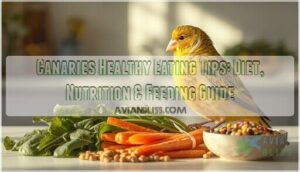
Your canary’s vibrant plumage and cheerful song depend on more than good genetics—they’re direct reflections of what goes into that food dish each day. Many canary owners unknowingly compromise their bird’s health by relying on seed-only diets, which lack the complete nutritional profile these small songbirds need to thrive.
Dull feathers, weakened immunity, and shortened lifespans often trace back to simple dietary gaps that you can easily correct. The right balance of proteins, minerals, and fresh foods transforms your canary’s vitality, supporting everything from feather regrowth during molting to sustained energy for those signature trills.
Understanding what your canary truly needs—and avoiding common feeding pitfalls—creates the foundation for years of vibrant health.
Table Of Contents
Key Takeaways
- A balanced diet with pellets making up 75–80% of intake, plus fresh greens, fruits, and protein sources, is vital for your canary’s long-term health and vibrant feathers.
- Seed-only diets cause nutritional deficiencies, obesity, and metabolic disorders, so seeds should be limited to no more than 20% of your bird’s daily food.
- Safe vegetables like kale, collard greens, and carrot, along with calcium from cuttlebone and mineral blocks, support strong bones, immunity, and color-rich plumage.
- Portion control, daily cleaning of food and water dishes, and adjusting nutrition during molting, breeding, or aging help prevent common health problems and keep your canary thriving.
Why Canaries Need a Balanced Diet
Your canary’s diet isn’t just about keeping the food dish full—it’s the foundation for everything from vibrant feathers to a strong immune system. Just like you need more than bread and butter to thrive, your bird needs a mix of nutrients working together to stay healthy and active.
Understanding what canaries need beyond just seeds—and why those nutrients matter—can feel overwhelming at first, but this guide to bird nutrition and diet breaks down the essentials in practical terms.
A canary’s diet is the foundation for vibrant feathers, strong immunity, and overall health—not just a full food dish
Let’s look at what makes a balanced diet so essential for your canary’s well-being.
Choosing healthy bird seed options for pets forms the foundation of this nutritional approach, giving your canary the energy and nutrients needed to thrive.
Key Nutritional Requirements
Your canary’s health starts with getting the nutrient ratio right. Proper avian nutrition includes these essentials:
A well-rounded bird nutrition food guide breaks down the proper balance of seeds, pellets, fruits, and vegetables your canary needs daily.
- Protein sources with essential amino acids for feather growth
- Calcium needs met at a 2:1 ratio with phosphorus
- Vitamin balance including A, B complex, D, and E
- Mineral intake with zinc, magnesium, and iodine
- Fresh water available constantly
Dietary balance bolsters metabolism, immunity, and overall vitality.
Impact on Feather Color and Health
Your canary’s plumage quality reflects what you feed it. Carotenoid-rich foods like carrots and leafy greens drive color enhancement in red and yellow feathers, while amino acids support melanin for dark markings.
Nutrient deficiencies often show up as dull, patchy plumage during the molting process. Adequate protein, zinc, and antioxidants guarantee strong feather growth and that radiant sheen you’re looking for.
Preventing Common Health Problems
Beyond aesthetics, proper dietary disease prevention keeps your bird thriving for years. Nutritional imbalances cause obesity, fatty liver, kidney disease, and even life-threatening respiratory issues from vitamin A deficiency. Balanced mineral intake prevents skeletal deformities and gout, while appropriate calcium supplements support bone strength without risking toxic buildup. Understanding vitamin toxicity risks is essential for a healthy diet.
- Avoid high-fat seed mixes that contribute to obesity and liver degeneration
- Moderate protein levels to protect long-term kidney function and prevent renal disease
- Balance vitamin D3 carefully since excess causes kidney calcification despite supporting calcium absorption
- Provide iodine-rich foods to prevent thyroid enlargement that can block breathing passages
Seeds Vs. Pellets: Making The Right Choice
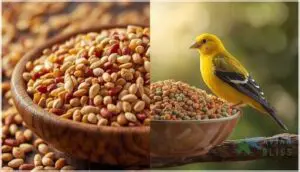
Choosing between seeds and pellets is one of the biggest decisions you’ll make for your canary’s nutrition, and it’s not always straightforward. Each option comes with distinct advantages and challenges that can affect your bird’s health, energy levels, and overall well-being.
Let’s break down what you need to know about both approaches so you can make the best choice for your feathered friend.
If you’re leaning toward a spray solution, check out this guide on non-toxic bird cage disinfectants to find safe, effective options.
Pros and Cons of Seed Diets
Seeds have been the go-to for canary owners for generations, but are they the best choice? Your bird’s seed mix offers high palatability and encourages natural foraging habits, keeping them mentally engaged. However, seed-only diets carry serious dietary risks, including nutrient deficiencies in vitamin A, calcium, and essential amino acids that can lead to obesity and metabolic disorders over time. Providing a balanced diet approach is vital for maintaining ideal health in canaries.
| Advantages of Seeds | Disadvantages of Seeds |
|---|---|
| Highly palatable, encouraging natural feeding habits | Poor calcium-to-phosphorus ratio risks bone disease |
| Energy-dense for active birds during molting | Deficient in vitamins A, D₃, and amino acids |
| Promotes foraging behavior and mental stimulation | Selective eating worsens nutritional imbalances |
When you rely solely on seed mixtures, you’re setting your canary up for preventable health problems. Seed nutrition falls short in critical areas—especially lysine, methionine, and fat-soluble vitamins your bird needs for vibrant feathers and strong immunity. That’s why most avian veterinarians now recommend seeds as just 10–20% of your canary feeding schedule, with pellets forming the nutritional foundation.
Benefits of Pelleted Foods
Pelleted diets give your canary scientifically formulated, complete nutrition in every bite—eliminating the selective eating and vitamin loss that plague seed mixes. These balanced diets deliver controlled fat content to prevent obesity, precise calcium-to-phosphorus ratios for strong bones, and ideal vitamin A levels for healthy feathers and immunity. When pellets make up 75–80% of your bird’s intake, you won’t need extra supplements, and you’ll see cleaner cages with less waste. Nutrient absorption improves dramatically because your canary consumes the entire pellet, not just the fatty seeds they prefer. Quality pelleted foods support vibrant plumage, sturdy immune function, and longer lifespans by preventing the liver disease, kidney problems, and nutritional deficiencies common in seed-only diets.
| Pelleted Diet Benefits | Seed-Only Diet Risks | Health Outcome |
|---|---|---|
| Complete vitamin and mineral profile in each pellet | Uneven nutrient distribution; vitamins lost during hulling | Prevents hypovitaminosis A and metabolic disorders |
| Controlled fat content (prevents selective eating) | High-fat seeds encourage obesity and fatty liver | Maintains healthy weight and liver function |
| Balanced calcium and phosphorus ratios | Low calcium ( |
- https://windycityparrot.com/potential-toxic-effects-vitamins-given-birds-excess/
- https://birdsupplies.com/blogs/news/149781127-iodine-deficiency-in-parrots-and-pet-birds
- https://www.petmd.com/bird/canary-care-sheet
- https://hari.ca/avian-care/symptoms-treatment-of-bumblefoot-in-parrots/
- https://www.ivis.org/library/avian-health-and-disease/pododermatitis-bumblefoot-diagnosis-treatment-resolution-and-prevention