This site is supported by our readers. We may earn a commission, at no cost to you, if you purchase through links.
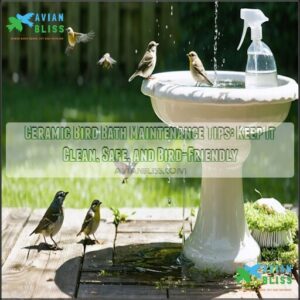 To keep your ceramic bird bath in top shape, clean it weekly using a natural solution like white vinegar and water—skip harsh chemicals that can harm birds.
Scrub gently with a soft brush to remove algae and dirt, then rinse thoroughly.
Replace water daily to prevent bacteria and mosquito breeding; no one likes an insect buffet!
In colder months, use a deicer to keep water available, but avoid adding salt—it’s bad news for birds.
Place the bath in a shady spot to slow algae growth and keep water cool, ensuring a thriving backyard sanctuary.
Regular care guarantees happy, healthy birds and a thriving backyard sanctuary.
Table Of Contents
- Key Takeaways
- Cleaning Ceramic Bird Baths
- Bird Bath Maintenance Schedule
- Ceramic Bird Bath Safety Tips
- Enhancing Ceramic Bird Baths
- Benefits of Regular Maintenance
- Frequently Asked Questions (FAQs)
- How to keep a ceramic bird bath clean?
- How do you seal a ceramic bird bath?
- Do copper pennies keep bird baths clean?
- Are ceramic bird baths a good idea?
- How to prevent ceramic bird bath cracks?
- Best location to place ceramic bird baths?
- How to repair chipped ceramic bird baths?
- What to do if ceramic glaze fades?
- How to transport ceramic bird baths safely?
- How to repair cracks in ceramic bird baths?
- Conclusion
Key Takeaways
- Clean your bird bath weekly with a vinegar-water mix and a soft brush; rinse thoroughly to keep it safe for birds.
- Replace water daily to prevent bacteria and mosquito breeding while ensuring fresh hydration for birds.
- Avoid harsh chemicals; stick to bird-safe solutions like baking soda or enzyme cleaners for effective maintenance.
- Place the bath in a shady spot to slow algae growth and use a deicer in winter to keep water accessible.
Cleaning Ceramic Bird Baths
Keeping your ceramic bird bath clean isn’t just about looks—it keeps your feathered visitors safe and happy.
A clean bird bath is more than decor—it’s a safe, refreshing oasis for your feathered friends.
With the right tools and a bit of effort, you can easily banish dirt, algae, and grime.
Removing Debris and Dirt
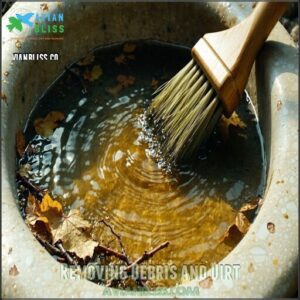
Before diving into scrubbing, give your ceramic bird bath a pre-soak to loosen stubborn debris—it’s like a spa day for your bird bath!
Use a soft brush designed for ceramics to avoid scratches while tackling dirt removal. Toss the debris into your garden; plants love it.
Rinse thoroughly with fresh water to wash away any residue, ensuring a clean, safe haven for birds. Regular bird bath maintenance keeps stains and algae at bay!
Using Natural Cleaning Solutions
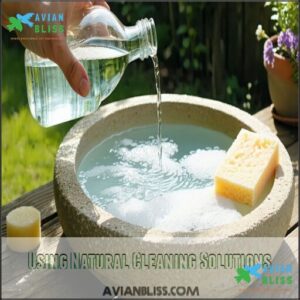
Keeping your ceramic bird bath clean doesn’t have to be a chore. Natural cleaning solutions are simple, effective, and safe for your feathered friends.
Start with a vinegar-water mix (1 part vinegar, 9 parts water) to tackle grime. For stubborn stains, sprinkle baking soda, then scrub gently. Enzyme cleaners are another great option—they break down residue without harming birds.
Many people find success with a dedicated vinegar product. Enzyme cleaners are another great option—they break down residue without harming birds.
- Vinegar solution: Removes dirt and algae.
- Baking soda: Perfect for tough spots.
- Enzyme cleaners: Prevent buildup naturally.
- Safe rinsing: Always rinse thoroughly to avoid residue.
Stick to bird-safe products, and your bird bath will stay fresh, clean, and welcoming!
Avoiding Harsh Chemicals
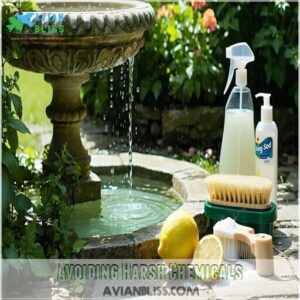
Birds deserve a safe splash zone, so skip harsh chemicals—they’re like a bad roommate, leaving behind harmful residues.
Instead, lean on safe alternatives like a vinegar-water mix or enzyme cleaners. These bird-safe products clean effectively without risking feather health.
Regular cleaning also prevents mosquito breeding, ensuring a healthier environment.
Here’s a quick guide:
| Problem | Harsh Chemical Risk | Natural Solution | Dilution Ratios |
|---|---|---|---|
| Algae buildup | Toxic residue | Vinegar-water mix | 9:1 water-vinegar |
| Stains | Feathers damaged | Baking soda scrub | Paste consistency |
| Bacteria | Lingering toxins | Enzyme cleaners | Follow label |
| Grime removal | Water contamination | Bird-safe sealants | Thin application |
Stick to natural cleaning solutions—your birds will thank you!
Scrubbing and Rinsing Techniques
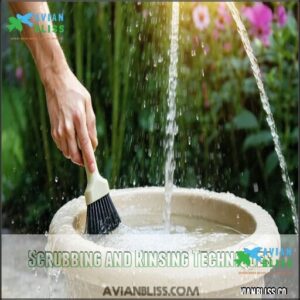
Using the right brush types makes bird bath cleaning easier. A stiff-bristled brush works wonders for tough grime, but don’t overdo the pressure—scratches aren’t stylish.
Pre-soaking benefits include loosening debris, saving you elbow grease. For stubborn stains, try baking soda or vinegar.
Consider using a specialized cleaning tool for superior results. After scrubbing, rinse thoroughly with a garden hose to guarantee residue removal.
These bird bath rinsing methods leave it spotless. Keep scrubbing techniques gentle yet firm for perfect results every time.
Bird Bath Maintenance Schedule
Keeping your ceramic bird bath on a regular cleaning schedule isn’t just good for the birds—it’s good for you too, saving time and effort in the long run.
By adjusting how often you clean based on the weather, bird activity, and algae growth, you’ll keep it fresh and inviting year-round.
Frequency of Cleaning

A clean bird bath isn’t just pretty—it’s a bird’s spa day.
Tailor your bird bath cleaning frequency to weather influence, bird activity, and algae growth.
Follow this simple schedule:
- Hot weather: Change water daily to combat murkiness.
- Summer: Clean 2-3 times weekly for hygiene.
- Cooler months: Scrub weekly.
- Inspect water: Watch for cloudy water or odors.
- Seasonal adjustments: Adapt based on bird bath maintenance needs.
Factors Affecting Cleaning Frequency
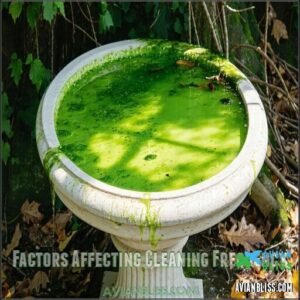
How often you clean your bird bath depends on weather conditions, bird activity, and algae growth.
Hot, sunny days speed up algae growth, while busy birds leave droppings and feathers behind.
Shady spots slow algae but invite debris accumulation like fallen leaves.
Keep an eye on water clarity—if it’s murky or smells funky, it’s cleaning time!
Safe cleaning methods include using diluted vinegar.
Regular maintenance keeps your bird bath inviting and safe.
Seasonal Considerations
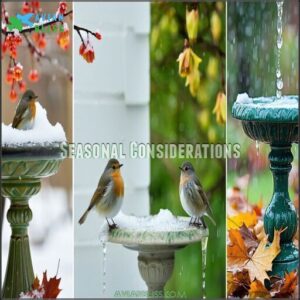
When seasons change, your bird bath maintenance needs a little tweaking.
For winter care, heated baths prevent winter freezing and keep water available.
Spring migration means more visitors, so step up your bird bath cleaning schedule.
Summer algae blooms and mosquito infestations? Frequent scrubbing and algae removal are your best friends.
In fall, diseases can spread, so clean thoroughly to support migrating birds.
Smart shade placement reduces evaporation and algae, making seasonal considerations easier all year round.
Monitoring Water Quality

Keeping an eye on bird bath water quality is like being a lifeguard for your feathered friends.
Look out for algae growth, murkiness indicators, or odor detection—these scream bird bath water contamination.
Regularly refresh the water to lower pathogen levels and prevent bird bath waterborne pathogens.
Stick to a smart refill frequency, and you’ll make bird bath water care a breeze while keeping your birds happy and healthy.
Ceramic Bird Bath Safety Tips
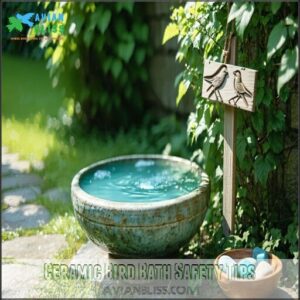
Keeping your ceramic bird bath safe isn’t just about the birds—it’s about keeping your yard peaceful and inviting too.
By avoiding harmful substances and tackling mosquito problems early, you’ll create a clean, worry-free spot for your feathered visitors.
Avoiding Toxic Substances
Protect your feathered friends by sticking to bird-safe cleaning solutions. Harsh chemicals can harm birds by stripping oils from their feathers or leaving toxic residue.
Instead, opt for natural cleaning solutions like vinegar-water mixes or enzyme cleaners. Always rinse thoroughly to remove any leftover cleaning agents.
Here are some tips to avoid bird bath toxic substances:
- Skip synthetic soaps and harsh chemicals.
- Use safe sealants labeled non-toxic for birds.
- Avoid copper toxicity by skipping copper-based cleaners.
- Mix homemade solutions carefully, following safe recipes.
Protecting Birds From Harm
Bird bath safety means thinking ahead.
Use bird-safe cleaning solutions to keep water fresh and prevent disease.
Place baths in open spaces to avoid predators and guarantee safe placement.
Keep water depth shallow—about two inches—for bird health.
Watch for winter hazards like frozen water, which can trap birds.
Use a heater or deicer to prevent such dangers.
| Safety Tip | Why It Matters | Action to Take |
|---|---|---|
| Predator Deterrents | Protects birds from attacks | Place in open areas |
| Water Depth | Prevents drowning | Keep under 2 inches |
| Winter Safety | Avoids freezing dangers | Use a heater or deicer |
Preventing Mosquito Infestations
Mosquitoes love standing water, but you can stop them in their tracks.
Keep your bird bath mosquito-free with these tips:
- Water circulation: Add a bubbler or fountain to keep pests away.
- Regular changes: Dump and refill bird bath water every 2-4 days.
- Natural predators: Attract dragonflies for natural mosquito control.
Consider adding a bird bath bubbler to further discourage mosquitoes.
Clean often, remove algae, and consider safe larvicide options for extra protection!
Enhancing Ceramic Bird Baths
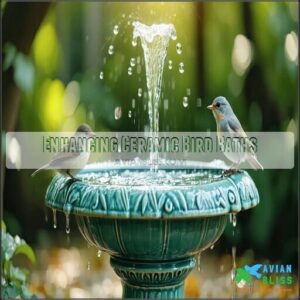
You can make your ceramic bird bath even more inviting by adding simple features like bubblers or heaters.
These small upgrades both attract more birds and keep the water clean and safe year-round.
Adding Water Features
A bird bath fountain or gentle bubblers can transform your bath into a bird-friendly environment while keeping algae at bay.
Drippers and moving water attract more birds and work as natural mosquito deterrents.
Solar-powered bird bath water features are eco-friendly and stylish, and these additions both enhance functionality and create a lively space that birds love.
It’s like hosting nature’s pool party!
Using Heaters and Deicers
Keeping your bird bath winter-ready doesn’t have to feel like rocket science. A bird bath heater with thermostat control guarantees water stays drinkable without spiking your energy bill.
- Use heater types safe for ceramic baths to prevent cracks.
- Monitor energy consumption by placing baths in sunny spots.
- Explore DIY heaters or insulated bases for extra protection.
Glazes help protect against weather and simplify cleaning, guaranteeing longevity. Your feathered friends will thank you!
Incorporating Wildlife-Safe Enzymes
Adding wildlife-safe enzymes to your ceramic bird bath is like having a secret cleaning assistant.
These enzymes handle algae control and water clarity by breaking down debris naturally.
They’re bird-safe and make bird bath maintenance easier by reducing scrubbing time.
Just follow the enzyme application instructions—don’t wing it!
With regular use, you’ll notice better algae removal, cleaner water, and happier birds enjoying their safe, sparkling oasis.
Creating a Bird-Friendly Environment
Creating a bird-friendly environment isn’t rocket science, but it does take some thoughtful planning.
Start with native plants for shade and food. Place your ceramic bird bath near shelter for bird safety, but keep it away from predator hideouts.
Maintain proper water depth (2 inches max) and fresh bird bath water. Clean regularly to support bird health and happiness.
- Use native plants for shade and natural food.
- Position near shelter, avoiding predator zones.
- Maintain shallow water depth for bird safety.
- Clean often to guarantee bird bath water stays fresh.
Benefits of Regular Maintenance

Keeping up with regular maintenance makes your bird bath a hotspot for happy, healthy birds. Plus, it helps prevent algae, disease, and those pesky mosquitoes from crashing the party.
Attracting More Birds
To attract more birds, start with safe placement—near shrubs for shelter but far from predators.
Add native plants to your bird bath landscaping to provide food sources and a natural, bird-friendly environment.
Keep the ceramic bird bath water fresh and clean; birds won’t visit a murky mess! Incorporate water movement, like a bubbler, to catch their attention and deter mosquitoes.
Consider offering black oil sunflower seeds to attract cardinals, finches, and woodpeckers. Think of your yard as a bird spa—offering shelter options, food, and sparkling water. It’s a recipe for feathered guests flocking in!
Preventing Disease and Illness
Dirty bird baths can become breeding grounds for stagnant water, spreading pathogen risks like avian flu and other diseases.
Weekly cleanings and proper bird bath hygiene are your best tools for bird bath disease prevention.
Scrubbing away algae and debris also protects feather health and keeps your backyard’s ecosystem thriving.
Think of it like offering a fresh drink to a friend—clean water supports bird health and keeps them coming back.
A little bird bath sanitation goes a long way!
Maintaining Water Quality
Keep your bird bath water fresh by making frequent changes—every 2-4 days works best.
Place it in the shade for algae prevention, and toss in a pre-1982 copper penny to slow growth.
Use enzyme cleaners to break down gunk, and don’t forget water circulation, like a bubbler, to keep things moving.
Clean water equals happy, healthy birds!
Supporting Bird Health and Well-being
Fresh water isn’t just invigorating—it’s essential for feather health and safe hydration.
Regular bird bath cleaning keeps bacteria and algae at bay, ensuring bird safety and disease prevention. A clean bird bath supports their ecosystem and encourages clean preening, which helps birds stay healthy.
- Scrub with bird-safe tools to create a welcoming space.
- Replace bird bath water often to reduce contamination.
- Stick to a consistent bird bath maintenance schedule for happy, thriving visitors, which is crucial for their safe hydration and overall well-being.
Frequently Asked Questions (FAQs)
How to keep a ceramic bird bath clean?
Rinse and scrub your ceramic bird bath weekly with a soft brush and a vinegar-water mix (9:1).
Avoid harsh chemicals, rinse thoroughly, and let it dry completely before refilling to keep birds safe.
This will ensure the bird bath remains a healthy and welcoming environment for birds.
How do you seal a ceramic bird bath?
Ever wondered how to protect your ceramic bird bath from wear?
Apply a clear, nontoxic sealant evenly to the surface.
Let it dry completely before use, and voilà—your bird bath stays durable and easy to clean!
Do copper pennies keep bird baths clean?
Placing a pre-1982 copper penny in your bird bath can help reduce algae growth.
The copper releases ions that slow algae buildup, but it’s not a magic fix—regular cleaning is still essential.
Are ceramic bird baths a good idea?
A ceramic bird bath is like a charming garden jewel—beautiful, durable, and easy to clean.
It retains water well, resists rust, and stays cool in summer.
Just handle carefully to avoid cracks or chips.
How to prevent ceramic bird bath cracks?
To prevent cracks, bring your ceramic bird bath indoors before freezing weather hits.
If that’s not possible, completely empty it, cover with a weatherproof tarp, or use a heater to keep water from freezing.
Best location to place ceramic bird baths?
Pick a shady spot, near shrubs for cover but away from feeders to avoid debris.
Keep it level to prevent tipping, close to a hose for easy refills.
Birds love safety, not surprises!
How to repair chipped ceramic bird baths?
Fix chips by cleaning the area, applying waterproof epoxy, and smoothing it with a putty knife.
Let it cure fully before use.
For larger chips, mix epoxy with matching paint for a seamless repair.
What to do if ceramic glaze fades?
Did you know UV exposure can fade glazes over time?
To restore shine, apply a non-toxic ceramic sealant after cleaning.
It’s like sunscreen for your bird bath—keeps it looking fresh and protected!
How to transport ceramic bird baths safely?
Wrap the bird bath in thick blankets or bubble wrap for cushioning, then secure it in a sturdy box.
Place it upright in your car’s trunk, surrounded by soft items to prevent shifting.
How to repair cracks in ceramic bird baths?
Cracks in ceramic bird baths are like wrinkles on a favorite book—fixable with care.
Use waterproof epoxy or ceramic adhesive, apply evenly, let it cure fully.
Seal with a nontoxic glaze for durability.
Conclusion
Maintaining a ceramic bird bath doesn’t have to be a chore.
Sure, weekly cleaning might sound tedious, but it’s a small effort for a big reward—happy, healthy birds flocking to your yard.
Stick to natural solutions, avoid harsh chemicals, and keep water fresh daily to prevent bacteria and mosquitoes.
Add a deicer in winter, and place the bath in a shady spot to slow algae growth.
With these ceramic bird bath maintenance tips, you’ll create a safe, inviting space for feathered friends.