This site is supported by our readers. We may earn a commission, at no cost to you, if you purchase through links.
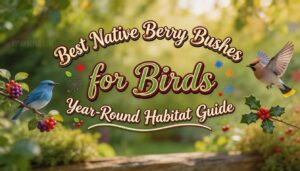
A single serviceberry shrub in full fruit can strip clean in under two days—thrushes, waxwings, and bluebirds descend on it like it’s the only table in town. That’s the kind of pull native berry shrubs have on local wildlife, and it happens because these plants and the birds that depend on them evolved together over thousands of years.
A birdbath and a feeder are fine, but the yard that keeps birds coming back season after season offers something deeper: real food, real cover, and a reason to stay.
Choosing native berry bushes for birds means working with that relationship, not around it.
Table Of Contents
Key Takeaways
- Native berry shrubs like serviceberry, winterberry, and elderberry draw far more birds than feeders alone, because birds and these plants evolved together over thousands of years.
- Matching shrubs to your yard’s sunlight, soil drainage, and USDA hardiness zone is the deciding factor between a thriving habitat and a struggling plant.
- Layering tall, mid-height, and low shrubs while staggering their fruit seasons keeps birds fed continuously from early summer through the coldest winter months.
- A few common bird-friendly shrubs — including winterberry holly and elderberry — are toxic to pets, so placement and fallen berry cleanup matter if you have animals in your yard.
Best Native Berry Bushes to Plant for Birds
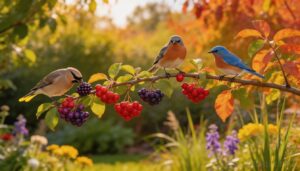
Not every berry bush earns its place in a bird-friendly yard, so choosing wisely matters more than planting a lot. few key factors — how we selected these plants, how your yard’s conditions stack up, and which USDA zone you’re in — shape which ones will actually thrive and feed birds long-term.
Pairing your berry bush choices with broader habitat strategies — like those covered in these bird habitat preservation tips for native planting and water features — helps you build a yard birds will actually return to season after season.
Here’s what to think about before you start.
How We Chose These Bushes
Choosing the right shrubs takes more than guessing what looks pretty. Every bush on this list earned its spot through five clear filters:
- Bird attraction metrics — proven appeal to local songbirds
- Native status verification — true native species supporting local ecosystems
- Fruit production consistency — reliable annual yields across seasons
- Drought tolerance — manages dry spells without babysitting
- Cost-effective sourcing — widely available at reasonable prices
These native berry-producing plants for wildlife deliver year-round bird habitat in gardens without complicated care.
Selecting The Right Environment for Your Yard
Before picking a single shrub, take a walk around your yard at different times of day. Notice where sun lingers, where wind cuts through, and where water pools after rain — that’s your microclimate mapping in action. Drainage assessment and soil texture evaluation tell you what roots will actually tolerate. Most native berry-producing plants for wildlife prefer well-drained loamy soil at pH 6.0–7.0.
| Factor | What to Check | Why It Matters |
|---|---|---|
| Sunlight | 6+ hours daily | Drives berry production |
| Drainage | No standing water | Prevents root rot |
| Wind exposure | Open vs. sheltered | Shapes windbreak design needs |
Smart habitat connectivity planning links shrub groupings so birds can move safely between feeding zones, turning your yard into a reliable year-round bird habitat in gardens. A thorough soil type assessment helps make sure your chosen shrubs thrive.
Matching Bushes to Your USDA Hardiness Zone
Once you’ve mapped your yard’s sun and soil, match each native berry shrub to your USDA hardiness zone. Zone hardiness isn’t just a label—it tells you which plants will survive your winters and summers.
For example, arrowwood viburnum thrives in zones 2–8, while serviceberry does well in zones 4–9.
Microclimate tips matter too: sheltered corners boost cold tolerance, while good soil drainage helps year-round bird habitat in gardens.
Winterberry Holly: The Winter Showstopper
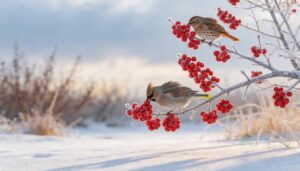
When most of your garden has gone quiet and bare, winterberry holly steps in like it owns the season. Those vivid red berries clinging to naked branches aren’t just beautiful — they’re a lifeline for birds pushing through the cold months.
Pairing winterberry with other seasonal offerings transforms your yard into a reliable refuge — explore bird-friendly fruits and berry shrubs for cold-weather feeding to keep your feathered visitors coming back all winter.
When winter silences the garden, winterberry holly’s vivid red berries become a lifeline for birds
Here’s what makes this native shrub worth every bit of space you give it.
Why Birds Love Winterberry’s Bright Red Berries
When winter strips the landscape bare, Winterberry (Ilex verticillata) becomes a lifeline. That Bright Color Signal — vivid red against snow — acts like a beacon for hungry birds facing Winter Food Scarcity. The High Sugar Content fuels quick energy on freezing days, and reliable Berry Retention keeps branches loaded for weeks.
Birds return again and again because winterberry offers:
- Easy Perching Visibility from branch clusters
- Quick calorie bursts from natural sugars
- Consistent fruit through harsh cold spells
- Safe foraging above snow-covered ground
- Reliable winter bird nutrition when insects vanish
Growing Conditions and Male/Female Planting Tips
Winterberry thrives in USDA zones 3–9, so checking your zone first saves a lot of frustration. It tolerates wet, acidic soil — ideal Soil pH Management is around 4.5–6.0.
Because it’s a dioecious plant species, you’ll need both male and female plants; follow a Male Female Ratio of roughly one male per five females.
Apply Planting Depth Guidelines carefully, keeping the root flare at soil level, and choose a Windbreak Site Selection to shield it from harsh winter winds.
Best Bird Species Attracted to Winterberry
A mature stand of Winterberry Ilex verticillata can pull in 20 or more bird species through a single season.
Cedar Waxwing Preference runs strong here — flocks descend fast during cold snaps.
Robin Winter Foraging picks up in late fall, helping robins pack on fat for survival.
Cardinal Berry Consumption increases after rain softens the fruit.
Thrush Seasonal Visits and Bluebird Energy Source need to bring additional regulars, while blue jays and cardinals round out the crowd.
Top Berry Shrubs for Year-Round Bird Feeding
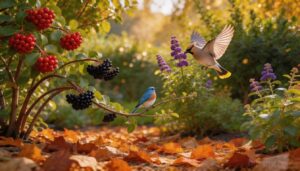
No single shrub can carry birds through every season on its own — that’s why variety matters. The right mix of plants keeps your yard stocked with food from the first warm days of summer all the way through the coldest weeks of winter.
Here are some of the best native berry shrubs and vines to explore, organized by season.
Early Summer Picks — Serviceberry and Elderberry
Few plants pull double duty quite like serviceberry (Amelanchier) and elderberry (Sambucus) — two native berry-producing plants for wildlife that kick off your year-round bird habitat in gardens, right at early summer.
- Bird Energy Boost: Their nutrient density fuels migrating thrushes, waxwings, and bluebirds during peak travel season.
- Fruit Color Signals: Deep blue-purple serviceberry and dark elderberry clusters tell birds exactly when to feed.
- Human Culinary Uses & Pollinator Attraction: Both offer edible fruit for jams and syrups, while their spring blooms draw bees before berries even form — supporting seasonal fruit availability to support year-round bird feeding.
Fall Favorites — Arrowwood Viburnum and Chokeberry
As summer fades, arrowwood viburnum (Viburnum dentatum) and chokeberry (Aronia melanocarpa) step up as reliable native berry-producing plants for wildlife.
Their late-season fruit and vibrant fall foliage make them a dual gift — beautiful and functional.
Migratory thrushes and waxwings depend on these dense cover value shrubs for shelter and fat-rich meals, supporting seasonal fruit availability for year‑round bird feeding.
Winter Stalwarts — American Holly and Northern Bayberry
When food gets scarce, two native plants quietly hold the line. Ilex opaca (American Holly) keeps its evergreen holly berries bright red well into winter, while Northern Bayberry’s waxy fruit clusters offer berry fragrance and coastal resilience that few shrubs match.
Both deliver real winter food for birds:
- Fruit persistence through cold snaps feeds thrushes and waxwings
- Fruit nutrition from fat-rich bayberry wax fuels migratory birds
- Winter aesthetics plus reliable shelter from holly’s dense canopy
Vines That Offer Seasonal Berries — Virginia Creeper and Trumpet Honeysuckle
Don’t overlook what’s growing on your fence. Native vines like Virginia Creeper and Trumpet Honeysuckle quietly punch above their weight as year-round bird habitat in gardens. Their Vine Growth Rate is impressive, but the real payoff is Winter Food Source reliability — blue-purple berries from Virginia Creeper and red clusters from Trumpet Honeysuckle supporting migration stopover support when birds need it most.
| Vine | Berry Season | Key Bird Visitors |
|---|---|---|
| Virginia Creeper | Fall–Winter | Chickadees, Nuthatches |
| Trumpet Honeysuckle | Late Summer–Fall | Thrushes, Waxwings |
| Both Combined | Year-Round | Migratory + Resident |
Their Fruit Nutrient Content — rich in fats and carbohydrates — fuels birds through cold snaps, while their dense growth creates Habitat Connectivity between your shrub layers.
How to Plant and Maintain Bird-Friendly Berry Bushes
Getting your berry bushes off to a good start makes all the difference in how well they feed birds season after season. A few simple habits — right from planting day — set you up for healthy growth and reliable fruit.
Here’s what to focus on.
Soil, Sunlight, and Moisture Requirements
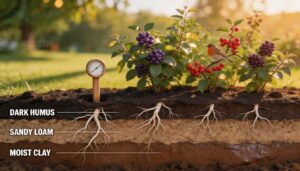
Getting the basics right makes all the difference. Most native berry bushes thrive with proper Soil Texture, pH Balance, and Sunlight Exposure from the start.
- Soil preparation and pH management keep soil acidity between 5.5–6.5 for most species
- Moisture Management means keeping it evenly moist — not soggy — to prevent root rot
- Sun exposure requires 6+ hours daily for strong berry production
- Water-loving shrubs like winterberry tolerate wet spots; drought-tolerant firethorn tolerates drier sites
Spacing, Mulching, and Watering Best Practices
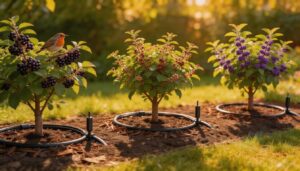
Once your soil and sunlight are sorted, spacing becomes the next piece of the puzzle. For most native berry-producing shrubs for wildlife, keep bush centers 6 to 8 feet apart to allow good airflow.
Apply organic mulch 2 to 4 inches deep, following basic mulch depth guidelines, and keep it away from stems.
Drip irrigation placement low at the root zone, paired with soil moisture sensors, makes seasonal watering adjustments simple and effective.
Pruning Schedules to Maximize Berry Production
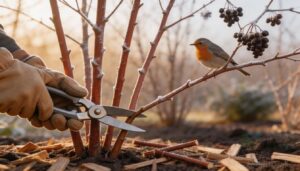
Timing your cuts matters as much as making them. Dormant Season Pruning — late winter, before buds break — keeps stress low and sets up strong canes for fruiting. Practice smart Canes Selection Timing by keeping four to eight healthy canes per plant.
Post-Harvest Thinning and Light Penetration Management open the canopy, improving Disease Prevention Pruning results and boosting seasonal fruit availability for your birds.
Avoiding Pesticides to Protect Birds and Pollinators
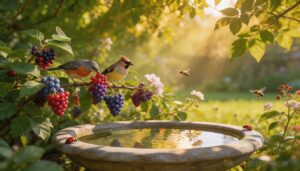
Smart pruning keeps your plants healthy, but watch what you spray nearby. Pesticides can wipe out the very birds and pollinators you’re trying to attract. Integrated Pest Management and Biological Control Agents — like releasing ladybugs or lacewings — handle most pest problems without the fallout.
A few practical habits make a real difference:
- Keep Habitat Buffer Zones of at least 10 feet around flowering shrubs
- Practice Pollinator Safe Spraying by applying only in calm winds, early morning or late evening
- Focus on Drift Reduction by choosing granular products over sprays when possible
- Support Minimizing pesticide use to protect birds and insects through companion planting and trap crops
Your bird-friendly garden thrives when the whole ecosystem stays intact.
Designing a Multi-Layered Bird Habitat With Berry Shrubs
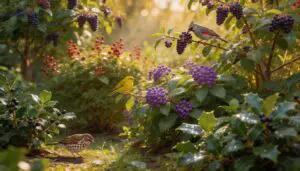
Planting berry shrubs is just the start — how you arrange them makes all the difference for the birds that visit. A well-layered garden gives every species, from ground-foragers to canopy dwellers, a place to feed, nest, and take shelter.
Here’s how to put it all together.
Layering Tall, Mid-Height, and Low Shrubs for All Birds
Think of your yard as a living apartment building for birds. Tall shrubs like mountain ash claim the back, offering vertical perching opportunities and Habitat Connectivity Layers between canopy and ground.
Arrowwood viburnum fills the middle, while low winterberry anchors the front.
This arrangement delivers native berry-producing plants for wildlife at every height, supporting a year-round bird habitat in gardens across all seasons.
Creating Nesting and Shelter Zones With Dense Growth
Dense thorny shrub growth does more than fill space — it creates genuine nesting sites where birds feel protected. Here’s why it matters for your year-round bird habitat:
- Microclimate Regulation keeps nesting areas 2–4°F cooler in summer heat
- Predator Deterrence Design cuts predation risk by up to 40%
- Ground Cover Management hosts insects fledglings depend on
- Cavity Creation Strategies through Seasonal Density Adjustments support native berry shrubs for bird habitat enhancement
Staggering Bloom and Fruit Times for Continuous Food Supply
When you stagger bloom and fruit times, you’re practicing phenology matching — aligning your plantings with birds’ seasonal needs. Bloom overlap between serviceberry, elderberry, and chokeberry closes seasonal nectar gaps while supporting pollinator synchronization that improves fruit set.
Fruit ripening stages across spring, summer, and fall create a steady, layered timeline birds can count on.
| Season | Plant | Benefit |
|---|---|---|
| Early Summer | Serviceberry | First fresh berries |
| Late Summer | Elderberry | Peak migration fuel |
| Winter | Winterberry Holly | Scarce-season lifeline |
Safety Notes — Toxic Species and Pet-Friendly Placement
A few plants in your bird-friendly garden can harm pets. Winterberry Holly, American Holly (Ilex opaca), Firethorn (Pyracantha coccinea), Elderberry (Sambucus), and Hawthorn (Crataegus monogyna) all carry real pet toxicity risks.
Use barrier installation and pet access control to keep curious dogs and cats away. Choose pet safe mulch, practice toxic plant ID, and remove fallen berries promptly.
Frequently Asked Questions (FAQs)
Do berry bushes attract unwanted pests or rodents?
Yes, berry bushes can attract rodents. Fruit spillage and ground debris are the main culprits.
Regular pest monitoring and prompt removal of fallen fruit keep squirrel damage and unwanted visitors manageable.
Can berry shrubs thrive in containers or raised beds?
Tight spaces don’t have to mean giving up on berry shrubs. With proper raised bed drainage and smart root space management, compact varieties like Sunshine Blue blueberry thrive beautifully.
How long until newly planted shrubs produce berries?
Most shrubs take two to three Establishment Years before their First Fruit Timing kicks in.
With proper sun, water, and Pollination Requirements met, you’re usually looking at a small harvest by year two or three.
Conclusion
Did you know that one-third of bird species rely on native berries for survival? By choosing native berry bushes for birds, you’re supporting an indispensable food source.
As you plant and tend these shrubs, you’re not just feeding birds—you’re nurturing an ecosystem. With the right selection and care, your yard can become a haven for local wildlife.
Choosing native berry bushes for birds is a simple yet powerful way to make a lasting impact.