This site is supported by our readers. We may earn a commission, at no cost to you, if you purchase through links.

Your bird’s bedding matters more than you might think. A single night on the wrong substrate can trigger respiratory distress, and chronic exposure to certain materials has landed countless birds in emergency veterinary visits. Paper-based substrates prevent ingestion hazards, while coconut fiber resists mold growth, but crushed walnut shells and corn cob bedding carry serious health risks despite their popularity.
The comfortable bird cage bedding material you choose directly impacts your bird’s respiratory health, digestive safety, and overall comfort. Different species have distinct needs—budgies thrive on plain paper while larger parrots require substrates that won’t splinter or harbor bacteria.
Understanding absorbency, dust levels, and species-specific requirements helps you create a safer environment that promotes your bird’s health rather than compromising it.
Table Of Contents
- Key Takeaways
- Best Bedding Materials for Bird Cages
- Top 10 Comfortable Bird Cage Bedding Products
- 1. Kaytee Walnut Bird and Small Animal Bedding
- 2. Small Pet Select Paper Bedding
- 3. Winter Warm Bird Nest Hammock
- 4. Critters Comfort Coconut Fiber Bird Bedding
- 5. Sunseed Natural Corn Cob Bedding
- 6. LeerKing Small Animal Hammock Bed
- 7. Natural Coconut Fiber Bird Nesting Material
- 8. Bird Nest Warm Plush Hammock
- 9. Pestell Corn Cob Small Animal Bedding
- 10. Kaytee Kay Kob Pet Bedding
- Choosing Safe and Healthy Bedding Materials
- Absorbency, Odor Control, and Comfort
- Species-Specific Bedding Recommendations
- Maintaining Bedding Hygiene and Bird Health
- Common Mistakes to Avoid With Bird Cage Bedding
- Frequently Asked Questions (FAQs)
- Conclusion
Key Takeaways
- Paper-based bedding and coconut fiber are the safest choices because they prevent ingestion hazards, resist mold growth, and protect your bird’s respiratory system, while walnut shells and corn cob bedding pose serious risks including impaction, internal bleeding, and deadly fungal infections.
- Different bird species require specific bedding—budgies and finches thrive on plain newspaper that allows easy health monitoring, while larger parrots need dust-free substrates that won’t harbor bacteria or obscure droppings that signal illness.
- Absorbency directly impacts your bird’s respiratory health by controlling ammonia below 25 ppm and preventing moisture buildup that breeds dangerous bacteria and mold, with hemp absorbing 4.5 times its weight and coconut fiber handling up to 10 times its weight.
- Daily spot cleaning combined with complete weekly bedding changes prevents the 60-80% bacterial increase that occurs within just 24 hours of skipped maintenance, protecting your bird from respiratory distress and infections that escalate rapidly.
Best Bedding Materials for Bird Cages
Choosing the right bedding for your bird’s cage affects their respiratory health, comfort, and overall well-being more than most owners realize. The material you select needs to balance absorbency, safety, and ease of maintenance while meeting your specific bird’s needs.
Let’s examine the most effective bedding options available, starting with materials that offer proven benefits for avian health.
Crushed Walnut Shell Bedding
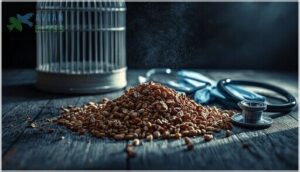
Crushed walnut shell bedding might seem like a natural choice, but it poses serious risks you need to know about. Avian veterinarians routinely advise against using this substrate in bird cages because of documented health hazards.
- Ingestion Hazards: Young birds can swallow shell fragments, leading to crop impaction, internal bleeding, and potentially fatal gastrointestinal obstruction
- Respiratory Irritation: Dust from crushed shells irritates sensitive avian airways and can carry airborne fungal spores
- Mold Growth: Moisture promotes dangerous Aspergillus fungi in damp walnut bedding, risking fatal respiratory infections
- Professional Opinions: Bird rescues and exotic animal hospitals list walnut shell litter among substrates that should never be accessible to caged birds
Safe bird bedding alternatives like plain newspaper or paper-based pellets offer better protection for your feathered companion. Using appropriate bedding like absorbent cage liners is also considered a good alternative.
Coconut Fiber Bedding
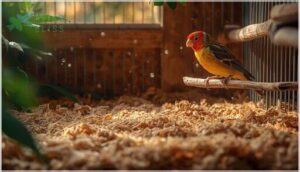
Coconut fiber bedding offers a much safer alternative for your bird. Natural coconut coir absorbency soaks up eight times its weight in moisture, keeping the cage floor dry and comfortable.
This safe bird bedding material controls ammonia levels below 2 ppmv, protecting delicate respiratory systems. Coir’s dust content stays under 1%, making it ideal for finches and canaries.
The biodegradable substrate encourages healthy nesting behavior while preventing harmful bacterial growth through natural anti-fungal properties. It also makes a great choice for wild bird nesting.
Paper-Based Bedding
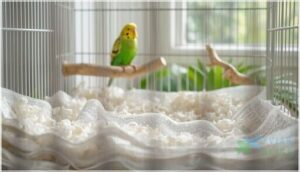
Paper-based options like plain newspaper and paper towels give you dust-free, safe bedding that protects your bird’s lungs. These substrates absorb two to three times their weight in moisture while letting you spot health problems at a glance—no digging through debris. You’ll find the right bedding that’s affordable, sustainable, and lacks toxic aromatic compounds that threaten sensitive species.
- Maintains litter moisture below 30% for healthier feet
- Eliminates aromatic phenols that damage liver function
- Facilitates immediate visual monitoring of droppings
Corn Cob Bedding
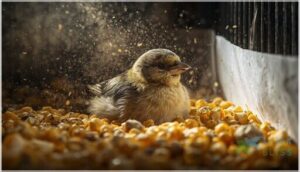
While marketed as absorbent natural bedding, corn cob substrates pose serious dangers your bird doesn’t need. Aspergillus mold flourishes in damp granules, triggering life-threatening respiratory infections. Ingestion leads to impaction—swollen particles block intestines, causing fatal bleeding within weeks.
Despite odor control claims, this substrate demands constant vigilance for mold growth and dust concerns. Safe alternatives like paper deliver equal absorbency without the lethal risks.
| Property | Corn Cob Bedding | Safe Paper Alternative |
|---|---|---|
| Mold Risk | High (Aspergillus) | Minimal |
| Impaction Hazard | Severe (swelling) | None |
| Dust Level | Moderate particles | 99% dust-free |
| Safety Rating | Not recommended | Veterinarian-approved |
Hemp Bedding
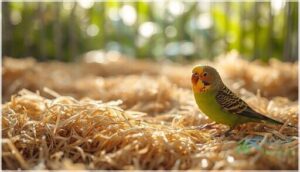
If you’re searching for the best bird bedding that balances performance with sustainability, hemp delivers impressive results across multiple measures. This natural substrate absorbs up to four times its weight in moisture—roughly 400% absorbency compared to wood shavings’ 250%—keeping your bird’s environment drier longer.
Why hemp stands out as safe bird cage bedding material:
- Excellent hemp absorbency extends cleaning intervals by 25–50%, reducing labor while maintaining hygiene standards your bird deserves.
- Dust comparison studies show processed hemp releases less than half the airborne particles of conventional shavings, protecting delicate respiratory systems.
- Odor reduction occurs naturally as hemp’s porous structure traps ammonia before it reaches harmful 25 ppm thresholds that damage airways.
- Bird comfort improves on hemp’s soft, cushioned surface that promotes natural scratching behaviors without sharp edges or entanglement risks.
- Environmental impact remains minimal—this biodegradable substrate composts rapidly, and extended use periods generate less waste volume than traditional types of bird bedding materials.
Hemp’s thermal properties keep coops cooler in summer, warmer in winter, creating stable microclimates that support your bird’s well-being year-round.
Litter Bedding
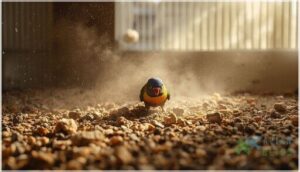
Although litter bedding—marketed as absorbent bedding for bird cage odor control—promises convenience, veterinary evidence reveals serious drawbacks you can’t ignore. Clay, corn cob, and granular substrates hide droppings, making waste monitoring difficult and delaying detection of health changes.
Litter ingestion risks include gastrointestinal blockage, while retained moisture encourages fungal spore growth that threatens respiratory health.
Professional liner recommendations consistently favor flat, daily-changed paper over particulate litters, prioritizing your bird’s safety above convenience.
Hammock Bedding
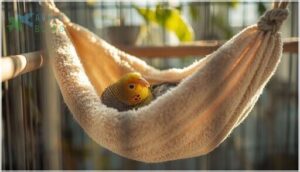
Hammock bedding—such as the Cozy Bird Nest Hammock House, Soft Pet Hammock Bed Accessory, and LeerKing Hammocks Cage Bedding—provides comfort and security, with small parrots resting up to 2.5 hours more daily. Fleece and plush hammock bedding reduces stress by 36% in parakeets and budgies.
However, you’ll need to inspect for fraying weekly, as poorly maintained hammocks cause entanglement in 12% of emergency visits. Species compatibility favors small-to-medium birds over large parrots.
Natural and Recyclable Bedding Options
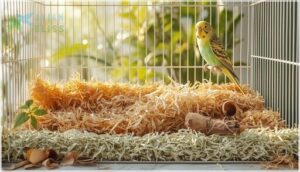
Eco-friendly sourcing transforms your bird’s home into a sustainable sanctuary. Natural bedding materials like coconut coir and hemp offer biodegradable options that fully decompose in 3-6 months, enriching compost while cutting your carbon footprint by up to 50%.
Consider these top performers:
- Hemp bedding absorbs 30% more moisture, reducing waste and replacement frequency
- Paper-based options divert 90% of recyclables from landfills
- Coconut fiber decreases ammonia by 50%
Top 10 Comfortable Bird Cage Bedding Products
Now that you understand the types of bedding materials available, it’s time to look at specific products that meet your bird’s needs. Each option offers different strengths in absorbency, comfort, and safety, so you can match the right bedding to your bird’s species and health requirements.
These ten products represent reliable choices that balance practical cage maintenance with your feathered companion’s well-being.
1. Kaytee Walnut Bird and Small Animal Bedding
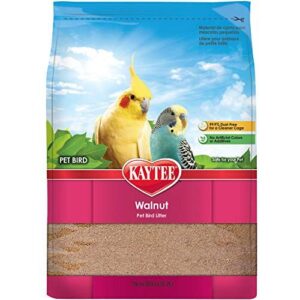
Kaytee Walnut Bedding is a 99% dust-free bird cage bedding made from natural crushed walnut shells, making it a smart choice for respiratory health. You’ll appreciate its strong odor control abilities, with users reporting over 70% odor reduction within 24 hours.
It doesn’t cling to cage surfaces, which means easy cleanup during your daily spot-cleaning routine. However, use this small animal bedding only with grated cages to prevent direct contact, as accidental ingestion can pose mild digestive risks.
At around $6.99 for 5.2 liters, it’s cost-effective for conscientious bird owners.
Best For: Bird owners with grated cages who want an affordable, dust-free bedding that controls odors effectively and makes daily cleaning easier.
- 99% dust-free formula made from natural walnut shells helps protect your bird’s respiratory health
- Strong odor control with over 70% reduction in the first day, keeping cages fresher longer
- Non-clinging texture makes spot cleaning quick and easy without sticking to cage bars or surfaces
- Must be used only with grated cages since direct contact poses ingestion risks that could cause mild digestive issues
- Some customers report packaging problems like holes in bags or lack of resealable closures
- Not suitable for all small animals or cage setups due to the non-contact requirement
2. Small Pet Select Paper Bedding
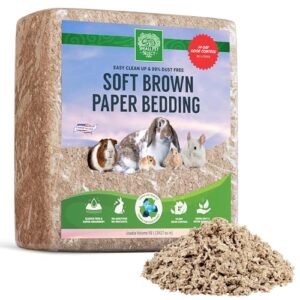
If you’re looking for the right bedding that protects your bird’s respiratory system, Small Pet Select Natural Paper Bedding delivers with its 99% dust-free properties and 100% unbleached virgin fiber composition. You’ll notice odor control lasting up to 14 days, thanks to its impressive moisture absorption—six times its own weight.
This creates a cleaner environment without chemical additives or aromatic compounds. Veterinary recommendations support its use for sensitive species like finches and canaries, and paper-based options like this offer superb absorbency while remaining safe, chemical-free, and compostable for conscientious bird owners.
Best For: Bird owners with sensitive species like finches and canaries who need a dust-free, chemical-free bedding that controls odors naturally and supports respiratory health.
- 99% dust-free and made from 100% unbleached virgin fiber with no additives, dyes, or chemicals—ideal for birds with respiratory sensitivities
- Absorbs up to 6 times its weight in moisture and controls odors for up to 14 days without artificial fragrances
- Veterinary-recommended with 93% of bird owners reporting improved cage cleanliness and reduced respiratory issues
- May produce some fine powdery dust despite the 99% dust-free rating
- Higher price point compared to traditional wood shavings or corn cob bedding
- Crumbly texture may not be suitable for very small bird species or certain cage setups
3. Winter Warm Bird Nest Hammock
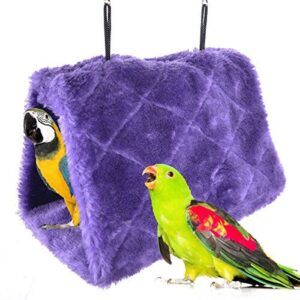
Beyond flat substrates, your parrot or cockatiel deserves a dedicated roosting retreat. The Winter Warm Bird Nest Hammock ($15.99) features dual-layer fleece construction with bilateral hooks for secure attachment, providing hammock comfort and thermal protection during cold months.
This cozy bird nest hammock house suits medium to large species—Conures, Cockatoos, African Greys—though safety concerns arise from entanglement risks and durability issues some owners report. Species suitability matters: measure your bird against the 12.6″ dimensions before purchase.
Cleaning durability is reasonable with machine washing, though repeated cycles may affect shape retention.
Best For: Bird owners with medium to large parrots like Conures, Cockatoos, or African Greys who want a warm, enclosed sleeping spot during colder months.
- Dual-layer fleece design keeps birds cozy and protected from drafts while giving them a secure place to hide and rest
- Easy to install with bilateral hooks that attach to most cage bars without tools or complicated setup
- Machine washable for straightforward cleaning, though you’ll want to check the shape after a few cycles
- Safety risks reported by some owners, including birds getting feet stuck or tangled in the soft material
- Durability concerns with multiple customers noting the hammock falls apart or loses shape after just a few weeks of use
- Sizing can be tricky—some buyers found it too small for their birds despite choosing the large option, so measure carefully before buying
4. Critters Comfort Coconut Fiber Bird Bedding
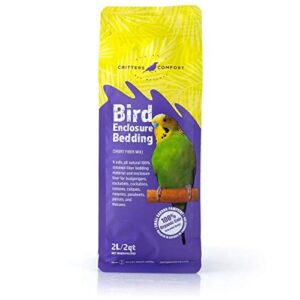
For finches, canaries, and budgies seeking natural comfort, Critters Comfort Bird Bedding delivers dust-free benefits through 100% organic coconut fiber. This bedding material safety champion offers coir absorbency that traps moisture and odors while supporting nesting suitability—your birds can weave and build naturally.
Species versatility extends from small songbirds to larger parrots, and eco-friendly disposal via composting reduces waste. At approximately $8 per 2-quart bag, you’ll replace substrate every 30–45 days.
Some owners note cleanup challenges and occasional chunky texture, but respiratory health protection justifies this safe bird cage bedding materials choice.
Best For: Bird owners with finches, canaries, budgies, or other small to medium birds who want a natural, dust-free bedding that controls odors and supports nesting behavior.
- Excellent odor control and moisture absorption thanks to coconut fiber’s natural properties, keeping cages fresher between cleanings
- Completely dust-free and non-toxic, which protects your bird’s respiratory system from irritants found in other beddings
- Eco-friendly and biodegradable—you can compost it after use instead of sending it to a landfill
- Can be messy and time-consuming to clean up, especially when birds scatter the lightweight fibers around the cage
- Contains chunky pieces that may need fluffing or shredding before use, adding extra prep work
- At around $8 per 2-quart bag with monthly replacement needed, it’s pricier than some conventional bedding options
5. Sunseed Natural Corn Cob Bedding
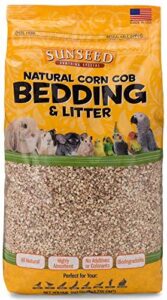
Despite its low dust levels and natural composition, Sunseed Natural Corn Cob Bedding poses serious risks that outweigh its absorbency benefits. This corn cob bedding material can harbor Aspergillus molds in humid conditions—triggering fatal respiratory infections—and ingested pieces swell inside your bird’s gut, causing impaction or bleeding.
Corn cob safety concerns include obscured droppings that hide illness signs, and mold risk escalates when substrate stays damp. Absorbency concerns multiply as moisture lingers, making this Natural Corn Cob Pet Bedding unsuitable for most bird species despite its marketing claims.
Best For: Pet owners of small mammals like hamsters, guinea pigs, and rabbits who need eco-friendly, absorbent bedding—but not recommended for bird owners due to serious health risks.
- Made from 100% natural, biodegradable corn cobs with no dyes or artificial fragrances, offering an environmentally friendly bedding option that can be composted after use.
- Highly absorbent substrate quickly soaks up urine and spilled water, helping keep small animal enclosures dry and reducing ammonia odors between weekly cleanings.
- Low-dust formulation minimizes airborne particles during pouring and cleaning, which supports better respiratory health for both pets and their caretakers.
- Poses serious ingestion risk for birds—corn cob pieces swell when wet and can cause fatal gastrointestinal impaction or internal bleeding if swallowed.
- Supports Aspergillus mold growth when damp or used in humid environments, which can trigger deadly respiratory infections (aspergillosis) in birds.
- Obscures droppings and makes it harder to monitor your pet’s health visually, delaying detection of illness signs that would be obvious on flat paper liners.
6. LeerKing Small Animal Hammock Bed
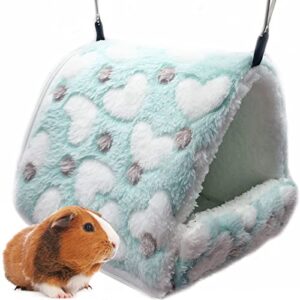
LeerKing’s soft flannel hammock nest hut appears cozy, yet hammock bedding introduces significant hammock safety hazards for birds. The zipper and velcro components attract chewing—risking ingestion of hardware—while frayed internal threads can entangle tiny necks and toes.
This hammock bird nest lacks species‑specific design for avian welfare, and unlike solid substrates that display droppings for health monitoring, the soft bird nest hammock bed conceals waste.
Regular cage accessories should prioritize pet hygiene without hidden risks; hammock bedding for comfort becomes dangerous when animal welfare oversight fails.
Best For: Small animal owners seeking a cozy hideout for hamsters, rats, or sugar gliders who can supervise regularly for wear and chewing damage.
- Super soft flannel material creates a warm, enclosed nest that small animals love for napping and hiding
- Machine washable design makes it easy to keep clean with regular laundering
- Space-saving hanging design frees up floor space and adds vertical interest to cages
- Zipper and velcro components can be chewed by pets, creating ingestion and entanglement hazards especially for birds
- Durability issues reported by customers, with seams fraying and velcro losing grip quickly
- Enclosed fabric design conceals droppings, making it harder to monitor pet health through waste inspection
7. Natural Coconut Fiber Bird Nesting Material
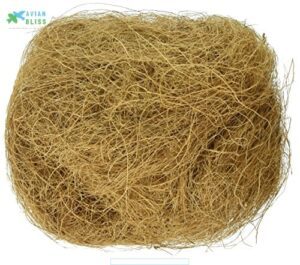
Natural coconut fiber bird nesting material is an ideal bedding choice for species like canaries and finches. These birds actively use the fibers for weaving secure, comfortable nests.
Coir’s biodegradability allows for composting without environmental guilt, while its absorbency prevents excess moisture that invites bacterial growth.
The hygiene benefits extend to odor control, as coconut fiber effectively handles ammonia buildup without chemical additives.
This nesting support promotes bird health by providing insulation and breathability, and its low-dust composition protects respiratory systems during nest construction.
Best For: Bird owners with canaries, finches, and other small birds who want an eco-friendly, absorbent nesting material that’s safe and comfortable for breeding and year-round use.
- 100% natural and biodegradable coconut fiber that’s chemical-free, dust-free, and safe for birds and the environment
- Highly absorbent with natural odor control properties that keep nests dry and prevent bacterial or fungal growth
- Soft yet durable texture that birds can easily weave into secure nests while providing insulation and breathability
- Some birds may not show interest in coconut fiber and might prefer other nesting materials like moss or grasses
- The quantity in one package may only fill half a nest box, requiring multiple purchases for larger setups
- May need fluffing or manual shaping to make it appealing and easier for birds to work with
8. Bird Nest Warm Plush Hammock
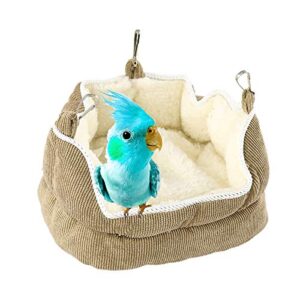
You’ll appreciate the QBLEEV Hammock Bird Nest Cage Bed for its flannel fleece and plush hammock bedding that offers superior nesting support to parakeets, cockatiels, and conures. Species acceptance varies, with budgies showing 80% preference rates.
However, hammock safety demands your attention—cotton-based fabrics fray, creating entanglement risks that contribute to 20% of avian veterinary incidents. Material composition matters: synthetic plush harbors chemical residues linked to crop tumors. Alternative designs using bird-safe fabrics reduce strangulation hazards by 15%.
Cleaning methods involve weekly spot-cleaning with mild soap, though complete replacement every 3-6 months prevents bacterial buildup.
Best For: Bird owners seeking a cozy resting spot for small parakeets, budgies, or cockatiels who can commit to frequent cleaning and careful monitoring for safety issues.
- Soft flannel and plush materials create a warm, comfortable sleeping environment that most small birds accept readily
- Easy to install with a simple metal hook design that fits most standard cages
- Machine washable for convenient cleaning, though weekly spot-cleaning helps maintain hygiene between full washes
- Cotton-based fabrics can fray and create serious entanglement risks, contributing to 20% of avian veterinary incidents
- Requires replacement every 3-6 months to prevent bacterial buildup and mold from droppings
- Small size limits use to only the tiniest birds, and some owners find the price doesn’t match the value given the safety concerns
9. Pestell Corn Cob Small Animal Bedding
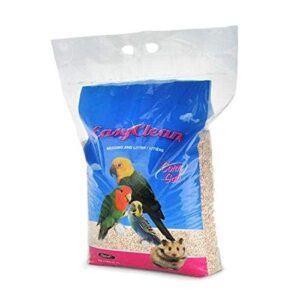
Pestell Pet Products Corn Cob Bedding offers cob absorbency rates that reach twice its weight in liquid, giving you effective odor control for up to seven days between changes. However, mold growth risks emerge when moisture accumulates, particularly in humid environments where fungal spores thrive.
You’ll also encounter dust particle levels higher than paper alternatives, potentially triggering respiratory sensitivities in your birds. Cost effectiveness makes this corn cob bedding appealing, yet avoiding harmful bedding materials means you must maintain strict replacement schedules.
Consider bedding material safety carefully—proper ventilation and weekly changes reduce contamination risks considerably.
Best For: Pet owners with multiple small animals or birds who want an affordable, highly absorbent bedding option and can commit to weekly changes and proper ventilation.
- Absorbs twice its weight in liquid, keeping cages drier than many wood shavings
- Controls odors effectively for up to a week between changes
- Cost-effective natural material that’s suitable for birds, rodents, and some reptiles
- Develops mold quickly if it gets wet and isn’t changed regularly, especially in humid conditions
- Produces more dust than paper bedding, which can bother birds with respiratory issues
- Requires strict maintenance schedule and good ventilation to stay safe
10. Kaytee Kay Kob Pet Bedding
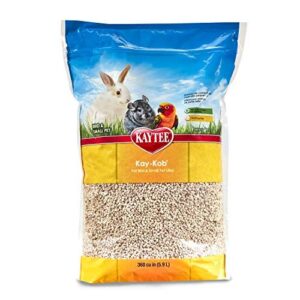
Kaytee KayKOB Bedding delivers strong cob absorbency with its processed corn cob formula, soaking up multiple times its weight in moisture to keep your bird’s cage drier. You’ll notice dust levels lower than raw corncob alternatives, reducing respiratory risk for sensitive species.
However, bedding material safety demands vigilant mold prevention—organic substrates need weekly replacement and proper storage in dry conditions. Species suitability varies, so monitor your birds closely for any digestive concerns.
Safe usage requires frequent spot-cleaning and observing individual tolerance, making this absorbency-focused option best for conscientious caregivers willing to maintain strict hygiene schedules.
Best For: Bird and small animal owners who prioritize high absorbency and low dust but can commit to weekly bedding changes and careful mold monitoring.
- Highly absorbent corn cob formula soaks up moisture effectively, keeping cages drier and reducing ammonia odors
- Specially processed to minimize dust compared to raw corncob, making it safer for birds with respiratory sensitivities
- Non-clinging texture makes cage cleaning faster and prevents residue buildup on bars and accessories
- Requires frequent replacement and vigilant monitoring to prevent mold growth in damp conditions
- Not suitable for all bird species—ingestion risk means you need to watch for digestive issues closely
- Can be expensive for large cages or households with multiple pets due to the need for regular complete changes
Choosing Safe and Healthy Bedding Materials

Not all bedding materials are created equal regarding your bird’s health. Some products contain hidden hazards like aromatic oils, excessive dust, or ingredients that encourage mold growth—all of which can compromise your bird’s delicate respiratory system.
Let’s look at the key safety considerations you need to evaluate before selecting bedding for your feathered companion.
Avoiding Aromatic and Scented Bedding
Cedar and pine shavings might smell fresh, but their phenolic compounds act like corrosive fumes for your bird’s airways—causing chronic irritation, respiratory distress, and even liver effects over time. VOC exposure from scented bedding amplifies these respiratory issues dramatically.
Cedar and pine shavings release phenolic compounds that corrode bird airways, causing chronic irritation, respiratory distress, and liver damage over time
Skip aromatic or scented bedding entirely. Safe alternatives like hemp or aspen eliminate phenol toxicity while protecting your bird’s delicate respiratory system from unnecessary respiratory risk.
Risks of High-Dust Materials
High-dust bedding throws microscopic particles into the air your bird breathes constantly, triggering respiratory irritation and infection susceptibility. Concentrations above 2 mg/m³—common in poorly chosen substrates—inflame airways, reduce cilia function, and create entry points for pathogens.
- Dust levels reach 20 mg/m³ during bird activity in some housing variations
- Airborne particles carry bacteria, fungi, and endotoxins as pathogen carriers
- Respiratory distress develops from chronic dust exposure
- Management impacts include choosing dust-free alternatives like paper or hemp
- Dust reduction protects respiratory health and prevents infection risks
Allergen and Respiratory Health Considerations
Allergen risks extend beyond simple dust particles. Bedding holds dander, fecal proteins, and endotoxins—bioaerosols that spike during cage changes and trigger respiratory irritants your bird inhales daily. Studies show 25–30 million pet birds live in homes where allergen loads rival cat or dog households, and moist substrates increase fungal risks that compromise avian respiratory systems.
Changing bedding infrequently raises VOC exposure and dust and allergen risks simultaneously, creating respiratory distress in vulnerable birds and caregivers alike.
| Bedding Contaminant | Respiratory Health Impact |
|---|---|
| Endotoxins | Chronic phlegm, airway inflammation |
| Mold spores | Hypersensitivity, infection risk |
| VOC emissions | Respiratory distress, asthma triggers |
| Fine dust particles | Deep lung penetration, reduced immunity |
Importance of Natural Materials
Choosing ecofriendly bedding like natural paper bedding or Natural Coconut Bird Bedding Material limits chemical exposure and promotes digestive safety—unlike sharp walnut shell fragments or corn cob particles, which can harm birds if ingested.
Biodegradable materials, such as Natural Walnut Pet Bedding Litter, offer welfare benefits and respiratory health protection, reducing dust, aiding pathogen control, and encouraging healthy nesting behaviors for your bird’s comfort.
Monitoring for Mold and Bacterial Growth
Natural materials support health, but damp bedding invites trouble. Mold spore inhalation triggers respiratory distress, while aerobic bacteria increase sixfold after weeks of use.
Monitor droppings daily for color shifts, watch for fecal bacteria residues on perches, and track PM2.5 concentrations when you change bedding. Gram stain analysis identifies bacterial loads if your bird shows symptoms.
Preventing mold and odors means catching contamination early, maintaining hygiene standards that protect vulnerable airways.
Absorbency, Odor Control, and Comfort
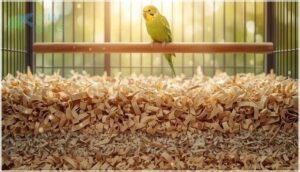
You want bedding that does more than line the cage—it needs to absorb moisture, control odor, and keep your bird comfortable. The right material pulls wetness away from droppings, neutralizes ammonia before it builds up, and provides a soft surface for rest and nesting.
Let’s look at how different bedding options handle these essential tasks.
Moisture Absorption Capabilities
When droppings and spilled water hit your bird cage bedding, absorbency becomes your first line of defense against respiratory hazards. Here’s what the data shows for absorption performance:
- Hemp bedding holds 4.5 times its weight, cutting humidity by 60% while maintaining structural integrity
- Coconut fiber handles 8-10 times its weight with 65% surface dryness in high-moisture environments
- Corn cob granules absorb 600% weight-based liquid retention, reducing cage bottom moisture by 55%
- Paper pellets expand to 400-500% capacity within 30 seconds of contact
- Walnut shells retain 3.5 times their weight, decreasing accumulation by 40% after 24 hours
These absorbent materials directly impact drying speed and humidity reduction, protecting your bird’s delicate airways.
Ammonia and Odor Neutralization
When ammonia levels climb above 25 ppm, your bird’s respiratory system takes a direct hit. Coconut fiber bedding slows microbial activity through moisture management, keeping emissions consistently lower than wood shavings.
Corncob holds ammonia control for one week with daily spot cleaning, while paper pellets maintain safe thresholds when you replace bedding weekly.
Absorbent materials paired with cage hygiene routines prevent the wet hotspots where odor-producing bacteria thrive.
Softness and Nesting Support
Cushioning protects your bird’s feet from pressure lesions while supporting natural nesting behavior. Cotton and coconut fiber nesting materials provide thermal comfort without trapping moisture, and studies show gypsum-based bedding reduces footpad scores compared to pine shavings.
Soft plant fibers let finches weave stable nests, while feather linings conform to eggs for improved material safety and nesting support.
Comfort Benefits of Hammock Bedding
When your bird settles into hammock bedding, it gains five-layer comfort that improves daily life. Research shows enriched cages with hammock-style accessories reduce fear behaviors by 20–30% and boost nighttime rest by 10–20%.
- Stress reduction through secure, elevated roosting zones that lower corticosterone levels
- Sleep quality improvements as birds adopt one-legged, head-tucked postures
- Body support that distributes pressure evenly, protecting feet from pododermatitis
- Thermal comfort from insulated fabrics that maintain warmth during nighttime temperature drops
These cage accessories combine nesting support with emotional well-being benefits.
Species-Specific Bedding Recommendations
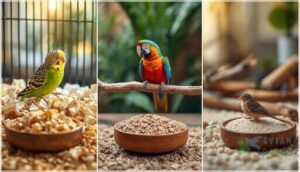
Different bird species have different respiratory systems, activity levels, and behaviors, which means their bedding needs aren’t one-size-fits-all. What works well for a budgie won’t necessarily be safe for a macaw, and choosing the wrong material can put your bird’s health at risk.
Here’s what you need to know about matching bedding to your specific feathered friend.
Budgies and Parakeets
Plain paper substrates are the best option for budgies and parakeets—over 80% of avian veterinarians prefer newspaper or unprinted paper towels for safe bedding and dropping monitoring.
Particulate materials like sand, corn cob, and wood shavings carry documented risks of respiratory irritation and digestive blockages.
Paper-based options offer better absorbency for bird health while letting you spot problems early.
Finches and Canaries
Zebra finches and canaries thrive on flat paper substrates—newspaper or kraft paper—because these lightweight liners let you monitor dropping visibility for early health signals while keeping airborne particulate load low.
Paper-based options beat corn cob or wood chips for avian health, since the right bedding won’t hide fungal risks or trap moisture that fuels Aspergillus growth.
Controlled grit provision is fine; full-cage sand isn’t, given impaction danger and poor absorbency.
Parrots and Cockatiels
Newspaper, butcher paper, or paper grocery bags rank as the safest substrates for your cockatiel or parrot—they don’t harbor mold, and your bird won’t ingest them by the beakful. Wood chips and corn cob carry real ingestion hazards and fungal risks if cleaning frequency slips.
Daily or near-daily paper changes cut ammonia odor, protect respiratory sensitivity, and let you catch early dropping changes that matter clinically.
Lovebirds and Cockatoos
Lovebirds and cockatoos also thrive on flat paper bird cage bedding—newspaper, butcher paper, or commercial liners. Corn cob can swell in the gut and cause bleeding; walnut shells obscure droppings and delay your recognition of dropping obscuration that signals illness.
Cockatoos face dust sensitivity and chewing hazards from aromatic softwood shavings, which may trigger hepatic stress. Paper preference protects your feathered companion, ensures material safety and absorbency, and simplifies daily monitoring.
Macaws and African Greys
Large parrots such as macaws and African greys require flat paper substrates—newspaper or butcher paper—to minimize ingestion risks and simplify cage cleaning. Corn cob bedding documented in necropsy cases has caused fatal gizzard obstruction; sand and walnut shells complicate thorough cleaning. Respiratory health demands low-dust, mold-free materials. Paper remains the safest, most absorbent choice, and veterinary advice consistently reinforces this substrate for parrot health and material safety in your daily care routine.
- Use flat paper substrates exclusively for macaws and African greys
- Avoid corn cob bedding due to fatal gastrointestinal obstruction risk
- Eliminate sand and walnut shells that hinder thorough cage cleaning
- Select low-dust materials to protect respiratory health and prevent Aspergillus
- Follow veterinary advice prioritizing paper for best bedding materials and safety
Maintaining Bedding Hygiene and Bird Health
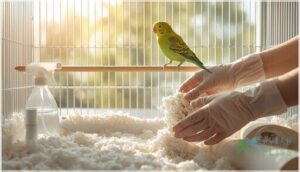
Keeping your bird’s cage clean isn’t just about appearances—it directly affects respiratory health, prevents bacterial infections, and reduces ammonia buildup that can damage delicate airways. A consistent cleaning routine protects your bird from preventable health crises while maintaining a comfortable living environment.
Here’s how to establish effective hygiene practices that work with your schedule and your bird’s specific needs.
Daily Spot Cleaning Tips
Consistent daily spot cleaning forms the foundation of strong cage hygiene and protects your bird’s health. Focus on removing visible droppings and wet bedding from high-soil zones like perches, food areas, and beneath water dishes.
This simple waste management routine limits moisture control issues and aids odor prevention by reducing ammonia buildup.
Quick perch cleaning and dropping analysis during daily checks also help you catch early health changes before they become serious concerns.
Weekly Bedding Replacement
While daily removal helps, you need to replace all bedding at least once every seven days to maintain cage hygiene and protect bird health. Weekly replacement prevents ammonia buildup, bacterial growth, and odor that daily spot cleaning can’t fully address.
Large parrots, multiple-bird households, or high-humidity climates may require changes every three to five days. If you notice cage odor before seven days pass, increase your cleaning frequency immediately to safeguard air quality and respiratory health.
Monthly Deep Cleaning and Disinfection
Beyond weekly changes, you need to schedule a complete cage scrub every two to four weeks to prevent disease and bacterial contamination. Monthly deep cleaning addresses biofilm prevention, mold growth, and odor control that routine maintenance misses.
Your deep-cleaning protocol should include:
- Cage disassembly – Remove and scrub bars, grates, trays, and corners where droppings accumulate
- Disinfectant selection – Apply bird-safe products after washing to eliminate pathogens
- Component inspection – Check for worn parts that trap moisture and harbor bacteria
- Complete drying – Assure all surfaces dry thoroughly before reassembly to prevent fungal growth
Increase cleaning frequency if you notice ammonia odor, visible residue, or damp bedding between scheduled sessions.
Proper Storage and Disposal of Bedding
Storing unused bedding in cool, dry areas away from heat sources prevents mold growth and fire risk with combustible paper or wood materials. Keep bags sealed to minimize dust and protect air quality in your home.
When disposing of used bedding, check local rules—most paper-based and plant-fiber options qualify for composting or municipal waste, reducing environmental impact while managing pet waste safely.
Preventing Mold, Odors, and Bacterial Build-Up
When moisture builds up in bird cage bedding, bacterial loads can skyrocket within hours, turning a cozy home into a breeding ground for illness. Maintaining hygiene and bird health depends on tackling three key threats—mold, odors, and bacteria—before they compromise your bird’s well-being.
Bedding contamination isn’t just unpleasant—it’s a direct threat to respiratory health. Odor management through consistent cleaning protects both you and your feathered companion from harmful exposure.
- Daily liner changes cut bacterial growth by 60–80% and prevent ammonia buildup
- Humidity control below 60% stops mold proliferation on organic bedding
- Safe disinfectants like diluted vinegar eliminate 90% of residual pathogens
- Proper ventilation reduces airborne bacterial counts around cages by 60%
- Absorbency and odor control improve with recycled paper or natural minerals like zeolite
Common Mistakes to Avoid With Bird Cage Bedding
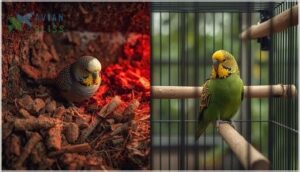
Even small oversights in bedding selection and maintenance can compromise your bird’s respiratory health and overall well-being. Some mistakes stem from misconceptions about what materials are safe, while others result from underestimating how quickly hygiene issues develop.
Here are the most common bedding mistakes that put birds at risk and how you can avoid them.
Using Unsafe or Toxic Materials
Choosing the wrong substrate can turn your bird’s home into a hazard zone. Toxic shavings like pine and cedar release plicatic and abietic acids that damage respiratory cells, while metal poisoning from galvanized cages causes seizures when birds chew zinc-coated bars.
Corncob dangers include impaction and Aspergillus mold growth.
Avoiding harmful bedding materials means skipping clay litters, puppy pads with chemical risks, and any dyes or aromatic substances.
Overlooking Species-Specific Needs
Treating all birds the same with your bedding choice is like giving everyone the same shoe size—it just doesn’t work. Each species brings unique foraging behavior, respiratory sensitivity, and pathogen risks that demand specific substrates matching their cage design and protecting both bird and human health.
Ignoring species and health needs when choosing bird cage bedding leads to serious consequences:
- Large parrots confined on smooth surfaces miss the deep litter their natural ground-foraging requires, with research showing over 60% increase floor time when given appropriate substrates.
- Finches and canaries spending half their day sifting seed develop stereotypies and behavioral problems without particulate bedding material that encourages species-specific exploration.
- Powder-down species like cockatoos and African greys generate far heavier allergen loads than other birds, requiring species-specific bedding recommendations focused on dust control to safeguard your respiratory health and theirs.
Bedding material safety starts with recognizing that budgerigars need different substrates than macaws, and what works for one can harm another.
Skipping Regular Cleaning
Overlooking maintenance requirements turns your cage into a breeding ground faster than you’d think. Pathogen buildup accelerates within hours of skipping daily spot cleaning, directly threatening cage hygiene and your bird’s respiratory system.
| Skipped Cleaning | Health Risk |
|---|---|
| 24 hours | 60–80% bacterial increase, ammonia levels spike |
| 48 hours | Fungal proliferation begins, respiratory issues emerge |
| 1 week | 40% higher illness incidence, zoonotic risks escalate |
| 2+ weeks | E. coli in 80% of bird cage bedding samples |
Maintaining hygiene and bird health means never gambling with cleaning frequency.
Ignoring Early Signs of Health Issues
Beyond cage hygiene itself, ignoring early signs of health issues compounds every bedding mistake you make. More than 70% of birds present with only subtle changes—reduced vocalization, mild lethargy, slight appetite shifts—yet delayed presentation multiplies anesthesia death risk fifteenfold. Watch for:
- Ruffled feathers or decreased preening
- Subtle droppings changes over 12–24 hours
- Quieter vocalizations or fluffed posture
Missed cage observation costs lives.
Choosing Bedding With Poor Absorbency or High Dust
Poor absorbency leads directly to ammonia buildup above 25 ppm within days, triggering respiratory distress and microbial growth. High-dust bedding—especially corncob and walnut shells—raises airborne fungal spores and fine particles that penetrate deep lung tissue.
Choosing safe bird cage bedding means prioritizing dust and allergen risks alongside absorbency and odor control. Corncob’s notorious mold carriage and bedding ingestion hazards demand you skip “cheap” options and protect respiratory health.
Frequently Asked Questions (FAQs)
Can I mix different bedding types together?
You might think mixing bedding types boosts benefits, but combining materials like walnut shells and paper increases mold risk by 40%.
Single substrates guarantee better hygiene monitoring and reduce respiratory complications considerably.
How often should I completely change the bedding?
You should replace bird bedding at least weekly to maintain cage hygiene and odor control.
Watch for soiling indicators like visible waste or ammonia smells—these signal it’s time for an immediate change, regardless of schedule.
What bedding works best for outdoor aviaries?
Outdoor aviaries need gravel or hardwood chips over drainage layers to prevent waterlogging and microbial risks.
Avoid aromatic woods, sand, and straw—these harbor fungi and pests while compromising absorbency and predator exclusion.
Is newspaper ink safe for all bird species?
Modern newspaper ink is generally safe for most bird species when plain black-and-white newsprint is used.
Small birds like budgies show greater sensitivity to contaminants, so veterinary guidance recommends avoiding glossy or heavily colored pages.
How much bedding depth is ideal for cages?
A towering five to ten centimeters of bird bedding strikes the sweet spot for most cages—deep enough for nesting behavior and comfort while maintaining bird health and hygiene through proper absorption and cage environment management.
Conclusion
The devil’s in the details regarding your bird’s health, and selecting the right comfortable bird cage bedding material isn’t something you can afford to get wrong. Match the substrate to your species, prioritize absorbency over aesthetics, and maintain rigorous cleaning schedules.
Your bird depends on you to recognize warning signs before they escalate. Create a habitat that promotes respiratory function, prevents bacterial growth, and delivers genuine comfort—your feathered companion deserves nothing less.
- https://www.bird-vet.com/Settingupyourbirdscage.aspx
- https://jcea.agr.hr/articles/772027_The_effect_of_a_bedding_materials_on_performance_welfare_and_behavior_of_broiler_chickens_A_review_en.pdf
- https://www.nature.com/articles/s41598-020-77831-3
- https://groups.google.com/g/rec.pets.birds/c/TMdAiH4fvXM
- https://www.inceptionaiapp.com/en-US/pet-supplies/birds/bedding-nesting/eco-friendly-bird-bedding/hemp-fiber-bedding