This site is supported by our readers. We may earn a commission, at no cost to you, if you purchase through links.
 Controlling parasites in backyard chickens requires a two-pronged approach: prevention and treatment.
You’ll want to maintain clean coops, provide dust baths with diatomaceous earth, and quarantine new birds.
For internal parasites like roundworms, natural dewormers such as garlic and pumpkin seeds work well for mild cases, while severe infestations may need prescription medications like fenbendazole.
External parasites like mites respond to essential oil sprays and wood ash treatments.
Regular fecal exams help you catch problems early—think of them as your chickens’ annual physical.
The key isn’t waiting until your flock looks like they’ve been through a tornado, but rather taking preventive measures to ensure their health and well-being through regular check-ups.
Table Of Contents
- Key Takeaways
- Identifying Chicken Parasites
- Chicken Lice Control
- Natural Deworming Methods
- Preventing Chicken Lice
- Treating External Parasites
- Internal Parasite Control
- Managing Parasite Infestations
- Maintaining Healthy Chickens
- Frequently Asked Questions (FAQs)
- What can I give my chickens to get rid of parasites?
- Should you deworm backyard chickens?
- What is the most common parasite in chickens?
- Can parasites spread between chickens and humans?
- How often should I test for parasites?
- Are baby chicks susceptible to parasites?
- Can wild birds transmit parasites to chickens?
- Do free-range chickens get more parasites?
- Conclusion
Key Takeaways
- Establish prevention first – You’ll save time and money by maintaining clean coops, providing dust baths with diatomaceous earth, and quarantining new birds for 30 days rather than treating established infestations.
- Use targeted treatments based on parasite type – You’ll need specific approaches for each pest: diatomaceous earth and essential oils for external parasites like lice and mites, while internal worms require prescription medications like fenbendazole or natural remedies for mild cases.
- Schedule regular health monitoring – You should conduct weekly visual inspections and fecal exams every 3-6 months to catch parasites early, as untreated infestations can reduce egg production by up to 20%.
- Combine natural and medical approaches strategically – You can use herbal supplements like garlic and oregano for prevention and mild cases, but don’t hesitate to use veterinary-approved dewormers for severe infestations while following proper egg withdrawal periods.
Identifying Chicken Parasites
Early detection of chicken parasites can save you weeks of treatment headaches and prevent serious health issues in your flock.
You’ll need to recognize the telltale signs of external pests like lice and mites, plus internal parasites such as roundworms and tapeworms that can quietly drain your birds’ health.
Signs of External Parasite Infestation
Something’s not right when your feathered friends start showing telltale signs of unwelcome visitors. External parasites like chicken lice and mites can turn your peaceful coop into an uncomfortable situation for your birds.
Watch for these key warning signs of external parasite infestation:
Don’t wait until your flock suffers—early detection saves weeks of treatment headaches.
- Feather loss around the vent, wings, and neck areas where parasites feed most actively
- Skin irritation with visible scratching, pecking, or red, inflamed patches on exposed skin
- Egg reduction as stressed hens divert energy from laying to dealing with constant irritation
- Lice detection through visible golden bugs about 3mm long crawling on skin under wings
- Mite infestation signs including pale combs, lethargy, and decreased energy levels in affected birds
Regular weekly inspections help catch these chicken parasite symptoms early, preventing minor issues from becoming major poultry parasite infestations.
Recognizing Roundworms and Tapeworms
Two types of internal parasites threaten your flock’s health.
Roundworm Symptoms include weight loss, diarrhea, and decreased egg production, while Tapeworm Diagnosis requires spotting rice-like segments in droppings.
Fecal Testing confirms infestations before symptoms appear.
| Parasite Type | Key Identification Signs |
|---|---|
| Cecal Worms | Yellowish diarrhea, lethargy |
| Large Roundworms | Visible worms in droppings |
| Tiny Roundworms | Weight loss, poor feather quality |
| Tapeworms | Rice-like segments in feces |
| Mixed Infestations | Multiple symptoms combined |
Parasite Life cycles vary, but early detection through regular chicken parasite control monitoring prevents serious health issues.
Detecting Mites and Lice
Several signs reveal mites and lice lurking on your chickens. Check for excessive scratching, feather loss, and pale combs during your weekly skin examination.
Look for tiny golden lice around vents and under wings, plus white nits clustered on feather shafts. Red or scaly patches indicate mites.
Early parasite identification through regular feather checks prevents serious infestations requiring intensive chicken lice removal.
Chicken Lice Control
When chickens start scratching more than usual and you spot tiny golden bugs crawling near their vents, you’re likely dealing with lice.
These pesky external parasites can quickly multiply if left untreated, but several natural remedies can help you regain control of the situation.
Diatomaceous Earth Treatment
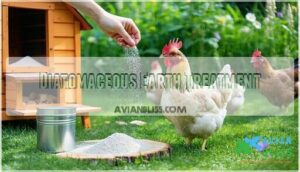
Diatomaceous earth works like nature’s microscopic sandpaper against chicken lice. This powder treatment damages their exoskeletons, causing dehydration.
Nature’s microscopic sandpaper fights chicken lice naturally—no harsh chemicals needed.
Apply DE carefully with these steps:
- Dust chickens directly – Focus on vent areas and feather bases
- Sprinkle coop floors – Target nesting boxes and bedding during changes
- Mix with dust baths – Let chickens self-apply for ongoing natural parasite control
Wear protective gear during application to avoid respiratory irritation. For effective parasite control, consider using natural pest remedies in your chicken care routine.
Essential Oils for Lice
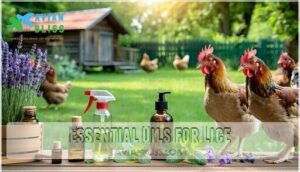
Against lice, you’ll find essential oils pack a powerful punch in your parasite control arsenal.
Tea Tree Oil and Lavender Spray create effective Natural Repellents when diluted properly with water.
Peppermint Treatment works well too—mix these Oil Blends into homemade sprays targeting infested areas.
These herbal remedies for chickens offer gentler alternatives to harsh chemicals while maintaining solid parasite prevention strategies.
Garlic and Apple Cider Vinegar Remedies

Natural power lies in simple kitchen staples that pack a punch against lice.
Garlic benefits include antiparasitic properties that make your birds less appealing to unwanted guests, while apple cider vinegar creates an inhospitable environment on their skin.
Your natural remedies arsenal includes:
- Fresh garlic cloves crushed into feed weekly for herbal supplements
- Apple cider vinegar spray (1:10 ratio) applied directly to affected areas
- Combined garlic-ACV water treatment for thorough organic treatments
These parasite prevention strategies offer gentle yet effective natural deworming alternatives to harsh chemicals.
Natural Deworming Methods
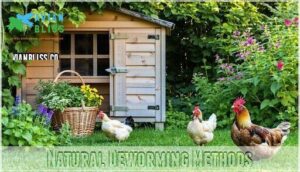
You can protect your flock from internal parasites using natural herbs that create an unwelcoming environment for worms while supporting digestive health.
These herbal remedies work as preventive measures, though they shouldn’t replace veterinary care for severe infestations, and are used to support overall digestive health.
Using Herbs for Parasite Prevention
When time comes to naturally protect your flock, herbal remedies offer powerful parasite prevention without synthetic chemicals. Strategic herbal supplements support digestive health while creating an unwelcoming environment for parasites.
Natural deworming through herbal parasite prevention gives you control over your chickens’ wellness using proven strategies. For effective parasite control, consider using a natural dewormer solution that’s chemical-free and safe for your flock.
| Herb | Primary Benefit | Application Method | Frequency |
|---|---|---|---|
| Oregano | Antifungal, antiparasitic properties | Feed additive or fresh plant | Daily |
| Wormwood | Traditional vermifuge for internal worms | Self-medication access | As needed |
| Garlic | Anti-parasitic, immunity booster | Crushed in water or feed | Weekly cycles |
| Marigold | Insect repellent, carotenoid source | Chopped in nesting boxes | Replace weekly |
| Lavender | Circulation boost, stress reduction | Dried herb in coop | Monthly refresh |
Herbal chicken health support requires consistent application and proper dosing for effective parasite control strategies. This approach ensures a healthy and thriving flock, making it a crucial part of chicken care and wellness management.
Fennel Seed and Peppermint Benefits
Two powerful allies strengthen your flock’s defense against internal parasites.
Fennel seed promotes fennel digestion while naturally helping expel intestinal worms through improved gut efficiency.
Peppermint oil creates an unwelcoming environment for parasites while stimulating healthy digestion and soothing gut inflammation.
These herbal remedies support natural deworming efforts, making your chickens’ digestive systems less hospitable to unwanted guests while boosting overall chicken health and wellness.
Chamomile and Marjoram for Gut Health
Chamomile works like a gentle hug for your chickens’ irritated digestive systems.
This flower reduces gut inflammation caused by parasites while promoting healing.
Marjoram creates an unwelcoming environment for worms with its antimicrobial properties.
You can brew chamomile tea for their water or sprinkle dried herbs in their feed to support their chicken gut microbiome naturally.
Preventing Chicken Lice
You’ll want to prevent chicken lice before they become a problem in your flock.
Smart prevention saves you time, money, and keeps your birds healthier than trying to eliminate an established infestation.
Quarantine and Biosecurity Measures

Always quarantine new chickens for thirty days before introducing them to your existing flock.
This critical biosecurity step prevents parasite transmission and protects your birds’ health.
Check newcomers thoroughly for lice, mites, and other external parasites during isolation.
Sanitize your coop between introductions and maintain strict poultry parasite prevention protocols throughout the quarantine period.
The quarantine period is crucial for the health of your birds, and biosecurity measures should be taken seriously to prevent disease transmission.
Regular Coop Cleaning and Maintenance

Clean coops prevent parasite hideouts and break infestation cycles.
You’ll want to remove wet bedding weekly, scrape manure from roosts, and disinfect nest boxes monthly.
Proper ventilation reduces moisture that harbors parasites, while maintaining secure fencing keeps wild birds from introducing new pests.
Regular coop sanitation makes your backyard chicken care routine much easier, ensuring a clean and healthy environment for your chickens, which is crucial for proper ventilation.
Providing Dust Baths and Wood Ash
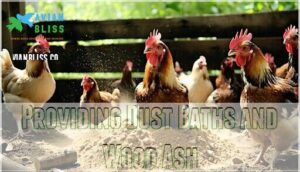
During regular maintenance, you’ll want to establish dust bathing areas for your chickens’ natural parasite prevention routine.
Mix wood ash with dirt to create effective dust baths that suffocate lice and mites. Place these bathing spots in dry, covered areas where your flock can roll around freely.
This simple coop management strategy supports chicken hygiene while providing natural remedies against external parasites.
By understanding the importance of dust bath benefits, you can create a healthier environment for your flock, utilizing natural remedies and promoting chicken hygiene.
Treating External Parasites
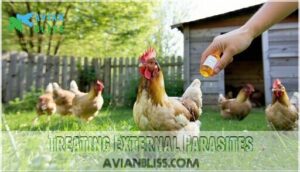
When external parasites attack your flock, you’ll need targeted treatment methods that address each type effectively.
The key is identifying whether you’re dealing with mites, lice, fleas, or other external pests before selecting the right treatment approach.
Mite and Flea Control Methods
Beneath your coop’s surface lurk tiny invaders that’ll make your flock miserable if left unchecked.
Effective mite removal and flea control require a multi-pronged approach:
- Dust chickens with diatomaceous earth or sulfur powder
- Spray coops with mite killer solutions
- Provide wood ash baths for natural pest management
- Repeat treatments every 7-21 days for complete parasite prevention
Understanding avian mite control is essential for maintaining a healthy flock.
Lice and Roundworm Treatment Options
Your chicken’s health depends on choosing the right treatment approach.
Lice Removal requires immediate action, while Roundworm Medication needs careful dosing.
Natural Remedies work for prevention, but established infestations demand proven Deworming Methods for effective Parasite Control.
| Treatment Type | Best For |
|---|---|
| Permethrin sprays | Active lice infestations |
| Fenbendazole | FDA-approved roundworms |
| Diatomaceous earth | Prevention/mild cases |
| Levamisole | Water-based deworming |
Tapeworm and Scaly Leg Mite Remedies
For stubborn tapeworms, you’ll need prescription meds like praziquantel or fenbendazole through your vet.
Scaly leg mites respond well to warm Epsom salt soaks followed by petroleum jelly applications every three days.
Natural remedies work for mild cases, but severe infestations require targeted treatment.
Regular parasite tests help you stay ahead of these freeloaders before they crash your flock’s health party completely.
Internal Parasite Control
When internal parasites like roundworms and tapeworms invade your flock, you’ll need proven deworming medications to protect your chickens’ health.
Since Wazine is no longer readily available, alternatives like Safeguard paste and fenbendazole offer effective treatment options with proper dosing and egg withdrawal periods.
Safeguard Paste and Wazine Alternatives
With Wazine no longer available, you’ll need reliable deworming options for your flock’s parasite control.
Safeguard paste has become the go-to alternative treatment, though medication safety requires careful consideration when exploring chemical free approaches.
Top Deworming Options:
- Safeguard paste – Most accessible alternative with proven effectiveness
- Valbazen liquid – Requires veterinary guidance for off-label use
- Natural herbal blends – Verm-X and oregano-based products for prevention
- Diatomaceous earth – Food-grade option for ongoing parasite prevention
- Apple cider vinegar – Daily water additive supporting gut health
These alternative deworming methods offer flexibility while maintaining your birds’ health and safety.
Effective parasite control methods are essential for preventing the spread of diseases in backyard chickens.
Fenbendazole and Levamisole Treatment
Two medications lead the charge against internal parasites: fenbendazole and levamisole.
Fenbendazole offers broader spectrum coverage against roundworms and cecal worms, while levamisole targets specific roundworm species effectively.
| Medication | Target Parasites | Dosage | Safety Notes |
|---|---|---|---|
| Fenbendazole | Roundworms, cecal worms | 50mg/kg for 5 days | Low toxicity, wide safety margin |
| Levamisole | Large roundworms | 20-40mg/kg single dose | Higher toxicity, precise dosing required |
| Combination | Resistant parasites | Veterinary guidance | Alternating treatments prevent resistance |
| Follow-up | All treatments | Fecal exam 2-3 weeks | Confirms treatment efficacy |
Both medications require veterinary oversight for off-label poultry use.
The treatment plan should consider medication options to guarantee effective parasite control.
Egg Withdrawal Period and Safety Precautions
When treating chickens with deworming medication, you’ll need to follow strict egg withdrawal periods to guarantee food safety.
Different medications require varying withdrawal times before eggs become safe for consumption.
Here are essential safety precautions for egg withdrawal:
- Mark treatment dates – Record when you administer medication to track withdrawal periods accurately
- Separate treated birds – Keep medicated chickens away from untreated flock to prevent cross-contamination
- Dispose of eggs properly – Discard all eggs during withdrawal period, typically 20 days for most dewormers
- Monitor medication expiration – Use only fresh, properly stored medications to guarantee effectiveness and safety
Always consult your veterinarian about specific withdrawal times for your chosen treatment method.
Managing Parasite Infestations

Once you’ve identified parasites in your flock, you’ll need a strategic approach that considers both treatment timing and environmental factors.
The key is balancing routine prevention with targeted treatment based on fecal exams and your local climate conditions.
Scheduled Routine Treatments
Many chicken owners follow scheduled deworming treatments rather than waiting for visible infestations.
You’ll typically deworm your flock every 3-4 months using medication rotation to prevent resistance.
Popular treatment plans include alternating between fenbendazole and levamisole.
This proactive flock management approach works well in warm, moist climates where parasite monitoring shows consistent pressure throughout the year.
Fecal Exam and Deworming Schedules
Regular fecal testing gives you the upper hand in poultry parasite management.
Smart chicken keepers run fecal tests 3-4 times yearly to catch parasites before they cause problems.
Here’s your deworming schedule blueprint:
- Schedule fecal tests every 3 months for accurate parasite monitoring
- Deworm adult birds every 3-6 months based on test results
- Time treatments during spring and fall for maximum effectiveness
- Follow proper egg withdrawal periods for treatment timing safety
- Keep detailed records of your poultry worming schedule results
This approach allows for accurate parasite monitoring and helps in maintaining a healthy flock by following a structured poultry worming schedule.
Climate and Environmental Factors
Climate substantially impacts poultry parasite environmental control strategies.
Warm, humid environments create ideal breeding conditions for parasites, requiring more aggressive sanitation and weather patterns monitoring.
| Climate Factor | Impact on Parasites | Management Strategy |
|---|---|---|
| Temperature Control | Heat accelerates parasite life cycles | Provide shade and ventilation |
| Humidity Management | High moisture promotes parasite survival | Guarantee proper drainage and air circulation |
| Soil Quality | Wet, contaminated soil harbors parasites | Rotate runs and improve drainage |
| Air Circulation | Poor airflow increases parasite loads | Install fans and proper ventilation systems |
Maintaining Healthy Chickens

You’ll need to establish a consistent inspection routine to catch parasite problems before they compromise your flock’s health and productivity.
Regular health monitoring combined with proper nutrition and stress management creates the foundation for keeping parasites at bay naturally.
Regular Health Checks and Inspections
Beyond routine treatments, weekly Flock Monitoring becomes your early warning system.
Chicken Examination during Health Screening helps catch issues before they spread throughout your backyard flock management routine. Check each bird systematically for Parasite Detection signs.
- Spotting tiny crawlers moving across feathers signals immediate action needed
- Finding pale combs warns you that blood-sucking parasites are weakening your birds
- Discovering crusty leg scales means scaly leg mites have moved in uninvited
- Noticing decreased egg production often reveals hidden internal parasite loads
- Seeing excessive preening behavior indicates external parasites are making chickens miserable
Regular health checks also involve understanding disease transmission methods to prevent the spread of illnesses among your flock.
Balanced Diet and Nutrition for Parasite Prevention
Proper nutrition acts like armor against parasites. You’ll boost your flock’s immunity by feeding quality layer feed with 16-18% protein plus nutrient supplements. Probiotic feed and vitamin boosters create hostile gut environments for worms, while mineral richness strengthens natural defenses against infestations.
| Nutrition Category | Parasite Prevention Benefits |
|---|---|
| Protein Sources | Builds immune defenses, reduces worm susceptibility |
| Vitamin A & B-Complex | Creates gut environment hostile to parasites |
| Probiotics | Maintains beneficial bacteria, limits parasite resources |
| Copper & Selenium | Acts as anti-parasitic agent, boosts immunity |
| Garlic & Pumpkin Seeds | Natural compounds repel and paralyze worms |
Digestive health starts with clean water enhanced with apple cider vinegar. Add herbal supplements like oregano and wormwood for immune support. Quality poultry nutrition means fewer vet bills and healthier birds. Chicken health supplements work best when combined with proper gut health practices—think of it as insurance for your investment.
Stress Reduction and Coop Management Techniques
Managing stress in your flock starts with proper coop ventilation—fresh air keeps respiratory issues at bay.
Monitor flock dynamics daily; bullying weakens birds and invites parasites.
Maintain clean roost management with adequate perching space. Keep nest box maintenance consistent, replacing bedding weekly.
These coop management tips reduce stress naturally, supporting your chickens’ immune systems against parasite invasion through better coop hygiene and natural chicken health practices.
Frequently Asked Questions (FAQs)
What can I give my chickens to get rid of parasites?
You’ll need specific dewormers for internal parasites like Safeguard paste (fenbendazole) for roundworms, or Praziquantel for tapeworms.
For external parasites, use diatomaceous earth, permethrin sprays, or poultry dust containing pyrethrin insecticides.
Should you deworm backyard chickens?
Like shepherds guarding their flocks from wolves, you should deworm chickens only when fecal tests confirm parasites or symptoms appear, rather than routinely medicating healthy birds unnecessarily.
What is the most common parasite in chickens?
Roundworms are the most common internal parasite you’ll encounter in your backyard flock.
These sneaky invaders thrive in warm, moist conditions and can quickly spread through your entire coop if left unchecked, which makes them a significant concern for backyard flock owners to address promptly.
Can parasites spread between chickens and humans?
Most chicken parasites won’t spread to you, but good hygiene’s still smart. Chicken lice are species-specific and can’t live on humans. However, some mites might temporarily irritate your skin.
How often should I test for parasites?
Test your flock every 3-6 months, or annually if they’re healthy with no symptoms. Increase frequency to monthly during warm, humid weather when parasite loads typically spike higher.
Are baby chicks susceptible to parasites?
Prevention beats cure when protecting your feathered family.
Yes, baby chicks are vulnerable to parasites, especially roundworms and coccidiosis.
Their developing immune systems can’t fight infestations effectively.
Keep brooders clean, quarantine new birds, and monitor droppings closely for early detection of coccidiosis.
Can wild birds transmit parasites to chickens?
Yes, wild birds can definitely transmit parasites to your chickens.
They’re common carriers of roundworms, tapeworms, and external parasites like mites and lice, spreading them through droppings and direct contact with your flock.
Do free-range chickens get more parasites?
Like sheep exposed to wolves in open fields, you’ll find that free-range chickens do face higher parasite risks.
They encounter more contaminated soil, wild bird droppings, and intermediate hosts like earthworms and snails that carry parasites, which poses a significant threat to their health due to the increased exposure to these parasite risks.
Conclusion
Studies show that untreated parasites can reduce egg production by up to 20% in backyard flocks.
Successfully controlling parasites in backyard chickens requires consistent prevention rather than reactive treatment.
You’ve learned that combining regular coop maintenance, natural remedies, and strategic treatments creates the strongest defense.
Remember to quarantine new birds, maintain dust baths, and schedule routine fecal exams.
With these proven strategies, you’ll keep your flock healthy and productive year-round.
- https://pmc.ncbi.nlm.nih.gov/articles/PMC4927506/
- https://www.bdvets.org/JAVAR/V8I4/h551_pp606-611.pdf
- https://www.cdc.gov/healthy-pets/about/backyard-poultry.html
- https://agrilifetoday.tamu.edu/2021/02/26/protect-backyard-chickens-from-disease-parasites/
- https://grubblyfarms.com/blogs/the-flyer/internal-chicken-parasites-what-to-watch-for