This site is supported by our readers. We may earn a commission, at no cost to you, if you purchase through links.
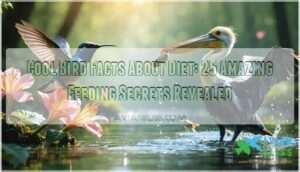 You’ll be amazed by these cool bird facts about diet that showcase nature’s creativity.
Hummingbirds remember thousands of flower locations and visit up to 2,000 blooms daily for nectar. Pelicans can store three gallons of water in their expandable throat pouches.
Some woodpecker tongues wrap around their skulls to reach insects deep in tree bark. Cardinals generate 500 pounds of pressure per square inch to crack tough seeds, while vultures possess stomach acid stronger than car batteries to digest bones.
Arctic terns migrate 44,000 miles annually following fish populations, and crows use tools to extract hidden grubs.
These remarkable adaptations reveal even more surprising feeding secrets.
Table Of Contents
- Key Takeaways
- Bird Diet Diversity
- Bird Feeding Habits
- Specialized Bird Diets
- Bird Dietary Adaptations
- Cool Bird Diet Facts
- Frequently Asked Questions (FAQs)
- What do birds eat a day?
- Do wild birds eat twice their weight a day?
- Do birds eat humans?
- What do coastal birds eat?
- How many times a day do birds eat?
- What do omnivorous birds eat?
- What is the coolest fact about birds?
- What birds have an unusual diet?
- Is there any bird you cannot eat?
- Do baby birds eat different foods than adults?
- Conclusion
Key Takeaways
- You’ll discover birds eat 10-50% of their body weight daily, with hummingbirds consuming the most due to their extreme metabolism and need to visit up to 2,000 flowers per day
- You can observe remarkable feeding adaptations like woodpecker tongues that wrap around their skulls, pelican throat pouches holding three gallons of water, and cardinal beaks generating 500 pounds of pressure per square inch
- You’ll find that seasonal diet switching is crucial for survival – over 40% of songbirds change from insects to seeds and fruits during fall migration, while Arctic terns travel 44,000 miles annually following fish populations
- You should know that providing native plants creates better bird habitat than feeders alone, since indigenous flora produces seeds at ideal times and offers superior nutrition compared to non-native alternatives
Bird Diet Diversity
You’ll discover that birds have evolved incredibly diverse diets, ranging from strict herbivores that munch on seeds and fruits to fierce carnivores that hunt other animals.
This amazing variety in what birds eat reflects millions of years of evolution, with each species developing unique feeding strategies that help them thrive in their specific environments, showcasing their ability to adapt to various conditions and making them incredibly diverse.
Herbivorous Bird Diets
While herbivorous birds might seem like simple plant-eaters, they’re actually sophisticated foragers with remarkable dietary strategies.
These feathered vegetarians have evolved incredible adaptations for Plant Adaptation and Herbivore Ecology that’ll blow your mind.
Plant-eating birds showcase evolutionary brilliance through specialized beaks, digestive systems, and foraging techniques that maximize nutrition from nature’s bounty.
- Seed Consumption specialists like finches crack tough shells with precision beaks
- Fruit Eating masters such as parrots use their feet like hands
- Leaf Foraging experts including swans digest cellulose with extended intestines
- Granivorous birds store seeds in specialized throat pouches for later
These herbivorous birds showcase nature’s ingenuity perfectly.
Omnivorous Bird Diets
You’ll find omnivorous birds are nature’s ultimate opportunists.
These adaptive feeding champions switch between seed consumption and fruit eating based on what’s available.
Crows, jays, and ducks showcase perfect omnivore nutrition by combining plant matter with insects and small animals.
Their bird foraging flexibility helps them thrive in changing environments, making their bird dietary requirements remarkably versatile compared to specialized feeders, which is a key aspect of their ability to be ultimate opportunists.
Carnivorous Bird Diets
Looking beyond seeds and bugs, carnivorous birds pack serious hunting power.
These aerial predators use razor-sharp talons and specialized beaks to catch everything from mice to fish.
Hawks employ stealth tactics, while owls hunt silently at night.
Raptors showcase incredible bird predation skills, with some eagles snatching prey weighing several pounds.
Their meat-eating lifestyle requires precise hunting tactics and powerful digestive systems to process bones and fur.
Insectivorous birds also play a vital role in the ecosystem, with many species relying on insect eating habits to survive, demonstrating the importance of insectivorous birds and their ecosystem role.
Factors Influencing Bird Diets
Several key factors shape what you’ll observe birds eating throughout the year.
Geography plays a huge role—mountain birds face different challenges than coastal species.
Seasons dramatically shift dietary needs, while human activities increasingly impact natural food sources.
- Habitat Effects: Forest birds access different foods than grassland species, with each environment offering unique resources
- Climate Change: Shifting temperatures alter insect emergence timing and plant flowering schedules, disrupting traditional feeding patterns
- Food Availability: Drought, storms, and seasonal cycles determine what’s actually available for birds to consume
- Nutrient Cycling: Birds adapt their diets based on breeding needs, requiring more protein during nesting season for healthy chicks
Bird Feeding Habits
You’ll discover that birds don’t just eat whatever’s available—they’re incredibly strategic about their food choices throughout the year.
From switching diets with the seasons to adapting to human-provided meals, these feathered creatures have developed fascinating feeding habits that might surprise you.
Seasonal Changes in Diet
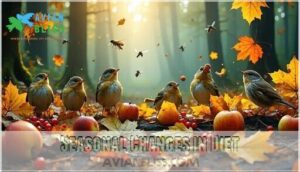
You’ll notice bird seasonal diet changes happen like clockwork throughout the year.
Over 40% of North American songbirds switch from insects to fruits and seeds during fall seasonal migration.
Winter foraging becomes a survival game – chickadees abandon insect larvae for nuts and seeds when food scarcity hits.
Arctic shorebirds show remarkable dietary flexibility, trading aquatic invertebrates for berries during autumn travels.
This adaptive eating pattern helps birds survive changing seasons.
Supplementing their diets can be achieved through seasonal dietary products.
Human Impact on Bird Diets
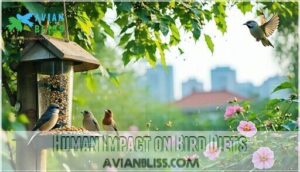
Your backyard feeder might be changing bird diets more than you realize.
Over 48% of North American households provide supplemental bird feeding, creating dependency on human-provided nutrition. Urban birds consume 42% more processed foods than their rural counterparts, leading to significant diet disruption.
Your backyard feeder might be reshaping bird evolution in ways you never imagined.
The use of proper bird feeding equipment is essential to maintain healthy bird populations.
Here’s how human feeding impacts bird nutrition:
- Junk food consumption – City birds eat discarded bread and salty snacks, causing nutritional imbalances
- Feeder management issues – Dirty feeders spread disease, doubling mortality rates in some populations
- Artificial selection pressure – Food supplements support weaker individuals who wouldn’t survive naturally.
Human impact on bird feeding habits creates both opportunities and challenges for bird nutritional needs.
Importance of Native Plants

Native plant-communities create biodiversity hotspots that support local bird populations year-round.
You’ll discover that indigenous flora produces Native Seeds at ideal times, matching natural bird feeding cycles.
These Plant Diversity champions offer superior nutrition compared to non-native alternatives, maintaining critical Ecosystem Balance while providing authentic Bird Habitat.
By implementing effective bird feeding practices, you can create a thriving environment for various bird species.
| Native Plant Benefits | Bird Species Supported | Seasonal Timing |
|---|---|---|
| Oak trees produce acorns | Woodpeckers, jays, nuthatches | Fall harvest period |
| Sunflowers yield seeds | Goldfinches, cardinals, chickadees | Late summer/early fall |
| Berry bushes offer fruit | Thrushes, waxwings, mockingbirds | Summer through fall |
| Grasses provide seeds | Sparrows, buntings, towhees | Late summer/winter |
Local Flora creates sustainable bird feeding guide systems that don’t require human intervention, supporting wild bird diet needs naturally while fostering healthy avian food habits.
Providing Fresh Water
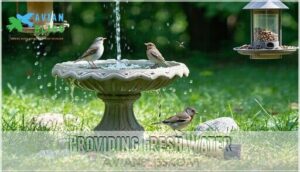
You’ll want fresh, clean water available daily since birds need it for drinking and bathing.
Change your birdbath water every 2-3 days to prevent bacteria growth. Position water sources near feeders but away from predator hiding spots.
Shallow dishes work best – waterfowl prefer deeper areas while songbirds need just 1-2 inches. Clean containers weekly with a brush.
Regular birdbath maintenance involves using effective birdbath cleaning products to keep the area clean.
Specialized Bird Diets
You’ll discover that some birds have developed extraordinary dietary specializations that seem almost impossible.
These feathered specialists have evolved remarkable adaptations to exploit food sources that most other animals can’t access, which is a truly remarkable aspect of their biology.
Nectarivorous Bird Diets
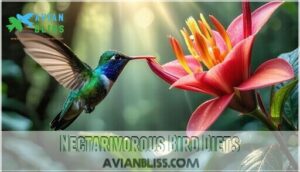
You’ll discover that nectarivorous birds have evolved remarkable adaptations for nectar feeding, making them nature’s specialized sugar specialists.
These feathered pollinators consume nectar containing roughly 20% sugar content, supplementing with insects for protein balance.
Here are five fascinating nectar feeding facts:
- Hummingbird Diets – Over 330 hummingbird species feed every 10-15 minutes throughout the day to meet their extreme metabolic demands
- Sugar Water Composition – Natural nectar contains sucrose, glucose, and fructose, providing instant energy for rapid wing beats
- Feeder Designs – Specialized long bills and brush-like tongues allow efficient extraction from tubular flowers
- Pollination Role – These birds pollinate up to 90% of certain rainforest plants through their feeding activities
- Nectar Composition – Bird diet facts reveal that trace minerals and pollen provide essential micronutrients missing from pure sugar sources
Frugivorous Bird Diets
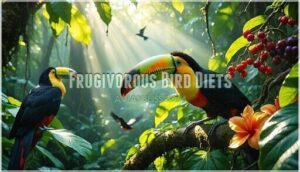
Frugivorous birds are nature’s gardeners, with toucans and hornbills leading the fruit eating charge.
These feathered friends have evolved specialized beaks perfect for berry consumption and accessing tropical diets.
Through fruit foraging, they’ve mastered frugivory while providing essential seed dispersal services.
You’ll find these bird food sources create fascinating bird diet facts about ecosystem partnerships.
Granivorous Bird Diets
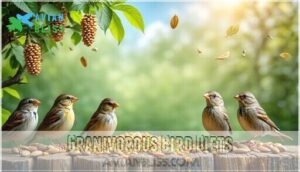
Seed-eating birds showcase remarkable dietary specialization through their powerful beaks and feeding strategies.
Granivores like sparrows and finches crack tough seeds with cone-shaped bills, while others prefer smaller grains.
These bird diets vary by species – goldfinches favor thistle seeds, cardinals choose sunflower seeds.
Different bird seed types and food sources support various granivorous species year-round.
Insectivorous Bird Diets
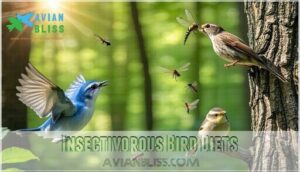
While seed-eating birds focus on plant matter, insectivores tackle a protein-packed menu that keeps ecosystems buzzing with balance.
These feathered pest controllers consume millions of insects daily, making them nature’s most efficient exterminators.
Here’s how insectivores master their craft:
- Specialized bird beaks – Thin, pointed bills pierce through bark and snatch tiny prey
- Lightning-fast feeding strategies – Some species catch insects mid-flight with surgical precision
- Diet specialization varies from ant specialists to fly-catching experts
- Insect control services – One swallow devours 850 insects per day during breeding season
- Bird insect foraging techniques include gleaning, hawking, and probing hidden crevices
These insectivore species rely on bird insect protein for energy-intensive activities like migration and reproduction, showcasing remarkable insect catching abilities.
Understanding the importance of insect based foods is vital for maintaining a balanced ecosystem.
Bird Dietary Adaptations
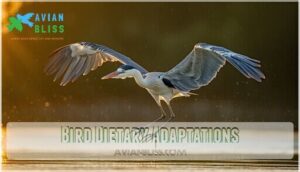
You’ll discover how millions of years of evolution shaped birds’ bodies into perfect feeding machines.
From razor-sharp talons that pierce prey to curved beaks that extract nectar, each adaptation tells a remarkable survival story.
Beak and Talon Shapes
You’ll notice how each bird’s beak shape perfectly matches its preferred grub.
Kingfishers sport dagger-like bills for spearing fish, while finches have sturdy, cone-shaped beaks for cracking tough seeds.
Beak Functions and Talon Adaptations work together—owls use razor-sharp talons to capture prey, then their hooked bills tear meat efficiently.
These Feeding Mechanisms showcase nature’s brilliant engineering at work.
Foraging Strategies
You’ll discover birds use multiple foraging strategies to survive.
Some species employ perch gleaning, plucking insects from branches, while others use aerial hawking to catch prey mid-flight.
Seed gathering involves ground scratching techniques where birds kick debris aside.
Food search patterns vary from patient stalking to aggressive chasing.
These foraging tactics showcase remarkable dietary adaptations that help different species exploit unique ecological niches effectively.
Birds also exhibit behavioral flexibility in their foraging behavior, allowing them to thrive in various environments.
Defensive Behaviors
Staying vigilant while feeding becomes essential for bird survival strategies.
You’ll notice birds constantly scanning for bird predators, using quick head movements between bites.
Their bird defense mechanisms include flocking together for safety, with some birds acting as sentries.
Feeding fights break out when resources are scarce, involving aggressive displays and bird beak adaptations for intimidation.
Smart predator avoidance means feeding in open areas with escape routes nearby.
Migration Patterns
Many birds follow ancient Bird Routes across continents, timing their journeys perfectly with seasonal food sources.
These incredible migration cycles demonstrate how birds balance energy conservation with nutritional needs during their longest adventures.
Here are four amazing migration facts:
- Seasonal Travel – Arctic terns travel 44,000 miles annually, following summer’s abundance from Arctic to Antarctic
- Food Sources – Hummingbirds double their body weight before crossing the Gulf of Mexico, storing fat for their 500-mile nonstop flight
- Migration Cycles – Bar-tailed godwits fly 7,000 miles without stopping, relying entirely on stored body fat for fuel
- Habitat Changes – Warblers time their spring arrival precisely when insects emerge, ensuring peak seasonal bird feeding opportunities
Cool Bird Diet Facts

You’ll discover that birds have developed some of the most surprising and clever feeding strategies in the animal kingdom.
From hummingbirds that can remember thousands of flower locations to pelicans with expandable throat pouches that hold more fish than their stomachs, these feathered creatures showcase remarkable adaptations.
These adaptations will change how you view your backyard visitors, as they demonstrate the birds’ ability to thrive in various environments with unique strategies, such as the ability to remember thousands of flower locations.
Unique Bird Diets
While some birds stick to standard diets, others have developed extraordinary feeding habits that’ll blow your mind.
These unique bird diets showcase incredible bird diet specialization and dietary adaptations that help species thrive in specific environments.
| Diet Type | Bird Examples | Special Adaptations |
|---|---|---|
| Nectar Feeders | Hummingbirds, Sunbirds | Long bills for deep flowers |
| Fruit Eaters | Toucans, Hornbills | Large bills for grabbing fruit |
| Seed Consumption | Finches, Cardinals | Strong bills for cracking shells |
| Pollination Helpers | Lorikeets, Honeyeaters | Brush-tipped tongues for nectar |
These bird food preferences drive incredible bird diet diversity across ecosystems worldwide.
Bird Diet Variations
You’ll find that bird nutrition varies dramatically across species, with some birds switching between multiple food sources throughout their lives.
This dietary flexibility helps them survive changing seasons and environmental challenges.
Key Bird Diet Variations:
- Seasonal switchers – Cardinals eat insects during breeding season but switch to seeds in winter
- Age-based changes – Young pelicans eat fish regurgitated by parents, then learn to dive for their own prey
- Geographic adaptations – House finches in desert areas consume more succulent plants for water content
- Opportunistic feeding – Crows adjust their feeding strategies based on available food sources in urban versus rural environments
These dietary adaptations showcase how bird food sources and feeding strategies evolve with ecological roles and environmental pressures.
Importance of Bird Diets in Ecosystems
You’ll discover that birds serve as nature’s hardest workers in maintaining ecosystem balance through their diverse diets.
Their feeding habits create intricate food chains where each species plays unique ecological roles.
When hummingbirds pollinate flowers or finches disperse seeds, they’re providing ecosystem services worth billions annually.
Bird conservation efforts protect these essential species interactions that keep our planet’s avian ecology thriving and healthy, which is worth billions annually.
Interesting Bird Feeding Behaviors
Bird Foraging reveals nature’s most creative feeding strategies.
You’ll spot woodpeckers using tools to extract insects, while crows drop nuts from heights to crack them open.
Flocking Behavior helps birds share information about food sources through calls and movements.
Watch how Seed Preferences change as different species visit your feeders – finches prefer nyjer while cardinals love sunflower seeds.
Strategic Feeder Placement attracts diverse species, creating backyard feeding spectacles you won’t believe.
Understanding bird diet diversity is vital for creating an ideal feeding environment that supports the health and well-being of various bird species, including their diet diversity and backyard feeding needs, with a focus on bird species and feeding strategies.
Frequently Asked Questions (FAQs)
What do birds eat a day?
Early bird catches the worm" rings true—you’ll find birds consume 10-50% of their body weight daily. Hummingbirds need constant refueling, while larger raptors eat less frequently but bigger meals.
Do wild birds eat twice their weight a day?
Wild birds don’t typically eat twice their body weight daily.
Most songbirds consume about 20-30% of their weight per day, though tiny hummingbirds can eat up to 50% due to their incredibly fast metabolism.
Do birds eat humans?
Picture a tiny hummingbird trying to tackle a towering giant – it’s physically impossible.
No birds eat humans.
You’re far too large for any bird’s digestive system or hunting capabilities, even massive eagles or condors.
What do coastal birds eat?
Coastal birds feast on fish, crabs, mollusks, marine worms, and aquatic invertebrates. You’ll spot them diving, probing sandy shores, or filtering water for tiny organisms like plankton and algae.
How many times a day do birds eat?
Like clockwork from the Victorian era, you’ll find birds eating constantly throughout daylight hours.
Most species feed every 10-15 minutes, consuming 15-20% of their body weight daily to fuel their high-speed metabolisms.
What do omnivorous birds eat?
Omnivorous birds eat both plants and animals, switching between seeds, fruits, insects, small prey, and eggs depending on seasonal availability and nutritional needs for survival.
What is the coolest fact about birds?
Like nature’s Swiss Army knife, you’ll discover hummingbirds consume half their body weight daily, beating wings 80 times per second while hovering to sip nectar from flowers with pinpoint precision.
What birds have an unusual diet?
You’ll find flamingos eating upside-down, filtering algae and tiny shrimp through specialized beaks. Oxpeckers munch parasites off large mammals, while vampire finches actually drink blood from other birds.
Is there any bird you cannot eat?
You shouldn’t eat any bird species due to legal protections, health risks, and conservation concerns. Many birds carry diseases like salmonella or avian flu that can harm you.
Do baby birds eat different foods than adults?
Baby birds are absolutely ravenous little eating machines!
You’ll find that nestlings typically eat different foods than their parents.
Adults feed them protein-rich insects and soft foods, while adult birds often eat seeds and varied diets, making them quite different.
Conclusion
Nature’s feeding strategies reveal remarkable adaptations that challenge our understanding of survival.
These cool bird facts about diet demonstrate how evolution creates perfect solutions for every ecological niche. From hummingbirds’ precision navigation to vultures’ powerful digestion, each species develops unique methods to thrive.
You’ve discovered how beaks, behaviors, and migrations all center around food acquisition. Understanding these dietary secrets helps you appreciate the intricate web connecting all living things and inspires better conservation efforts.
This understanding of ecological niche and the adaptations within it, highlights the complexity of life and how each species plays a vital role, making every ecological niche unique.