This site is supported by our readers. We may earn a commission, at no cost to you, if you purchase through links.
Bluebirds don’t actually eat seed. Most backyard feeders, packed with sunflower and millet, go completely ignored by them.
These birds are insectivores at heart, built to hunt soft-bodied prey from a low perch and return to their nest with something worth eating. A single nesting pair can feed their chicks over 100 insects per day during peak spring weeks.
Mealworms change everything—they mimic exactly what bluebirds hunt naturally, deliver up to 64% protein by weight, and trigger feeding visits within days of setup. Getting the food, feeder, and placement right makes the difference between a yard where bluebirds pass over and one they keep coming back to.
Table Of Contents
- Key Takeaways
- Why Bluebirds Love Insects
- Top 3 Insect Food Products
- Best Feeder Setup for Bluebirds
- Seasonal Feeding Tips for Bluebirds
- Safe Bluebird Feeding Practices
- Frequently Asked Questions (FAQs)
- Can you feed bluebirds too many mealworms?
- What is the best food to attract bluebirds?
- Do bluebirds prefer live or dried mealworms?
- What can I feed bluebirds other than mealworms?
- How can I attract bluebirds?
- How do insects affect bluebird health overall?
- Can insect diets reduce bluebird reliance on feeders?
- Do different insect species attract bluebirds differently?
- How do weather changes impact insect availability?
- What methods attract specific insects for bluebirds?
- Conclusion
Key Takeaways
- Bluebirds ignore most backyard feeders because they’re natural insect hunters, and mealworms—with up to 64% protein—are the one food that actually gets their attention.
- Live mealworms trigger hunting instincts and keep nestlings hydrated, while dried mealworms offer better shelf life and higher nutrient concentration, so using both gives you the best of each.
- A platform or tray feeder mounted 5–6 feet high, placed 10–15 feet from shrubs, with a shallow mealworm cup and a nearby water dish, is the setup that turns a one-time visit into a regular stop.
- Bluebirds’ nutritional needs shift with the seasons—protein-heavy mealworms in spring and summer, fruits in fall, and high-fat suet or waxworms in winter—so matching your offering to the season keeps them coming back year‑round.
Why Bluebirds Love Insects
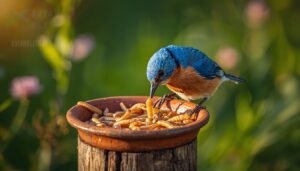
Bluebirds are insect hunters at heart, and the right food makes all the difference in getting them to visit your yard. Mealworms, in particular, check every box — high protein, easy to offer, and hard for bluebirds to resist.
If you want to go deeper, bluebird feeding patterns and insect-hunting behavior explain exactly why protein-rich foods like mealworms trigger such a strong response in these birds.
Here’s what you need to know about why insect foods work so well for them.
Mealworms as a High-protein Staple
Mealworms earn their place as a cornerstone of any bluebird diet for good reason. Their amino acid balance rivals soy and fish meal, and their mineral density delivers iron, zinc, and B12 in every bite. They also provide significant omega-3 DHA, supporting brain health and cognitive function.
Here’s what makes them stand out:
- High protein content ranging from 47–64%
- Excellent digestibility factors for small birds
- Sustainable production benefits with low environmental impact
- Easy shelf-life preservation when stored in airtight containers
Live Vs. Dried Mealworms
Both forms have real value in a bluebird diet, but they shine in different ways. Live mealworms offer movement stimulation that triggers natural hunting instincts, plus hydration advantages that support nestlings during growth.
Dried mealworms win on shelf stability and nutrient concentration.
For escape prevention, use a deep-sided cup. Rehydrating dried mealworms in warm water bridges the gap nicely.
Why Insect Foods Beat Seed
Bluebirds are natural insectivores, and their bodies are built to get the most from insect protein. Seeds simply can’t compete.
Insect foods like mealworms deliver higher protein content, essential amino acids, and energy-dense fat that seeds lack. That digestibility advantage means bluebirds extract more nutrition from less food — exactly what they need when nesting season hits hard.
Mealworms give bluebirds more nutrition from less food — exactly what nesting season demands
Top 3 Insect Food Products
Picking the right food product makes a real difference in how often bluebirds visit your yard. Not all mealworm and feeder options are created equal, so it helps to know which ones actually deliver.
Here are three worth keeping on your radar.
1. Organic High Protein Mealworms Feed
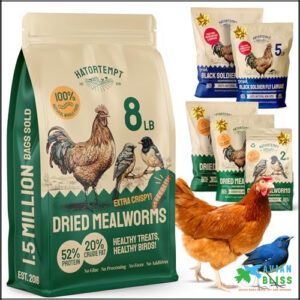
If you want one of the best options on the market, the Hatortempt 5 lb Dried Mealworms check nearly every box. They’re 100% non-GMO, preservative-free, and pack 52% crude protein — that’s serious nutritional firepower for bluebirds during nesting or winter.
The resealable zip-top bag keeps moisture out, so freshness isn’t a guessing game.
You can rehydrate them with warm water on cold mornings for easier eating, or offer them dry. At $38.99, it’s a smart investment for consistent, high-quality feeding.
| Best For | Backyard bird enthusiasts, small flock owners, and wildlife feeders who want a clean, high-protein treat for chickens, wild birds, or small animals year-round. |
|---|---|
| Price | $38.99 |
| Bird Compatibility | Bluebirds, wild birds, reptiles |
| Drainage Design | Resealable bag prevents moisture |
| Easy Cleaning | Resealable zip-top bag |
| Weather Resistance | Resealable bag blocks moisture |
| Mounting Options | Not applicable (food product) |
| Additional Features |
|
- Pure 52% protein with zero additives — great for egg production, feather health, and winter energy needs
- Resealable bag keeps things fresh without any fuss
- Works for a wide range of animals, from bluebirds to reptiles to hedgehogs
- At $38.99, it’s pricier than bulk generic options, which adds up fast for larger flocks
- Dry texture isn’t for every bird — some may need them soaked first
- A single 5 lb bag goes quickly if you’re feeding multiple species or a big flock
2. Blue Stokes Select Bird Feeder
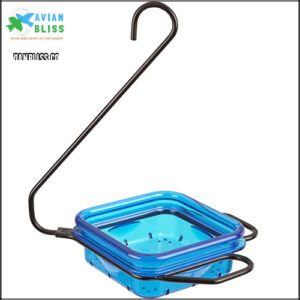
The Blue Stokes Select Bird Feeder keeps things simple without cutting corners. At $15.99, the polycarbonate tray is dishwasher‑safe, and the powder-coated metal perches hold up through rain and wind alike.
If you’re feeding during breeding season, pairing this feeder with high-protein options covered in this guide to top-rated bluebird feeders can make a real difference for nesting pairs.
Drain holes prevent water buildup, so your mealworms stay dry longer.
It’s lightweight at just half a pound, easy to hang almost anywhere, and the removable dish makes weekly cleaning genuinely quick.
One heads‑up: the drainage holes are large enough for live mealworms to escape, so dried worms work best here.
| Best For | Casual backyard birders who want a low-maintenance feeder that attracts a wide variety of small birds without breaking the bank. |
|---|---|
| Price | $15.99 |
| Bird Compatibility | Small backyard birds |
| Drainage Design | Drain holes in tray |
| Easy Cleaning | Dishwasher-safe removable dish |
| Weather Resistance | Powder-coated metal perches |
| Mounting Options | Hanging only |
| Additional Features |
|
- Dishwasher-safe polycarbonate tray makes cleanup genuinely easy
- Powder-coated metal holds up well outdoors through rain and wind
- Lightweight and versatile — hangs almost anywhere with minimal fuss
- Drainage holes are large enough for live mealworms to slip through
- Small capacity means frequent refills, especially with bigger birds around
- No protective cover, so heavy rain can still get to your food
3. Woodlink Platform Bird Feeder Station
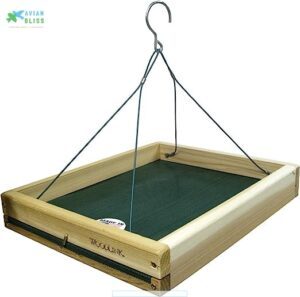
If you want something built to last, the Woodlink Platform Bird Feeder Station earns its $37.53 price tag. Hand-crafted from rot-resistant inland red cedar, it holds up to 3 lb of food and sits at a generous 16 × 13 inches — plenty of room for mealworms, fruit, and suet side by side.
The slide-out tray and removable powder-coated mesh bottom make weekly cleaning surprisingly painless.
Mount it 5–6 feet up on a pole, and your bluebirds will find it fast.
| Best For | Backyard birders who want a durable, easy-to-clean feeder that welcomes a wide variety of birds — from finches and cardinals to larger species like crows. |
|---|---|
| Price | $37.53 |
| Bird Compatibility | Finches, cardinals, nuthatches, crows |
| Drainage Design | Powder-coated metal screen bottom |
| Easy Cleaning | Slide-out tray for cleaning |
| Weather Resistance | Rot-resistant cedar wood |
| Mounting Options | Hang, pole-mount, or ground |
| Additional Features |
|
- Built from rot-resistant cedar, so it holds up through rain, sun, and everything in between.
- The slide-out tray and removable mesh bottom make cleaning quick and straightforward.
- Works hung, pole-mounted, or ground-level — flexible enough to fit almost any yard setup.
- Mounting hardware isn’t included, so expect to spend a little extra on top of the $37.53 price.
- The open platform means rain can soak your seed, which leads to more frequent cleanings after wet days.
- Squirrels will help themselves freely unless you add a baffle separately.
Best Feeder Setup for Bluebirds
Getting bluebirds to show up is one thing — getting them to stay is another. The right feeder setup makes all the difference, from how high it sits to how well it keeps bigger birds at bay.
Here’s what works.
Platform and Tray Feeder Design
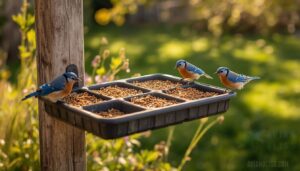
The right feeder makes all the difference. Platform feeders and tray feeders built with UV‑Stabilized Plastic hold up through harsh seasons without cracking or fading.
Look for Drainage Channels to prevent soggy mealworms, an Anti‑Slip Surface to keep insect protein accessible during feeding, and Weighted Base Stability so gusts won’t tip it over.
Modular Feeding Zones help organize mealworms neatly, making your setup truly bluebird‑friendly.
Ideal Feeder Height and Placement
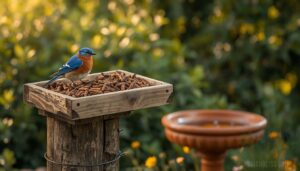
Height matters more than most people realize. Follow these feeder placement guidelines to give bluebirds their best shot:
- Ideal Height Range – Mount platform or tray feeders 5–6 feet high, following seasonal height tweaks as needed.
- Cover Proximity Guidelines – Stay 10–15 feet from shrubs for quick escapes.
- Water Perch Pairing – Place a shallow dish within 6–8 feet, with nearby perches.
Add a predator baffle for extra safety.
Reducing Competition From Larger Birds
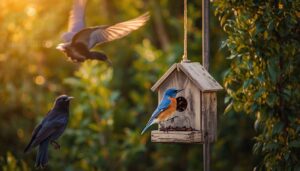
Bigger birds can turn your bluebird station into a battleground fast. Here’s how to take back control:
| Strategy | How It Works | Example |
|---|---|---|
| Micro entry design | Limits access by bill size | Starlingproof feeder openings |
| Shrub barrier planting | Blocks sightlines for large birds | Dense native shrubs nearby |
| Timed feeding windows | Disrupts monopolizing patterns | Mid-morning mealworms only |
Pair perch height control with motion deterrent devices, and your bluebird-friendly feeders stay competition reduction zones worth visiting.
Using a Shallow Mealworm Cup
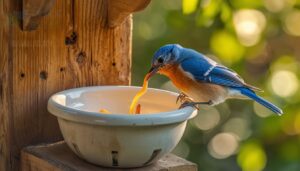
A shallow dish on your bluebird feeder changes everything about supplemental feeding. The right cup design makes mealworms easy to grab and keeps them fresh longer.
- Ramp Angle guides worms toward the center for easy pickup
- Drainage Groove prevents moisture buildup and mold
- Ventilation Slits keep your insect protein source fresh
- Shade Placement stops worms from overheating
- Refill Efficiency lets you top up without removing the whole cup
Seasonal Feeding Tips for Bluebirds
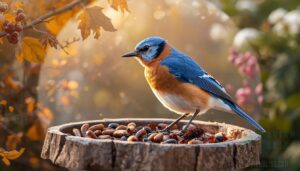
Bluebirds don’t eat the same way in January as they do in May — their needs shift with the seasons, and so should your feeding routine.
Getting this right makes a real difference in how often they visit and how well they thrive year‑round. Here’s what to offer them in each season.
Spring Nesting Season Protein Support
When nesting season arrives, your bluebirds need serious protein timing — and that’s where high-protein insects become essential.
| Feeding Stage | Best Protein Source | Key Benefit |
|---|---|---|
| Egg Incubation | Live mealworms | Moisture management for parents |
| Hatch Week 1–2 | Dried mealworms + eggshell calcium | Amino acid balance + bone support |
| Fledgling Growth | Mixed insect blend | Rapid chick growth and feather development |
| Peak Nesting | Live mealworms daily | Natural foraging behavior stimulation |
| Full Nesting Season | Rotating protein source for birds | Sustained energy and nutritional coverage |
Offer around 50 live or rehydrated mealworms twice daily during this window.
Summer Feeding and Fresh Water
Once nesting wraps up, summer brings its own challenge — keeping your bluebirds cool, fed, and hydrated through peak heat.
- Set up a bird bath or Hydration Stations Placement near feeders, no deeper than 1 inch
- Practice Daily Water Rotation every 24 hours for Shallow Water Maintenance
- Offer live mealworms in the morning and dried mealworms in the evening for Insect Moisture Balance
- Use Heat Resistant Water dishes and place them in partial shade
These Seasonal Feeding Considerations for Bluebirds keep fresh water and insects working together all summer.
Fall Fruit and Berry Additions
As summer cools down, bluebirds naturally shift toward fruit.
Think of fall as your chance to build a real bluebird buffet.
Slice apples for an Apple Fiber Boost, add pomegranate arils for Pomegranate Vitamin C, and toss in grapes as a Grape Hydration Aid.
Cranberries offer Cranberry Acidic Appeal alongside mealworms, while berries deliver Berry Antioxidant Benefits.
These seasonal feeding considerations for bluebirds make supplemental feeding count.
Winter Suet and Waxworm Options
Once the berries run low, winter calls for a different kind of fuel. Suet is your best friend here — look for blends built on a Beef Tallow Base, which holds up in cold temps.
No-Melt Formulas, Nut-Enriched Suet, and Berry-Infused Suet all work beautifully.
Add waxworms for a Waxworm Energy Boost.
This high-fat winter food keeps bluebirds strong when supplemental feeding matters most.
Safe Bluebird Feeding Practices
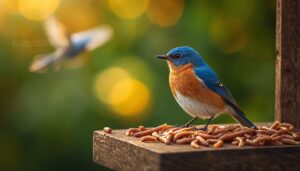
Feeding bluebirds the right food is only half the equation — how you handle and maintain that food matters just as much.
few simple habits can keep your feeder safe, fresh, and worth returning to. what you need to know to do it right.
Rehydrating Dried Mealworms Correctly
Dried mealworms go from tough to tempting with one simple step: rehydrating them correctly. Soak them in warm water — around 40–50°C — for 20–40 minutes until plump and pliable.
That’s your soaking time optimization sweet spot.
Water temperature guidelines matter here; never use boiling water, as it strips nutrients.
After soaking, drain thoroughly and check texture consistency before offering them to your bluebirds.
Portion Control and Waste Prevention
Too much food left sitting in the feeder is a quiet invitation for mold and pests.
Use measured scoop sizes — about 50 mealworms per feeding — and stick to a consistent portion scheduling routine, morning and evening. Spill-resistant cups keep high-protein insects contained, while daily feed audits tell you if leftovers need trimming. Quick leftover removal protects feeder hygiene and keeps bluebirds coming back.
Weekly Feeder Cleaning and Hygiene
Think of your feeder like a kitchen counter — it needs regular attention. Clean feeders frequently to protect your bluebirds’ health, especially when they’re on an insect-based diet.
- Scrub surfaces weekly with warm soapy water, then apply a 10% Bleach Disinfection solution for mold prevention.
- Follow a consistent Cleaning Schedule, increasing to twice weekly in humid weather.
- Practice Tool Segregation and Glove Use to avoid cross‑contamination.
Maintaining feeder hygiene keeps birds safe.
Storing Dried Mealworms for Freshness
Good storage is the difference between fresh, nutritious mealworms and a spoiled batch, your bluebirds won’t touch. Keep dried mealworms in airtight containers in cool dark storage, ideally between 50–60°F. Add desiccant packets to fight moisture.
For longer shelf stability, try freezing portions — they’ll keep up to six months.
Watch for spoilage signs like clumping or off smells, and use refrigerated mealworms within two months.
Frequently Asked Questions (FAQs)
Can you feed bluebirds too many mealworms?
Yes, you absolutely can — mountain of mealworms daily spells trouble. Overfeeding disrupts the calcium protein ratio, raises weight gain potential, and creates digestive health concerns.
Stick to 10–15 mealworms per bluebird, per day.
What is the best food to attract bluebirds?
Mealworms are the best food to attract bluebirds.
As natural insectivores, they crave high-protein insects above all else. Live or dried mealworms trigger natural foraging instincts and keep them coming back reliably.
Do bluebirds prefer live or dried mealworms?
Live wins — but dried holds its own.
Bluebirds favor live mealworms for moisture benefits and nestling hydration, yet dried mealworms offer higher protein density when temperatures rise and foraging behavior shifts.
What can I feed bluebirds other than mealworms?
Beyond mealworms, bluebirds enjoy berries, chopped fruit, suet, sunflower hearts, unsalted nuts, calcium-coated insects, and cricket offerings.
Fresh water stations nearby help too, supporting their need for natural food sources and high-protein insects year-round.
How can I attract bluebirds?
To attract bluebirds, set up bluebird-friendly feeders in open, sunny spots with nearby perches.
Offer live mealworms or dried mealworms, keep feeders clean, and add native plantings to mimic a natural foraging habitat.
How do insects affect bluebird health overall?
Think of insects as a bluebird’s daily multivitamin.
They deliver fatty acid energy, gut microbiota boost, immune system support, and parasite resistance — all the avian nutrition a thriving bluebird truly needs.
Can insect diets reduce bluebird reliance on feeders?
Yes.
When wild insect availability peaks, bluebirds naturally hit a protein saturation threshold and show feeder avoidance behavior.
Supplemental feeding matters most during seasonal insect scarcity, when natural food sources can’t keep up.
Do different insect species attract bluebirds differently?
Bluebirds do have favorites. They’ll snatch soft caterpillars and crickets first, then go for mealworms and moth larvae.
Beetle larvae and spiders round out their insect-based diet with key amino acids.
How do weather changes impact insect availability?
Weather shapes insect availability more than most people realize. Temperature thresholds, rainfall impacts, and wind disruption all shift what’s out there daily, making seasonal feeding considerations for bluebirds essential to keep them well-fed year-round.
What methods attract specific insects for bluebirds?
Like setting a dinner table, attracting insects for bluebirds means creating the right conditions.
Native Plantings, Flowering Borders, and Ground Cover Management draw beetles and caterpillars naturally, while Moisture Zones support crickets that bluebirds actively hunt.
Conclusion
Ironically, the secret to attracting one of nature’s most colorful backyard visitors has nothing to do with your feeder’s color, style, or location—it’s what’s inside that counts.
Mastering insect-based bird food for attracting bluebirds comes down to one simple swap: ditch the seed and serve what they actually hunt.
Pair fresh mealworms with the right feeder setup, keep things clean, and bluebirds won’t just pass through your yard—they’ll treat it like home.