This site is supported by our readers. We may earn a commission, at no cost to you, if you purchase through links.
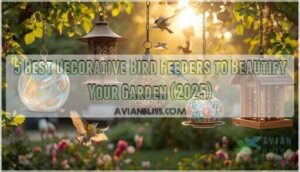
A garden without birds feels like a stage without performers—beautiful, but missing the magic of movement and song. When you add decorative bird feeders to your outdoor space, you’re not just putting up functional feeding stations. You’re installing living artwork that changes with the seasons, attracts colorful visitors, and turns quiet mornings into front-row seats to nature’s daily show.
The right feeder becomes a focal point that pulls your garden design together, whether you’re drawn to the luminous swirl of hand-blown glass, the rustic charm of weathered metal, or the vibrant sparkle of mosaic tiles catching afternoon light. These pieces work double duty, offering sustenance to feathered friends while anchoring your landscape with purposeful beauty that doesn’t fade when summer ends.
Table Of Contents
Key Takeaways
- Decorative bird feeders bring both beauty and life to your garden, turning quiet spaces into lively, ever-changing scenes.
- Choosing feeders made of durable, weather-resistant materials keeps your garden looking great year-round and makes maintenance easier.
- Mixing feeder styles, heights, and placements attracts more bird species and creates a layered, inviting outdoor space.
- Picking sustainable, easy-to-clean feeders supports wildlife and makes it simpler to keep birds healthy and happy.
Top 5 Decorative Bird Feeders for Gardens
You want a bird feeder that does more than just hold seed—it should catch your eye and make your garden feel alive. The right feeder blends beauty with function, drawing birds in while adding that finishing touch to your outdoor space.
Here are five standout options that bring charm and purpose to any garden.
1. Blown Glass Hummingbird Feeder for Outdoors
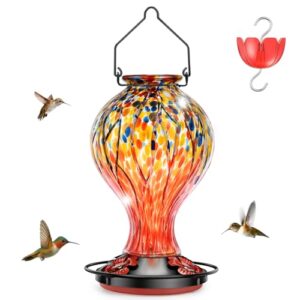
If you’re looking for outdoor decor that truly shines, a blown glass hummingbird feeder might be your garden’s missing piece. These decorative bird feeders combine glass feeder safety with stunning artistry, measuring around 7″L x 6″W x 6″H and holding 28 ounces of nectar.
Seasonal nectar demand peaks in warmer months, when hummingbird visitation rates soar. To prevent nectar spoilage, place yours in a shaded spot and maintain regular cleaning frequency—especially during summer.
The built-in ant moat keeps pests away, while the leakproof design makes maintenance simple, letting you enjoy both beauty and function.
Best For: Gardeners who want a decorative feeder that’s easy to clean and effectively keeps ants out while attracting hummingbirds during peak spring and summer months.
- The 28-ounce capacity with leakproof design means fewer refills and less mess, plus the wide mouth makes cleaning actually manageable.
- Built-in ant moat does the work of keeping pests away from the nectar, which is huge during hot summer months when bugs are everywhere.
- Glass construction is safer for birds than plastic and resists mold buildup better, so you’re not constantly scrubbing or worrying about bird health.
- The gold flower ports aren’t as attractive to hummingbirds as traditional red or orange feeding ports, which might mean slower initial bird traffic.
- Glass can break if dropped, so you’ll need to handle it more carefully than a plastic feeder during cleaning and setup.
- Some users report the design has quirks like the base ring being too close or nectar flowing slowly, which may require tweaking or adding perches.
2. Metal Hanging Bird Feeder Tray
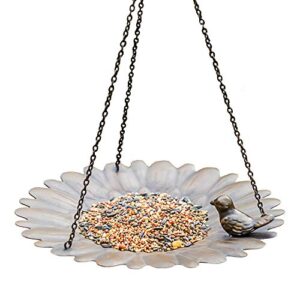
Metal bird feeder trays bring both rugged metal tray durability and elegant outdoor decor to your garden. These decorative bird feeders attract considerable bird diversity—studies show tray-style designs welcome up to 98 different species to your space.
With rust-resistant construction and mesh drainage for easy maintenance, they’ll serve your feathered friends for years.
The wildlife impact is meaningful too: open feeding platforms support bird survival during harsh winters while considering ecological considerations like reducing waste.
As garden accessories go, metal trays blend function with lasting beauty perfectly.
Best For: Bird lovers who want a durable, weather-resistant feeder that attracts a wide variety of species while adding decorative charm to their garden.
- Built from rust-resistant metal that lasts 5–10 years, even in harsh weather, so you won’t need frequent replacements.
- Attracts up to 98 different bird species with its open tray design, giving you more variety and activity in your yard.
- Easy to clean and sterilize thanks to non-porous metal surfaces, keeping your birds healthy and reducing maintenance hassle.
- No drain holes in this model means water can pool and cause seed rot if you don’t clean it regularly.
- The decorative bird on the side can throw off the balance, making it tricky to hang and potentially unstable for feeding birds.
- Strong winds can blow it around or knock it off its chain, especially since it’s lightweight.
3. MYITYARD Metal Hanging Bird Feeder
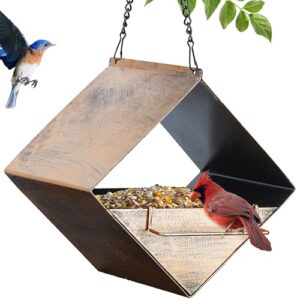
The MYITYARD Metal Hanging Bird Feeder brings retro design charm to your backyard with its vintage square silhouette and rust-proof construction. Metal durability means this decorative bird feeder withstands weather extremes season after season, while market acceptance reflects strong consumer satisfaction with both form and function.
You’ll appreciate its simple refilling through a top opening, plus the 360-degree perch invites sparrows and other wild birds to feast comfortably. It’s garden decoration that works hard—attracting birds while adding lasting character to your outdoor space.
Best For: Gardeners who want a durable, decorative feeder that attracts small wild birds like sparrows while adding vintage charm to their outdoor space.
- Rust-proof metal construction withstands multiple seasons of weather exposure without corroding
- 360-degree perch design and top-refill opening make feeding and maintenance quick and hassle-free
- Retro square aesthetic doubles as functional bird feeder and attractive garden decoration
- Feeding tray can be too narrow for comfortable bird access according to some users
- Perch wires may feel flimsy or small for larger bird species
- Birds may take time to discover and regularly visit the feeder, especially in new locations
4. Lujii Hand Blown Hummingbird Feeder
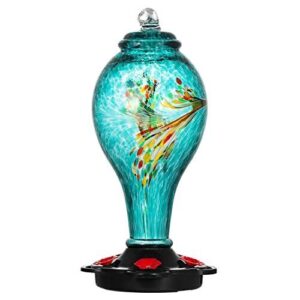
Glassblowing artistry is prominently featured with the Lujii Hand Blown Hummingbird Feeder, where five rustproof feeding stations invite a flurry of activity to your garden. Its leak-proof design means less mess and more time enjoying your visitors, while cleaning efficiency shines through its three-piece construction.
You’ll love watching multiple hummingbirds sip from the 36-ounce glass nectar reservoir, which shows nectar levels at a glance.
Customer satisfaction scores consistently top 4.6 stars, proving this decorative bird feeder delivers on both beauty and performance for your garden decoration.
Best For: Gardeners who want an elegant, functional feeder that attracts multiple hummingbirds while adding handcrafted visual appeal to their outdoor space.
- Hand-blown glass with fade-proof colors creates a unique, artistic addition to any garden while providing clear visibility of nectar levels
- Five metal feeding stations and 36-ounce capacity accommodate multiple birds at once, reducing territorial disputes and increasing bird activity
- Leak-proof, three-piece design makes cleaning and maintenance quick and hassle-free
- Glass construction is fragile and can break if dropped or struck, requiring careful handling during cleaning and installation
- Larger size and weight may make it more challenging to hang securely and requires more frequent refilling in busy areas
- Initial hummingbird attraction depends on location and may take time, especially if competing feeders or natural nectar sources are nearby
5. Mosaic Solar Wild Bird Feeder
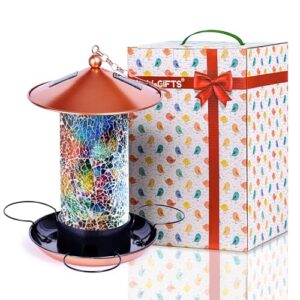
With every sunset, the Mosaic Solar Wild Bird Feeder adds a magical glow to your garden decor. Its mosaic glass artistry and color-rich LED illumination turn simple bird watching into a nightly spectacle.
This weather-resistant feeder boasts high solar panel efficiency, powering lights that enchant your yard decorations for hours. Multiple perches and smart design attract a variety of bird species, while durability ensures year-round garden decoration.
For a pop of color, consider pairing it with the Mosaic Birds SidebySide Poppy Feeder.
Best For: Homeowners and bird lovers looking for an eco-friendly feeder that doubles as stunning garden art with nighttime ambiance.
- Solar-powered LED lights create a beautiful, colorful glow at night without any electricity costs or wiring hassle.
- Handmade mosaic glass design adds unique visual appeal to your outdoor space while attracting a variety of bird species.
- Weatherproof construction with an inclined roof protects birds and seed from rain while standing up to the elements year-round.
- Small seed reservoir means you’ll need to refill it more often than larger feeders.
- Some users report durability concerns and construction issues that may affect long-term use.
- LED lights may not fully illuminate the glass when the feeder is full of seed, limiting the nighttime visual effect.
Popular Styles and Materials for Bird Feeders
When you’re choosing a decorative bird feeder, the style and material make all the difference in how it looks and how well it holds up over time.
From sleek modern designs to handcrafted artisan pieces, there’s a feeder to match every garden’s personality.
Let’s explore the most popular styles and materials that combine beauty with function.
Modern Farmhouse and Artisanal Designs
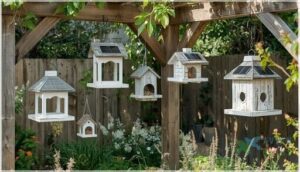
If you’re drawn to cozy, timeless charm in your outdoor spaces, modern farmhouse and artisanal decorative bird feeders blend rustic design with handcrafted quality beautifully. These nature-inspired decor pieces reflect growing consumer preferences for sustainable materials and authentic garden integration. Some of these feeders even utilize solar powered technology to reduce maintenance.
Consider these standout features:
- Neutral palettes in whites, grays, and natural wood tones
- Reclaimed materials supporting eco-conscious values
- Distressed finishes adding vintage character to garden decoration and accessories
Ceramic, Metal, Wood, Glass, and Recycled Materials
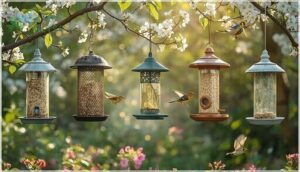
Choosing the right material for your decorative bird feeders shapes both garden decor and outdoor decoration longevity.
Ceramic feeders boast outstanding durability, withstanding temperatures up to 1250°C and offering a material lifespan exceeding five years with minimal maintenance needs. Glass provides stunning aesthetic appeal but requires careful handling.
Recycled options reduce environmental impact considerably—keeping nearly 2 million pounds of plastic from landfills annually through cost-effective, sustainable choices. These feeders also help to reduce the risk of disease among bird populations.
Color Options and Decorative Finishes
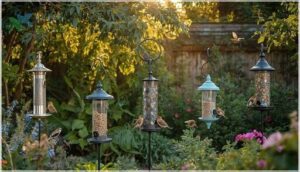
Your feeder’s color does more than catch your eye—it speaks directly to your feathered visitors. Silver and green finishes draw up to 48% more songbirds, while robins prefer black by 18%.
Nature-inspired decor trends now favor biophilic palettes—earthy greens and soft blues appearing in 36% of 2025 collections. Mosaic and metallic finishes improve garden design and decoration beautifully, though finish durability and non-toxic coatings matter most for decorating outdoor spaces safely.
Weather-resistant Features and Durability
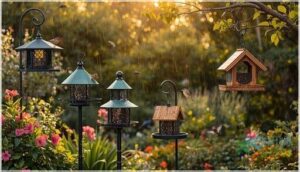
Your feeder faces rain, sun, and wind year-round, so material weather resistance matters. Metal feeders with powder coating last 4–7 years and handle extreme conditions beautifully, while cedar naturally resists moisture impact for up to a decade.
Look for squirrel-resistant designs with longevity guarantees—some brands offer lifetime warranties. Clean every 3–4 days during humid weather to reduce maintenance needs and keep your decorative bird feeders thriving.
Enhancing Garden Decor With Bird Feeders
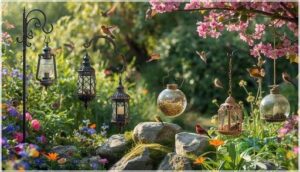
A bird feeder isn’t just a place for birds to eat—it’s a garden accessory that can bring color, movement, and life to your outdoor space. When you choose the right style and place it thoughtfully, your feeder becomes part of your garden’s story, not just something that sits there.
A bird feeder isn’t just functional—it’s a garden accessory that brings color, movement, and life to your outdoor space when chosen and placed thoughtfully
Here’s how to make your decorative bird feeders work beautifully with the rest of your garden design.
Placement Tips for Visual Appeal and Bird Attraction
Your feeder’s spot can make or break bird visitation rates—strategic placement near shelter proximity boosts activity by up to 60%. Here’s how to balance visual appeal with bird attractants:
- Follow height guidelines: Position feeders 5–6 feet high for best visibility while reducing disturbance from ground predators
- Place 10–15 feet from trees: Quick escape routes increase feeder use across species
- Choose quiet zones: Calm backyard design areas see 50% more visits than high-traffic spots
Pairing Feeders With Garden Accessories
Once you’ve found the perfect spot, think about how your feeder looks alongside planters, wind chimes, or solar lights—over 40% of decorative garden setups pair these accessories together. Seasonal pairings and thematic sets, like autumn leaf motifs or butterfly accents, keep your backyard and patio decor fresh while supporting wildlife.
Matching metal finishes with garden furniture or combining feeders with nearby water features creates nature-inspired decor that feels intentional and inviting.
Creating Tiered Visual Interest With Varied Heights
Beyond coordinating accessories, feeder height diversity transforms your yard decoration into something truly alive. Species-specific levels invite different birds—ground feeders for sparrows, waist-high for cardinals, tree-mounted for chickadees. This tiered design benefits both bird species and visual cohesion ratings, while predator deterrence keeps your feathered friends safe.
Five height strategies for decorative bird feeders:
- Ground-level feeders welcome towhees and juncos near flower beds
- Waist-high stations attract finches and provide easy viewing
- Tree-mounted designs draw woodpeckers and create vertical interest
- Window feeders offer intimate glimpses while reducing collisions
- Overhead hangers add drama and shelter shy species
Integrating With Native Plants and Water Features
Your decorative feeders gain real purpose when you pair them with native plantings. That oak tree provides for 500 caterpillar species—essential food for nesting birds—while your feeder offers supplemental seeds.
Add a small fountain or dripper to complete the habitat creation triangle. Moving water attracts migrant warblers and thrushes, turning your wildlife-friendly gardening space into an ecological hub where garden accessories support genuine wildlife attraction tips and native plant benefits work together.
Choosing The Right Decorative Bird Feeder
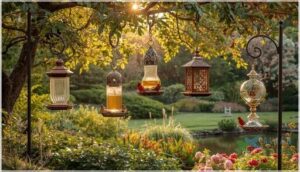
Picking the right bird feeder isn’t just about looks—it’s about finding one that fits your garden’s personality and works with your lifestyle. You’ll want to think about how much time you can spend on upkeep, which birds you hope to see, and whether you want something that’s kind to the planet.
Let’s walk through what matters most when you’re choosing your perfect feeder.
Matching Feeder Style to Garden Aesthetics
Your garden’s personality should shine through every detail, including your bird feeder. When you’re choosing decorative bird feeders, think about how the design speaks to your outdoor decor vision:
- Match feeder materials to your garden style – wooden feeders blend beautifully with cottage gardens, while sleek metal designs suit modern spaces
- Coordinate colors for visual layering – green and silver feeders attract more birds while complementing nature inspired decor
- Layer heights thoughtfully – mixed placement boosts bird attraction by 23% and creates stunning outdoor garden accessories displays
Considering Maintenance and Cleaning Needs
Keeping your feeders fresh protects the birds you love and saves time. Hummingbird feeders need cleaning every three to five days in warm weather, while seed feeders should be scrubbed every two weeks. Regular cleaning with a bleach solution can reduce disease transmission by up to 30%. Choose glass or metal feeders with removable trays—they cut maintenance time by 35% and make mold management far easier.
| Feeder Type | Cleaning Frequency | Maintenance Tips |
|---|---|---|
| Hummingbird | Every 3-5 days | Replace nectar immediately if mold appears |
| Seed-based | Every 2 weeks | Use hot water and bleach solution for thorough cleaning |
| Suet | Often in summer | Check for rancidity in higher temperatures |
| Glass/Metal | Weekly adherence | Dishwasher-safe models reduce time by 35% |
Eco-friendly and Sustainable Options
When you choose a sustainable feeder, you’re casting a vote for wildlife conservation and nature conservation. Over 70% of buyers now prioritize ecological products that support wildlife-friendly gardening, and materials like recycled plastics and aluminum feeders deliver lasting durability. Look for material certifications like FSC-approved bamboo, which signals responsible sourcing while reducing phosphorus runoff into ecosystems.
- Recycled plastic feeders divert waste and outlast wood by five times
- Aluminum options tap into nearly 75% recyclable material already in circulation
- Certified bamboo designs blend sustainable gardening with premium aesthetics
Selecting Feeders for Specific Bird Species
Beyond beauty alone, you’ll want to match your feeder to the birds you hope to welcome. Bird size and habitat needs matter, too—ground-level platform feeders suit doves, while raised designs serve smaller species better. Tube feeders attract finches and chickadees with their seed preferences for black oil sunflower, and suet draws woodpeckers during winter months.
| Bird Species | Feeder Design & Bird Food |
|---|---|
| Finches, Chickadees | Tube feeders with black oil sunflower seeds |
| Woodpeckers, Nuthatches | Suet feeders for winter bird feeding strategies |
| Cardinals, Grosbeaks | Hopper feeders supporting varied seed preferences |
| Doves, Sparrows | Platform feeders with millet near ground level |
Regular cleaning impact can’t be overlooked—glass and metal models reduce spoilage and keep visiting flocks healthy.
Frequently Asked Questions (FAQs)
How can I prevent squirrels from accessing bird feeders?
For blocking squirrels from your bird feeder, combine a baffle, strategic feeder placement, and clever seed selection.
Squirrel-resistant designs, deterrent devices, and even a Squirrel Umbrella Bird Feeder save you money and attract more birds, too.
What types of seeds work best in decorative feeders?
Isn’t it curious how the smallest seeds often invite the most colorful visitors? Sunflower wins for bird food popularity, millet boosts attraction, nyjer benefits finches, safflower favors cardinals, while peanuts add excitement to decorative bird feeding.
How often should decorative bird feeders be refilled?
Decorative bird feeders thrive on fresh refills every 2-4 days, but Refill Frequency Factors shift with Seasonal Refilling Needs and Feeder Type Impact.
Prioritize Seed Spoilage Prevention and follow Expert Refill Guidance for the healthiest Bird Feeding experience.
Conclusion
The quietest gardens are often the ones with the loudest stories—each flutter, chirp, and flash of color reminding you that stillness invites life.
Choosing decorative bird feeders for garden decor isn’t just about filling empty space; it’s about curating a living gallery where beauty and nature are always in motion.
When you welcome birds, you invite a new chapter to unfold each day, turning your backyard into a peaceful retreat that never loses its spark.
- https://www.businessresearchinsights.com/market-reports/bird-feeder-market-120492
- https://www.futuremarketinsights.com/reports/bird-feeding-and-watering-suppliers-market
- https://www.verifiedmarketresearch.com/product/garden-decor-market/
- https://datahorizzonresearch.com/bird-feeder-market-25724
- https://www.hilinegift.com/blogs/outdoor-decor/bird-friendly-garden-decor-ideas-that-are-stylish-and-functional